
Rabat Travel Guide
In this Rabat Travel Guide, I’ll help you explore the city in a simple and friendly way, with the best places to visit, where to stay, and useful travel tips.
Rabat is Morocco’s quiet, elegant capital city. If Casablanca is busy and Marrakech is vibrant, Rabat feels more relaxed, organized, and peaceful. It’s a city of ocean views, white walls, blue doors, palm trees, and gentle breezes.
In this Rabat Travel Guide, I’ll walk with you like a friend and local guide. I’ll show you the best things to do, where to stay, what to eat, and how to make your visit easy and stress-free.
Why Visit Rabat?
Many travelers skip Rabat, but when they finally visit, they are surprised by how soft and beautiful it feels. It’s clean, not too crowded, and easy to explore.
Rabat is worth visiting because:
It has calm, beautiful historical areas like the Kasbah of the Udayas
You can visit Hassan Tower and the Mausoleum of Mohammed V, two of the most important landmarks in Morocco
The Bouregreg River and Marina areas are perfect for walking and relaxing
The Medina is small, traditional, and much less hectic than other cities
It’s one of the safest and most comfortable cities in the country
Rabat is a perfect stop if you want culture, history, and ocean air without the stress of big crowds.
Your Rabat Travel Guide - Best Things to Do
Here are the top highlights and I’ll explain everything in simple words so you never feel lost.
Visit Hassan Tower & the Mausoleum of Mohammed V
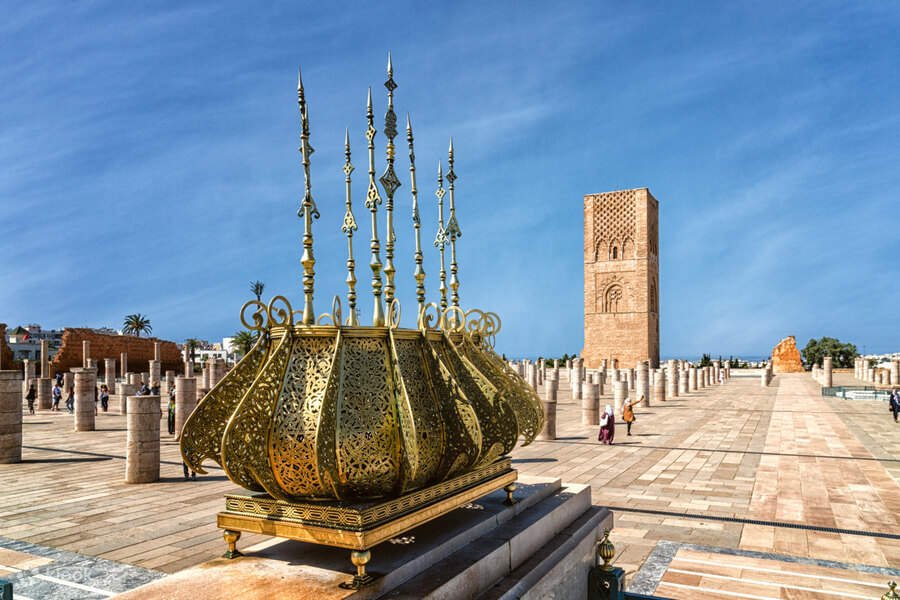
This is the heart of Rabat. Hassan Tower is an unfinished minaret from the 12th century, surrounded by dozens of stone columns. Next to it is the Mausoleum of Mohammed V, a royal tomb decorated with marble, cedarwood, carved plaster, and green tiles.
It’s quiet, respectful, and very beautiful inside. Even if you are not usually interested in monuments, this place will impress you. Try to dress modestly when you visit, and walk slowly to absorb the atmosphere.
Explore the Kasbah of the Udayas
The Kasbah of the Udayas is one of Rabat’s most magical places. As you walk through its white and blue streets, you’ll feel a mix of calm and beauty. Locals sit at their doors, children play in the alleys, and cats nap in sunny corners.
Inside the Kasbah you’ll find Café Maure, a simple but beautiful café overlooking the river and the ocean. Order a mint tea, sit on the stone terrace, and enjoy the view. It’s one of those moments where you truly feel the peaceful side of Morocco.
Walk Along the Bouregreg River & Marina
Between Rabat and the neighboring city of Salé runs the Bouregreg River. In recent years, the area has become a modern marina with boats, cafés, restaurants, and wide walking paths.
You can:
Walk by the water
Take a small boat across to Salé
Sit on a terrace and enjoy the view of the Kasbah and the river
The marina area is especially beautiful around sunset.
Discover Chellah – Ancient Ruins and Storks
Just outside the center of Rabat, Chellah is a quiet world of its own. It’s a historic site with Roman ruins, old walls, and a former Islamic necropolis. Today, storks build their nests on the ruined towers, and the place feels like a secret garden of history.
Chellah is perfect if you love walking slowly, taking photos, and imagining what life was like centuries ago.
Museum of Modern and Contemporary Art
If you’re interested in art and culture, you’ll love this museum. The Mohammed VI Museum of Modern and Contemporary Art shows Moroccan and African art in a bright, modern building.
Even if you don’t stay for long, it’s a great place to understand how Morocco is changing and modernizing while staying proud of its traditions.
Where to Stay in Rabat
Rabat is a comfortable city to sleep in. It has peaceful neighborhoods, clean streets, and a good mix of modern hotels and traditional riads. Choosing the right area will make your stay even more enjoyable.
If you enjoy a more traditional feeling, staying near the Medina lets you walk easily to the Kasbah, the river, and many cafés. There are several charming riads where you can experience Moroccan hospitality in a quiet setting.
For a modern vibe, the Agdal district is a great choice. It’s full of cafés, restaurants, and shops, and it feels safe and relaxed. It’s popular with students and young professionals, and you’ll find many modern apartments and hotels there.
If you prefer something more elegant and green, the Souissi and Hassan districts are perfect. These neighborhoods are home to embassies, wide boulevards, and more luxurious hotels. They are calm, leafy, and ideal if you want extra comfort and quiet nights.
Each of these Hotels gives your visitors a different style of Rabat, so they can choose what fits their trip best.
Sofitel Rabat Jardin des Roses a beautiful luxury hotel with big gardens and pools
The View Hotel Rabat modern, stylish, and perfect for a comfortable stay
ONOMO Hotel Rabat Terminus central and good value
Riad Dar El Kebira or Dar Shaan riad-style options in or near the Medina
You can explore the best hotels in Casablanca in my complete Best Hotels in Morocco guide
🍽 What to Eat in Rabat
Rabat’s food scene is a gentle mix of coastal flavors and traditional Moroccan cooking. The city is not as chaotic as other places, so eating here feels relaxed and enjoyable.
Because Rabat sits by the ocean and near the river, seafood is a natural star on many menus. You can enjoy grilled fish, shrimp, and calamari in restaurants near the river or along the coast. One special place is Le Dhow, a restaurant on an old wooden boat anchored in the Bouregreg. Eating there with the view of the city lights and the Kasbah feels very special.
Traditional Moroccan dishes are easy to find too. You can sit in a riad-style restaurant and enjoy tajine with lemon and olives, slow-cooked beef with prunes, or a big plate of couscous on Friday, which is a tradition all over Morocco. Places like Dar Naji are popular for tasty, simple Moroccan meals in a cozy setting.
Rabat also has a nice café culture. You’ll find modern coffee shops in Agdal and near the city center, as well as classic Moroccan cafés where people drink mint tea and watch the world go by. Try Moroccan pastries like chebakia, briouates, or sfenj (our version of doughnuts) along with your tea or coffee.
Whether you choose a modern restaurant in the marina, a traditional riad in the Medina, or a simple café with locals, Rabat will always give you something comforting and delicious to eat.
🛡 Rabat Safety
Rabat is one of the safest big cities in Morocco. You’ll see families walking, students heading to classes, and people relaxing in cafés at all times of day.
As in any city, it’s good to use common sense: keep your phone and wallet close, avoid very quiet streets late at night, and use official taxis or ride apps if you’re not sure about walking. But overall, you can feel calm and relaxed exploring Rabat.
🌤 Weather & Best Time to Visit Rabat
Rabat has a soft, coastal climate thanks to the Atlantic Ocean. The weather is mild almost all year.
The best times to visit are spring (March–May) and autumn (September–November), when the days are warm but not too hot, and the evenings are perfect for walking by the river or in the Medina.
Summer is sunnier and a bit warmer, but the ocean breeze makes it more comfortable than inland cities. Winter is mild with some rain, but still very visitable.
💡 Rabat Travel Tips
Rabat is a city you should enjoy slowly. It’s not about rushing from sight to sight it’s about feeling the calm rhythm of the capital.
Use the tram or taxis to move around easily. Spend at least one sunset at the Bouregreg Marina or Café Maure in the Kasbah. Combine your visit with nearby cities like Casablanca or Fes by train Rabat is very well connected.
Most importantly, don’t treat Rabat as “just a stopover.” Give it at least one full day, and it will surprise you with its quiet charm.
More info about Casablanca Travel Guide : Visit Morocco Official Tourism Website
🎒 What to Pack for Rabat
You don’t need anything complicated for Rabat. Pack comfortable walking shoes, light clothes for daytime, and a light jacket or sweater for the evening breeze.
Because Rabat has important religious and political sites, it’s nice to bring at least one modest outfit (covered shoulders and knees) for visiting places like the Mausoleum or if you’re invited somewhere more traditional. A small day bag, sunglasses, and a power bank are always helpful when exploring.
👍 Rabat Do’s & Don’ts
In Rabat, a little respect and kindness go a long way.
Do greet people with a smile, say salam alaykum, and take your time. Do enjoy mint tea at local cafés, walk through the Kasbah early in the day, and dress modestly in religious or royal areas.
Don’t take close-up photos of people without asking, don’t walk alone in very quiet areas late at night, and don’t wear beach clothes in the Medina or near the Mausoleum. Stay relaxed, be respectful, and Rabat will feel very welcoming.
For more inspiration around Morocco, you can also read my full Fes Travel Guide another amazing city with culture, history, and incredible food.
❓ Rabat FAQs
Is Rabat worth visiting?
Yes, very much. Rabat is clean, calm, and full of beautiful historical and coastal spots. It’s a great place to rest and still see important Moroccan landmarks.
Is Rabat safe for tourists?
Yes, Rabat is considered one of Morocco’s safest cities. Just use normal travel awareness as you would anywhere.
How many days do I need in Rabat?
One to two days is enough to see the main sights: the Kasbah, Hassan Tower, the Mausoleum, Chellah, and the Medina.
Can I visit Rabat as a day trip from Casablanca?
Yes, absolutely. The train between Casablanca and Rabat is fast and easy, and many people visit Rabat as a comfortable day trip.
What is Rabat known for?
Rabat is known for being Morocco’s political capital, for the Kasbah of the Udayas, Hassan Tower, the Mausoleum of Mohammed V, and its calm, coastal lifestyle.
✈️ Best Flights to Morocco
If you’re planning your trip to Rabat, you’ll likely arrive by plane to Casablanca or Rabat-Salé Airport and then continue by train or taxi.
Before you book, you can visit my Best Flights to Morocco Guide, where I share tips on the cheapest airlines, best routes, and easiest airports to use when flying into Morocco.
👉 Find the Best Flights to Morocco
If you book through some of the links, I may earn a small commission at no extra cost to you. Thank you for supporting Morocco Tips.
🤝 Need Help Planning Your Trip?
If you’d like help choosing hotels, planning a route, or organizing a private tour in Rabat or anywhere in Morocco, you’re always welcome to contact me. As a local guide, I’m happy to share honest advice and help you shape a trip that feels right for you.
Rabat may be quieter than other Moroccan cities, but that’s exactly its magic. It’s a place where you can slow down, breathe the ocean air, walk through soft blue streets, and feel both history and modern life at the same time.
I hope this Rabat Travel Guide helps you explore the capital with confidence. Whether Rabat is your first stop or just one part of your Morocco journey, it will leave you with calm, beautiful memories.