
Start here · Updated for 2026
Plan Your Morocco Trip With Confidence
Kamal’s quick answer: For most first-time visitors, 10 days gives the best balance. Choose two or three main regions, allow time for the long distances, and build your route around the experiences you care about most.
Planning a trip to Morocco can feel exciting and overwhelming at the same time. One moment you’re dreaming about riding camels across the Sahara Desert, the next you’re trying to decide whether to spend more time in Marrakech, visit the blue streets of Chefchaouen, explore the ancient medina of Fes, or relax by the Atlantic coast. Morocco isn’t one destination; it’s many different worlds in one country, and that’s exactly what makes it unforgettable.
The challenge is that Morocco is also very different from what many first-time visitors expect. Distances are much longer than they appear on a map. The weather can change completely between the coast, the Atlas Mountains, and the Sahara Desert. A seven-day itinerary that looks perfect online can quickly become exhausting if you spend most of your holiday driving instead of enjoying the country.
I’m Kamal, a licensed Moroccan tour guide based in Marrakech. I’ve been guiding travelers across Morocco since 2006 and became an officially licensed guide after passing the national guide examination in Rabat in 2018. Before that, I spent years exploring Morocco as a driver-guide, taking visitors from Casablanca to Tangier, Chefchaouen, Volubilis, Meknes, Fes, the Sahara Desert, the Draa Valley, the High Atlas Mountains, and Marrakech. After thousands of days on the road, I’ve learned that the best trips aren’t about seeing the most places; they’re about seeing the right places at the right pace.
One mistake I see almost every week is travelers trying to fit too much into one itinerary. Morocco rewards slow travel. Spending an extra day wandering the souks of Marrakech, watching the sunset over the dunes in Merzouga, or sharing mint tea with a local family often becomes the memory people treasure most, not rushing from one attraction to the next.
That’s exactly why I created this Morocco Travel Guide.
Why Trust This Morocco Travel Guide?
This guide is based on real experience helping visitors plan their journeys, not just researching destinations online. I’ll show you where to go, how long to stay, the best time to visit, how to travel between cities, what Morocco really costs, what to eat, how to stay safe, and the common mistakes that are easy to avoid with local advice.
Why you can trust this guide:
- ✅ Official licensed Moroccan tour guide
- ✅ Guiding travelers across Morocco since 2006
- ✅ Officially licensed since 2018
- ✅ Geography graduate
- ✅ Honest local advice based on real guiding experience
By the time you finish this Morocco Travel Guide, you’ll have a clear plan for your trip and the confidence to explore Morocco the way I recommend to the travelers I guide every week. My goal isn’t just to help you visit Morocco; it’s to help you experience the country in a way that you’ll remember long after you’ve gone home.
Table of Contents
Table of Contents
Morocco at a Glance
| Topic | Quick Answer |
|---|---|
| Capital | Rabat |
| Currency | Moroccan Dirham (MAD) |
| Languages | Arabic, Amazigh, French. English is common in tourist areas. |
| Time Zone | GMT+1 |
| Visa | Many nationalities can visit visa-free for up to 90 days. |
| Best Time to Visit | April, May, October, and early November |
| Religion | Islam |
| Driving Side | Right-hand side |
| Power Plugs | Type C & E, 220V |
| Emergency Number | 112 |
These quick facts cover the basics, but every trip to Morocco is different. Throughout this guide, I’ll explain when to visit, where to go, how to get around, what to budget, and the local advice that can make your trip smoother from the moment you arrive.
Morocco Travel Tips from a Local Guide
Before you start planning your route, there are a few Morocco travel tips I always share with travelers. These simple points can save you time, money, and stress once you arrive.
- Do not try to see too many places in one week. Morocco looks small on the map, but travel days can be long.
- Carry cash every day. Cards work in many hotels and restaurants, but taxis, tips, souks, cafés, and rural areas often need Moroccan dirhams.
- Stay close to the medina if you want atmosphere, but choose your riad location carefully.
- Use trains between major cities when possible, especially Casablanca, Rabat, Tangier, Marrakech, and Fes. For routes, tickets, classes and Al Boraq, see my complete Train Travel in Morocco guide.
- For the Sahara Desert, Atlas Mountains, and remote areas, private transport or organized travel is usually easier.
- Dress comfortably and respectfully, especially in traditional neighborhoods, villages, and religious areas.
- Do not choose the cheapest Sahara tour only because the photos look beautiful. The route, camp quality, and driving pace matter more.
- Learn to say “no thank you” politely in busy tourist areas and keep walking.
- Leave space for slow moments: mint tea on a rooftop, a local meal, a quiet medina walk, or an unexpected stop on the road.
Practical Morocco Travel Resources
Use these detailed Morocco Tips guides when you need specific information about destinations, itineraries, transport, costs, food, safety, packing and staying connected.
🧭 Plan Your Trip to Morocco
Follow my step-by-step process for choosing your dates, trip length, route, airports, transport, accommodation and what to book first.
🗓️ Best Time to Visit Morocco
Find the best season for Marrakech, the Sahara Desert, the Atlas Mountains, the coast, festivals, weather, and travel prices.
🗺️ Morocco Itineraries
Choose the right route for 7, 10, or 14 days, whether this is your first visit or you are returning to see more of the country.
🏙️ Best Places to Visit in Morocco
Discover Marrakech, Fes, Chefchaouen, Essaouira, Merzouga, Ouarzazate, Casablanca, Rabat, Tangier, and more.
👨👩👧👦 Morocco With Kids
Plan a family trip around Morocco with advice on the best routes, children’s ages, the Sahara, transport, accommodation and how to avoid exhausting travel days.
💰 Morocco Travel Budget
Learn how much Morocco really costs, including hotels, food, transportation, desert trips, tours, shopping, and daily expenses.
🛍️ What to Buy in Morocco
Discover the best Moroccan souvenirs, realistic price ranges, what to buy in Marrakech, Fes and Essaouira, and my local advice on quality, bargaining and what to avoid.
🚆 Getting Around Morocco
Understand trains, buses, taxis, rental cars, private drivers, domestic flights, and real travel times between major destinations.
🍽️ Moroccan Food
Know what to eat in Morocco, what to avoid, traditional dishes to try, food safety tips, and local eating advice from experience.
🛡️ Safety and Travel Tips
Learn how to avoid common scams, stay safe in medinas, travel as a solo visitor, understand local culture, and feel confident on the ground.
🎒 Packing and Travel Essentials
Know what to wear, what to pack for different seasons, what to bring for the desert, and what first-time visitors often forget.
📱 Stay Connected in Morocco
Having reliable mobile data makes travelling around Morocco much easier. Whether you need Google Maps, WhatsApp, online bookings or remote work, these guides will help you choose the best way to stay connected before and after you arrive.
📱 Morocco SIM Card Guide
Compare Maroc Telecom, Orange Maroc and inwi, tourist plans, prices and the best mobile operator for your trip.
✈️ Best eSIM for Morocco
Compare the best travel eSIM providers and arrange mobile data before your flight.
🛄 Marrakech Airport SIM Card Guide
Learn where to buy a SIM card after landing, current tourist prices, passport requirements and practical arrival advice.
📶 Internet in Morocco
Learn about Wi-Fi, 5G, mobile coverage, remote working and staying connected throughout Morocco.
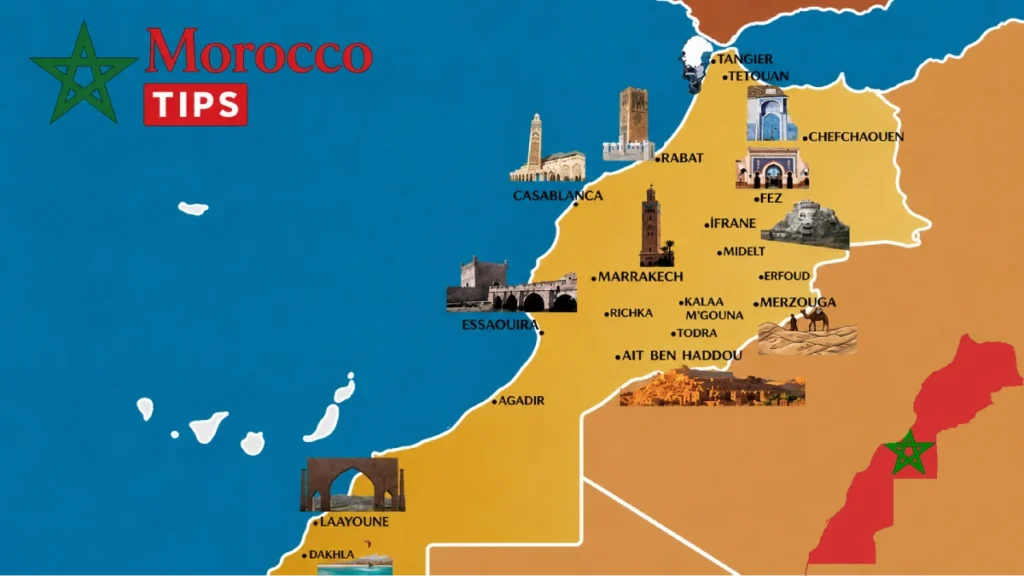
Before planning your route, take a look at where Morocco’s most famous destinations are located. You’ll quickly see why driving times are often longer than travelers expect.
Kamal’s Local Tip
Many first-time visitors think Morocco is a small country because it looks compact on the map. In reality, driving from Marrakech to Merzouga takes around 9–10 hours with sightseeing stops, while Tangier and the Sahara are nearly opposite ends of the country. Choosing the right itinerary is more important than trying to see everything in one trip.
Morocco Destinations at a Glance
Use this quick table to understand how each major destination fits into a Morocco itinerary before you start planning the full route.
| Destination | Best For | Suggested Stay | Kamal’s Honest Advice |
|---|---|---|---|
| Marrakech | First-time visitors, souks, food, palaces, day trips | 3–4 nights | Best first stop for many travelers, but do not rush it. The medina needs time. |
| Fes | History, culture, crafts, traditional medina life | 2–3 nights | Deeper and more traditional than Marrakech. A guide helps a lot here. |
| Chefchaouen | Photography, calm streets, mountain atmosphere | 1–2 nights | Beautiful and peaceful, but far from Marrakech. Best with a northern route. |
| Essaouira | Coast, seafood, relaxed travel, families, couples | 2 nights | Better as an overnight stay than a rushed day trip from Marrakech. |
| Merzouga | Sahara dunes, camel trek, desert camp, stargazing | 1 desert night, 3–4 days total | Worth it, but only if you give the road enough time. |
| Ouarzazate | Kasbahs, Ait Ben Haddou, film history, desert route | 1 night | A smart stop between Marrakech and the Sahara, not just a quick photo stop. |
| Rabat | Calm capital, history, coast, easy train stop | 1 night | Good for travelers who want a softer, cleaner, less intense Moroccan city. |
| Casablanca | Hassan II Mosque, flights, first or last night | 1 night | Best as a practical arrival or departure city, not the main focus of a first trip. |
| Tangier | Northern Morocco, Spain connection, coast, culture | 1–2 nights | Very good if your route includes Chefchaouen, Tetouan, Asilah, or Fes. |
| Agafay Desert | Sunset dinner, short desert-style escape from Marrakech | Half day or 1 night | Beautiful for limited time, but it is not the real Sahara. |
This table gives you a quick idea of how each destination fits into a Morocco itinerary. Some places are easy to combine, while others need more time because of long driving distances. In my experience as a local guide, the best Morocco trip is not the one with the most stops. It is the one with the right pace.
Driving Times Between Morocco’s Most Popular Destinations
| Route | Approximate Drive Time |
|---|---|
| Marrakech → Essaouira | 3 hours |
| Marrakech → Ouarzazate | 3.5–4 hours |
| Marrakech → Merzouga | 9–10 hours (with sightseeing stops) |
| Marrakech → Fes | 6.5–7 hours |
| Casablanca → Marrakech | 2.5–3 hours |
| Casablanca → Fes | 3–4 hours |
| Rabat → Chefchaouen | 4–4.5 hours |
| Fes → Chefchaouen | 3.5–4 hours |
| Tangier → Chefchaouen | 2–2.5 hours |
| Ouarzazate → Merzouga | 5–6 hours |
These are approximate driving times without long sightseeing stops or heavy traffic. If you’re planning a road trip, remember that many of Morocco’s most beautiful experiences happen between destinations. The drive through the High Atlas Mountains, Aït Ben Haddou, Dades Valley, Todra Gorge, and the Ziz Valley is part of the journey, not just the route to your next stop.
My Honest Recommendations as a Local Guide
After guiding travelers across Morocco since 2006, I’ve learned that the best trips are not always the busiest ones. If a friend asked me how to spend their first time in Morocco, this is what I’d recommend:
- Spend at least 3 nights in Marrakech. The city deserves more than a quick stop.
- Choose a 3- or 4-day Sahara Desert tour instead of trying to do it in two days.
- If you only have 7 days, don’t try to include Chefchaouen, Tangier, and the Sahara in the same trip.
- Stay 2 nights in Essaouira instead of rushing through on a day trip if your schedule allows.
- Visit Fes if you’re interested in Morocco’s history, traditional crafts, and authentic culture.
- Leave room for unexpected moments. Some of the best memories come from sharing mint tea with locals, watching the sunset from a rooftop, or stopping at a place you didn’t plan to visit.
There is no perfect Morocco itinerary for everyone. The best trip is the one that matches your interests, your pace, and the amount of time you have.
Why Visit Morocco?
Morocco is special because every part of the country feels different. You can start your trip in Marrakech, cross the High Atlas Mountains, sleep near the Sahara Desert, then finish by the Atlantic Ocean in Essaouira or Casablanca.
This is why many travelers are surprised by Morocco. It is not only desert and souks. It is mountains, old cities, beaches, villages, food, history, and real daily life. A good Morocco travel guide should not only tell you where to go; it should help you understand how many days you really need.
When I guide travelers in Morocco, I see this reaction often. They arrive with one idea in their mind, but after a few days they understand the country is much deeper.
In Fes, they feel the history. In Marrakech, they feel the energy. In the Atlas Mountains, they see village life. In the Sahara, they understand silence. On the coast, they see another side of Morocco completely.
What I love about Morocco is that traditions are still part of daily life. The souks are not only for tourists. Local people shop there too.
Bread is still baked in neighborhood ovens. Tea is still offered when people welcome guests. Craftsmen still work with leather, wood, metal, and carpets by hand. This is what makes Morocco feel real.
Morocco is also easier to travel than many first-time visitors expect. Trains connect cities like Casablanca, Rabat, Tangier, and Fes. Roads between main destinations are much better than before.
Marrakech, Fes, Essaouira, Chefchaouen, and the Sahara region are used to welcoming visitors. But good planning is still important because distances can be long.
Morocco can also offer very good value. You can travel on a budget, stay in comfortable riads, or enjoy luxury hotels and private tours.
The important thing is to know where your money goes. Riads, transport, food, guides, day trips, tips, and desert travel all change the final budget.
For most visitors, Morocco is safe and welcoming. Like anywhere, you need awareness in busy places, especially medinas and tourist areas.
But many travelers remember Moroccan hospitality more than anything else. A glass of mint tea, a helpful stranger, or a family-run guesthouse can become one of the best memories of the trip.
Morocco is best for travelers who enjoy culture, food, history, road trips, photography, desert landscapes, mountain villages, and places that feel alive.
It is not always perfectly quiet or predictable, but that is part of why people remember it. If you plan it well, Morocco can give you a trip full of variety, color, and real human moments.
Which Part of Morocco Is Right for You?
One of the best things about Morocco is that every region offers a different experience. Before choosing your itinerary, think about the kind of trip you want.
| If you’re looking for… | I recommend… |
|---|---|
| Your first trip to Morocco | Marrakech, Fes, and the Sahara Desert |
| History and culture | Fes, Meknes, Rabat, and Volubilis |
| Beaches and relaxation | Essaouira, Agadir, and Asilah |
| Photography | Chefchaouen, Aït Ben Haddou, and the Sahara Desert |
| Mountains and hiking | High Atlas Mountains, Imlil, and Aït Bouguemez |
| Luxury travel | Marrakech, the Agafay Desert, and luxury desert camps |
| Family travel | Marrakech, Essaouira, and the Atlas Mountains |
| Road trips | Marrakech, Ouarzazate, Dades Valley, Todra Gorge, and Merzouga |
| Food lovers | Marrakech, Fes, and Essaouira |
| Adventure | Merzouga, Erg Chigaga, Todra Gorge, and the High Atlas Mountains |
There is no single perfect Morocco itinerary. The best trip depends on your interests, how much time you have, and how comfortable you are with long travel days. That’s why I always recommend choosing experiences rather than trying to visit every famous destination.
Top Places to Visit in Morocco
One of the questions I hear most from travelers is, “Where should I go in Morocco?”
The answer is never the same because no two trips are alike.
Some people dream about wandering through the colorful souks of Marrakech. Others want to spend a night beneath the stars in the Sahara Desert, hike in the High Atlas Mountains, relax by the Atlantic Ocean, or get lost in the blue streets of Chefchaouen. Every region has its own character, and that’s what makes planning a trip to Morocco so exciting.
As a local guide, I always tell travelers not to judge Morocco by one city. Marrakech, Fes, Essaouira, Chefchaouen, the Sahara, and Tangier all feel completely different. If you try to visit everything in one week, you’ll spend more time on the road than enjoying the country. Choosing the right destinations is much more important than trying to see them all.
Think about the kind of trip you want before you build your itinerary. If you love history, you’ll probably enjoy Fes and Meknes. If you’re dreaming about dramatic landscapes, the Sahara Desert and the High Atlas Mountains should be high on your list. Food lovers usually fall in love with Marrakech, while photographers often tell me they could spend days in Chefchaouen or among the kasbahs of southern Morocco.
The Atlas Mountains include several very different regions rather than one destination. My complete Atlas Mountains Morocco guide compares the High Atlas, Middle Atlas and Anti-Atlas, including the best valleys, transport options, trip lengths and overnight stays.
For a deeper breakdown of the country’s highlights, read my guide to the Best Places to Visit in Morocco.
If mountain scenery is one of the reasons you’re visiting Morocco, don’t miss my guide to the 10 Most Beautiful Mountain Towns in Morocco, where I compare places like Imlil, Aït Bouguemez, Tafraoute, Chefchaouen, Ifrane, and my hometown of Tinghir from the perspective of someone who has guided travelers through these regions for many years.
Below are the destinations I recommend most often when helping visitors plan their first trip to Morocco. Each offers something different, and together they show why Morocco is one of the most rewarding countries to explore.
Marrakech: The Best First Stop for Many Morocco Trips
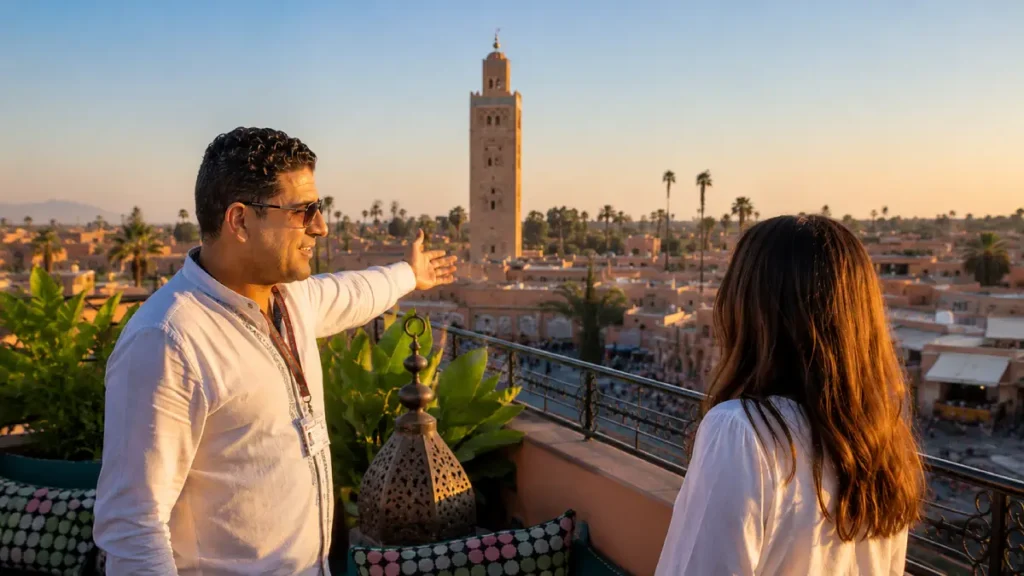
For many travelers, Morocco begins in Marrakech. It’s the city where first impressions are made. The call to prayer echoes across the rooftops, the smell of spices fills the air, and Jemaa el-Fnaa slowly comes to life as the sun begins to set. It can feel busy and overwhelming at first, but that’s completely normal. Give Marrakech a day or two, and you’ll start to understand why so many people fall in love with it.
As a guide based in Marrakech, I often tell first-time visitors not to rush. Some people arrive thinking they’ll see the city in one day before moving on. By the end of their stay, many wish they had booked an extra night. There is always another quiet riad to discover, another rooftop café for mint tea, another hidden alley inside the medina, or another local restaurant serving food you’ve never tasted before.
The old medina is the heart of Marrakech. Here you’ll find colorful souks, historic palaces, peaceful gardens, traditional hammams, artisan workshops, and narrow streets that have changed very little over the centuries. Outside the old city, Marrakech becomes more modern, with stylish restaurants, luxury hotels, wide avenues, and beautiful gardens.
Marrakech is also the best base for exploring central Morocco. Some of my favorite day trips include the High Atlas Mountains, the Agafay Desert, Ourika Valley, Ouzoud Waterfalls, Essaouira, and Ait Ben Haddou. Each offers a completely different experience, which is one reason many travelers choose to spend several nights here instead of treating Marrakech as a quick stop.
I usually recommend Marrakech to first-time visitors, couples, food lovers, photographers, and anyone who wants to experience Morocco’s history without giving up modern comforts. If your trip is only a week, this is often the city I suggest building your itinerary around.
Continue planning your trip:
Marrakech Travel Guide
Best Day Trips from Marrakech
7 Days in Marrakech Itinerary
Ouarzazate: Gateway to Kasbahs and Southern Morocco
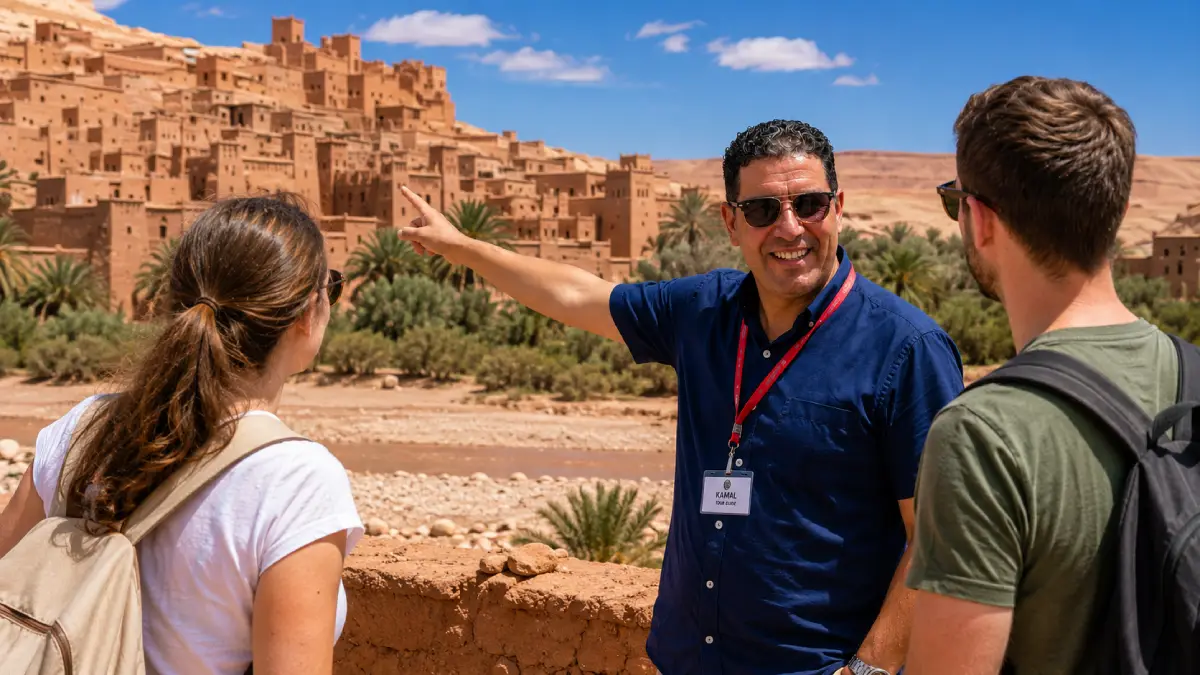
Ouarzazate is where many travelers first feel Morocco changing. After the busy streets of Marrakech and the curves of the High Atlas Mountains, the land opens wide, the colors become softer, and the road begins to feel like southern Morocco. It is one of the best stops between Marrakech and the Sahara Desert, especially if you want the journey to feel like part of the trip, not just a long drive.
Many travelers pass through Ouarzazate too quickly on the way to Merzouga, but I don’t recommend treating it like only a transfer point. Around Ouarzazate, you find Ait Ben Haddou, Taourirt Kasbah, Atlas Studios, Fint Oasis, Skoura, and Kasbah Amridil. This is kasbah country, with mud-brick villages, old caravan routes, palm groves, and desert roads that tell the story of southern Morocco.
As a Moroccan guide, I often tell travelers to spend at least one night in Ouarzazate or nearby if the itinerary allows it. It makes the journey from Marrakech to the desert much easier, and it gives you time to enjoy the region properly instead of stopping only for photos. This is especially helpful for families, couples, and anyone who does not want to feel rushed.
Ouarzazate is best for travelers who love history, photography, film locations, road trips, quiet landscapes, and the feeling of entering the south of Morocco.
Continue planning your trip:
Ouarzazate Travel Guide
Where to Stay in Ouarzazate
Best Things to Do in Ouarzazate
Ait Ben Haddou Travel Guide
Chefchaouen: The Blue Mountain Town

Chefchaouen feels very different from Marrakech, Fes, and the big imperial cities. Hidden in the Rif Mountains of northern Morocco, it moves at a slower pace. The streets are quieter, the air feels cooler, and the blue-painted alleys give the town a peaceful feeling that many travelers remember long after they leave.
Most people come to Chefchaouen for the photos, and yes, the blue streets are beautiful. But for me, the real reason to visit is the calm atmosphere. Chefchaouen is not a city of big monuments or long sightseeing lists. It is a place to slow down, walk without rushing, sit on a rooftop, watch the mountains, and enjoy a gentler side of Morocco.
I usually recommend Chefchaouen for couples, photographers, relaxed travelers, and anyone building a northern Morocco route with Tangier, Tetouan, Fes, or the Rif Mountains. It also works well after busy cities because it gives travelers time to breathe.
Most visitors stay one or two nights. One night is enough if your itinerary is short, but two nights is better if you want to enjoy the town slowly instead of arriving, taking photos, and leaving the next morning.
Continue planning your trip:
Chefchaouen Travel Guide
Things to Do in Chefchaouen
Where to Stay in Chefchaouen
Fes: Morocco’s Cultural and Spiritual Heart
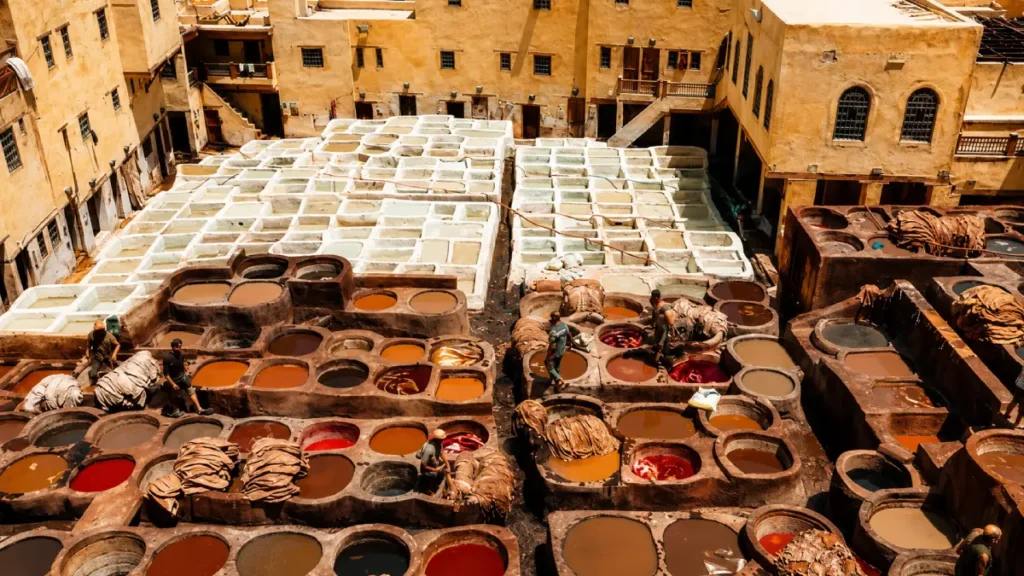
Fes is one of Morocco’s oldest and most important cities. If Marrakech is full of energy and color, Fes feels deeper, older, and more traditional. It is a city for travelers who want to understand Moroccan history, religion, architecture, crafts, and daily life inside one of the most fascinating medinas in the world.
The medina of Fes is not polished for tourists. It is alive. People still shop in the old streets, artisans still work in small workshops, and the sound of donkeys, tools, voices, and calls to prayer fills the narrow alleys. This is one of the reasons many travelers find Fes so powerful.
Fes can feel confusing at first, but once you enter with patience, the city starts to reveal itself. As a guide, I usually recommend Fes to travelers who love culture more than comfort. The city rewards curiosity.
You can visit ancient madrasas, traditional tanneries, artisan workshops, historic riads, mosques from the outside, old fountains, and streets where trade has continued for centuries. Fes is not always easy on the first day, especially if it is your first medina in Morocco. But for travelers interested in the historical and spiritual side of the country, it is one of the most rewarding cities to visit.
Most travelers should stay two or three nights. Two nights gives you time for the medina and main monuments. Three nights is better if you want a slower pace, a food experience, or a day trip to Meknes and Volubilis.
Continue planning your trip:
Fes Travel Guide
Things to Do in Fes
Where to Stay in Fes
Rabat – Morocco’s Elegant Capital
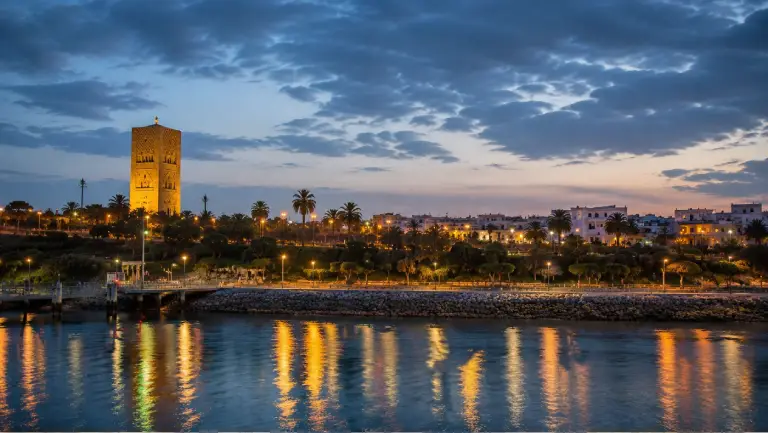
Rabat is the capital of Morocco, but it does not feel as intense as Marrakech or Fes. This is one reason I like it for travelers who want a softer side of the country.
Rabat is clean, organized, coastal, and calm. It has history, ocean views, wide streets, gardens, and a medina that feels much easier to explore than the big medinas of Marrakech and Fes.
Many travelers skip Rabat because they think the capital will be boring. I do not agree. Rabat is not the most dramatic city in Morocco, but it is one of the easiest cities to enjoy.
The main places to visit are Hassan Tower, the Mausoleum of Mohammed V, the Kasbah of the Udayas, the Andalusian Gardens, the medina, and the oceanfront areas. The kasbah is especially beautiful, with blue-and-white streets and views over the river and Atlantic coast.
Rabat also works well for travelers arriving from Casablanca or heading north toward Tangier and Chefchaouen. It is connected by train, which makes it practical and comfortable.
For first-time visitors, Rabat is not usually the main reason to come to Morocco. But it is a very good stop if you want to break the journey, see the capital, and experience a more relaxed Moroccan city.
I recommend 1 night in Rabat for most travelers. If you enjoy slower cities, museums, ocean walks, and a calmer pace, 2 nights can be very pleasant.
Continue planning your trip:
Rabat Travel Guide
Things to Do in Rabat
Where to Stay in Rabat
Casablanca: Morocco’s Business City by the Atlantic
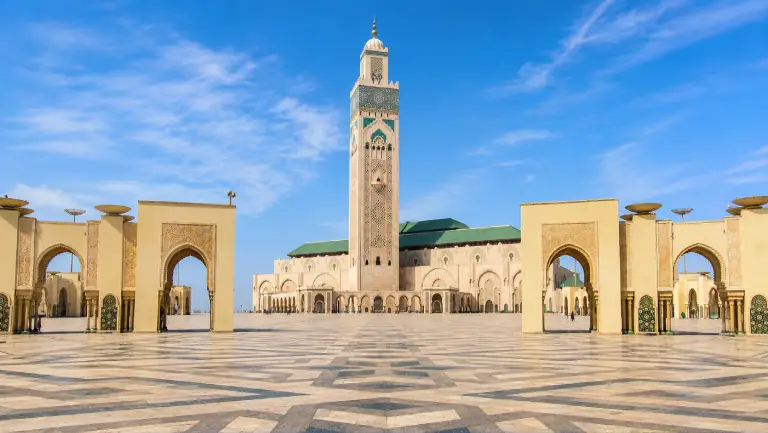
Casablanca is Morocco’s biggest city, but it is not the city most travelers imagine when they think of Morocco. It is modern, busy, commercial, and spread out.
You will see traffic, offices, apartment blocks, restaurants, shopping areas, and Atlantic coastline. Casablanca does not have the same old medina atmosphere as Fes or Marrakech.
That does not mean Casablanca is not worth visiting. It just means you need to understand what Casablanca is good for.
The main reason travelers visit Casablanca is the Hassan II Mosque. It is one of the most impressive buildings in Morocco, standing beside the Atlantic Ocean with beautiful Moroccan craftsmanship and a huge minaret.
For many visitors, this mosque alone makes Casablanca worth a stop.
Casablanca is also the main international arrival point for many flights from the United States, Canada, and Europe. Because of this, it often works best as a practical first or last night in Morocco.
I do not usually recommend spending too many nights in Casablanca on a first Morocco trip unless you have a special reason. It is not the best city for slow sightseeing, and distances inside the city can take time.
But if your flight arrives in Casablanca, do not panic. You can still enjoy it. Visit Hassan II Mosque, walk along the Corniche, have seafood or Moroccan food by the coast, and rest before starting your route to Rabat, Fes, Marrakech, or the north.
For most first-time travelers, 1 night in Casablanca is enough. If your flight times are easy, you can also visit Hassan II Mosque and continue by train the same day.
Continue planning your trip:
Casablanca Travel Guide
Where to Stay in Casablanca
Casablanca Day Trip From Marrakech
Tangier: Where Africa Feels Close to Europe
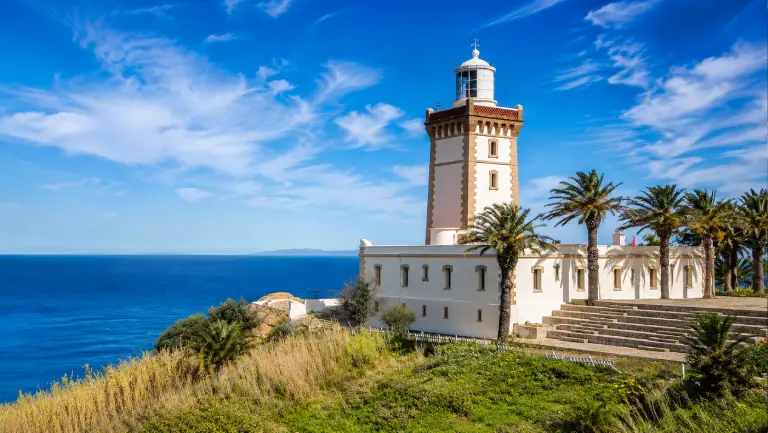
Tangier sits at the northern edge of Morocco, facing Spain across the Strait of Gibraltar. On a clear day, you can feel how close Europe is. Ferries arrive from Spain, languages mix in the streets, and the city has always had a different energy from Marrakech, Fes, or the desert.
Tangier has been shaped by travelers for a long time. Artists, writers, diplomats, traders, and people from many countries passed through here. You still feel this history in the old cafés, the sea views, the medina, and the mix of Moroccan, Spanish, French, and international influence.
Compared to Marrakech or Fes, Tangier feels more open and coastal. The air is different. The city looks toward the sea. It has a relaxed café culture, whitewashed streets, busy local markets, and neighborhoods that feel both Moroccan and Mediterranean.
I like Tangier especially for travelers who are visiting northern Morocco or coming from Spain. It works very well with Chefchaouen, Tetouan, Asilah, Rabat, and Fes.
Tangier has also changed a lot in recent years. The city feels cleaner, more organized, and easier to explore than many visitors expect. The marina, corniche, train station area, and main roads are much more modern now, but the old medina still gives you the historic side of the city.
The best things to do in Tangier include walking through the medina, visiting the Kasbah, stopping at old cafés, seeing the Atlantic and Mediterranean viewpoints, and taking time near Cape Spartel and the Caves of Hercules.
Tangier is not the city I recommend for a first Morocco trip if you only have a few days. Marrakech, Fes, or the desert usually give a stronger first impression of Morocco. But if your route includes northern Morocco, Tangier is a very good stop.
I recommend 1 or 2 nights in Tangier. One night works if you are passing through. Two nights is better if you want to enjoy the city slowly, visit the coast, and connect it with Chefchaouen or Asilah.
Continue planning your trip:
Tangier Travel Guide
Northern Morocco Travel Guide
Things to Do in Tangier
Where to Stay in Tangier
Essaouira: Morocco’s Relaxed Atlantic Coast
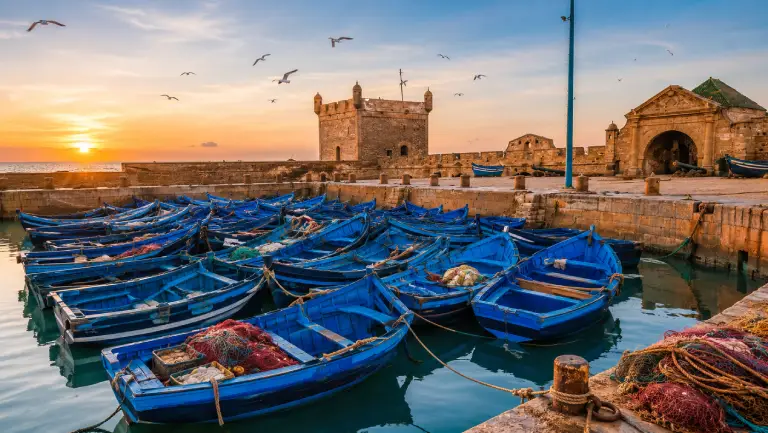
Essaouira is one of the easiest cities to enjoy in Morocco. After the noise and energy of Marrakech, many travelers feel immediate relief when they arrive here. The air is cooler, the streets are easier, and the Atlantic Ocean changes the whole mood.
Essaouira is smaller, calmer, and very walkable. You do not need to rush. You can walk through the medina, visit the fishing port, eat grilled seafood, sit in a café, watch the waves, and enjoy the city without feeling overwhelmed.
The colors are different too. White walls, blue doors, old stone ramparts, fishing boats, sea birds, and Atlantic light give Essaouira a completely different feeling from inland Morocco.
I often recommend Essaouira to travelers who want a break inside a bigger Morocco itinerary. It works very well after Marrakech, after a desert tour, or near the end of a trip when you want to slow down before flying home.
Essaouira is especially good for couples, families, solo travelers, surfers, seafood lovers, and people who enjoy a slower travel pace. It is also popular with digital nomads because it feels relaxed but still has cafés, restaurants, riads, and enough comfort for longer stays.
The city is not about big monuments. Essaouira is about atmosphere. The best way to enjoy it is to walk slowly, eat well, spend time near the ocean, and let the city breathe.
For most travelers, I recommend 2 nights in Essaouira. One night feels too short because the journey from Marrakech takes time. Three nights is better if you want beach time, surfing, hammam, seafood, and a slower rhythm.
Essaouira also works well as a day trip from Marrakech, but only if your schedule is tight. In my opinion, it is much better as a 2-night coastal break.
Continue planning your trip:
Essaouira Travel Guide
Things to Do in Essaouira
Where to Stay in Essaouira
Marrakech to Essaouira Day Trip
If you prefer a larger resort base with a long promenade and easy beach-holiday infrastructure, see my Agadir travel guide.
Merzouga: Gateway to the Sahara Desert
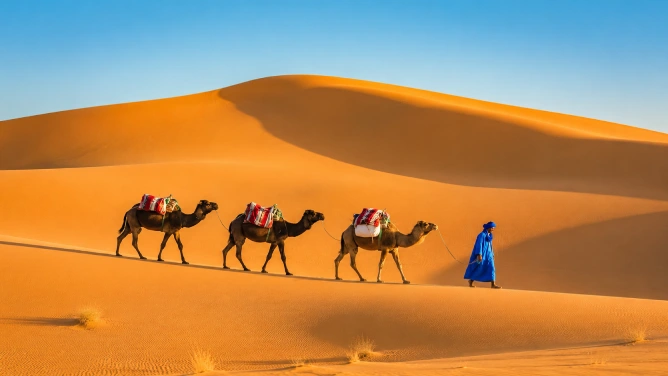
For many travelers, the Sahara Desert becomes the emotional highlight of the whole Morocco trip. Merzouga is the main gateway to Erg Chebbi, the famous golden dunes most people imagine when they think about the Moroccan Sahara.
This is where travelers come for camel trekking, luxury desert camps, sunset dunes, stargazing, traditional music around the fire, and long desert road trips through southern Morocco.
But I always tell travelers one important thing: the Sahara is not close to Marrakech or Fes. To enjoy the desert properly, you need time.
A rushed one-night desert trip from Marrakech is possible, but it is not the best way to experience the Sahara. The driving is long, and if you hurry too much, you miss the beauty of the journey.
A proper Sahara experience usually needs at least 2 or 3 days from Marrakech or Fes. If you have more time, even better. The road itself is part of the adventure.
The desert journey is not only about sand dunes. Before you reach Merzouga, you pass mountain roads, kasbahs, palm valleys, old villages, dramatic gorges, and landscapes that change many times in one day. For me, this is one of the most beautiful parts of Morocco.
From Marrakech, the classic route usually passes the High Atlas Mountains, Ait Ben Haddou, Ouarzazate, the Valley of Roses, Dades Valley, Todra Gorge, Erfoud, Rissani, and finally Merzouga.
From Fes, the road passes through the Middle Atlas, cedar forests, Ziz Valley, Erfoud, and then the dunes.
Merzouga is best for travelers who want the real big-dune Sahara experience. The dunes are high, golden, and impressive, especially at sunset and sunrise.
I recommend at least 1 night in the desert camp, but the full journey needs more than one night overall. For most travelers, a 3-day desert tour from Marrakech is the minimum. A 4-day route is much better if you want to travel with less pressure.
The Sahara is not the easiest part of Morocco to reach, but when planned well, it can become the memory travelers talk about for years.
Continue planning your trip:
Merzouga Travel Guide
Best Desert Camps in Merzouga
3 Days Desert Tour from Marrakech
2 Days Desert Tour from Marrakech
Morocco Itineraries: How Many Days Do You Really Need?
A good Morocco travel guide should not only tell you where to go. It should help you understand how many days you really need.
One of the biggest mistakes I see travelers make in Morocco is trying to see too much too quickly. Morocco may look easy on a map, but travel here takes time. Mountain roads are slow, desert distances are long, and medina visits need patience.
Some of the best places are not connected by fast highways. When an itinerary is too rushed, the trip can become tiring instead of beautiful.
As a local guide, I usually tell travelers this: Morocco is better when you give it space.
The right itinerary depends on where you arrive, where you fly out, whether you want the Sahara Desert, how comfortable you are with long drives, and whether you prefer culture, relaxation, adventure, food, photography, or a mix of everything. If you only have five days, my 5-day Morocco itinerary compares three realistic routes without trying to fit the whole country into one trip.
Below are the Morocco routes I most often recommend for first-time visitors.
7 Days in Morocco: Best for a First Taste
Seven days in Morocco can work very well if you choose carefully. This is enough time to experience some of Morocco’s highlights, but it is not enough time to see the whole country properly.
With 7 days, most travelers should focus on Marrakech, the Atlas Mountains, the Sahara Desert, and either Fes or Casablanca depending on flights. This gives you a strong first experience of Morocco: old medinas, mountain landscapes, kasbahs, desert dunes, Moroccan food, and local culture.
But with only one week, you need to be honest with yourself. Trying to include Marrakech, Fes, Chefchaouen, Tangier, Casablanca, Essaouira, and the Sahara in 7 days is too much for most travelers.
You will spend too much time moving and not enough time enjoying. For first-time visitors, I recommend choosing quality over quantity.
It is better to experience fewer places properly than to collect many names and feel tired every day. A good 7-day Morocco itinerary can feel rich and complete if it is planned with the right pace.
Continue planning your trip: 7 Days in Morocco Itinerary
10 Days in Morocco: The Best Balance
For many travelers, 10 days is the best amount of time for a Morocco trip. It gives you enough time to combine imperial cities, the Sahara Desert, mountain roads, old medinas, and maybe northern Morocco without feeling too rushed.
A classic 10-day route often includes Marrakech, the High Atlas Mountains, Ait Ben Haddou, Ouarzazate, Dades Valley or Todra Gorge, Merzouga Desert, Fes, Chefchaouen, and either Tangier or Casablanca depending on your flights.
This is one of the best routes for first-time visitors because it shows you many sides of Morocco.
You see Marrakech with its souks and energy. You cross the Atlas Mountains. You experience the desert. You visit Fes, which feels older and more traditional. You can also add Chefchaouen for the blue streets and northern mountain atmosphere.
Ten days also gives you a better rhythm. You are still moving, but not every day feels like a race.
If you want both the Sahara Desert and northern Morocco, 10 days is usually the minimum I recommend. It gives the trip balance between movement and comfort.
Continue planning your trip: 10 Days in Morocco Itinerary
14 Days in Morocco: The Full Morocco Experience
With 14 days, Morocco becomes a much deeper trip. You can travel at a slower pace, spend more time inside each destination, and include places that shorter itineraries often skip.
A good 2-week Morocco itinerary may include Marrakech, Essaouira, the High Atlas Mountains, Ait Ben Haddou, Ouarzazate, the Sahara Desert, Fes, Chefchaouen, Tangier, Rabat, and Casablanca.
This type of trip works especially well for travelers who enjoy photography, food, culture, road trips, history, coastal towns, and changing landscapes.
Fourteen days also reduces travel fatigue. Instead of constantly packing, driving, and arriving late, you have time to settle into the rhythm of each place.
You can spend more time in Marrakech without rushing the souks. You can enjoy Essaouira instead of only visiting for a few hours. You can cross the desert route more comfortably. You can stay longer in Fes and still have time for the north.
For travelers coming from the United States, Canada, Australia, or New Zealand, 14 days is often worth it because the flight is long. If you are already coming far, giving yourself two weeks makes the trip feel more complete.
Continue planning your trip: 14 Days in Morocco Itinerary
My Honest Advice as a Local Guide
Most travelers enjoy Morocco more when they slow down. Trying to see everything usually creates long driving days, rushed medina visits, and tired travelers by the middle of the trip. Morocco is not a checklist destination.
The best moments often happen slowly: drinking tea on a riad rooftop, watching sunset in the Sahara, walking through a quiet street in the medina, sharing food with locals, or stopping unexpectedly during a mountain drive. Leave space for those moments. That is usually what travelers remember most after Morocco.
Practical Things to Know Before Visiting Morocco
Once you know which parts of Morocco interest you, there are a few practical things worth understanding before you arrive. Entry requirements, transportation, money, safety, packing and local customs can all affect how smoothly your trip goes.
I cover the essentials below and link to my detailed guides when a subject needs more explanation.
If you are ready to organize the entire journey from choosing your dates and trip length to building the route, selecting airports, arranging transport and booking accommodation use my Plan Your Trip to Morocco guide.
Is Morocco Safe for Travelers?
I want to keep the safety advice realistic. Morocco is generally a safe country for travelers, including couples, families, solo travelers, and women traveling alone.
But like any destination, it is important to understand what kind of problems visitors may actually face.
Most issues in Morocco are not serious crime. They are usually small travel frustrations: pushy sellers, fake guides, taxi confusion, tourist prices, or getting lost in large medinas.
These situations can feel stressful at first, especially in busy cities like Marrakech or Fes, but they are much easier to manage once you understand how things work locally.
The busiest medinas feel intense because they are active, social, and full of movement. That does not mean they are dangerous.
Walk with confidence, say no politely, keep your phone secure in crowded areas, and avoid following anyone who insists on “helping” you when you did not ask.
In Morocco, calm confidence helps a lot. You do not need to be rude. A simple “No thank you” and keep walking is usually enough.
For the full breakdown, read Safety in Morocco, where I explain common scams, solo travel advice, women traveler tips, medina safety, taxis, and local recommendations from real guiding experience.
Continue planning your trip:
Travel Scams
Is Morocco Safe for Solo Women?
Is Morocco Safe for Tourists?
Morocco Visa Requirements
Many travelers can visit Morocco without a visa for short tourism stays, including visitors from the United States, Canada, the United Kingdom, many European countries, Australia, and New Zealand.
For many of these travelers, the usual tourist stay is up to 90 days.
But visa rules can change, and entry requirements depend on your passport. Always check official information before booking flights, especially if you are staying longer, traveling with a less common passport, or entering Morocco for work, study, or business.
You should also make sure your passport is valid for your trip and has enough blank space for entry stamps.
For full details, read Morocco Visa Guide, where I explain entry requirements, passport rules, visa-free stays, and what to check before you travel.
Transportation in Morocco
Transportation is one of the most important parts of planning a smooth Morocco itinerary. Morocco has good train connections between major cities such as Marrakech, Casablanca, Rabat, Tangier, and Fes. For these routes, trains are often comfortable and easy to use. For smaller towns and regional journeys, CTM and Supratours buses are useful options. They are usually better than random local buses for travellers who want a more organised experience. Inside cities, taxis are common. In some places, ride apps such as inDrive can also be useful, but availability and local rules vary by city. For short journeys, agree on the fare before you start when the meter is not used. For desert routes, Atlas Mountain journeys, coastal road trips, and travellers who want more flexibility, a rental car or private driver can make the journey much easier. This is especially useful when travelling with family, carrying luggage, visiting several places in one day, or crossing long rural routes. For prices, insurance, deposits, documents, and vehicle choice, read my Rent a Car in Morocco Guide. You can also compare reliable car rental companies in Morocco before booking. For speed limits, checkpoints, parking, mountain roads, and practical safety advice, continue with my Driving in Morocco Guide. If you are landing in Marrakech and starting a self-drive route, see my Marrakech Airport rental car advice before collecting the vehicle.
The most important thing to understand is that travel times in Morocco are often longer than they appear on a map. Mountain roads are slow, desert routes are long, and many medina hotels are not directly accessible by car. A journey that looks simple online can take most of the day in real life.
For complete details, read my Morocco Transportation Guide, where I explain trains, buses, taxis, private drivers, domestic flights, airport transfers, and realistic travel times.
If your itinerary takes you north from Casablanca, use my Casablanca to Tangier guide to compare Al Boraq, buses and road transport, with practical ticket, station and airport-connection advice.
Morocco Travel Costs, Cash, and Tipping
Morocco can work for many different budgets. Some travelers spend very little by using local cafés, trains, buses, and simple riads.
Others spend much more on boutique hotels, private drivers, rooftop restaurants, desert camps, hammams, shopping, and guided experiences.
The real cost of Morocco depends on your season, accommodation style, transportation choices, private tours, shopping plans, and how much comfort you want.
Local food can still be affordable. Trains and buses are usually reasonable. Many riads offer good value compared with hotels in Europe or North America read my Best Hotels in Morocco.
But costs can rise quickly with luxury riads, private desert camps, last-minute bookings, long driving routes, tourist restaurants, and serious souk shopping.
Cash is also very important in Morocco. Cards work in many hotels, larger riads, modern restaurants, supermarkets, and shopping malls.
But cash is still needed for taxis, small cafés, souks, tips, porters, public toilets, rural areas, and desert routes.
ATMs are easy to find in major cities, but I still recommend carrying small notes for daily use. Large bills can be annoying when paying for small things like taxis, water, snacks, or tips.
Tipping is part of travel in Morocco, but it does not need to be complicated. It is appreciated when service is good, especially for porters, drivers, guides, riad staff, hammam staff, restaurant servers, and desert camp teams.
The amounts are usually small, but understanding local tipping habits helps avoid awkward moments.
For the full budget picture, read Morocco Travel Costs. For daily spending examples, read Morocco Travel Budget. For cards, cash, ATMs, and dirhams, read Money in Morocco. For exact local tipping advice, read Tipping in Morocco.
Continue planning your trip:
Can You Use Credit Cards in Morocco?
How Much Cash Do You Need in Morocco?
ATMs in Morocco
What to Pack for Morocco
Packing correctly makes a big difference in Morocco because the country can feel like several climates in one trip. You may have hot afternoons in Marrakech, cool evenings in the Atlas Mountains, windy days on the Atlantic coast, and cold nights in the Sahara Desert.
Comfortable walking shoes are one of the most important things to bring. In the medinas, streets are uneven, narrow, and busy. Travelers often walk more than they expect, especially in Marrakech and Fes.
For most Morocco trips, I recommend packing light layers, sunglasses, sunscreen, a small day bag, a power bank, and one warm layer for evenings. For charging phones and other electronics, check my Morocco travel adapter guide before departure.
If your itinerary includes the Atlas Mountains, Dades Valley, Todra Gorge, or Merzouga Desert in winter, pack warmer clothes than you first think you need. Desert nights can surprise many travelers.
You should also think about phone data before you arrive. A working phone makes it much easier to use maps, contact your riad, message your driver, and check travel details.
For the full seasonal checklist, read Morocco Packing List, where I explain what to wear, what to bring for desert tours, and the small items travelers often forget.
Continue planning your trip:
What to Wear in Morocco
Best eSIM for Morocco
How to Dress in Morocco
Cultural Expectations in Morocco
Morocco is welcoming, social, and rich in tradition, but daily interaction can feel different from Europe or North America.
People may greet you directly, start conversations, offer help, or invite you to look inside a shop. In busy tourist areas, some of this is friendly and natural. Some of it is also part of selling.
The key is to stay polite, calm, and confident.
You do not need to understand every detail of Moroccan culture before you arrive. But a few simple habits will make your trip much smoother.
Greet people politely. Dress respectfully in traditional areas. Ask before taking close photos of people. Stay calm when bargaining. Do not rush every interaction. Respect mosques, local homes, and family spaces.
In Morocco, small gestures matter. Saying “Salam” when entering a shop, thanking someone, or showing patience can change the feeling of an interaction.
You do not need to behave perfectly. Travelers are welcomed warmly when they show simple respect and curiosity about local culture.
For deeper advice, read Morocco Culture and Etiquette Guide, where I explain greetings, clothing, bargaining, food customs, photos, religious respect, and everyday local behavior.
Continue planning your trip:
Morocco Culture and Etiquette Guide
How to Dress in Morocco
Morocco Travel Mistakes
Sahara Desert Experiences
For many travelers, the Sahara Desert becomes the most unforgettable part of the whole Morocco trip. But the desert is not only about camel rides or sleeping in a tent.
The experience begins long before you reach the dunes. The changing landscapes, mountain roads, kasbahs, palm groves, valleys, and small villages along the way are part of what makes southern Morocco so special.
Most Sahara trips start from Marrakech or Fes and slowly move toward the desert through the Atlas Mountains, old caravan routes, and oasis towns of southern Morocco.
Before choosing your route, I recommend reading Authentic Morocco Sahara Desert Tours, where I explain Merzouga, Erg Chebbi, Erg Chigaga, Agafay, desert camps, prices, packing, and the best time to go.
The two main real Sahara regions travelers usually choose are Merzouga / Erg Chebbi and Erg Chigaga.
Agafay is also popular from Marrakech, but it is important to understand the difference. Agafay is a rocky desert near the city. It is beautiful for a short escape, but it is not the true Sahara with giant golden dunes.
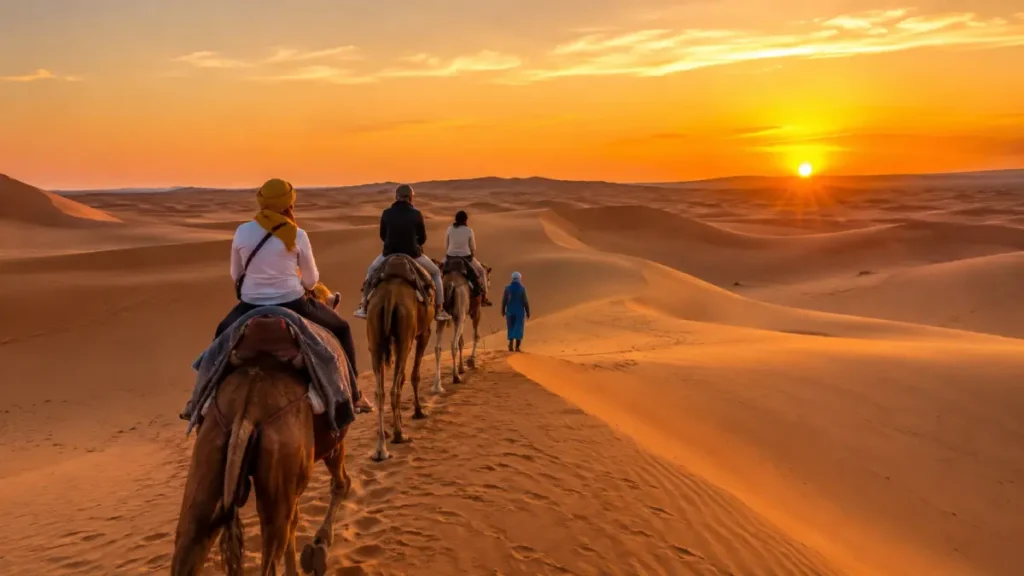
Merzouga and Erg Chebbi
Merzouga is the most famous Sahara destination in Morocco and the gateway to the golden dunes of Erg Chebbi.
This is the classic desert experience most travelers imagine: camel trekking at sunset, soft sand dunes, desert camps, stargazing, traditional music around the fire, and sunrise over the Sahara.
Merzouga works especially well for first-time visitors because the dunes are impressive and the tourism infrastructure is easier than in more remote desert areas.
You can find simple camps, comfortable camps, and luxury camps, but not all desert camps are the same. Camp location, transport quality, heating in winter, bathroom comfort, food, and how far the camp sits from the main village can completely change the experience.
Before booking, read Best Desert Camps in Merzouga so you understand what to look for and what questions to ask.
Erg Chigaga: The Wild Sahara
Erg Chigaga feels more remote, wild, and adventurous than Merzouga. This desert is usually reached through M’Hamid and requires proper 4×4 driving across rough desert tracks.
It takes more time, more planning, and more flexibility. But for the right traveler, Erg Chigaga is very special.
It feels quieter, less developed, and more connected to the nomadic side of the Sahara. The journey has a stronger expedition feeling, and the desert atmosphere feels more isolated.
Erg Chigaga is best for adventure travelers, photographers, repeat visitors to Morocco, and people who want a more remote Sahara experience.
It is not the route I usually recommend for every first-time visitor, especially if time is short. But if you want something wilder and you are comfortable with longer travel days, it can be unforgettable.
If you are still comparing both desert regions, read Erg Chebbi vs Erg Chigaga before choosing.
Agafay Desert: The Closest Desert to Marrakech
Agafay is not the true Sahara, but it has become very popular because it is close to Marrakech.
Instead of giant sand dunes, Agafay has rocky hills, dry landscapes, open views, and a desert-style atmosphere. It works well for sunset dinners, luxury camps, short camel rides, quad biking, and quick escapes from the city.
For travelers with limited time, Agafay can be a beautiful choice. If you only have one evening or one night, Agafay is much easier than traveling all the way to Merzouga.
You can leave Marrakech in the afternoon, enjoy sunset, have dinner, and return the same night or stay overnight in a camp.
But I always tell travelers to understand what they are booking. Agafay is not the Sahara Desert. It is a rocky desert near Marrakech.
If you expect high golden dunes like Merzouga, you may be disappointed. If you understand it as a scenic desert-style escape close to the city, it can be very enjoyable.
For more detail, read Agafay Desert Day Trip from Marrakech.
How Many Days Do You Need for the Sahara?
This is one of the most important things travelers misunderstand. The Sahara Desert is far from Marrakech and Fes.
A rushed desert trip can become exhausting, especially if you try to fit too much into too little time.
As a local guide, I usually recommend a minimum of 3 days from Marrakech for Merzouga. Three days is possible and popular, but it is still a lot of driving.
Four days is much better if you want a more comfortable pace, better stops, and less pressure on the road.
From Fes, Merzouga can also fit well because the route through the Middle Atlas and Ziz Valley is beautiful. Many travelers choose Marrakech to Merzouga to Fes, or Fes to Merzouga to Marrakech, instead of going back the same way.
The journey itself is part of the experience. Some of the most beautiful moments happen before you reach the dunes: crossing the Atlas Mountains, visiting Ait Ben Haddou, driving through palm valleys, stopping in small villages, seeing kasbahs, and watching the landscape change hour by hour.
Trying to do the desert too quickly is one of the biggest Morocco itinerary mistakes.
If you are planning this route, read 3 Days Desert Tour from Marrakech and 2 Days Desert Tour from Marrakech so you understand the real driving time, overnight stops, and what the journey actually feels like before booking.
My Honest Advice About the Sahara
Do not choose your Sahara experience only by the cheapest price or the most edited Instagram photos.
What matters most is the route quality, pacing, camp location, comfort level, transport quality, and how much time you actually spend enjoying the desert.
A very cheap desert tour often means rushed driving, basic accommodation, large groups, poor camp location, or too little time in the dunes.
A good desert experience does not need to be the most expensive one, but it should be planned with care.
The Sahara becomes magical when you slow down enough to feel the silence, watch the stars, and understand why southern Morocco feels so different from the rest of the country.
For many travelers, this is the part of Morocco they remember for years.
Best Time to Visit Morocco
One thing many travelers misunderstand about Morocco is the weather. Morocco does not have one climate. The country changes completely depending on where you go.
The Sahara Desert, the Atlantic coast, the Atlas Mountains, and the imperial cities can all feel different on the same day.
That is why there is no single perfect month for everyone. The best time to visit Morocco depends on your route, your travel style, your tolerance for heat, whether you want the desert, and the kind of experience you are looking for.
As a local guide, I usually tell travelers this: Morocco is enjoyable almost all year if you choose the right route for the right season.
Spring in Morocco: March to May
Spring is one of the most balanced seasons to visit Morocco. From March to May, the weather is usually comfortable, the landscapes look greener after winter rain, and the days are good for exploring cities, mountains, desert routes, and coastal towns.
Marrakech and Fes feel easier to explore than in summer. The Sahara Desert is still comfortable for most travelers. The Atlas Mountains are beautiful, especially when valleys are green and the air feels fresh.
March can still feel cool in the mornings and evenings, especially in the mountains and desert. April is often one of the easiest months for longer Morocco itineraries.
By May, the weather becomes warmer, but the coast, mountains, and desert can still work well if you plan around the strongest midday heat.
Spring is a very good season for first-time visitors who want a mix of Marrakech, Fes, the Sahara Desert, the Atlas Mountains, and maybe Essaouira or Chefchaouen.
Continue planning your trip:
Spring in Morocco
Morocco in March
Morocco in April
Morocco in May
Summer in Morocco: June to August
Summer is the season where location matters most. From June to August, coastal places like Essaouira, Agadir, Taghazout, Imsouane, Asilah, and Tangier feel much more comfortable because of the Atlantic air and sea breeze.
Inland cities like Marrakech and Fes can become very hot during the day. The Sahara Desert can feel extreme in July and August, especially during the strongest afternoon heat.
That does not mean you cannot visit Morocco in summer. It means you need a smarter route and a slower rhythm.
Plan sightseeing early in the morning or later in the afternoon. Take breaks during the hottest hours. Choose riads or hotels with air conditioning. Add coastal time if you can.
Be careful with long desert trips in the hottest months.
June is usually the easiest summer month because the heat is rising but still more manageable than July and August. July is one of the hottest months of the year inland.
August brings a stronger local holiday feeling, with Moroccan families traveling to beaches, mountain areas, and cooler destinations.
For summer, I usually recommend the coast, the north, the Atlas Mountains, relaxed evenings, and careful pacing.
Continue planning your trip:
Summer in Morocco
Morocco in June
Morocco in July
Morocco in August
Best Beaches in Morocco
Autumn in Morocco: September to November
Autumn is one of my favorite times to travel in Morocco. After the strong summer heat, the country becomes easier again.
Days stay warm, evenings become cooler, and travel conditions improve across many regions.
This season works very well for Sahara Desert trips, medina exploration, photography, mountain drives, food experiences, and longer itineraries.
September can still feel hot in some inland areas, but it becomes better as the month moves on. October is one of the best months overall because the balance between temperature, daylight, and travel comfort is excellent in many parts of Morocco.
November feels cooler and calmer, especially in the evenings.
Autumn is a strong choice if you want Marrakech, Fes, the Sahara Desert, Chefchaouen, Essaouira, and the Atlas Mountains in one trip.
For many travelers, this is one of the best seasons for a 10-day or 14-day Morocco itinerary.
Continue planning your trip:
Autumn in Morocco
Morocco in September
Morocco in October
Morocco in November
Morocco Itinerary
Winter in Morocco: December to February
Winter surprises many first-time visitors. Morocco does not become freezing everywhere.
In fact, winter can be one of the smartest seasons for travelers who prefer calmer sightseeing, comfortable daytime temperatures, and fewer crowds.
Cities like Marrakech, Rabat, Casablanca, and Fes can have pleasant sunny days, while the Atlas Mountains may receive snow. This contrast between warm city afternoons, snowy mountain views, and desert landscapes makes winter visually beautiful.
The main thing travelers underestimate is the nighttime temperature. The Sahara Desert, Atlas Mountains, Dades Valley, Todra Gorge, and traditional riads can feel cold at night, especially in December, January, and February.
Even when the day feels warm, evenings can surprise you.
Winter works especially well for cultural trips, riad stays, desert experiences, photography, city sightseeing, and travelers escaping colder winters in Europe or North America.
Just pack layers. Do not come to Morocco in winter with only summer clothes.
Continue planning your trip:
Winter in Morocco
Morocco in December
Morocco in January
Morocco in February
Morocco Packing List
Ramadan and Religious Holidays in Morocco
Traveling during Ramadan feels different from traveling during the rest of the year. Days are usually quieter. Local rhythms change.
Some cafés and restaurants may close during daylight hours, especially outside tourist areas. After sunset, the atmosphere becomes much more social, warm, and lively.
For travelers interested in culture, Ramadan can be a beautiful time to visit Morocco. You see a different side of daily life, family, food, patience, and community.
But it also requires flexibility.
Do not expect every restaurant, shop, or service to run exactly the same way as usual. Plan your meals more carefully, be patient with slower daytime energy, and respect people who are fasting.
Eid al-Fitr and Eid al-Adha also affect travel. Transportation can be busier, some businesses close, and many Moroccan families travel to be together.
The dates of Ramadan and Eid change every year, so always check your travel dates before booking.
Continue planning your trip:
Morocco During Ramadan
Eid al-Fitr in Morocco
Eid al-Adha in Morocco
My Honest Seasonal Advice as a Local Guide
Do not choose your Morocco trip only from one temperature chart.
The same month can feel completely different depending on whether you are walking through Marrakech, sleeping in the Sahara, hiking in the Atlas Mountains, or relaxing on the Atlantic coast.
The smartest Morocco trips are built around season and route together.
If you want the Sahara Desert, spring and autumn are usually the easiest seasons. If you want the coast, summer can be beautiful. If you want fewer crowds and good city sightseeing, winter can work very well.
If you want the best overall balance, April, May, October, and early November are often excellent choices.
The best time to visit Morocco is not only about weather. It is about choosing the right places for the season you are traveling.
That is what creates a smoother, more enjoyable trip.
What to Eat in Morocco
Food is one of the most memorable parts of traveling in Morocco. Meals here are not only about eating quickly. Food is part of hospitality, family life, religion, seasons, and daily culture.
In many Moroccan homes, food is shared slowly around one table, usually with bread, mint tea, and conversation. This starts early in the day too. A traditional Moroccan breakfast can include fresh bread, msemen, baghrir, harcha, olive oil, honey, cheese, amlou, olives, and mint tea.
Moroccan food also changes from region to region. What you eat in Marrakech may feel different from what you eat in Fes, Essaouira, the Atlas Mountains, or the Sahara Desert.
That is one reason Moroccan cuisine feels so rich. It is connected to local ingredients, family recipes, old traditions, and the rhythm of daily life.
If you are starting your trip in Marrakech and want to understand local food beyond restaurant menus, read my guide to the Best Food Tours in Marrakech.
Some of the dishes I recommend trying include:
Tajine — slow-cooked dishes such as chicken with preserved lemon, lamb with prunes, or kefta meatballs with eggs.
Couscous — traditionally served on Fridays and often shared with family.
Harira — a rich Moroccan soup, especially popular during Ramadan.
Pastilla — a sweet-and-savory pastry often made with chicken or seafood.
Zaalouk — a cooked eggplant and tomato salad served as a side dish.
Moroccan salads — small cooked salads served before the main meal.
Fresh seafood — especially in Essaouira, Agadir, Tangier, and other coastal towns.
Mint tea — the traditional Moroccan drink and one of the strongest symbols of hospitality.
Food quality in Morocco is usually very good in busy local restaurants, riads, family kitchens, and well-rated cafés. Street food can also be excellent when you choose places with fresh turnover and local customers.
In Morocco, busy is often a good sign when it comes to simple food.
But I also tell travelers to use common sense. Be careful with food that has been sitting too long, raw salads in places that do not look clean, ice in very basic stalls, and seafood far from the coast or outside busy restaurants.
For more safety advice, read What Not to Eat in Morocco, where I explain food risks like salads, ice, seafood, and street food. For water advice specifically, read Can You Drink Tap Water in Morocco? before your trip.
One thing I always tell travelers: some of the best meals in Morocco are the simplest ones.
A fresh tajine in a family riad, grilled fish beside the Atlantic, warm bread with olive oil, or mint tea on a rooftop can become the meals people remember most after their trip.
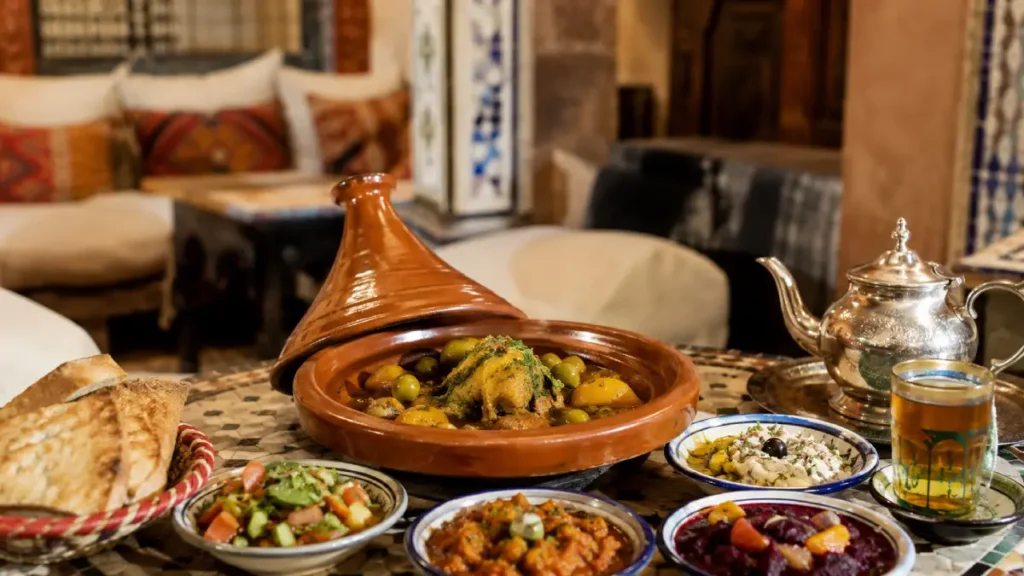
For the full food guide, read What to Eat in Morocco, where I explain traditional dishes, regional food, Moroccan breakfast, food safety tips, and what to try in Marrakech, Fes, Essaouira, the Atlas Mountains, and the Sahara.
Continue planning your trip:
Is street food safe in Morocco?
What to Eat in Morocco
What Not to Eat in Morocco
Can You Eat Salad in Morocco?
Moroccan Breakfast
What Do Moroccans Eat for Lunch
Best Restaurants in Marrakech
Morocco Festivals and Cultural Events
One of the most underrated parts of traveling in Morocco is experiencing the country during a festival or cultural celebration.
Beyond the landscapes, food, medinas, and desert routes, Morocco has a strong tradition of music, seasonal gatherings, Amazigh culture, spiritual celebrations, and local festivals connected to history, harvests, and community life.
For one of Morocco’s most important Amazigh celebrations, read my complete guide to Yennayer in Morocco.
Some events feel international and energetic. Others feel deeply local and traditional. The atmosphere changes completely depending on where you are and what time of year you visit.
As a local guide, I always tell travelers that festivals can show you a side of Morocco that regular sightseeing sometimes misses.
You may hear Gnaoua music in Essaouira, see roses celebrated in the Valley of Roses, experience sacred music inside historic Fes, or pass through a mountain gathering where Amazigh culture still feels very alive.
These are some of the most interesting festivals and cultural events travelers can experience in Morocco.
Almond Blossom Festival in Tafraoute
The Almond Blossom Festival is usually held in Tafraoute in the Anti-Atlas region. It celebrates the almond blossom season, when the landscape becomes softer and more colorful after winter.
The setting is beautiful, with pink granite mountains, Amazigh villages, local music, crafts, and seasonal celebrations.
This festival is especially interesting for travelers who enjoy photography, road trips, rural Morocco, and places that feel far from the usual tourist route.
Rose Festival in Kalaat M’Gouna
The Rose Festival in Kalaat M’Gouna usually takes place in spring during the rose harvest season.
This is one of the most famous local festivals in southern Morocco. The Valley of Roses becomes lively with music, markets, traditional clothing, rose products, and local celebrations.
If your route passes between Ouarzazate, Dades Valley, and the Sahara Desert, this festival can add a beautiful cultural layer to the journey.
Fes Festival of World Sacred Music
The Fes Festival of World Sacred Music is one of Morocco’s most respected cultural events.
It usually brings musicians and spiritual traditions from different parts of the world into historic venues across Fes. The atmosphere is very different from a normal music festival.
It feels more refined, reflective, and connected to the old spiritual identity of the city.
For travelers who love culture, history, architecture, and music, this can be a special time to visit Fes. The city already feels deep and traditional. During the festival, that feeling becomes even stronger.
Gnaoua Festival in Essaouira
The Gnaoua Festival in Essaouira is one of Morocco’s most famous music festivals.
It mixes Gnaoua music with jazz, African rhythms, world music, and international artists. The setting makes it even more special: Essaouira’s medina, Atlantic wind, old ramparts, sea air, and open public spaces all become part of the experience.
During the festival, Essaouira becomes much busier than usual. Hotels and riads can fill quickly, and the city feels more crowded and energetic.
If you love music, culture, and coastal atmosphere, it can be unforgettable. If you want Essaouira quiet and peaceful, visit outside festival dates.
Imilchil Marriage Festival
The Imilchil Marriage Festival is one of the most unique cultural gatherings in the Atlas Mountains.
It is connected to Amazigh traditions, community life, music, markets, and mountain culture. For travelers, it can be fascinating, but it is also important to visit respectfully.
This is not only a tourist show. It is connected to real local identity and tradition.
If you go, dress respectfully, ask before taking photos, and remember that you are a guest watching a cultural event that belongs first to the local community.
Ramadan and Eid in Morocco
Ramadan changes the rhythm of Morocco completely. Days become quieter. Many locals are fasting. Some cafés and restaurants close during daylight hours, especially outside tourist areas.
After sunset, the atmosphere becomes much more social and lively.
For travelers interested in culture, Ramadan can be one of the most memorable times to visit Morocco. You see family life, evening food traditions, patience, prayer, and community in a different way.
But it also requires flexibility.
Eid al-Fitr and Eid al-Adha also affect travel. Transportation can become busy, many families travel, and some shops or services may close for a few days.
If your trip falls during Ramadan or Eid, plan carefully and keep your expectations realistic.
Sahara Cultural Experiences
Not every cultural experience in Morocco happens during a formal festival.
In the Sahara and southern Morocco, music, storytelling, desert hospitality, Amazigh traditions, nomadic heritage, and campfire gatherings can become some of the most memorable parts of a trip.
In Merzouga, M’Hamid, Erg Chigaga, and the desert villages of southern Morocco, travelers often discover a slower way of life: traditional music, mint tea, simple food, open landscapes, and quiet evenings under the desert sky.
These moments may not have a ticket or a big program, but they can feel more personal than a large festival.
My Honest Advice About Festivals in Morocco
Traveling during a festival can completely change your Morocco trip.
Cities feel more alive. Local traditions become more visible. Music, food, markets, and public spaces bring people together in a way you do not always see during normal sightseeing.
But festivals can also affect accommodation, transportation, crowds, and prices.
For major events in Fes, Essaouira, Rabat, Marrakech, or popular seasonal regions, book your accommodation early and check the exact dates before building your itinerary.
Do not plan a festival trip only from an old blog post or one calendar screenshot. Dates can change, especially for religious holidays and local events.
The best festival experiences in Morocco happen when you plan ahead, stay flexible, and respect the culture behind the celebration.
Continue planning your trip:
Autumn in Morocco
Spring in Morocco
Kamal’s Top Tips for First-Time Travelers
The best Morocco trips are not always the ones with the most stops. They are the ones with the right pace, the right route, and realistic expectations.
Morocco is a country of contrast. Marrakech can feel energetic and busy. Fes can feel deep and traditional. Chefchaouen feels calm and slow. The Sahara feels wide and silent. The coast feels softer and easier.
If you try to treat all these places the same way, the trip can become tiring.
My honest advice as a local guide is simple: give yourself enough time to enjoy Morocco properly.
Stay close to the medina when you want culture. Choose a riad when you want atmosphere. Use trains between major cities when the route makes sense. Choose private transport for mountain roads, desert routes, and day trips where flexibility matters.
Start early on long travel days, especially if you are crossing the Atlas Mountains or heading toward the Sahara Desert.
Do not over-plan every hour.
Some of the best moments in Morocco happen naturally: rooftop tea at sunset, a quiet conversation with a shop owner, a mountain viewpoint you did not expect, or a simple local meal that becomes one of your favorite memories.
Morocco rewards travelers who arrive informed but stay open.
If this is your first trip, start with a realistic itinerary. Understand the basics of safety, transport, money, culture, weather, and timing. Then leave enough space for Morocco to surprise you.
Continue planning your trip:
Plan Your Trip to Morocco
Morocco Itinerary
Safety in Morocco
Morocco Transportation Guide
Money in Morocco
Best Time to Visit Morocco
Need Personal Morocco Travel Advice?
If you feel unsure about your route, timing, desert trip, or where to stay, you can message me directly on WhatsApp.
I’m Kamal, a licensed local guide based in Marrakech. I help travelers understand what makes sense before they book anything, especially when the route looks confusing or too rushed.
Whether you are planning a short Marrakech stay, a Sahara Desert tour, a family trip, or a full Morocco itinerary, I can help you choose a plan that fits your time, budget, and travel style.
The goal is simple: avoid rushed routes, avoid tourist mistakes, and enjoy Morocco with more confidence.
Use this Morocco travel guide as your starting point, then adjust the route based on your dates, flights, budget, and travel style.
FAQs: Honest Answers From Your Local Moroccan Guide
Is Morocco worth visiting?
Yes, Morocco is absolutely worth visiting if you enjoy culture, history, food, landscapes, and places that feel different from everyday life.
What makes Morocco special is the variety. In one trip, you can walk through old medinas, cross the Atlas Mountains, sleep near the Sahara dunes, eat fresh seafood on the Atlantic coast, and stay in beautiful riads.
But Morocco is not a place to rush. The best trips are planned with realistic pacing and a good understanding of distances, weather, transport, and local culture.
Continue planning your trip: Best Places to Visit in Morocco , Morocco Itinerary
How many days do you need in Morocco?
For a first trip, I recommend at least 7 days in Morocco.
Seven days gives you a good first taste, especially if you focus on Marrakech, the Atlas Mountains, the Sahara Desert, and either Fes or Casablanca depending on your flights.
Ten days is better if you want a more balanced trip with Marrakech, the desert, Fes, and Chefchaouen.
Fourteen days is ideal if you want the full Morocco experience with cities, desert, coast, mountains, and the north without rushing too much.
Continue planning your trip: 7 Days in Morocco Itinerary 10 Days in Morocco Itinerary 14 Days in Morocco Itinerary
What is the best month to visit Morocco?
For most travelers, April, May, October, and early November are some of the best months to visit Morocco.
These months usually give you a good balance of comfortable weather, good desert conditions, pleasant city sightseeing, and easier travel between regions.
But the best month depends on your route. Summer can be good for the coast. Winter can be good for cities and the Sahara if you pack warm layers. Spring and autumn are usually the easiest for first-time visitors.
Is Morocco safe for American travelers?
Yes, Morocco is generally safe for American travelers, and many visitors from the United States travel here every year without problems.
The most common issues are not usually serious danger. They are things like pushy sellers, taxi confusion, tourist prices, fake guides, or getting lost in busy medinas.
Use normal travel awareness. Keep your phone secure in crowded places, agree on taxi prices when needed, avoid following strangers who insist on helping, and dress respectfully in traditional areas.
Is Morocco safe for solo female travelers?
Many solo women travel safely in Morocco, but it is important to be prepared.
The main challenge is usually unwanted attention, especially in busy medinas or tourist areas. This can feel uncomfortable, but it can often be managed with confidence, simple clothing choices, and choosing accommodation in good locations.
I recommend staying in well-reviewed riads or hotels, arriving during daylight when possible, avoiding empty streets late at night, and using trusted transport.
Do you need a visa for Morocco?
Many travelers from the United States, Canada, the United Kingdom, Australia, New Zealand, and many European countries can visit Morocco without a visa for short tourism stays, usually up to 90 days.
But visa rules can change, and requirements depend on your passport. Always check official information before booking your flight, especially if you plan to stay longer or travel for reasons other than tourism.
Continue planning your trip: Morocco Visa Guide
Is Morocco expensive?
Morocco can be affordable, mid-range, or luxury depending on how you travel.
Local cafés, trains, buses, and simple riads can keep costs lower. Boutique riads, private drivers, desert camps, rooftop restaurants, hammams, guided tours, and shopping can raise the budget quickly.
For many travelers from the US, UK, Canada, Australia, and New Zealand, Morocco can feel good value compared with Europe, but it is not always “cheap” if you want comfort and private experiences.
Can you use credit cards in Morocco?
Yes, you can use credit cards in many hotels, larger riads, modern restaurants, supermarkets, and shopping malls.
But Morocco still uses a lot of cash in daily life. You will need Moroccan dirhams for taxis, small cafés, souks, tips, porters, public toilets, local markets, rural areas, and many desert routes.
I recommend carrying small bills every day because large notes can be difficult for small payments.
What should I wear in Morocco?
You do not need special clothing for Morocco, but respectful and comfortable clothing makes travel easier.
In cities like Marrakech, Fes, Rabat, and Chefchaouen, I recommend light, modest clothing that covers shoulders and knees in traditional areas. On the coast, clothing can be more relaxed. In the desert and mountains, layers are important because evenings can become cold.
Comfortable walking shoes are very important because medina streets are uneven and you will walk more than you expect.
Can you drink tap water in Morocco?
Some locals drink tap water in parts of Morocco, but for travelers I usually recommend bottled or filtered water, especially for a short trip.
Your stomach may not be used to local water, and it is better not to risk losing a day of travel.
Also be careful with ice in very basic places, raw salads in restaurants that do not look clean, and food that has been sitting too long.
What food should I try in Morocco?
Some of the best foods to try in Morocco include tajine, couscous, harira, pastilla, zaalouk, Moroccan salads, fresh bread, grilled meats, seafood on the coast, mint tea, msemen, baghrir, and amlou.
Food changes by region, so try to eat local dishes where they make sense. Seafood is best on the coast. Slow-cooked dishes are wonderful in riads and family restaurants. Simple breakfasts can be one of the most enjoyable parts of the trip.
Do you need a guide in Morocco?
You do not need a guide everywhere in Morocco, but a good local guide can make a big difference in certain places.
In Marrakech and Fes, a guide can help you understand the medina, avoid wasting time, find real artisan areas, and learn the history behind what you are seeing.
For the Sahara Desert, Atlas Mountains, and longer routes, a good driver or guide can also help with pacing, safety, local stops, and realistic planning.
A guide is not only about directions. The right guide helps you understand the country.
Is the Sahara Desert worth it?
Yes, the Sahara Desert is worth it if you have enough time.
The desert is one of the most memorable experiences in Morocco, but it is far from Marrakech and Fes. If you rush it too much, the journey can feel exhausting.
For Merzouga, I recommend at least 3 days from Marrakech, and 4 days is better if you want a more comfortable pace.
The desert is not only about the dunes. The road through the Atlas Mountains, kasbahs, valleys, gorges, and oasis towns is part of the experience.
Should I visit Marrakech or Fes?
If it is your first trip and you want energy, souks, gardens, rooftops, restaurants, day trips, and an easy travel base, Marrakech is usually the better first stop.
If you want deep history, traditional crafts, old religious schools, and one of the most authentic medinas in Morocco, Fes is very special.
They are different cities, and the best trip includes both if you have enough time.
Is Casablanca worth visiting?
Casablanca is worth visiting mainly for Hassan II Mosque and as a practical arrival or departure city.
It is Morocco’s biggest business city, but it does not have the same travel atmosphere as Marrakech, Fes, Chefchaouen, or Essaouira.
For most first-time visitors, 1 night in Casablanca is enough unless your flights require more time.
Should I go to Chefchaouen?
Chefchaouen is worth visiting if your itinerary includes northern Morocco or if you have enough time to travel slower.
The blue streets are beautiful, and the town feels calmer than Marrakech or Fes. But it is not close to the main Marrakech-desert route, so adding it to a short trip can create too much travel.
Chefchaouen works best in a 10-day or 14-day itinerary with Fes, Tangier, Tetouan, or Rabat.
What is the biggest mistake first-time visitors make in Morocco?
The biggest mistake is trying to see too much too quickly.
Morocco has long drives, slow mountain roads, large medinas, and many different regions. If you add too many stops, you spend more time moving than experiencing.
A better trip has fewer places, better pacing, and enough time to enjoy tea, food, views, medinas, and quiet moments.
Morocco is not a checklist. It is better when you give it time.