How to Dress in Morocco as a Tourist: What to Wear and Avoid
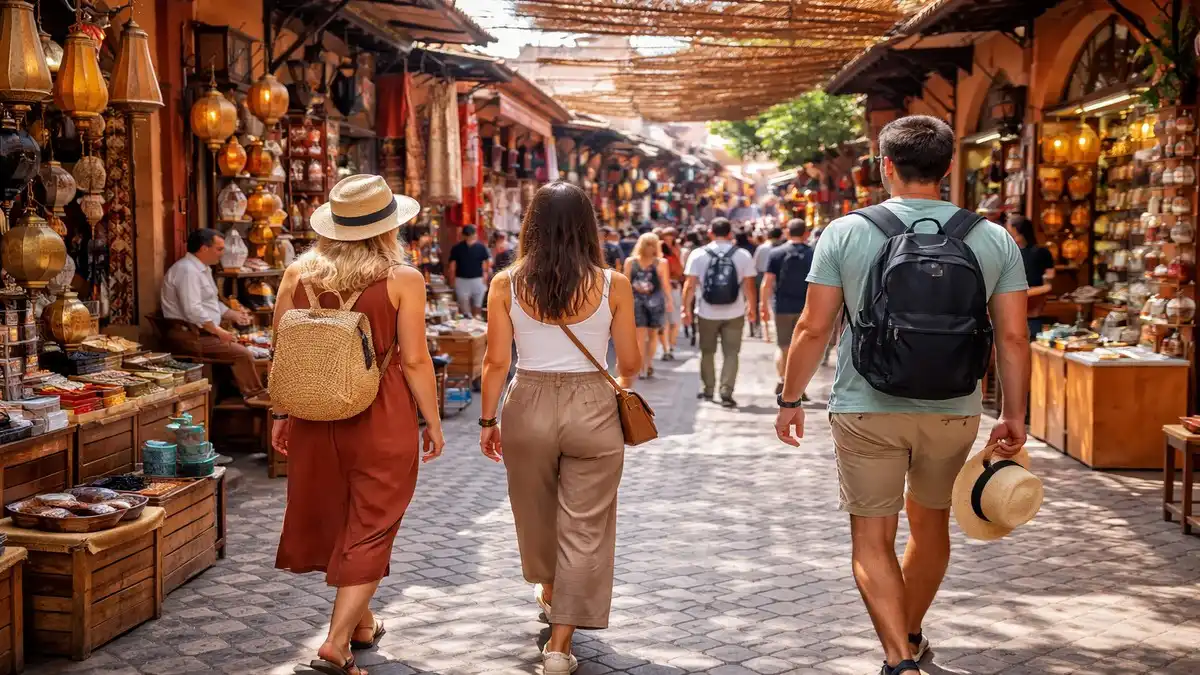
How to dress in Morocco is a question I hear often while guiding travelers. For most sightseeing days, I suggest a breathable top, loose trousers or a longer skirt, and comfortable walking shoes.
You do not need to dress like a local or buy a special wardrobe. The main thing is to adapt to the place: medinas and villages, hotel pools, mountain paths, and desert camps call for different clothes.
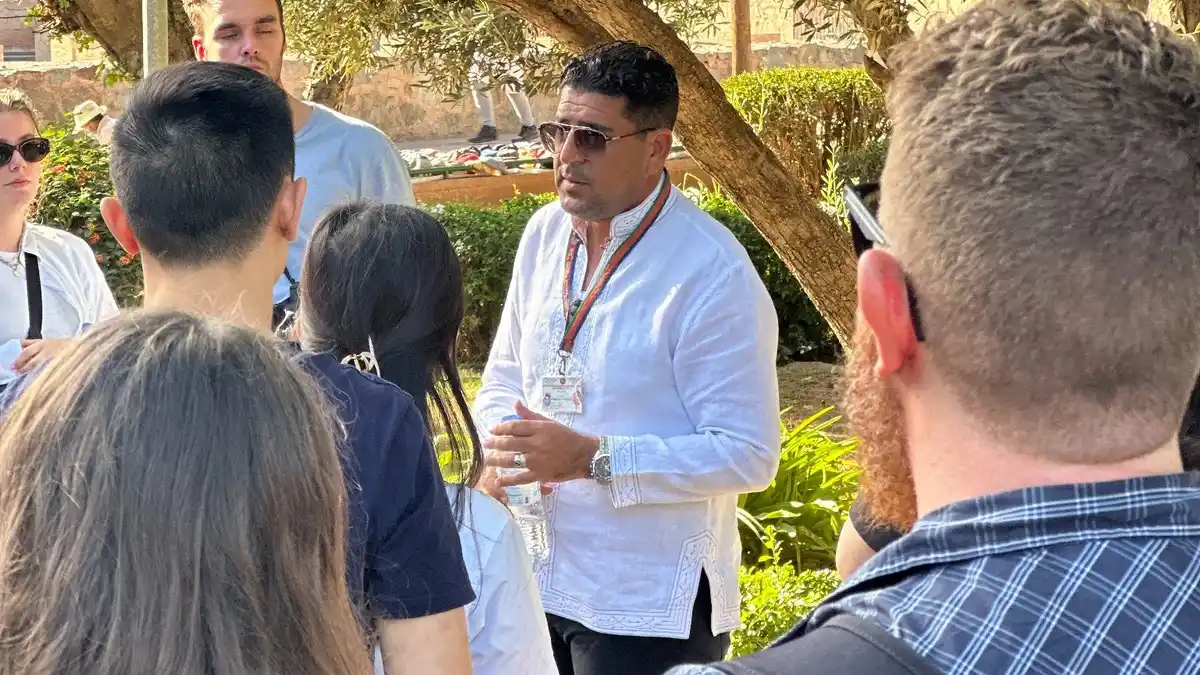
I’m Kamal, a licensed Moroccan tour guide based in Marrakech. Here is what I recommend for women and men, including shorts, headscarves, mosque visits, and seasonal layers.
Quick answer: Tourists do not need to dress like locals in Morocco. For most cities and sightseeing, comfortable clothes that cover the shoulders and knees work well, especially in medinas and villages. Women do not need to cover their hair, and shorts are acceptable, although very short or revealing clothes may attract more attention.
For the rest of your bag, use my Morocco Packing List. For routes and everyday planning, start with the Morocco Travel Guide.
Table of Contents
What to Wear in Morocco: Quick Outfit Guide
| Where you are going | Practical clothes | What to bring |
|---|---|---|
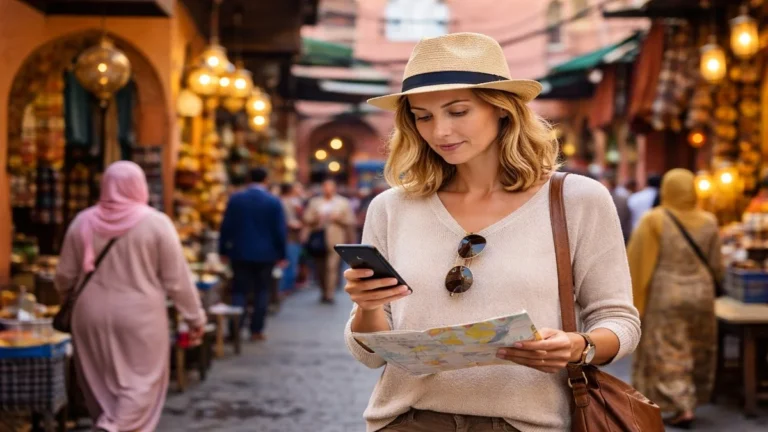
| Marrakech or Fes medina | Breathable top with loose trousers, or a knee-length or longer dress | Comfortable walking shoes and a light layer |
| Villages and rural stops | A top covering the shoulders with longer trousers or a skirt | Closed shoes for dusty or uneven paths |
| Beach or hotel pool | Swimwear at the pool or beach | A cover-up for streets, shops, and cafés |
| Sahara camel ride | Loose trousers and a breathable shirt | Sun hat, secure shoes, and a layer for cooler evenings |
| Atlas Mountains | Layers suited to the altitude and forecast | Walking shoes, a warm layer, and rain protection when needed |
| Hassan II Mosque tour | Covered shoulders and torso; clothes extending below the knees | No shorts or sleeveless tops; shoes come off inside |
For the Casablanca mosque visit, check the official Hassan II Mosque visitor rules before you go.
What to Wear in Morocco by Season
Spring and autumn: Wear light clothes during the day and carry a jacket or cardigan for evenings. For an October trip, my Morocco in October guide explains the regional differences.
Summer: Choose loose, breathable fabrics, a sun hat, and shoes you can walk in. A light shirt can protect your skin from the sun without feeling heavy.
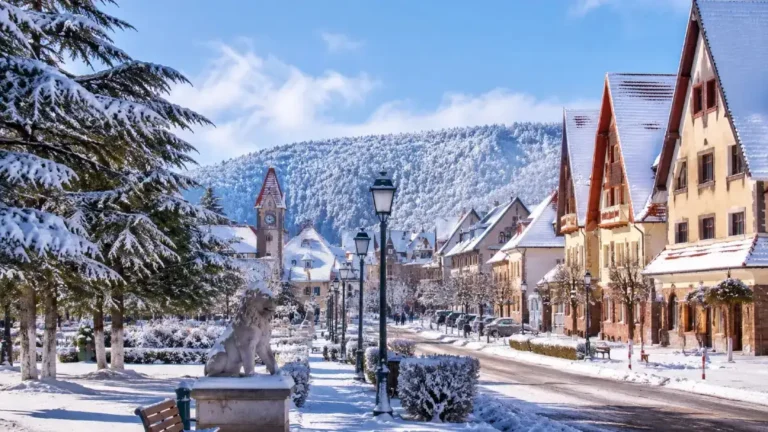
Winter: Pack warmer layers, a jacket, and closed shoes. A sunny afternoon can be followed by a cold evening, especially in the mountains and desert. Check the forecast for every stop, rather than packing only for Marrakech.
Dressing in Cities vs Villages in Morocco
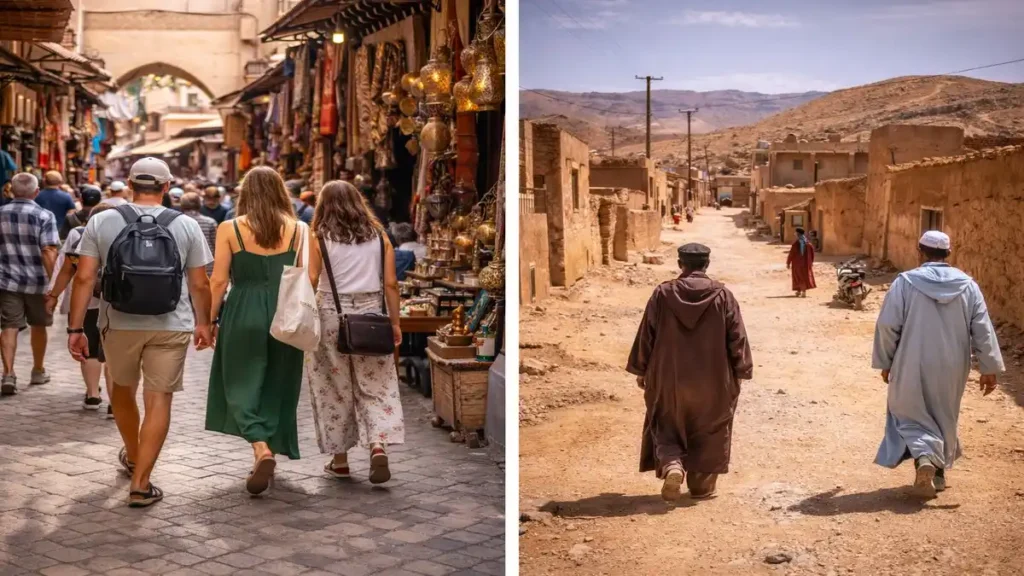
What feels comfortable to wear in Morocco depends a lot on where you are. Cities, medinas, villages, desert areas, and mountain valleys all have different atmospheres. Dressing with that in mind makes your day much easier.
In big cities and tourist areas, people are used to seeing visitors. In medinas, modern neighborhoods, and popular streets, tourists wear many different styles. T-shirts, light dresses, jeans, linen trousers, and casual outfits are normal. You do not need to dress like a local, but clothes that are not too revealing usually attract less attention. The goal in cities is comfort mixed with awareness, not strict rules.
Villages and rural areas feel different. Life there is often more traditional, and people are less used to tourists. Clothing that shows a lot of skin can feel more noticeable there. If you are visiting mountain areas, desert villages, or places like Ourika Valley, covering shoulders and knees usually helps you blend in and feel more comfortable. It is not about fear. It is about respect and ease, both for you and for the people around you.
Practicality matters too. Villages often involve uneven ground, dusty paths, old stone streets, or short walks between viewpoints, markets, and cafés. Loose, breathable clothes and comfortable shoes work much better than tight outfits or fashion-first looks. Dressing simply in rural areas usually leads to warmer interactions and fewer curious looks.
This difference becomes even clearer once you understand how local life changes from place to place, something I also explain in my Safety in Morocco guide.
Most travelers notice this quickly. The same outfit that feels fine in a city can feel different in a smaller village. Adjusting slightly depending on where you are makes the whole experience smoother without changing who you are.
What Women Should Know About Dressing in Morocco
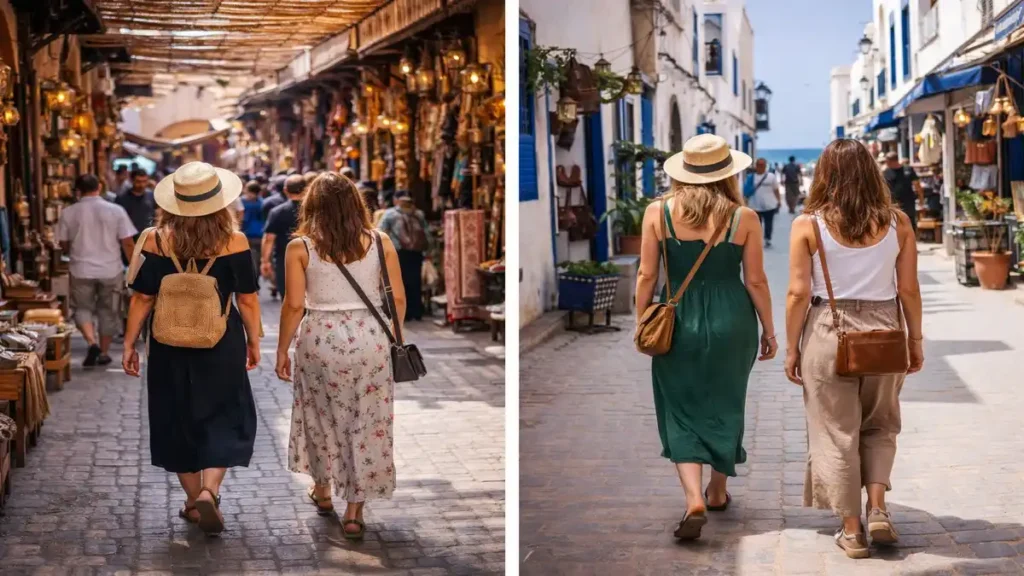
For women, loose trousers with a T-shirt or light shirt are an easy sightseeing outfit. A midi or maxi dress also works well. Carry a thin layer if your top leaves your shoulders bare and you are heading into a village or a religious site.
Your clothing does not make you responsible for someone else’s behavior. Modest clothes can help you feel comfortable in traditional settings, but they do not guarantee that you will avoid unwanted comments.
In cities, many women wear light dresses, loose trousers, skirts, and short-sleeve tops without problems. What usually works best is clothing that covers the shoulders or at least does not feel very exposed, and outfits that are not too tight on the body. You do not need to cover your hair, and you do not need long sleeves all the time. Outfits that feel relaxed and practical usually draw less attention than very short shorts or low-cut tops.
Many solo travelers also find it useful to read my advice on Is Morocco Safe for Tourists, especially when planning city walks and day trips.
What surprises some women is that attention can still happen even when they are dressed modestly. That is important to understand. There is no perfect outfit that stops all attention. Sometimes it is curiosity, sometimes it is street culture, and sometimes it has nothing to do with clothing at all.
The goal is not to disappear. The goal is to feel comfortable and confident.
In smaller towns and villages, dressing a little more conservatively usually makes a bigger difference. Long skirts, loose trousers, and tops that cover the shoulders often feel more natural there. Not because anyone is forcing it, but because you will usually feel more at ease moving through the space.
Shoes matter more than people expect. Comfortable walking shoes help you move with confidence, especially in medinas with uneven streets. Often, the way you move affects how you feel much more than the exact outfit itself.
From what I see while guiding travelers, women who dress for comfort, keep their style simple, and do not overthink every detail usually have the best experience.
What Men Usually Get Wrong About Dressing in Morocco
Most men do not worry too much about clothing before coming to Morocco, and in general that is fine. Morocco is relaxed when it comes to men’s clothing. The problems usually come from wearing things that simply do not work well here.
The most common mistake is dressing too casually in busy public spaces. Very short shorts, sleeveless gym tops, or walking shirtless outside beach areas attract attention, not because they are forbidden, but because they feel out of place. In cities and villages, men usually dress simply and neatly, even in hot weather. When tourists dress far outside that rhythm, they stand out more than they expect.
Another mistake is misunderstanding heat. Some men think less clothing means more comfort. In Morocco, loose and breathable clothes often work better than very minimal clothing. Light trousers and airy shirts can protect from sun, dust, and heat much better than shorts and tank tops during long walking days.
Footwear is also underestimated. Flip-flops may seem fine for a short walk, but they quickly become uncomfortable in medinas with uneven stone streets. Comfortable shoes help you move more confidently, and confidence often affects how the day feels more than people realize.
In villages and smaller towns, dressing a bit more covered usually makes interactions easier. Long trousers and a simple shirt help you blend in and show basic awareness of the setting. No one expects you to dress like a local, but looking put-together helps.
From what I see, men who dress clean, simple, and practical enjoy Morocco more. They get less attention, move around more easily, and feel comfortable everywhere from city streets to rural areas.
If you are still packing, my Morocco Packing List guide helps explain what actually works on the ground.
Beaches, Desert & Resorts: What to Wear in Morocco
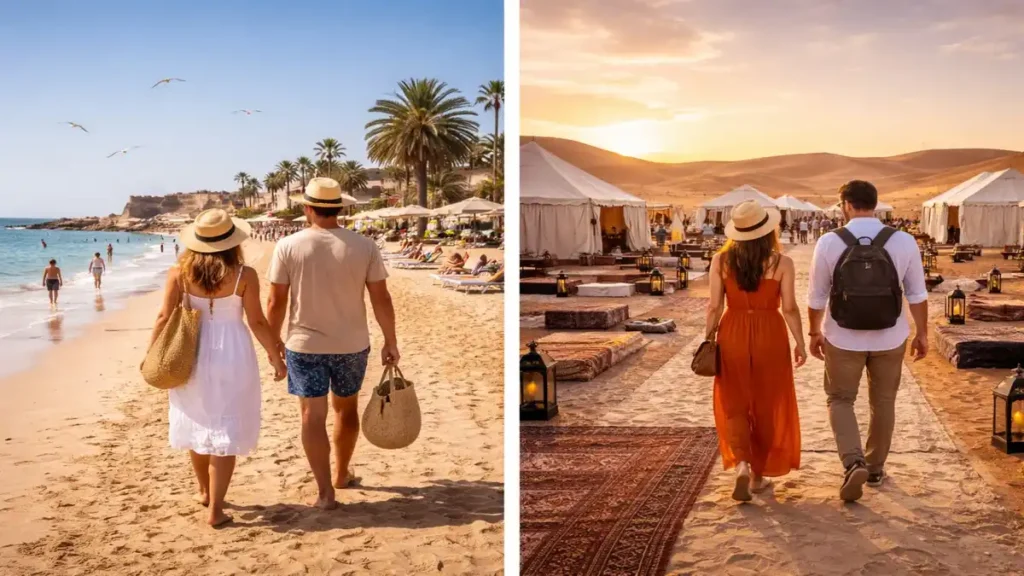
Beaches, desert camps, and resorts in Morocco have a different atmosphere from cities and villages. What you wear in these places is more relaxed, and tourists usually feel comfortable dressing the way they would in other beach or holiday destinations.
In coastal cities and beach areas, swimsuits, shorts, and light summer clothes are normal. On the beach itself, bikinis and swimwear are common, especially in places like Agadir and Essaouira. Once you leave the beach or sit at a café or restaurant, putting on a cover-up, dress, or T-shirt helps you blend in more naturally.
Desert camps and desert tours are also relaxed when it comes to clothing. Comfort matters much more than style. Loose trousers, long skirts, breathable shirts, and layers for the evening work best. During the day, sun protection matters more than modesty concerns. At night, temperatures can drop faster than people expect, so a warmer layer is useful even in summer. What you pack also depends on the season: Spring in Morocco and Autumn in Morocco are usually the most comfortable for desert clothing, Summer in Morocco needs serious sun protection and breathable fabrics, and Winter in Morocco requires warmer layers for cold desert nights.
If you are visiting in early spring, my full guide to Morocco in March explains the weather, what to wear, Sahara Desert temperatures, Ramadan and Eid timing, and the best places to visit.
If you are heading to the Sahara or Agafay, dressing comfortably matters more than dressing fashionably, and I explain more in my Morocco Sahara Desert Guide.
Resorts and private hotels usually follow international standards. Inside these spaces, tourists dress freely and no one pays much attention. The main shift happens when you leave the resort and move into nearby towns or public spaces. Switching back to casual but more covered clothing makes those transitions easier.
Most travelers understand this naturally once they arrive. The key is simple: dress for the place you are in. Beaches and resorts are relaxed, deserts are practical, and cities and villages need a little more awareness.
What Not to Wear in Morocco
Morocco is not strict about clothing, but some choices simply make your day harder than it needs to be.
Very short shorts, very short skirts, and tops that show a lot of cleavage tend to attract more attention in cities and villages. They are not forbidden, but they make you stand out more in public spaces where people are already curious about tourists.
Walking shirtless or wearing only swimwear outside the beach or resort areas is another common mistake. Even in hot weather, this feels out of place once you leave the beach. A light T-shirt, shirt, or cover-up changes the feeling immediately and works much better in cafés, shops, and normal streets.
Tight or heavy clothing is also uncomfortable in Morocco’s climate. Thick fabrics, dark tight outfits, and clothes that trap heat can quickly become unpleasant, especially if you are walking a lot. Loose and breathable clothes work better almost everywhere.
High heels and uncomfortable shoes are also best avoided in medinas. Stone streets, steps, and uneven paths make walking tiring very quickly. Comfortable shoes help you move with confidence, and in Morocco that matters much more than trying to dress impressively.
The general rule is simple: if an outfit feels extreme, impractical, or suited only for a beach or nightclub, it probably will not work well for everyday walking in Morocco.
If you are still planning your route and want a broader overview of Morocco before you arrive, you can also visit the official Morocco tourism website for general travel inspiration.
FAQ: Dressing in Morocco as a Tourist
Do tourists have to dress like locals in Morocco?
No. Tourists are not expected to dress like locals. You just need to dress in a way that feels respectful and practical for where you are. Simple, relaxed clothing works almost everywhere.
Do women need to cover their hair in Morocco?
No. Women do not need to cover their hair for ordinary sightseeing in Morocco. A scarf can be useful for sun, wind, or covering your shoulders. Check the visitor rules of any religious site you plan to enter.
Can tourists wear shorts in Morocco?
Yes. Shorts are common in cities and tourist areas. Very short shorts may attract attention, especially in medinas and villages, but they are not forbidden.
Is it okay to wear dresses and skirts?
Yes. Dresses and skirts are very common. Knee-length or longer styles usually feel the most comfortable for walking around cities and towns.
What should tourists wear when visiting mosques?
Most mosques in Morocco are not open to non-Muslim visitors. Hassan II Mosque in Casablanca offers visitor tours. Its official rules require covered shoulders and torso, clothing extending below the knees, and no shorts or sleeveless tops. Remove your shoes before entering.
Does dressing modestly stop all attention?
No. Unwanted attention can happen regardless of what you wear. Choose clothes for comfort and the setting; someone else’s behavior is not your fault.
Final Advice From a Local Guide
Dressing in Morocco is not about strict rules. It is about awareness.
When your clothes match the place you are in, the day becomes easier. You walk more comfortably, attract less attention, and feel more relaxed. Most travelers quickly find a balance between their own style and what works locally.
Morocco does not ask tourists to change who they are. It simply rewards those who pay attention to their surroundings. Dress with comfort, respect, and common sense, and you will feel at ease almost everywhere you go.
Once you understand how to dress in Morocco, moving through cities, villages, beaches, and desert areas becomes much more comfortable.
Disclosure: Some links in this article may be affiliate links. If you use them, I may earn a small commission at no extra cost to you. I only recommend services and guides that genuinely help travelers in Morocco.