
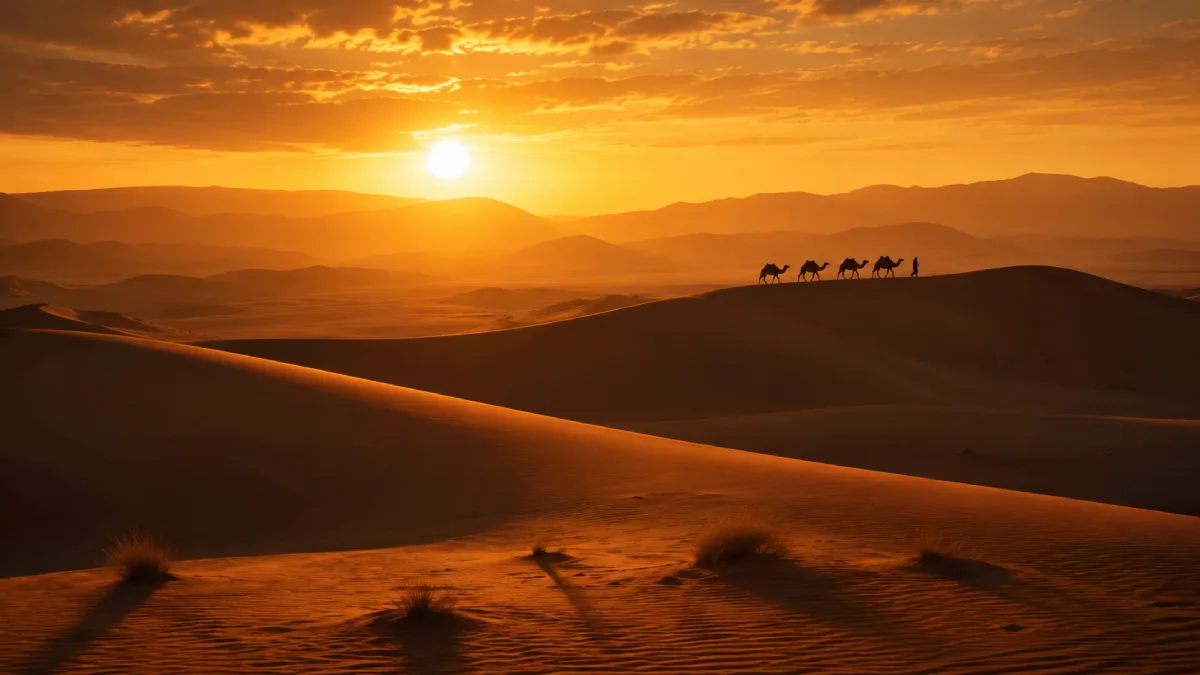
Authentic Morocco Sahara Desert Tours are not just about reaching the dunes for a photo. The real Sahara experience is the long road through the Atlas Mountains, the silence after sunset, the cold desert air at night, and that moment when the first golden dunes appear after hours of travel.
I’m Kamal, a licensed tour guide based in Marrakech. I have crossed the Sahara Desert more times than I can count. I have stayed in simple camps, luxury camps with private bathrooms, and some places where I honestly wondered how they were advertised as luxury. So in this guide, I want to speak honestly, like I do with my guests before they book.
Many travelers search for the best Authentic Morocco Sahara Desert Tours and quickly become overwhelmed. Some tours go to Merzouga, some to Erg Chigaga, some only to Agafay near Marrakech. Some last 2 days, some 3, some 4 or 5. Prices can look similar online, but the experience can be completely different once you arrive.
My honest advice is simple: do not choose a Sahara tour only because it is cheap or because the photos look good. The right tour depends on your time, comfort level, budget, and what kind of desert experience you are looking for.
In this local guide, I will explain the difference between Merzouga, Erg Chigaga, and Agafay, how many days you really need, when to go, what to pack, how to avoid common booking mistakes, and which Sahara tour I would personally recommend for most first-time visitors to Morocco.
If you are planning your first trip, I also recommend reading my Morocco Travel Guide first. It will help you understand how the Sahara fits into a larger Morocco itinerary instead of treating it like a rushed side trip.
Table of Contents
Table of Contents
How to Choose Authentic Morocco Sahara Desert Tours
This is the question I hear most often from travelers.
After years guiding visitors across Morocco, my answer is simple: the best Sahara desert tour depends on your time, budget, and travel style.
| Traveler Type | Best Sahara Tour |
|---|---|
| First-time visitors | 4-Day Marrakech to Fes via Merzouga |
| Short Morocco trips | 3-Day Marrakech to Merzouga |
| Families and couples | Private Merzouga desert tour |
| Adventure travelers | Erg Chigaga |
| One free evening in Marrakech | Agafay Desert |
| Budget travelers | Shared 3-day Merzouga tour |
For most travelers, my favorite route is the 4-Day Marrakech to Fes Desert Tour via Merzouga.
Why? Because Morocco is not only about reaching the dunes. The journey matters too.
You cross the High Atlas Mountains, visit Ait Ben Haddou, pass through Dades Valley and Todra Gorge, sleep near the Sahara dunes, then continue through the Ziz Valley toward Fes.
That route feels like a real Moroccan journey instead of driving all the way back to Marrakech.
If you only have three days, the classic Marrakech to Merzouga tour is still a good experience. But the return day is long and often feels rushed.
If you only have one evening, choose Agafay for sunset, dinner, or a luxury camp near Marrakech. Just remember that Agafay is not the real Sahara.
My honest advice? If your itinerary allows it, choose Merzouga, give yourself at least four days, and do not rush the desert.
Some links in this guide may earn a small commission at no extra cost to you. I only recommend services I trust for planning a Morocco trip.
Why Sahara Experiences in Morocco Feel So Powerful
The Sahara is not just another stop in Morocco. It changes the rhythm of the whole trip.
In Marrakech, everything moves fast. The souks are alive, scooters pass behind you, sellers call from small shops, spices smell strong, and your eyes are busy every minute. Then early in the morning, you leave the city behind. The road climbs into the High Atlas Mountains, passes kasbahs, valleys, palm groves, dry plateaus, and old caravan routes. Little by little, Morocco becomes quieter.
This is why the Sahara feels emotional. You do not arrive in the dunes like you arrive at a museum. You feel the distance. You feel the road. You feel the change from city noise to mountain silence, then from stone villages to open desert.
By the time the golden dunes appear, many travelers become quiet. I have seen this many times with my guests. Nobody needs to explain it. The landscape does the work.
This is also why I always tell travelers not to choose a Sahara tour only by price. A cheap tour can still give you a good memory, yes, but the wrong pace, poor camp, crowded vehicle, unclear timing, or bad route can make the experience tiring instead of magical.
The best Sahara desert tour is not always the most expensive one. It is the one that matches your time, comfort level, season, and travel style. If you choose the right route and give the desert enough time, the Sahara becomes more than a photo. It becomes the part of Morocco you remember for years.
Avoiding the “Agafay Desert Scam”: How to Know What You Are Really Booking
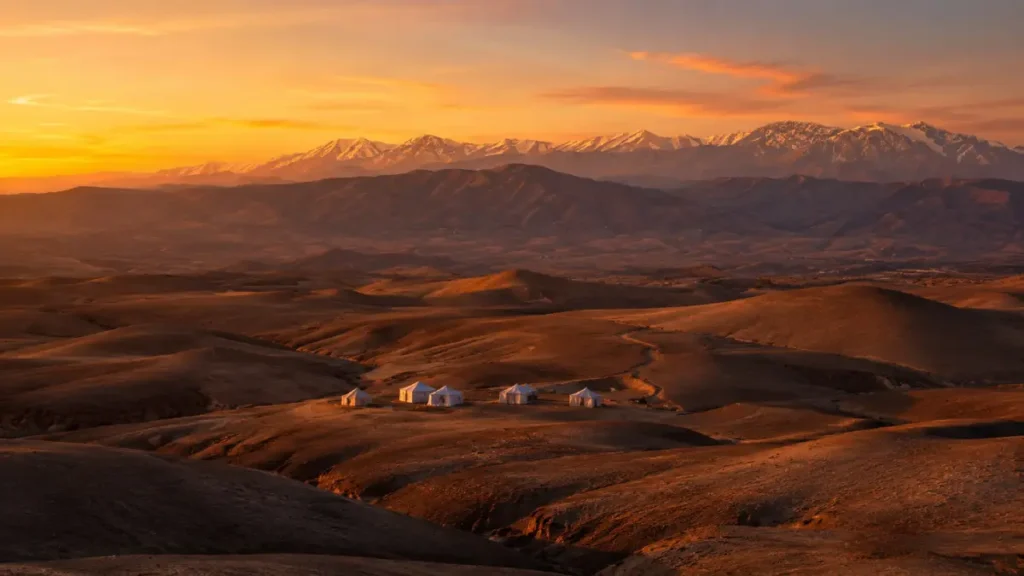
Agafay is beautiful, and I like it when it is sold honestly.
It is a good choice for sunset dinner, camel photos, quad biking, a short luxury camp near Marrakech, or a peaceful evening outside the city. For travelers who do not have enough time to reach Merzouga or Erg Chigaga, Agafay can still give a nice desert-style experience.
But Agafay is not the Sahara.
This is where many travelers get confused. Agafay is a rocky desert close to Marrakech, usually around 40 to 45 minutes from the city. It has dry hills, open views, stone landscapes, and beautiful light at sunset. But it does not have the giant golden dunes most people imagine when they search for Authentic Morocco Sahara Desert Tours.
The problem is not Agafay itself. The problem is the way some tours are advertised. If someone books a “Sahara desert tour from Marrakech” and then discovers they are only outside the city in a rocky landscape, they feel cheated. That is why people search for an Agafay Desert scam guide.
My honest advice is simple: choose Agafay if you only have one evening or one night near Marrakech. Choose Merzouga or Erg Chigaga if you want the real Sahara dunes.
Agafay vs Merzouga: What Is the Real Difference?
Agafay is close, easy, and good for a short escape from Marrakech.
Merzouga is far away in southeastern Morocco, near Erg Chebbi, and this is where you find the tall golden dunes, camel routes, desert camps, sunrise views, and the classic Sahara feeling most travelers dream about.
From Marrakech to Merzouga, the road is long. The drive is around 560 km and usually takes 9 to 10 hours without long stops. In real travel conditions, with the Atlas Mountains, lunch, photos, bathroom breaks, and winding roads, it feels like a full travel day.
But this long journey is also why Merzouga feels different. You do not just arrive in the dunes. You pass through the High Atlas Mountains, Ait Ben Haddou, Ouarzazate, valleys, palm groves, and desert towns before the sand finally appears.
That arrival is part of the emotion.
So here is the honest local guide answer:
Choose Agafay for one evening near Marrakech.
Choose Merzouga if you want the real Sahara experience.
Choose Erg Chigaga if you want something wilder and more remote.
Agafay is not bad. It is just not the Sahara. When it is sold honestly, it can be a beautiful experience. When it is sold as the real Sahara, that is where the problem starts.
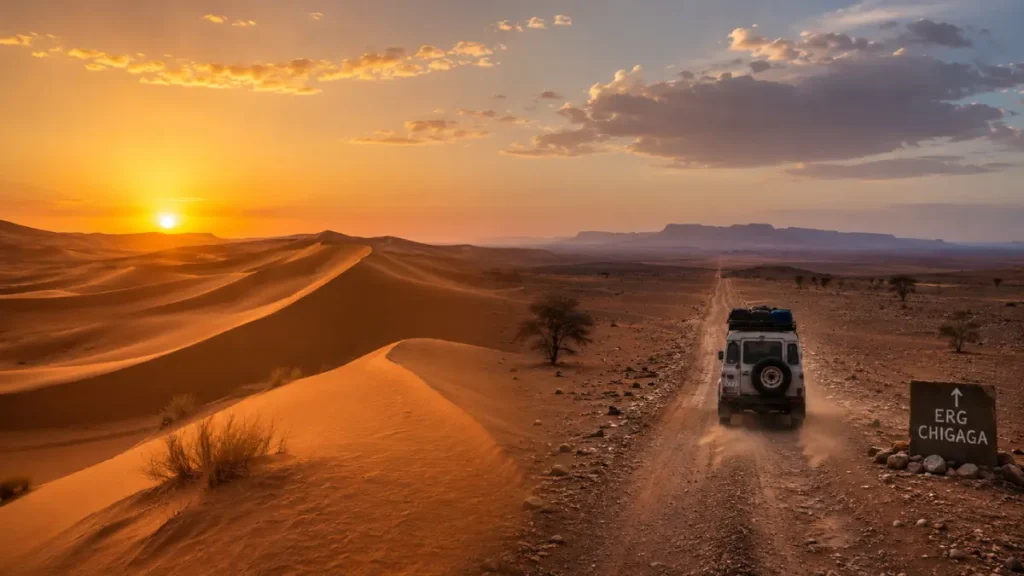
Merzouga vs. Erg Chigaga Comparison: Which Dune Sea Is Right for You?
When travelers compare the best Authentic Morocco Sahara Desert Tours, this is usually the most important decision: Merzouga or Erg Chigaga.
Both are beautiful. Both can give you silence, stars, camel rides, desert camps, and that feeling of being very far from normal life. But they are not the same experience.
Merzouga is easier, more famous, more developed, and better for most first-time visitors. Erg Chigaga is wilder, quieter, more remote, and better for travelers who want adventure and do not mind a rougher road.
If you are looking for the classic Sahara photo with tall golden dunes, camel ride at sunset, many camp options, and easier logistics, Merzouga is usually the right choice.
If you want the feeling of going deeper into the desert, with 4×4 tracks, fewer people, wider empty landscapes, and a more raw Sahara atmosphere, Erg Chigaga is stronger.
I explain it to my guests like this: Merzouga gives you the classic Sahara dream. Erg Chigaga gives you the deeper desert journey.
Merzouga and Erg Chebbi: Best for First-Time Sahara Travelers
Merzouga is the easiest Sahara gateway to recommend for most first-time travelers to Morocco.
Not because it is the wildest desert in the country, but because it gives travelers the classic Erg Chebbi dune experience without making the journey too complicated.
The dunes here are the ones many people imagine before they come to Morocco: tall, golden, soft, and close enough to reach by road from Marrakech, Fes, or Ouarzazate. From the village area, you continue toward the camp by camel or 4×4, depending on your comfort level and the camp location.
From Marrakech, the journey is long, but this is also part of the experience. The route can take you across the High Atlas Mountains, past Ait Ben Haddou, Ouarzazate, Dades Valley, Todra Gorge, Erfoud, and Rissani before the landscape finally opens toward Erg Chebbi.
This slow change is what makes the arrival special. First mountains. Then kasbahs. Then palm valleys. Then dry open land. Then suddenly, the dunes appear.
Once you reach Merzouga, the Sahara experience is easy to enjoy. You can ride camels at sunset, sleep in a desert camp, listen to drums around the fire, watch the stars, and wake up early for sunrise over the dunes.
For many travelers, this is exactly the Sahara memory they came for.
The honest downside is that Merzouga is more developed than Erg Chigaga. In high season, you may see other camps, camel caravans, 4×4 vehicles, and people gathering for sunset. For most visitors, this does not ruin the experience. The dunes are still beautiful. But if you want a more remote and wild desert, Erg Chigaga may be a better fit.
For most first-time visitors, Merzouga is still my easiest recommendation because it offers real Sahara dunes, good camp choices, better comfort options, and a route that fits well into a normal Morocco itinerary.
If you are planning a spring desert trip, my Morocco in March guide explains the weather, cold desert mornings, what to wear, Ramadan and Eid travel tips, and why March is one of the best months for the Sahara.
If you want to understand this area better before choosing your camp, read my full Merzouga Sahara Desert Travel Guide.
Merzouga vs Erg Chigaga Comparison
| Feature | Merzouga / Erg Chebbi | Erg Chigaga / M’Hamid |
|---|---|---|
| Best for | First-time Sahara travelers | Adventure seekers |
| Dune feeling | Tall, golden, iconic dunes | Wild, remote dune sea |
| Access | Easier by road | Requires more 4×4 access |
| Camp options | Many standard, comfort, and luxury camps | Fewer, more remote camps |
| Crowd level | More visitors, especially high season | Quieter and less crowded |
| Best trip length | 3–4 days from Marrakech | 4–5 days from Marrakech |
| Comfort level | Easier to arrange luxury comfort | More rustic unless planned well |
| Local advice | Best for most first-timers | Best for deeper desert lovers |
This Merzouga vs Erg Chigaga comparison matters because many travelers book a desert trip before they really understand the difference. Then the experience feels different from the dream they had in their mind. For a deeper local breakdown, read my full guide to Erg Chebbi vs Erg Chigaga. If you want the famous golden dunes, easier logistics, and more camp choices, Merzouga is usually the better option. If you want a wilder road, fewer people, and a deeper remote feeling, Erg Chigaga may fit you better.
Choosing Your Itinerary: 2-Day, 3-Day, 4-Day, or 5-Day Sahara Tours
When travelers ask me about Sahara desert tours in Morocco, I always explain one thing first: the number of days matters as much as the desert you choose.
The Sahara is far from Marrakech. This is not a quick activity like a city tour or a sunset dinner. It is a real road journey across mountains, valleys, kasbahs, palm groves, and desert towns before you finally reach the dunes.
A cheap or rushed desert tour can still take you to the sand, yes. But it may not give you the Sahara experience you imagined. If you squeeze too much into too little time, you spend more energy in the car than in the desert.
Is a 2-Day Sahara Tour from Marrakech Worth It?
A 2-day desert tour from Marrakech can work only if your time is very limited.
But you need to be careful with expectations.
Most 2-day tours from Marrakech go to Zagora or nearby desert-style areas, not the big golden dunes of Merzouga. You may still see beautiful landscapes, enjoy a camel ride, and sleep in a camp, but this is not the deep Sahara experience most travelers imagine.
I recommend a 2-day desert tour only for travelers who cannot add one more day. If you dream of tall dunes, sunrise over Erg Chebbi, and a real Sahara feeling, try to make time for Merzouga instead.
Is a 3-Day Sahara Tour Enough?
Yes, 3 days can be enough if your time is limited and you understand the pace.
A classic 3-day Marrakech to Merzouga tour usually looks like this: Marrakech to Dades or Tinghir on day one, Dades or Tinghir to Merzouga on day two, then Merzouga back toward Marrakech on day three.
It gives you the essential Sahara experience: Atlas Mountains, Ait Ben Haddou, valleys, Todra Gorge, camel ride, desert camp, sunset, and sunrise. But the final day back to Marrakech is long and tiring.
I recommend 3 days for travelers who really want the real Sahara but only have a short Morocco trip. It is better than missing the dunes completely, but you must accept that it is a highlights trip, not a slow journey.
Why 4 Days Is Better for Most Travelers
For most of my guests, I prefer 4 days.
With 4 days, the road becomes more human. You have time to enjoy Ait Ben Haddou, stop properly in the valleys, visit Todra Gorge without rushing, arrive at the camp with better timing, and wake up in the desert without feeling destroyed by the journey. If you want to break the drive more comfortably, my guide to where to stay in Ouarzazate can help you choose a good overnight stop between Marrakech and the desert.
A 4-day desert tour also gives you more space for real cultural moments: tea with nomad families, a visit to Khamlia for Gnawa music, a short 4×4 desert loop, or time to enjoy the dunes after sunrise instead of leaving in a hurry.
This is also why I like the 4-day Marrakech to Fes route via Merzouga. Instead of driving all the way back to Marrakech, you continue north through the Ziz Valley toward Fes. For many travelers, this makes more sense and feels like a real Morocco itinerary.
Private tours make a big difference here. In my tours, I prefer flexible timing because the desert is not a train station. If the light is beautiful, stop. If a guest is tired, slow down. If a family needs more time, adjust. This is the difference between just “doing the Sahara” and actually feeling it.
As one local desert guide once told me near Merzouga: “The desert does not like hurry. If you arrive running, you only see sand. If you arrive slowly, you understand the silence.”
When 5 Days Makes Sense
A 5-day Sahara tour is perfect for families, photographers, honeymooners, slow travelers, or anyone who wants Morocco to feel less like a checklist.
With 5 days, you can add more time in the Dades Valley, explore Todra Gorge, visit nomadic families, enjoy a second desert night, or return by a different route. It also works well if you want to combine the Sahara with the Atlas Mountains or spend more time around Merzouga.
For families with children, 5 days is much easier than 3. Long driving days can be hard for kids, especially when they are tired, hot, or bored. A slower itinerary protects the experience.
My honest local advice is simple: choose 2 days only if you have no choice, choose 3 days if your time is short, choose 4 days if you want the best balance, and choose 5 days if you want the desert to feel calm, deep, and unforgettable.
Beyond the Camel Ride: Real Sahara Experiences for 2026
A camel ride is beautiful, yes. But the Sahara is much bigger than the camel ride.
Many travelers come for the photo: camel, dunes, sunset, campfire. I understand. These moments are beautiful. But the best Sahara desert tours in Morocco are not only about one activity. They are about the whole feeling of the journey: the road, the people, the camp, the food, the silence, the stars, and the small moments you do not expect.
In 2026, most travelers are looking for something more than a quick tourist stop. They want comfort, but they also want authenticity. They want a beautiful camp, but they also want real people, local music, simple desert food, and stories they cannot find inside a normal hotel.
This is why choosing the right Sahara tour matters. A good tour gives you time to feel the desert. A rushed tour gives you only the photo.
Luxury Desert Camps: What “Luxury” Really Means
Luxury desert camps can be wonderful when they are done well, but I always tell travelers to look beyond the word “luxury.”
In the Sahara, that word is used everywhere. Sometimes luxury means a beautiful private tent with a real bed, private bathroom, hot water, heating in winter, better food, and careful service. Sometimes it only means a normal tent with a nice carpet and professional photos online.
A good luxury camp should give you comfort without losing the desert feeling. You should still feel the silence, the dunes, the stars, and the distance from normal life. But you should also sleep well, stay warm in winter, and feel clean and comfortable after a long road journey.
Before booking, check recent reviews carefully. Look for words like private bathroom, hot water, heating, clean tent, comfortable bed, good food, friendly staff, transfer, and location. These small details matter more than decoration.
Also ask how you reach the camp. Some travelers love arriving by camel at sunset. Others prefer a 4×4 transfer, especially families, older travelers, or anyone who does not want a long camel ride. Many good camps can arrange both.
For camp levels, think of it simply. A standard camp is basic and more rustic. A comfort camp gives you better bedding, more privacy, and cleaner facilities. A luxury camp is best for couples, families, honeymooners, winter travelers, and anyone who wants the Sahara feeling without giving up comfort.
My honest advice? Do not choose the cheapest camp in winter unless you are ready for cold nights and basic facilities. A beautiful Instagram photo does not keep you warm at 3 a.m. If you want help choosing the right camp level, read my full guide to the best desert camps in Merzouga before you book.
The Camel Ride Truth
The camel ride is magical, but let’s not lie.
For many travelers, the sunset camel ride is the dream moment. The light becomes soft, the dunes change color, and the caravan moves slowly into the sand. It feels like the Morocco many people imagined before they arrived.
Most camel rides to the camp or into the dunes last around 1 to 2 hours, depending on the camp location. For some travelers, this is perfect. For others, it can feel uncomfortable after a while.
Getting on and off can feel awkward. After 30 minutes, some people start to feel it in their legs or back. This is normal. You are not weak. Camels are not sofas.
My favorite advice is simple: take the sunset camel ride into the dunes, enjoy the slow arrival, then ask for a 4×4 transfer back in the morning if you want comfort and speed. This works very well for families, older travelers, or anyone with back problems.
And yes, in Morocco, most “camels” travelers ride are actually dromedaries with one hump. But don’t worry, everyone still says camel.
Sandboarding, Quad Biking, and 4×4 Desert Routes
If you want more adventure, the Sahara has good options.
Sandboarding is often available at desert camps. It is fun for photos, families, and kids, but the real workout is walking back up the dune. Do not expect perfect equipment everywhere. Sometimes the boards are simple, but the memory is still fun.
Quad biking is popular around Merzouga. It can be exciting, especially if you want something more active after the long drive. But choose carefully. A good operator respects safe routes, avoids dangerous driving, and does not disturb quiet camp areas.
For me, the 4×4 desert loop is one of the best additions to a Merzouga tour. Around Erg Chebbi, you can visit nomadic families, fossil areas, dry lake landscapes, black desert areas, and Khamlia village. This gives you a better understanding of the region beyond only the dunes.
In Erg Chigaga, the 4×4 is not only an activity. It is part of the journey. The camp access itself is more remote, so the drive across desert tracks becomes part of the adventure.
Tea, Gnawa Music, and Desert Food
The Sahara is not empty. People live there. Families move there. Music, food, and hospitality are part of the experience.
One of the best cultural moments is tea with nomad families. But this should be done respectfully. You are entering someone’s living space, not visiting a museum. A good guide explains the situation, translates when needed, and makes the visit feel human, not forced.
Khamlia village near Merzouga is known for Gnawa music, with deep roots connected to sub-Saharan African heritage. When done properly, a visit there can be powerful. When rushed, it feels like another tourist stop. This is why the guide and timing matter.
Food is also part of the Sahara memory. Around Rissani and the Tafilalet region, many travelers enjoy madfouna, often called Berber pizza. In some places, you may also hear about traditional bread, desert tea, dates, and simple meals cooked with patience.
These are the details that make the Sahara feel alive. The dunes are beautiful, but the people, music, food, and hospitality are what turn the desert from a landscape into a real experience.
Best Time to Visit the Sahara Desert in Morocco
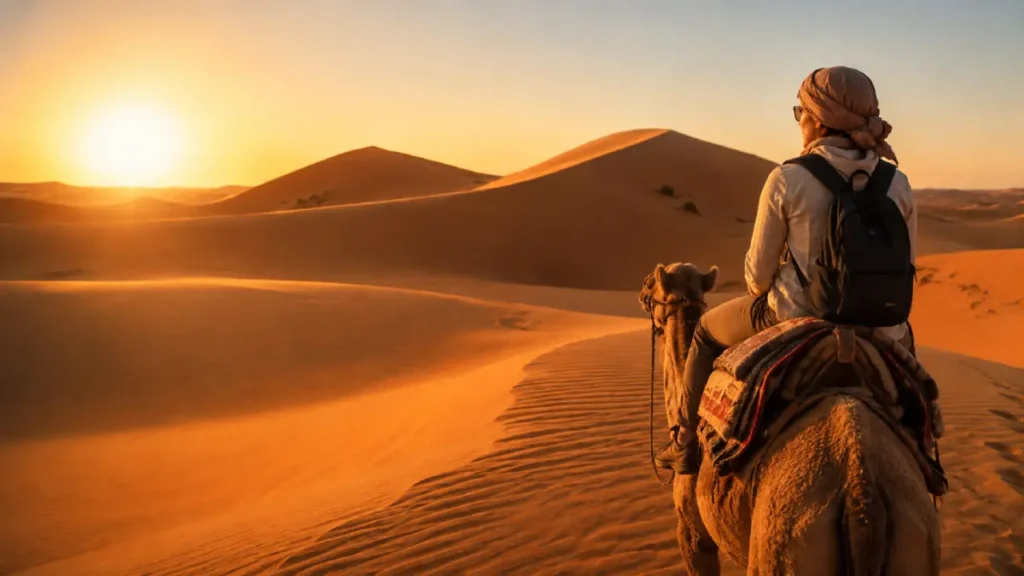
The best time to visit the Sahara Desert in Morocco is usually spring and autumn, especially from March to May and from September to November.
These months give most travelers the best balance: warm days, cooler evenings, clear light, and easier travel through the Atlas Mountains, valleys, and desert roads.
From my experience, April and October are two of the best months for Sahara trips. The heat is not too heavy, the light is beautiful for photos, and the long road from Marrakech toward Merzouga or Erg Chigaga feels much easier than in summer.
March and November are also good months, but you need to pack layers. The desert can feel warm during the day and cold after sunset, especially if you are sleeping in a simple camp.
Winter in Morocco can be beautiful for the Sahara. December, January, and February often bring clear skies, quiet dunes, and amazing stars at night. But this is where many travelers get surprised. The Sahara is not always hot. Winter nights can feel very cold, sometimes close to freezing in simple camps.
If you travel in winter, ask your camp about warm blankets, heating, and proper bedding before you book. In winter, good clothes are not extra comfort. They are part of the trip.
Summer is the hardest season for Sahara desert tours. June, July, and August can be extremely hot, especially around Merzouga and the deep desert areas. The heat is dry, heavy, and tiring, especially in the middle of the day.
Some travelers still go in summer because these are their vacation dates, but I do not recommend summer Sahara trips for everyone. If you go, choose air-conditioned transport, start early, drink enough water, avoid too much activity in the afternoon, and keep your expectations realistic.
My honest local advice is simple: choose March, April, October, or November if you can. Choose winter if you want quiet dunes and stars, but prepare for cold nights. Avoid summer unless you understand the heat and plan carefully.
For the bigger seasonal picture, read my full Best Time to Visit Morocco guide before choosing your Sahara dates.
Sahara Desert Packing List: What I Tell My Guests to Bring
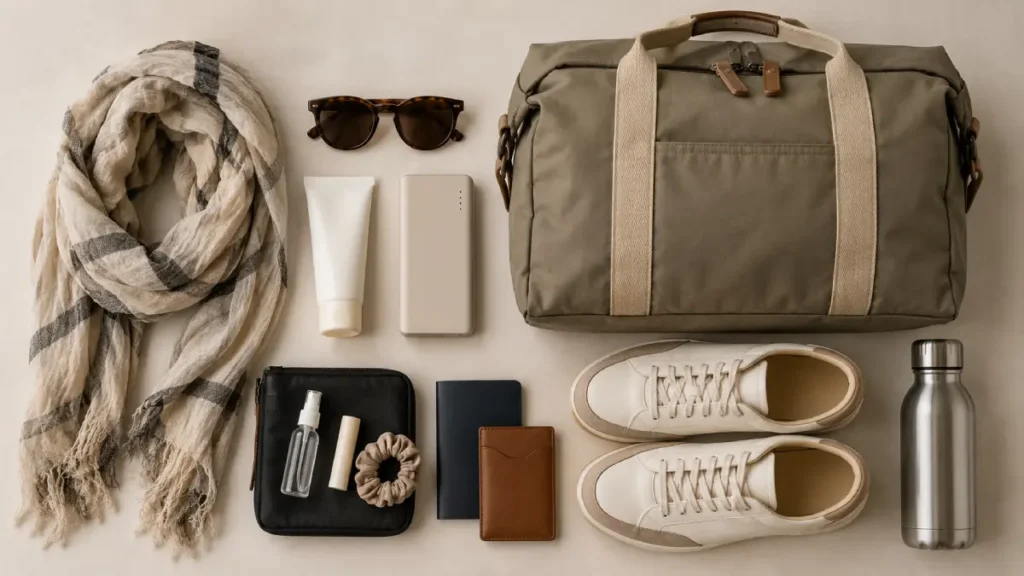
Packing for the Sahara is not about bringing too much. It is about bringing the right things.
The desert can feel warm during the day and cold after sunset, especially from November to March. Bring light clothes for daytime and warm layers for evening. In winter, take a real jacket, not only a thin sweater.
A scarf or cheche is one of the most useful things you can bring. It helps with sun, wind, dust, and sand. Sunglasses, high SPF sunscreen, lip balm, and comfortable closed shoes also make the trip much easier.
Sandals are fine at camp, but closed shoes are better for walking around dunes, rocky ground, and camp areas at night. The desert looks soft in photos, but not every place is soft sand.
If you ride a camel to camp, do not take your big suitcase with you. Bring a small overnight bag with warm clothes, toiletries, phone charger, medicine, passport, money, and anything important. Your main luggage can usually stay with the vehicle or be transferred separately, depending on the camp.
A power bank is very useful because electricity can be limited in some camps. Keep some cash in small notes for tips or small purchases, because ATMs are rare once you are near the desert.
Wet wipes, tissues, hand sanitizer, and a small flashlight are also helpful after dark. A phone light works too, but only if your battery is not dead.
My honest advice is this: pack light, but pack smart. The Sahara is not difficult when you are prepared. The small things, like a warm jacket, scarf, power bank, and overnight bag, can make the whole trip much more comfortable.
For the full countrywide version, use my Morocco Packing List Guide together with this Sahara advice.
Private Sahara Tours vs Budget Group Tours
For Sahara desert tours in Morocco, the biggest difference is often not only the destination. It is the driver, the vehicle, the camp, the timing, the first-night hotel, and how much control you have over the journey.
This matters because the Sahara is far. You are not booking a simple activity for two hours. You are booking long road travel, mountain driving, hotel stops, desert camp quality, food, timing, and the person who will be responsible for your experience for several days.
Budget group tours from Marrakech can work for young travelers, backpackers, or people who mainly want the basic Sahara experience at the lowest price. Some shared 3-day tours can start from low prices, but you need to understand what that usually means.
The transport is shared. The schedule is fixed. The vehicle may be full. The stops may be rushed. The camp is usually simple. You may have less control over when you stop, where you eat, what time you arrive, and how many shopping stops are included.
This does not mean every budget tour is bad. Some travelers enjoy them. But you should book with clear expectations.
A private Sahara tour costs more, but it gives you something very important: flexibility.
You can leave earlier, stop when the landscape is beautiful, avoid unnecessary shopping stops, choose better accommodation, and arrive at the desert camp before sunset without feeling pushed from one stop to the next.
This is especially important for couples, families, older travelers, photographers, honeymooners, and anyone who wants a calmer experience.
Private tours also make the long road easier. If someone feels tired, you can slow down. If the light is beautiful in the Atlas Mountains, you can stop. If a child needs a break, you are not waiting for a whole group. This flexibility changes the whole mood of the trip.
Luxury camps are another upgrade. A private tent with a real bed, ensuite bathroom, better dinner, warm blankets, heating in winter, or air conditioning in summer will always change the price. Sometimes this is worth it, especially if you visit in winter when desert nights can be very cold.
My advice is not “always book expensive.” My advice is: know what you are paying for before you book.
Ask what type of vehicle is included. Ask if the transport is private or shared. Ask where you sleep on the first night. Ask what level of camp is included. Ask if dinner and breakfast are included. Ask if the camel ride is included. Ask if a 4×4 return from camp is possible.
Also ask if there are forced shopping stops. A good operator answers clearly. A weak operator gives you a price but avoids the details.
For Sahara trips, transport is one of the biggest comfort factors. A better vehicle, a careful driver, and a flexible route can completely change how the journey feels. If you are still comparing options, read my Morocco Transportation Guide before choosing your desert tour.
So do not only ask, “How much is the Sahara tour?”
Ask the better question:
“What kind of Sahara experience am I really buying?”
The Classic Sahara Route from Marrakech
The classic Marrakech to Merzouga route is one of the most beautiful long drives in Morocco, but it needs time.
On the map, the Sahara can look simple. In real life, it is a full journey across mountains, valleys, kasbahs, palm groves, and desert roads.
Most tours leave Marrakech early in the morning and cross the High Atlas Mountains through the Tizi n’Tichka road. The views are beautiful, but the road is winding, so if you get motion sickness, prepare before the drive.
The main stops usually include Ait Ben Haddou, Ouarzazate, Dades Valley or Tinghir, Todra Gorge, Erfoud, Rissani, and finally Merzouga.
This slow change is what makes the journey special. First you see mountains. Then old kasbahs. Then palm valleys. Then dry open land. Then, after many hours, the golden dunes appear.
My honest advice is simple: do not rush this route too much. If you only collect stops, you arrive tired. If you give the journey enough time, the road becomes part of the Sahara experience.
This is also why I prefer the 4-day Marrakech to Fes desert route when it fits your itinerary. Instead of driving all the way back to Marrakech, you continue through the Ziz Valley toward Fes. It feels smoother, smarter, and more natural for many Morocco trips.
When to Book in Advance and When to Stay Flexible
For spring and autumn, book your desert camp and private driver in advance, especially if you want a good luxury camp, private transport, or a 4-day Marrakech to Fes route.
March, April, October, and November are some of the best months for Sahara desert tours in Morocco, so the better camps and drivers can fill up early.
For winter, book carefully, not only early. Read recent reviews and ask about heating, warm blankets, and proper bedding. A camp can look beautiful online and still feel cold at night.
For summer, I recommend speaking with a local before booking. Sometimes it is better to adjust the route, choose better timing, avoid long afternoon stops, or skip the deep desert if the heat is too strong.
If you are traveling during holidays, school breaks, or busy Morocco travel periods, booking early helps. Good drivers, guides, and camps do not stay available forever.
Local Etiquette in the Sahara
The Sahara is beautiful, but it is also home.
People live there. Families move there. Music, tea, animals, wells, villages, and old routes are part of daily life. So when you visit, respect matters.
Ask before taking close photos of families, children, or nomads. Dress comfortably but respectfully, especially when visiting villages or family tents. Accepting tea is part of hospitality, but do not treat people like attractions.
If musicians perform and you enjoyed it, a small tip is appreciated. If someone helps with your luggage, camel, or camp transfer, a small tip is also normal. Keep cash in small notes because change can be difficult in remote places.
Also respect the land. Do not leave plastic in the dunes. Do not drive randomly over sensitive areas. Do not treat the desert like a playground without limits.
The silence is part of the beauty. Good travelers help protect it.
My Honest Recommendation for Sahara Desert Tours in Morocco
For most first-time travelers, I recommend Merzouga and Erg Chebbi with at least 3 days, but 4 days is much better if your schedule allows it.
You get the real golden dunes, good camp choices, camel rides, sunrise, sunset, and a route that works well with a normal Morocco itinerary.
If your route allows it, my top recommendation is the 4-day Marrakech to Fes desert tour via Merzouga. You avoid backtracking, enjoy the journey at a better pace, and continue naturally toward Fes after the desert.
For travelers who want something wilder and more remote, I recommend Erg Chigaga with 4 or 5 days. This route is better for adventure travelers who do not mind longer driving, rougher tracks, and fewer facilities.
For travelers with only one evening near Marrakech, Agafay can be a good choice, but only if you understand what it is. Agafay is a rocky desert experience, not the Sahara. It is good for sunset, dinner, camel photos, and a short escape, but it will not give you the same feeling as Merzouga or Erg Chigaga.
That is the honest difference.
The Sahara is not something you should book blindly. It is too far, too special, and too important for many travelers. Choose the right route, the right season, the right camp, and the right pace. Then the desert will give you what you came for.
Ask Kamal Before You Book Your Sahara Tour
If you are not sure whether Merzouga, Erg Chigaga, or Agafay fits your Morocco trip, I can help you choose honestly.
As a licensed tour guide based in Marrakech, I know how different these routes feel in real life. Some travelers need a private 4-day Sahara tour. Some only need Agafay for sunset. Some should avoid rushing and add one more night.
It depends on your time, budget, comfort level, season, and travel style.
The best Sahara experience is not the one with the loudest marketing. It is the one that matches your trip.
If you want local advice before booking, contact me and I will help you choose the Sahara route that makes sense for you.
These FAQs answer the questions travelers usually ask before booking the best Sahara desert tours in Morocco.
FAQs About Authentic Morocco Sahara Desert Tours
What is the Best Authentic Morocco Sahara Desert Tours?
For most first-time travelers, the best Authentic Morocco Sahara Desert Tours is a 4-day Marrakech to Fes route via Merzouga. You see the High Atlas Mountains, Ait Ben Haddou, Dades Valley, Todra Gorge, Erg Chebbi dunes, and Ziz Valley without driving all the way back to Marrakech. If your itinerary allows it, this is the route I recommend most.
Is 3 days enough for the Sahara Desert in Morocco?
Yes, 3 days is enough if you are traveling from Marrakech to Merzouga and your time is limited. But it is a fast trip with long driving hours, especially on the final day back to Marrakech. If your schedule allows, 4 days is much more comfortable and gives you more time to enjoy the route.
Is a 4-day Marrakech to Fes desert tour worth it?
Yes, a 4-day Marrakech to Fes desert tour is worth it if you want a better pace and a smarter Morocco itinerary. Instead of returning to Marrakech after the desert, you continue toward Fes through the Ziz Valley. This avoids backtracking and makes the Sahara feel like part of a real journey across Morocco.
How far is Merzouga from Marrakech?
Merzouga is around 560 km from Marrakech, and the drive usually takes about 9 to 10 hours without long stops. In real travel conditions, with mountain roads, lunch, photos, and bathroom breaks, it feels like a full travel day. This is why I do not recommend treating the Sahara like a quick side trip.
Is Agafay the same as the Sahara Desert?
No, Agafay is not the Sahara Desert. Agafay is a rocky desert near Marrakech, good for sunset dinners, camel photos, quad biking, and short luxury camp experiences. The real Sahara dunes are much farther away, especially around Merzouga / Erg Chebbi or Erg Chigaga.
What is the best time to visit the Sahara Desert in Morocco?
The best time to visit the Sahara Desert in Morocco is usually March to May and September to November. These months offer more comfortable temperatures, better light, and easier travel conditions. Winter is beautiful but cold at night, while summer can be extremely hot, especially around Merzouga and deeper desert areas.
Which is better, Merzouga or Erg Chigaga?
Merzouga is better for first-time travelers who want iconic golden dunes, easier access, and more camp options. Erg Chigaga is better for adventure travelers who want a wilder, quieter, and more remote desert experience. The right choice depends on your time, comfort level, and travel style.
Are Sahara desert camps comfortable?
Some Sahara desert camps are very comfortable, and some are very basic. Standard camps usually have simple tents and shared facilities, while luxury camps can offer real beds, private bathrooms, heating in winter, better food, and 4×4 transfers. Always check the camp level before booking.
Should I book a private Sahara tour or a budget group tour?
Book a private Sahara tour if you want flexibility, better timing, more comfort, and fewer rushed stops. A budget group tour can work for backpackers or travelers who mainly want the lowest price, but the schedule is fixed and the camp is usually simple. For families, couples, older travelers, and honeymooners, private is usually better.
Is the Sahara safe for solo female travelers?
Yes, the Sahara can be safe for solo female travelers when booked with reputable guides, drivers, and camps. I recommend choosing trusted operators, avoiding unclear budget offers, and confirming transport and accommodation details before you go. Private tours can give extra comfort and peace of mind.
What should I pack for a Sahara desert tour?
For a Sahara desert tour, bring layers, a warm jacket in winter, scarf or cheche, sunglasses, sunscreen, lip balm, closed shoes, power bank, cash, wet wipes, tissues, and a small overnight bag. The desert can be warm during the day and cold at night, so packing smart makes the experience much better.