Money in Morocco: Cash, Cards, ATMs, Exchange & Local Guide Tips
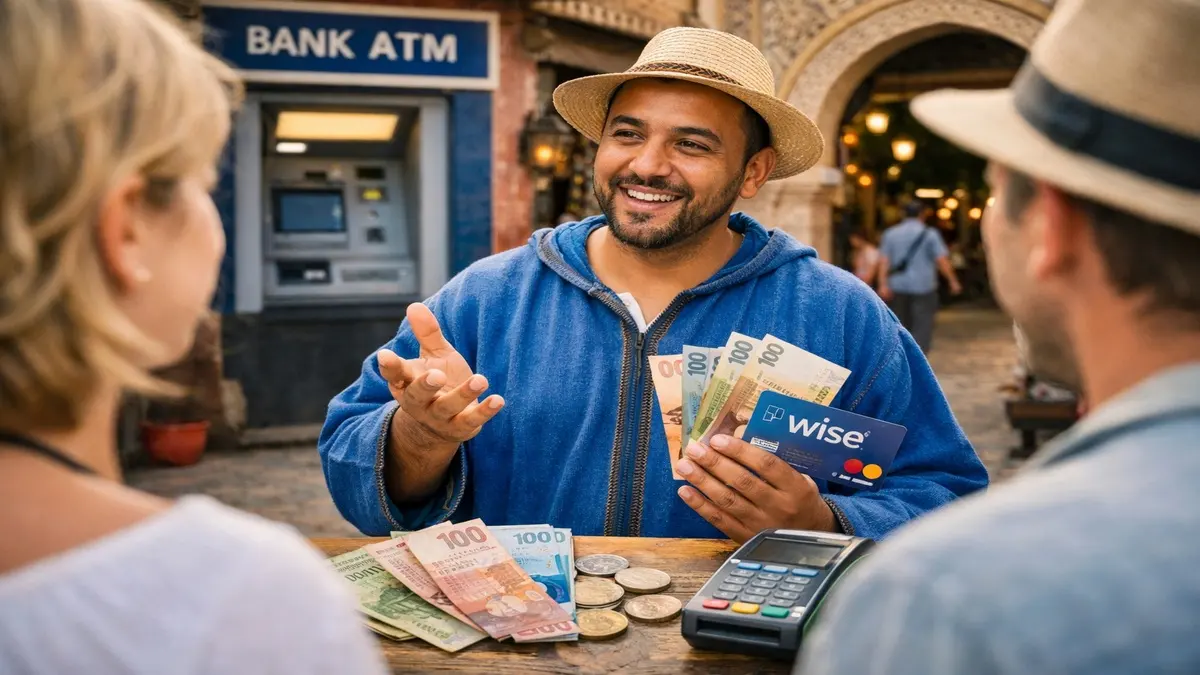
Money in Morocco is easy to manage once you understand a few simple rules. The local currency is the Moroccan dirham (MAD), cash is still important for many everyday purchases, and credit cards are widely accepted in hotels, larger restaurants, supermarkets, and many modern businesses. For most travelers, the best approach is to use a card for larger payments, withdraw Moroccan dirhams from ATMs after arrival, and keep small bills for taxis, cafés, tips, souks, and local shops.
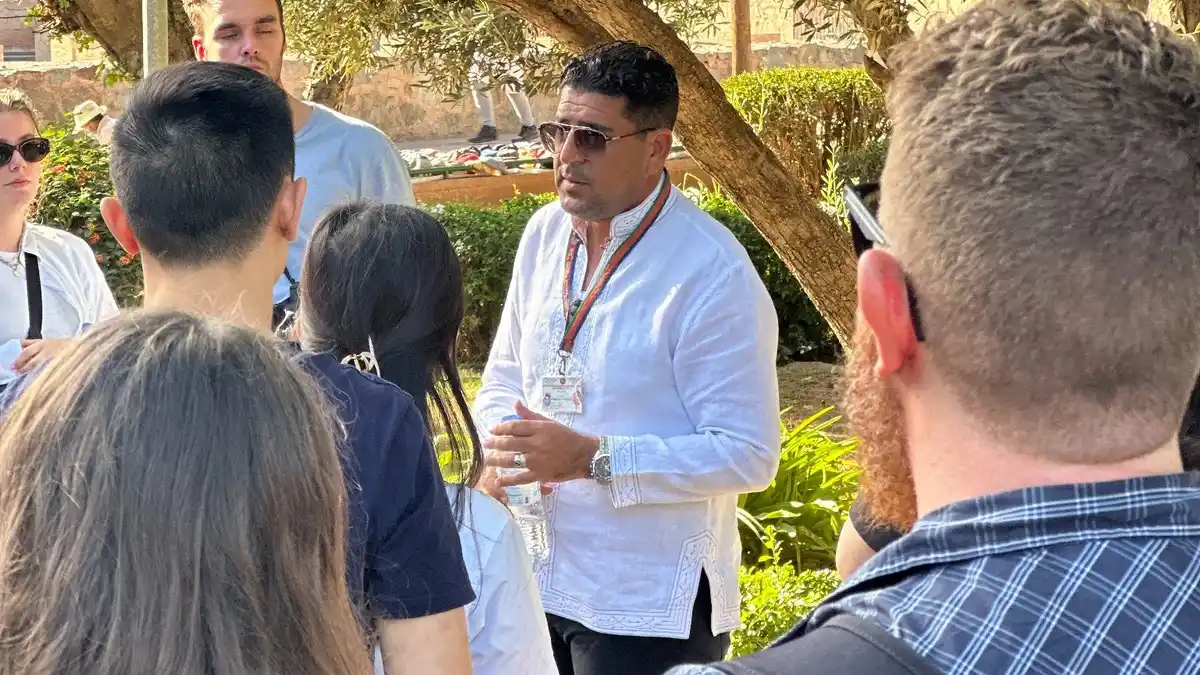
As a licensed Moroccan tour guide, this is one of the questions I answer most often before my guests arrive. People ask whether they should bring cash, exchange money before flying, rely on credit cards, or use a travel debit card. The good news is that managing money in Morocco is straightforward when you have a simple plan.
In this guide, I’ll explain how the Moroccan dirham works, where to use cash or cards, how to avoid unnecessary ATM fees, how much cash to carry each day, and the money mistakes I see travelers make most often. My goal is to help you arrive prepared and spend with confidence throughout your trip.
Table of Contents
Table of Contents
Quick Answer: How Money Works in Morocco
The currency in Morocco is the Moroccan dirham (MAD), the only official currency accepted for everyday payments throughout the country. Cash is still essential for taxis, souks, small cafés, local restaurants, tips, and many rural areas, while credit and debit cards are widely accepted in hotels, larger riads, supermarkets, shopping malls, and many modern restaurants. For most travelers, the simplest approach is to withdraw Moroccan dirhams from an ATM after arrival, use your card for larger purchases, and carry small notes for everyday expenses.
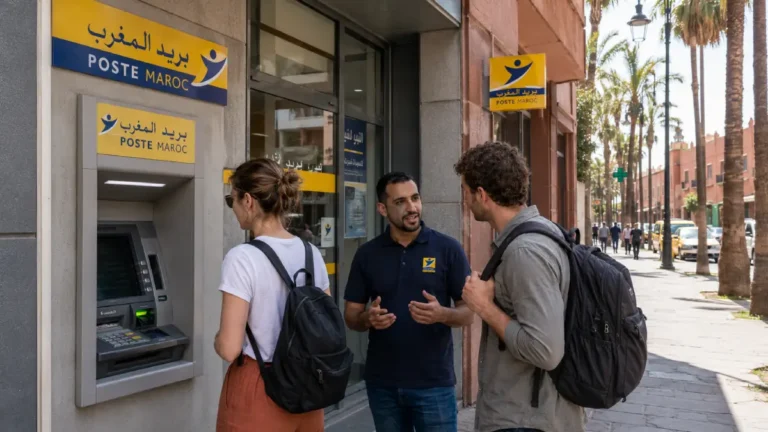
ATMs are easy to find in major cities such as Marrakech, Fes, Casablanca, Rabat, Tangier, Agadir, and Essaouira. For the best experience, use ATMs attached to bank branches and always choose to be charged in Moroccan dirhams (MAD) if the machine offers currency conversion.
Bring one or two payment cards, a small emergency amount in euros, US dollars, or British pounds, and avoid relying entirely on cash or cards. A combination of both is the safest and most practical way to manage money in Morocco.
For deeper planning, read my Morocco Travel Guide and Morocco Travel Costs before you arrive.
Your First 24 Hours in Morocco
For an arrival at Mohammed V Airport, plan the journey as well as your cash: use Casablanca Airport to city centre if you are staying in the city, or Casablanca Airport to Marrakech if you are continuing south. If you prefer buying mobile data after landing, my Morocco SIM Card Guide explains local options.
Your first 24 hours in Morocco are important because this is when many small money problems happen. A traveler lands in Marrakech or Casablanca, feels tired, needs a taxi or transfer, wants water, maybe pays the riad balance, then goes out for dinner. If they arrive with no cash, only one card, and no idea about small bills, the first evening can feel more stressful than it needs to be.
At the airport, you can use an ATM or exchange a small amount at an official exchange desk. The airport rate may not always be the best, but it is practical for the first hours. I usually tell guests not to exchange all their trip money at the airport. Just get enough for the first day: taxi, tips, water, first meal, and small emergencies.
For many travelers, 1,000 to 2,000 MAD on arrival is a comfortable first amount, depending on your style of travel and whether your airport transfer or hotel is already paid. If you want a simple cash plan by arrival day, daily spending, souks, day trips, and desert travel, read How Much Cash Should I Bring to Morocco?
After that, you can use a bank ATM in the city when you are rested.
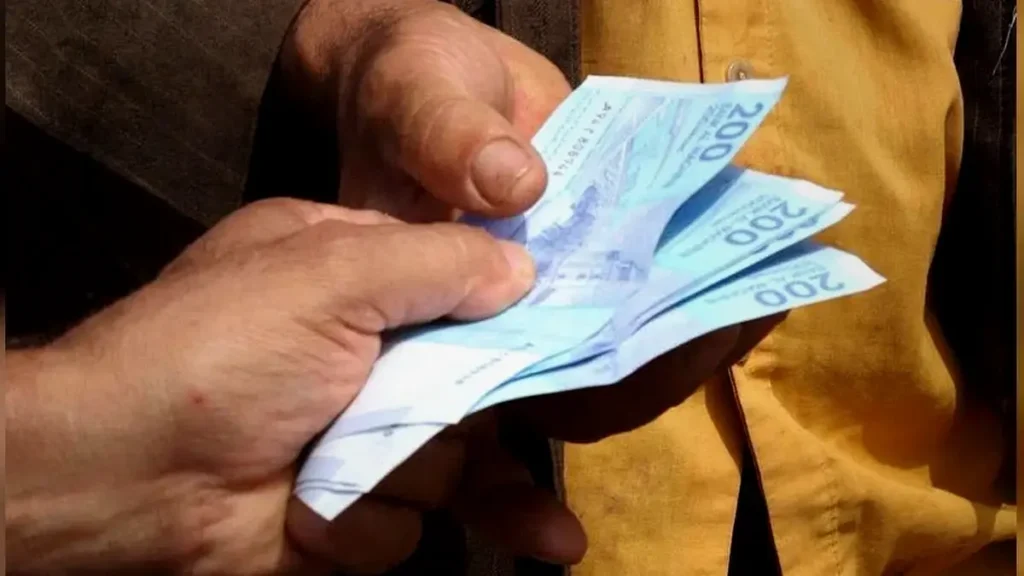
The most important thing is small bills. A 200 MAD note is useful, but it can be difficult for taxis, small cafés, porters, and tiny shops. Try to get 20, 50, and 100 MAD notes as soon as possible. Buy water, pay for coffee, or ask your riad politely if they can help change a larger note. Small bills are the secret to easy travel in Morocco.

Understanding the Moroccan Dirham
The official currency of Morocco is the Moroccan dirham (MAD). You’ll also see it written as DH, Dhs, or د.م. The Moroccan dirham is the only currency officially accepted for everyday payments throughout the country, although a few tourist shops may occasionally accept euros or US dollars at their own exchange rate.
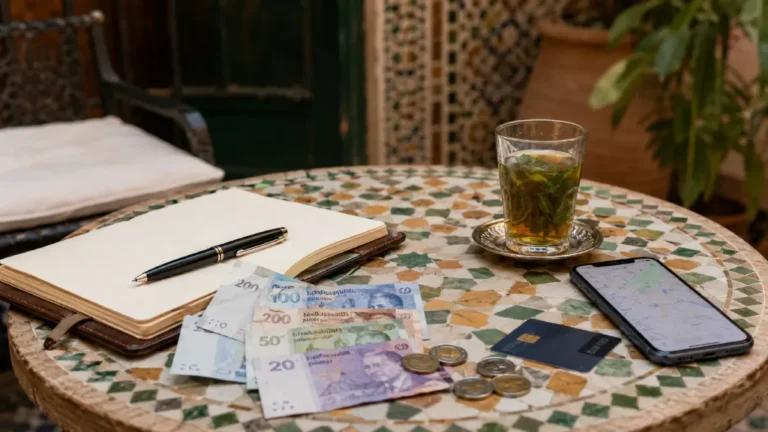
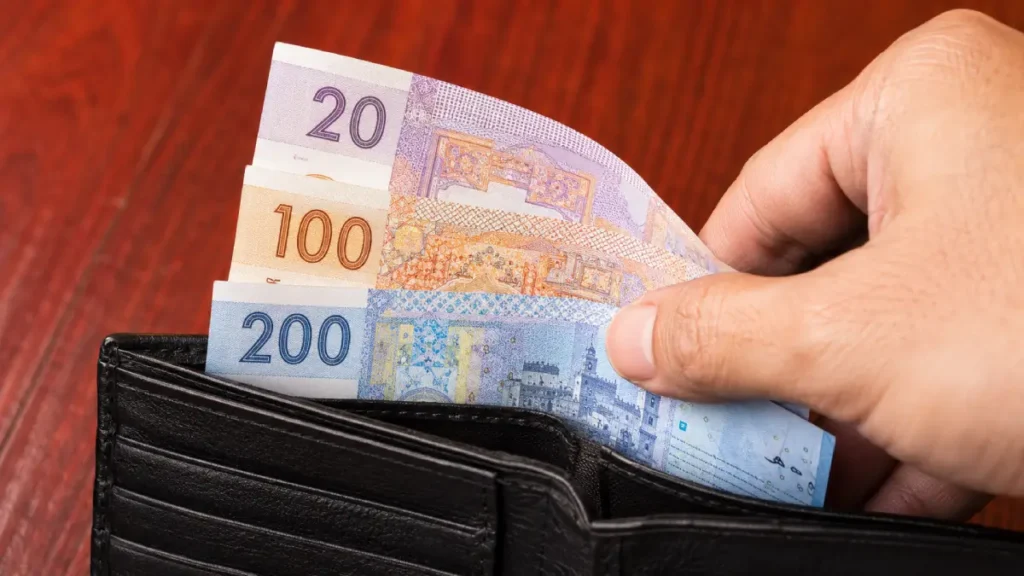
Moroccan banknotes come in 20, 50, 100, and 200 MAD, while coins include 1, 2, 5, and 10 dirhams, plus smaller centime coins. As a traveler, you’ll mostly use the larger notes and dirham coins for taxis, cafés, restaurants, entrance fees, shopping, and tips. The official currency and banking information are published by Bank Al-Maghrib, Morocco’s central bank. Travelers who want to check official exchange information can also view the bank’s daily foreign banknote exchange rates.
Many first-time visitors spend their first day converting every price into their home currency. That’s completely normal, but it quickly becomes unnecessary. After a day or two, you’ll naturally understand what everyday prices look like in Moroccan dirhams and paying becomes much easier.
As a local guide, I always recommend thinking in dirhams instead of constantly converting prices. It makes bargaining, budgeting, and everyday spending feel much more natural, especially in souks, cafés, taxis, and local markets. If you’re wondering how much spending money you’ll actually need, read my How Much Cash Should I Bring to Morocco? guide.
Should You Bring Cash to Morocco?
Yes, you should bring a small amount of backup cash to Morocco, but you shouldn’t carry your entire travel budget in cash. The best approach is to arrive with one or two payment cards, a small emergency amount in euros, US dollars, or British pounds, and then withdraw Moroccan dirhams from an ATM after you arrive.
Cash is still essential for many everyday expenses in Morocco, including taxis, souks, small cafés, local restaurants, tips, public toilets, and many businesses in rural areas. Credit and debit cards work well in larger hotels, modern restaurants, supermarkets, shopping malls, and many tour companies, but they shouldn’t be your only payment method.
I don’t recommend traveling with a large envelope of cash. It’s unnecessary and increases the risk of loss. A combination of cards and Moroccan dirhams gives you the flexibility to pay almost anywhere while keeping your money safer throughout your trip.
Although some tourist businesses may accept euros or US dollars, paying in Moroccan dirhams almost always gives you a clearer price and a better exchange rate.
How Much Cash Should You Carry Each Day?
How much cash you carry depends on your travel style. These are my suggested amounts to have available for one adult, not fixed daily costs or a target you need to spend. They exclude accommodation, prepaid tours, long-distance transport, and major purchases. Share costs such as taxis between your group, and add any unpaid hotel or tour balances separately.
| Travel Day | Suggested Cash | Local Advice |
|---|---|---|
| Light city day | 300–500 MAD | Good for taxis, coffee, snacks, water, and simple meals. |
| Sightseeing day | 500–1,000 MAD | Useful for meals, entrances, tips, taxis, and small extras. |
| Medina and souks day | 700–1,500 MAD | Better for small shopping, spices, ceramics, leather, and bargaining. |
| Shopping day | Carry more | Rugs, lamps, bags, pottery, and handmade pieces may need more planning. |
| Day trip | 500–1,000 MAD | Useful for lunch, drinks, toilets, tips, roadside stops, and small purchases. |
| Desert or remote travel day | Carry more cash | Withdraw before leaving the city because ATMs are less reliable in remote areas. |
Kamal’s local tip: do not carry all your cash in one place. Keep daily cash in your wallet, extra cash separate, and backup money somewhere safe. This is a simple precaution for any trip. If you want the bigger trip picture beyond cash and cards, read my Morocco Travel Budget guide where I explain daily costs for riads, food, transport, desert tours, tipping, and hidden expenses.
Where Credit Cards Work in Morocco
Credit and debit cards are widely accepted in many parts of Morocco, especially in larger hotels, modern riads, supermarkets, shopping malls, international restaurants, and many tour companies. However, cash is still the preferred payment method in traditional daily life, including taxis, souks, small cafés, local restaurants, market stalls, and many rural areas.
For most travelers, the best approach is to use your card for larger purchases and keep Moroccan dirhams in small notes for everyday spending. Even where cards are accepted, payment terminals can occasionally stop working because of internet or connection problems, so carrying some cash is always a smart backup.
| Place | Cards Accepted? | Local Guide Advice |
|---|---|---|
| Large hotels | Usually yes | Good place to use a card for bigger payments. |
| Luxury riads | Often yes | Confirm before arrival, especially for remaining balance. |
| Small riads | Sometimes | Some accept cards, some prefer cash, and some machines fail. |
| Modern restaurants | Often yes | Ask before ordering if you plan to pay by card. |
| Local restaurants | Often no | Carry cash, especially outside tourist streets. |
| Souks | Sometimes, but cash is better | Cash helps with bargaining and small purchases. |
| Taxis | Usually no | Small cash is very important. |
| Supermarkets | Usually yes | Cards are common in larger supermarkets. |
| Museums and monuments | Mixed | Some are cash only, some may accept cards. Carry cash. |
| Desert camps | Sometimes | Confirm before travel. Internet can be weak. |
| Rural areas | Rarely | Cash is the safest option. |
Even when a place accepts cards, the machine can fail. Sometimes the internet is weak, the terminal is not working, or the bank connection is slow. This is why I always say: card for bigger payments, cash for daily life.
Cash or Card in Morocco: Which Is Better?
For most travelers, the best way to pay in Morocco is to use both cash and cards. Credit and debit cards are widely accepted in hotels, larger riads, supermarkets, shopping malls, and many modern restaurants, while cash is still essential for taxis, souks, small cafés, local restaurants, market stalls, tips, and many businesses in rural areas.
I recommend using your card for larger purchases and keeping Moroccan dirhams in small notes for everyday spending. This gives you the flexibility to pay almost anywhere while avoiding the inconvenience of carrying large amounts of cash.
Although Morocco has become increasingly card-friendly in recent years, you shouldn’t rely entirely on electronic payments. Internet outages, card terminal problems, and cash-only businesses are still common enough that carrying some cash is always a smart idea. For more practical advice about where cards are accepted, read my Can You Use Credit Cards in Morocco guide.
ATMs in Morocco
ATMs in Morocco are widely available in major cities, airports, tourist destinations, and most medium-sized towns, making it easy for travelers to withdraw Moroccan dirhams during their trip. You’ll find reliable ATMs in Marrakech, Casablanca, Fes, Rabat, Tangier, Agadir, Essaouira, Ouarzazate, and many other popular destinations.
I always recommend using ATMs attached to bank branches rather than standalone machines. If your card is retained, the machine has a problem, or you need assistance, it’s much easier to get help from the bank. Whenever possible, withdraw cash during the day, shield your PIN, and avoid accepting help from strangers.
Before traveling to remote areas such as the Sahara Desert, the Atlas Mountains, or small villages, withdraw enough cash in a larger city. ATMs can be less common, temporarily out of service, or empty during busy travel periods and public holidays.
The ATM Rule That Can Save You Money
When you use an ATM in Morocco, the screen may ask if you want to be charged in your home currency or in Moroccan dirhams. This is called dynamic currency conversion. The simple rule is this: choose Moroccan dirhams.
If the ATM offers to convert the amount into euros, dollars, pounds, or another home currency, the exchange rate may be worse. When you choose to be charged in Moroccan dirhams, your own bank or card provider handles the conversion. This is usually better, especially if you use a good travel card.
The screen can look confusing because it may say something like “accept conversion” or “continue without conversion.” Read slowly. You are not canceling the withdrawal when you decline the ATM’s conversion. You are only refusing the ATM’s exchange rate.
ATM Fees and Withdrawal Limits
ATM fees in Morocco can come from several places. The Moroccan ATM may charge a local fee, your home bank may add an international withdrawal fee, and your card provider may charge a foreign exchange fee. You can also lose more through the exchange rate when you accept the ATM’s own currency conversion.
This is why withdrawing very small amounts several times can become expensive. When every withdrawal includes a fixed fee, taking 200 MAD five times may cost more than withdrawing 1,000 MAD once. At the same time, do not carry more cash than you feel comfortable managing. Balance is important.
Always read the ATM screen carefully before confirming the transaction. Some machines show the fee clearly, and many banking apps send instant notifications that make it easier to track your spending. Before travelling, check your bank’s foreign withdrawal fees so there are no surprises.
Travellers renting a car should also keep enough available credit for the security deposit and carry some cash for fuel, tolls, parking, and smaller roadside stops. For deposit requirements, payment methods, insurance, and additional rental charges, read my Rent a Car in Morocco
When to Withdraw Cash Before Leaving the City
Withdraw cash before you leave big cities for remote places. This is very important for the Sahara Desert, Merzouga, Erg Chebbi, Erg Chigaga, the Atlas Mountains, Dades Valley, Draa Valley, Imlil, Ouarzazate routes, small villages, and remote beaches.
Even if there is an ATM in a small town, it may be out of service, out of cash, or far from your hotel. During festivals, Eid, Ramadan evenings, public holidays, and busy travel weekends, cash planning becomes even more important. Banks may close, ATMs may have lines, and small businesses may not have change.
Before a desert trip, I tell guests to prepare cash in Marrakech, Fes, Ouarzazate, or another city before the long road. This is especially helpful if you are planning with my Morocco Itinerary 7, 10, and 14 Days guide or checking seasonal advice in Best Time to Visit Morocco.
Exchanging Money in Morocco
You can exchange money in Morocco at official exchange offices, banks, and airport exchange desks. Always use official places. Do not exchange money in the street, even if someone offers a “better rate.” It is not worth the risk or confusion.
Airport exchange desks are okay for a small first amount. For larger amounts, compare exchange offices in the city. In Marrakech, many travelers exchange money near Gueliz, Jemaa el-Fna, or official exchange shops close to tourist areas. In Fes and Casablanca, you will also find banks and exchange offices in central areas.
Keep your exchange receipt, especially if you may want to change leftover dirhams back before departure. Morocco controls the dirham, and it is not a currency you should plan to take home in large amounts.
Before You Leave: Leftover Dirhams and Exchange Receipts
Plan your final withdrawal so you have enough for the airport journey, meals, and small expenses without leaving with a large cash balance. Keep the original exchange receipts in your name, and take your passport when asking an authorized exchange office to change unused dirhams back into foreign currency. Confirm the documents and amount they can handle before your departure day.
The Office des Changes allows travelers to carry up to 2,000 MAD in Moroccan banknotes into or out of Morocco. This is a border allowance, not a promise that an exchange desk will buy back any amount without paperwork. Its rules for changing leftover dirhams back set separate document requirements.
My practical advice is to deal with a larger leftover amount in the city rather than leaving everything until you reach the airport.
Should You Exchange Money Before Arriving in Morocco?
For most travelers, no. It is usually better to get Moroccan dirhams after you arrive. Moroccan dirhams are not always easy to get abroad at a good rate, and you do not need to arrive with a large amount of cash.
A simple arrival plan is to arrive with one or two working cards, bring a small backup amount in euros, dollars, or pounds, then withdraw some dirhams at the airport or exchange a small amount when you land. After that, get smaller bills as soon as possible because small cash is very useful for taxis, tips, toilets, snacks, and small purchases.
Later in the trip, you can use city ATMs or official exchange offices for better planning. This system is easier, safer, and more flexible than trying to organize all your dirhams before the trip.
Also, make sure your phone works when you arrive. You may need internet for maps, bank verification, taxi pickup, hotel messages, or finding your riad. Before your trip, read my Best eSIM for Morocco guide, and if you want to compare Wi-Fi, mobile data, and staying connected while you travel, see my Internet in Morocco guide.
Using Travel Debit Cards in Morocco
A travel debit card can help you track spending and pay by card where accepted. Before traveling, check your issuer’s exchange rates, foreign transaction fees, and ATM withdrawal limits.
But I want to be clear from real local experience: no travel card replaces cash in Morocco. You can use your card in many hotels, modern restaurants, supermarkets, and some larger shops, but you will still need cash for taxis, tips, souks, small cafés, local restaurants, toilets, porters, rural areas, and day-trip stops.
Choose Moroccan dirhams (MAD) when paying or withdrawing, decline the terminal or ATM’s currency conversion, and keep small bills for daily life. Bring a backup card and store it separately.
What to Do If Your Card Is Declined
First, check your banking app for a security alert, your available balance, and your international-payment settings. A declined payment does not necessarily mean the card will fail everywhere. Ask whether the terminal has a connection problem, then use your backup card or cash if necessary.
If an ATM gives no cash but your app shows a debit, keep the receipt or photograph the machine’s location and transaction details. Contact your card issuer through its official app or the number on your card. Avoid repeated withdrawals until you understand what happened.
If your card is lost or retained, freeze it in your banking app and contact the issuer. Keep a second card and emergency cash separately so one problem does not interrupt the whole trip.
Tipping and Small Bills in Morocco
Tipping in Morocco is not always compulsory, but it is appreciated when service is good. Small bills make tipping easy and natural. If you only have 200 MAD notes, tipping becomes awkward.
| Situation | Suggested Tip | Local Advice |
|---|---|---|
| Café | 5–10 MAD | Small coins or notes are enough for simple service. |
| Restaurant | 5–10% | More if service is very good. Check if service is included. |
| Taxi | Round up | Agree clearly or use the meter when possible. |
| Hotel porter | 10–20 MAD | More if bags are heavy or the walk is long. |
| Housekeeping | 20–50 MAD | Leave daily or at the end of your stay. |
| Private driver | 100–200 MAD per day | Depends on service, distance, and group size. |
| Local guide | 100–300 MAD | Depends on tour length and quality. |
| Hammam staff | 20–50 MAD | More in luxury spas if service is excellent. |
| Desert camp staff | 50–100+ MAD | Depends on service and group size. |
For a deeper guide, read Tipping in Morocco before your trip. It will help you avoid overthinking every situation.
Cash Safety in Morocco
Traveling around Morocco is straightforward if you use normal common sense. You do not need to feel afraid, but you should travel smart. Keep daily cash separate from backup cash. Use your hotel or riad safe when available. Carry a backup card separately from your main card. Cover your PIN at ATMs. Avoid anyone who tries to “help” you at the cash machine.
In shops and taxis, ask prices first. Count change calmly. Do not feel embarrassed to check your money. In busy places like Jemaa el-Fna, the Fes medina, train stations, and crowded souks, keep your wallet secure the same way you would in any busy travel destination.
The goal is not to make Morocco sound dangerous. It is to help you move with confidence. For more practical advice, read Morocco Travel Scams.
Money in the Souks
The souks are one of the places where cash matters most. In Marrakech and Fes, you may find shops that accept cards, especially for larger items like rugs, leather jackets, lamps, or ceramics. But cash is still powerful for small and medium purchases.
Bargaining is part of the souk culture, but it should be respectful. Do not bargain hard if you are not serious. If you ask the price, negotiate, agree, and then walk away just for fun, it creates bad energy. But if you are truly interested, bargaining can be friendly and even enjoyable.
Small bills help a lot. If you negotiate a small item down to 80 MAD and then give a 200 MAD note, the shopkeeper may not have change, or the moment becomes awkward. For spices, small leather goods, scarves, baskets, and ceramics, keep 20, 50, and 100 MAD notes ready.
For rugs, lamps, pottery, and bigger handmade pieces, take your time. Ask about shipping, payment method, and total cost clearly. If paying by card, check the amount before entering your PIN. If paying cash, count it slowly. For more details, read my Marrakech Souks Guide. If you are planning to shop for souvenirs, my Morocco souvenir and shopping guide includes realistic price ranges for rugs, leather, ceramics, spices and other popular purchases.
Money for Desert Tours and Day Trips
Even if your tour is prepaid, you still need cash. This surprises many travelers. On a day trip to the Atlas Mountains, Agafay, Essaouira, Ouzoud, or Ourika, you may need cash for drinks, toilets, snacks, lunch upgrades, tips, local guides, small purchases, and roadside cafés.
For desert tours, cash becomes even more important. On the road to Merzouga or Erg Chigaga, you may stop for coffee, water, toilets, fossils, scarves, viewpoints, or small local shops. You may want to tip camel handlers, luggage helpers, camp staff, drivers, or local guides. Some desert camps accept cards, but internet can be weak, and not every small stop has a machine.
Before leaving Marrakech or Fes for the Sahara, withdraw enough cash. If you are planning the classic route, read 3 Days Desert Tour from Marrakech and Best Desert Camps in Merzouga. If you prefer something closer to Marrakech, read Agafay Desert.
City-by-City Money Notes
Marrakech
Marrakech is easy for ATMs and card payments in many hotels, restaurants, and modern shops. But the medina, taxis, souks, food stalls, small cafés, and porters still need cash. Around Jemaa el-Fna and the souks, keep small bills. For planning your visit, read my Marrakech Travel Guide, and if you’re deciding where to stay, see Where to Stay in Marrakech.
Fes
Fes is traditional and beautiful, but the old medina can feel like a maze. Cash is very useful for local food, guides, craftsmen, small shops, and taxis. Use ATMs before going deep into the medina. For planning your visit, read my Fes Travel Guide, and if you’re choosing accommodation, see Where to Stay in Fes.
Casablanca
Casablanca is Morocco’s business city, so cards are more common in modern restaurants, malls, hotels, and larger stores. Still, taxis, small cafés, and local places often need cash. For planning, read Casablanca Travel Guide.
Essaouira
Essaouira is relaxed and easier than Marrakech for many travelers. Cards work in some hotels and restaurants, but cash is still best for the port, small seafood places, taxis, markets, and local shops. For planning, read Essaouira Travel Guide.
Chefchaouen
Chefchaouen is smaller and more relaxed. ATMs exist, but bring enough cash before weekends or holidays. Many small shops, cafés, and taxis prefer cash. For planning, read Chefchaouen Travel Guide.
Merzouga
Merzouga and desert areas need cash planning. Do not arrive depending only on cards. Bring enough dirhams for tips, drinks, scarves, small stops, and extras. For planning, read Merzouga Travel Guide.
Atlas Mountains
In the Atlas Mountains, cash is the safest option. Small villages, mountain guides, family lunches, mule handlers, and local cafés may not accept cards. Bring small bills and coins. For planning, read 10 Most Beautiful Mountain Towns in Morocco Guide.
My Local Money Tips for Morocco
My honest advice is simple: do not make money in Morocco complicated. Bring a backup card. Bring a small amount of foreign cash. Withdraw Moroccan dirhams after arrival. Use cards for bigger payments when it makes sense. Use cash for daily life. Keep small bills always.
This is the same advice I give my guests in Marrakech. When they follow it, they relax. They enjoy the medina, the food, the riads, the desert road, and the small local moments without worrying every time they need to pay.
Morocco is not a place where you need to carry huge cash all the time. It is also not a place where you should travel with only Apple Pay and one card. The best system is in the middle: card for bigger payments, cash for daily life, small bills for smooth travel.
Common Money Mistakes Travelers Make in Morocco
The first mistake is arriving with only one card. If that card is blocked, lost, damaged, or refused by an ATM, the trip becomes stressful. Always bring a backup if possible.
The second mistake is not having small bills. Travelers withdraw 2,000 MAD, receive large notes, then struggle to pay a taxi or tip a porter. Break large notes early.
The third mistake is waiting until remote areas to withdraw. Do not wait until the Sahara, a mountain village, or a small beach town to solve your cash problem.
The fourth mistake is paying in euros or dollars too often. It may feel easy, but the exchange rate is usually not good for you.
The fifth mistake is accepting ATM conversion without understanding it. Choose to be charged in Moroccan dirhams.
The sixth mistake is not checking the riad card policy before arrival. Some small riads prefer cash or have machine issues.
The seventh mistake is withdrawing tiny amounts many times. Fees can add up quickly.
The eighth mistake is carrying all cash in one wallet. Separate your money.
The ninth mistake is forgetting cash for tips and toilets. This is very common on day trips.
The tenth mistake is thinking every restaurant accepts cards. Many local restaurants do not.
Morocco Money Checklist Before You Fly
Before leaving for Morocco, make sure you have:
✓ At least one debit or credit card that works internationally.
✓ A second backup payment card if possible.
✓ A small emergency amount in euros, US dollars, or British pounds.
✓ A plan to withdraw Moroccan dirhams after arrival.
✓ Small Moroccan banknotes for taxis, cafés, tips, and local shops once you’ve exchanged or withdrawn cash.
✓ Your bank informed if required for international travel.
✓ Enough cash before traveling to the Sahara Desert, the Atlas Mountains, or other remote areas.
FAQs About Money in Morocco
What currency is used in Morocco?
Morocco uses the Moroccan dirham, usually written as MAD, DH, or د.م. You will use dirham notes and coins for most daily payments.
Is Morocco cash or card?
Morocco is both, but using cash and cards together is the best approach. Credit and debit cards are widely accepted in hotels, larger restaurants, supermarkets, and many modern businesses, while cash is still essential for taxis, souks, small cafés, tips, and rural areas.
Can I use euros or dollars in Morocco?
Sometimes, especially in tourist shops or for larger purchases, but it is usually better to pay in Moroccan dirhams. Paying in euros or dollars can give you a poor exchange rate and create confusion.
Should I exchange money before arriving?
For most travelers, no. Bring a small backup amount in euros, dollars, or pounds, then withdraw or exchange Moroccan dirhams after arrival.
Are ATMs safe in Morocco?
Yes, ATMs are generally safe when you use normal common sense. Use machines attached to banks, withdraw during the day when possible, cover your PIN, and avoid help from strangers.
How much cash should I bring to Morocco?
Do not bring your whole trip budget in cash. Bring a small backup amount in foreign currency and withdraw Moroccan dirhams after arrival. For daily spending, many travelers carry around 300 to 1,000 MAD depending on the day.
Can I pay by card in Marrakech?
Yes, in many hotels, restaurants, supermarkets, and modern shops. But in the medina, taxis, food stalls, souks, and small cafés, cash is still very important.
Do taxis accept cards in Morocco?
Most taxis do not accept cards. Carry small cash, especially 10, 20, and 50 MAD notes.
Is tipping expected in Morocco?
Tipping is appreciated when service is good. It is common in cafés, restaurants, hotels, tours, hammams, and desert camps. Small bills make tipping much easier.
What should I do with leftover Moroccan dirhams?
Spend down small amounts before departure. For a larger balance, ask an authorized exchange office about changing it back and keep your original exchange receipts and passport ready. Travelers may carry up to 2,000 MAD in Moroccan banknotes into or out of Morocco; reconversion has separate document requirements.
Is Morocco expensive for tourists?
Morocco can be budget-friendly, mid-range, or luxury depending on your choices. Local food and taxis can be affordable, while luxury riads, private tours, fine dining, and shopping can increase your budget.
What is the best way to pay in Morocco?
The best way is to use a card for bigger payments and cash for daily life. Always keep small bills for taxis, tips, cafés, and souks.
Should I carry cash in the Sahara Desert?
Yes. Carry enough cash before traveling to the Sahara. ATMs and card machines can be limited or unreliable in remote desert areas.
Do riads in Morocco accept cards?
Some riads accept cards, especially luxury riads, but smaller riads may prefer cash or have machine problems. Always confirm payment options before arrival.
Final Advice Before You Travel to Morocco
Money in Morocco is much easier when you prepare a little before you arrive. The Moroccan dirham may feel new on the first day, but after a few coffees, taxis, entrance tickets, and small payments, you start to understand it naturally. ATMs are easy to find in big cities, cards work in many modern places, and cash is still important for the medina, souks, taxis, rural areas, and desert travel.
My honest advice is simple: do not travel with only one card, do not wait until the last minute to find cash, and do not forget small bills. With a good mix of card, cash, backup money, and small notes, your trip becomes smoother from the first airport transfer to the last day in Morocco.
This is the best way to handle money in Morocco: stay prepared, keep it simple, and use your energy for the beautiful parts of your trip: walking through old medinas, tasting Moroccan food, sleeping in riads, crossing the mountains, and enjoying the desert.
If you’re still planning your journey, start with my Morocco Travel Guide for everything you need to know before visiting Morocco.