
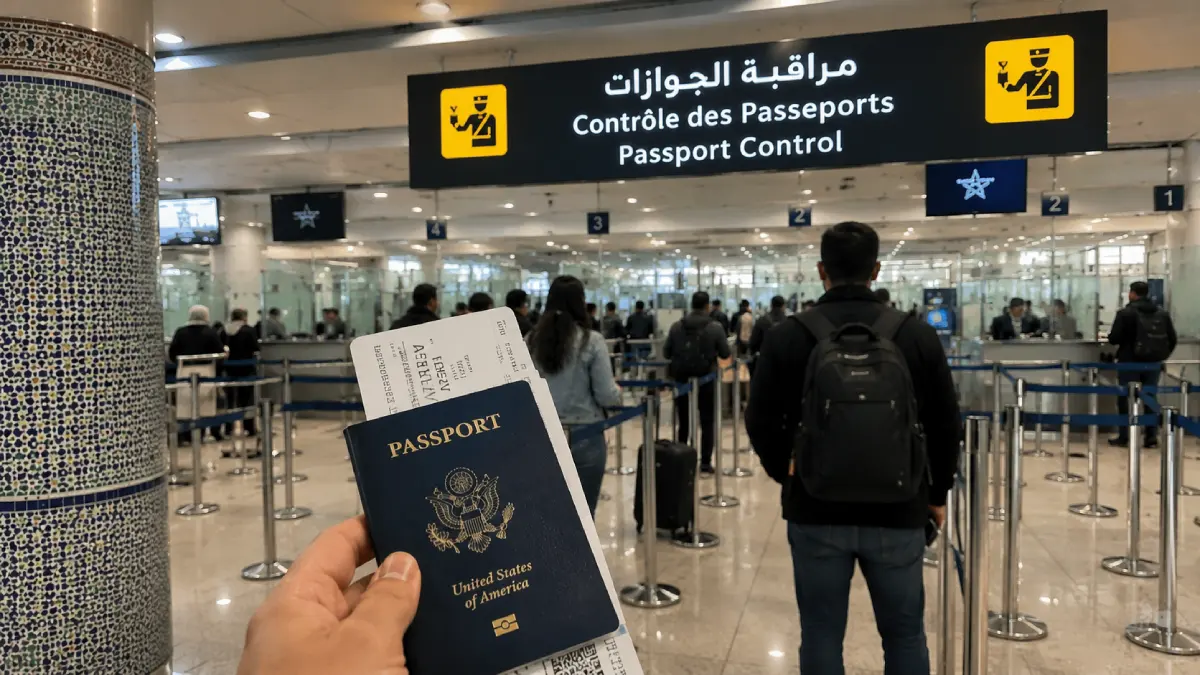
If you are searching for Visa Morocco information before your trip, one of the first things to check is whether you need a visa and how long your passport needs to be valid.
For many travelers, visiting Morocco is straightforward. Citizens of several countries, including the United States, United Kingdom, Canada and Australia, can normally visit Morocco for tourism for up to 90 days without getting a tourist visa in advance.
But visa and passport rules depend on your nationality, passport and reason for travel. They can also change.
I’m Kamal, a licensed Moroccan tour guide based in Marrakech. I have been working with international travelers in Morocco for many years, and my advice is simple: check your documents before booking your final travel arrangements rather than relying on an old blog post or social media comment.
This guide explains the main Morocco visa requirements, passport rules, the 90-day limit, eVisa options and what to expect when you arrive.
Quick answer: Many visitors from the US, UK, Canada, Australia, New Zealand and European countries can visit Morocco visa-free for tourism for up to 90 days. Other nationalities may need a visa or may qualify for Morocco’s eVisa system. Always verify the current requirement for your passport before traveling.
Do You Need a Visa for Morocco?
Whether you need a visa for Morocco depends mainly on your nationality and the purpose and length of your stay.
For a normal holiday, many travelers can enter Morocco without applying for a tourist visa beforehand.
Morocco visa requirements at a glance
| Traveler | Tourist visa for a short visit? | Typical maximum stay |
|---|---|---|
| United States | Normally not required | Up to 90 days |
| United Kingdom | Normally not required | Up to 90 days |
| Canada | Normally not required | Less than 90 days |
| Australia | Normally not required | Less than 90 days |
| Many EU countries | Generally visa-free | Usually up to 90 days |
| Other nationalities | Depends on nationality | Check before travel |
Do not use this table as your final immigration check.
Visa rules can change, and special rules may apply depending on your passport type, residency, purpose of travel or personal circumstances.
Before flying, check with the Moroccan authorities or the Moroccan embassy or consulate responsible for your country.
Morocco Entry Requirements
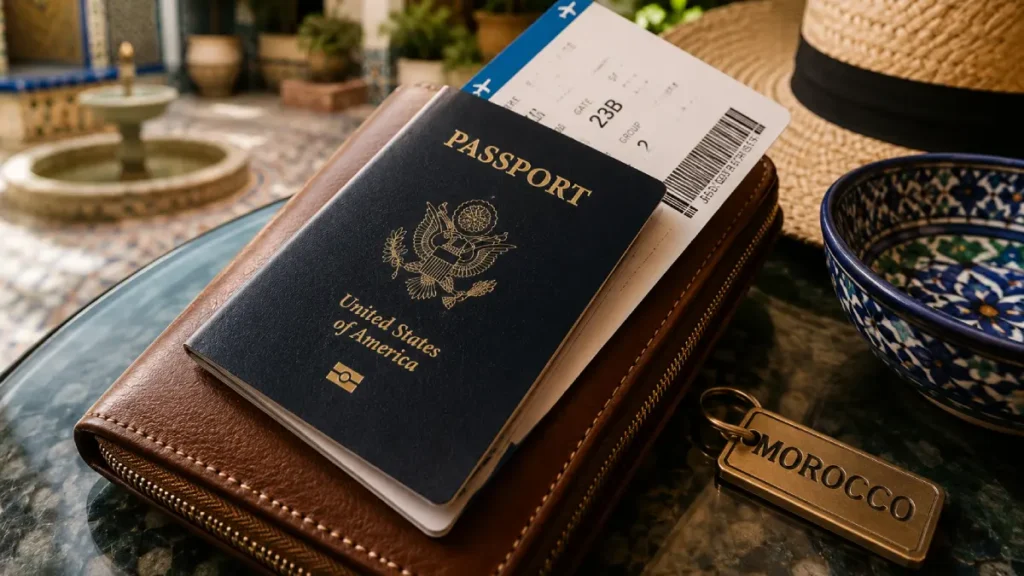
A visa is only one part of entering Morocco.
You also need to make sure your passport and other travel documents meet the requirements that apply to you.
Passport validity
This is an area where travelers need to be careful because you will often see conflicting information online.
There is no passport-validity sentence I would apply blindly to every nationality.
For example, current British government guidance says a British citizen’s passport should expire at least three months after the date of arrival in Morocco. Other governments publish different guidance for their own citizens.
The safest approach is to check the official travel advice for the passport you are actually traveling with and your airline’s document requirements before departure.
Also make sure your passport is in good condition. A badly damaged passport can cause problems at the border.
Get your passport stamped
When you enter Morocco, check that the immigration officer has properly recorded your entry.
This is easy to overlook after a long flight, but it matters.
Travelers can experience difficulties when leaving Morocco if there is no record of their legal entry into the country.
Kamal’s tip: Once you are through immigration and have collected your luggage, keep your passport somewhere secure. You generally do not need to carry it around Marrakech all day. I prefer keeping the original safely at the accommodation and carrying another form of identification or a copy when practical.
Visa Morocco Requirements for US Citizens
U.S. citizens traveling to Morocco for tourism do not need a visa for stays of 90 days or less.
Current U.S. State Department guidance says your passport should have at least six months of validity at the time you enter Morocco and at least one blank page available for an entry stamp.
If you plan to stay longer than 90 days, work, study or live in Morocco, different requirements apply. Check the latest official guidance before traveling.
Morocco Visa Requirements for UK Citizens
British citizens traveling on a full British citizen passport can visit Morocco without a visa for tourism for up to 90 days.
Current UK government guidance says your passport must have an expiry date at least three months after the date you arrive in Morocco.
Make sure your passport is stamped when you enter. Some travelers have experienced problems leaving Morocco when their entry was not properly recorded.
If you want to stay longer than 90 days, you must request an extension from the appropriate Moroccan authorities before your permitted stay expires.
Morocco Visa Requirements for Canadians
Canadian tourists do not need a tourist visa for stays of less than 90 days.
Current Government of Canada guidance says a regular Canadian passport must be valid for at least six months beyond the date you expect to leave Morocco.
This is a good example of why passport-validity advice should always be checked for your specific nationality rather than applying one general rule to every traveler.
If you plan to stay longer than 90 days, you need to obtain the proper authorization before your permitted stay expires.
Morocco Visa Requirements for Australians
Australians generally do not need a visa when visiting Morocco for less than 90 days.
Australian government advice recommends checking entry and exit conditions before travel because requirements can change at short notice.
It also advises travelers to make sure their entry is properly recorded.
What If My Country Is Not Visa-Free?
Do not worry if your passport is not covered by Morocco’s visa-free arrangements.
Depending on your nationality and circumstances, you may need to obtain a visa before traveling or you may be eligible for Morocco’s electronic visa system.
The important thing is to establish which category applies to your passport before buying a non-refundable flight.
Morocco eVisa
Morocco operates an electronic visa system for eligible travelers.
Eligibility is not based only on nationality. In some situations, factors such as your country of residence or visas/residence permits you already hold can affect whether you qualify.
Because of this, I would not rely on a long static list copied into a travel blog.
Use Morocco’s official Accès Maroc system to check your eligibility and follow the current application procedure.
If you qualify for an eVisa, complete the process through the official system rather than an unofficial website charging unnecessary intermediary fees.
How Long Can Tourists Stay in Morocco?
For many visa-exempt visitors, the normal tourism limit is up to 90 days.
Do not confuse 90 days with three calendar months.
If you are planning a long stay, calculate your dates carefully.
The entry stamp or immigration record is important because it establishes when you entered Morocco.
Can You Extend a Stay Beyond 90 Days?
Do not simply overstay.
If you need to remain in Morocco beyond your permitted stay, contact the appropriate Moroccan immigration or police authorities before your authorized period expires.
For example, current British guidance says travelers wishing to stay longer than 90 days should request an extension at a Moroccan police station. Canadian guidance advises contacting the local police’s foreigners service before the 90-day period expires.
Overstaying can create serious problems when you try to leave Morocco and may involve administrative or legal procedures and fines.
If you already know you intend to work, study or live in Morocco, investigate the correct status before your trip rather than entering as a tourist and assuming you can sort everything out later.
What Happens at Passport Control in Morocco?
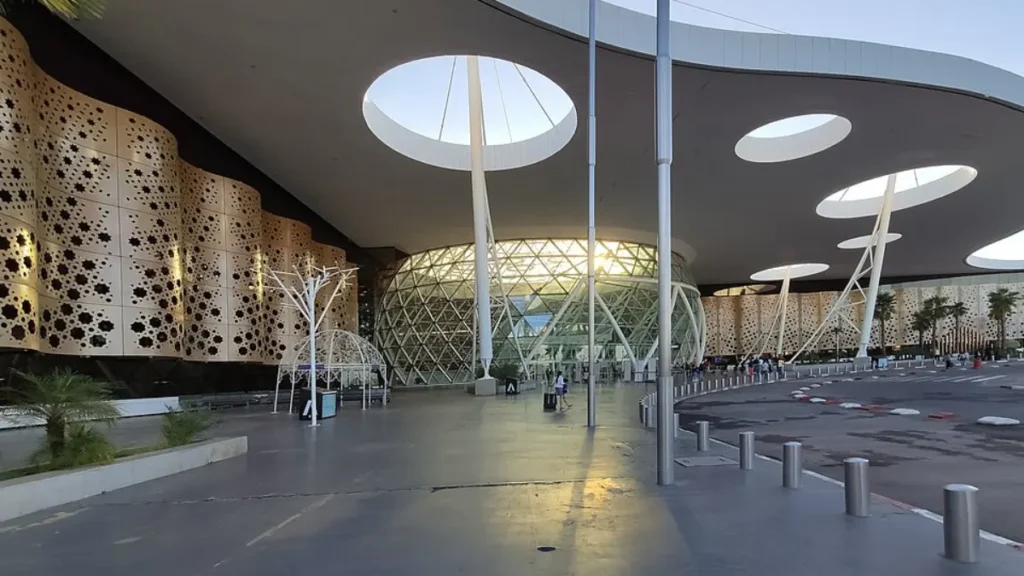
For most tourists, immigration is straightforward.
When you arrive at an international airport such as Marrakech Menara, Casablanca Mohammed V, Fes-Saïss, Agadir Al Massira or Tangier Ibn Battouta, you will pass through passport control before collecting your checked luggage.
Have your passport ready.
Border officials may ask basic questions about your visit, such as where you are staying or how long you plan to remain in Morocco.
Having the name and address of your first hotel or riad easily available on your phone is useful.
After immigration, check that your entry has been properly recorded before continuing to baggage claim.
Do You Need Proof of a Hotel or Riad Booking?
It is sensible to have your first accommodation details available when you arrive.
I recommend saving the hotel’s or riad’s:
- name
- address
- telephone number
- reservation confirmation
Do not rely completely on having internet access immediately after landing.
Take a screenshot or save the confirmation offline.
This is particularly useful in Marrakech because many riads are inside the medina, where the street address may not look like a conventional hotel address.
Do You Need a Return Ticket?
Border and airline staff may want to understand your travel plans, particularly if you are entering as a tourist.
I recommend keeping your return or onward travel confirmation easily accessible.
Even when nobody asks to see it, having clear proof of your travel arrangements avoids unnecessary complications.
Arriving in Morocco With Children
Families should check the document requirements for every child before traveling.
Each child needs the appropriate travel documentation.
Requirements can become more complicated when a child is traveling with only one parent, with someone who is not a parent, or when parents have different nationalities.
Depending on your circumstances, carrying a birth certificate and a consent letter from the absent parent may be sensible or required.
Check the official advice for your particular situation before departure.
Dual Nationals
Dual nationality can make entry requirements more complicated.
The passport you use matters, and travelers with Moroccan nationality or Moroccan family connections may be subject to rules that do not apply to ordinary foreign tourists.
If you hold Moroccan citizenship as well as another nationality, check the requirements that apply specifically to dual nationals before traveling.
Do You Need a Visa for a Morocco Layover?
Do not automatically assume that a short connection means you do not need to check visa requirements.
The answer depends on your nationality, itinerary and whether you need to pass through Moroccan immigration.
For example, collecting checked luggage, changing airports or leaving the international transit area may change the situation.
If Morocco is only a connection on your journey, confirm the transit requirements with your airline and the appropriate Moroccan authorities before departure.
Coming to Morocco by Ferry
The same basic immigration principle applies if you arrive by ferry from Europe: you must enter through an official border point and meet the requirements for your passport.
Ferry routes commonly connect Spain with northern Morocco, including the Tangier area.
Keep your passport and travel documents accessible during the crossing because immigration procedures may be handled differently depending on the route and operator.
If you are bringing a vehicle into Morocco, there are additional customs procedures for the vehicle.
Can You Work in Morocco on a Tourist Entry?
A visa-free tourist stay does not automatically give you permission to work in Morocco.
Tourism, employment, study and residency are different immigration purposes.
If you are coming to Morocco for employment, long-term study, business activities requiring authorization or residency, check the appropriate Moroccan requirements before traveling.
Common Morocco Visa Mistakes
Assuming every passport follows the same rule
It does not.
Always check requirements for your specific nationality and passport.
Reading an old article and never checking again
Immigration requirements can change.
A blog can help you understand the process, but your final check should be with an official source.
Forgetting the 90-day limit
For travelers admitted for up to 90 days, overstaying can cause significant problems.
Not checking your entry record
Make sure your arrival has been properly recorded when you enter Morocco.
Using unofficial visa websites
If you need an electronic visa, start with Morocco’s official eVisa system.
Waiting until the airport to check
This is probably the worst time to discover a passport or visa problem.
Check before booking and check again shortly before departure.
My Advice Before Flying to Morocco
After years of working with travelers, I find that most people worry much more about Moroccan immigration than they need to.
For travelers who qualify for visa-free tourism and have the correct documents, arrival is normally quite straightforward.
The important part happens before you leave home.
Check your passport expiry date, confirm whether your nationality needs a visa, save your first accommodation details and keep your return or onward flight information accessible.
And check the rules again close to departure.
Five minutes spent doing that is much better than discovering a problem at the airline check-in desk.
Official Sources to Check Before You Travel
Visa and entry requirements can change, so I recommend verifying your situation through official sources.
Morocco: Accès Maroc — official eVisa eligibility and application portal.
United States: U.S. Department of State — Morocco — official entry, visa and travel information for U.S. citizens.
United Kingdom: GOV.UK — Morocco Entry Requirements — official passport, visa and entry guidance for British travelers.
Canada: Government of Canada — Morocco Travel Advice — official entry and travel information for Canadian travelers.
Australia: Smartraveller — Morocco — official Australian government travel and entry guidance.
If the information on a travel website conflicts with official guidance for your nationality, follow the official guidance.
Last reviewed: September 2026
FAQs About Visa Morocco
Do US citizens need a visa for Morocco?
US tourists generally do not need a visa for visits of 90 days or less. Check current official requirements before departure.
Do British citizens need a visa for Morocco?
British citizens traveling for tourism can currently visit Morocco without a visa for up to 90 days.
Do Canadians need a visa for Morocco?
Canadian tourists generally do not need a visa for stays of less than 90 days.
Do Australians need a visa for Morocco?
Australians generally do not need a visa for tourist visits of less than 90 days.
How long can I stay in Morocco without a visa?
For many visa-exempt nationalities, the normal tourist stay is up to 90 days. Your nationality and circumstances determine the actual permission that applies to you.
Does my passport need six months of validity for Morocco?
Do not assume six months applies universally. Passport guidance differs depending on nationality and travel circumstances. Check the official government guidance applicable to your passport and your airline’s requirements.
Can I get a Morocco visa online?
Morocco has an eVisa system for eligible travelers. Check eligibility through the official Accès Maroc platform.
Can I extend my 90-day stay in Morocco?
If you need to stay longer than your permitted period, contact the appropriate Moroccan authorities before your authorized stay expires. Do not simply overstay.
Do I need to print my hotel booking?
I recommend having your first accommodation details available offline. A screenshot or downloaded confirmation is useful in case you do not have mobile data when you land.
What should I do after I pass immigration?
Once your passport formalities and luggage are finished, the practical part of your Morocco trip begins. You may want to arrange your airport transfer in advance, get connected with an eSIM or local SIM, withdraw some Moroccan dirhams and have your accommodation directions ready.
Continue Planning Your Morocco Trip
Once your visa and passport requirements are sorted, the next steps are much easier.
If you are flying into Marrakech, read my Marrakech Airport Transfer guide before arrival so you know the easiest way to reach your hotel or riad.
For mobile data, compare the options in my Best eSIM for Morocco and Morocco SIM Card guides.
I also recommend reading my guides to ATMs in Morocco, transportation in Morocco and Safety in Morocco before you leave.
And if you are still putting the whole trip together, start with my Morocco Travel Guide or Plan Your Trip to Morocco.
That way, when you land in Morocco, the important practical decisions are already taken care of.