
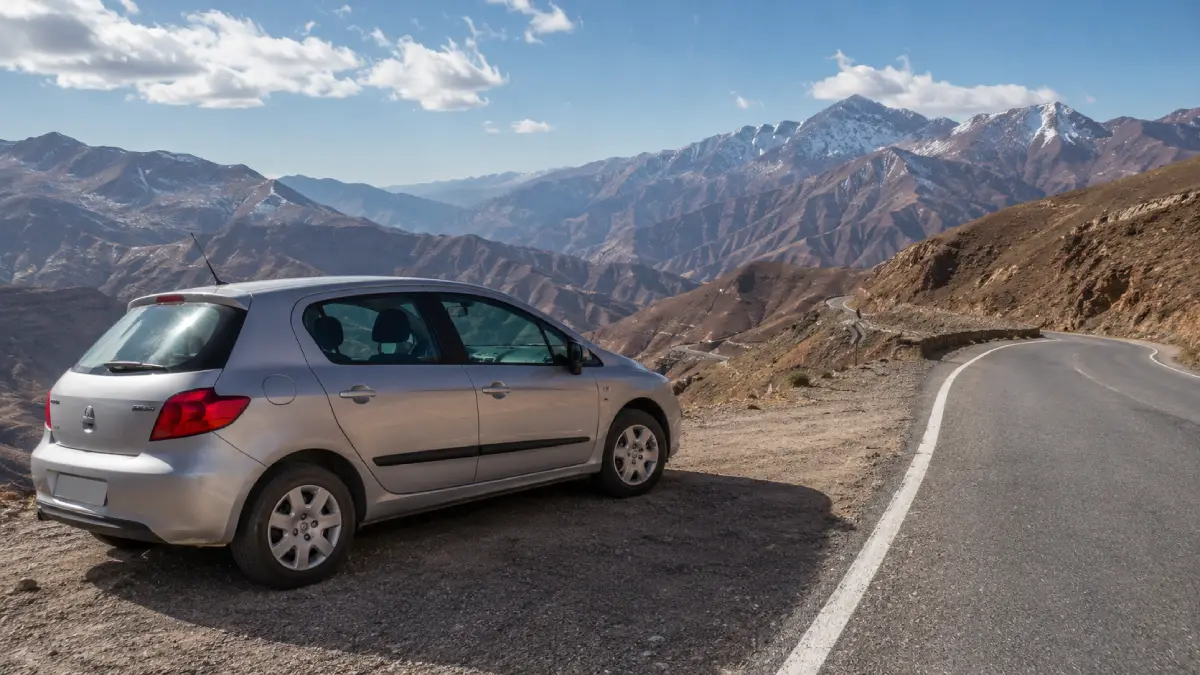
Imagine leaving Marrakech just after sunrise.
The city slowly disappears behind you as the road begins climbing into the High Atlas Mountains. Red plains give way to green valleys, small Amazigh villages, and mountain peaks that seem to rise directly from the road.
By lunchtime, you could be walking through the old lanes of Aït Ben Haddou. Two days later, you might be watching the evening light move across the dunes near Merzouga.
That freedom is the main reason many travellers decide to rent a car in Morocco.
A rental car allows you to stop when a mountain view catches your attention, have lunch in a small village, and reach places that trains do not serve. You can travel at your own rhythm instead of building every day around departure times.
But driving in Morocco also comes with challenges. City traffic can feel intense, rental insurance is not always easy to understand, security deposits can be high, and journeys through the mountains or towards the Sahara often take much longer than they appear on Google Maps.
I’m Kamal, a licensed Moroccan tour guide based in Marrakech. I have travelled these roads for more than 20 years, from Tangier and Chefchaouen in the north to Fes, the High Atlas Mountains, the Draa Valley, Todra Gorge, Merzouga, and the Atlantic coast.
This guide explains what renting and driving in Morocco is really like not only what appears on a rental-company booking page.
Quick answer: Renting a car in Morocco is a good choice for road trips through the Atlas Mountains, Ouarzazate, Dades Valley, Merzouga, Chefchaouen, and the Atlantic coast. A small car is enough for most paved routes, while a 4×4 is only necessary for remote tracks. Expect economy rentals from around €10–€25 per day, plus insurance and a possible security deposit. Drive during daylight, avoid entering old medinas, record the vehicle before leaving, and choose a company with reliable local support.
Table of Contents
Table of Contents
Rent a Car in Morocco: The Quick Answer
Yes, renting a car in Morocco can be safe and practical, especially when you drive during daylight, stay on normal paved roads, respect local speed limits, and avoid taking the vehicle into old medinas.
A rental car is particularly useful for exploring the Atlas Mountains, Ouarzazate, Dades Valley, Todra Gorge, Merzouga, Chefchaouen, the Atlantic coast, and smaller towns that are difficult to reach by train.
For a trip focused mainly on Marrakech, Casablanca, Rabat, Tangier, Meknes, and Fes, trains and local taxis may be easier.
For most rentals, you will need your passport, original driving licence, rental agreement, insurance documents, and a credit card or another deposit method approved by the company. An International Driving Permit may also be required depending on your nationality and rental company.
My number-one advice is simple: choose reliable support over the cheapest price.
Saving a few euros per day means very little if nobody answers the telephone when you have a flat tyre outside Ouarzazate.
Before deciding, compare driving with trains, buses, and private transport in my Morocco Transportation Guide.
Is Renting a Car Right for Your Morocco Trip?
A rental car makes the most sense when the journey itself is part of the experience.
It works well when your route includes rural areas, mountain roads, desert towns, or smaller coastal destinations. It is also useful for families and small groups travelling with luggage, especially when the rental and fuel costs are shared.
A car gives you the freedom to leave early, stop for photographs, take a break in a roadside café, and spend longer in places you enjoy.
However, a rental car is not necessary for every itinerary.
If your trip is mainly Marrakech, Casablanca, Rabat, Tangier, and Fes, trains are often more comfortable. Once you arrive, taxis and walking are usually easier than driving.
A car also becomes almost useless inside old medinas. Many riads are located in pedestrian lanes where vehicles cannot enter. Even when the accommodation is technically accessible, finding the correct gate or nearby parking can be stressful.
One of the smartest plans is to rent a car for only part of your trip.
You could spend three nights exploring Marrakech on foot and by taxi, then collect your vehicle on the morning you leave for Essaouira, Aït Ben Haddou, Ouarzazate, or the Sahara.
This saves rental, parking, and insurance costs while avoiding the most difficult city driving. If you are collecting your vehicle as soon as you land, see my car rental at Marrakech Airport guide for pickup, insurance and driving advice.
If you are landing at Agadir Al Massira and still deciding between a car, bus, taxi or transfer, use my Agadir Airport transport guide.
For Casablanca arrivals, compare Casablanca Airport transfer options before renting at the terminal—you may not need a car for a city-only stay.
| Your Morocco itinerary | Best transport choice |
|---|
| Marrakech, Casablanca, Rabat and Tangier | Train and local taxis |
| Marrakech to Essaouira | Rental car, bus or private transfer |
| Atlas Mountains road trip | Rental car or private driver |
| Ouarzazate, Dades and Merzouga | Rental car, guided tour or private driver |
| Fes and Chefchaouen | Rental car, bus or private transfer |
| Staying mainly inside medinas | Train, taxi and walking |
| Family trip with several stops | Rental car or private driver |
Kamal’s Local Tip: Do not rent a car simply because the daily price looks cheap. First calculate how many days you will genuinely use it. If it stays parked while you explore Marrakech or Fes, you are paying for the vehicle, insurance, and parking without receiving any real benefit.
Renting a Car in Morocco Requirements
The legal driving age in Morocco and the minimum rental age are not the same.
Most rental companies require the main driver to be at least 21 or 23. Some larger vehicles, luxury cars, SUVs, and people carriers may have higher age limits.
Many agencies also require you to have held your driving licence for at least one or two years. Drivers under 23 or 25 may be charged an additional young-driver fee.
The exact renting a car in Morocco requirements depend on the company, the vehicle category, and the country that issued your licence.
Documents You Should Carry
Bring the original versions of your documents to the rental desk.
You will normally need your passport, original driving licence, booking confirmation, payment card, and the licence of every additional driver.
Keep the rental contract, insurance certificate, vehicle registration documents, and emergency contact details inside the car.
Do not rely only on photographs stored on your phone. A flat battery, damaged phone, or poor connection can create problems at the worst moment.
Do You Need an International Driving Permit?
This is one of the most confusing parts of renting a car in Morocco because rental companies do not always give the same answer.
An International Driving Permit, usually called an IDP, is a translated version of your national licence. It does not replace your licence, so you must carry both documents together.
British travellers should follow current UK government guidance and carry the correct IDP with their UK licence when required.
Travellers from the United States, Canada, Australia, and other countries should confirm the rules with their issuing authority and rental company before departure.
My practical advice is to carry an IDP whenever your licence is not clearly written in French, Arabic, or English. It can make communication easier at the rental desk or during a police check.
How Much Does It Cost to Rent a Car in Morocco?
Car rental prices in Morocco change according to the season, city, vehicle, transmission, insurance package, and how early you book.
These prices are realistic starting points rather than guaranteed quotes:
| Vehicle type | Approximate daily price |
| Small manual car | €10–€25 |
| Mid-range manual car | €25–€40 |
| Small automatic car | €30–€50 |
| SUV or 4×4 | From €60 |
| Premium or luxury vehicle | €90–€200+ |
| Manual economy cars are normally the cheapest. Automatic cars cost more because fewer are available, and they can sell out quickly during busy travel periods. |
| The lowest advertised rate is rarely the full price. |
| A cheap rental can become much more expensive after insurance, airport surcharges, an additional driver, automatic transmission, child seats, one-way fees, mileage restrictions, and taxes are added. |
| Always continue to the final booking page and check the complete amount before paying. |
| You can compare the wider cost of transport, accommodation, food, and activities in my Morocco Travel Costs Guide. |
Compare Car Rental Prices in Morocco
Rental prices can vary widely between companies, airport locations, and vehicle types. Use DiscoverCars to compare available vehicles, insurance options, deposit requirements, mileage limits, fuel policies, and cancellation terms before booking.
Before choosing a supplier, compare the best car rental companies in Morocco, including established international brands and Moroccan agencies, and check their deposits, insurance excesses, pickup locations, and emergency support.
Car Rental Morocco No Deposit: What It Really Means
A normal security deposit for an economy car may be around €500–€1,000. For an SUV, 4×4, premium car, or luxury model, the blocked amount can reach €1,000–€2,500.
The deposit is usually pre-authorised on the main driver’s credit card. The money may not leave your account as a completed payment, but it reduces the credit available on the card until the block is released.
Some local companies advertise car rental in Morocco with no deposit, debit-card payment, or cash-deposit options.
These offers can be useful, but they often require the customer to buy a more expensive insurance package.
Before booking, ask whether the deposit is genuinely zero, whether any amount will still be blocked, what insurance is compulsory, how much excess remains, and whether tyres, windows, mirrors, roof, and underbody are covered.
Also check the mileage limit, roadside-assistance conditions, airport fees, cleaning charges, and late-return policy.
The words “no deposit” are not enough. What matters is the complete price and your remaining responsibility if the car is damaged.
Some platforms, including DiscoverCars, allow you to filter rental options by deposit amount, payment method, automatic transmission, insurance coverage, and airport pickup. Always open the supplier’s rental conditions and check the final deposit, card requirements, mileage policy, and insurance exclusions before confirming.
Morocco Car Rental Insurance Explained
Insurance is the part of the booking that travellers misunderstand most often.
A low rental rate can look attractive until you discover that the damage excess is €1,500.
Third-Party Liability
Third-party liability insurance covers damage or injury caused to another person, vehicle, or property according to the policy conditions.
It does not automatically mean the rental car itself is fully protected.
Collision Damage Waiver
Collision Damage Waiver, usually called CDW, reduces your financial responsibility for covered damage to the rental vehicle.
However, basic CDW often includes a high excess.
For example, if the excess is €1,000, you may remain responsible for the first €1,000 of covered damage.
CDW may also exclude tyres, wheels, windscreen, windows, mirrors, roof damage, underbody damage, lost keys, incorrect fuel, interior damage, and driving on unapproved roads.
Super CDW or Full Protection
Super CDW or full protection may reduce the excess, sometimes close to zero.
But “full insurance” does not always mean that every part of the vehicle is covered.
Ask for the exclusions in writing.
The name of the insurance package matters less than the protection described in the contract.
Before signing, ask the agent one direct question:
What is the maximum amount I could personally pay if this vehicle is damaged?
Ask them to show you the answer in the rental agreement.
Record the Car Before Leaving
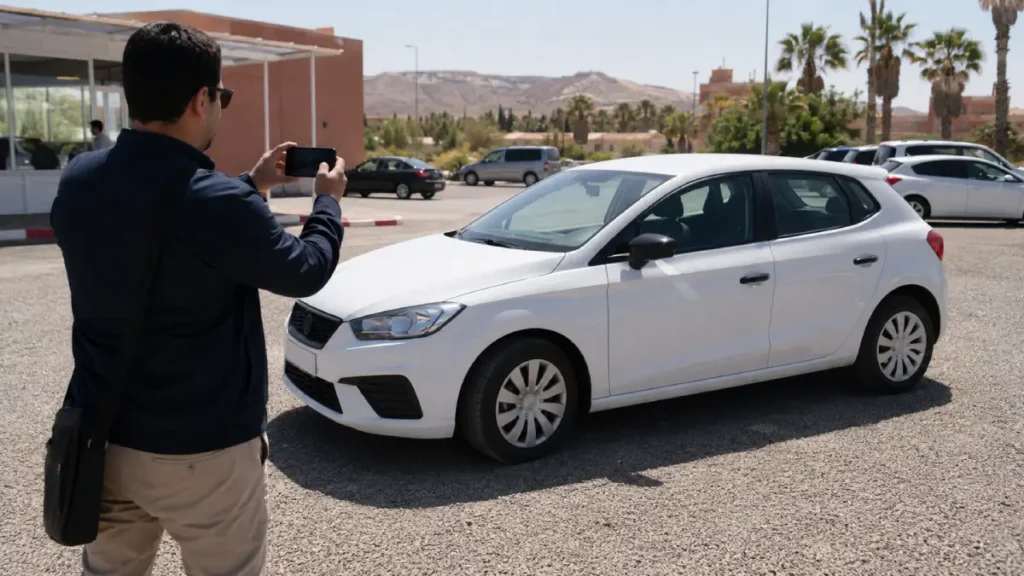
Before moving the vehicle, take a slow 360-degree video.
Film the bodywork, bumpers, wheels, tyres, windscreen, mirrors, roof where visible, interior, fuel level, mileage, and dashboard.
Make sure every scratch, dent, cracked light, or damaged wheel is marked on the inspection form.
Test the headlights, indicators, air conditioning, windscreen wipers, seatbelts, brakes, and horn.
Repeat the inspection when returning the car. Record the fuel gauge, mileage, condition, parking position, and return time.
Five minutes of filming can prevent a long disagreement later.
Choosing the Best Car for Your Morocco Road Trip
The best vehicle is not always the biggest or cheapest one.
It is the car that matches your route and that you can drive confidently for several hours.
Manual or Automatic?
Manual cars are more common and normally cheaper.
Automatic car rental in Morocco costs more because the supply is limited. Automatics are especially popular with travellers who normally drive one at home.
An automatic can make busy city traffic, hill starts, and long mountain journeys less tiring.
A manual car is perfectly suitable when you already drive one confidently.
Morocco is not the best place to relearn manual driving while managing scooters, roundabouts, pedestrians, and steep bends.
Never choose a manual only to save money if you are not comfortable using it.
Do You Need a 4×4?
For most normal tourist routes, no.
A compact car or standard sedan can reach Marrakech, Casablanca, Rabat, Fes, Chefchaouen, Essaouira, Ouarzazate, Dades Valley, Todra Gorge, Erfoud, Rissani, and Merzouga using paved roads.
A 4×4 becomes useful when your itinerary intentionally includes remote mountain tracks, unpaved desert roads, or accommodation with difficult access.
Do not take a normal rental car onto desert dunes. It can become stuck quickly, and off-road driving may invalidate the insurance.
Diesel or Petrol?
Diesel vehicles are common in Morocco and often offer better fuel economy on long road trips.
As a practical guide, diesel usually costs around 13–14 MAD per litre, while unleaded petrol is often around 14–15 MAD per litre. Prices can change, so use these figures for planning and check the price displayed at the station when you arrive.
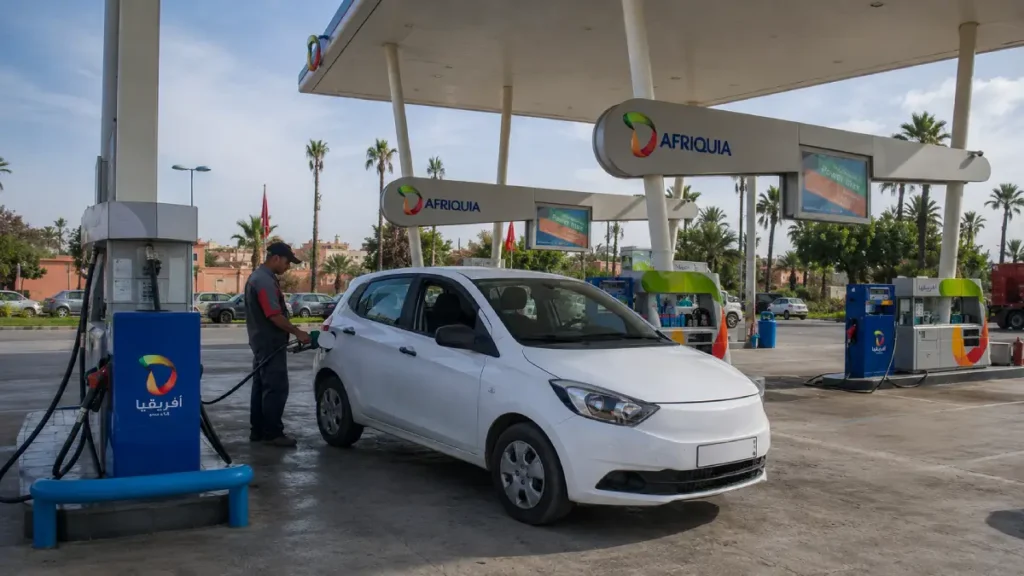
Most petrol stations in Morocco are full-service. Tell the attendant “gasoil” for diesel or “sans plomb” for unleaded petrol.
Always check the label inside the fuel cap before filling the tank. Rental cars in Morocco are often diesel, but never assume. Putting the wrong fuel into the vehicle is normally treated as driver negligence and may not be covered by the insurance.
Driving in Morocco: Rules and Safety
Driving in Morocco is manageable when you remain patient, stay alert, and do not try to copy aggressive local drivers. Traffic can feel fast and unpredictable in Marrakech, Casablanca, and Fes. Outside the cities, driving is usually calmer, but you must still watch for pedestrians, bicycles, scooters, animals, tractors, and vehicles entering the road unexpectedly. For detailed advice about speed limits, police checkpoints, roundabouts, night driving, and road safety, read my Driving in Morocco Guide.
Morocco Speed Limits
Always follow the posted signs because speed limits can change several times along the same road.
| Road type | Typical maximum speed |
| Towns and urban areas | 40–60 km/h |
| Open and regional roads | Up to 100 km/h |
| Motorways | Up to 120 km/h |
| Mobile speed controls and police checkpoints are common. |
| Slow down before the sign at the entrance to a town, not after you have passed it. |
Alcohol and Driving
Treat the alcohol limit as zero.
Drink-driving is taken seriously, and penalties can be severe.
Do not have “just one drink” and then drive. Leave the car parked or take a taxi.
Moroccan Roundabouts
Roundabouts can confuse visitors because not all junctions appear to operate in the same way.
At many normal roundabouts, vehicles already circulating have priority. At junctions controlled by traffic lights, signs, or road markings, the movement may be different.
Do not guess.
Reduce your speed, read the signs, watch the traffic, and enter only when the situation is clear.
Waiting a few seconds is better than forcing your way into the roundabout.
Avoid Driving at Night
My advice is to avoid night driving outside cities whenever possible.
Rural and mountain roads can include pedestrians in dark clothing, bicycles without lights, donkeys, sheep, slow carts, potholes, construction, and vehicles with weak lighting.
Fog and changing weather can also make mountain routes more difficult after dark.
Plan to arrive before sunset, especially when crossing the Atlas Mountains or driving towards the Sahara.
Best and Most Difficult Places to Drive in Morocco
Marrakech and Fes: Avoid the Medina Trap
Do not drive deep into the medinas of Marrakech or Fes.
Many streets become too narrow for cars. Others are restricted, crowded with pedestrians, or difficult to leave once you enter.
For practical advice on neighbourhoods, medina access, taxis, and getting around the city, read my Marrakech Travel Guide.
Park near a car-accessible gate or arrange parking with your riad. From there, continue on foot or take a small taxi.
Before booking accommodation, ask:
Can I reach the riad directly by car, and where is the nearest secure parking?
My Where to Stay in Marrakech and Where to Stay in Fes guides explain which areas are easiest for drivers, including the difference between staying inside the medina and choosing more accessible neighbourhoods such as Gueliz, Hivernage, or the Ville Nouvelle.
Marrakech to Ouarzazate
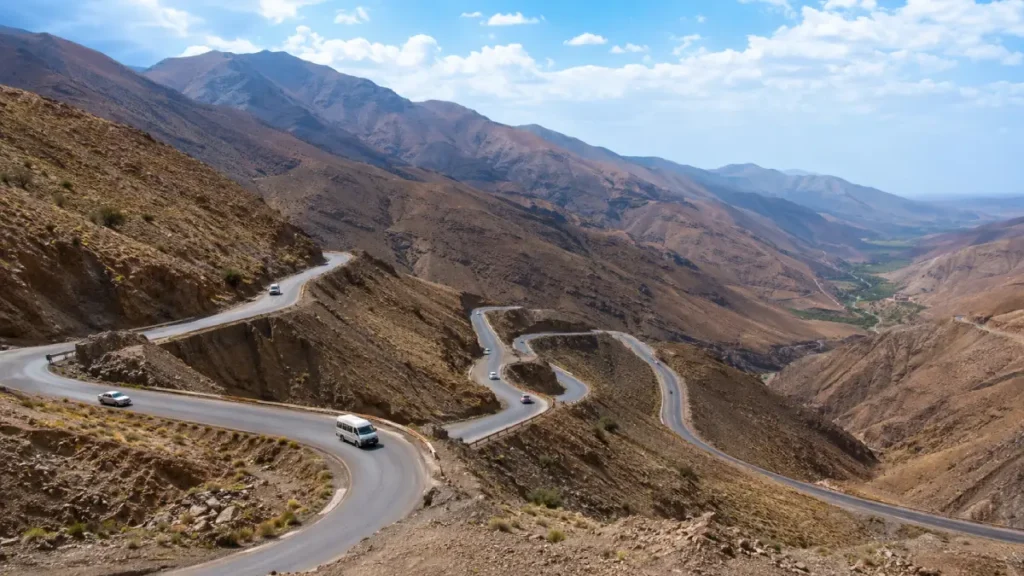
The N9 road crosses the High Atlas Mountains through the Tizi n’Tichka Pass.
It is one of Morocco’s most impressive drives, but it is not a road to rush.
Expect sharp bends, slow trucks, changing mountain weather, roadworks and many viewpoints where you may want to stop.
A map may show around four hours from Marrakech to Ouarzazate. With traffic, photographs, lunch and changing road conditions, the journey can easily take five hours or more.
Crossing Tizi n’Tichka gives you dramatic mountain views, but it is not the same as staying in a valley such as Imlil, Ouirgane or Aït Bouguemez. My complete Atlas Mountains Morocco guide explains the main mountain regions, the best places to visit and how to plan a day trip or overnight stay.
In winter, check the weather and road conditions before leaving. Travellers continuing towards the Sahara can use my Ouarzazate to Merzouga Road Trip Guide for realistic driving times, recommended stops, fuel advice and the best route through Dades Valley and Todra Gorge.
Agadir to Essaouira
The coastal road between Agadir and Essaouira is one of the most enjoyable drives in Morocco.
It passes Atlantic viewpoints, argan countryside, small villages, and long stretches of open landscape. The drive feels calmer than the mountain routes, but you should still slow down when entering towns and busy coastal areas.
Once you arrive, my Essaouira Travel Guide will help you plan parking, accommodation, places to eat, and the best things to do in the city.
Fes to Chefchaouen
The road between Fes and Chefchaouen offers beautiful views across the Rif Mountains.
It is paved, but the journey includes bends, small villages, slow vehicles, and changing weather. Allow more time than your navigation app suggests, especially when travelling in winter or stopping for photographs.
Once you arrive, my Chefchaouen Travel Guide will help you choose where to stay, what to see, and how to explore the Blue City without rushing.
Driving to Merzouga
You do not need a 4×4 to reach Merzouga using the main paved road.
Once you arrive, contact your desert camp. Most camps arrange a meeting point or secure parking area and transfer guests to the dunes by camel or the camp’s own 4×4.
Never follow a random track into the sand because somebody says it is a shortcut.
For camp planning, desert routes, and realistic travel times, read my Merzouga Sahara Desert Travel Guide.
Travellers who prefer not to drive the long desert route can compare the experience with my 3-Day Desert Tour from Marrakech guide.
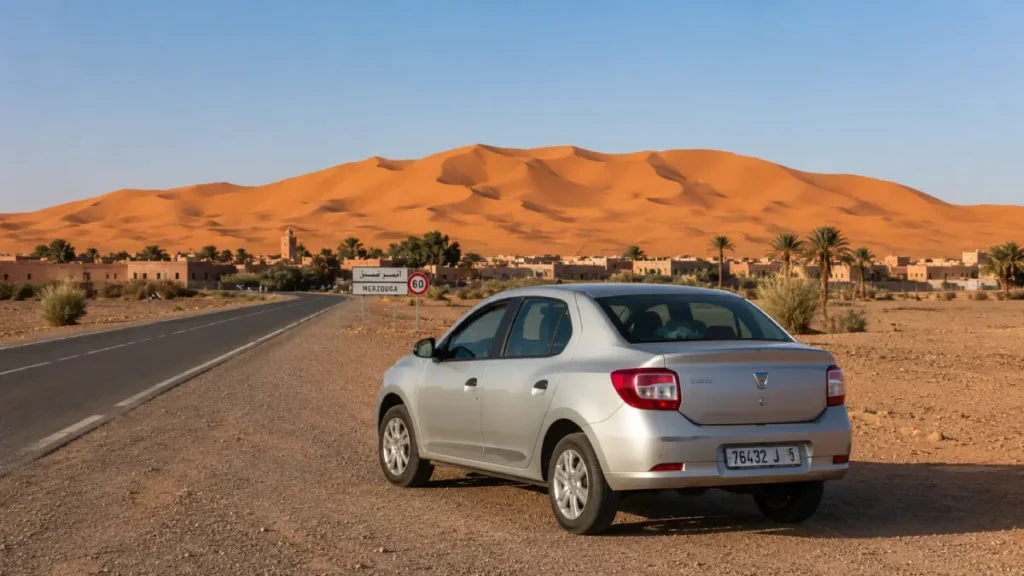
A Real Tizi n’Tichka Mistake
One family I know rented a small sedan and drove from Marrakech towards Merzouga during the July heat.
A normal car can make this journey, but their vehicle was not in good condition. It began overheating while climbing the Tizi n’Tichka Pass.
They had very little water, no offline map, and no direct WhatsApp contact for the rental company. They waited for several hours before a local truck driver stopped to help.
The problem was not simply the size of the car.
It was the combination of poor vehicle condition, extreme heat, weak preparation, and unreliable support.
Before a long summer journey, check the tyres, spare tyre, engine temperature, air conditioning, water supply, offline maps, and the rental company’s emergency contact.
Seasonal conditions can completely change the driving experience, so check my Best Time to Visit Morocco guide before planning a long route through the mountains or desert.
Police Checkpoints and Roadside Fines
Police and gendarmerie checkpoints are normal in Morocco.
When an officer signals you to stop, slow down immediately, pull over safely, remain calm, and keep your documents ready.
Do not argue aggressively or offer unofficial money.
If you receive a fine, ask the officer to explain the offence and provide an official receipt or written record.
Keep the receipt and inform the rental company when necessary.
A respectful attitude usually makes the interaction easier.
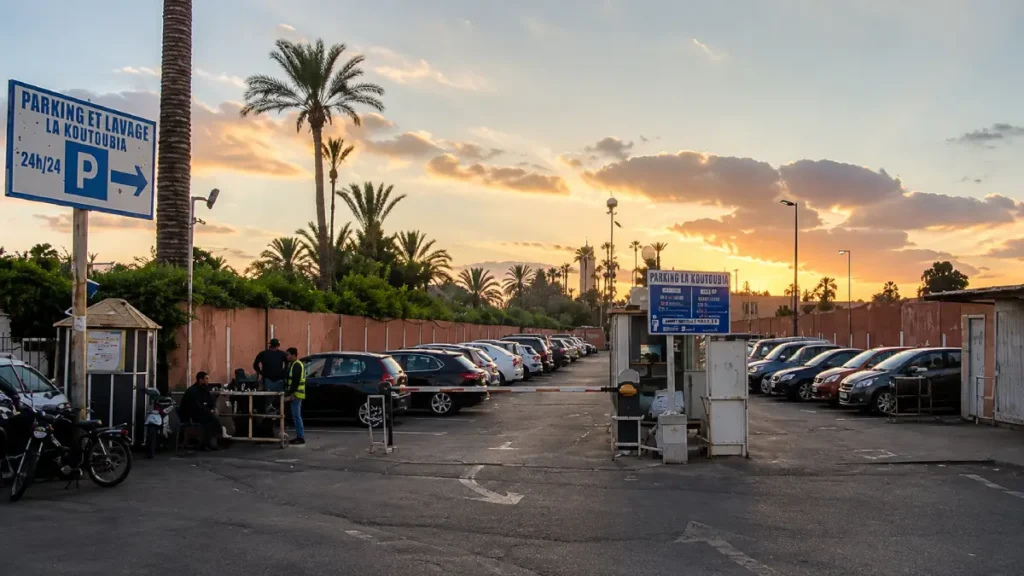
Parking Guardians in Morocco
In many Moroccan cities, you will meet a gardien de voitures a person who watches parked vehicles.
This is normal.
The gardien may help you find a space, guide you while reversing, and keep an eye on the car.
A typical daytime payment may be around 10–20 MAD, while overnight parking can cost more.
Before walking away, ask whether parking is allowed, how much it costs, and whether the price is for one hour, the day, or overnight.
In Casablanca, Rabat, and some modern districts, you may also find parking meters or underground car parks.
Never leave passports, cameras, luggage, or visible bags inside the vehicle.
Fuel, Tolls and Payment
Carry both card and cash.
Major petrol stations usually accept cards, but cash is still useful in smaller towns, at local parking areas, and when a payment terminal is not working.
Moroccan motorways accept several payment methods, and some rental cars may already have a Jawaz electronic toll pass.
Ask the rental company whether the vehicle has Jawaz and how the toll charges will be added to your final bill.
I still recommend keeping small dirham notes available for fuel, tolls, parking, and roadside stops. My Money in Morocco Guide explains how to use cash, cards, ATMs, and small payments during your trip.
My Local Checklist Before Leaving the Rental Office
Before driving away, photograph the rental contract, save the company’s WhatsApp number, take a complete video of the car, and confirm the fuel type.
Check the tyres, spare tyre, headlights, indicators, air conditioning, and fuel-return policy.
Ask what happens after an accident or breakdown and whether the company provides assistance outside the major cities.
Download offline maps, carry water during hot weather, and plan long journeys so that you arrive before dark.
Should You Rent a Car or Hire a Private Driver?
Renting a car gives you freedom.
You decide when to stop, where to eat, and how long to stay.
A private driver gives you something different: peace of mind.
A driver may be the better choice when you are nervous about Moroccan traffic, your itinerary includes several long driving days, or you are travelling with children or older family members.
It is also a good option when you want to enjoy the mountain scenery instead of concentrating on the road for several hours.
Driving yourself is not more authentic than using a driver.
The best option is the one that allows you to enjoy Morocco without spending the whole trip stressed.
For realistic route ideas, use my Morocco Itinerary for 7, 10 and 14 Days.
Ready to compare vehicles? Check several suppliers, review the deposit and insurance conditions carefully, and choose the option offering the best balance of price, rental terms, and local support.
Final Advice From a Moroccan Guide
A Morocco road trip can be unforgettable.
You can leave the noise of Marrakech in the morning, cross mountain passes, eat lunch beside an old kasbah, drive through palm valleys, and arrive near the Sahara as the evening light turns the landscape gold.
But freedom needs preparation.
Choose a reliable company. Understand the insurance. Record the car. Carry the correct documents. Avoid night driving. Respect the speed limits. Do not enter medinas blindly. Keep the rental company’s telephone and WhatsApp details saved.
When the route feels comfortable, drive yourself and enjoy the freedom.
When the journey feels too long or stressful, there is nothing wrong with using a private driver or organised tour.
The goal is not simply to cross Morocco.
The goal is to experience it properly.
A rental car can open the door to parts of Morocco that many visitors never see, but it is only one part of planning a successful trip. For advice on routes, cities, transport, costs, weather, culture, and practical travel preparation, start with my complete Morocco Travel Guide.
FAQ About Renting a Car in Morocco
Is it safe to drive in Morocco as a tourist?
Yes. Most tourists can drive safely by staying on paved roads, travelling during daylight, following speed limits, and avoiding busy medina centres. For a complete explanation of checkpoints, road rules, roundabouts, and driving conditions, read my Driving in Morocco Guide.
Can I drive in Morocco with a UK or US licence?
Carry your original driving licence. Additional requirements, including an International Driving Permit, depend on your nationality and rental company. Confirm the current rules before travelling.
Can I rent a car in Morocco without a credit card?
Some local companies accept debit cards, cash deposits, or no-deposit bookings with additional insurance. Confirm the payment method, deposit, excess, and final price in writing.
Are roads in Morocco paved?
The main routes between popular tourist destinations are paved. A regular car can reach Ouarzazate, Dades Valley, Todra Gorge, Chefchaouen, and Merzouga. Remote villages and off-road desert routes may require a 4×4.
Is a 4×4 necessary for a Morocco road trip?
No. A compact car or normal sedan is enough for most itineraries. Rent a 4×4 only when your route intentionally includes remote tracks or difficult unpaved roads.
How much does fuel cost in Morocco?
As a practical budget, expect to pay around 13–14 MAD per litre for diesel and approximately 14–15 MAD per litre for petrol.
A small diesel car usually costs less to run on long routes, which is one reason diesel rentals are common in Morocco. For example, a full day of driving from Marrakech towards Ouarzazate or the desert can use much more fuel than a short city-to-city journey, especially on mountain roads.
Prices can vary slightly between stations and may change during the year, so treat these figures as a planning range rather than a fixed national price. As of late June and early July 2026, reported averages were approximately 13.1–13.6 MAD per litre for diesel and 14.1–14.3 MAD per litre for petrol.
Most stations are full-service. Check the label inside the fuel cap and tell the attendant “gasoil” for diesel or “sans plomb” for unleaded petrol.
What happens when police stop tourists in Morocco?
Pull over safely, remain calm, and show your licence, identification, rental contract, and vehicle documents. If you receive a fine, ask for an official receipt and keep it with your rental paperwork.