
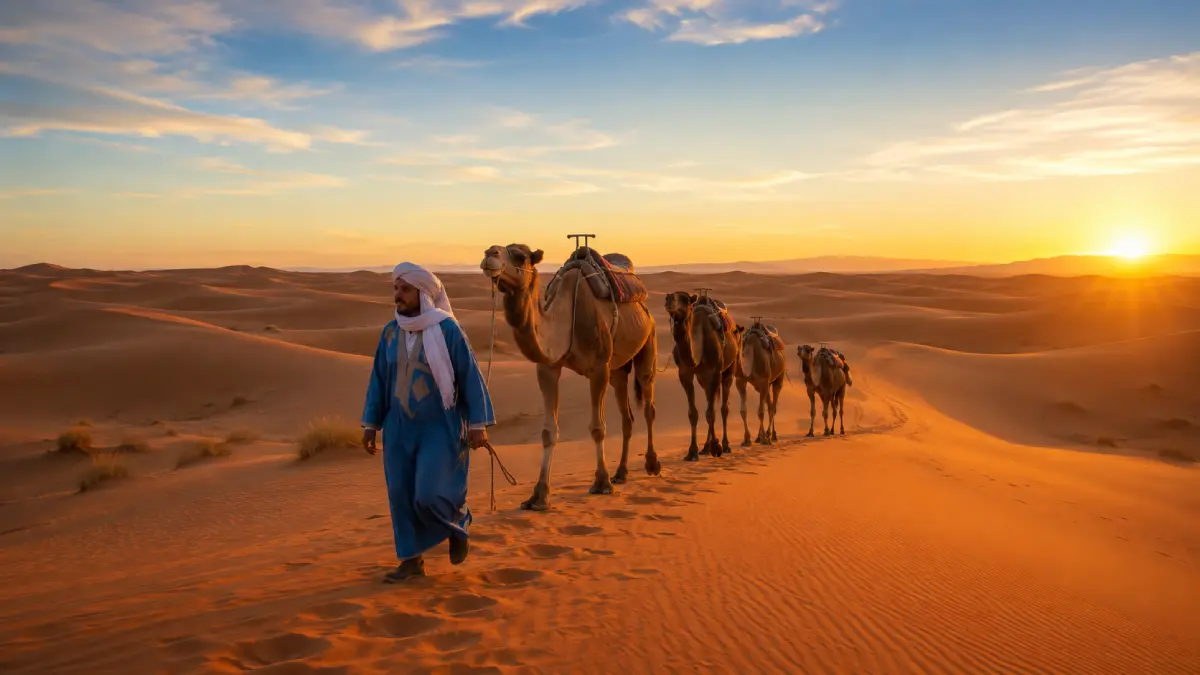
Merzouga Sahara Desert Travel Guide by a Local Moroccan Guide
Merzouga is one of the best places in Morocco to experience the real Sahara Desert. This local Merzouga Sahara Desert Travel Guide explains Erg Chebbi dunes, camel rides, desert camps, the best time to visit, how to get there from Marrakech and Fes, what to pack, safety tips, and honest local advice before you book.
I’m Kamal, a licensed tour guide based in Marrakech, and I have guided many private Morocco tours through Merzouga, Erg Chebbi, Dades Valley, Todra Gorge, Ait Benhaddou, and the long desert roads between Marrakech and Fes. This Merzouga Sahara Desert Travel Guide is here to help you plan your visit with clear local advice, realistic travel times, honest camp tips, and practical information before you book.
If you are still choosing between Morocco’s desert experiences, start with my guide to Authentic Morocco Sahara Desert Tours and my comparison of Erg Chebbi vs Erg Chigaga. Merzouga is usually the easiest real Sahara choice for first-time visitors, while Erg Chigaga is more remote and Agafay is closer to Marrakech but not a sand-dune Sahara.
On this page, you will find the best time to visit Merzouga, how to get there from Marrakech and Fes, what to do in the dunes, where to stay, what to pack, safety tips, route advice, and local recommendations for choosing the right desert experience.
What Is Merzouga?
Merzouga is a desert village near the Algerian border, famous for the high golden dunes of Erg Chebbi. When many travelers imagine the Sahara Desert in Morocco, this is the landscape they have in mind: tall dunes, camel caravans, desert camps, sunset light, and wide open silence.
The village itself is simple, but the location is special. Erg Chebbi rises beside Merzouga like a sea of sand, making it one of the most accessible places in Morocco for a classic Sahara experience. From here, you can take a camel ride, sleep in a desert camp, visit Khamlia village, meet nomad families, go sandboarding, or explore the surrounding desert by 4×4.
Merzouga is not close to Marrakech or Fes, so it should be planned properly. From Marrakech, the journey usually passes through the High Atlas Mountains, Ait Benhaddou, Ouarzazate, Dades Valley, and Todra Gorge. From Fes, the route passes through the Middle Atlas, cedar forests, Midelt, the Ziz Valley, Erfoud, and Rissani.
Why Visit Merzouga?
Merzouga is worth visiting if you want the classic Sahara Desert experience with golden dunes, camel rides, desert camps, and beautiful sunrise and sunset views. It is one of the best choices for first-time visitors because it gives a strong desert feeling while still connecting well with Marrakech, Fes, Ouarzazate, Dades Valley, and Todra Gorge.
Merzouga is best for travelers who want real sand dunes, a night under the stars, a comfortable desert camp, local Amazigh culture, and a route that fits into a 3-day, 4-day, or longer Morocco itinerary. Erg Chigaga is more remote and adventurous, but Merzouga is easier for most travelers who want beauty, comfort, and a clear route.
For me, Merzouga is not only about taking photos on a camel. The real beauty is the silence before sunrise, the color of the dunes at sunset, the warmth of desert people, and the feeling that life has slowed down for a moment.
Best Things to Do in Merzouga
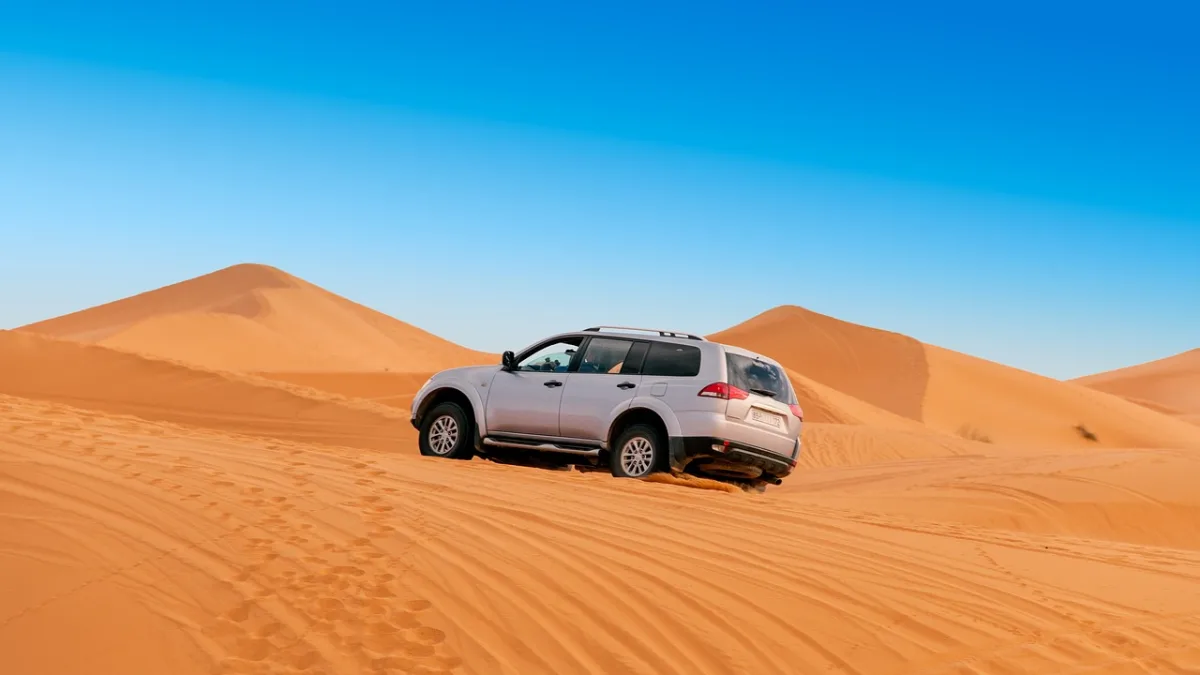
Merzouga is not only about arriving, taking a camel photo, and leaving. The best desert experience comes when you give yourself enough time to enjoy the dunes, the village, the music, the people, and the quiet moments between activities. Here are the best things to do in Merzouga if you want a real Sahara Desert experience.
Take a Sunset Camel Ride in Erg Chebbi
A sunset camel ride is the classic Merzouga experience. You ride slowly into the Erg Chebbi dunes while the light changes from gold to orange and the desert becomes softer and quieter. Most camel rides last around one hour to one hour and a half, depending on your camp location and route.
My local advice is to wear long, comfortable trousers, closed shoes, sunglasses, and a scarf if there is wind. Hold your phone carefully because many phones disappear into the sand every year. If you are not comfortable riding a camel, many camps can arrange a 4×4 transfer instead, so you can still enjoy the dunes without forcing yourself.
Wake Up for Sunrise Over the Dunes
Sunrise in Merzouga is one of the most peaceful moments in Morocco. Before the camp becomes busy, climb a nearby dune and watch the first light touch the sand. The colors are softer than sunset, the air is cooler, and the silence feels very special.
Do not skip sunrise just because you are tired. This is often the moment travelers remember most. Bring a jacket if it is winter or early spring, and start walking before the sun appears so you are already in position when the dunes begin to glow.
Spend a Night in a Desert Camp
Sleeping in a desert camp is the main reason many travelers come to Merzouga. Camps range from simple standard camps with shared facilities to luxury desert camps with private tents, proper beds, private bathrooms, hot showers, and better meals.
A good camp makes a big difference. Before booking, check what is included: camel ride or 4×4 transfer, dinner, breakfast, private bathroom, heating or blankets in winter, and pickup point. The cheapest camp is not always the best value, especially if you care about comfort, cleanliness, and good timing for sunset and sunrise.
Explore the Desert by 4×4
A 4×4 desert tour shows you another side of Merzouga beyond the camp. With a local driver, you can visit black volcanic desert landscapes, fossil areas, dry lake views, nomad families, small desert villages, and panoramic viewpoints around Erg Chebbi.
This is a good option if you have two nights in Merzouga. One night gives you the camel ride and camp experience, but two nights allow you to explore the region properly without rushing. It is also better for families, photographers, and travelers who want more than a simple overnight stop. Traveling with children? My Morocco With Kids guide explains when I recommend the Sahara for families, how age affects the trip, and how much time to allow for the long journey to Merzouga.
Visit Khamlia Village for Gnawa Music
Khamlia is a small village near Merzouga known for Gnawa music, a powerful musical tradition with deep African roots. Visitors usually sit inside a local house or music space, drink tea, and listen to drums, singing, and rhythmic desert music.
This visit is not only entertainment. It is a way to understand the cultural mix of the Sahara region, where Amazigh, Arab, Saharawi, and Sub-Saharan African influences meet. Go with respect, listen properly, and support the musicians if you enjoy the experience.
Meet Nomad Families Respectfully
Some 4×4 tours include a visit to nomad families living in the desert. This can be a beautiful experience when it is done respectfully. You may be invited for tea, see how families live with limited resources, and understand how hard desert life can be.
My advice is simple: do not treat people like a photo subject. Ask before taking pictures, accept tea with gratitude, and if you want to support the family, do it through your guide in a respectful way. The best visits feel human, not staged.
Try Sandboarding on the Dunes
Sandboarding is a fun and simple activity in Merzouga, especially for families and younger travelers. Many camps have boards you can use near the dunes. You climb up, slide down, laugh, and then realize climbing sand is harder than it looks.
The best time for sandboarding is early morning or late afternoon when the sand is not too hot. Avoid doing it barefoot in the heat, especially from May onward, because the sand can become very hot.
Enjoy Stargazing in the Sahara
Merzouga has very little light pollution compared with cities, so the night sky can be incredible. On clear nights, you can see thousands of stars, and sometimes the Milky Way is visible depending on the moon and season.
For the best stargazing, step away from the camp lights for a few minutes with your guide or camp staff. Do not walk far into the dunes alone at night because it is easy to lose direction. The desert is peaceful, but it should still be respected.
Take Photos at the Best Times
Merzouga is one of the best places in Morocco for photography, but timing matters. Sunrise and sunset are the strongest moments because the dunes show shadows, curves, and warm color. Midday light is usually too harsh, especially in spring and summer.
For camel photos, sunset is best. For quiet dune photos, sunrise is better. For stars, check the moon phase before your trip if photography is important to you. And always protect your camera or phone from sand, because desert wind can damage equipment quickly.
Visit Rissani and the Local Market
If your route allows time, visit Rissani before or after Merzouga. Rissani is an important desert town with a traditional market, local food, dates, spices, and a more everyday Moroccan feeling than the camp areas.
It is also a good place to try medfouna, often called Berber pizza. This stuffed bread is one of the most famous foods of the region, usually filled with meat, onions, herbs, and spices. If you want to understand the desert beyond the dunes, Rissani is worth a stop.
My Local Advice for Merzouga Activities
Do not try to do everything in a few hours. Merzouga is best when you slow down. If you only have one night, focus on the camel ride, sunset, camp dinner, stars, and sunrise. If you have two nights, add a 4×4 desert tour, Khamlia village, nomad visit, sandboarding, and Rissani.
For most travelers, one night is enough to feel the magic. Two nights are better if you want a deeper desert experience. The mistake is not staying too long; the mistake is arriving tired, rushing everything, and leaving before the desert has time to work on you.
Best Time to Visit Merzouga
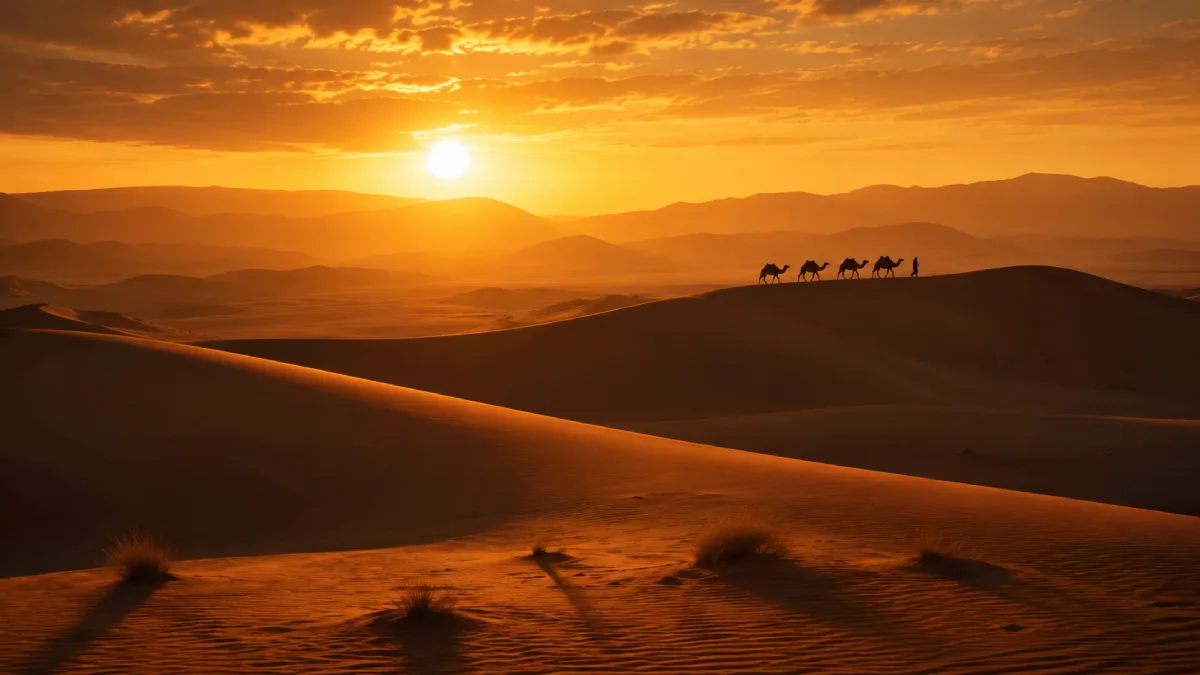
The best time to visit Merzouga is usually March to May and September to November. During these months, the weather is warm enough to enjoy the dunes, camel rides, sunrise walks, and desert camp nights without the extreme summer heat.
Merzouga has a true desert climate. Days can be hot, nights can be cold, and temperatures change quickly after sunset. This is why the “best time” is not only about the month, but also about how you plan your activities during the day.
Spring in Merzouga: March to May
Spring is one of the best seasons for Merzouga. March and April are usually the most comfortable months, with warm days and cooler nights. The desert feels alive, the road trip from Marrakech or Fes is easier, and camel rides are usually pleasant around sunset.
May can still be a good time to visit Merzouga, especially in the first half of the month. The days are warm, the evenings are usually comfortable, and the Sahara still feels possible before the serious summer heat arrives. By late May, temperatures can climb quickly, so I recommend keeping desert activities for sunrise, sunset, and the cooler parts of the day.
If you are planning a late spring Sahara trip, read my full Morocco in May guide. I explain when May is still comfortable for Merzouga, what to wear, and why early May is better than late May for desert travel.
Autumn in Merzouga: September to November
Autumn is another excellent time to visit Merzouga. September can still be hot, especially early in the month, but conditions usually improve as you move into October and November. These months are very popular for desert tours because the heat becomes easier, the skies are often clear, and the nights are more comfortable.
October and November are among my favorite months for first-time visitors. You still get beautiful desert light, but the experience feels less intense than summer. If you want a classic Sahara trip with camel rides, campfires, and sunrise over the dunes, autumn is a very strong choice.
Winter in Merzouga: December to February
Winter in Merzouga is sunny during the day, but cold at night. Many travelers are surprised by how cold the desert can feel after sunset. In December, January, and February, you may enjoy beautiful clear days, but you need warm layers for the camp, especially early morning and late evening.
Winter is still a good time to visit if you are prepared. The dunes are peaceful, the light is beautiful, and the daytime weather can be very comfortable for walking and photography. Just do not arrive with only summer clothes because the nights can feel very cold.
Summer in Merzouga: June to August
Summer is the hardest season for Merzouga. Temperatures can go above 45°C, and the heat can make camel rides, dune walks, and midday travel very uncomfortable. I do not recommend summer desert trips for most travelers, especially families with young children or anyone sensitive to heat.
If you must visit in summer, keep everything very early or very late. Avoid long activities during the day, choose accommodation with air conditioning before or after the camp, and drink plenty of water. But honestly, if your dates are flexible, choose spring, autumn, or winter instead.
For the bigger seasonal picture, my Summer in Morocco guide explains why summer is better for the coast, mountains, and slower travel, and why the Sahara Desert needs extra care in June, July, and August.
Best Time of Day for Desert Activities
In Merzouga, timing your day is very important. Sunrise and sunset are the best moments for camel rides, dune walks, photography, and quiet desert views. Midday can be harsh, especially from April onward, so this is the time to rest, drink tea, sit in the shade, or travel by vehicle instead of walking in the dunes.
For photography, sunrise gives softer light and quieter dunes. Sunset gives stronger colors and the classic camel caravan atmosphere. For stargazing, choose a clear night and avoid walking far from camp without a guide.
Best Months for a First Merzouga Trip
If this is your first Sahara trip, aim for March, April, October, or November. These months usually give the best balance between comfort, light, and travel conditions.
The best desert journeys are not only about reaching the dunes. They include the High Atlas, kasbahs, valleys, palm groves, local food, and small stops that make the road feel like part of the adventure. For the best timing by season, check my Best Time to Visit Morocco guide before finalizing your route.
How to Get to Merzouga
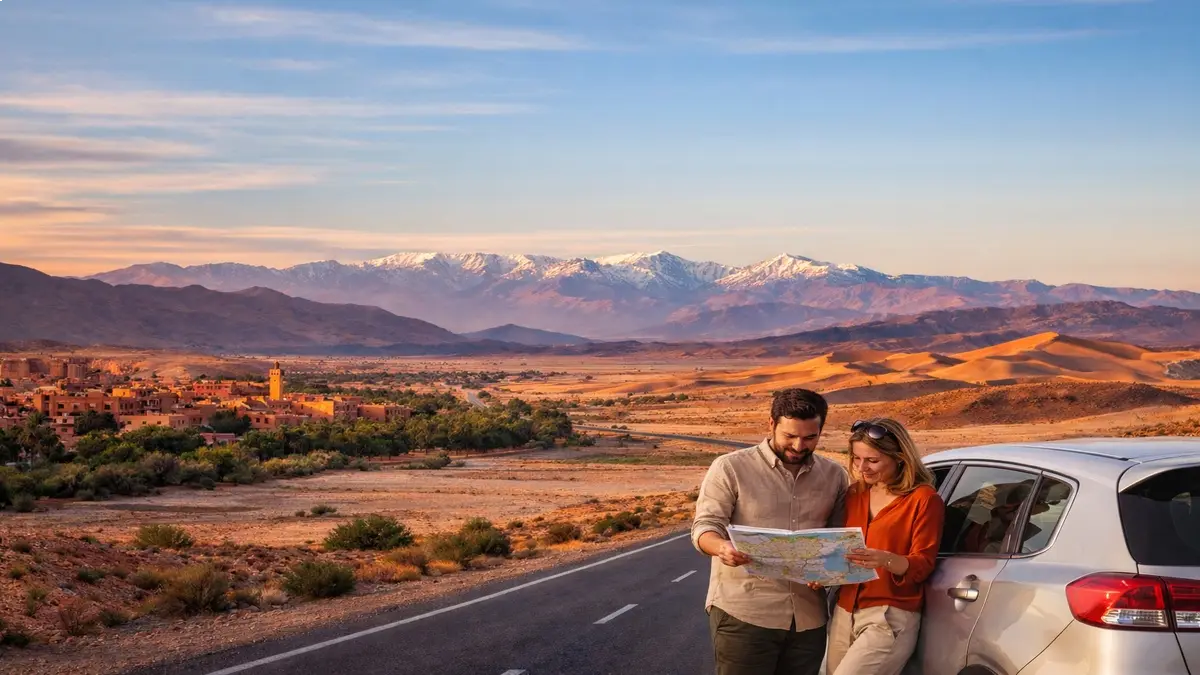
Merzouga sits in southeast Morocco, close to the Erg Chebbi dunes and not far from the Algerian border. It looks simple on the map, but the journey takes time because Morocco is a big country with mountains, valleys, desert roads, and many scenic stops along the way. If this is your first time planning routes, start with my full Morocco Travel Guide, my Morocco Itinerary 7, 10 & 14 Days, and my Morocco Transportation Guide before choosing your desert route.
Most travelers reach Merzouga from Marrakech, Fes, Ouarzazate, or Errachidia. The best route depends on where you start, how many days you have, and whether you want a private desert tour, public transport, or a self-drive road trip. For a wider planning view, my Plan Your Trip to Morocco guide can help you organize transport, hotels, routes, money, and practical details before you arrive.
Marrakech to Merzouga
The route from Marrakech to Merzouga is one of the most popular desert journeys in Morocco. It usually takes around 9 to 10 hours of driving if you go directly, but I do not recommend doing it in one day unless you have no other choice. The road is long, and much of the experience comes from the places you see along the way.
Most well-planned Marrakech to Merzouga tours take 3 or 4 days. The route usually crosses the High Atlas Mountains through the Tizi n’Tichka Pass, then continues towards Aït Ben Haddou, Ouarzazate, Skoura, Dades Valley, Todra Gorge, Erfoud, Rissani, and finally Merzouga. If you are still choosing between Sahara routes, read my Authentic Morocco Sahara Desert Tours Guide for a deeper look at private desert tours, routes, camps, and what to expect.
A 3-day trip works when your time is limited, but a 4-day trip is more comfortable. With 4 days, you have better timing, less pressure on the road, and more time to enjoy the valleys, kasbahs, and desert without arriving exhausted.
Travellers who prefer to drive independently can complete the route in a normal rental car using the main paved roads. For vehicle choice, insurance, deposits, realistic costs, and road-trip preparation, read my Rent a Car in Morocco Guide. If your entire Morocco trip is only five days, compare the Sahara route with two alternative 5-day Morocco itineraries before committing to the long drive.
Fes to Merzouga
Fes to Merzouga is another beautiful route and usually takes around 7 to 8 hours by road. This journey feels different from the Marrakech route because you pass through the Middle Atlas Mountains, cedar forests near Azrou, Midelt, the Ziz Valley, Erfoud, and Rissani before reaching the dunes. If you want to understand the mountain towns and valleys travelers can include before the Sahara, read my guide to the 10 Most Beautiful Mountain Towns in Morocco. This route is a good choice if your Morocco itinerary starts in the north, especially if you visit Tangier, Chefchaouen, and Fes before heading south to the Sahara. Many travelers like to go from Fes to Merzouga, then continue toward Dades Valley, Ait Benhaddou, and Marrakech. This creates a nice one-way desert route instead of driving back the same way. If Fes is part of your trip, my Fes Travel Guide can help you plan the city before heading toward the desert.
Private Driver or Desert Tour: What Is Better?
For most first-time visitors, a private driver or organized desert tour is the easiest way to visit Merzouga. It saves time, avoids navigation stress, and allows you to enjoy the road instead of worrying about every turn.
A private tour is best if you want comfort, flexibility, better stops, and a smoother pace. Group tours are cheaper, but they usually follow a fixed schedule and can feel rushed. If your budget allows, I recommend a private desert route, especially for couples, families, photographers, and travelers who care about timing. You can also compare Merzouga with other desert options in my Erg Chebbi vs Erg Chigaga guide before booking.
My Local Advice for Getting to Merzouga
Do not underestimate the distance to Merzouga. The Sahara is far, and that is part of its beauty. If you are coming from Marrakech, try to give yourself at least 3 days, and choose 4 days if you want the trip to feel comfortable. If you are coming from Fes, consider continuing to Marrakech afterward instead of returning the same way.
Where to Stay in Merzouga
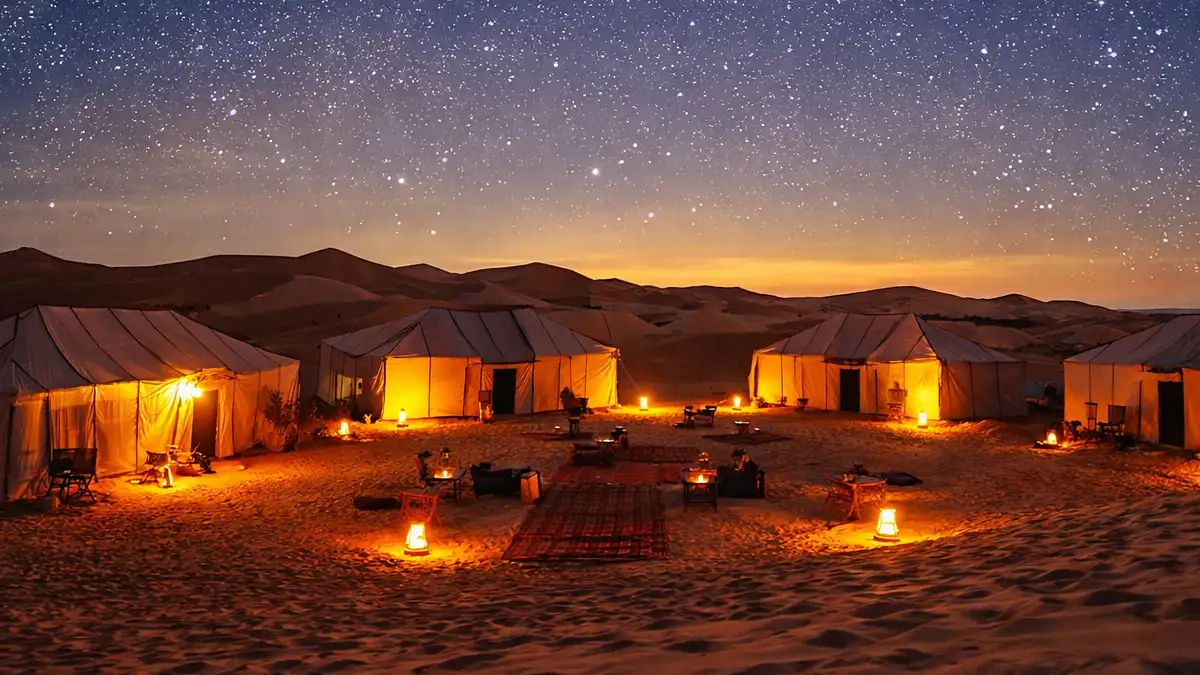
Merzouga has two main types of accommodation: desert camps inside or near the dunes, and guesthouses or small hotels in the village. The best choice depends on your comfort level, budget, season, and how much time you want to spend in the Sahara.
For most first-time visitors, I recommend spending at least one night in a desert camp. This is where you feel the real magic of Merzouga: sunset over the dunes, dinner under the sky, Berber drums by the fire, silence at night, and sunrise in the morning. If you only stay in the village and do not sleep near the dunes, you miss a big part of the experience.
Luxury Desert Camps
Luxury desert camps are the best choice if you want comfort, privacy, and a smoother experience. These camps usually offer private tents with real beds, private bathrooms, hot showers, better bedding, and more comfortable dining areas.
A luxury camp is especially good for couples, families, older travelers, honeymooners, and anyone who wants the Sahara feeling without sacrificing comfort. In winter, a good luxury camp also makes a big difference because nights can be very cold. In warmer months, ask about shade, ventilation, and transfer timing before booking.
Before you book, check what is included. Some camps include camel rides, dinner, breakfast, luggage transfer, and 4×4 pickup. Others charge extra. Always confirm the meeting point, sunset timing, and whether you will reach the camp by camel, 4×4, or both.
Standard Desert Camps
Standard desert camps are more affordable and can still give you a beautiful Sahara experience. They are usually simpler, with basic tents, shared or simple bathrooms, traditional food, and a more rustic feeling.
This option works well for budget travelers, backpackers, and people who care more about atmosphere than luxury. But be careful with very cheap camps. Sometimes the photos look nice online, but the bedding, bathrooms, food, or location may not match your expectations.
If you choose a standard camp, ask clear questions before booking: Is the bathroom shared or private? Is dinner included? Is the camel ride included? How far is the camp from the road? Do they provide enough blankets in winter? Small details matter in the desert.
Guesthouses and Hotels in Merzouga Village
Staying in Merzouga village is a good option if you want easier access, air conditioning, a swimming pool, parking, or a more relaxed base before or after the camp. Many guesthouses are family-run and offer warm Moroccan hospitality, homemade food, and easy dune access.
This can be a smart choice if you arrive late, travel with children, visit in hot months, or want two nights in the area. For example, you can spend one night in a guesthouse and one night in a desert camp. This gives you more comfort and better timing for activities.
Some travelers also leave their big luggage at a guesthouse or hotel before going to the camp with only a small overnight bag. This is much easier than carrying a large suitcase across sand.
One Night or Two Nights in Merzouga?
One night in Merzouga is enough for the classic experience: camel ride, sunset, camp dinner, music, stars, sunrise, and breakfast. This works well if you are following a 3-day desert route from Marrakech or a one-way route between Fes and Marrakech.
Two nights are better if you want to enjoy Merzouga properly. With two nights, you can do a 4×4 desert tour, visit Khamlia village, meet nomad families, explore Rissani market, try sandboarding, and enjoy the dunes without rushing.
My honest advice: if Merzouga is the main dream of your Morocco trip, stay two nights. If it is part of a bigger itinerary and your time is limited, one night can still be magical if the camp and timing are good.
Best Area to Stay in Merzouga
The best area depends on what kind of experience you want. Some camps are deeper in the dunes and feel more remote. Others are closer to the village and easier to reach. Guesthouses near the edge of Erg Chebbi can be very practical because you still get dune views without being far from the road.
If you want comfort and easy logistics, stay near the edge of the dunes or choose a camp with organized 4×4 transfer. If you want more silence and a deeper desert feeling, choose a camp farther from the village, but confirm transport and luggage handling clearly.
My Local Advice Before Booking a Camp
Do not choose your Merzouga camp only by the cheapest price or the most edited photos. Look carefully at real reviews, bathroom details, location, transfer information, and what is included in the price.
A good desert camp should be clear about:
The meeting point in Merzouga
Camel ride or 4×4 transfer details
Dinner and breakfast
Private or shared bathroom
Heating, blankets, or cooling options depending on the season
Luggage handling
Sunrise and sunset timing
If comfort matters to you, book a better camp. The Sahara is beautiful, but small problems feel bigger in the desert because you are far from normal city services. A good camp, a reliable driver, and honest planning can change the whole experience.
For a deeper comparison, read my guide to the best desert camps in Merzouga before choosing where to stay.
What to Pack for Merzouga
Packing for Merzouga is different from packing for Marrakech, Fes, or the coast. The desert can be hot during the day, cold at night, windy at sunset, and dusty during camel rides or 4×4 tours. The best packing style is simple, light, and practical.
You do not need too much luggage in the dunes. If you are sleeping in a desert camp, take only a small overnight bag with what you need for one night. Leave your big suitcase at your hotel, guesthouse, or with your driver if this is arranged safely.
For a full country-wide packing checklist, read my Morocco Packing List Guide before your trip. And if you are unsure what feels respectful in cities, villages, and desert areas, my How to Dress in Morocco guide explains clothing tips for men and women in more detail.
Clothes for the Desert
For daytime, bring light and breathable clothes. Cotton, linen, and loose fabrics work best because they protect your skin from the sun while still keeping you comfortable. Long sleeves and long trousers are better than very short clothes because they protect you from sunburn, wind, and sand.
For evening and early morning, bring a warm layer. Even when the day feels hot, the temperature can drop after sunset. In winter and early spring, the desert can feel very cold at night, especially around the campfire or before sunrise.
A good desert outfit usually includes light trousers, a breathable shirt, sunglasses, a hat, a scarf, and comfortable shoes. For women, loose trousers, long skirts, maxi dresses, and covered shoulders work well and feel respectful in villages and local areas.
What to Eat in Merzouga
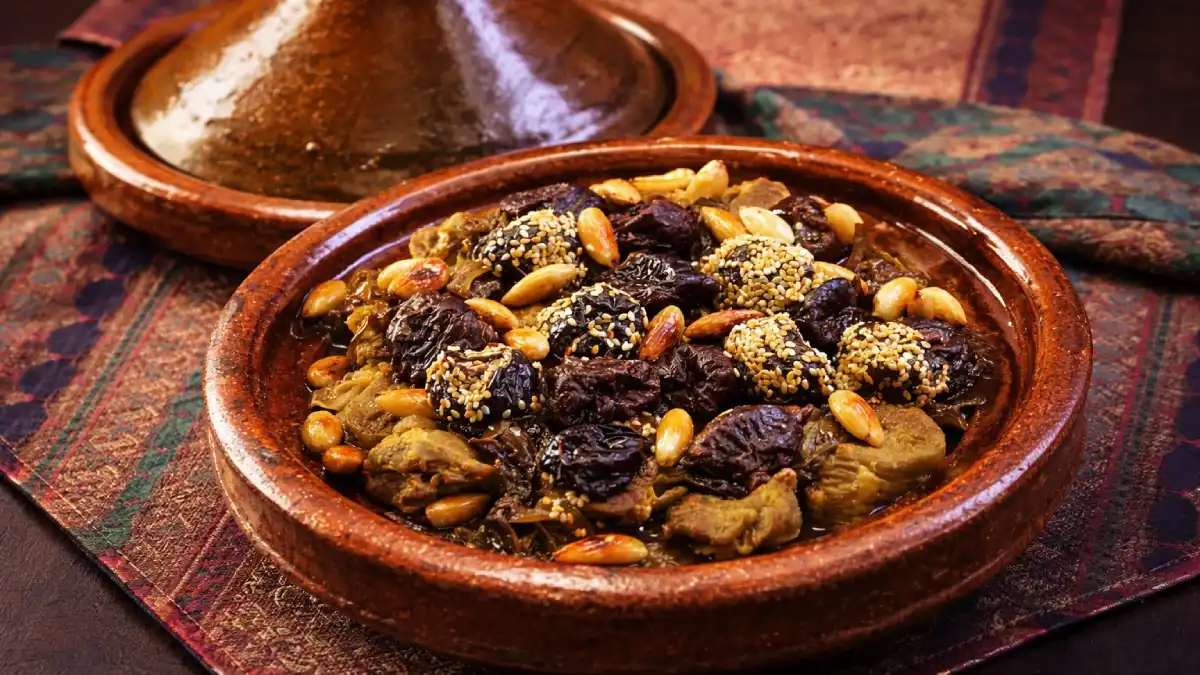
Food in Merzouga is simple, warm, and connected to desert hospitality. You will not find the same restaurant scene as Marrakech or Fes, but you will find home-cooked meals, slow flavors, dates, tea, bread, and dishes that feel perfect after a long road trip or a camel ride in the dunes.
If you stay in a desert camp, dinner is usually included. Most camps serve soup, tagine or couscous, seasonal fruit, mint tea, and sometimes music around the fire after the meal. In a good camp, dinner becomes part of the Sahara experience, not just something you eat before sleeping.
Medfouna: The Famous Desert Pizza
The most famous local dish near Merzouga is medfouna, often called Berber pizza. It is a stuffed bread filled with minced meat, onions, herbs, spices, and sometimes vegetables. It is usually baked in a traditional oven and served hot, often in Rissani or nearby villages.
If you have time, try medfouna in Rissani before or after your desert camp. It is one of those foods that tells you where you are. You feel the desert, the market, the spices, and the local way of eating all in one simple dish.
Berber Tagine
Tagine is common across Morocco, but in the desert it feels different because it is often slower, simpler, and served in a more family-style way. You may find chicken tagine, lamb tagine, vegetable tagine, or kefta depending on the camp or guesthouse.
After a long drive or a cold desert evening, a hot tagine with bread and mint tea feels exactly right. The quality depends on the camp or guesthouse, so this is another reason to choose your accommodation carefully.
Couscous on Friday
If you are in Merzouga on a Friday, ask if couscous is available. Friday couscous is a Moroccan tradition, and in the desert it is often served with vegetables, chickpeas, and sometimes meat.
Not every camp or restaurant prepares it every day, so Friday is the best time to try it in a more local way. It is filling, comforting, and perfect if you want to experience Moroccan food beyond the usual tourist menu.
Dates, Tea, and Desert Hospitality
Dates are important in the desert region, especially around Erfoud, Rissani, and the Ziz Valley. You will often see dates served with tea, used as a welcome gesture, or sold in local markets.
Mint tea is also part of the experience. In Merzouga, tea is not only a drink. It is a pause. You drink it after the road, before sunset, with nomad families, in guesthouses, and around camp. It is one of the small details that makes the Sahara feel human and welcoming.
Dinner in a Desert Camp
A typical desert camp dinner usually includes Moroccan soup, tagine or couscous, bread, fruit, and tea. In luxury camps, the meal may be more refined, with better presentation and more courses. In standard camps, the food is usually simpler but can still be very satisfying.
Before booking your camp, check whether dinner and breakfast are included. Also ask about vegetarian meals, vegan meals, gluten-free needs, or food allergies before you arrive. In the desert, last-minute changes are harder than in big cities.
My Local Food Advice
Do not expect Merzouga food to be fancy like a big-city restaurant. Expect warmth, simplicity, and hospitality. The best meals are often the ones served slowly, with bread in the middle of the table, tea poured high, and someone asking if you want more.
If you want the most local food experience, try medfouna in Rissani, eat dinner in your desert camp, drink tea with patience, and buy dates from the region if you have space in your bag. For a bigger picture of Moroccan dishes, street food, sweets, tea, and local eating habits, read my full What to Eat in Morocco guide before your trip.
Merzouga Safety Tips
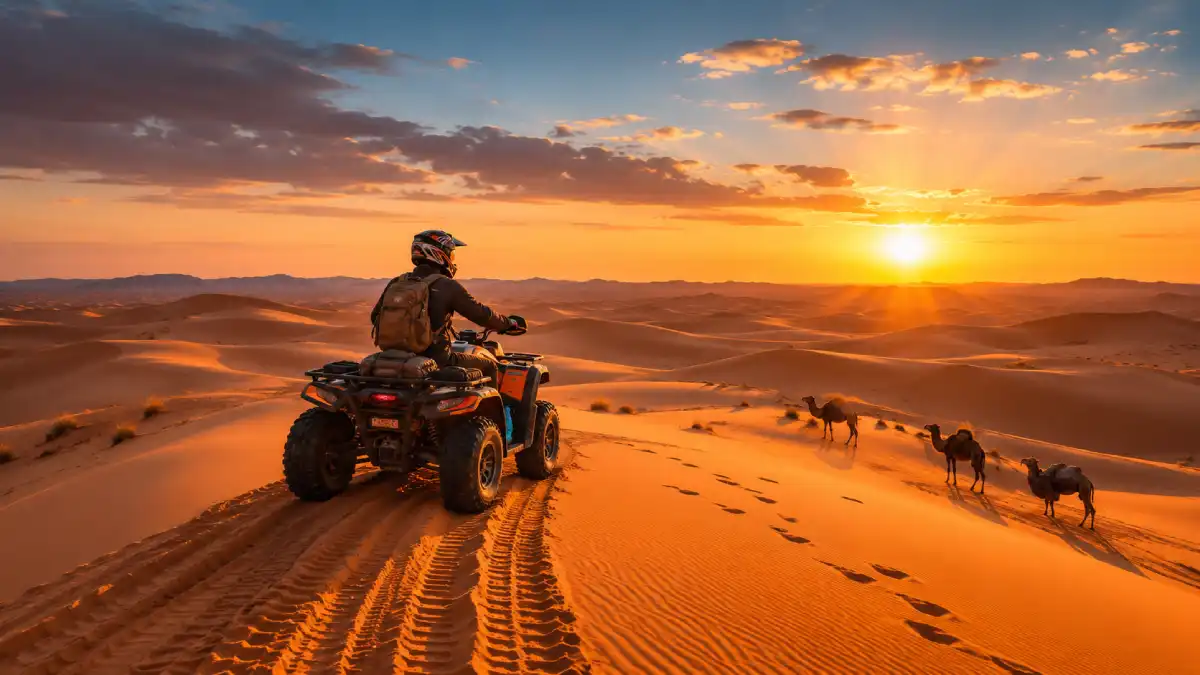
Merzouga is generally a safe place to visit, especially around the village, the main Erg Chebbi dunes, guesthouses, and organized desert camps. Local people are used to welcoming travelers, and most visits are relaxed, friendly, and peaceful. Still, the Sahara is a desert, not a city park, so you need to respect the environment, the heat, the distance, and the dunes.
The main safety issues in Merzouga are usually not crime. They are heat, dehydration, getting disoriented in the dunes, poor timing, weak planning, and choosing a camp or tour without clear details. With a good guide, a reliable driver, and simple awareness, Merzouga is one of the most enjoyable places in Morocco.
Do Not Walk Deep Into the Dunes Alone
The dunes look easy from a distance, but once you walk inside them, many directions can look the same. It is easy to lose your sense of where the camp, village, or road is, especially after sunset or at night.
If you want to walk in the dunes, stay close to your camp or go with your guide. For sunrise or stargazing, ask the camp staff where it is safe to walk. Do not go far alone just because the desert feels calm.
Respect the Heat
The sun in Merzouga can be strong, especially from April onward and very serious in summer. Avoid long walks in the middle of the day, wear a hat or scarf, use sunscreen, and drink water before you feel thirsty.
In hot months, plan activities early in the morning or around sunset. Midday is better for resting, sitting in the shade, traveling by vehicle, or relaxing at your guesthouse. The desert rewards smart timing.
Choose a Reliable Camp or Driver
A safe Merzouga trip depends a lot on who organizes it. A good driver knows the road, timing, stops, and desert conditions. A good camp explains the transfer clearly, handles luggage properly, serves safe food, and gives you realistic information about camel rides, 4×4 transfers, and weather.
Before booking, check reviews and ask what is included. Very cheap options can sometimes mean rushed service, unclear meeting points, basic facilities, or poor communication. In the desert, small problems feel bigger because you are far from normal city services.
Keep Valuables Simple
Merzouga is relaxed, but you should still travel smart. Keep your passport, cash, phone, and camera secure. Do not leave valuables loose in shared areas, and do not take unnecessary expensive items into the dunes.
For the desert camp, bring only what you need in a small overnight bag. Leave big luggage in the vehicle, guesthouse, or arranged storage if this is part of your transfer. Always confirm where your luggage will stay before you leave for the dunes.
Be Careful With Camel Rides
Camel rides are usually slow and calm, but you still need to listen to your guide. Hold on when the camel stands up or sits down, because that is the moment when many people feel unbalanced. Wear comfortable clothes and closed shoes, and avoid carrying too many loose items.
If you have back problems, knee problems, are pregnant, or simply do not feel comfortable riding a camel, ask for a 4×4 transfer instead. You can still enjoy the Sahara without riding.
Travel With Children in Merzouga
Merzouga can be beautiful for families, but the trip needs good timing. Children usually love the dunes, camels, sandboarding, and campfire music, but long drives and heat can be tiring.
For families, I recommend a comfortable camp, shorter camel ride, private transport, and enough time to rest. Avoid summer if possible, and bring snacks, water, sunscreen, hats, and warm layers for the evening.
My Local Safety Advice
Merzouga is safe when you do not treat it casually. Stay hydrated, follow your guide, avoid walking far into the dunes alone, respect the heat, and book with people who communicate clearly. The Sahara is peaceful, but it deserves respect. That respect is what makes the experience smooth, safe, and unforgettable.
For wider travel safety advice beyond the desert, read my full Safety in Morocco guide, where I explain medinas, transport, scams, solo travel, and practical safety tips for first-time visitors.
Merzouga Sahara Desert Travel Guide for First-Time Travelers
Merzouga is a place where good planning makes the experience much better. The desert is beautiful, but it is also remote, hot in some seasons, cold at night in others, and very different from Morocco’s cities. These local tips will help you enjoy the Sahara with fewer surprises.
Start Activities Early or Late
The best time for camel rides, dune walks, photography, and sandboarding is early morning or late afternoon. Midday can be too hot and too bright, especially from April onward. Use the middle of the day for rest, tea, lunch, a 4×4 transfer, or relaxing at your guesthouse.
Do Not Rush the Desert
Many travelers arrive in Merzouga tired after a long drive, take a camel ride, sleep one night, and leave early the next morning. This can still be beautiful, but it can also feel rushed. If the Sahara is one of your main dreams in Morocco, stay two nights if your itinerary allows.
One night gives you the classic experience. Two nights give you time for Khamlia, Rissani, a 4×4 desert tour, sandboarding, nomad visits, sunset, sunrise, and real quiet time.
Confirm What Is Included Before Booking
Before you book a camp or desert tour, ask clear questions. Is the camel ride included? Is the 4×4 transfer included? Are dinner and breakfast included? Is the bathroom private or shared? Where is the meeting point? What happens to your luggage?
These details matter in Merzouga because the camp may be far from the road, and last-minute changes are not always easy in the desert.
Bring Cash
Bring cash for small purchases, tips, local cafés, scarves, water, snacks, music visits, or market stops in Rissani. Some camps and guesthouses accept cards, but you should not depend on cards in the desert area.
It is better to withdraw money in Marrakech, Fes, Ouarzazate, Errachidia, Erfoud, or Rissani before reaching the dunes. For a bigger picture of cash, ATMs, cards, exchange rates, and tipping, read my full Money in Morocco guide before your trip.
Protect Your Phone and Camera From Sand
Sand is part of the Sahara experience, but it is not friendly to phones, cameras, lenses, and charging ports. Keep your devices in a small pouch or zip bag when you are not using them.
During windy weather, avoid changing camera lenses outside. Also hold your phone carefully on camel rides because if it falls into soft sand, finding it can be difficult.
Respect Local People and Nomad Families
If you visit a nomad family, Khamlia village, or local homes around Merzouga, go with respect. Accept tea politely, ask before taking photos, and avoid treating people like part of the scenery.
Small gestures matter. A greeting, a smile, and patience can turn a short visit into a warm human moment.
Check the Moon Phase for Stargazing
If stargazing is very important to you, check the moon phase before choosing your desert night. A full moon is beautiful on the dunes, but it makes the sky brighter, so stars may be less visible. A darker moon period usually gives better conditions for seeing the Milky Way.
My Local Merzouga Advice
The best Merzouga experience is not always the most expensive one. It is the one with good timing, honest organization, a comfortable pace, and the right expectations. Choose the camp carefully, respect the desert, and give yourself enough time to feel the silence.
Do’s and Don’ts in Merzouga
Merzouga is peaceful and welcoming, but the desert has its own rules. A little respect, preparation, and patience will make your Sahara experience much smoother.
Do Wake Up for Sunrise
Sunrise is one of the most beautiful moments in Merzouga. The air is cool, the dunes are quiet, and the first light makes the sand glow softly. Even if you are tired from the road or the camp evening, try to wake up early at least once.
Do Wear Long, Light Clothing
Long, loose clothing protects you from sun, wind, and sand. It is more comfortable than short clothes in the desert, especially during camel rides and 4×4 tours. A scarf, sunglasses, and a hat are also very useful.
Do Follow Your Guide in the Dunes
The dunes can look simple, but it is easy to lose direction, especially after sunset or at night. Stay near your camp or walk with your guide if you want to explore deeper into the dunes.
Do Bring Cash
Small shops, cafés, local musicians, scarf sellers, and market stops may not accept cards. Keep some Moroccan dirhams with you for small purchases and tips.
Do Slow Down
Merzouga is not a place to rush. The best moments are often simple: tea before sunset, silence after dinner, watching the stars, or walking slowly on the dunes before sunrise.
Don’t Walk Far Into the Desert Alone
Do not go deep into the dunes without a guide, especially at night. The desert feels calm, but direction can disappear quickly when the light changes.
Don’t Underestimate the Cold at Night
Even when the day is warm, the desert can become cold after sunset, especially in winter and early spring. Always pack at least one warm layer for the evening and sunrise.
Don’t Ride Camels With Loose Items
Phones, sunglasses, scarves, and cameras can fall easily during a camel ride, especially when the camel stands up or sits down. Keep your important items secure and listen to your camel guide.
Don’t Fly a Drone Without Permission
Drone rules in Morocco are strict, and many camps do not allow drones. Do not bring or fly a drone without proper permission. It can create problems with authorities, camps, and local people.
Don’t Treat Local People Like Photo Props
If you visit nomad families, Khamlia village, or local markets, always ask before taking photos of people. A respectful visit is much better than a rushed photo moment.
My Local Advice
Respect the desert, respect the people, and respect your own energy. Merzouga is not difficult when you plan well, but it is still remote. The more prepared you are, the more relaxed the experience becomes.
Merzouga vs Erg Chigaga vs Agafay
Many travelers ask me if Merzouga is the best desert in Morocco, or if they should choose Erg Chigaga or Agafay instead. The honest answer depends on your time, budget, comfort level, and what kind of desert image you have in your mind.
Merzouga and Erg Chebbi
Merzouga is the best choice for most first-time travelers who want the classic Sahara Desert experience. The dunes of Erg Chebbi are tall, golden, easy to recognize, and easier to access than the more remote desert regions. You can ride camels, sleep in a desert camp, watch sunrise over the dunes, visit Khamlia, explore by 4×4, and connect the route with Marrakech, Fes, Dades Valley, Todra Gorge, and Ait Benhaddou.
Merzouga is not “empty wilderness” everywhere because it is popular, but it gives you a strong Sahara feeling with better logistics. This makes it ideal for couples, families, photographers, and first-time visitors who want beauty and comfort together.
Erg Chigaga
Erg Chigaga is wilder, more remote, and more adventurous. It is reached from the M’Hamid area and usually needs a proper 4×4 section. The dunes feel more isolated, and the journey has a deeper expedition feeling, but it also needs more time and better planning.
Erg Chigaga is best for travelers who already understand that the desert is not only about comfort. It is for people who want fewer crowds, a remote atmosphere, and a more rugged Sahara route. If you only have 3 days from Marrakech, Merzouga is usually easier. If you have 4 to 5 days and want a wilder feeling, read my Marrakech to Chegaga Desert guide before choosing this route.
Agafay Desert
Agafay is close to Marrakech, but it is not the Sahara. It is a rocky desert landscape with dry hills, open views, camps, dinner shows, camel rides, and sunset experiences. It is beautiful in its own way, but it does not have the tall golden dunes that people imagine when they dream of the Sahara.
Agafay is best if you have only one day or one night from Marrakech and cannot travel all the way to Merzouga or Erg Chigaga. It is a good short escape, but I always tell travelers not to confuse it with the real Sahara Desert. If you only have a short stay in Marrakech, my Agafay Desert Day Trip from Marrakech guide will help you understand what Agafay offers and what it does not.
Which Desert Should You Choose?
Choose Merzouga if you want the classic golden dunes, camel ride, desert camp, and easier logistics.
Choose Erg Chigaga if you want a more remote, wild, and adventurous Sahara experience.
Choose Agafay if you are short on time and want a desert-style escape close to Marrakech.
For a deeper comparison, read my full Erg Chebbi vs Erg Chigaga guide. If you are still deciding which desert route fits your trip, my Authentic Morocco Sahara Desert Tours guide will help you compare routes, timing, comfort, and travel style.
My Local Advice Before You Book Merzouga
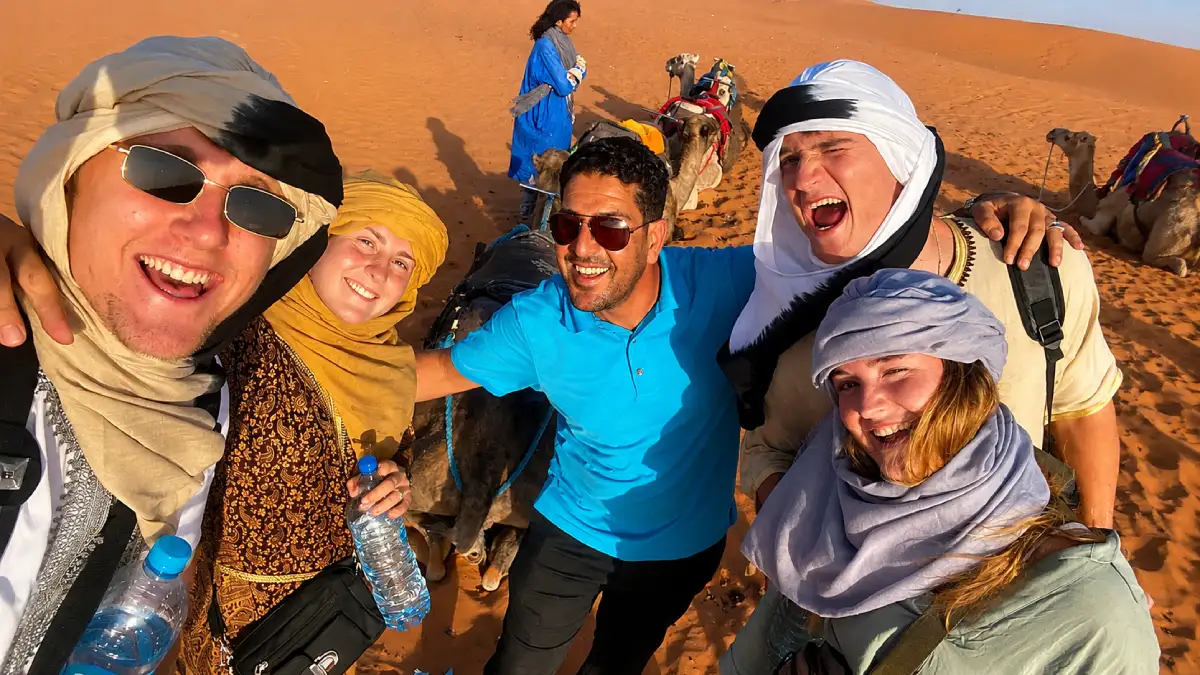
Before you book Merzouga, remember that the desert experience is not only about the dunes. The dunes are beautiful, yes, but the quality of your trip depends on the route, driver, timing, camp, food, transfer, and how clearly everything is organized before you arrive.
Many travelers look only at the camp photos. They see a beautiful tent, a camel at sunset, and a nice dinner setup. But in real life, the small details matter more: where the camp is located, how you reach it, whether the bathroom is private, what time you arrive, what happens to your luggage, and whether your driver understands the long desert route properly.
Do Not Choose Only by Price
Very cheap desert tours or camps can look attractive, but you need to know what is included. Sometimes a low price means rushed transport, a basic camp, shared facilities, unclear pickup details, or too many stops designed for shopping instead of enjoying the journey.
This does not mean you must choose the most expensive option. It means you should choose honestly. If you want comfort, privacy, good timing, and a relaxed experience, pay attention to details before booking.
Ask About the Camp Location
Not all camps are the same. Some are closer to the village and easier to reach. Others are deeper in the dunes and feel quieter. Both can be good, but you should know what you are booking.
If the camp is far into the dunes, ask how you will get there, how long the camel ride takes, whether there is a 4×4 option, and how luggage is handled. If the camp is closer to the road, it may be more practical, especially for families, older travelers, or anyone who wants easier access.
Confirm Camel Ride or 4×4 Transfer
Many travelers think every desert camp automatically includes a camel ride, but this is not always true. Some camps include it, some offer it as an extra, and some give you the choice between camel and 4×4.
If you do not want to ride a camel, ask for a 4×4 transfer. There is no shame in that. The Sahara is still beautiful without a camel ride. Comfort and safety are more important than forcing yourself into an activity you do not enjoy.
Check Bathroom and Comfort Details
Before booking, ask if your tent has a private bathroom or shared bathroom. Also ask about hot water, blankets, heating in winter, ventilation in warmer months, and electricity for charging phones or cameras.
In luxury camps, these details are usually better, but you should still confirm. In standard camps, comfort can vary a lot. Clear questions before booking avoid disappointment later. For your own devices, my adapter for phones and cameras in Morocco guide explains what to pack before the desert route.
Think About the Season
Merzouga changes a lot by season. Spring and autumn are usually the best times. Winter has sunny days but cold nights. Summer can be extremely hot, and I do not recommend it for most travelers.
If you are visiting in May, go earlier in the month if possible. If you are visiting in winter, bring warm clothes. If you are visiting in summer, be very careful with timing and avoid long activities during the day.
Book a Route, Not Just a Camp
This is one of my biggest pieces of advice. Merzouga is far from Marrakech and Fes, so your desert experience starts long before you arrive at the camp. The road, stops, timing, and driver all matter.
A good desert route includes enough time for the High Atlas, Ait Benhaddou, Dades Valley, Todra Gorge, Rissani, and the dunes without making every day feel like a race. A good driver also knows when to stop, when to continue, and how to help you arrive before sunset without stress.
My Honest Booking Advice
If Merzouga is one of the highlights of your Morocco trip, do not treat it like the cheapest overnight activity you can find online. Choose a route and camp that match your comfort level, your season, and your real travel style.
A well-planned Merzouga trip feels smooth from the first mountain road to the last sunrise in the dunes. A badly planned one can feel rushed, tiring, and confusing. The Sahara is worth doing properly.
Suggested Merzouga Itinerary
Merzouga can fit into different Morocco itineraries, but the timing needs to be realistic. The Sahara is far from Marrakech and Fes, so the best itinerary is not the one that looks fastest on paper. The best itinerary is the one that gives you enough time to enjoy the road, arrive before sunset, and experience the dunes without feeling exhausted.
One Night in Merzouga
One night in Merzouga works if you are short on time and want the classic Sahara experience. You arrive in the afternoon, take a camel ride or 4×4 transfer to the camp, watch sunset over the dunes, enjoy dinner, listen to music by the fire, sleep in the camp, wake up for sunrise, and leave after breakfast.
This is enough for a first taste of the Sahara, but it can feel short if you arrive tired after a long drive. If you choose one night, make sure your route is well organized and your arrival time allows you to enjoy sunset properly.
Two Nights in Merzouga
Two nights in Merzouga is much better if the desert is one of the main reasons for your Morocco trip. With two nights, you can enjoy the camp without rushing and use the second day for a 4×4 desert tour, Khamlia village, nomad visits, sandboarding, Rissani market, or simply relaxing near the dunes.
This option is especially good for families, photographers, couples, and travelers who want a deeper Sahara experience. The desert becomes more beautiful when you stop looking at the clock.
3-Day Marrakech to Merzouga Itinerary
A 3-day Marrakech to Merzouga itinerary is the most common route, but it is also a busy one. Usually, the first day goes from Marrakech through the High Atlas Mountains, Ait Benhaddou, Ouarzazate, and Dades Valley. The second day continues through Todra Gorge, Erfoud, Rissani, and Merzouga, with sunset camel ride and overnight camp. The third day is a long drive back to Marrakech.
This route works, but you need to understand that it includes many hours on the road. If you want the full details, timing, stops, and honest expectations, read my 3 Days Desert Tour from Marrakech guide before booking.
4-Day Marrakech to Merzouga Itinerary
A 4-day route is more comfortable than 3 days. It gives you more breathing space, better timing for stops, and less pressure on the return journey. You can spend more time in Dades Valley, Todra Gorge, or even add a second night near the desert depending on your route.
If your schedule allows it, I usually recommend 4 days over 3 days. The Sahara is not close to Marrakech, and adding one extra day can change the whole feeling of the trip.
Fes to Merzouga to Marrakech Itinerary
One of the best ways to visit Merzouga is to travel one way from Fes to the desert, then continue to Marrakech. This route avoids repeating the same road and gives you a beautiful cross-country journey. You pass the Middle Atlas and Ziz Valley from Fes, then after the desert you continue through Todra Gorge, Dades Valley, Ouarzazate, Ait Benhaddou, and the High Atlas toward Marrakech.
This works very well for travelers who start in northern Morocco, especially if your trip includes Tangier, Chefchaouen, and Fes. It is also a smart way to connect your itinerary without wasting time going backward.
My Local Itinerary Advice
If you only have 3 days from Marrakech, Merzouga is possible but fast. If you have 4 days, it becomes much better. If you are coming from Fes and ending in Marrakech, the route feels more natural and more rewarding.
For most travelers, I recommend building Merzouga into a larger Morocco itinerary instead of treating it as a quick side trip. The desert is far, but the journey is part of the experience: mountains, kasbahs, palm valleys, gorges, markets, and finally the dunes.
🤝 Need Help Planning Your Merzouga Trip?
Merzouga is magical, but the desert is far, and the right planning makes a big difference. If you need help choosing the best route, camp style, travel season, private driver, or number of days, I can help you plan it in a simple and honest way.
As a licensed Moroccan tour guide based in Marrakech, I can help you create a private Merzouga Sahara Desert trip from Marrakech, Fes, Casablanca, or Tangier, with realistic timing, comfortable stops, trusted local partners, and a route that matches your travel style.
If you want help planning your Sahara journey, contact me anytime. I’ll be happy to help you experience Merzouga the right way: calmly, safely, and with real local advice..
FAQs About Merzouga Sahara Desert
Is Merzouga worth visiting?
Yes, Merzouga is worth visiting if you want the classic Sahara Desert experience in Morocco. The golden dunes of Erg Chebbi, camel rides, desert camps, sunrise views, stargazing, and local Amazigh hospitality make it one of the most memorable places in the country.
How many days do I need in Merzouga?
One night is enough for the basic desert experience: camel ride, sunset, camp dinner, stars, sunrise, and breakfast. Two nights are better if you want to visit Khamlia, explore by 4×4, meet nomad families, see Rissani market, and enjoy the dunes without rushing.
Can I drive to Merzouga myself?
Yes, you can drive to Merzouga yourself if you are comfortable with long distances, mountain roads, rural routes, and arriving before dark. The main roads are usually possible with a normal car, but you should not drive into the dunes unless you have proper experience. Always confirm your camp meeting point before you arrive.
What is the best time to visit Merzouga?
The best time to visit Merzouga is usually March to May and September to November. March, April, October, and November are the most comfortable months. May can still be good, especially early in the month, but late May starts to feel hotter.
Do I need a 4x4 car?
You do not always need a 4×4 to reach Merzouga village, but you may need one to reach certain camps or explore deeper desert areas. Many camps arrange 4×4 transfers from the village or meeting point. If you plan a desert circuit, nomad visit, or off-road route, a 4×4 is recommended.
Is Merzouga better than Agafay?
Merzouga is better if you want real golden Sahara dunes and a classic desert camp experience. Agafay is closer to Marrakech and good for a short sunset dinner or overnight escape, but it is a rocky desert, not the Sahara dunes. If you have time, Merzouga gives a much deeper desert feeling.
Is Merzouga better than Erg Chigaga?
Merzouga is easier to access and better for most first-time visitors. Erg Chigaga is wilder, more remote, and better for travelers who want a deeper adventure with more time and a 4×4 route. Both are beautiful, but they suit different travel styles.
Can I visit Merzouga with kids?
Yes, Merzouga can be a wonderful family experience if you plan it carefully. Choose a comfortable camp, avoid the hottest months, keep camel rides short if needed, bring snacks and water, and allow enough rest after the long drive. Children usually love the dunes, camels, music, and sandboarding.
How cold does Merzouga get at night?
Merzouga can feel cold at night, especially from November to February and sometimes in early spring. Even when the day is sunny, the temperature can drop quickly after sunset. Bring a warm jacket, socks, and comfortable layers for the camp and sunrise.
Is there Wi-Fi in Merzouga desert camps?
Some desert camps offer Wi-Fi, especially luxury camps, but you should not depend on it. The connection can be weak or unavailable depending on the location. Treat Merzouga as a place to disconnect, and download anything important before you arrive.
What should I wear in Merzouga?
Wear long, light, breathable clothes during the day to protect yourself from sun, wind, and sand. Bring closed shoes for camel rides and dune walks, plus a scarf, hat, sunglasses, sunscreen, and a warm layer for the evening. Avoid bringing delicate clothes or shoes that are difficult to clean.
Can I visit Merzouga in summer?
You can visit Merzouga in summer, but I do not recommend it for most travelers because the heat can be extreme. Temperatures can go above 45°C, and midday activities become very uncomfortable. If you must go in summer, keep activities for sunrise and sunset, stay hydrated, and choose accommodation carefully.