10 Most Beautiful Mountain Towns in Morocco: A Local Guide to the Atlas, Rif & Anti-Atlas
10 Most Beautiful Mountain Towns in Morocco is my local guide to the Atlas, Rif, Anti-Atlas, and mountain valleys where travelers can see a deeper side of the country.
Morocco is not only Marrakech, Fes, the Sahara Desert, and the blue streets of Chefchaouen. Some of the most beautiful places in the country are hidden in the mountains, where life slows down, the air feels cleaner, and every valley has its own character.
As a local guide in Morocco, I always tell travelers that the mountains show another side of the country. In the High Atlas, you find stone villages, walnut trees, snow peaks, and hiking trails. In the Middle Atlas, you find cedar forests, quiet towns, lakes, and cooler air. In the Anti-Atlas, the colors change completely, with pink rocks, almond trees, saffron fields, and Amazigh houses. In the Rif Mountains, you find Chefchaouen, one of the most photogenic towns in Morocco.
This guide is not just a list of pretty places. It is the kind of advice I give to travelers when they ask me where to go beyond Marrakech, Fes, and the desert. For a broader comparison of Morocco’s main mountain regions, including the High Atlas, Middle Atlas and Anti-Atlas, read my Atlas Mountains Morocco travel guide. If this is your first trip, start with my Morocco Travel Guide and Best Time to Visit Morocco because mountain travel depends on season, altitude, roads, and how much time you really have.
Table of Contents
Table of Contents
Most Beautiful Mountain Towns in Morocco
Here is a quick look at the 10 Most Beautiful Mountain Towns in Morocco and what each place is best for.
| Mountain Town | Region | Best For | My Local Advice |
|---|---|---|---|
| Imlil | High Atlas | First-time travelers and hiking | Stay one night if you can |
| Aït Bouguemez | Central High Atlas | Authentic Amazigh culture | Best hidden gem on this list |
| Tafraoute | Anti-Atlas | Photography and slow travel | Visit in spring for almond blossoms |
| Chefchaouen | Rif Mountains | Blue streets and photography | Stay overnight for quieter streets |
| Ifrane | Middle Atlas | Families and winter trips | Do not see it only as “Switzerland” |
| Azrou | Middle Atlas | Cedar forests and markets | Check market day |
| Taliouine | Anti-Atlas / Souss | Saffron and southern culture | Visit as part of a southern route |
| Ouirgane | High Atlas | Calm escape near Marrakech | Better with one night |
| Tinghir | Todra Valley | Oasis, culture, and gorge views | Walk the oasis, not only the gorge |
| Setti Fatma | Ourika Valley | Quick day trip from Marrakech | Go early to avoid crowds |
Some links in this guide may earn a small commission at no extra cost to you. I only recommend services I trust for planning a Morocco trip.
1. Imlil: Best Mountain Town for First-Time Travelers
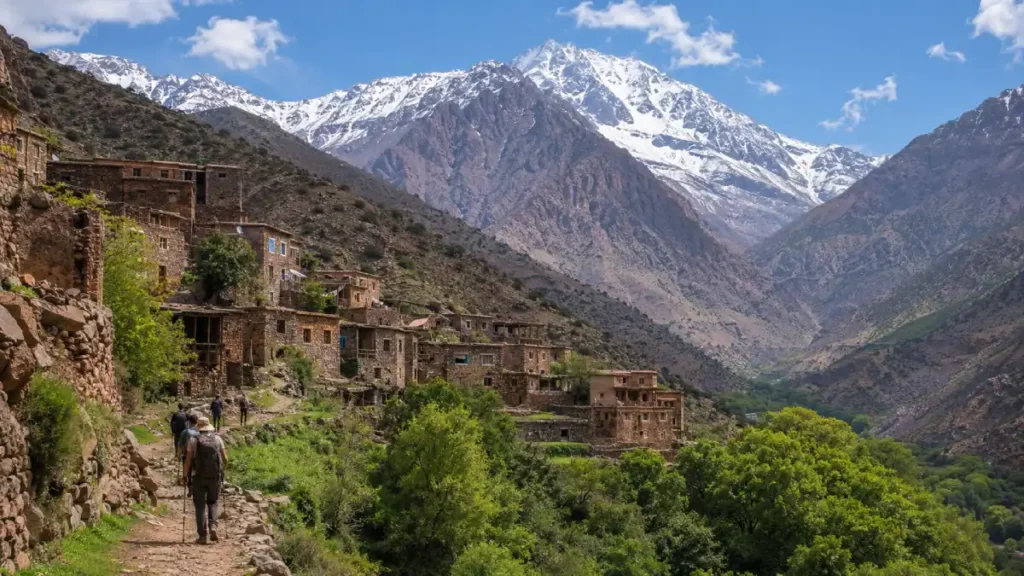
Imlil is one of the easiest mountain villages to visit from Marrakech, and for many travelers it is the first real taste of the High Atlas. The village sits at around 1,700–1,740 meters above sea level, about 65–70 km from Marrakech, and the drive usually takes around 1.5 to 2 hours, depending on traffic and stops. It also sits close to Mount Toubkal, the highest peak in Morocco and North Africa at 4,167 meters, inside Toubkal National Park, so even before you start hiking, you already feel the mountains around you.
For first-time travelers, Imlil works very well because you do not need many days and you do not need to be a serious hiker. You can walk between villages, see terraced fields, drink mint tea with a local family, and enjoy High Atlas views without going too far from Marrakech. If you only have one day, Imlil is possible as a day trip, but I always prefer 1 night because the village feels more peaceful after the day visitors leave.
What makes Imlil special is the mix of beauty and access. In one day, you can leave the noise of Marrakech and arrive where mules still carry supplies, walnut trees shade the paths, and stone houses climb the mountainsides. The nearby villages, such as Armed, sit even higher, around 1,900 meters, and this is where you start to feel the altitude more clearly, especially if you are walking uphill. My advice is simple: do not treat Imlil like a quick photo stop. Walk slowly, drink water, wear good shoes, and give yourself time.
Imlil is best for hiking, nature, first-time mountain travelers, and anyone who wants a real Atlas experience without a complicated journey. If you are building a short route from Marrakech, I recommend reading my Marrakech Travel Guide first so you understand how to use the city as a base, then check my Morocco Itinerary 7, 10 & 14 Days to see how Imlil can fit into a longer Morocco trip.
2. Aït Bouguemez: The Most Beautiful Mountain Valley in Morocco
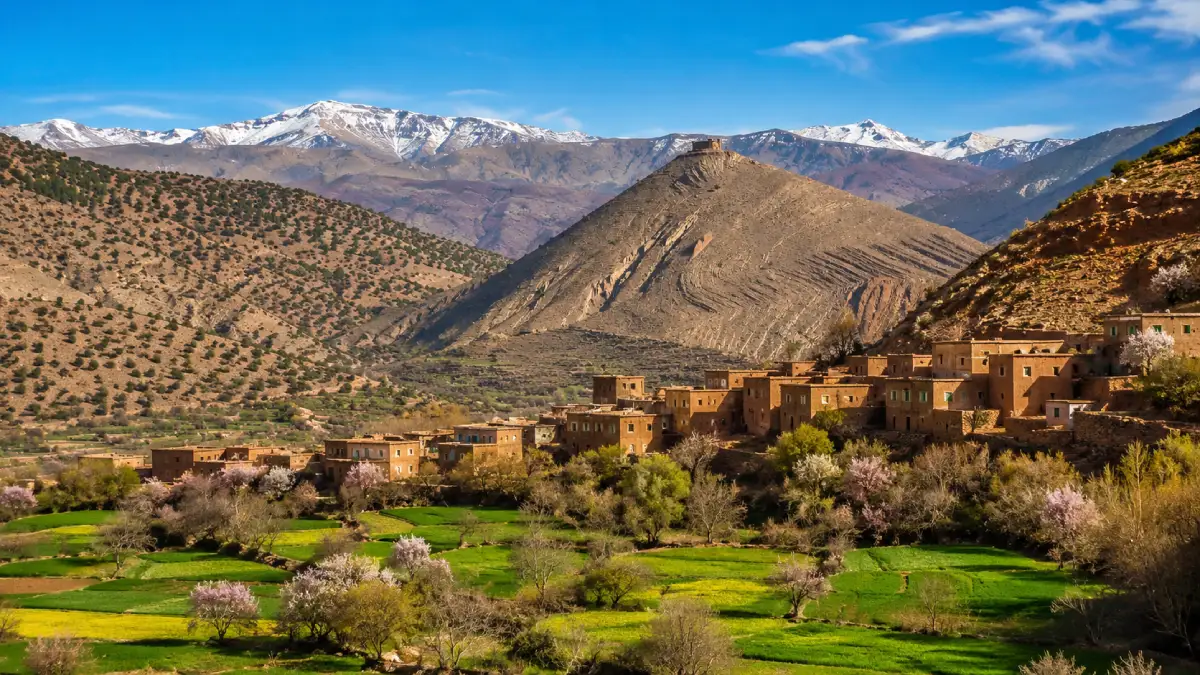
For me, Aït Bouguemez is the most beautiful mountain place on this list. Many people call it the Happy Valley, and honestly, the name fits. The valley sits at around 1,800 to 2,200 meters above sea level in the Central High Atlas, surrounded by high mountain peaks and traditional Amazigh villages. It feels peaceful, wide, green, and untouched in a way that is becoming harder to find in Morocco.
Aït Bouguemez is not dramatic like the Sahara. Its beauty comes slowly. You see traditional Amazigh villages, wide fields, donkeys on small paths, women working in the fields, children walking to school, and old houses built from earth and stone. This is where you understand that Morocco is not one landscape. Every valley has its own soul.
For Amazigh culture, Aït Bouguemez is one of the strongest choices in Morocco. The language, farming traditions, village architecture, and daily life are still very present. This is also why I call it the hidden gem many blogs forget. Many visitors go only to Imlil because it is closer to Marrakech, but Aït Bouguemez gives you a deeper and quieter Atlas experience.
It is best for travelers who have more time, love nature, and want something less commercial. It is not the easiest mountain valley to reach, so I recommend it with a private driver or as part of a longer High Atlas route. Spring is especially beautiful here, when the valley turns green, fruit trees begin to bloom, and the fields feel alive.
3. Tafraoute: Pink Rocks, Almond Trees, and Anti-Atlas Soul
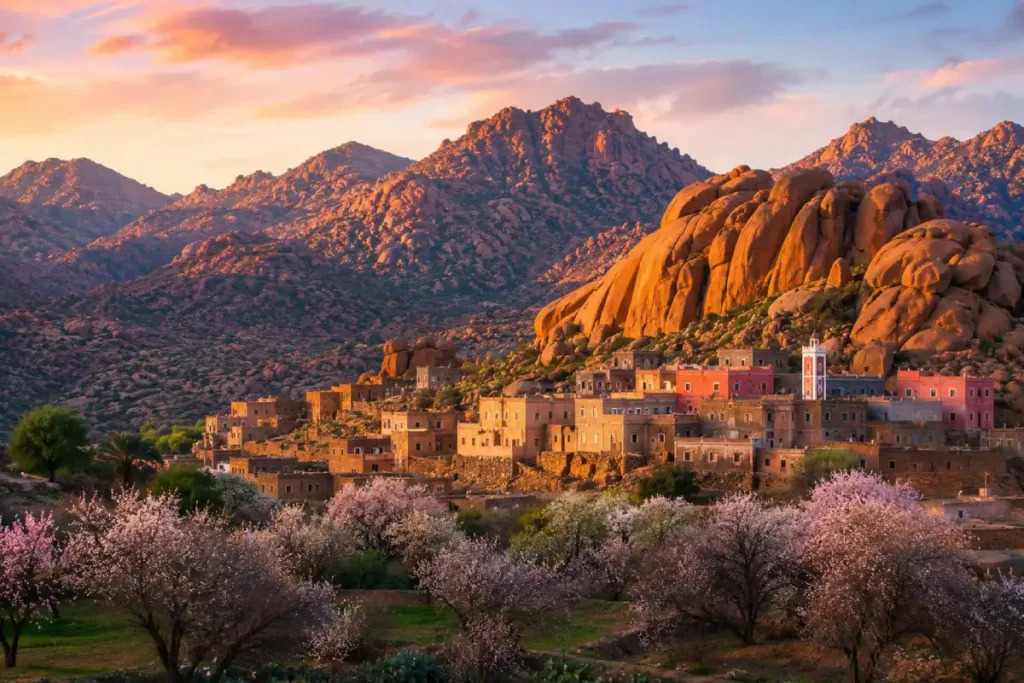
Tafraoute is the mountain town that changed my view of Morocco. The Anti-Atlas feels very different from the High Atlas. The mountains are lower, drier, and softer in color. Tafraoute sits around 1,000 meters above sea level, surrounded by pink granite rocks, almond trees, small Amazigh villages, and quiet valleys. The whole landscape has a calm beauty that does not feel like Marrakech, Fes, or the Sahara.
Tafraoute is one of the best places in Morocco for photography. It does not have the blue streets of Chefchaouen or the high peaks of Imlil, but it has something more unusual: pink and orange rocks, old Amazigh houses, painted rocks nearby, winding roads, and warm southern light. This is the kind of place where you do not need to chase one famous view. The road, the villages, and the mountains all become part of the experience.
Tafraoute is also one of the best places to feel Amazigh culture in southern Morocco. You hear it in the language, see it in the old houses and village markets, and taste it in simple local food made with almonds, olive oil, bread, and mountain ingredients. If you visit in spring, the almond trees make the region even more beautiful, and my Almond Blossom Festival Morocco guide will help you understand why this season is special.
Tafraoute is best for photographers, slow travelers, culture lovers, and people who already visited Marrakech or Fes and want to see a different Morocco. It is not a quick day trip from Marrakech. Give it time.
4. Chefchaouen: The Blue Mountain Town of the Rif
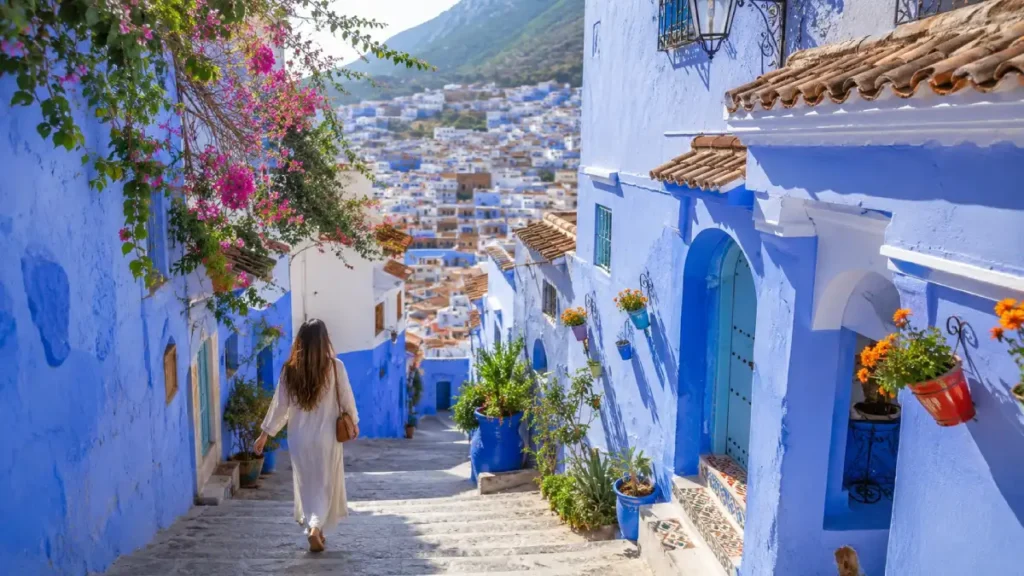
Chefchaouen is the most famous mountain town in Morocco, and for photography it is easy to understand why. The town sits at around 560 meters above sea level, tucked below the Rif Mountains, so you get that rare mix of blue streets, whitewashed walls, mountain backdrop, small alleys, and relaxed medina life.
But Chefchaouen is not only blue paint. The peaks rising around the town are part of the feeling. In the early morning or late afternoon, when the streets are quieter and the light is softer, you understand why travelers remember Chefchaouen long after they leave.
For first-time visitors, Chefchaouen is beautiful, but it is not always practical if your route is focused only on Marrakech and the desert. It works better with Tangier, Tetouan, Fes, or a northern Morocco itinerary. My honest advice is to stay overnight. During the day, the medina can feel busy with visitors, but early morning and evening are much more peaceful.
Chefchaouen is best for photography, slow walks, soft mountain atmosphere, and travelers who want a different side of Morocco. For deeper planning, read my Northern Morocco Travel Guide to understand how Chefchaouen fits with Tangier, Tetouan, and Fes, or use my Chefchaouen Travel Guide if you want more local advice on where to stay, when to visit, and how to enjoy the blue town without rushing.
5. Ifrane: The Most Misunderstood Mountain Town in Morocco
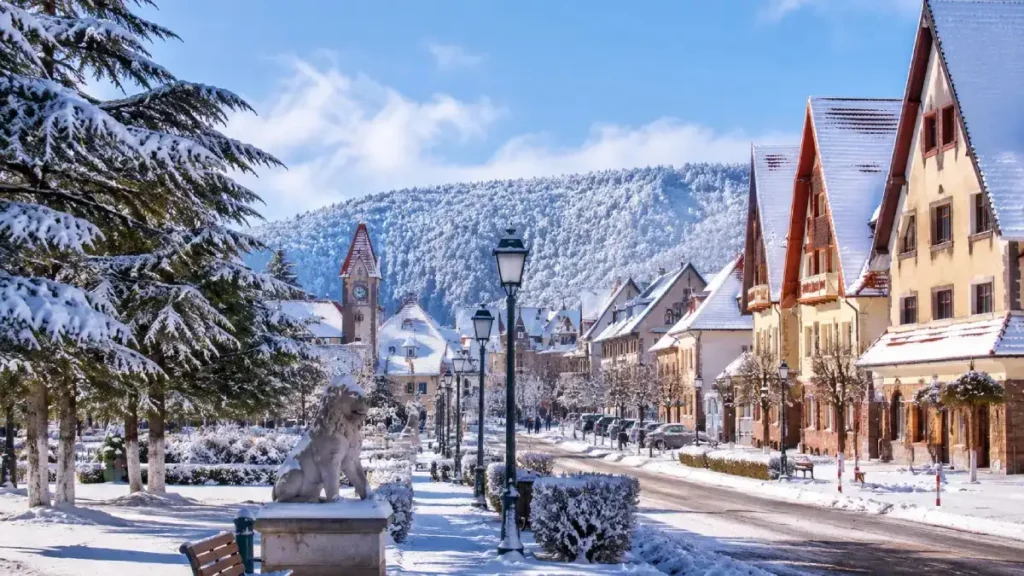
Ifrane is often called “the Switzerland of Morocco,” but I think this description is too simple. Yes, it has European-style buildings, clean streets, cold winters, and sometimes snow. But the real value of Ifrane is not only the architecture. It is the Middle Atlas landscape around it.
Ifrane sits at around 1,650 meters above sea level, which explains the cooler air, snowy winters, cedar forests, and very different feeling from Marrakech, Fes, or the Sahara. Many travelers are surprised when they arrive because this is not the image most people imagine when they think about Morocco.
Ifrane is good for families, easy travel, and travelers who want comfort. It feels calm, organized, and different from the busy rhythm of the big cities. Nearby, you have cedar forests, lakes, Azrou, and mountain roads that show the greener side of Morocco. This is the Morocco many visitors do not expect.
Ifrane is especially interesting in winter, when snow changes the feeling of the town completely. But it is also nice in summer because the cooler temperatures give Moroccan families an escape from the heat of the cities.
Ifrane is best for families, relaxed travel, winter atmosphere, and Middle Atlas road trips. It should not be sold only as “Europe in Morocco.” It is Moroccan in its own way, shaped by mountain weather, cedar forests, local life, and the unique atmosphere of the Middle Atlas.
6. Azrou: Cedar Forests, Markets, and Middle Atlas Life
Azrou is close to Ifrane, but it feels more local. If Ifrane feels polished and calm, Azrou feels more connected to everyday Middle Atlas life. The town sits at about 1,250 meters above sea level, which gives it cooler air than the plains and makes it a natural stop between Fes, Ifrane, Midelt, and the Sahara route.
Azrou is known for its cedar forests, Amazigh culture, local markets, and mountain roads. Many travelers stop nearby to see the cedar forest and the Barbary macaques, but I always tell people not to make the forest the only reason to come. The town itself has a local feeling, especially when you walk around the market area and see how people from nearby villages come in for daily life.
For me, Azrou is best when you do not rush it. Visit the forest, but also pay attention to the food, the people, the roads, and the rhythm of the Middle Atlas. This is where you feel how the Middle Atlas is different from both the High Atlas and the Anti-Atlas.
Azrou is good for families, nature lovers, and travelers moving between Fes, Ifrane, Midelt, and the Sahara. It is not as famous as Chefchaouen or Imlil, but it gives a more grounded view of mountain Morocco. If your trip includes long drives, read my Morocco Transportation Guide to plan the route with more realistic driving times.
My local tip is to check market day. A normal town can feel quiet, but on souk day everything changes. Farmers, vegetables, spices, tools, animals, and people from surrounding villages come together. This is where you see real mountain life, not only the tourist stop.
7. Taliouine: Saffron, Villages, and Anti-Atlas Roads
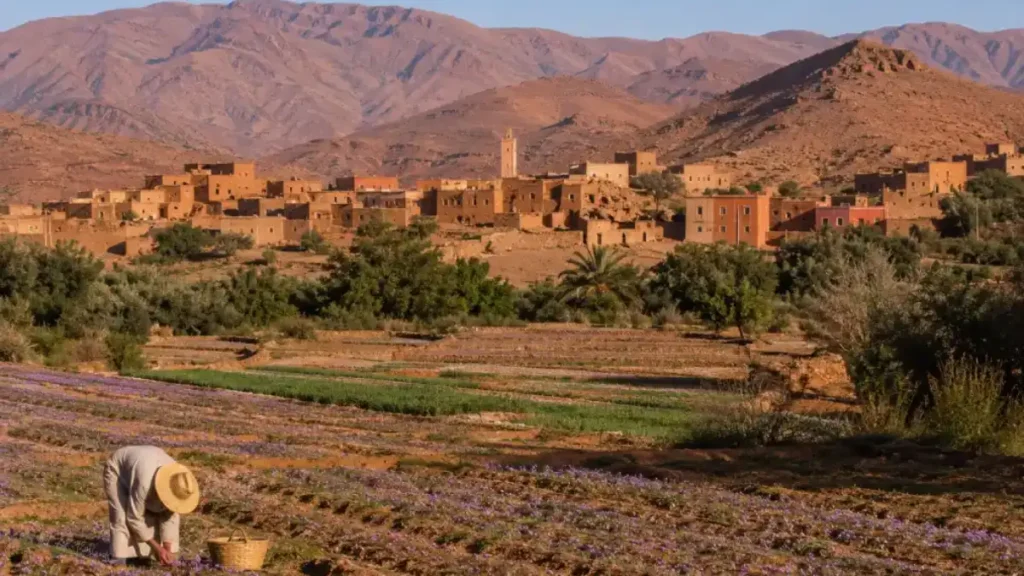
Taliouine is not always included in lists of beautiful mountain towns, but it deserves its place. It sits in southern Morocco between the Souss region, the Anti-Atlas, and the road toward Ouarzazate. This is not a place of big monuments or busy tourist streets. Its beauty is quieter, tied to dry mountains, old kasbahs, saffron fields, and the villages around the town.
Taliouine sits at around 1,200 meters above sea level, which gives the region cooler nights and a different feeling from the hotter plains farther south. The mountain light here is soft, especially in the late afternoon when the dry hills and old kasbah walls turn golden.
Taliouine is famous as Morocco’s saffron capital, and that gives it a special identity. Saffron is not just a spice here. It is work, patience, family income, and local pride. In the right season, small purple saffron flowers appear in the fields, and families collect them carefully by hand early in the morning. When travelers understand this, they start to see Taliouine differently. It becomes more than a stop on the road.
The beauty of Taliouine is not loud. It is in the dry mountain landscapes, the quiet villages, the old kasbah walls, and the way people still live close to the land. This is a good place for travelers who enjoy agriculture, local culture, slow roads, and places that feel more Moroccan than tourist-made.
Taliouine is best visited as part of a southern Morocco route, especially between Taroudant, Tafraoute, Ouarzazate, or the desert. It is not the kind of place where you arrive, take one photo, and leave. You need to understand what saffron means to the region, how people work the land, and why this “red gold” is part of the soul of the area.
Taliouine is best for cultural travelers, food lovers, road trips, and people who want to see Morocco beyond the obvious stops. If you want to understand how local ingredients shape the country’s identity, read my What to Eat in Morocco guide, because saffron is one of those small details that tells a bigger story about Moroccan food, farming, and tradition.
8. Ouirgane: Calm High Atlas Escape Near Marrakech
Ouirgane is one of the best mountain places near Marrakech for travelers who want peace without a difficult journey. It sits in the High Atlas, about 60–65 km from Marrakech, so it works very well for people who want fresh air, village scenery, and mountain views without spending the whole day driving.
Compared to places like Imlil or Setti Fatma, Ouirgane feels softer and quieter. The landscape is full of red earth, olive trees, gentle hills, small Amazigh villages, and peaceful roads that curve through the valley. It is not the place for travelers looking for the highest peaks or the hardest hikes. It is better for slow walks, local guesthouses, traditional food, and mornings where you hear birds instead of traffic.
One reason I often recommend Ouirgane is because it feels relaxed without feeling isolated. You still get mountain air and Atlas scenery, but the pace is easier, especially for couples, families, or travelers who want a calmer side of Morocco after the energy of Marrakech.
Ouirgane is also beautiful in different seasons. In spring, the valley becomes greener and full of flowers. In autumn, the light feels softer and the weather is excellent for walking. Even in summer, it stays more comfortable than Marrakech because of the mountain air.
For me, Ouirgane is not only about scenery. It is about atmosphere. You sit outside with mint tea, watch the changing light on the hills, hear distant village sounds, and slow down naturally. That is something many travelers do not expect near Marrakech.
It can be done as a day trip, but honestly, one night is much better. You wake up with cool air, birds, olive trees, and a calm feeling that is difficult to find in the city. Ouirgane works especially well for travelers who want comfort with a local mountain feeling rather than a busy tourist stop.
If you are using Marrakech as your base, read my Where to Stay in Marrakech guide, and Ouirgane is also one of my favorite escapes inside Best Day Trips from Marrakech.
9. Tinghir: Oasis Life Between Mountains and Desert
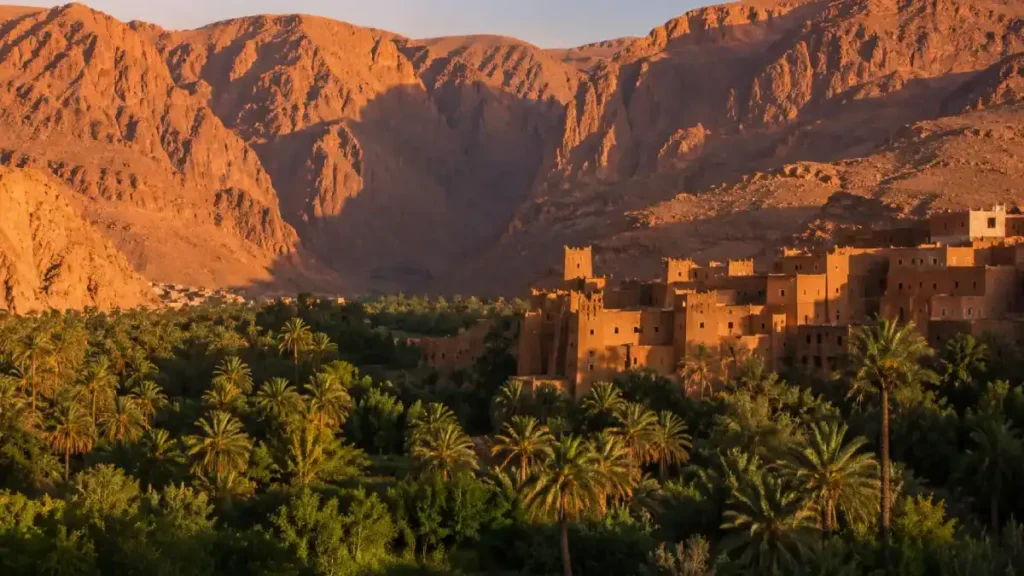
Tinghir is personal for me because I come from southeastern Morocco. This is one of the most important places on this list, not only because it is beautiful, but because it shows the connection between mountains, oasis, kasbahs, and desert routes.
Tinghir sits at around 1,300 meters above sea level near the Todra Valley and Todra Gorge, one of Morocco’s most impressive canyon landscapes. The area is known for its palm oasis, old ksour, kasbahs, irrigation channels, and dramatic cliffs near the gorge that rise to about 300 meters high in some sections. Many travelers stop only for the gorge, take a few photos, and continue. For me, that is a mistake.
For culture and traditional life, Tinghir is one of the strongest choices in Morocco. Here, the oasis is not decoration. It is life. Families still depend on land, water, palms, gardens, and old systems of sharing resources. When you walk through the oasis, you understand how people survived between mountain and desert for generations.
Tinghir is best for photography, culture, hiking in Todra Gorge, oasis walks, and travelers doing the Marrakech–Dades–Merzouga or Fes–Merzouga route. My advice is to not only stop at the gorge for photos. Walk in the palm valley. Visit the old neighborhoods. Listen to the water channels. That is where Tinghir becomes real. If you are continuing toward the dunes, read my Merzouga Sahara Desert Travel Guide.
10. Setti Fatma: Waterfalls and Quick Atlas Escape
Setti Fatma is one of the most popular mountain escapes from Marrakech. It sits in the Ourika Valley at around 1,500 meters above sea level, and it is known for waterfalls, river restaurants, mountain views, and easy access from the city.
For travelers with limited time, Setti Fatma gives a quick taste of the High Atlas. You can leave Marrakech in the morning, follow the Ourika Valley, stop for views, and reach a mountain village with cooler air and flowing water within a few hours. It becomes especially popular in spring and summer, when people want to escape the heat of Marrakech.
The village is famous for its waterfalls, but the experience is not only about reaching the top. The road itself is part of the atmosphere, with Amazigh villages, riverside cafés, small bridges, walnut trees, and mountain views along the valley.
But my honest advice is this: Setti Fatma can be busy, especially on weekends and Moroccan holidays. If you want a quieter feeling, go early in the morning and avoid peak local travel days. Do not expect untouched mountain silence like Aït Bouguemez or remote Atlas valleys. Setti Fatma is popular because it is easy, social, and close to Marrakech.
Setti Fatma is best for short day trips, families, river views, and travelers who want a simple mountain experience from Marrakech. For more serious hiking or deeper Amazigh culture, Imlil, Ouirgane, or Aït Bouguemez are stronger choices.
Which Mountain Town in Morocco Is Best for You?
For first-time travelers, choose Imlil. It is close to Marrakech, easy to reach, and gives you a real High Atlas feeling without needing many days. Sitting at around 1,740–1,800 meters above sea level, the village already feels cooler and more mountainous than Marrakech, especially in spring and autumn.
For the most beautiful mountain experience, choose Aït Bouguemez. The valley sits at around 1,800 meters elevation in the Central High Atlas and feels peaceful, green, authentic, and deeply connected to Amazigh village life.
For families and easy travel, choose Ifrane or Ouirgane. Ifrane sits at about 1,650–1,665 meters above sea level, which explains the cooler air, cedar forests, snowy winters, and calm atmosphere. Ouirgane is lower and softer, making it easier for relaxed stays near Marrakech.
For hiking, choose Imlil. It is the strongest base for Mount Toubkal at 4,167 meters, the highest peak in Morocco and North Africa, with some of the country’s best hiking trails.
For photography, choose Chefchaouen, Tafraoute, and Tinghir. Chefchaouen gives blue streets and Rif Mountain views, Tafraoute gives pink granite rocks and almond valleys, and Tinghir gives palm groves, old kasbahs, and the dramatic cliffs of Todra Gorge.
For culture and traditional life, choose Tinghir, Aït Bouguemez, and Tafraoute. These places still show strong Amazigh identity, village farming traditions, old architecture, local markets, and slower rhythms of life that many travelers no longer expect to find.
For a hidden gem, choose Aït Bouguemez. Many blogs forget it because it takes longer to reach, but for me, it is one of the deepest and most rewarding mountain experiences in Morocco.
Best Time to Visit Mountain Towns in Morocco
The best time to visit most mountain towns in Morocco is spring and autumn. March to May is beautiful because valleys turn green, flowers appear, rivers flow stronger, and hiking feels comfortable. September to November is also excellent because the light becomes clearer, temperatures feel softer, and mountain roads are easier for long drives and slow travel.
Winter can be beautiful in Ifrane, the High Atlas, and parts of the Middle Atlas, especially in places above 1,500 meters where snow sometimes covers villages, cedar forests, and mountain roads. But travelers should always check road conditions, weather, and nighttime temperatures before going into the mountains.
Summer can become very hot in lower mountain regions like Tinghir and Tafraoute, where daytime temperatures sometimes pass 35°C in July and August. But higher villages such as Imlil, sitting around 1,740 meters above sea level, and Aït Bouguemez, around 1,800 meters, usually stay cooler and more comfortable, especially in the morning and evening.
This is why I always tell travelers not to plan Morocco by one weather forecast. The country changes completely by altitude, region, and season. Before choosing your route, read Best Time to Visit Morocco and Morocco Packing List Guide so you understand what different seasons actually feel like in different parts of the country.
How Long Do You Need?
If you only have one day from Marrakech, choose Imlil, Ouirgane, Setti Fatma, or Asni. These places are close enough for a mountain escape without making the day too heavy.
If you have two days, Imlil becomes much better because you can stay overnight in the village and enjoy the quiet evening after day visitors leave. Ouirgane also works well for one peaceful night, especially if you want comfort, fresh air, and a slower pace near Marrakech.
Tinghir is different. I would not visit it as a quick trip from Marrakech. It works better if you are already traveling toward Dades Valley, Todra Gorge, or Merzouga. In that case, one night is possible, but two nights gives you time to walk in the oasis and see more than the gorge.
If you have more time, choose Aït Bouguemez, Tafraoute, Chefchaouen, or Tinghir and Todra Valley. These places deserve slower travel because the beauty is not only in the main view. It is in the road, the tea stops, the local markets, the family houses, the valley walks, and the silence between villages.
The biggest mistake travelers make is rushing. Mountain Morocco is not only about arriving, taking a photo, and leaving. It rewards people who slow down.
Local Guide Advice Before Visiting Morocco’s Mountain Towns
My first advice is simple: do not trust the map too much in the mountains. A road can look short on Google Maps, but in Morocco, mountain roads have curves, villages, animals, slow trucks, photo stops, and sometimes weather changes. A two-hour drive can easily become half a day if you travel the right way, and honestly, that is part of the beauty.
In winter, always ask about snow before driving to the High Atlas or Middle Atlas. In summer, do not hike like you are in Europe. Start early, carry water, wear a hat, and avoid the strongest sun. In places like Imlil and Aït Bouguemez, the altitude can surprise you if you walk too fast, so take your time, wear good shoes, and keep your plan flexible.
And please, if you want to see real mountain life, ask about souk day. A quiet village can look sleepy on a normal day, but on market day everything changes. Farmers come from the hills, women bring vegetables and herbs, men sell tools and animals, and the whole valley feels alive. This is the Morocco I love showing travelers not only the postcard view, but the real life behind it.
Final Thoughts: The Mountains Show the Real Depth of Morocco
After visiting many of these places with travelers, I can say the 10 Most Beautiful Mountain Towns in Morocco are not beautiful in the same way. Imlil gives you the strong High Atlas feeling near Marrakech. Aït Bouguemez gives you peace, fields, and Amazigh village life. Tafraoute gives you those Anti-Atlas colors you do not forget. Chefchaouen gives you blue streets with Rif Mountain air. Ifrane and Azrou show you cedar forests, cold winters, and a greener Morocco many travelers do not expect.
Then you have Taliouine with saffron and southern mountain culture, Ouirgane with calm close to Marrakech, Tinghir with oasis life between mountains and desert, and Setti Fatma for a quick taste of the Atlas when time is short. This is why I always say Morocco is not one landscape. Every valley has its own face, its own people, and its own way of living.
For me, the best memory in the mountains is not always the famous viewpoint. Sometimes it is a glass of mint tea in a small village, the smell of bread coming from a family oven, or a quiet walk between stone houses while the mountains stand around you. That is the Morocco I love showing travelers.
If you are planning a Morocco mountain trip and feel unsure which town to choose, remember this simple rule: build your route around the season, the road, and the kind of experience you want, not only the map. If you want help planning a private Morocco route through the Atlas Mountains, Rif Mountains, or southern valleys, you can contact me.
FAQs About Mountain Towns in Morocco
What is the most beautiful mountain town in Morocco?
For me, the most beautiful mountain place in Morocco is Aït Bouguemez. The valley feels peaceful, authentic, and deeply connected to Amazigh life. It is not crowded, and the beauty comes from the landscape, the villages, and the slower rhythm of daily life.
Which mountain town in Morocco is best for first-time travelers?
Imlil is usually the best choice for first-time travelers because it is easy to reach from Marrakech and gives a real High Atlas experience without needing many days or difficult hiking.
What are the best mountain towns near Marrakech?
The best mountain towns and valleys near Marrakech are Imlil, Ouirgane, Setti Fatma, and Asni. They all work well as day trips, but honestly, staying one night gives a much better experience.
Which mountain town is best for hiking in Morocco?
Imlil is the best base for hiking because it sits near Mount Toubkal and many High Atlas trails. Aït Bouguemez is also excellent if you want quieter hiking and more traditional village landscapes.
Which mountain town in Morocco is best for photography?
Chefchaouen, Tafraoute, and Tinghir are the strongest choices for photography. Chefchaouen gives blue streets and mountain views, Tafraoute gives pink granite landscapes, and Tinghir gives palm oases and dramatic gorge scenery.
Are Morocco’s mountain towns safe for tourists?
Yes, Morocco’s mountain towns are generally very safe for travelers. The biggest challenges are usually road conditions, weather, and planning enough time between places rather than safety itself.
What is the best time to visit mountain towns in Morocco?
Spring and autumn are usually the best seasons. March to May gives green valleys and flowers, while September to November gives cooler temperatures and beautiful light for road trips and hiking.
Can you visit Morocco’s mountain towns in winter?
Yes, but you need to plan carefully. Places like Ifrane and the High Atlas can get snow in winter, so road conditions should always be checked before traveling.
How many days do you need for Morocco’s mountain towns?
If you only have one day, Imlil, Ouirgane, and Setti Fatma work well from Marrakech. For deeper experiences like Aït Bouguemez, Tafraoute, or Tinghir, I recommend at least two or three days.
What should you pack for mountain travel in Morocco?
Bring comfortable shoes, layers, sun protection, and water. Even when Morocco feels hot in the cities, mountain weather can change quickly, especially in the High Atlas and Middle Atlas.