Driving in Morocco: 11 Rules Tourists Need to Know
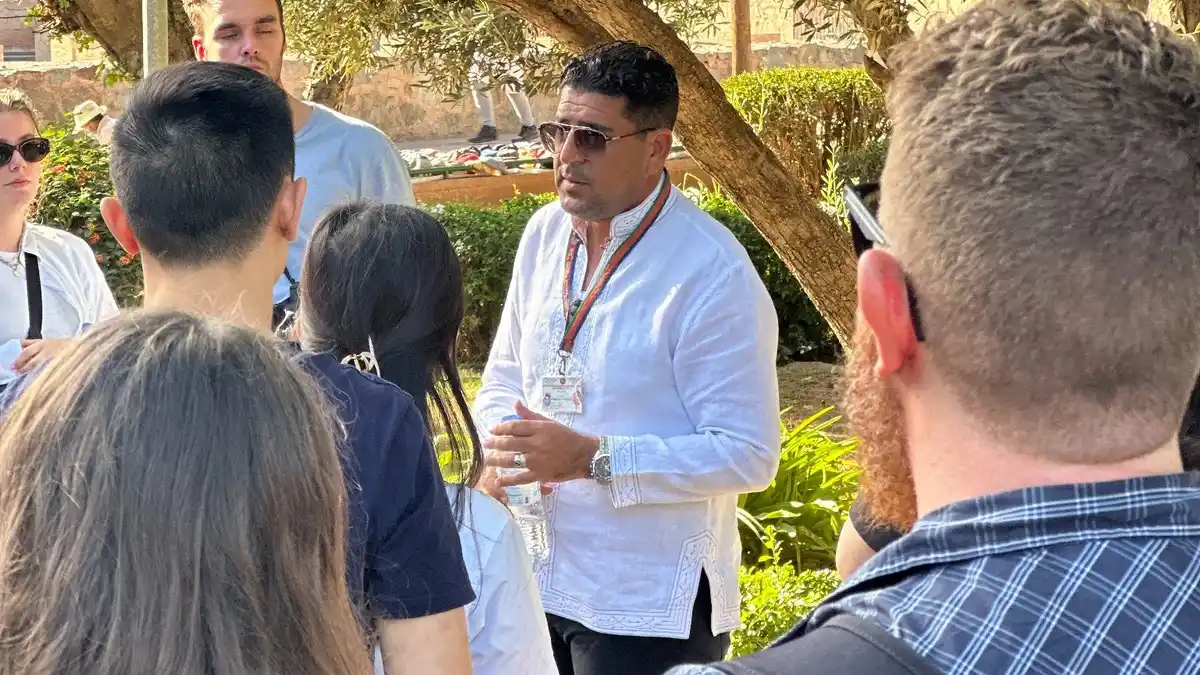
The first time you drive out of Marrakech, Morocco can feel surprisingly open. The city traffic begins to fade, the road stretches towards the High Atlas Mountains, and the landscape changes from red plains to villages, valleys, and steep mountain passes. Then you see a police checkpoint ahead. For many visitors, this is the moment when driving in Morocco begins to feel uncertain. Should you stop completely? What is the speed limit? Who has priority at the next roundabout? Have you done something wrong, or is it only a routine check? I’m Kamal, a licensed Moroccan tour guide based in Marrakech. I have travelled Morocco’s roads for more than 20 years, from Tangier and Chefchaouen to Fes, the Atlas Mountains, the Draa Valley, Merzouga, and the Atlantic coast. Driving in Morocco is not as frightening as some travel stories make it sound, but it does require patience, attention, and respect for the road. This guide explains the rules, speed limits, police checkpoints, roundabouts, mountain driving, night driving, and practical situations tourists should understand before getting behind the wheel.
Quick answer: Driving in Morocco is generally safe for confident tourists. Morocco drives on the right, speed limits are usually 40–60 km/h in towns, up to 100 km/h outside towns, and up to 120 km/h on motorways. Follow posted signs, expect police checkpoints, avoid night driving outside cities, and slow down before entering towns.
Table of Contents
Table of Contents
Driving in Morocco
Driving in Morocco is manageable when you stay patient and understand the local rhythm of the road. The main routes between popular destinations are usually paved, but city driving in Marrakech, Casablanca, and Fes can feel intense because scooters, taxis, buses, pedestrians, and cars all share the same space.
Outside the large cities, the roads are often calmer, although you still need to watch for changing speed limits, animals, bicycles, slow trucks, roadworks, and people crossing unexpectedly.
My advice is simple: drive during daylight, follow the posted signs, leave extra space, and never let an impatient driver behind you decide your speed.
For rental prices, insurance, deposits, documents, and choosing the right vehicle, read my Rent a Car in Morocco Guide.
Once you understand the road rules, compare local and international car rental companies in Morocco before deciding where to book.
Need a Rental Car for Your Morocco Road Trip?
Compare rental cars, prices, pickup locations, and vehicle types before booking. Check the deposit, insurance excess, fuel policy, and mileage conditions carefully.
Which Side of the Road Do You Drive On in Morocco?
In Morocco, vehicles drive on the right-hand side of the road and normally overtake on the left. This feels natural for travellers from the United States, Canada, France, Germany, Spain, and most of Europe. Visitors from the United Kingdom, Ireland, Australia, New Zealand, South Africa, and other left-driving countries may need more time to adjust. The first few junctions and roundabouts require extra concentration. When leaving a petrol station, parking space, hotel, or quiet side road, pause for a moment and make sure you enter the correct side. Tired drivers are more likely to make mistakes during these simple movements than on the main road.
Is Driving in Morocco Safe for Tourists?
Yes, many visitors drive safely across Morocco every year. The main roads between Marrakech, Casablanca, Rabat, Tangier, Fes, Agadir, Essaouira, Ouarzazate, and Merzouga are used daily by private cars, coaches, taxis, delivery vehicles, and local families. The real challenge is not always the road itself. It is the unexpected movement around you. A scooter may pass closely in city traffic. A shared taxi may stop suddenly. A pedestrian may cross near a village. A truck may move slowly on a mountain climb. Drive defensively and leave more space than you normally would. Do not assume another driver will signal before changing direction. Watch the vehicle itself, not only the indicators.
Morocco Speed Limits
Speed limits in Morocco depend on the road, the location, the vehicle, and the posted signs.
| Road type | Typical maximum speed |
|---|
| Towns and urban areas | 40–60 km/h |
| Roads outside towns | Up to 100 km/h |
| Motorways | Up to 120 km/h |
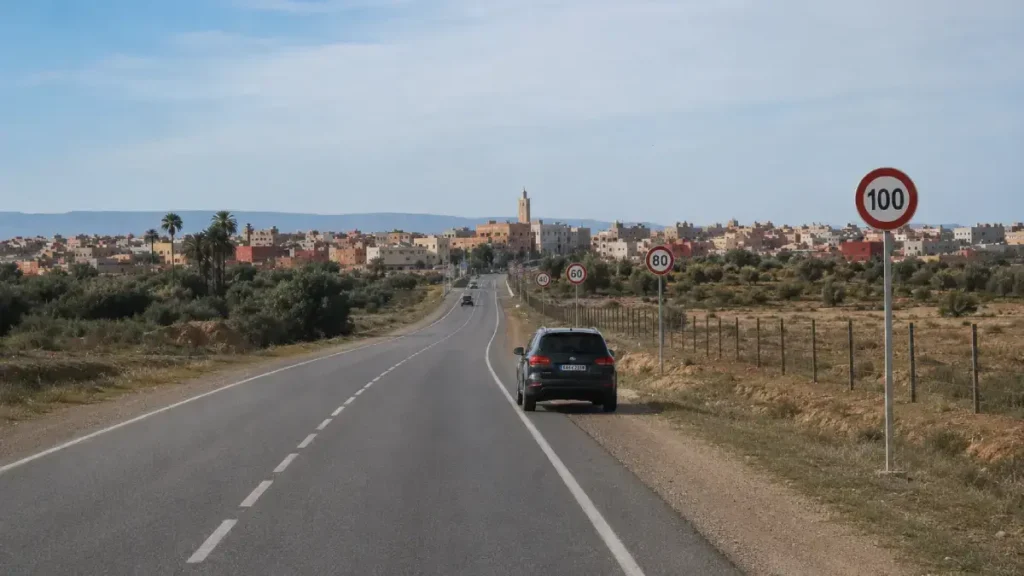
The posted sign always matters more than a general table. A road that allows 100 km/h can quickly fall to 80, 60, or 40 km/h as you approach a village, school, junction, or checkpoint. This is where many tourists make mistakes. They see the buildings ahead but wait until they are inside the town before slowing down. Police radar may already be operating near the entrance. Slow down when you see the first lower-speed sign, not when you reach the centre of the town.
Why Do Speed Limits Change So Quickly?
When approaching a town, you may see several speed signs within a short distance. A common sequence can look like this: 100 km/h, then 80 km/h, then 60 km/h, and finally 40 km/h. These signs are not suggestions. They are designed to reduce speed gradually as the road enters an area with pedestrians, shops, houses, taxis, bicycles, and local traffic. The road may still look wide and empty, but the lower limit already applies. Do not accelerate again until you pass a sign showing a higher limit or the clear end of the restricted area.
Some links in this guide may earn a small commission at no extra cost to you. I only recommend services I trust for planning a Morocco trip.
Speed Cameras and Mobile Radar
Morocco uses fixed cameras and mobile speed controls. Mobile radar may be operated by police or gendarmerie officers beside the road, sometimes before a checkpoint farther ahead. Do not rely on other drivers flashing their headlights to warn you. The safest approach is to respect the sign from the moment you pass it. A rental vehicle does not protect you from camera fines. If an offence is recorded and reaches the rental company later, the agency may charge the fine together with an administration fee according to the rental contract.
Police Checkpoints in Morocco
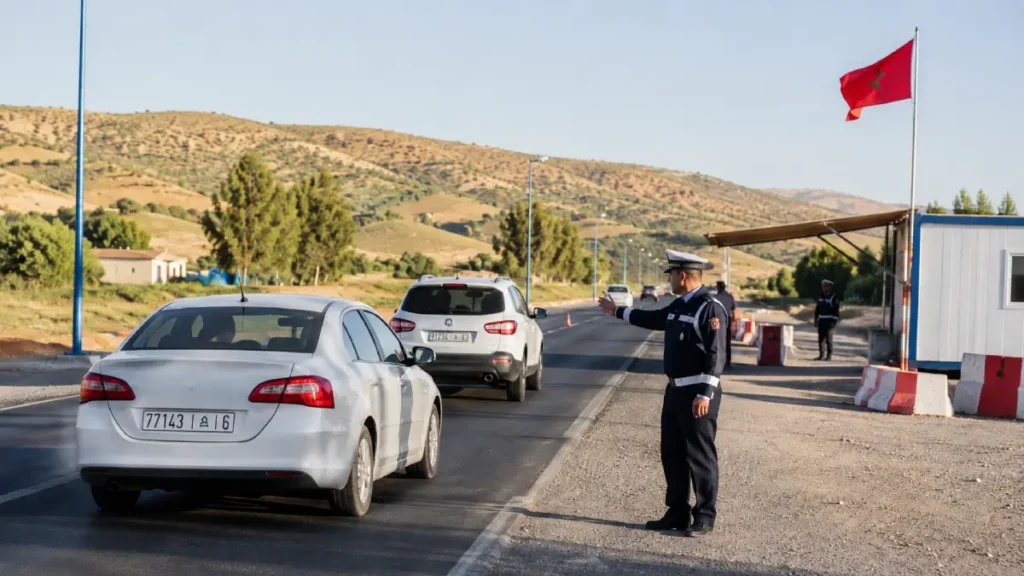
Police and gendarmerie checkpoints are a normal part of driving in Morocco. You will often see them at city entrances, city exits, major junctions, national roads, and areas with heavier traffic. A checkpoint does not automatically mean you have committed an offence. Officers may be checking speed, seatbelt use, vehicle documents, traffic conditions, or general security. Rental cars are often easy to recognise, but tourists who follow the rules and carry the correct documents should not be worried.
What Should You Do at a Police Checkpoint?
Watch the officer’s hand signals carefully. When the officer signals you to continue, slow down and pass calmly. When you are told to stop, pull over safely and keep your hands visible. Stay inside the vehicle unless the officer asks you to step out. Keep your original driving licence, passport or accepted identification, rental contract, vehicle papers, and insurance documents ready. Remain polite even when you do not immediately understand the reason for the stop. A calm attitude usually makes the conversation easier.
What Happens If You Receive a Fine?
Ask the officer to explain the offence and the amount. Request an official receipt or written record for any payment. Never offer extra money, suggest an unofficial arrangement, or hand over cash without proper documentation. Keep the receipt with your rental paperwork and inform the rental company when necessary. Traffic penalties depend on the exact offence, so one universal fine amount is not reliable. The important point is to understand the violation and keep proof of any payment.
Seatbelts, Phones and Children
Wear your seatbelt even when some people around you do not. The driver is responsible for controlling the vehicle safely, and passengers should also remain properly restrained. Do not hold a mobile phone while driving. Set your navigation before leaving, place the phone in a secure holder, and stop safely when you need to change the route. Families should request the correct child seat before arrival. Do not wait until collection day and assume one will be available. Check that the seat is suitable, present, and properly fitted before leaving the rental office.
Moroccan Roundabouts
Roundabouts are one of the most confusing parts of driving in Morocco. At many normal roundabouts, traffic already circulating has priority. However, some junctions are controlled by traffic lights, signs, road markings, or a police officer. In those situations, the movement may be different. Never assume that every Moroccan roundabout works in exactly the same way. Slow down and look for give-way signs, stop signs, traffic lights, painted markings, police directions, and vehicles already moving through the junction. Do not force your way into a small gap because the driver behind you is impatient. Take the extra few seconds you need.
Driving in Marrakech, Casablanca and Fes
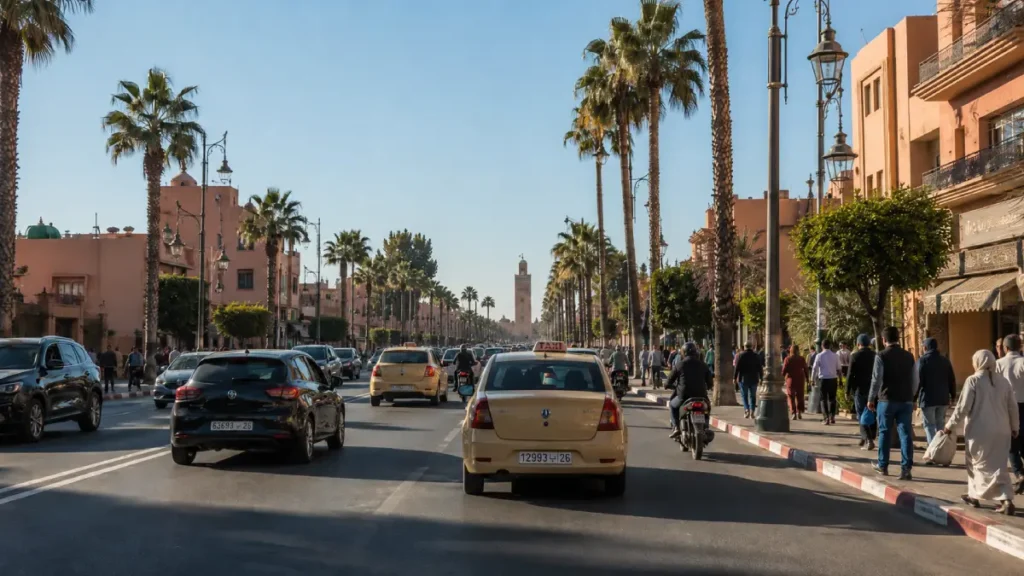
Driving in Morocco’s largest cities requires more concentration than driving between them. In Marrakech, scooters can pass close to the car, pedestrians may step into the road, and taxis sometimes stop with little warning. Casablanca has wider roads but heavier traffic, and lane changes can feel fast and unpredictable. Fes has busy modern roads outside the medina, but the old city itself is not a place to explore by car. My advice is to avoid using a rental car for sightseeing inside these cities. Park at your hotel or in an official car park, then continue by taxi or on foot. Do not follow navigation blindly into a medina. A route that appears open on the map may become a narrow pedestrian lane, a market street, or a restricted entrance. For easier accommodation access, read Where to Stay in Marrakech and Where to Stay in Fes. For a wider comparison of trains, taxis, buses, and private transport, use my Morocco Transportation Guide. If you are collecting the car in Marrakech, my picking up a rental car at Marrakech Airport guide explains what to check before leaving the city.
Driving Through Villages and Small Towns
Roads through villages can look quiet, but they require extra care. Children may walk close to the road, shared taxis stop to collect passengers, scooters enter from side streets, and animals may appear near the shoulder. Slow down even when there is no police officer in sight. Roadside cafés, petrol stations, and local shops can create sudden movement as vehicles enter and leave. Never overtake simply because the road appears straight. Check junctions, pedestrians, oncoming traffic, and the vehicle ahead before committing.
Driving in the Atlas Mountains
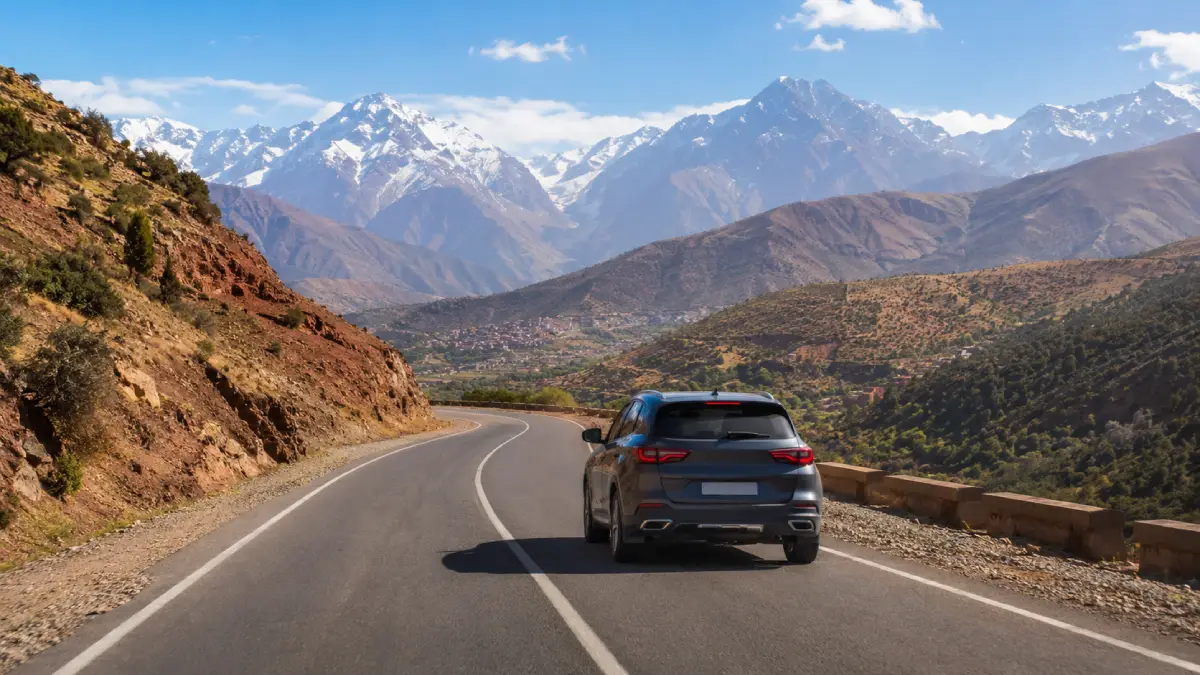
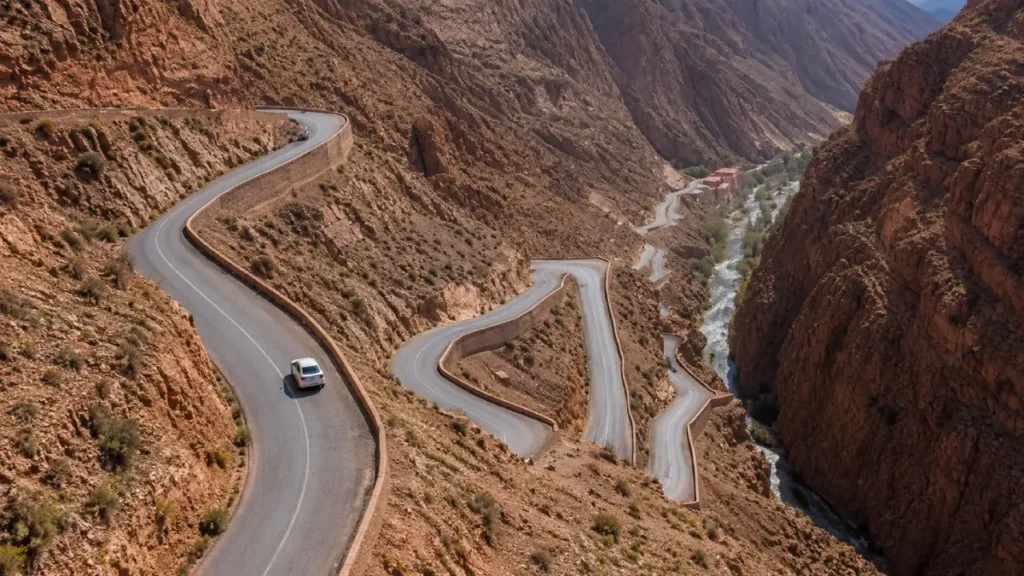
Mountain roads are among the most beautiful parts of a Morocco road trip. They are also places where drivers should forget about rushing. Expect bends, steep climbs, slow trucks, roadworks, changing weather, and occasional stones on the road. Leave enough distance between your vehicle and the one ahead, especially behind trucks and buses. Do not overtake on a blind bend. When descending, use a lower gear to help control the vehicle instead of relying continuously on the brakes. Weather can change quickly at higher elevations. A warm morning in Marrakech does not guarantee clear conditions near the Tizi n’Tichka Pass. Travellers continuing south can use my Ouarzazate to Merzouga Road Trip Guide for realistic driving times, fuel advice, and recommended stops.
Driving Towards Merzouga and the Sahara
You can reach Merzouga using normal paved roads. A 4×4 is not necessary for the main journey through Ouarzazate, Dades Valley, Todra Gorge, Erfoud, and Rissani. The important rule is to remain on the paved road. Do not follow random tracks into the sand, even when somebody describes them as a shortcut. Contact your desert camp before arriving. Most camps provide a meeting point, parking instructions, or transport from the edge of the dunes. My Merzouga Sahara Desert Travel Guide explains camp access, parking, desert routes, and practical planning in more detail.
Is It Safe to Drive in Morocco at Night?
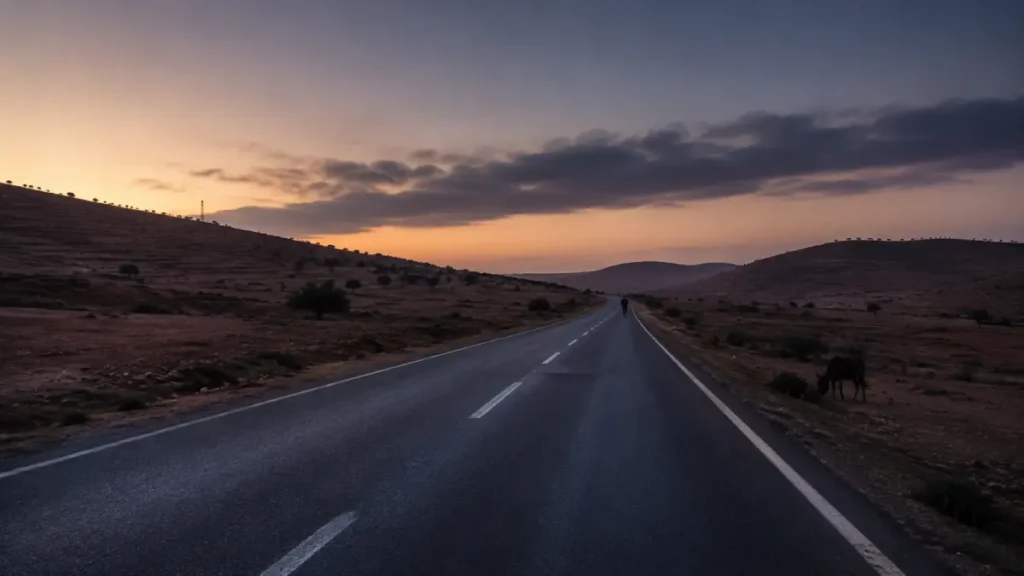
I do not recommend night driving outside major cities for first-time visitors. The road may look empty, but visibility can change suddenly. You may encounter pedestrians wearing dark clothes, bicycles without lights, donkeys, sheep, dogs, slow carts, tractors, potholes, construction, or vehicles with weak lighting. Mountain fog and driver fatigue make the situation more difficult. Plan long journeys so that you arrive before sunset. This is especially important when crossing the Atlas Mountains or travelling towards the Sahara. Driving conditions may also become busier before sunset during Ramadan as people travel home to break the fast. Seasonal conditions can change the road experience considerably, so check my Best Time to Visit Morocco Guide before planning a long mountain or desert journey.
Can You Drive in Morocco With a Foreign Licence?
Carry your original driving licence whenever you drive. An International Driving Permit may also be required depending on your nationality, licence format, length of stay, and rental-company conditions. An IDP is a translation of your licence. It does not replace the original document. Travellers from the United Kingdom, United States, Canada, Australia, India, and other countries should check the current requirements with their issuing authority and rental company before departure. Carrying the original licence and the correct IDP when required is the safest practical approach. For rental documents, minimum ages, deposits, and insurance, read my Rent a Car in Morocco Guide.
Book the Right Car Before You Arrive
Choose a vehicle that matches your route, driving confidence, and luggage. A small car is enough for most paved roads, while automatic cars should be reserved early.
Motorways and Toll Roads
Morocco’s motorways are generally the easiest roads for visitors. They connect routes including Casablanca to Rabat, Rabat to Tangier, Rabat to Fes, Casablanca to El Jadida, and Marrakech to Agadir. Keep to the right except when overtaking, maintain a safe distance, and move back after passing. Some rental cars have a Jawaz electronic toll pass. Ask the rental company whether the vehicle has Jawaz and how the toll charges will appear on your final bill. Keep small dirham notes available because cash remains useful for tolls, fuel, parking, and roadside stops. My Money in Morocco Guide explains how to use cash, cards, and ATMs during your trip.
What to Do After a Breakdown
Move the vehicle away from traffic when it is safe to do so. Switch on the hazard lights and use the warning triangle supplied with the vehicle. Contact the rental company before arranging repairs independently. Send them your location, photographs, and a clear description of the problem. Do not continue driving when the engine is overheating, a warning light appears, a tyre is badly damaged, or the vehicle feels unsafe. Save the rental company’s telephone and WhatsApp details before leaving the office.
What to Do After an Accident
Stop safely and check that everyone is all right. Contact the rental company immediately and follow its instructions. Photograph the vehicles, road, damage, number plates, and surrounding area without putting yourself in danger. Do not make an unofficial payment or agree to repairs at the roadside without informing the rental company. Keep every police report, receipt, photograph, and insurance document. The exact procedure depends on the accident, rental contract, and insurance conditions.
My Local Checklist Before a Long Drive
Before leaving, check the fuel level, tyres, spare tyre, lights, air conditioning, and dashboard. Make sure you have water, offline maps, a charged phone, the rental-company number, and the vehicle documents. Look at the complete route, not only the estimated arrival time. Navigation apps may calculate the driving time without understanding how often you will stop for mountain views, lunch, slow trucks, villages, police checks, or roadworks. Give yourself enough time to enjoy the road without feeling forced to drive after dark.
Common Driving Mistakes Tourists Make in Morocco
The most common mistakes are usually simple. Drivers enter towns too quickly, follow navigation into medinas, underestimate mountain travel times, overtake slow trucks without enough visibility, drive too late in the day, or collect a rental car without saving the emergency number. Another common mistake is allowing the driver behind to create pressure. Someone may follow closely or flash their lights, but that does not mean you should drive faster than you feel is safe. Let them pass when the road allows it. Your journey is not a race.
Planning to Drive Across Morocco?
Compare trusted rental options before your trip and review the complete price, insurance, deposit, and cancellation terms before confirming.
Final Advice From a Moroccan Guide
Driving in Morocco can become one of the best parts of your trip. You can leave a busy city in the morning, cross mountain passes, stop beside an old kasbah, drink tea in a small town, and watch the landscape open towards the desert. But the road rewards patience. Respect the posted speed limits. Slow down near towns. Stay calm at checkpoints. Avoid unnecessary overtaking. Do not enter medinas blindly, and plan to arrive before sunset. Most importantly, do not let an impatient driver behind you decide how fast you should travel. Drive at a speed that allows you to understand the road, notice the landscape, and arrive safely. For routes, cities, accommodation, transport, weather, and practical trip planning, start with my complete Morocco Travel Guide.
FAQ About Driving in Morocco
Which side of the road do people drive on in Morocco?
Morocco drives on the right-hand side of the road. Drivers normally overtake on the left.
How fast can you drive in Morocco?
Typical limits are 40–60 km/h in towns, up to 100 km/h on roads outside towns, and up to 120 km/h on motorways. Always follow the posted signs because speed limits can change quickly.
Why are there so many police checkpoints in Morocco?
Checkpoints are used for traffic control, speed enforcement, document checks, seatbelt checks, and general security. Being stopped does not automatically mean you have committed an offence.
Is driving in Morocco safe for tourists?
Yes. Confident tourists can drive safely by following posted signs, travelling during daylight, driving defensively, and avoiding difficult city centres and old medinas.
Is it safe to drive in Morocco at night?
Night driving is possible, but I do not recommend it outside major cities for first-time visitors. Pedestrians, animals, bicycles, slow vehicles, roadworks, and weak lighting can be difficult to see.
Can I drive in Morocco with a UK or US licence?
Carry your original driving licence. Additional requirements, including an International Driving Permit, depend on your nationality and the rental company. Confirm the current requirements before travelling.
Do I need an International Driving Permit in Morocco?
The requirement depends on your licence and rental company. Carrying the correct IDP with your original licence is the safest practical approach when required.
What should I do when police stop me in Morocco?
Slow down, pull over safely, remain polite, and show your driving and rental documents. If you receive a fine, ask for an official receipt or written record.
Are Moroccan roads paved?
The main routes between popular tourist destinations are paved. Remote mountain villages, desert tracks, and isolated areas may involve unpaved roads.
Can I drive a normal car to Merzouga?
Yes. The main route to Merzouga is paved, and a normal car can reach the town. Contact your camp for parking instructions and transport to the dunes.