
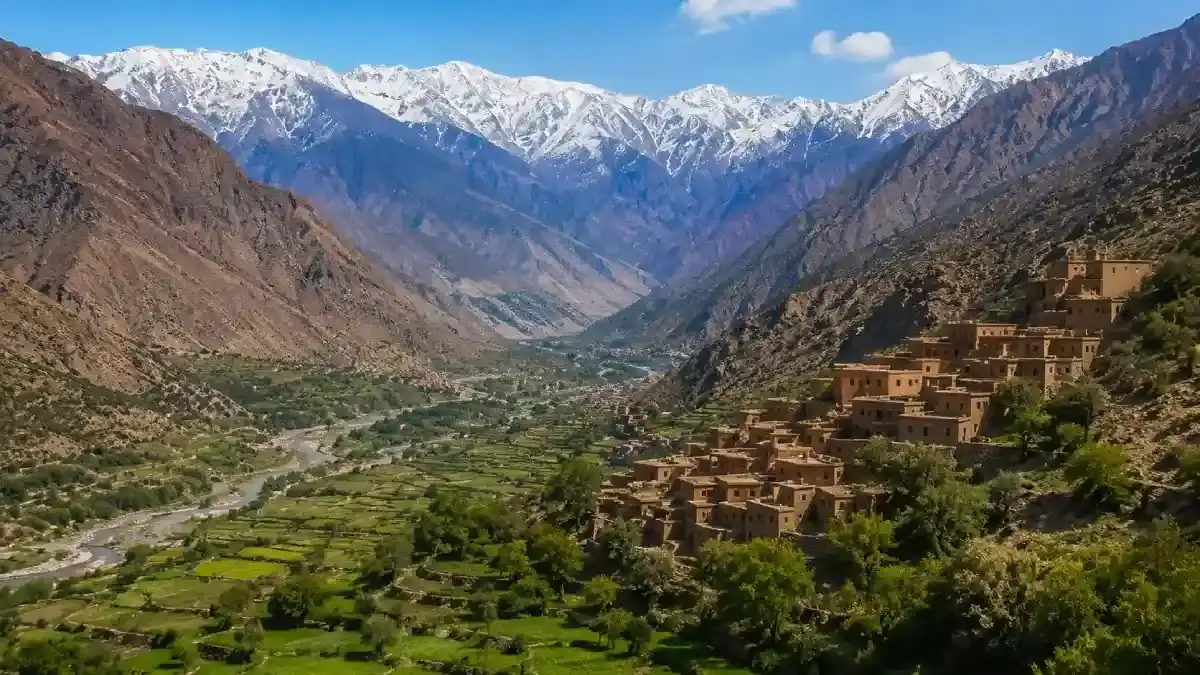
The Atlas Mountains are not one single destination. They stretch across a large part of Morocco and include very different valleys, villages, landscapes and climates.
Most first-time visitors explore the High Atlas from Marrakech, choosing places such as Imlil, Ourika Valley, Ouirgane or Oukaïmeden. Travellers with more time can continue into Aït Bouguemez, explore the cedar forests of the Middle Atlas or follow quieter roads through the Anti-Atlas.
If you are still planning your wider route through the country, start with my Morocco Travel Guide, which covers Morocco’s main destinations, itineraries, transport, costs and practical travel advice.
I’m Kamal, a licensed Moroccan tour guide based in Marrakech. I have been guiding travellers around Morocco since 2006, and the Atlas Mountains have always been an important part of the routes I organise.
One of the most common mistakes I see is trying to fit several valleys into one rushed day. Ourika is convenient and lively, Imlil is better for walking, Ouirgane is calmer, and Aït Bouguemez requires more time but offers a deeper mountain experience.
This Atlas Mountains Morocco travel guide will help you choose the right region, decide between a day trip and an overnight stay, understand the seasons and plan your transport, accommodation, hiking and itinerary realistically. If you are planning the whole country in five days rather than spending all five days in the Atlas, see my 5-day Morocco itinerary.
Atlas Mountains Morocco: The Quick Answer
For most first-time visitors planning an Atlas Mountains Morocco trip, the High Atlas is the best place to begin.
Choose Imlil when walking, village scenery and an overnight stay are your priorities. Choose Ourika Valley for an easy day trip from Marrakech with river scenery and the option of walking toward the waterfalls near Setti Fatma.
Ouirgane is better for a peaceful mountain escape with comfortable lodges and gentle countryside. Oukaïmeden offers a higher-altitude environment, seasonal snow and summer walking, but weather, road and snow conditions should always be checked before travelling.
Travellers with several days should consider Ait Bouguemez. It takes more effort to reach, but its wide cultivated valley, traditional villages and slower rhythm make it one of the most rewarding areas of the Central High Atlas.
The Middle Atlas works naturally with routes through Fes, Ifrane, Azrou or Midelt. The Anti-Atlas suits travellers exploring southern Morocco around Tafraoute, Taroudant and Agadir.
| Question | Quick answer |
|---|---|
| Best region for first-time visitors | High Atlas |
| Best gateway | Marrakech |
| Best destination for walking | Imlil |
| Best easy day trip | Ourika Valley |
| Best peaceful overnight stay | Ouirgane |
| Best for serious trekking | Mount Toubkal and Toubkal National Park |
| Best remote valley | Ait Bouguemez |
| Best for seasonal snow | Oukaïmeden, when conditions allow |
| Best season for most visitors | Spring or autumn |
| Recommended time | One day for an introduction or two to five days for a deeper experience |
| Is a rental car necessary? | No, but it can be useful for longer regional routes |
| Do you need a guide? | Not for every visit, but one is valuable for remote or high-altitude routes |
Where Are the Atlas Mountains in Morocco?
The Atlas Mountains extend across a large part of Morocco, creating a natural transition between the Atlantic plains, northern regions and landscapes leading toward the Sahara.
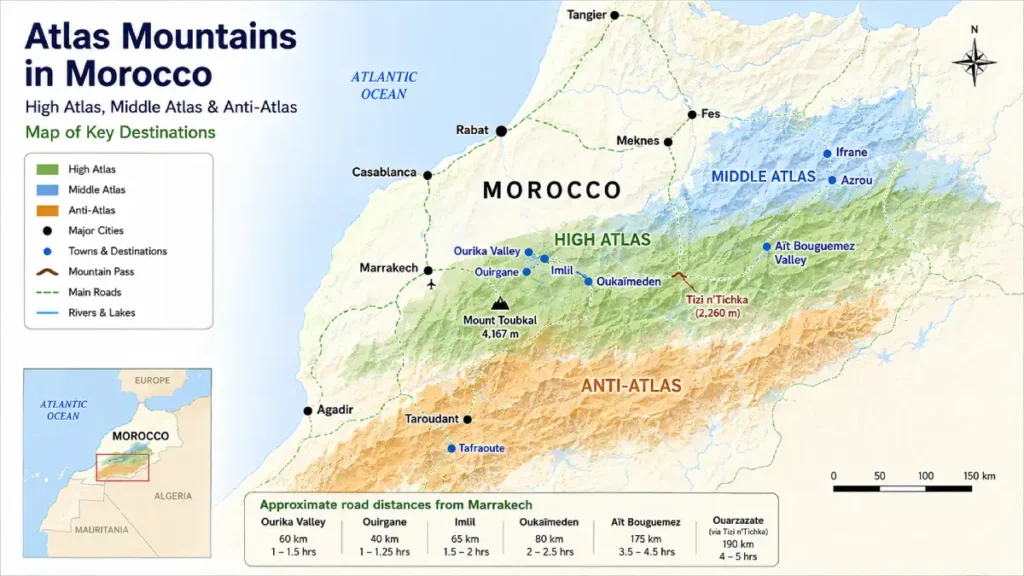
They are not one mountain chain that can be explored in a few hours. In Morocco, the Atlas system is usually divided into three main ranges: the High Atlas, Middle Atlas and Anti-Atlas.
The High Atlas contains Morocco’s highest peaks and many of the valleys most commonly visited from Marrakech. This is where you will find Imlil, Ourika Valley, Ouirgane, Oukaïmeden, Mount Toubkal and Ait Bouguemez.
The Middle Atlas lies farther north and northeast, covering areas around Ifrane, Azrou, Khenifra and parts of the road toward Midelt. Its landscapes include cedar forests, lakes, plateaus and greener mountain countryside.
The Anti-Atlas stretches across southern Morocco toward areas such as Tafraoute, Taliouine and Taroudant. Its scenery is drier and more open, with rocky valleys, palm oases and traditional villages.
Marrakech is the most convenient gateway for the western High Atlas, but it is not the best starting point for every region. Fes and Meknes are more practical for the Middle Atlas, while Agadir, Taroudant and Tafraoute work better for the Anti-Atlas.
This is why choosing the correct region matters. A traveller planning a short break from Marrakech needs a different route from someone driving between Fes and Merzouga or spending several days in southern Morocco.
High Atlas, Middle Atlas or Anti-Atlas?
The three Atlas ranges share Amazigh heritage and dramatic landscapes, but they offer different travel experiences.
For most first-time visitors, the High Atlas is the easiest place to begin. The Middle Atlas suits routes through northern and central Morocco, while the Anti-Atlas is best for slower journeys through the south.
The High Atlas Mountains
The High Atlas is the tallest and most dramatic of Morocco’s Atlas ranges.
It is home to Mount Toubkal, which reaches 4,167 metres and is the highest mountain in Morocco and North Africa.
The western High Atlas is the most accessible section for visitors staying in Marrakech. Imlil, Ourika Valley, Ouirgane and Oukaïmeden can all be visited as day trips, although Imlil and Ouirgane become more rewarding with an overnight stay.
The High Atlas is the strongest choice when you want mountain walking, terraced valleys, traditional villages, high passes or a guided trek.
You do not need to climb Mount Toubkal to enjoy the region. Imlil offers village walks and mountain guesthouses, Ourika provides a convenient valley excursion, and Ouirgane suits travellers looking for a peaceful stay.
Farther east, the Central High Atlas includes Aït Bouguemez and the M’Goun region. These areas require more travel time but offer broad agricultural valleys, traditional villages and opportunities for longer walks.
The Middle Atlas Mountains
The Middle Atlas has a softer and greener character than much of the High Atlas.
Its landscapes include cedar and oak forests, lakes, plateaus, fertile valleys and mountain towns. The range covers areas around Ifrane, Azrou, Khenifra and parts of the route toward Midelt.
Fes and Meknes are practical gateways for many Middle Atlas itineraries. Travellers often pass through Ifrane and the cedar-forest area near Azrou while continuing south toward Midelt, the Ziz Valley and Merzouga.
The Middle Atlas is a good choice for scenic drives, forest walks, family trips and travellers who want mountain scenery without organising a major trek.
Barbary macaques live in parts of the cedar forests. Observe them from a respectful distance and avoid feeding or attracting them with food for photographs.
The Anti-Atlas Mountains
The Anti-Atlas is the southernmost of Morocco’s three main Atlas ranges.
Its landscapes are generally drier, rockier and more sparsely populated. The mountains rise between the Atlantic region and the edge of the Sahara, creating arid valleys, palm oases, granite formations and traditional Amazigh villages.
Tafraoute is the best-known base for exploring the Anti-Atlas. The surrounding area works well for walking, cycling, photography and self-drive exploration.
The Anti-Atlas is not normally suitable for a quick excursion from Marrakech. Distances are longer, and the region deserves at least two or three days.
It combines naturally with Agadir, Taroudant, Tiznit and other parts of southern Morocco.
| Atlas region | Best gateway | Best for | Recommended time |
|---|---|---|---|
| High Atlas | Marrakech | First visits, mountain villages, walking and trekking | 1–5 days |
| Middle Atlas | Fes or Meknes | Cedar forests, lakes, scenic drives and family trips | 1–3 days |
| Anti-Atlas | Agadir, Taroudant or Tafraoute | Southern road trips, quiet landscapes and photography | 2–5 days |
For most first-time visitors, I recommend beginning with the High Atlas.
Choose the Middle Atlas when your route includes Fes, Meknes, Ifrane or Midelt. Choose the Anti-Atlas when you have additional time and want to explore southern Morocco at a slower pace.
Best Places to Visit in the Atlas Mountains
Imlil
Imlil is one of the best places to experience the High Atlas without travelling too far from Marrakech.
The village is surrounded by mountain slopes, cultivated terraces and smaller Amazigh settlements. It is also the main gateway to Toubkal National Park and the starting point for many walks and longer treks.
However, Imlil is not only for travellers planning to climb Mount Toubkal.
You can walk between villages, stop for lunch overlooking the valley or stay overnight in a locally operated guesthouse. Routes range from gentle village walks to demanding multi-day treks.
Imlil is a stronger choice than Ourika when walking and mountain scenery are your priorities. Staying overnight gives you time to enjoy the area after many day visitors have returned to Marrakech.
Allow a full day when visiting from Marrakech. One or two nights are better when you want a longer walk or a slower pace.
You can compare Imlil with other routes in my Atlas Mountains day trip from Marrakech guide. I also include it in my guide to the most beautiful mountain towns in Morocco.
Ourika Valley
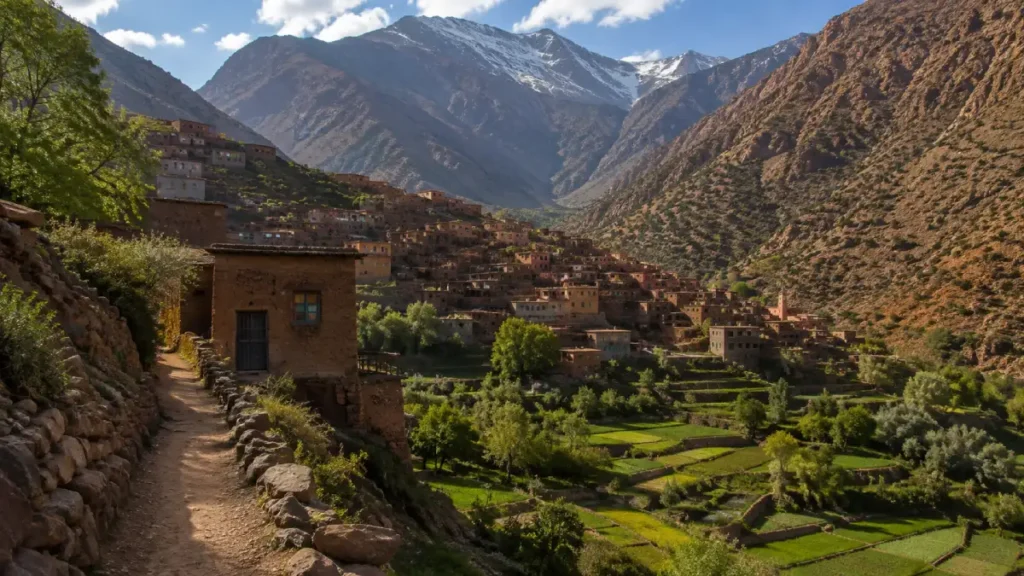
Ourika Valley is one of the easiest introductions to the High Atlas from Marrakech.
The road follows the valley toward Setti Fatma, passing riverside villages, cultivated slopes, cafés and mountain scenery.
Many visitors come to see the river and walk toward the waterfalls near Setti Fatma. The walk is optional, so travellers who prefer a relaxed visit can enjoy the scenery and lunch without completing the waterfall route.
The path can be rocky, steep and slippery. It should not be presented as an easy paved walk suitable for everyone.
Ourika is convenient, but it is also one of the most visited valleys near Marrakech. Weekends, public holidays and warmer periods can be busy around Setti Fatma and the riverside restaurants.
Start early when possible and avoid building the entire day around crowded commercial stops.
Ourika is best for travellers who want an accessible day excursion with river scenery and optional walking. My Ourika Valley day trip from Marrakech guide covers transport, the waterfall walk, clothing, costs and practical planning.
Ouirgane
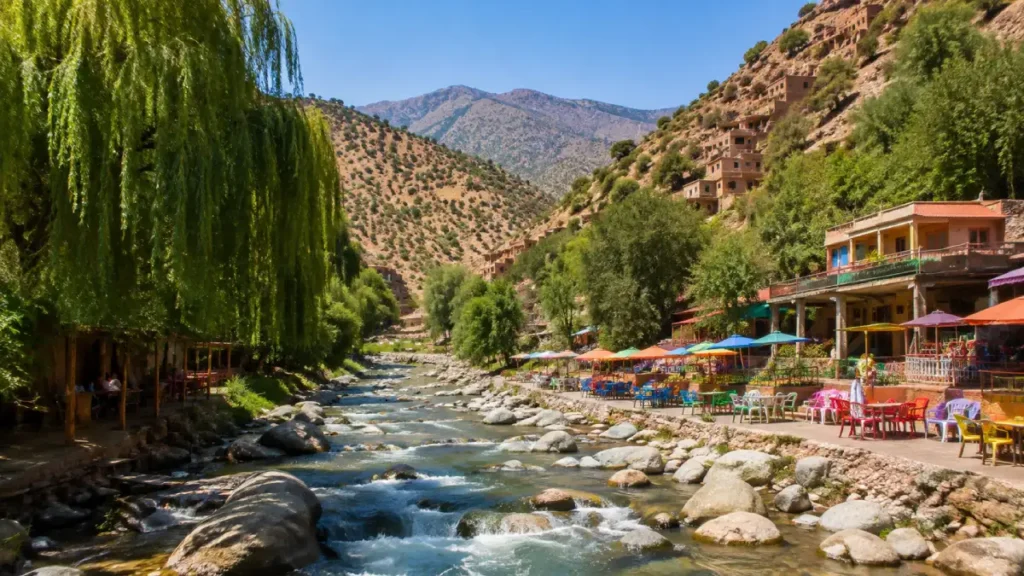
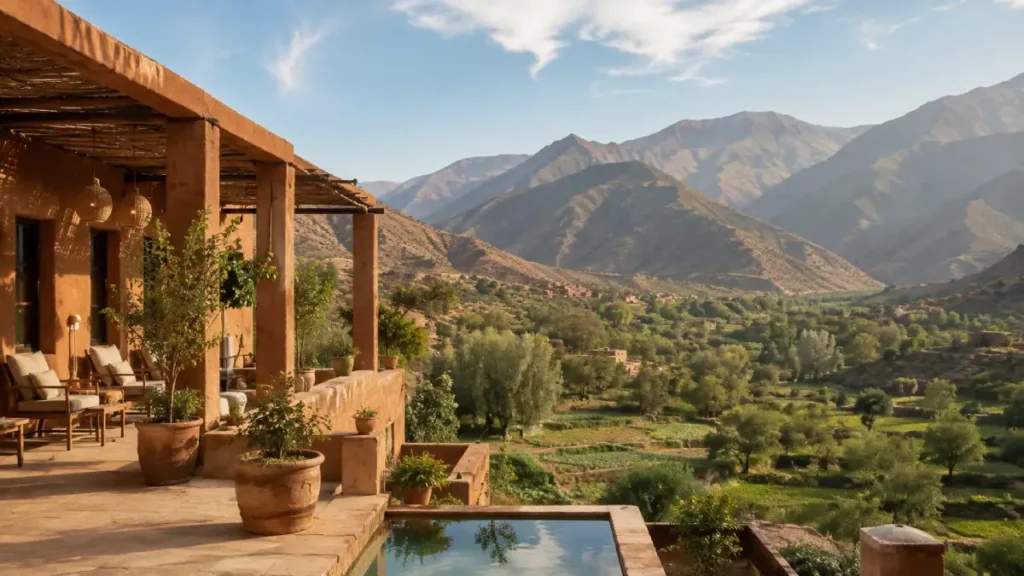
Ouirgane is a better choice for travellers seeking peace, comfortable accommodation and gentle countryside rather than a busy sightseeing itinerary.
The area has hills, cultivated land, orchards and mountain views. Its atmosphere is generally quieter than the main daytime areas of Imlil or Ourika.
Ouirgane works particularly well as an overnight escape from Marrakech. Its lodges and guesthouses are part of the experience rather than simply somewhere to sleep.
Activities are usually relaxed. You can walk through the countryside, visit nearby villages, enjoy the views from your accommodation or rest away from the noise of Marrakech.
Do not choose Ouirgane expecting a long list of major attractions. Its strength is the peaceful setting and slower rhythm.
One night is enough for a short escape, although two nights allow time for a walk and a genuinely relaxed stay.
Oukaïmeden
Oukaïmeden is a high-altitude destination known for mountain scenery, seasonal snow, walking and prehistoric rock engravings.
Many travellers associate it only with skiing, but it can be visited outside winter for hiking, views and a very different environment from the lower valleys.
During winter, snow may create opportunities for skiing, sledging or enjoying the landscape. However, snowfall, road access, equipment availability and lift operation vary.
Never book an Oukaïmeden visit on the assumption that snow or operating ski facilities are guaranteed. Check conditions shortly before departure.
The road rises considerably from the plains around Marrakech, so temperatures can change during the journey. Bring layers even when the city feels warm.
Oukaïmeden works as a day trip, but it should not be combined with several other distant valleys. Too much driving leaves little time to enjoy the destination.
Mount Toubkal and Toubkal National Park
Mount Toubkal is the highest mountain in Morocco and North Africa, reaching 4,167 metres.
Most summit routes begin around Imlil before continuing toward mountain refuges and higher slopes.
Climbing Mount Toubkal is very different from taking a scenic Atlas Mountains day trip. It is a high-altitude trek requiring suitable fitness, equipment and preparation.
The normal ascent may not require technical climbing skills in favourable dry conditions, but altitude, exhaustion, weather and winter snow can make it demanding.
Winter ascents require specialist equipment and experience. Travellers should confirm current access rules, route conditions and guide requirements before departure.
Visitors who do not want to attempt the summit can still enjoy Toubkal National Park through village walks, shorter guided hikes and stays around Imlil.
Aït Bouguemez Valley
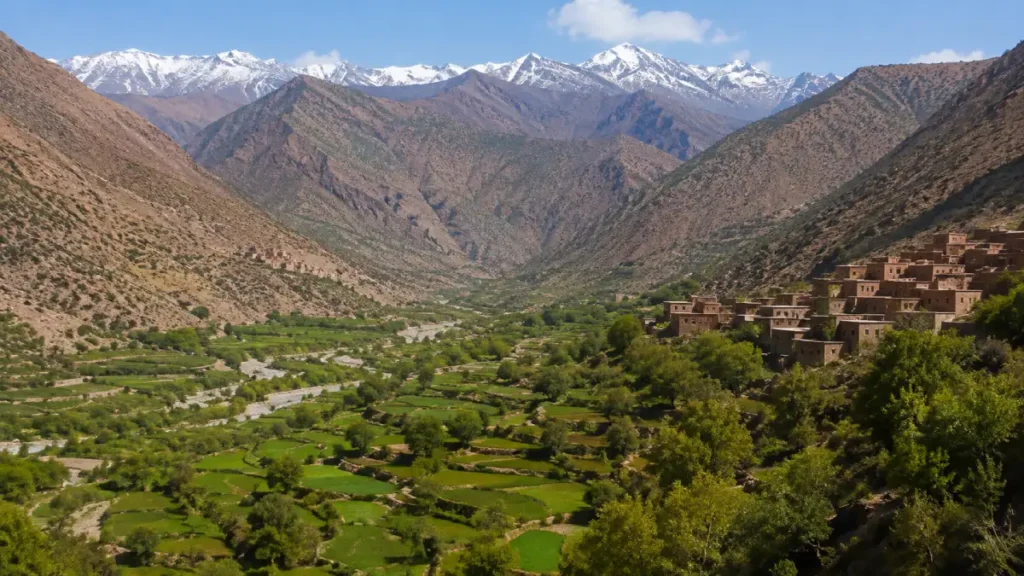
Aït Bouguemez is one of the best choices for travellers who want several days in the Central High Atlas rather than a quick excursion from Marrakech.
Often called the Happy Valley, it is known for broad cultivated landscapes, traditional Amazigh villages, orchards, terraced fields and walking routes beneath the surrounding mountains.
Aït Bouguemez lies within the wider M’Goun UNESCO Global Geopark, Morocco’s first UNESCO Global Geopark. Recognised in 2015, the geopark protects and promotes the region’s internationally important geological heritage alongside its natural landscapes, traditional villages and Amazigh culture.
Aït Bouguemez feels more remote than Imlil, Ourika or Ouirgane. Reaching it takes longer, and it is not a realistic addition to a short day trip.
Travellers come here to walk between villages, stay in small guesthouses and experience a slower mountain rhythm.
Two nights should be considered the minimum. Three or four nights provide more time for walking and a full day without arriving or departing.
Ask about heating, meals, road access and payment arrangements before booking, especially outside the warmer months.
Tizi n’Tichka and the Road to Ouarzazate
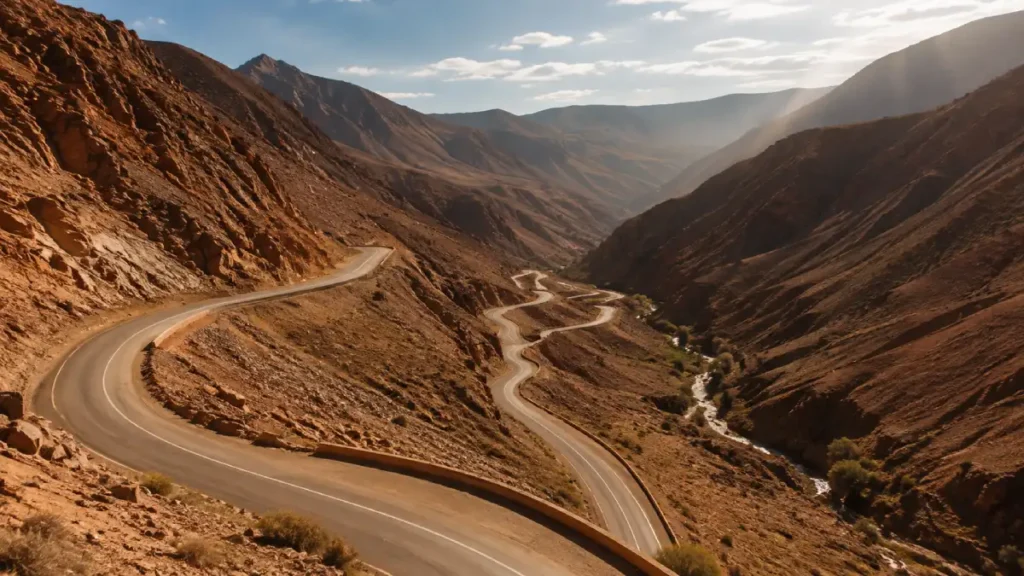
Tizi n’Tichka is the best-known High Atlas road crossing between Marrakech and Ouarzazate.
The route climbs through mountain scenery before descending toward Ait Ben Haddou, Ouarzazate and the drier landscapes of southern Morocco.
The crossing is beautiful, but driving across the pass is not the same as spending time in an Atlas Mountains village.
Many desert itineraries include viewpoints and roadside stops without providing enough time for a walk, village stay or deeper mountain experience.
The road contains many bends, and the journey can feel tiring for travellers who experience motion sickness. Weather, traffic, roadworks and sightseeing stops may affect the schedule.
I prefer including this crossing as part of a multi-day southern route instead of trying to reach Ouarzazate and return to Marrakech in one rushed day.
My Morocco itinerary for 7, 10 and 14 days explains how the crossing fits with Aït Ben Haddou, Ouarzazate and the Sahara.
Middle Atlas Around Ifrane and Azrou
Ifrane and Azrou are two practical bases for experiencing the Middle Atlas.
Ifrane is known for its parks, cooler climate and developed town environment, while Azrou provides easier access to cedar forests and rural landscapes.
The area works naturally with an itinerary beginning in Fes or Meknes. It is also a common route for travellers continuing toward Midelt, the Ziz Valley and Merzouga.
A short Middle Atlas visit can include Ifrane, cedar-forest scenery near Azrou and scenic stops along the road.
The region is generally better for forest scenery and road trips than for the high-altitude trekking associated with Imlil and Mount Toubkal.
Anti-Atlas Around Tafraoute
Tafraoute is the strongest base for a first visit to the Anti-Atlas.
The town is surrounded by granite formations, dry valleys, palm trees and traditional villages that create a different landscape from the High Atlas near Marrakech.
The region suits travellers who enjoy photography, walking, cycling and quiet self-drive routes.
Tafraoute is not a practical day trip from Marrakech. It works better as part of a southern route connected with Agadir, Taroudant or Tiznit.
Public transport can reach the main towns, but a rental car or private driver makes it easier to explore villages and viewpoints outside Tafraoute.
Plan at least two nights. Three or four are better when you want time for walking and scenic drives.
Tafraoute is also included in my guide to the most beautiful mountain towns in Morocco.
Which Atlas Mountains Destination Is Right for You?
The best destination depends on your starting point, available time and preferred level of activity.
For travellers staying in Marrakech, the main choice is usually between Ourika, Imlil and Ouirgane. Oukaïmeden is more seasonal, while Aït Bouguemez requires a longer journey.
The Middle Atlas makes more sense for routes beginning in Fes or Meknes. The Anti-Atlas suits travellers exploring southern Morocco.
| What you want | Best destination | Recommended time |
|---|---|---|
| A straightforward first day trip from Marrakech | Ourika Valley | One day |
| Walking and a strong mountain atmosphere | Imlil | One day or 1–2 nights |
| A peaceful mountain lodge and gentle scenery | Ouirgane | 1–2 nights |
| Seasonal snow and high-altitude views | Oukaïmeden | One day |
| A serious summit trek | Mount Toubkal | At least 2–3 days |
| A quiet valley with traditional villages | Aït Bouguemez | 2–4 nights |
| Cedar forests and a route from Fes | Ifrane and Azrou | 1–3 days |
| A scenic High Atlas crossing toward the desert | Tizi n’Tichka | One travel day |
| A quiet southern road trip | Tafraoute and the Anti-Atlas | 2–4 nights |
| Mountain scenery without difficult hiking | Ouirgane or Ourika Valley | One day or one night |
| A deeper walking experience without climbing Toubkal | Imlil | 1–2 nights |
| The least rushed cultural experience | Aït Bouguemez | Three nights or longer |
Atlas Mountains Day Trip or Overnight Stay?
An Atlas Mountains day trip can be worthwhile when your Morocco itinerary is short and Marrakech is your main base.
A well-planned day allows enough time to enjoy one valley, stop for local food and complete a short walk. The mistake is trying to include several distant areas simply because they appear in the same tour description.
Choose a day trip when you have limited time, do not want to change hotels and mainly want scenery with a light introduction to the mountains.
Ourika is usually the easiest option. Imlil is better when walking matters more, while Oukaïmeden works for higher scenery when conditions are suitable.
An overnight stay offers a different experience. Once the daytime vehicles leave, mountain villages usually become calmer.
Staying overnight also gives you time for a longer walk, a relaxed evening meal and a slow morning without immediately returning to Marrakech.
Imlil and Ouirgane are the easiest overnight choices from Marrakech. Imlil is better for walking and Toubkal National Park, while Ouirgane suits relaxation and comfortable accommodation.
Aït Bouguemez deserves at least two nights because of the longer journey.
When your itinerary allows it, one night usually creates a more relaxed experience. Choosing one destination and spending more time there is normally better than rushing through several valleys.
Planning a Day Trip From Marrakech?
Compare the main High Atlas routes before choosing between Imlil, Ourika Valley, Ouirgane and Oukaïmeden.
How Many Days Do You Need in the Atlas Mountains?
You can see part of the Atlas Mountains in one day, but a longer stay gives you more time for walking and quieter village experiences.
Mountain roads can be slow, and destinations that look close on a map may not be connected by a fast direct route.
| Time available | Best approach |
|---|---|
| One day | Visit one High Atlas destination from Marrakech |
| Two days | Stay overnight in Imlil or Ouirgane |
| Three days | Explore one area deeply or combine Ouirgane and Imlil |
| Four to five days | Visit Aït Bouguemez or plan a multi-day trek |
| One week or longer | Build a dedicated mountain itinerary |
It is normally better to explore one valley properly than spend most of the trip travelling between stops.
Suggested Atlas Mountains Itineraries
These Atlas Mountains Morocco itineraries are starting points rather than fixed schedules. Weather, road conditions, walking ability and accommodation may change what is realistic.
One-Day High Atlas Itinerary From Marrakech
Morning: Leave Marrakech and travel toward Imlil or Ourika Valley.
Late morning: Stop for mountain views and begin a short village or valley walk.
Lunch: Eat in a local restaurant or guesthouse.
Afternoon: Continue exploring the same area rather than driving to another distant valley.
Evening: Return to Marrakech.
Choose Imlil when you want more walking. Choose Ourika when you prefer a straightforward excursion with river scenery.
Two-Day Imlil Itinerary
Day 1: Travel from Marrakech to Imlil, settle into a guesthouse and take a guided walk through the surrounding villages. Return for dinner and an overnight stay.
Day 2: Enjoy a slower breakfast, complete another short walk or spend time in the village before returning to Marrakech.
This route works well for travellers who want mountain scenery and walking without attempting a summit trek.
Three-Day Ouirgane and Imlil Itinerary
Day 1: Travel from Marrakech to Ouirgane. Check into a mountain lodge and spend the afternoon walking gently or relaxing.
Day 2: Continue toward Imlil. Check into a guesthouse and take a short village walk.
Day 3: Enjoy a final morning in the mountains before returning to Marrakech.
Travellers who dislike changing hotels may prefer to spend all three days in one destination.
Five-Day Aït Bouguemez Itinerary
Day 1: Travel from Marrakech toward the Central High Atlas, allowing a full day for the journey and scenic stops.
Day 2: Explore villages and cultivated landscapes with a local guide.
Day 3: Complete a longer valley walk or explore another part of the M’Goun region.
Day 4: Enjoy a slower day around the guesthouse and nearby villages.
Day 5: Day 5: Return toward Marrakech or continue through Azilal, with the option of adding an Ouzoud Waterfalls day trip from Marrakech before or after your mountain stay.
Atlas Mountains and Sahara Itinerary
Many Morocco itineraries cross the High Atlas between Marrakech and southern Morocco.
A typical route continues across Tizi n’Tichka toward Aït Ben Haddou, Ouarzazate, the Dades Valley, Todra Gorge and Merzouga.
This provides dramatic mountain scenery, but it is not a dedicated Atlas Mountains stay.
A better route allows time for:
Day 1: Marrakech to Aït Ben Haddou or Ouarzazate across the High Atlas
Day 2: Continue toward the Dades Valley or Todra Gorge
Day 3: Travel toward Merzouga and the Sahara
Longer itineraries should add another desert night or a separate mountain stay rather than rushing back immediately.
My Morocco itinerary for 7, 10 and 14 days and Ouarzazate Travel Guide can help you plan the journey south.
Best Things to Do in the Atlas Mountains
An Atlas Mountains Morocco trip is not only for serious trekkers. Some of the best experiences are simple: walking between villages, sharing a meal in a mountain guesthouse or watching the landscape change as the road climbs away from the plains.
- Walk between mountain villages. Imlil and Aït Bouguemez offer routes ranging from short local walks to full-day hikes.
- Stay overnight in a guesthouse. One night gives you quieter mornings and evenings after the day visitors leave.
- Explore Ourika Valley. Follow the river, stop for lunch and decide whether the waterfall walk suits your ability.
- Discover Toubkal National Park. You do not need to climb Mount Toubkal to enjoy village paths and shorter walks.
- Spend a quiet break in Ouirgane. It is one of the best options for a comfortable lodge and gentle countryside.
- Visit Oukaïmeden. Come for high-altitude views, walking and rock engravings, or for snow when conditions allow.
- Explore Aït Bouguemez. Allow several nights for village walks and the wider M’Goun landscape.
- Cross the High Atlas by road. The Tizi n’Tichka route offers dramatic views on the way toward southern Morocco.
- Experience the Middle Atlas. Combine Ifrane, Azrou and cedar forests with a route from Fes.
- Travel through the Anti-Atlas. Tafraoute rewards travellers who enjoy peaceful roads, walking and photography.
The best activity is not always the most difficult one. Choose an experience that matches your time, fitness and interests.
Best Time to Visit the Atlas Mountains
The best time for an Atlas Mountains Morocco trip depends on the region, altitude and activities you are planning.
The weather in Marrakech may also be very different from the weather in a mountain village on the same day.
Spring
Spring is one of the best periods for sightseeing, village walks and lower-altitude hiking.
Valleys can be green, daytime temperatures are often comfortable and the landscape feels fresh after winter.
Snow may remain on higher routes, so warm conditions in a valley do not mean every trail is clear.
Summer
Summer is popular for mountain stays because higher areas can feel cooler than Marrakech.
It is a good period for many walks and multi-day treks, but lower valleys may still become hot during the middle of the day.
Start longer walks early, carry water and protect yourself from the sun. Evenings can feel cool at higher altitude.
Autumn
Autumn often offers comfortable walking conditions, clear views and cooler evenings.
It is a strong season for Imlil, Ouirgane, Aït Bouguemez and southern road trips.
Later in the season, daylight becomes shorter and nights become colder. Confirm heating arrangements when booking accommodation.
Winter
Winter can bring snow and beautiful high-altitude scenery, particularly around Oukaïmeden and Mount Toubkal.
It also brings cold nights, changing road conditions and more demanding hiking.
Ask whether your accommodation has reliable heating and check weather, road and trail conditions before departure. Snow and winter activities should never be treated as guaranteed.
| Season | Best for | Main consideration |
|---|---|---|
| Spring | Green valleys and general walking | Snow may remain on high routes |
| Summer | High-altitude stays and trekking | Heat and strong sun in lower valleys |
| Autumn | Walking, road trips and clear views | Colder evenings and shorter days |
| Winter | Snow scenery and quiet stays | Cold, road disruption and limited routes |
For most first-time visitors interested in sightseeing and light walking, spring and autumn offer the easiest balance.
For broader seasonal planning, read my Best Time to Visit Morocco guide.
Getting to and Around the Atlas Mountains
Most journeys through the Atlas Mountains continue by road.
The best transport depends on the region, group size and whether you are making a day trip or following a longer itinerary.
From Marrakech, the simplest options are an organised excursion, private driver, rental car or a combination of local transport and taxis.
Tours are convenient for a first day trip, while a private driver gives you more control over departure times, stops and the pace of the day.
A rental car is useful when you want flexibility, particularly in the Middle Atlas, Anti-Atlas or on a longer road trip.
Mountain roads can be slow, narrow or winding. Journey times may change because of weather, traffic and roadworks, so avoid building an itinerary around optimistic driving times.
Public transport reaches some towns and larger villages, but it is less practical for remote trailheads, isolated accommodation and several valleys in one trip.
Confirm the final transfer with your guesthouse before travelling.
Fes and Meknes are natural gateways for Ifrane, Azrou and the Middle Atlas. Agadir and Taroudant work better for Tafraoute and the Anti-Atlas.
Download offline directions before leaving the city and keep your accommodation’s telephone number available. Mobile coverage is useful in many settlements but should not be treated as guaranteed on every road or trail.
Read my Morocco Transportation Guide, Rent a Car in Morocco and Internet in Morocco guides before organising an independent journey.
Prefer More Flexibility?
A rental car can work well for a regional road trip, while a private driver is often easier for a short High Atlas visit from Marrakech.
Where to Stay in the Atlas Mountains
Accommodation ranges from simple village guesthouses to comfortable mountain lodges, kasbah-style hotels and trekking refuges.
Choose the location before choosing the property.
Imlil is the most practical base for walking and access to Toubkal National Park. Ouirgane is better for a peaceful lodge and gentle countryside. Ourika works for a short escape, while Aït Bouguemez suits travellers who want several nights in a quieter valley.
Guesthouses often include breakfast, and some provide dinner because restaurants may be limited outside the main settlements.
Confirm what is included before arrival, especially meals, transfers, heating and luggage assistance.
Comfort standards vary. A traditional room may still have simple heating, steep stairs or limited vehicle access.
In winter, ask specifically how the room is heated rather than assuming it will feel as warm as a city hotel.
For trekking routes, refuges provide practical shelter rather than hotel-style comfort.
Book early during popular hiking periods and holiday weekends, but do not choose accommodation only by its photographs. Location, access and walking difficulty can matter more than a panoramic terrace.
Read Where to Stay in Morocco for broader accommodation advice.
Find a Mountain Stay That Fits Your Route
Compare guesthouses, mountain lodges and hotels after choosing the Atlas region that suits your trip.
Hiking in the Atlas Mountains
Hiking in the Atlas Mountains can mean a short village walk, a full-day route, a multi-day valley trek or a high-altitude summit attempt.
These experiences should not be treated as the same activity.
Easy-looking paths may still be rocky, steep or poorly marked. Choose a route according to your real walking experience, not only the distance shown online.
Altitude, heat, snow and changing weather can make a familiar distance feel much harder.
A knowledgeable local guide is useful when the route is unfamiliar, remote, high-altitude or difficult to follow.
A guide can also adjust the walk to your pace and explain the villages, farming landscapes and customs along the way.
Wear suitable footwear, carry water, use sun protection and bring layers. Start early for longer walks and leave enough time to return before dark.
Do not continue simply because a summit, waterfall or viewpoint appears close.
Mount Toubkal requires a separate level of preparation from ordinary village walking. Check current route conditions, local requirements and seasonal equipment before committing to the climb.
Non-hikers can still enjoy the mountains through scenic drives, short walks, guesthouse stays and village meals.
Visiting the Atlas Mountains With Children and Limited Mobility
Families can enjoy the Atlas Mountains, but choosing the right destination and schedule matters.
Ouirgane is often a good option for families wanting a quiet lodge, gentle scenery and limited walking.
Ourika can work when the day focuses on the valley and river rather than assuming every traveller will complete the waterfall route.
Imlil also offers family-friendly possibilities, but paths, stairs and vehicle access vary between villages and guesthouses.
Keep driving days short when possible. Mountain roads are winding, and children or adults who experience motion sickness may find a packed multi-valley itinerary uncomfortable.
Bring layers, water, snacks and essential personal items. Small villages may not have the same range of shops or pharmacies as Marrakech.
Travellers with limited mobility should ask specific questions before booking. An “easy walk” can still mean uneven stones, steep steps or narrow paths.
Ask how far the vehicle can travel, whether stairs are required and whether the main restaurant or viewpoint can be reached without a long climb.
Some mountain scenery can be enjoyed from the road, a terrace or a lodge without demanding hiking.
A private driver or customised excursion normally provides more flexibility for breaks, walking time and route changes than a tightly scheduled group tour.
Atlas Mountains Costs
Costs vary more by transport, accommodation and activity than by the name of the valley.
| Expense | Usually costs less | Usually costs more |
|---|---|---|
| Transport | Shared excursion or local transport | Private driver or multi-day 4×4 route |
| Accommodation | Simple village guesthouse | High-comfort lodge or private retreat |
| Walking | Independent short village walk | Private guide or supported multi-day trek |
| Meals | Local café or guesthouse meal | Hotel dining or fully catered itinerary |
| Route | One destination near Marrakech | Remote valley requiring several transfers |
| Season | Quieter travel periods | Popular holidays and trekking dates |
Carry Moroccan dirhams because small cafés, guides and rural guesthouses may not accept cards.
Confirm whether meals, transfers, guiding, entrance costs and luggage transport are included before comparing prices.
A cheaper tour may include fewer services or spend more time at commercial stops.
For wider budgeting advice, read Morocco Travel Costs, Money in Morocco, ATMs in Morocco and Tipping in Morocco.
What to Pack for the Atlas Mountains
| Item | Why it matters |
|---|---|
| Comfortable walking shoes | Village paths may be rocky or uneven |
| Light layers | Temperatures change with altitude |
| Warm clothing | Evenings and winter stays can be cold |
| Sun protection | Mountain sun remains strong |
| Water bottle | Shops may be limited during walks |
| Small cash | Cards are not accepted everywhere |
| Rain layer | Conditions can change unexpectedly |
| Power bank | Charging access and coverage vary |
| Personal medication | Pharmacies may be far from remote valleys |
| Small day bag | Useful for water, layers and valuables |
For a simple day trip, you do not need specialist trekking equipment.
Longer, winter or high-altitude routes require a separate packing plan based on the route and current conditions.
Responsible Visits and Common Planning Mistakes
The Atlas Mountains are home to working villages, farms and family communities. They are not open-air attractions created for visitors.
Ask before photographing people, homes or private work. A friendly conversation does not automatically mean someone wants to appear in a photograph or video.
Use “Amazigh” when discussing the region’s Indigenous culture. Many travellers know the older term “Berber,” but respectful travel means listening to how local people describe themselves.
Support locally operated guesthouses, guides, cafés and cooperatives when they provide a genuine service.
Do not assume every sales stop is a community project simply because it is presented that way.
Dress respectfully, keep noise low in villages and do not enter fields, homes or religious spaces without permission. Carry your rubbish out and avoid leaving plastic bottles or packaging on trails.
One common mistake is trying to visit several valleys in one day. Long lists may look impressive in a tour description, but they often result in too much driving and too little time outside the vehicle.
Other mistakes include wearing unsuitable shoes, expecting Marrakech temperatures at altitude, carrying no cash, assuming winter snow is guaranteed and booking accommodation without checking its heating.
Do not assume every tour includes a meaningful walk. Ask how long you will actually spend walking, how difficult the path is and whether it can be adapted.
A Sahara tour that crosses Tizi n’Tichka provides mountain views, but it is not the same as staying in Imlil, Ouirgane or Aït Bouguemez.
Finally, choose activities according to your ability. Turning back, shortening a walk or changing plans because of weather is sensible mountain travel, not a failed trip.
My Honest Advice as a Moroccan Guide
For a first Atlas Mountains Morocco trip from Marrakech, choose one destination and give it enough time.
Choose Ourika when you want a straightforward day trip with river scenery. Choose Imlil when walking and mountain atmosphere matter most. Choose Ouirgane for a peaceful overnight stay, and save Aït Bouguemez for a longer journey.
You do not need to climb Mount Toubkal or visit several valleys to have a worthwhile experience.
A short walk, a good local meal and one unhurried night can reveal more than a day spent collecting viewpoints from a vehicle.
A successful Atlas Mountains Morocco itinerary is not measured by how many valleys you visit, but by how well the destination matches your time and interests.
The Atlas Mountains are at their best when the itinerary leaves room for slower roads, changing weather and spontaneous stops.
Atlas Mountains Morocco FAQ
Are the Atlas Mountains worth visiting?
Yes. The Atlas Mountains offer a strong contrast to Morocco’s large cities, with valleys, villages, scenic roads, guesthouses and walks for different abilities.
They are worthwhile even when you do not plan a serious trek. A day trip provides an introduction, while an overnight stay offers a slower experience.
Which part of the Atlas Mountains is best?
The High Atlas is the best introduction for most first-time visitors, especially those staying in Marrakech.
Choose Imlil for walking, Ourika for an easy day trip and Ouirgane for a peaceful stay.
The Middle Atlas works better with a Fes route, while the Anti-Atlas suits a longer southern road trip.
Can you visit the Atlas Mountains on a day trip from Marrakech?
Yes. Imlil, Ourika Valley, Ouirgane and Oukaïmeden can work as day-trip destinations.
Choose one main area rather than rushing between several valleys.
Read my Atlas Mountains day trip from Marrakech guide to compare the main routes.
Is it better to stay overnight in the Atlas Mountains?
An overnight stay is better when you want a longer walk, quieter mornings and evenings or time in a mountain guesthouse.
Imlil and Ouirgane are practical overnight choices from Marrakech.
A day trip remains suitable when your itinerary is short and you mainly want scenery and a light introduction.
How many days do you need in the Atlas Mountains?
One day is enough for a first visit from Marrakech. Two or three days allow an overnight stay and more walking.
Four or five days are better for Aït Bouguemez, a multi-day trek or a slower regional route.
Avoid trying to cover the High, Middle and Anti-Atlas during one short trip.
Can you visit the Atlas Mountains without hiking?
Yes. You can enjoy scenic roads, mountain lodges, village meals, viewpoints and short walks without completing a demanding hike.
Ouirgane is particularly suitable for a relaxed stay, while Ourika can be enjoyed without climbing toward the waterfalls.
Can you visit the Atlas Mountains without a tour?
Yes, depending on the destination.
A rental car works well for some road trips, and local transport reaches certain towns and villages.
A tour or private driver is often easier for a first High Atlas day trip, remote accommodation or an itinerary involving several transfers.
Do you need a guide in the Atlas Mountains?
You do not need a guide for every scenic drive or short visit.
A qualified local guide is valuable for unfamiliar trails, remote routes, longer walks and high-altitude trekking.
Always check current route conditions and local requirements before attempting Mount Toubkal or another major route.
When is the best time to visit the Atlas Mountains?
Spring and autumn are the easiest seasons for many visitors because they often provide comfortable conditions for sightseeing and walking.
Summer can work well at higher altitude, while winter brings cold, snow and more variable road and trail access.
The best period depends on the exact valley and activity.
Does it snow in the Atlas Mountains?
Yes, snow falls in higher parts of the Atlas Mountains during winter, including areas around Oukaïmeden and Mount Toubkal.
Timing and depth vary each year, so never assume snow, open roads or operating winter facilities are guaranteed.
Check conditions shortly before travelling.