ATMs in Morocco: Fees, Limits, Best Banks and Local Tips
Many travelers arrive in Marrakech with the same small worry: “Will my card work in Morocco?” Then, after the first taxi, a mint tea in the medina, or a porter helping with luggage, they understand something quickly. Morocco is modern, but daily travel still needs cash. ATMs in Morocco are easy to find in big cities, but using them the right way can save you money, stress, and a bad first-day mistake.
I am Kamal, a licensed Moroccan tour guide based in Marrakech. For more than 20 years, I have guided travelers across Morocco, from Marrakech and Fes to the Atlas Mountains and the Sahara Desert. I have seen guests arrive with only one card, choose the wrong currency at the ATM, or wait until a remote village to look for cash. This guide is the honest local advice I give before the trip starts.
This article is only about ATMs. For the full money system, including cash, cards, exchange offices, and daily prices, read my full guide to Money in Morocco.
Table of Contents
Table of Contents
Quick Answer: What Travelers Need to Know About ATMs in Morocco
ATMs are easy to find in Moroccan cities. Marrakech, Casablanca, Rabat, Fes, Tangier, Agadir, and Essaouira all have plenty of machines, especially around banks, airports, hotels, malls, and modern neighborhoods.
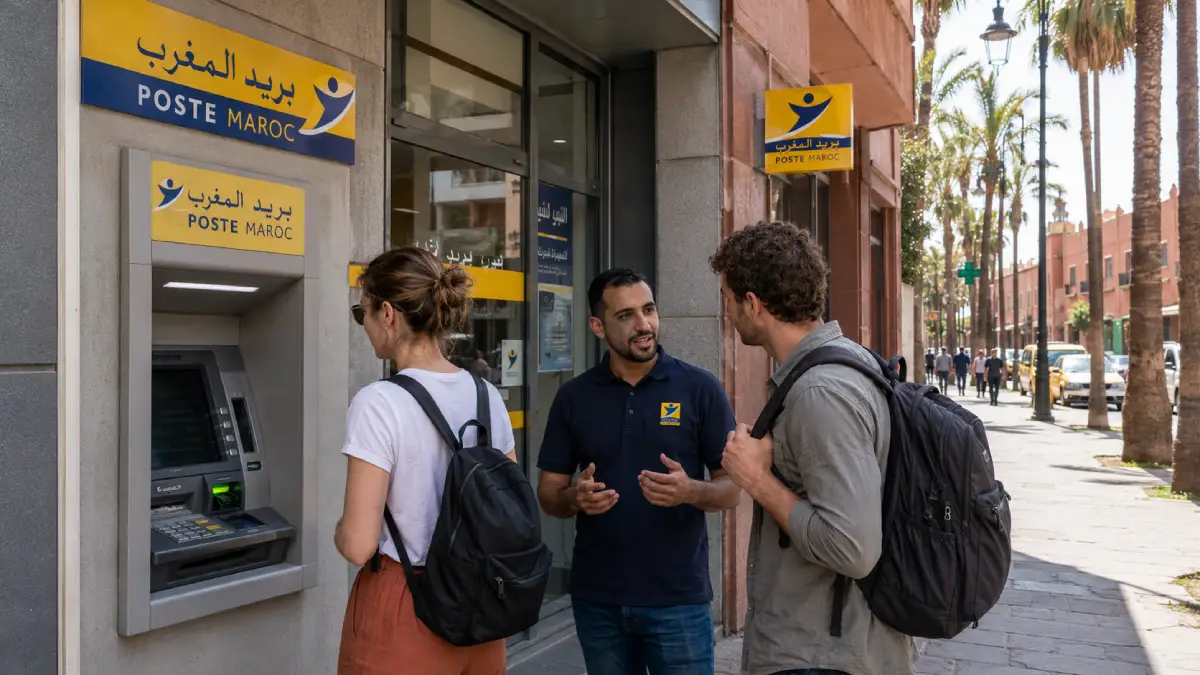
The safest choice is usually an ATM attached to a real bank branch. If something goes wrong, you are not standing alone in a busy street with a card problem. You can go inside the bank during opening hours and ask for help.
Expect possible local ATM fees. In 2026, public advice about Morocco ATM fees is confusing because some older guides are no longer reliable. Many travelers now report local ATM fees around 22–50 MAD, and some recent reports say Al Barid Bank, once known as fee-free, now shows a fee around 35 MAD for foreign cards.
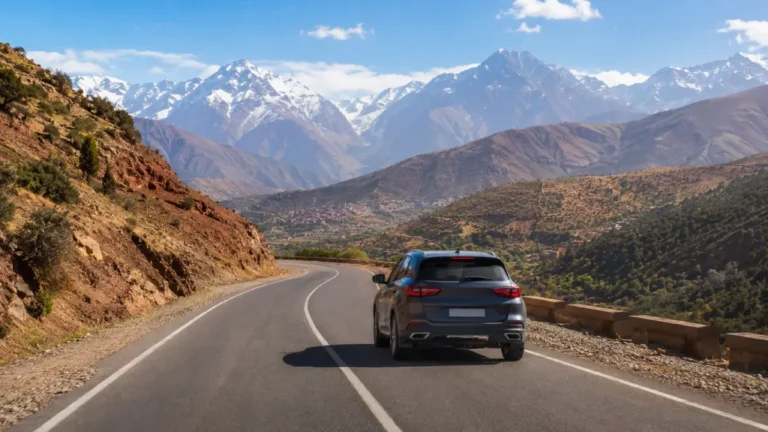
Withdraw before rural trips. Do not wait until the Atlas Mountains, Merzouga, Erg Chigaga, or a small village to look for cash. The further you go from cities, the less you should depend on ATMs.
Always choose Moroccan dirhams, not your home currency. If the machine asks you to accept conversion, decline it and continue in MAD. This avoids the Dynamic Currency Conversion mistake that often gives travelers a worse exchange rate.
Keep small notes. ATMs often give 200 MAD bills, but small taxis, cafés, tips, toilets, and souk shops are easier with 10, 20, 50, and 100 MAD notes.
Are ATMs Easy to Find in Morocco?
Yes, ATMs are easy to find in most Moroccan cities. In Morocco, you may also see the French term GAB, which means Guichet Automatique Bancaire. It simply means ATM.
In Marrakech, you can find ATMs at Marrakech airport, in Guéliz, Hivernage, near Jemaa el-Fna, around big hotels, and close to shopping streets. In Fes, Casablanca, Rabat, Tangier, Agadir, and Essaouira, you will also find many bank machines in normal city areas.
But the Morocco you see in a big city is not the same Morocco you find on a mountain road or desert route. In rural areas, ATMs can be limited, empty, offline, or not friendly to foreign cards. Some villages have no ATM at all.
This matters if your trip includes the Atlas Mountains, Merzouga, Erg Chigaga, small Berber villages, long drives, or remote guesthouses. You may find a machine on the map, but that does not mean it will be working when you arrive.
My local advice is simple: withdraw cash before you need it. The worst time to look for an ATM is when your driver is waiting, the restaurant only accepts cash, and the nearest working machine is one hour away.
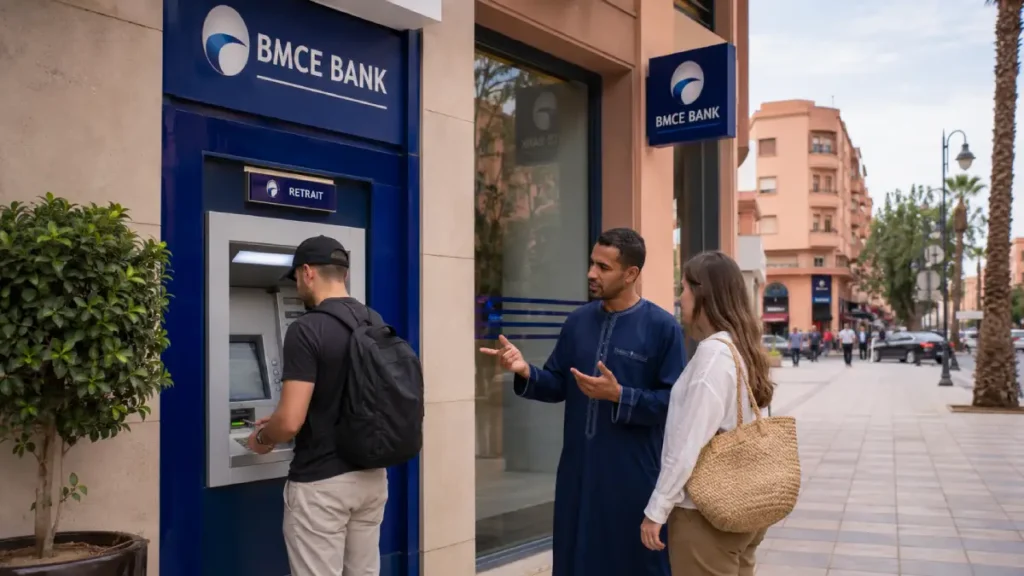
Morocco ATM Fees in 2026: What Has Changed?
Morocco ATM fees are one of the most confusing topics for travelers in 2026.
Some old online guides say certain Moroccan banks are fee-free for foreign cards. This advice is now dangerous to trust blindly. ATM fees can change, and the only fee that matters is the one shown on the machine before you confirm.
Al Barid Bank is the best example. For years, many travelers looked for Al Barid because older guides said it was fee-free. But recent traveler reports in 2026 say Al Barid now charges around 35 MAD for some foreign card withdrawals. I do not want to say this is official for every card and every machine, but I also would not tell guests to expect Al Barid to be free anymore.
Many travelers now report local Moroccan ATM access fees around 22–50 MAD per transaction. Sometimes it is 35 MAD. Sometimes it is more or less. It can depend on the Moroccan bank, the ATM, your card network, and your card issuer.
Your home bank may also charge its own fees. This is separate from the Moroccan ATM fee. Some banks charge a foreign ATM fee, a foreign transaction fee, or a poor exchange-rate markup.
Wise and Revolut can help with exchange rates and tracking your spending, but they do not remove every local Moroccan ATM fee. If the Moroccan ATM owner charges a fee, Wise or Revolut usually cannot make that disappear.
So the honest rule is this: do not trust any old “free ATM in Morocco” list without checking the screen. Read the fee message before confirming. If the fee feels too high, cancel and try another bank.
Best ATMs in Morocco for Foreign Cards
The best ATMs in Morocco for foreigners are usually machines attached to major Moroccan bank branches. I do not like promising that one bank is always cheapest because that is not how travel works in real life. Fees change, machines change, and cards behave differently.
The banks many travelers commonly use include Attijariwafa Bank, Bank of Africa / BMCE, Banque Populaire, BMCI, Al Barid Bank, and CIH Bank.
Attijariwafa Bank is very common in Morocco, especially in cities and busy towns. Bank of Africa, Banque Populaire, BMCI, CIH Bank, and Al Barid Bank are also easy to find in many areas.
| ATM / Bank | Best For | Local Guide Advice |
|---|---|---|
| Attijariwafa Bank | Easy city access | Very common in Marrakech, Fes, Casablanca, and many towns. I usually try branch-attached machines first. |
| Bank of Africa / BMCE | Foreign cards | A good option in city areas and main streets. Always check the fee screen before confirming. |
| Banque Populaire | Wide coverage | Useful in many Moroccan towns. If one ATM refuses your card, try another nearby branch. |
| BMCI | Modern city areas | Often found in Guéliz, Hivernage, business districts, malls, and hotel areas. |
| CIH Bank | Backup option | Worth trying if other machines are busy, offline, or not accepting your foreign card. |
| Al Barid Bank | Old fee-free reputation | Older guides called it fee-free, but many travelers now report fees. Do not assume it is free in 2026. |
My local advice: do not chase one “perfect” ATM in Morocco. Use a safe bank-attached machine, read the fee screen, choose Moroccan dirhams, and cancel if the fee or exchange option looks wrong.
For most travelers, I recommend trying a major bank ATM attached to a branch first. In Marrakech, that may mean using an ATM in Guéliz, Hivernage, near a hotel, inside a mall, or on a main street instead of a random machine in a crowded corner.
Daytime is better than late night. A bank-attached machine is better than an isolated one. A calm street is better than a chaotic tourist area when you have a choice.
I avoid independent-looking machines, broken card slots, quiet backstreets, machines where people are hanging around too close, and any ATM that feels suspicious. Your instinct matters. If something feels wrong, cancel and walk away.
Morocco ATM Withdrawal Limit
A common Morocco ATM withdrawal limit for foreign cards is around 2,000 MAD per transaction. This is not a fixed law, but it is something many travelers experience.
Some ATMs may allow 4,000 MAD or more. Some cards may allow larger withdrawals. Some machines may refuse anything above 2,000 MAD. Your limit depends on four things: the Moroccan ATM, the Moroccan bank, your foreign card issuer, and your own bank’s security settings.
If 4,000 MAD fails, try 2,000 MAD. If 2,000 MAD fails, try 1,000 MAD or another bank. Sometimes the problem is not your card. It is only that machine.
Because ATM fees are often flat per withdrawal, taking fewer larger withdrawals can be cheaper than many small withdrawals. But I do not recommend walking around with too much cash either. Morocco is safe for most travelers, but common sense is still common sense.
For most travelers landing in Marrakech, I usually recommend withdrawing 1,000–2,000 MAD first if the hotel and airport transfer are already arranged. That is usually enough for the first day or two: taxis, coffees, water, tips, snacks, and small local payments.
Last month, I guided a couple from Canada on a 7-day Morocco trip. Their hotels and desert tour were already paid. They arrived with two cards and withdrew 2,000 MAD in Marrakech. By the end of the trip, they spent around 4,300 MAD on lunches, tips, taxis, coffees, water, and small shopping. This is why I usually tell travelers to plan cash access during the trip instead of carrying the full trip budget from day one.
Always Choose Moroccan Dirhams: The DCC Trap
This is one of the most important ATM tips in Morocco.
When the ATM asks if you want to be charged in your home currency or Moroccan dirhams, choose Moroccan dirhams. The currency code is MAD.
You may see messages like “accept conversion,” “continue without conversion,” “charge in local currency,” “charge in MAD,” or “charge in your home currency.” Choose MAD and decline conversion.
Dynamic Currency Conversion, also called DCC, is when the ATM offers to convert the withdrawal into your home currency. It looks helpful because you recognize the amount in euros, pounds, dollars, or Canadian dollars.
But this usually gives you a worse exchange rate. The ATM provider chooses the rate, not your card provider. That small moment on the screen can quietly cost you more than the official-looking number suggests.
My advice is always the same: take Moroccan dirhams from the ATM and let your card provider handle the exchange.
Using Wise or Revolut in Morocco
Wise and Revolut can be useful in Morocco, especially if you like to see exchange rates clearly and track your spending in real time.
I like them for one simple reason: when travelers spend in Moroccan dirhams, the app notification helps them understand what they paid without guessing later.
But they are not magic cards.
Wise and Revolut do not guarantee fee-free ATM withdrawals in Morocco. Wise ATM rules depend on the country where your card was issued, and Revolut withdrawal limits and fees depend on your plan and country. The Moroccan ATM owner may also charge a local fee, and that fee can still appear even if your Wise or Revolut account has a free withdrawal allowance.
This is why I tell my guests to use Wise or Revolut as part of the plan, not the whole plan.
Bring one travel card if it works for your country, but also bring a backup Visa or Mastercard from another bank. Keep the backup card separate from your main wallet.
Visa and Mastercard are usually the most reliable cards in Morocco. American Express and Discover are not good for daily travel. You may find them accepted in a few luxury hotels, but I would not build a Morocco trip around them.
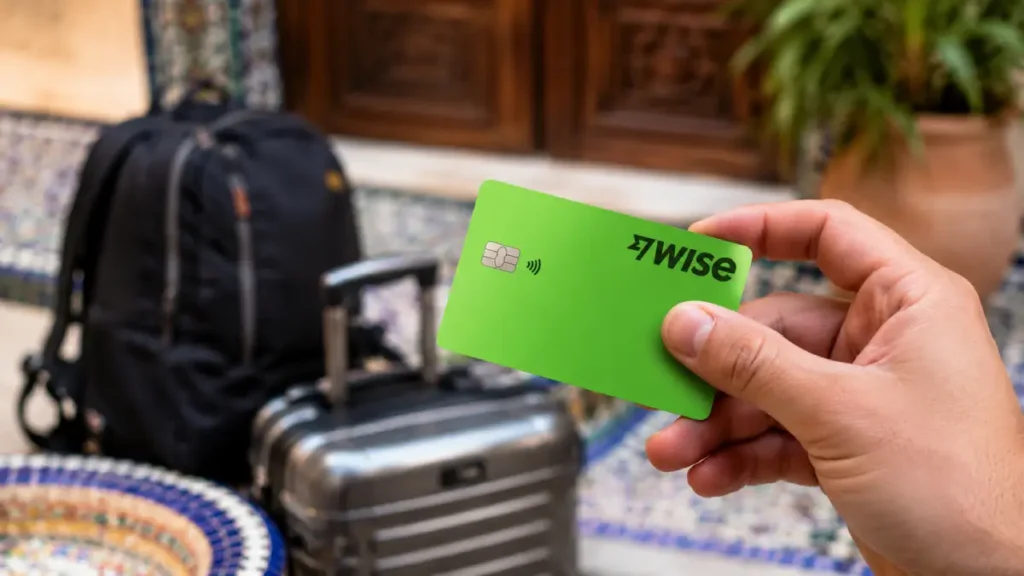
Some links in this guide may earn a small commission at no extra cost to you. I only recommend services I trust for planning a Morocco trip.
Need a travel card before Morocco? I usually recommend Wise because it makes exchange rates easier to understand and helps you track your spending in Moroccan dirhams. Just remember: Wise can help with exchange-rate surprises, but local ATM fees in Morocco may still apply.
Cash vs Card in Morocco: Where Each One Works Best
Morocco is still cash-first for daily travel, even though card use is growing.
You can pay by card in many big hotels, luxury riads, modern restaurants, supermarkets, car rental offices, some tour agencies, and many places in Guéliz and Hivernage in Marrakech.
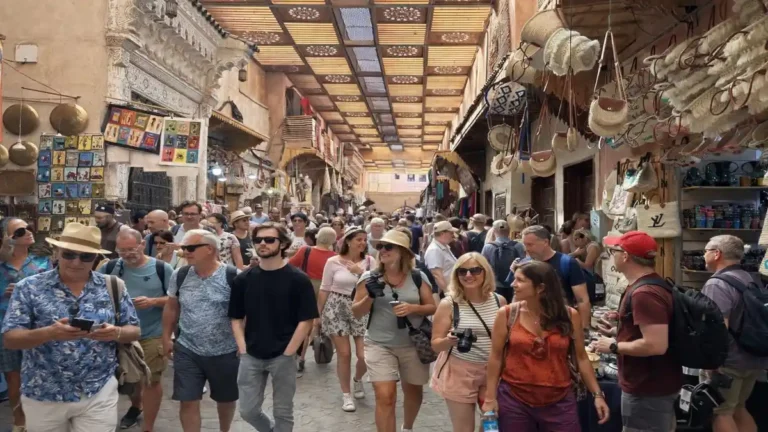
But in the medina, the souks, small cafés, local markets, petit taxis, public toilets, porter tips, and rural areas, cash is still the normal way.
This is where many first-time visitors feel the difference. A hotel may accept card for a large bill, but the man carrying your bags through the medina expects a small cash tip. A modern restaurant may accept card, but the tiny orange juice stand near Jemaa el-Fna may not. A boutique may accept card, but a small spice shop may prefer cash.
For shopping in the souks, cash also gives you more flexibility. Some bigger shops accept card, especially for rugs, leather, or ceramics, but smaller sellers often prefer dirhams.
If you are planning to shop seriously in Marrakech, read my Marrakech Souks Guide before you go. It will help you understand how the souks work before you start spending.
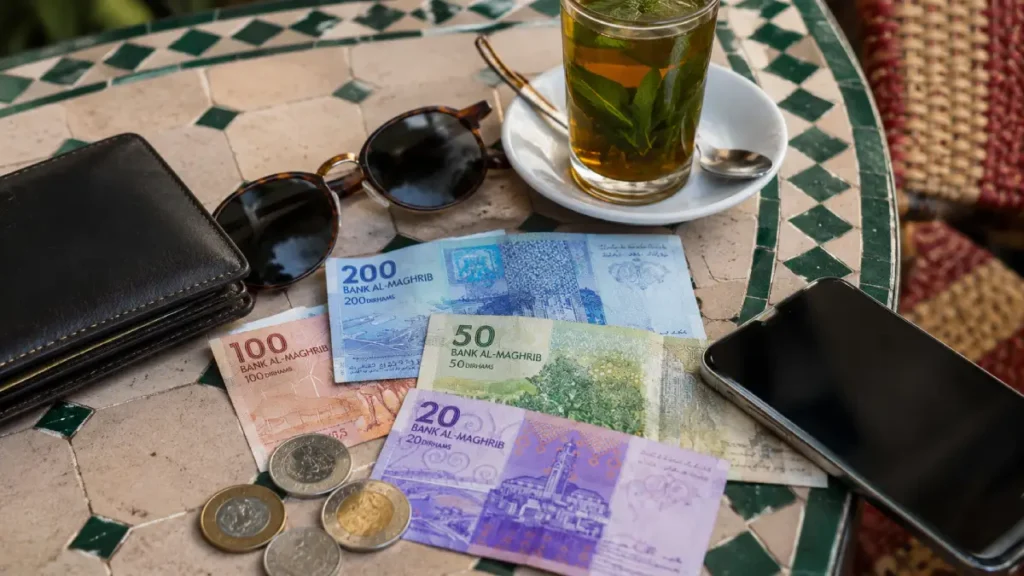
ATM Safety Tips in Morocco
Using ATMs in Morocco is usually normal and safe, but you should not use them carelessly.
Choose an ATM attached to a bank branch when possible. Use daylight if you can. Cover your PIN with your hand. Put your money away before walking off. Do not count a large amount of cash openly in the street.
Do not accept help from strangers at the ATM. Sometimes people are just friendly, but money machines are not the place to test that. If someone stands too close, cancel and move to another ATM.
Check the card slot before inserting your card. If it looks loose, damaged, or strange, use another machine. If the screen looks frozen or slow, cancel.
Keep your backup card separate from your main wallet. I usually tell travelers to keep one card with them and another card in a different bag or hotel safe. If your wallet is lost, you still have a way to continue the trip.
Also keep small emergency cash separate. Even 500–1,000 MAD hidden away can save a stressful day.
What to Do If an ATM Swallows Your Card in Morocco
If an ATM swallows your card in Morocco, stay calm. It feels scary, but it does happen.
If the ATM is attached to a bank and the bank is open, go inside immediately. Bring your passport or ID. Explain that the ATM kept your card. Sometimes the bank can help. Sometimes they cannot return the card because of security rules, but it is still better to ask right away.
At the same time, freeze the card in your banking app. If you cannot freeze it, call your bank. Do this before trying many other things.
If the ATM is not attached to a branch, or if it happens after hours, do not wait there for a long time. Freeze or cancel the card and use your backup card.
Common reasons an ATM may swallow a card include entering the wrong PIN too many times, a blocked card, an expired card, suspicious bank security, a machine fault, or leaving the card too long in the slot.
This is why I never recommend traveling in Morocco with only one card.
Moroccan Dirham Rules: Do Not Leave With Too Much Cash
The Moroccan dirham is a controlled currency. Travelers should usually get dirhams after arriving in Morocco and avoid leaving the country with a large amount.
The Office des Changes says travelers may carry up to around 2,000 MAD for return expenses. In simple traveler language, this means you should not take home a big pile of Moroccan dirhams.
Near the end of your trip, spend down your cash slowly. Keep enough for the taxi, airport snacks, tips, and small final payments, but do not withdraw a large amount on your last day.
If you have too much left, ask your hotel or a proper exchange office what your options are.
My Local ATM Strategy for Morocco
This is the simple ATM strategy I would give my own guests.
Arrive with two cards, not one. Withdraw 1,000–2,000 MAD after arrival. Use a major bank ATM attached to a branch. Always choose MAD and decline conversion. Break 200 MAD notes at a supermarket, hotel, or restaurant. Keep small notes for taxis, tips, cafés, and toilets. Withdraw again before leaving for the desert, mountains, or countryside. Do not depend only on card payments.
This plan is not complicated, but it works.
The mistake is not using ATMs in Morocco. The mistake is waiting until the wrong moment, trusting one card, accepting bad conversion, and carrying only large notes when the taxi driver needs change.
Money Guides to Read Next
If you are planning your first Morocco trip, these guides will help you understand money before you arrive.
For the full money system, start with Money in Morocco. This guide explains cash, cards, exchange offices, daily payments, and common tourist mistakes.
If you want to know how much the trip may cost, read Morocco Travel Costs and Morocco Travel Budget. These are useful for food, transport, tours, shopping, and daily extras.
If you are not sure how much cash to carry, read How Much Cash Should I Bring to Morocco?. It is a good next step after this ATM guide.
If you plan to pay by card, read Can You Use Credit Cards in Morocco?. Morocco is improving for card payments, but cash is still important in taxis, souks, small cafés, and rural areas.
For phones, maps, banking apps, and travel connection, read Best eSIM for Morocco. A working phone helps a lot when you need bank alerts, Google Maps, or Wise and Revolut notifications.
For buses, trains, taxis, drivers, and moving between cities, read my Morocco Transportation Guide.
If you are visiting Marrakech and plan to shop, read my Marrakech Souks Guide. It will help you understand cash, bargaining, and how to avoid pressure in the medina.
And if you are still building your full route, start with my main Morocco Travel Guide.
My Local ATM Advice Before You Travel
ATMs in Morocco are easy when you use them with a plan.
Get your first cash at the airport or in the city. Use major bank machines, choose Moroccan dirhams, and avoid Dynamic Currency Conversion. Carry small notes, bring a backup card, and withdraw before rural roads, not after you are already deep in the mountains or desert.
Morocco is a beautiful country, but it teaches practical lessons quickly. A traveler with small notes, two cards, and cash before the road is always more relaxed than the traveler searching for an ATM after sunset in a small village.
If this is your first trip, do not plan money at the last minute. For the full trip plan, read my Morocco Travel Guide next.
My local advice is simple: plan your money before the medina teaches you the hard way.
FAQs About ATMs in Morocco
Are ATMs easy to find in Morocco?
Yes, ATMs are easy to find in big cities like Marrakech, Casablanca, Rabat, Fes, Tangier, Agadir, and Essaouira. They are less reliable in rural areas, mountain villages, and desert routes. Withdraw before leaving the city.
Do ATMs in Morocco charge foreign cards?
Many Moroccan ATMs charge foreign cards. Travelers often report local ATM fees around 22–50 MAD, but fees can change by bank, machine, and card. Always check the ATM screen before confirming.
What is the usual ATM withdrawal limit in Morocco?
The usual ATM withdrawal limit in Morocco is often around 2,000 MAD per transaction for foreign cards. Some machines may allow 4,000 MAD or more. If a larger withdrawal fails, try 2,000 MAD or another ATM.
Which Moroccan bank ATM is best for foreigners?
There is no single bank that is always best for every foreign card. I usually recommend major bank ATMs attached to branches, such as Attijariwafa Bank, Bank of Africa, BMCI, Banque Populaire, CIH Bank, or Al Barid Bank. Choose safety and reliability first.
Is Al Barid Bank still fee-free in 2026?
I would not assume Al Barid Bank is still fee-free. Older guides often said it was, but recent 2026 traveler reports mention a fee around 35 MAD for some foreign card withdrawals. Check the screen before you confirm.
Should I choose MAD or my home currency at the ATM?
Choose MAD, Moroccan dirhams. If the ATM offers to charge you in your home currency, decline conversion. Choosing your home currency can give you a worse exchange rate.
Can I use Wise in Morocco?
Yes, many travelers use Wise in Morocco. It can help with exchange rates, spending alerts, and tracking dirham payments. But Wise does not remove local Moroccan ATM fees if the ATM owner charges them.
Can I use Revolut in Morocco?
Yes, Revolut can work in Morocco where Visa or Mastercard is accepted. Revolut withdrawal fees depend on your plan and country. Moroccan ATM owner fees may still apply.
What should I do if an ATM swallows my card in Morocco?
If the ATM is attached to an open bank branch, go inside with your passport or ID. Freeze your card in your banking app and call your bank. If it happens after hours or at an isolated ATM, freeze or cancel the card and use your backup.
Is Morocco better with cash or card?
Morocco is best with both. Use card for hotels, modern restaurants, supermarkets, car rentals, and larger payments. Use cash for taxis, souks, tips, small cafés, local markets, porters, public toilets, and rural areas.