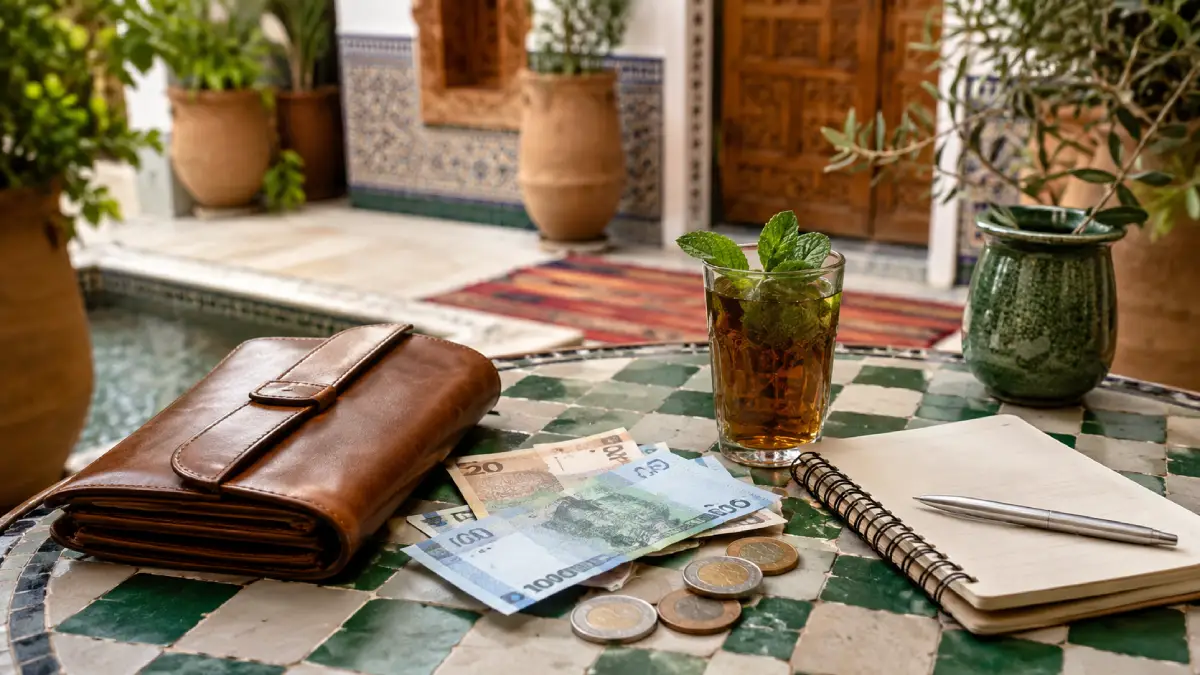
How Much Cash Do You Need in Morocco? Local Spending Guide for Travelers
Many travelers ask me this before they land in Marrakech: “Kamal, how much cash should I bring to Morocco?”
My honest answer is simple: do not bring your whole trip budget in cash. Morocco is not difficult with money, but you need a smart system. Get enough Moroccan dirhams for the first day or two, carry small bills for daily life, use cards for bigger payments when possible, and withdraw more cash in cities when you need it.
This guide explains exactly how much cash most travelers need in Morocco, based on trip length, destination, travel style, and whether hotels and tours are prepaid. For a complete guide to cards, ATMs, exchange offices, and payment methods, read my full guide to Money in Morocco. For the bigger trip budget, read Morocco Travel Budget. And for exact tip amounts, read Tipping in Morocco.
Here, we focus on one clear question: how much cash should you bring to Morocco for daily travel, arrival, souks, day trips, and the desert?
Table of Contents
Table of Contents
Quick Answer: How Much Cash Should I Bring to Morocco?
| Traveler Type | Cash Access Recommended |
|---|---|
| Budget traveler | 2,000–4,000 MAD |
| Mid-range traveler | 4,000–7,000 MAD |
| Comfort traveler | 7,000+ MAD |
| Family of 4 | 8,000–15,000 MAD |
For Arrival and Easy City Days
For Sightseeing and Shopping Days
For Day Trips and Rural Areas
Some links in this guide may earn a small commission at no extra cost to you. I only recommend services I trust for planning a Morocco trip.
If Your Hotels and Tours Are Already Paid, How Much Cash Do You Really Need?
This is the part many travelers forget. The amount of cash you need depends less on the length of your trip and more on what is already paid.
If your hotels, riads, airport transfer, desert tour, and main activities are already paid online, you do not need to walk around Morocco with a large amount of cash. You mainly need cash for daily life: taxis, cafés, lunches, tips, toilets, small shopping, bottled water, local snacks, and a few flexible moments.
For a 3-day Marrakech trip with your hotel already paid, many travelers can manage with around 1,500 to 2,500 MAD in cash access. This can cover simple lunches, taxis, tips, coffee, small entrance fees, and light shopping. If you plan to buy leather, ceramics, spices, or gifts in the souks, prepare more.
For a 7-day Morocco trip where your riads and desert tour are already paid, plan around 3,500 to 5,000 MAD per person in cash access. You may not spend all of it, but it gives you comfort for meals, tips, local taxis, roadside stops, small purchases, and emergencies. Do not withdraw it all at once. Take some on arrival, then withdraw more in Marrakech, Fes, Casablanca, Rabat, Tangier, Essaouira, or another city.
For a 10-day trip with a private driver already paid, you still need cash for lunches, tips, cafés, toilets, snacks, monument entrances, and shopping. I would plan around 5,000 to 7,000 MAD per person in cash access, but again, not all in your pocket. For more help with daily tip amounts, read Tipping in Morocco.
For a family trip, split the money safely. One adult should not carry everything. Keep daily cash in one place, backup cash somewhere else, and cards separate. This is not because Morocco is scary. It is just smart travel.
My local advice is simple: prepaid trips need less cash, but they are not cash-free. Even when the big things are paid, Morocco still uses cash for many small daily moments. If you are wondering when cards work and when cash is better, read Can You Use Credit Cards in Morocco?
Local guide example: Last month, I guided a couple from Canada on a 7-day Morocco trip. Their hotels and desert tour were already paid. They arrived with two cards and withdrew 2,000 MAD in Marrakech. By the end of the trip, they spent around 4,300 MAD on lunches, tips, taxis, coffees, water, and small shopping. This is why I usually tell travelers to plan cash access during the trip instead of carrying the full trip budget from day one.
My Simple Morocco Cash Formula
For most travelers, this simple formula works well:
Arrival cash + daily wallet cash + small bills + backup card = smooth Morocco trip.
Your arrival cash is the first 1,000 to 2,000 MAD. Your daily wallet cash is what you carry for that day. Your small bills are the 10, 20, 50, and 100 MAD notes that make taxis, cafés, tips, toilets, and souks easier. Your backup card protects you if one card does not work.
This system is simple, but it solves many small problems before they happen.
How Much Cash Should You Carry Each Day in Morocco?
A calm city day does not need a lot of cash. If you are walking around Marrakech, Essaouira, Rabat, or Chefchaouen, stopping for coffee, taking a short taxi, buying water, and eating a simple lunch, 300 to 500 MAD per person can be enough.
A busy sightseeing day needs more. If you visit monuments, take taxis, have lunch, stop for coffee, and tip a porter or guide, carry around 500 to 800 MAD per person.
A souk day is different. In Marrakech or Fes, you may only buy spices and a scarf, or you may suddenly find ceramics, leather, lamps, or a handmade bag you love. For a serious souk day, carry around 700 to 1,500 MAD, but do not show all your cash when bargaining. Keep smaller notes separate.
For an Atlas Mountains, Ourika Valley, Agafay, or Essaouira day trip, I would carry 500 to 1,000 MAD per person. Even if transport is already paid, cash is useful for drinks, toilets, tips, small snacks, local cafés, and little purchases along the road.
For the Sahara Desert, prepare more carefully. Before leaving Marrakech, Fes, or Ouarzazate, withdraw enough cash for the remote part of your trip. Even if your desert tour is prepaid, you may still need cash for drinks, scarves, toilets, tips, snacks, and small stops.
How Much Cash for Morocco by Trip Length?
This is not your full Morocco trip budget. This is only the cash you may need access to for daily life: taxis, tips, small meals, cafés, souks, toilets, day trips, and small surprises.
Short Trips in Morocco
One Week in Morocco
Longer Morocco Trips
If You Need to Pay Riads or Tours in Cash
Some small riads, guesthouses, local drivers, and tour providers may prefer cash. Some accept cards, but the card machine may not always work, especially in old medinas or smaller towns.
Before arrival, ask clearly: “Can I pay by card, or do you prefer cash?”
If a riad or tour balance must be paid in cash, keep that money separate from your daily spending cash. Do not mix your hotel payment with your taxi, lunch, and souk money. This one small habit keeps your budget clear.
For example, if you need to pay 1,200 MAD to a riad at checkout, put that amount aside and do not touch it during the day. Then carry a separate 500 to 800 MAD for normal daily spending.
City-by-City Cash Advice
Marrakech
Marrakech is modern, but cash is still very important. You need it for petit taxis, Jemaa el-Fna, souks, small cafés, porters, tips, and small shops. Cards work better in hotels, larger riads, modern restaurants, supermarkets, and some bigger shops.
For most Marrakech days, carry 500 to 800 MAD. For a souk shopping day, carry more, but keep small notes separate.
Fes
Fes medina is deep, traditional, and very cash-friendly. Carry cash for taxis, local food, craft areas, tips, and small purchases. A guide can also be useful in Fes, so keep some cash ready if you want to tip at the end.
Essaouira
Essaouira is more relaxed. You may spend less here than in Marrakech, especially if you walk, eat simple seafood, and enjoy cafés. Still, keep cash for the port, taxis, markets, small restaurants, and tips.
Chefchaouen
Chefchaouen is smaller, and cash is helpful for cafés, taxis, small guesthouses, and local shops. ATMs exist, but I would not wait until the last moment, especially during weekends or holidays.
Atlas Mountains
In the Atlas Mountains, cash is safest. Small villages, family lunches, mountain guides, mule handlers, roadside cafés, and local shops may not accept cards.
Sahara Desert and Merzouga
Prepare cash before the Sahara. Do not wait until the dunes to solve money problems. Even with a prepaid camp, you may need cash for drinks, tips, scarves, toilets, snacks, and small stops on the road.
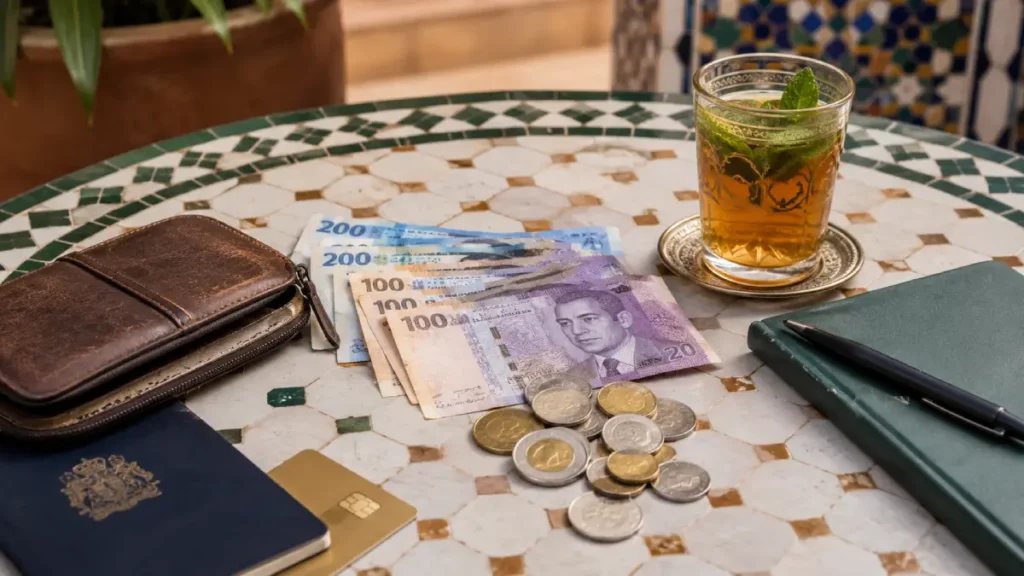
The Small Bill Rule in Morocco
This is one of the most important tips in this whole article.
A traveler with 2,000 MAD only in 200 MAD notes can still have problems. A traveler with 700 MAD in small notes may move more easily.
Small Notes for Daily Life
Notes You Will Use Often
Use Big Notes Carefully
Cash vs Card in Morocco
Keep this simple: use cash for daily Moroccan life and cards for bigger structured payments. In Morocco, cash is still best for taxis, souks, small cafés, local restaurants, tips, toilets, porters, and rural stops. Cards are more useful for hotels, larger riads, modern restaurants, supermarkets, some tour offices, and bigger shops.
The only rule I tell travelers is this: if paying by card matters to you, ask before you order, book, or buy. Some places accept cards, some prefer cash, and sometimes the card machine simply does not work. For the full guide to cards, ATMs, exchange offices, Wise, and payment methods, read Money in Morocco.
For easier travel money in Morocco, I recommend using my Wise Card in Morocco so you can manage ATM withdrawals, exchange rates, and small cash for tips without carrying too much money at once.
Should You Bring Euros, Dollars, Pounds, or Dirhams?
Do not bring your whole Morocco budget in Moroccan dirhams. Bring a small backup amount in euros, dollars, or pounds if you like, then withdraw or exchange Moroccan dirhams after arrival.
Euros are usually the easiest foreign currency to exchange in Morocco. US dollars and British pounds are also commonly exchanged in tourist cities. But for normal daily life, use Moroccan dirhams. Paying in foreign currency can create weak exchange rates and confusion with change.
Use official exchange offices, banks, airport exchange desks, or trusted hotel and riad support. Do not exchange money in the street.
How Much Cash for Tipping?
Keep 50 to 150 MAD in small notes daily for tips and small services.
That is enough for simple moments like café change, taxi rounding, porters, toilets, and small thank-you tips. For bigger services like private drivers, guides, hammams, and desert camp staff, keep larger tips separate and give them at the right moment.
For exact tipping amounts, read Tipping in Morocco.
Cash Mistakes I See Travelers Make
The first mistake is arriving with no cash and only one card. If the card does not work or the ATM is busy, the first evening becomes stressful.
The second mistake is carrying only 200 MAD notes. Big notes are useful for bigger payments, but not for taxis, tips, toilets, or small cafés.
The third mistake is exchanging the whole trip budget at the airport. The airport is fine for a first amount, but you do not need to exchange everything there.
The fourth mistake is waiting until the Sahara, mountains, or small villages to withdraw cash. Prepare before remote areas.
The fifth mistake is mixing hotel payment cash with daily wallet cash. Keep important payments separate.
The sixth mistake is assuming every riad, restaurant, or shop accepts cards. Morocco is improving, but cash is still part of daily life.
My Local Cash Plan for First-Time Visitors
If you are coming to Morocco for the first time and asking how much cash should I bring to Morocco, this is the simple plan I would follow.
Arrive with two cards if possible and a small backup amount in euros, dollars, or pounds. Then get 1,000 to 2,000 MAD when you arrive. This gives you comfort for the first day or two without carrying too much cash from the beginning.
Break big notes as soon as possible. A 200 MAD note is useful, but small notes make daily life easier. Try to keep 10, 20, 50, and 100 MAD notes for taxis, cafés, tips, toilets, snacks, and small shops.
On normal city days, carry around 300 to 700 MAD. Carry more for shopping, sightseeing, day trips, or desert travel. Before going to the Sahara, Atlas Mountains, or rural areas, withdraw extra cash in the city.
Keep your card for bigger payments and your small dirham notes for real Moroccan daily life. This is the balance that works best: not too much cash, not too little, and always small bills.
Final Advice
For most travelers, the smart plan is not to bring a huge amount of cash to Morocco. Get 1,000 to 2,000 MAD when you arrive, carry 300 to 1,000 MAD per day depending on your plans, keep small bills, use cards for bigger payments, and withdraw extra cash before remote areas.
Morocco is easier when you move with a simple system: card for big payments, cash for daily life, and small notes for smooth moments. That is what makes taxis, cafés, tips, souks, and day trips feel calm instead of stressful.
If you are still planning your full route, where to stay, when to visit, and how to move between cities, start with my Morocco Travel Guide before booking the rest of your trip.
FAQs About Cash in Morocco
How much cash should I bring to Morocco for one week?
For one week, plan access to around 3,500 to 6,000 MAD per person for daily cash needs, depending on your style. You do not need to carry all of it at once. Withdraw in stages.
How much cash do I need if my hotels and tours are already paid?
You need much less cash. For a prepaid 7-day trip, around 3,500 to 5,000 MAD per person in cash access is often comfortable for meals, taxis, tips, cafés, toilets, and small shopping.
Should I bring cash or card to Morocco?
Bring both. Use cards for bigger payments where accepted, and cash for taxis, tips, cafés, souks, small restaurants, and rural areas.
How much cash should I carry in Marrakech?
For a normal Marrakech day, 500 to 800 MAD per person is usually comfortable. For a souk shopping day, carry more, but keep it separate and discreet.
Can I use euros or dollars in Morocco?
Sometimes, especially in tourist shops, but Moroccan dirhams are better for daily life. Foreign currency can give you a worse rate and make change confusing.
Should I exchange money before Morocco?
For most travelers, no. Bring a small backup amount in foreign cash, then withdraw or exchange Moroccan dirhams after arrival.
Do taxis in Morocco take cards?
Most taxis do not take cards. Carry small cash, especially 10, 20, and 50 MAD notes.
How much cash should I bring for the Sahara Desert?
Prepare at least 1,000 MAD or more before leaving the city, depending on your tour and group size. You may need cash for drinks, tips, toilets, snacks, scarves, and small stops.
Is it safe to carry cash in Morocco?
Yes, with normal travel sense. Do not carry everything in one wallet. Keep daily cash separate from backup cash and use your riad or hotel safe when available.