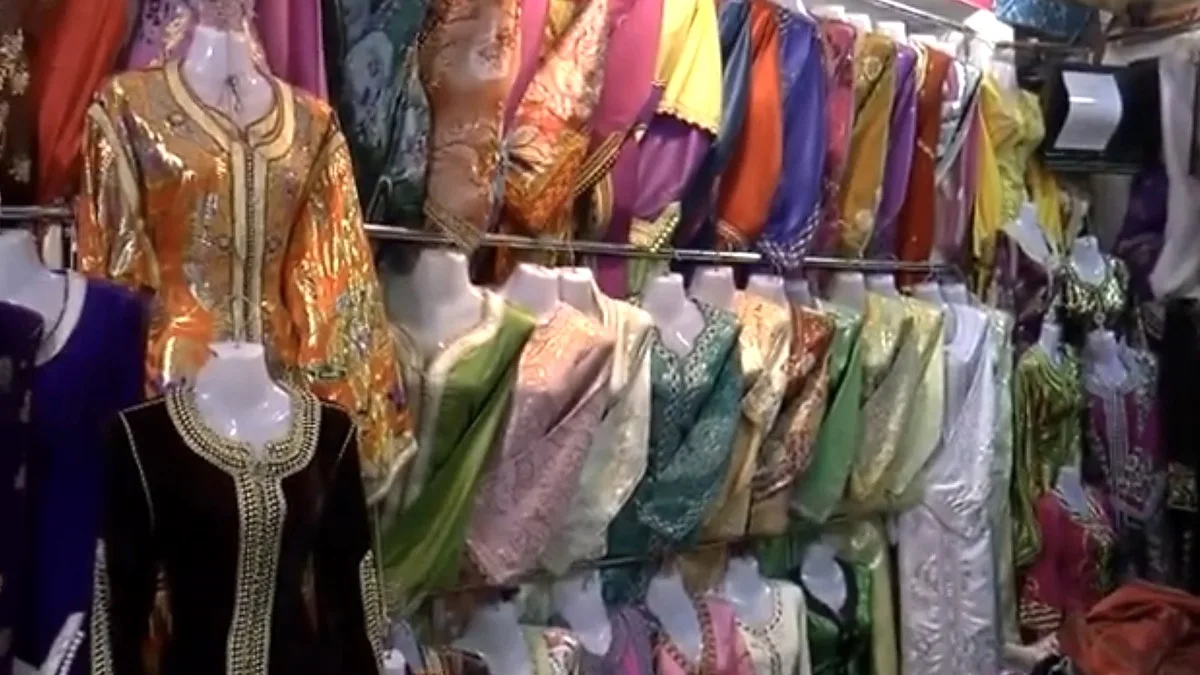
Buying a Kaftan in Marrakech: Where to Look and What to Check
Buying a kaftan in Marrakech can be a lovely way to bring Moroccan craftsmanship home. The important part is choosing a garment that fits your body, suits the occasion and still feels like something you will wear after the holiday.
Before discussing price, decide whether you want a simple dress, a decorated kaftan or a formal takchita. Then try it on, look inside the seams and ask what is included if you need a belt, lining or alterations.
I’m Kamal, a licensed Moroccan tour guide based in Marrakech. My advice is to give clothing the same attention you would give a leather bag or a rug: look closely, compare and take time before paying.
A beautiful garment on a hanger is only the beginning. You need to be comfortable wearing it.
Table of Contents
Table of Contents
Is a Moroccan Kaftan Worth Buying?
Yes, if you like the garment itself, the fit works and the price makes sense for its fabric and finish. For casual wear, a comfortable ready-made piece may be enough. For a wedding or another important occasion, leave time for fitting and ask exactly which pieces and services are included.
I would think about where you will wear it at home. A light dress for summer evenings and an elaborate outfit for a celebration are different purchases, even when both are described as kaftans in a shop.
For other souvenir ideas, read my What to Buy in Morocco guide.
Kaftan, Caftan, Takchita or Djellaba: What Are You Buying?
You will see both kaftan and caftan in English-language descriptions. They are alternative spellings, rather than two quality grades.
The names used in shops can be broad, especially for casual dresses sold to visitors. Ask the seller to show you the complete garment or outfit instead of relying only on the name.
| Garment | What to expect | What to clarify |
|---|---|---|
| Kaftan or caftan | Usually a long, hoodless garment; decoration and formality vary | Fabric, lining, closures and whether a belt is included |
| Takchita | Typically a layered formal outfit with an underdress, an outer layer and a belt | Exactly how many pieces you are buying and how they fit together |
| Djellaba | A long robe distinguished by its hood, with casual and dressier versions | Cut, fabric weight and intended use |
| Gandoura or casual kaftan-style dress | Often a simpler, loose garment for relaxed wear | Construction, transparency and how the seller describes the material |
For a wedding purchase, bring a photograph of the look you want and discuss it with the seller. That is more useful than asking for “the best kaftan” without explaining the occasion.
The Moroccan caftan is also part of a living craft tradition. UNESCO inscribed “Moroccan Caftan: art, traditions and skills” in 2025, recognizing the knowledge and work involved in its making. That recognition celebrates the tradition; it does not certify every garment sold in a shop.
Where to Look When Buying a Kaftan in Marrakech
The best place to start depends on what you want to buy and how much time you have.
Souk Semmarine and Nearby Clothing Shops
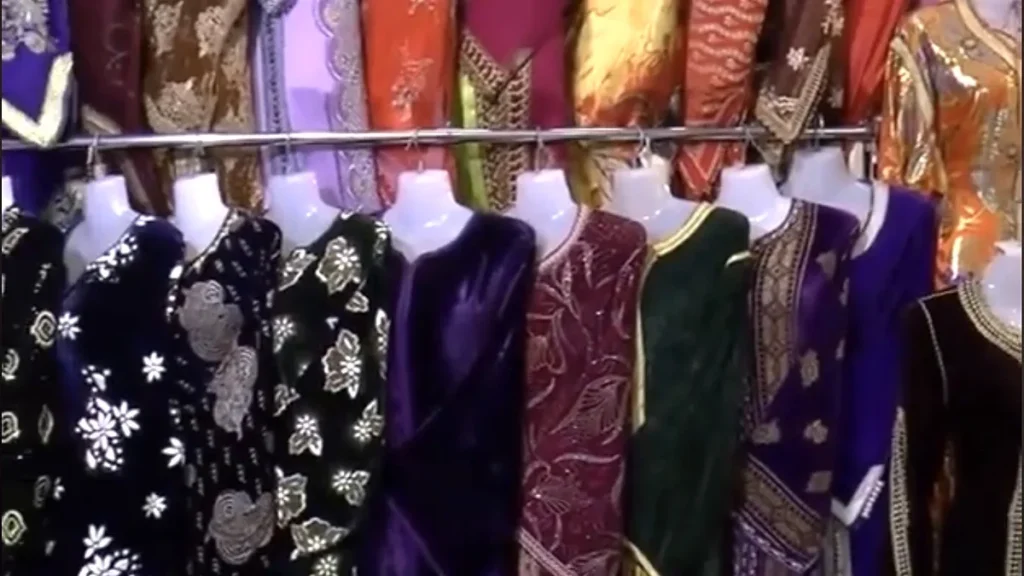
Souk Semmarine and the nearby kissaria clothing shops are useful places to browse traditional garments and compare styles in the medina. A kissaria is a group of small shops; ask for clothing or kaftan shops if you are unsure which passage to take.
Look at a few examples before deciding. Compare a simple ready-made garment with another of similar fabric and finish, rather than comparing it with a heavily decorated formal outfit.
For help understanding the surrounding market streets, use my Marrakech souks guide.
Boutiques in the Medina and Guéliz
Boutiques can be useful when you want a particular design, a quieter fitting or clearly marked prices. Ask about sizes, alterations and the exchange policy before buying.
A boutique address or a higher price does not automatically establish better workmanship. You should still check the actual piece, including its inside finish.
A Tailor or Specialist Atelier
For a made-to-measure kaftan or a formal outfit, speak to the person responsible for the fitting and completion date. Ask whether you are buying a finished garment, ordering from a sample or commissioning a new design.
Some designers and ateliers are also based in Sidi Ghanem. If you want to visit a particular workshop, confirm its address, appointment arrangements and available stock first. Do not assume every workshop is a walk-in shop.
If your departure is close, ready-made clothing with a confirmed minor alteration may be more practical than a new custom order.
How Much Does a Kaftan Cost in Marrakech?
There is no single fair price for every kaftan. Fabric, lining, cut, decoration, labor, brand and alterations all affect the total.
Simple casual garments and elaborate ceremonial outfits belong to different price categories. Decorated boutique kaftans can cost in the low thousands of dirhams; intricate designer pieces can cost several thousand or considerably more.
Published Marrakech boutique listings checked for this guide included individual kaftans around 1,700–1,800 MAD and a designer piece at 7,990 MAD. These are examples of the spread between products, not a Marrakech market average, a quality guarantee or a quote for your purchase. Check current prices in the shop.
For a lower-budget casual piece, compare similar ready-made garments in person. I would not use a designer price as the starting point for bargaining over a simple dress.
| Purchase | What to compare before agreeing a price |
|---|---|
| Simple ready-made dress | Fabric, comfort, seams and transparency |
| Decorated kaftan | Fabric information, lining, workmanship and fit |
| Formal takchita | All layers, belt, decoration and fitting requirements |
| Made-to-measure order | Fabric, labor, number of fittings, alterations and completion date |
Ask for the complete price. Does it include the belt? The underdress? Shortening the hem? A fitting? Packaging? A lower starting price can become less attractive when necessary extras are added.
Buying a Kaftan in Marrakech: My Quality Checklist
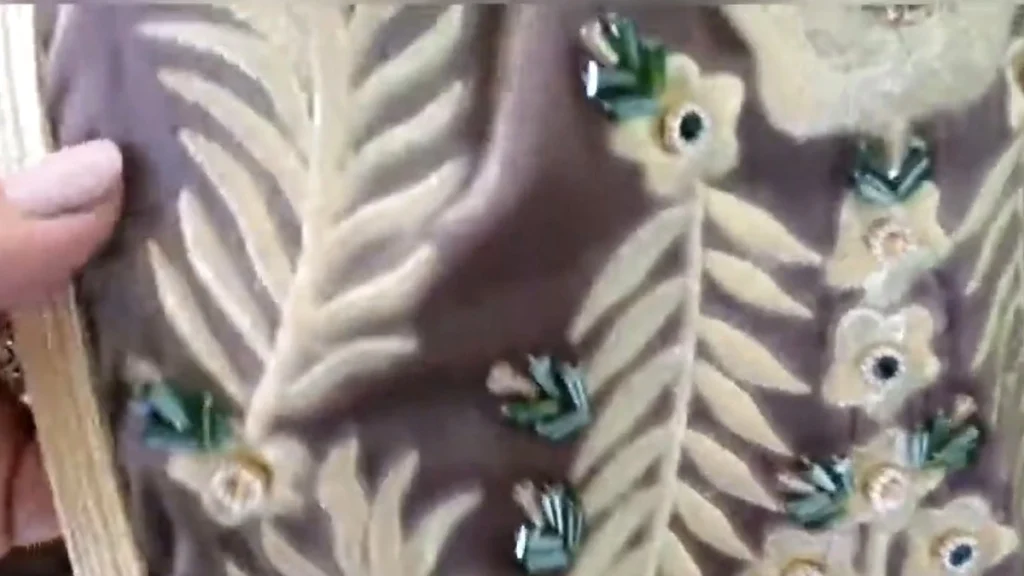
I would check the garment in good light and ask permission to look at the inside.
Fabric: ask what the material is and look for a fiber-content label where available. “Satin” describes a fabric construction, not proof that it is silk. Softness and shine alone cannot establish the fiber content.
Seams: look at the shoulders, underarms and sides. The seams should hold together without obvious gaps, pulled stitches or fabric already fraying along an edge.
Embroidery and trim: examine how the decoration is attached. Look for loose sections, snagged threads, missing beads or uncomfortable edges where the trim touches your skin.
Closures: check buttons, loops, hooks or zips. Fasten the garment rather than trying it on with every closure open.
Lining: if the garment has a lining, make sure it sits comfortably and does not pull or bunch. If it is unlined, check whether that works for the way you intend to wear it.
Condition: inspect the exact piece you are taking home for marks, damage and repairs. A display sample and the garment placed in your bag may be different pieces.
Ask which parts were worked by hand and which were sewn or embroidered by machine. A mixed process is not automatically a problem, but the explanation should match the price and the garment.
Try It On: Five Checks That Matter More Than the Size Tag
Do not rely only on a label such as small, medium or large. Cuts and measurements vary, and a loose garment can still be uncomfortable at the shoulders or sleeves.
1. Fasten it properly. Check that the neckline, chest and closures sit comfortably without pulling.
2. Move your arms. Reach forward and gently lift your arms. Notice whether the garment restricts you or pulls sharply across the back.
3. Sit down. A dress that looks perfect standing still may feel tight, heavy or awkward once you sit.
4. Check the length with your shoes. Use shoes similar in height to those you plan to wear. Ask about shortening before paying if the hem drags.
5. Try the complete outfit. For a takchita, put on the layers and belt together. Check that the belt fits and you can move comfortably with everything in place.
Look at the fabric against light as well. If it is more transparent than you expected, decide whether you need a lining or a separate garment underneath and include that cost in your decision.
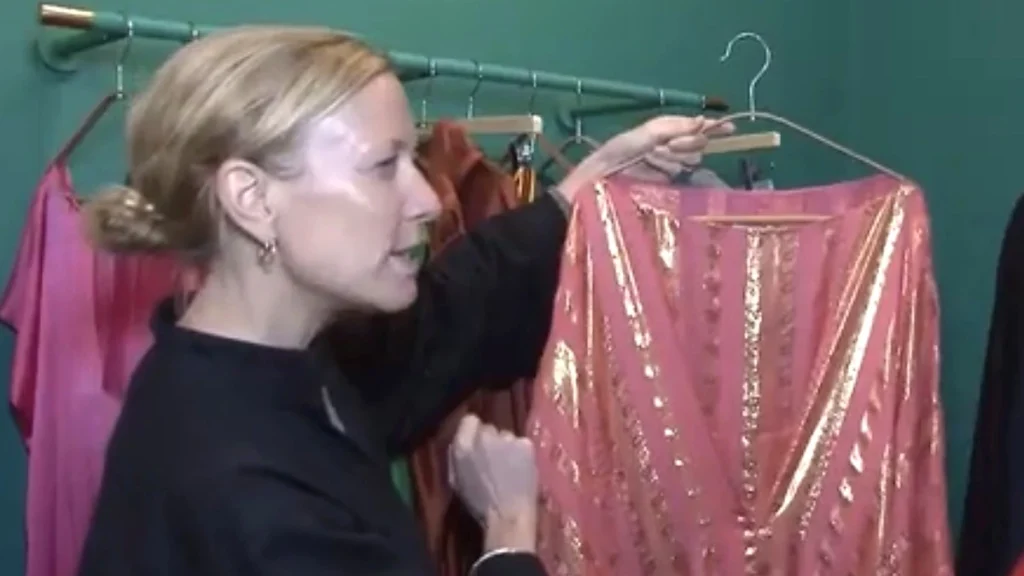
For a gift, bring measurements from a garment the recipient already wears comfortably, including its chest width, shoulder width, sleeve length and overall length. Ask the seller how those measurements will be used; a size label alone is less helpful.
Ready-Made or Made to Measure?
Choose ready-made when the fit already works or your time is limited. You can inspect the finished garment and know exactly what you are taking home.
Consider made-to-measure when you want a particular fit or design and can allow time for the work. Discuss the fabric, decoration and full outfit before agreeing to an order.
There is no universal completion time. A simple hem alteration, a newly made garment and a heavily decorated takchita are different jobs. Shop workload also matters.
For an order, ask for these details in writing:
- The garment or design, including fabric and agreed decoration.
- Which pieces, accessories and alterations are included.
- The total price, deposit and remaining balance.
- Fitting dates and the final collection date.
- What happens if it is late or needs further adjustment.
- The shop’s contact details and any agreed delivery arrangements.
Allow time for a final fitting before your flight. Inspect the completed work before collecting it, rather than discovering a fit problem after leaving Morocco.
If the timetable is too tight, I would choose a finished garment that fits or leave the purchase for another visit.
Bargaining, Receipts and Exchanges
Ask whether the price is fixed or negotiable. Some souk sellers negotiate; boutiques and other shops may use fixed prices.
I would compare similar garments first and then make an offer based on the piece you actually want. There is no reliable rule that every kaftan should cost half the first asking price.
Discuss the total after any alterations and accessories are included. Once you agree, ask for a receipt identifying the purchase and any work still to be completed.
Confirm the exchange or return policy before paying, particularly for gifts, sale items and altered or custom garments. Do not assume you can return a piece because you change your mind.
If fabric composition or handwork is a major reason for your purchase, ask the seller to record that description on the receipt. Keep photos of the garment and any order agreement.
Cleaning and Packing Your Kaftan
Ask how to clean the complete garment, including its lining, trim and decoration. Keep any care label or written instructions.
Do not assume “handmade” means hand-washable, or that all fabrics and embellishments can be cleaned in the same way. If the instructions are unclear, discuss them with a professional cleaner before experimenting at home.
For packing, make sure the garment is clean and dry. Fold it gently, use clean tissue between delicate decorated areas and keep heavy objects away from beads or embroidery. Pack a separate belt so it cannot rub against the fabric.
Keep it away from oil bottles and other liquids in your suitcase. If you are also shopping for beauty products, my argan-oil buying guide covers bottle checks and packing.
Want Help Shopping for a Kaftan in Marrakech?
If clothing is a priority, tell me whether you want a casual piece, a formal kaftan or a takchita, along with your approximate budget and the time available.
On a private Marrakech shopping tour, we can plan the walk around your interests, allow time to compare garments and help you ask practical questions about fit, workmanship and price.
You remain free to decide whether to buy. I can help with the conversation, but a shopping tour does not guarantee a seller’s fabric claims or a tailor’s completion date.
Contact me on WhatsApp with your preferred date, group size and shopping interests. We can discuss a private souks walk with no obligation to purchase anything.
Buying a Kaftan in Marrakech FAQs
Where can I buy a kaftan in Marrakech?
Start with the clothing shops around Souk Semmarine and the nearby kissaria for browsing. Compare boutiques in the medina or Guéliz if you want a particular design or fitting service. For a specialist atelier, confirm appointments and stock before visiting.
Are kaftan and caftan different garments?
They are alternative spellings. The more important distinction is between the actual styles and complete outfits being offered, such as a kaftan, a layered takchita or a hooded djellaba.
How much should I budget for a Moroccan kaftan?
Set your budget around the garment you want. Simple casual clothing costs much less than elaborate formal or designer work, which can run into thousands of dirhams. Compare like-for-like pieces and ask whether the belt, lining and alterations are included.
Can I get a custom kaftan during a short Marrakech visit?
Possibly, but confirm the specific job and fitting schedule with the tailor. Do not assume a custom garment can be finished in a few days. If your departure is close, a ready-made piece may be more practical.
How can I tell whether a kaftan is handmade?
Ask which parts were completed by hand and inspect the seams, embroidery and trim. A garment can combine handwork and machine work. Appearance alone cannot verify every claim about how it was made.
Is a kaftan a good gift?
It can be, but measurements, personal taste and the exchange policy matter. A garment chosen for someone else needs more planning than a souvenir with no sizing requirements.
Can tourists wear a Moroccan kaftan?
Yes. Choose a style appropriate to the occasion and comfortable for you. For an invitation to a wedding or celebration, ask your host about the dress expectations before shopping. For general sightseeing clothes, read my How to Dress in Morocco guide.