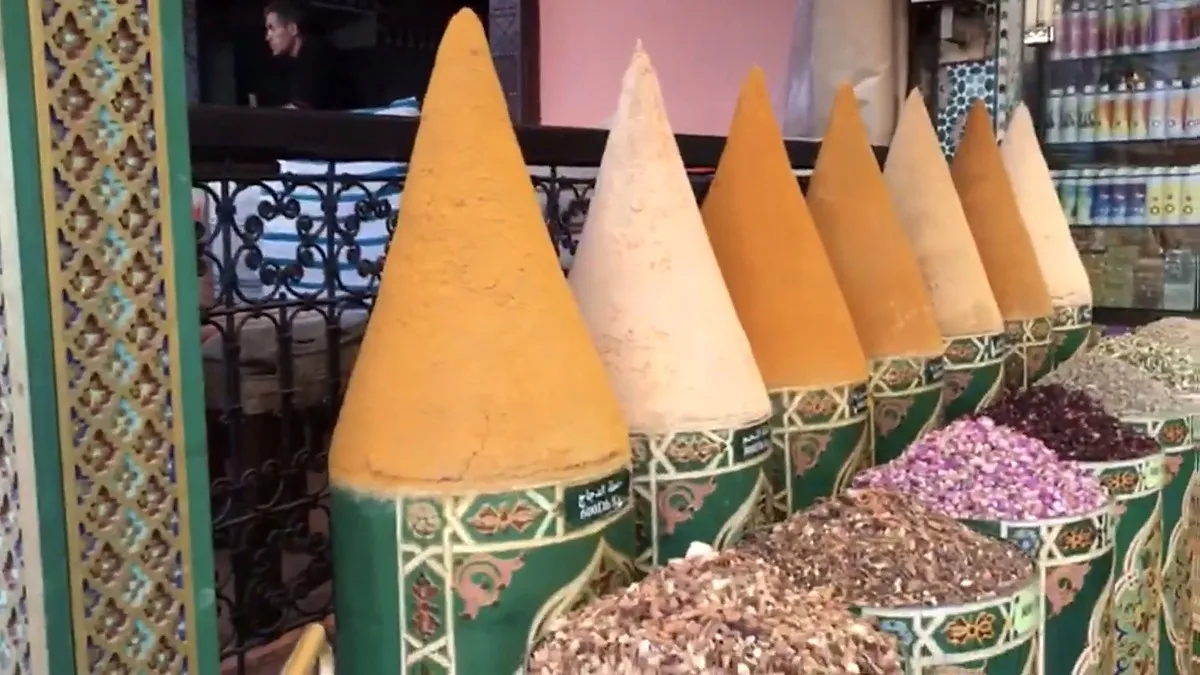
Buying Spices in Marrakech: What to Choose and Check Before You Buy
Buying spices in Marrakech is an easy way to bring some Moroccan cooking home, provided you choose things you will use and understand what you are paying for. A few small, clearly labeled packets can be more useful than a large mixed bag bought during an enthusiastic shop demonstration.
I’m Kamal, a nationally licensed Moroccan tour guide based in Marrakech. I have guided travelers since 2006. For spice shopping, my starting point is Rahba Lkdima, also written Rahba Kedima and often called the Spice Square.
My advice is to decide what you want to cook, compare prices for the same weight, and ask what is inside every blend before it goes into your bag.
If you would like help organizing the visit and asking questions, you can plan a private Marrakech shopping tour with me around your interests, with no obligation to buy.
Table of Contents
Table of Contents
Quick answer: is buying spices in Marrakech worth it?
Yes, if you enjoy cooking and choose manageable quantities of spices you recognize. Ras el hanout, cumin, paprika, ginger and cinnamon are useful starting points. At Rahba Lkdima, compare a few shops, agree the price and weight before packing, and ask for each spice to be labeled separately. Be more careful with expensive saffron and blends whose ingredients are unclear.
Where I would start: Rahba Lkdima
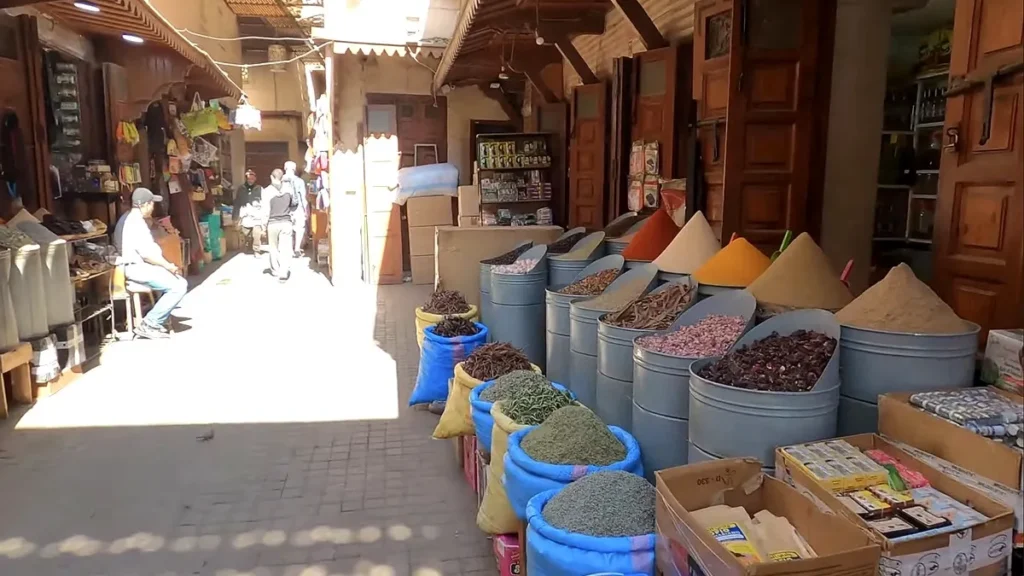
Rahba Lkdima is a square within the Marrakech medina, known for spice and herbalist shops. It gives you a place to begin browsing and comparing rather than choosing the first display you see on your walk.
Start with a small shopping list. Look around before agreeing to a demonstration or having several products weighed. You can enjoy the colors and aromas without turning every interesting jar into a purchase.
The location helps you find sellers; it does not establish the quality or origin of everything sold there. Ask where a product comes from rather than assuming that something bought in Marrakech was grown nearby.
For help understanding the surrounding lanes, read my Marrakech souks guide. This article concentrates on choosing and bringing home the spices themselves.
Buying spices in Marrakech: choose what you will cook with
Choose a few ingredients that fit your kitchen at home. If you rarely cook, one small spice blend may be a better souvenir than six bags of unfamiliar powders.
| Spice | A simple way to use it | What to ask before buying |
|---|---|---|
| Ras el hanout | Season a stew, vegetables or a tagine-style dish | Which ingredients are in this blend, and is it hot? |
| Cumin | Season beans, vegetables or meat | Is it whole or ground, and when was it ground? |
| Paprika | Add flavor and color to everyday cooking | Is this sweet paprika or a hot chili product? |
| Ginger | Use in savory dishes or baking | Is this plain ground ginger or a mixture? |
| Cinnamon | Use in baking and sweet or savory dishes | Are sticks and ground cinnamon available? |
| Saffron | Buy a small amount for a specific recipe | What are the stated origin, weight and price per gram? |
Ras el hanout is a spice blend whose recipe can vary. Do not expect every shop’s version to taste the same or contain an identical number of ingredients. Ask what is in the particular blend you are considering.
If the seller offers several blends, ask how they differ and which one suits the dish you plan to cook. A clear explanation is more useful than a claim that one mixture works for everything.
For ideas about the dishes you have tasted during your trip, see my Morocco food guide.
Whole or ground spices: which should you choose?
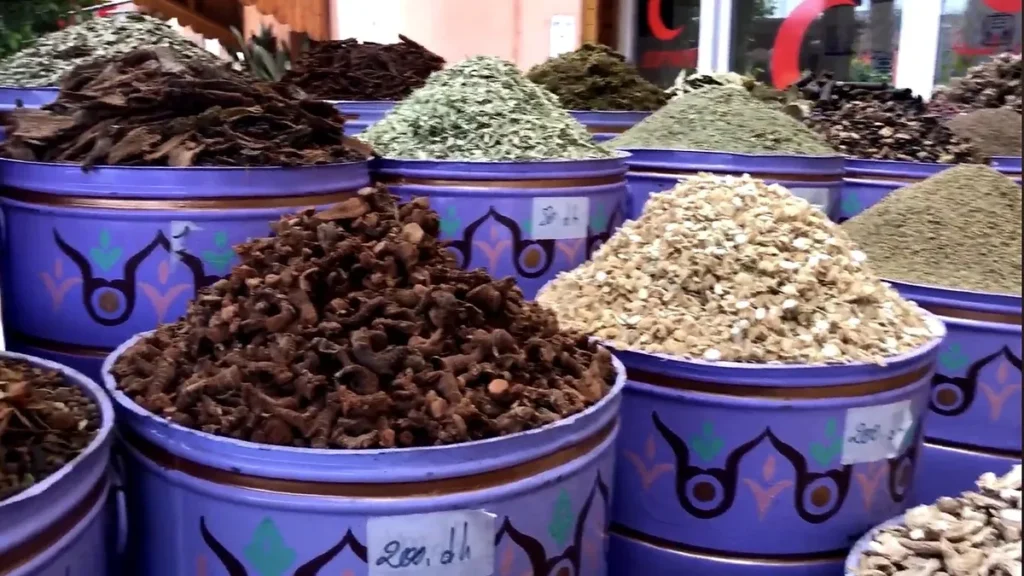
Whole spices generally retain their quality longer than ground versions when stored properly. Ground spices are convenient if you do not have a grinder or want to use them straight away.
Choose according to your habits. Whole cumin seeds make sense if you normally toast or grind spices. Ground cumin makes more sense if that is how you cook at home.
Ask when the ground spice was prepared and how it is stored. Grinding something in front of you shows that step of preparation, but does not prove its origin or overall quality.
With the seller’s permission, smell a sample. Aroma can help you decide whether you like the spice, but it is not proof of purity or safety. Bright color and a beautiful display are not enough on their own either.
How to compare spice prices in Marrakech
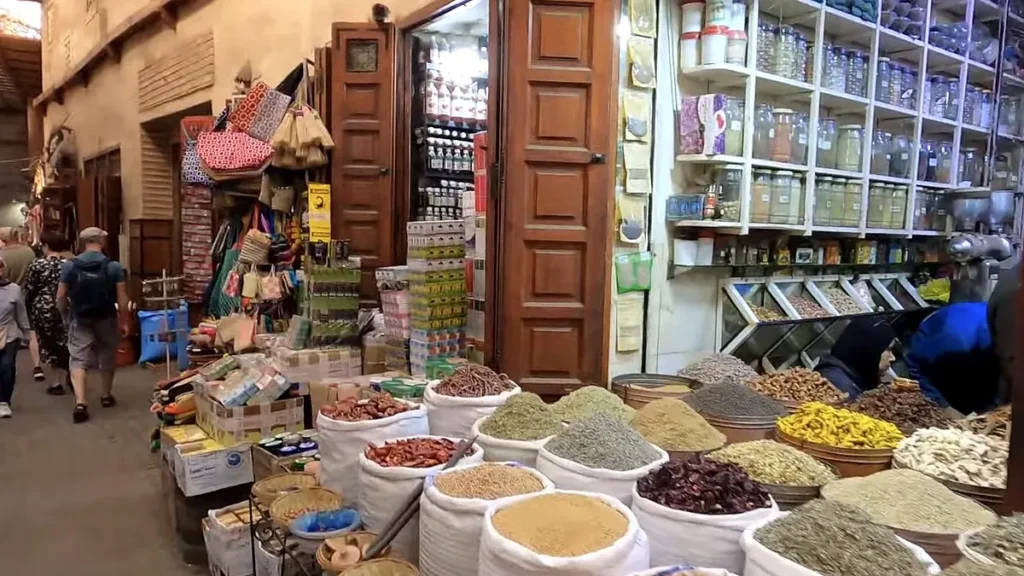
The most useful question is: “How much for 100 grams?” For saffron, ask for the price per gram. A price for “one bag” tells you very little until you know how much the bag contains.
Compare the same product, form and weight. A ground blend and a whole spice are different purchases, even if their colors look similar.
Here is a simple illustration, not a Marrakech market quotation: a 100-gram bag costing 20 MAD and a 50-gram bag costing 15 MAD have different unit prices. The second costs 30 MAD per 100 grams. It may still suit you if you want less, but it is not cheaper by weight.
Tell the seller the quantity you want before weighing begins. Ask to see the scale reading and confirm the total before the bags are closed. If a price is quoted per kilogram, ask what your smaller portion will cost.
There is no single fair price for every spice. Ingredients, quantity, packaging and the seller all affect the comparison. I would rather help you understand a clear quote than give you one number that cannot describe every purchase.
Ask whether prices are fixed or open to discussion. Keep bargaining friendly and agree only to a total you are comfortable paying. Check the separate items before accepting a bundle price.
Be more careful when buying saffron
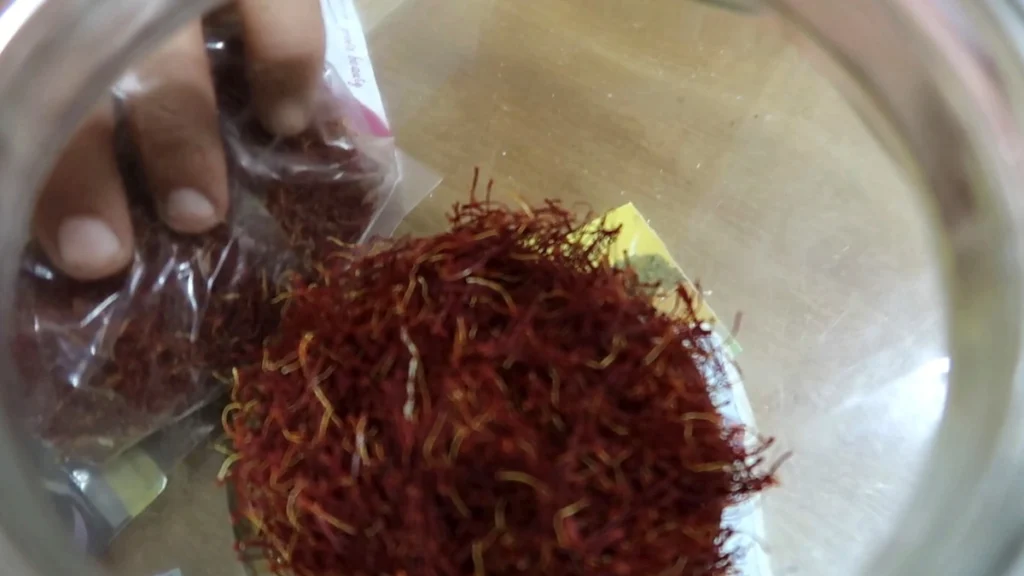
Saffron deserves a separate decision because a small quantity can represent a larger spend. Ask to see the exact product being sold, its stated origin, the weight and the final price.
Threads let you inspect the form more easily than a powder, but their appearance still does not guarantee authenticity. A seller naming a growing region does not establish traceability by itself.
Do not treat a water demonstration, smell or color as conclusive proof of purity. Research into spice authenticity involves analytical methods; a quick shop test cannot replace reliable product information.
For an expensive purchase, look for an identified producer or supplier, clear labeling and a receipt describing what you bought. If the explanation leaves you uncertain, choose a smaller amount or leave it.
Paying more does not automatically make saffron genuine. The reason to slow down is to understand the product, rather than buy confidence from the price tag.
My checklist before the spices are packed
Before payment, I would work through these questions:
- What is the exact spice or blend, and what ingredients does it contain?
- What weight am I buying, and what is the total in Moroccan dirhams?
- Can each product be packed and labeled separately?
- Is any packaging charge included in the quoted price?
- Can I have a receipt and the seller’s contact details?
If you have an allergy, do not rely on a vague assurance about a blend. Ask for ingredient information; if the seller cannot provide what you need, choose a product with clear labeling or leave it.
Check that the packets contain the products you selected. For gifts, labels are especially useful: the person receiving a brown powder should not have to guess whether it is cinnamon, cumin or a blend.
How much should you buy?
Buy according to how often you cook, not how much space a bag takes up. Small portions let you try a spice without leaving a large quantity unused in your cupboard.
As a shopping suggestion, 50–100 grams may be enough to try many everyday ground spices. That is not a rule: your recipes and cooking habits should decide the quantity. Saffron is a separate purchase, normally discussed in much smaller weights.
A large bag is only good value if you will use it while its flavor is still useful. A smaller amount that becomes part of your cooking is a better souvenir than a bargain you never open.
Packing spices and bringing them home
Ask for securely closed, food-appropriate packaging. Keep each label with its packet and place the packets inside a second bag to limit spills through your luggage. Keep receipts and any original product packaging.
Check both your destination’s food-import rules and your airline or airport’s baggage requirements before traveling. A sealed bag helps with packing and identification; it does not automatically make every ingredient admissible.
For travelers returning to the United States, USDA APHIS says most dried spices can enter, with exceptions. Citrus leaves and seeds, along with many vegetable and fruit seeds, are among the exceptions. Declare agricultural products on arrival; inspectors make the final entry decision. Check the current guidance for your exact ingredients before buying.
For the UK, Canada, Australia, New Zealand or another destination, use that country’s official guidance. Do not assume the US rules apply elsewhere, particularly to whole seeds, leaves or mixed herbal products.
At home, store spices in airtight containers somewhere dry, away from heat and sunlight. Penn State Extension’s storage guidance explains why the space above a hot stove is a poor place for a spice rack.
Would a private shopping tour help?
A private tour can help you plan a manageable route, explain your shopping interests and ask sellers clearer questions. It does not guarantee the purity of every product, and you should always feel free to compare or leave without buying.
We can make time for spice browsing at Rahba Lkdima alongside other interests. If you are still deciding between spices and other gifts, my guide to what to buy in Morocco gives you the wider overview.
My private Marrakech shopping tour lasts around 3–4 hours and costs €60 total for a private group of 2–4 people, payable on arrival. Solo travelers and groups of five or more can contact me for a quote. Purchases, shipping and vehicle transfers are separate. We confirm the meeting arrangements and booking terms in writing.
Ask Kamal about availability on WhatsApp. Tell me your travel date, group size and shopping interests in your own words. The message opens empty, and there is no obligation to buy during the tour.
Questions about buying spices in Marrakech
Where should I start looking for spices in Marrakech?
My starting point is Rahba Lkdima, also written Rahba Kedima. Browse a few shops and compare the exact product, quantity and price before deciding.
Which Moroccan spices make useful gifts?
A clearly labeled small packet of ras el hanout, cumin or cinnamon can be useful for someone who cooks. Choose according to their tastes and ask about the ingredients of any blend.
Is every ras el hanout blend the same?
No. Recipes vary, so ask about the ingredients, heat and suggested use of the blend you are buying rather than choosing by the name alone.
Can I take Moroccan spices home in my suitcase?
It depends on the ingredients and your destination’s import rules. Pack them securely, keep labels and receipts, and check official guidance before traveling. US travelers must declare agricultural products on arrival.
Do I need to buy anything on your shopping tour?
No. We can browse, compare and ask questions at a comfortable pace. The tour is a guided visit, and purchases are your choice.