Things to Do in Tangier: Best Sights & Local Experiences
Things to do in Tangier are not limited to the Medina. You have the Kasbah, the American Legation, Café Hafa, Cape Spartel, Hercules Caves and a modern waterfront that feels very different from the old city.
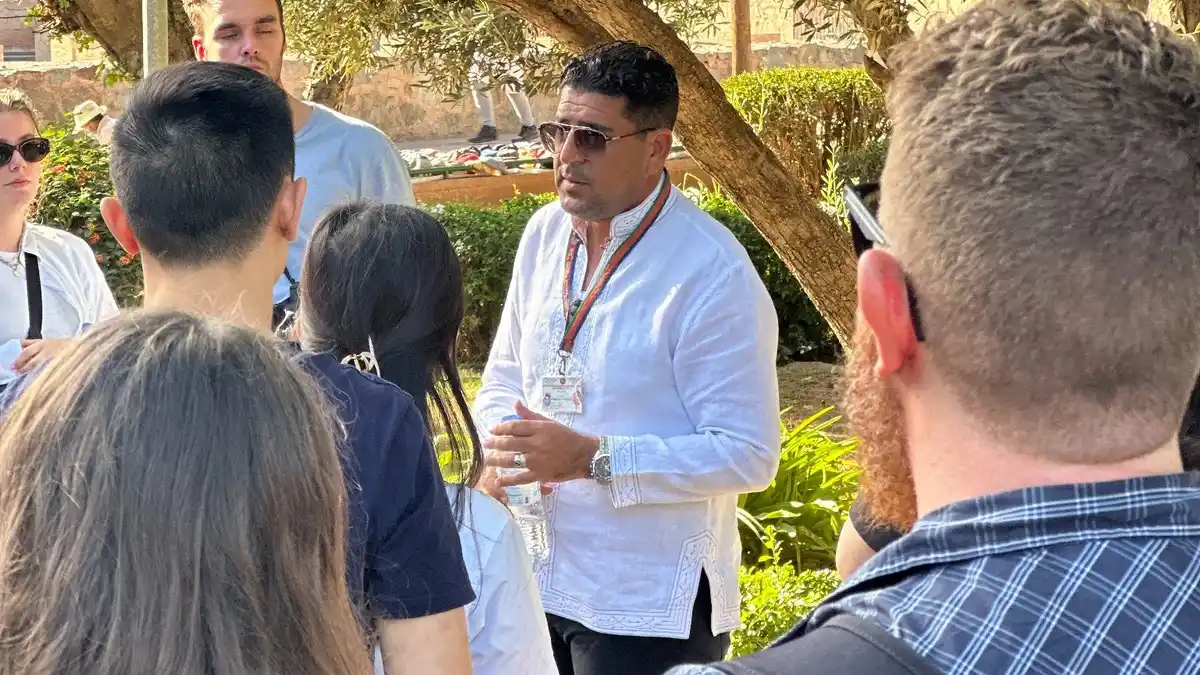
I’m Kamal, a licensed Moroccan tour guide, and when I visit Tangier I like to mix the historic center with the coast. The city is compact enough to explore without rushing, but each area has its own atmosphere.
In this guide, I’m focusing on the sights and experiences I would actually recommend for a first visit, from the Medina and Kasbah to the Atlantic viewpoints and the newer side of the city.
If you still need help with how many days to stay, where to sleep, transport or the best time to visit, start with my Tangier Travel Guide.
Table of Contents
Table of Contents
Explore the Tangier Medina, Petit Socco & Grand Socco
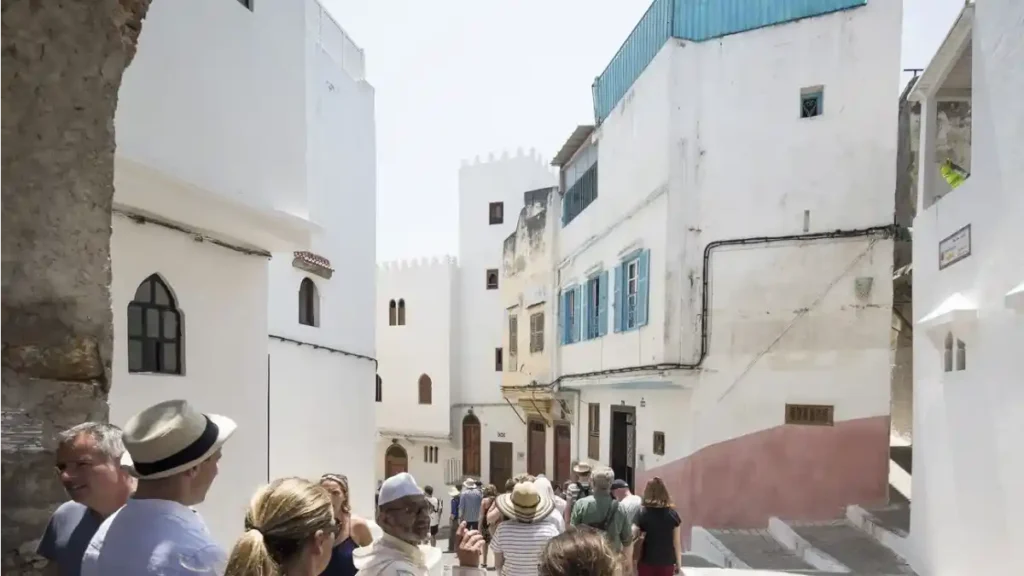
The Medina is where I would start a first visit to Tangier. It is smaller than the old cities of Marrakech or Fes, so you can explore it without feeling that you need a full day.
Walk in through Grand Socco and continue toward Petit Socco. This part of the Medina has cafés, small shops, bakeries and narrow streets that are easy to explore on foot.
Petit Socco is one of the historic meeting points of Tangier. Traders, travelers and foreign residents all passed through this area, and today it is still a good place to stop for coffee or mint tea and watch the city around you.
Do not worry about following one perfect route. Some of the best parts of the Medina are the small side streets, traditional doors, local shops and viewpoints you find while walking.
Shopping here is also more manageable than in Marrakech. You will see leather slippers, woven baskets, textiles, brass pieces and small craft shops, but I would spend more time walking than shopping on a first visit.
My tip: wear comfortable shoes because parts of the Medina are steep, keep some small cash for cafés and shops, and if someone offers directions you do not need, a simple “La, shukran” is enough.
Visit the Kasbah and Kasbah Museum
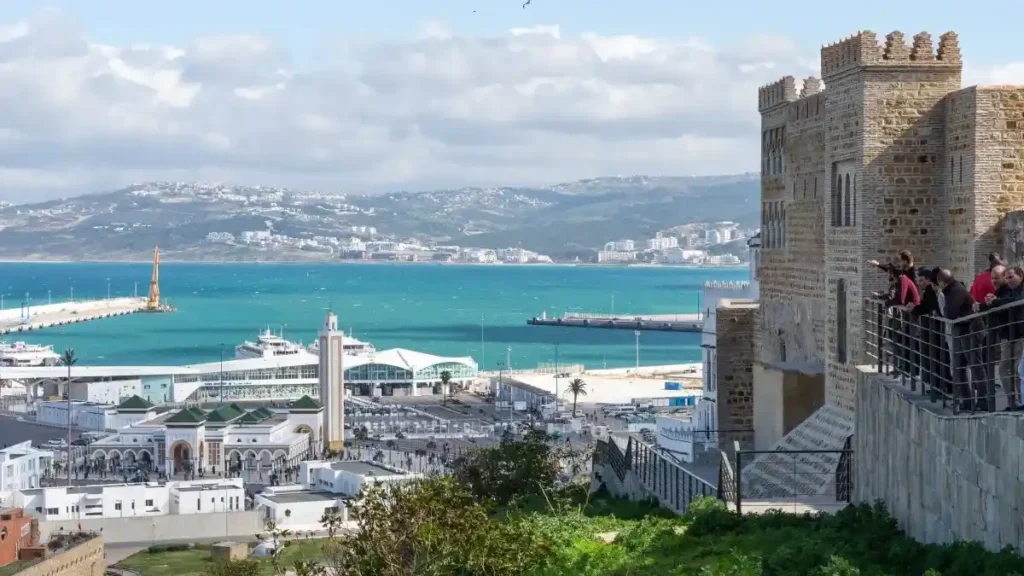
The Kasbah sits above the Medina and is one of the best places to understand Tangier’s history and geography.
I would walk up through the old streets rather than rush straight to the viewpoint. The area is quieter than the lower Medina, with white houses, blue doors and small streets that are easy to explore slowly.
Inside the former Sultan’s palace is the Kasbah Museum, also known as Dar el Makhzen. The museum covers different periods of northern Moroccan history and includes archaeological pieces, traditional objects, maps and displays connected to Tangier and the surrounding region.
Even if museums are not usually your priority, this one fits naturally into a Kasbah walk and does not require a large part of the day.
Outside the museum, take time to enjoy the views over the city and the Strait of Gibraltar. On a clear day, you can see across toward Spain.
My tip: visit earlier in the day if you want quieter streets and a more relaxed museum visit.
Visit the American Legation Museum
The American Legation is one of the most interesting historic stops inside the Tangier Medina.
Morocco was the first country to recognize the independence of the United States, and the Legation became an important part of the long relationship between the two countries.
Today, the building is a museum and cultural center with photographs, documents, artwork and displays about Tangier’s international history and Moroccan-American relations.
It is not a large museum, so you can visit without taking too much time away from the rest of the Medina.
I like this stop because it gives more meaning to the city. Tangier was connected to diplomats, traders and foreign communities long before modern tourism arrived.
My tip: combine the Legation with your Medina walk. Around 30 to 45 minutes is enough for most visitors.
Stop for Mint Tea at Café Hafa
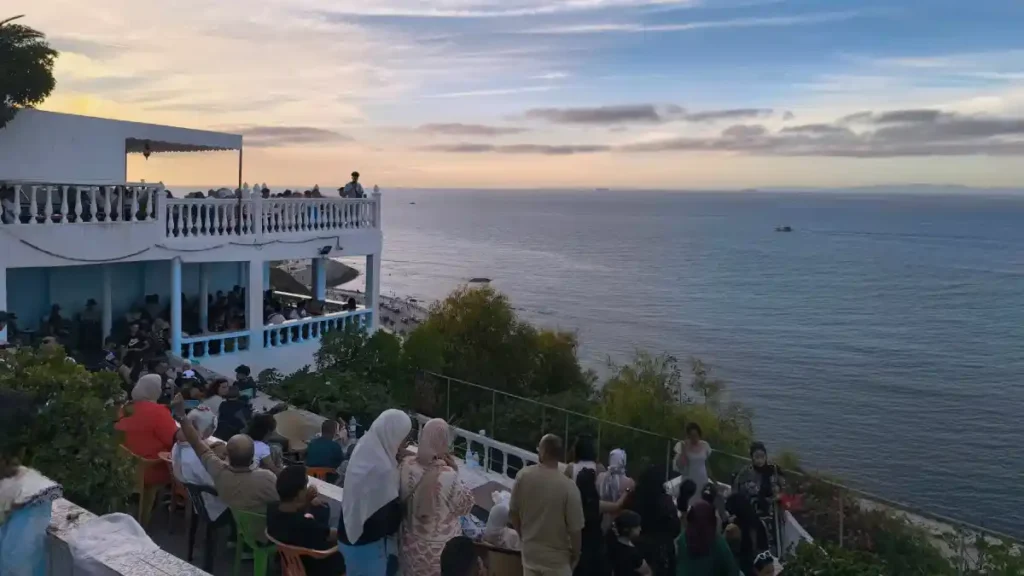
Café Hafa is one of the classic stops in Tangier, especially if you want a break after walking through the Medina and Kasbah.
The café has been here since the 1920s and is built on terraces overlooking the sea. The setting is simple, but the view across the Strait of Gibraltar is the reason people keep coming back.
Order a mint tea, find a seat and give yourself a little time. This is not a place I would rush through just to take a photo.
The café has a long history with writers, artists, musicians and local families, but today it still works best as a normal place to sit, talk and enjoy the view.
Afterward, you can continue toward Marshan or the coast depending on how much time you have.
My tip: go in the late afternoon, but arrive before sunset if you want a better chance of getting a good seat.
Visit Hercules Caves and Cape Spartel
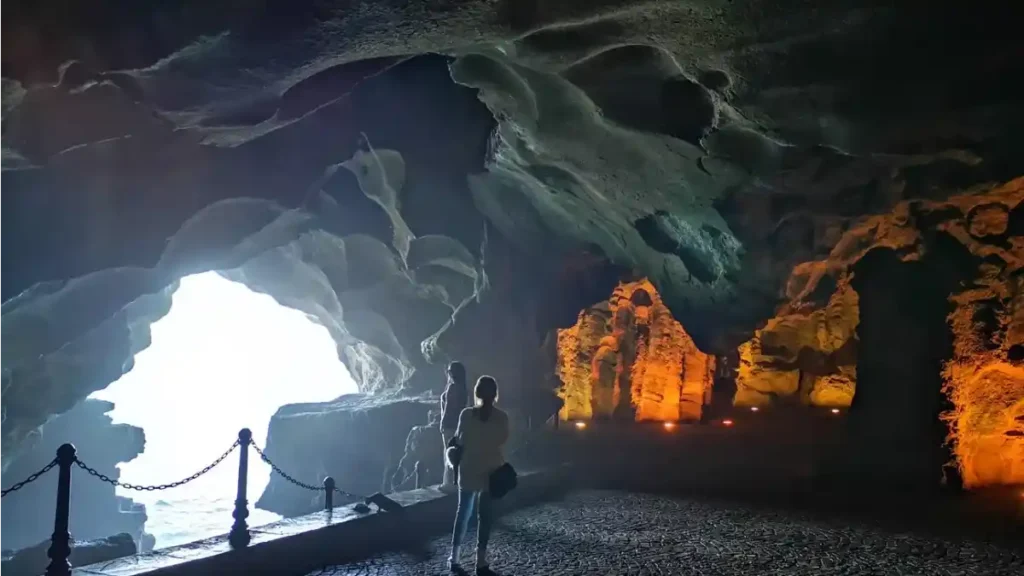
Hercules Caves and Cape Spartel are easy to combine because they are both west of central Tangier.
The Caves of Hercules are best known for the sea opening that resembles the shape of Africa. Part of the cave is natural and other sections were shaped by people over time. It is a short visit, but the sound of the waves and the opening toward the Atlantic make it worth stopping.
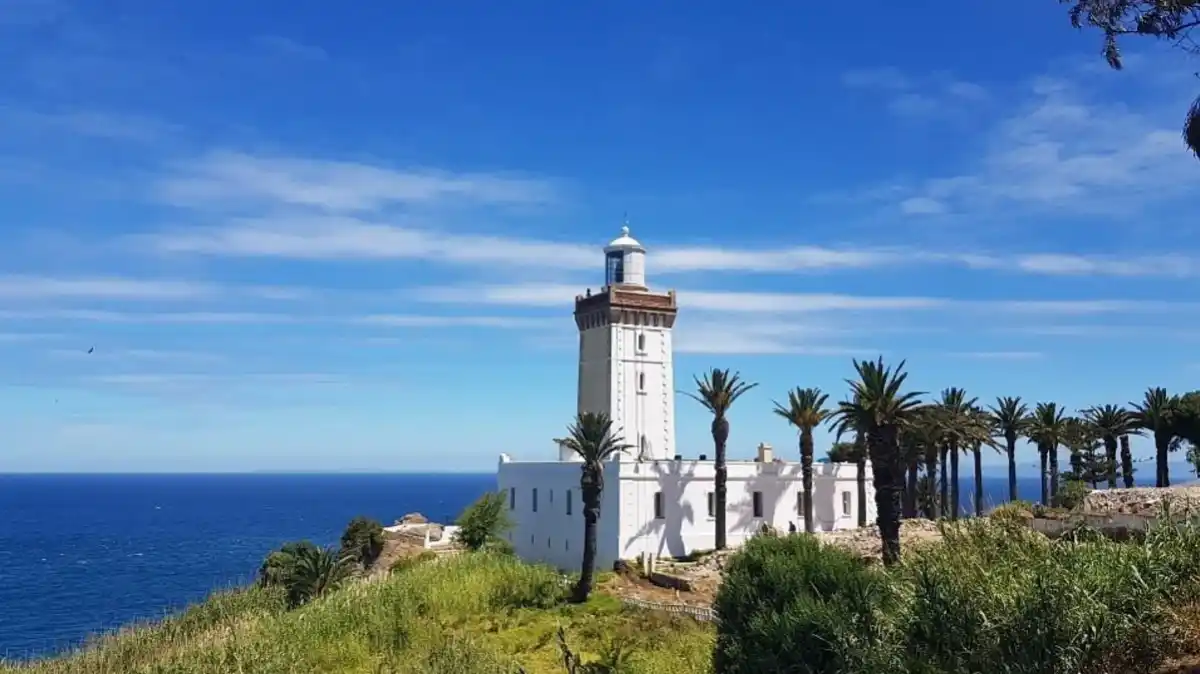
A few minutes away, Cape Spartel gives you a much wider coastal view. The lighthouse stands near the point where the Strait of Gibraltar opens toward the Atlantic, and on a clear day the views are excellent.
I would visit both places together rather than making two separate trips. A taxi, private driver or guided visit is the easiest option from Tangier.
My tip: go earlier in the day if you want fewer people at the caves, and leave enough time at Cape Spartel to enjoy the view without rushing.
Walk the Tangier Marina and Corniche
The marina and Corniche show a completely different side of Tangier from the Medina and Kasbah.
I like this area in the late afternoon when the light is softer and more people come out for a walk. You have wide promenades, cafés, views across the water and a good look back toward the old city.
The marina is easy to explore on foot and works well after a morning in the Medina because the space feels much more open.
Farther along the coast, Malabata has modern hotels, a long seaside road and more places where locals walk in the evening.
You do not need to spend hours here, but it is worth seeing if you want to understand both old and modern Tangier.
My tip: come before sunset and walk slowly along the waterfront rather than trying to cover the whole Corniche.
Try Local Food and Seafood in Tangier
Tangier is a good city for seafood, especially if you want a change from the heavier dishes you may eat inland.
You will find grilled fish, seafood plates, tagines, sandwiches and simple local meals around the Medina, Petit Socco and the waterfront.
I would not choose a restaurant only because it appears everywhere on social media. In Tangier, some of the best meals are in simple places with a short menu and plenty of local customers.
If you like fish, ask what is fresh that day rather than ordering only from a fixed menu.
Keep some small cash because smaller cafés and local restaurants may be easier to pay in cash.
My tip: choose one seafood meal while you are in Tangier and keep the rest simple. You do not need to turn every meal into a destination.
FAQ: Things to Do in Tangier
What are the best things to do in Tangier?
For a first visit, I would explore the Medina and Kasbah, visit the American Legation, stop for mint tea at Café Hafa, walk along the marina and Corniche, and make time for Cape Spartel and Hercules Caves.
What should I not miss in Tangier?
If you have limited time, do not miss the Medina, Kasbah and Café Hafa. If you have a second day or a free afternoon, add Cape Spartel and Hercules Caves.
Can you explore Tangier Medina on your own?
Yes. Tangier’s Medina is smaller than the old cities of Marrakech or Fes and is easy to explore on foot. Wear comfortable shoes and allow some time to wander without following a strict route.
Are Cape Spartel and Hercules Caves worth visiting?
Yes, especially if you have more than one day in Tangier. They are close to each other and easy to combine in the same outing by taxi, private driver or guided visit.
Is Café Hafa worth visiting?
Yes. The café itself is simple, but the sea view and atmosphere make it one of the classic Tangier experiences. I prefer going in the late afternoon before sunset.
My Final Advice for Things to Do in Tangier
Tangier is not a city where I would try to see everything in a few hours.
Start with the Medina and Kasbah, then choose the experiences that fit your time. Café Hafa works well later in the day, while Cape Spartel and Hercules Caves are better when you have enough time to leave the city center without rushing.
If you only have one day, focus on central Tangier. If you have more time, add the coast and places outside the Medina.
The best Tangier visit is usually a mix of history, walking, sea views and enough time to sit somewhere and enjoy the city.
If you are staying overnight, my Tangier Hotels guide will help you choose the right area for your visit.
If Tangier is part of a longer route through northern Morocco, see my Northern Morocco Travel Guide for Chefchaouen, Tetouan, Asilah and other stops in the north.
And if you are planning the rest of the country as well, my Morocco Travel Guide will help you connect Tangier with the wider trip.
Book a Guided Tangier Experience
If you prefer to explore Tangier with a guide, choose an experience that matches the part of the city you want to understand better. A Medina walking tour is good for history and local life, while a coastal tour works better if you want to include Cape Spartel and Hercules Caves.
You can compare guided tours and experiences in Tangier on Viator and choose one that fits your schedule and travel style.
Disclosure: Some links in this guide may be affiliate links. If you book through them, I may earn a small commission at no extra cost to you. I only recommend experiences I genuinely believe can add value to your trip.