What Do Moroccans Eat for Lunch? A Local Guide to Moroccan Midday Meals
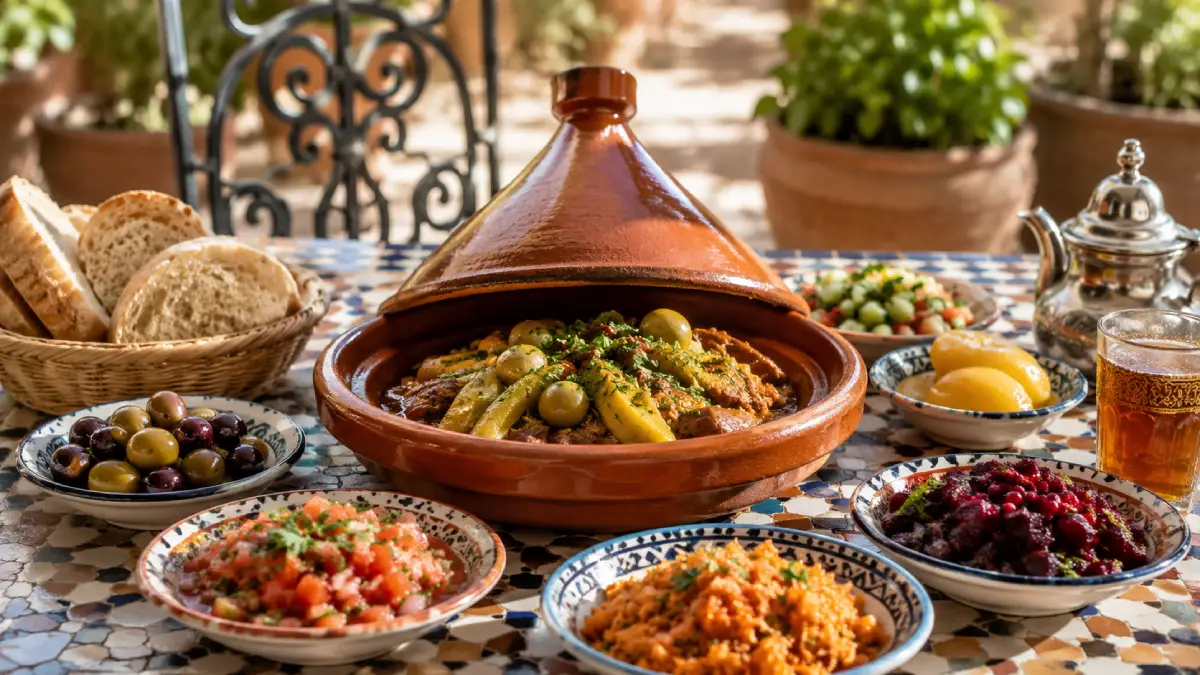
Lunch in Morocco is not just a quick break in the middle of the day. For many Moroccan families, lunch is the main meal. It is the moment when the table becomes full, the bread is placed in the middle, and everyone slows down for food, tea, and conversation.
So, what do Moroccans eat for lunch? Most Moroccans eat dishes like tagine, couscous, grilled meat, Moroccan salads, lentils, beans, fish, chicken, vegetables, bread, and sometimes soup. But the real answer depends on the day, the region, the family, and the season.
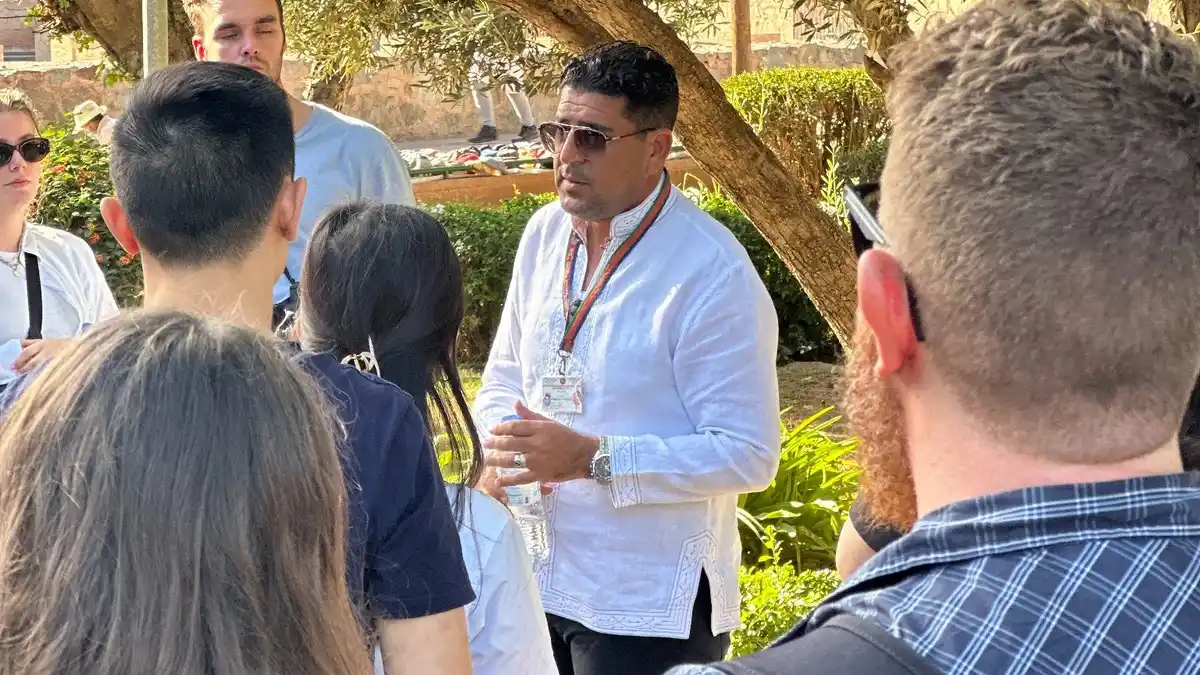
As a Moroccan guide from Tinghir, I always tell travelers that lunch is one of the best ways to understand Moroccan daily life. Breakfast shows you the morning rhythm, but lunch shows you the heart of the home. If you are starting with Moroccan food from the beginning of the day, you can also read my full guide to Moroccan Breakfast to understand what locals eat in the morning before we move into the bigger midday meal.
If you are asking what do Moroccans eat for lunch, the answer is not one single dish. Moroccan lunch changes from city to city, but tagine, couscous, bread, salads, grilled meat, fish, lentils, and beans are the most common midday foods you will see across the country.
Table of Contents
Table of Contents
Some links in this guide may earn a small commission at no extra cost to you. I only recommend services I trust for planning a Morocco trip.
Quick Answer: What Do Moroccans Eat for Lunch?
Moroccans usually eat tagine, couscous, Moroccan salads, grilled meat, fish, lentils, beans, bread, and seasonal vegetables for lunch. Lunch is often the main meal of the day in Morocco, especially on Fridays when many families eat couscous together after Friday prayer.
A Moroccan lunch is usually warm, filling, and shared. It is not only about the food on the plate. It is about family, bread, hospitality, and taking time to eat properly. This is why lunch in Morocco often feels different from lunch in many Western countries, where people may eat quickly at work or grab something small between activities.
What Is a Typical Moroccan Lunch?
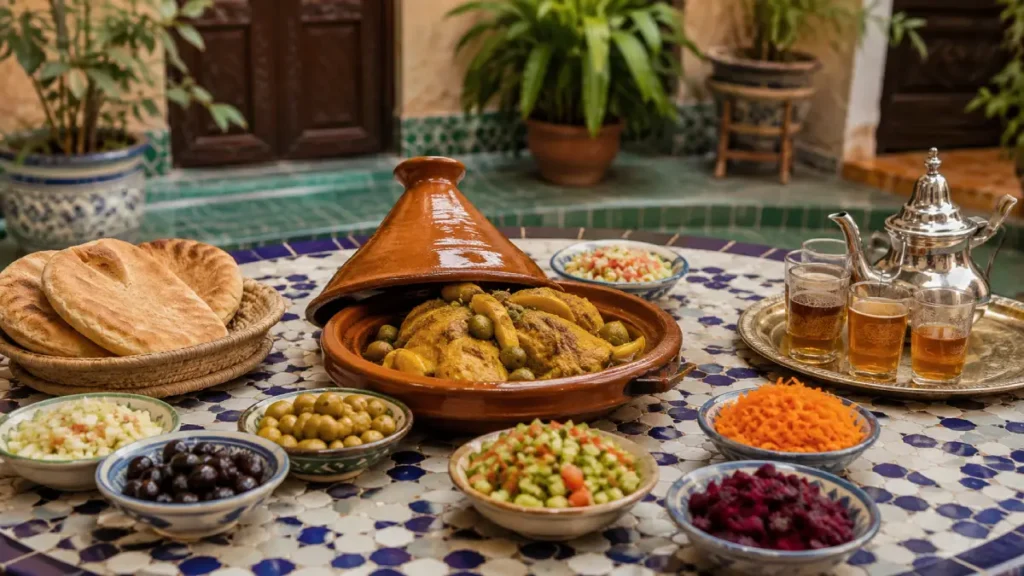
A typical Moroccan lunch usually has one main dish in the center of the table. This could be a tagine, couscous, grilled meat, fish, lentils, beans, or chicken with vegetables. Around it, you may find Moroccan salads, olives, bread, water, and sometimes mint tea after the meal.
Bread is almost always present. In Morocco, bread is not only a side dish. We use it to scoop sauce, take vegetables, share from the same plate, and enjoy the best part of the dish. If you eat tagine and leave the sauce at the bottom, you are missing the soul of the meal.
In Moroccan homes, lunch is often the meal where people gather. Of course, modern life has changed many habits. People work, children go to school, and not every family can eat together every day. But culturally, lunch still has a strong place. It is the meal that feels most complete.
If you are planning your first trip and want a bigger overview of local dishes, read my guide to What to Eat in Morocco where I explain the most important foods travelers should try across the country.
Couscous: The Famous Friday Lunch
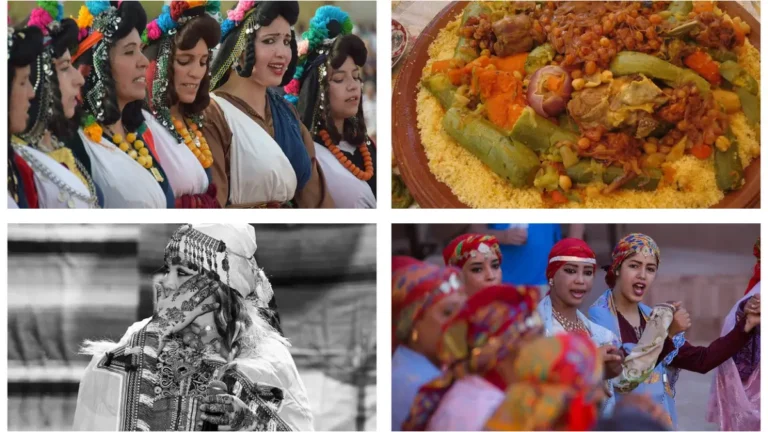
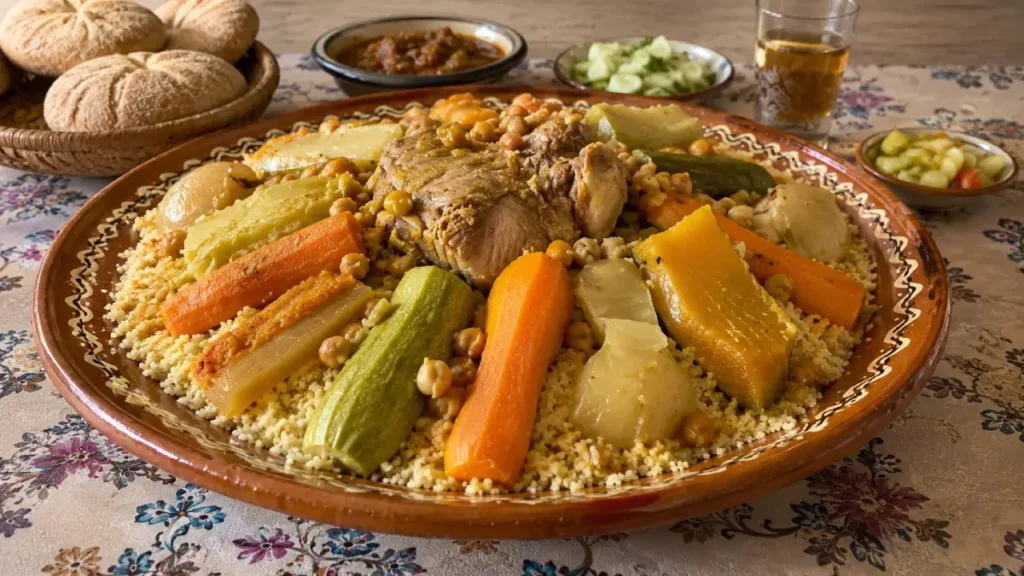
When travelers ask me what do Moroccans eat for lunch on Fridays, couscous is always one of the first answers. In many Moroccan families, Friday is couscous day. After Friday prayer, families often gather around one large plate of couscous with vegetables, chickpeas, onions, pumpkin, carrots, zucchini, turnips, and meat or chicken.
For travelers, couscous may look like a simple dish, but for Moroccans it carries a strong family feeling. It is a dish of gathering. It is often served on a large shared plate, with everyone eating from their side. The vegetables are arranged on top, and the sauce is poured carefully over the couscous.
The most common version is couscous with seven vegetables. Some families prepare it with lamb, beef, or chicken. In some areas, you may find a sweeter version with caramelized onions and raisins. In southern Morocco, the taste can change depending on the family, the region, and the ingredients available.
Couscous is also recognized internationally as an important North African food tradition. UNESCO recognizes the knowledge and practices connected to couscous as part of intangible cultural heritage, which shows how deeply this dish is connected to family life, hospitality, and tradition across the region.
My local advice: if you want to eat couscous in Morocco, try it on a Friday if possible. Many restaurants serve couscous every day for tourists, but Friday couscous feels more natural because this is when many Moroccan families eat it at home.
Tagine: The Everyday Moroccan Lunch
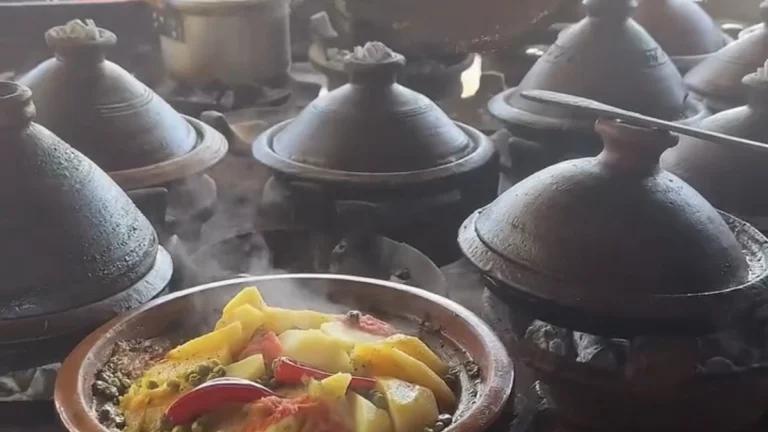
Tagine is one of the most common Moroccan lunch dishes. The name refers both to the meal and to the clay pot with its cone-shaped lid. Meat, chicken, fish, or vegetables cook slowly with spices and a little liquid, creating a sauce that we eat with bread.
For a first lunch, chicken with preserved lemon and olives is a familiar choice. You may also find beef or lamb with prunes, kefta with tomato sauce and eggs, or a vegetable tagine made with seasonal produce. The choices depend on the home or restaurant.
A tagine is usually placed in the middle of the table. Take food from the part nearest you, using bread to pick up vegetables and sauce. Unlike couscous, tagine is an everyday option and does not have one particular day of the week.
My local advice: ask which tagines are ready before ordering, especially in a small lunch spot. A dish that has been cooking slowly will be different from something prepared quickly for a tourist menu.
Moroccan Salads: The Start of Many Lunches
Moroccan salads are often served before lunch or alongside the main dish. But when we say “salad” in Morocco, we do not always mean raw lettuce or a cold green salad. Many Moroccan salads are cooked vegetable dishes served at room temperature or slightly warm.
Common Moroccan salads include zaalouk, made with eggplant and tomato; taktouka, made with peppers and tomatoes; carrot salad with cumin; beetroot salad; cucumber and tomato salad; olives; and cooked greens. These small dishes bring color, flavor, and balance to the table.
In many restaurants, Moroccan salads are served as a starter before tagine or couscous. In family homes, they depend on what is available, what is in season, and how much time the cook has. Sometimes the lunch table has many small plates. Other times, it is one main dish and bread.
For travelers, Moroccan salads are a beautiful way to understand the lighter side of Moroccan cooking. If you are careful with raw food while traveling, cooked Moroccan salads are often easier to enjoy than raw salads. Choose places that look clean, fresh, and busy.
Bread: The Quiet Hero of Moroccan Lunch
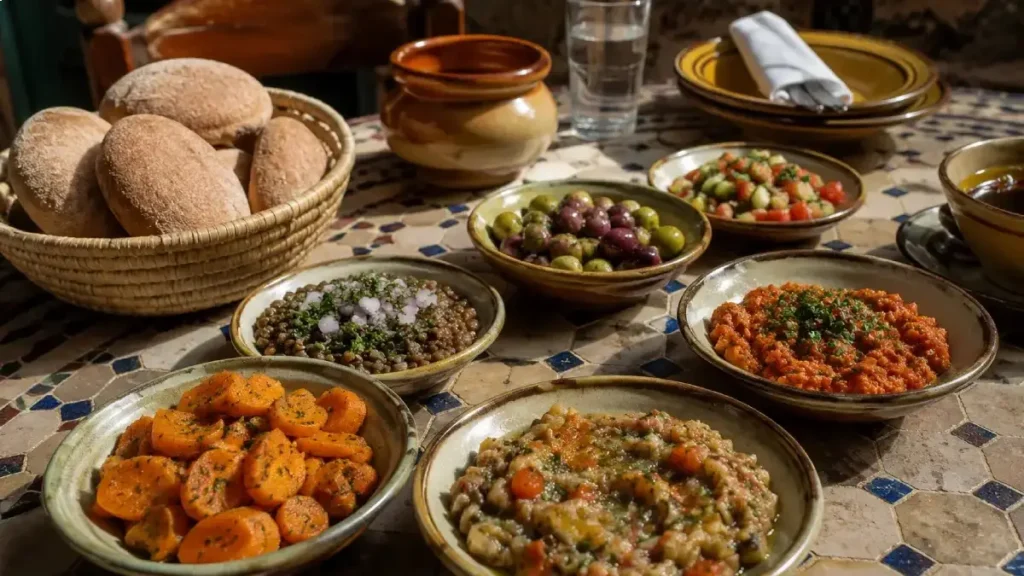
Bread is part of almost every Moroccan lunch. Even when the main dish is couscous, bread may still appear on the table. With tagine, lentils, beans, salads, grilled meat, and fish, bread is essential.
In Morocco, bread is more than something you eat on the side. It is part of how we eat. It helps us share food from the same plate. It helps us enjoy sauce. It brings the table together.
In traditional neighborhoods, bread often comes from local bakeries or communal ovens. In villages, it may be homemade. When the bread is fresh and the tagine sauce is rich, you understand why Moroccans respect bread so much.
Many travelers arrive thinking Moroccan food is mainly tagine and couscous, but after a few days they understand that bread is the quiet hero of Moroccan meals.
Lentils, Beans, and Simple Local Lunches
Not every Moroccan lunch is a famous dish. Many everyday lunches are simple, affordable, and based on legumes. Lentils, white beans, chickpeas, and Foul beans are common in Moroccan homes and local restaurants.
Lentils are usually cooked with tomato, onion, garlic, olive oil, spices, and herbs. White beans, called loubia, are warm and filling, especially in colder months. These dishes are eaten with bread and sometimes served with olives or a small salad.
This is the kind of food many travelers miss because they are focused only on famous dishes. But a simple bowl of lentils in a local restaurant can feel more real than a tourist menu. It is everyday Moroccan food: warm, humble, filling, and full of flavor.
If you want to understand Morocco beyond the big famous dishes, these simple lunches matter. They show how Moroccans really eat on normal days.
Grilled Meat and Local Lunch Spots
Grilled meat is another common lunch option, especially in cities and local restaurants. You may find brochettes, kefta, chicken skewers, lamb, or mixed grill served with bread, salad, olives, and sometimes fries.
In Marrakech, many locals go to simple grill places for lunch. These places may not look luxurious, but the food can be fresh and full of flavor. The key is choosing a busy place where the meat is cooked fresh and not sitting for too long.
For travelers, grilled meat can be a good lunch because it is easy to understand and usually cooked in front of you. But choose carefully. Fresh, hot, busy, and clean are the words to remember.
If you are in Marrakech and feel unsure where to eat, a good local food experience can help you understand the difference between a real local place and a tourist trap. I explain this more in my guide to the Best Food Tours in Marrakech.
Fish and Seafood Lunches on the Coast
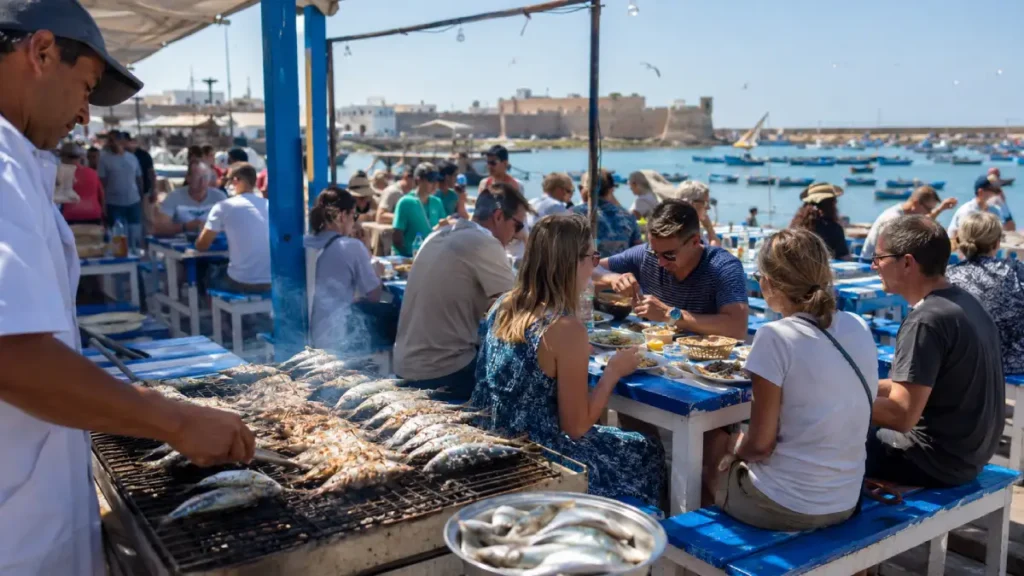
In coastal cities like Essaouira, Agadir, Safi, Tangier, and Casablanca, lunch often includes fish or seafood. Grilled sardines, fried fish, calamari, shrimp, and fish tagine are common depending on the place and season.
Essaouira is one of my favorite places for travelers to experience a seafood lunch. The feeling is different from Marrakech. You have the Atlantic air, the port, grilled fish, bread, salads, and a slower rhythm.
Seafood is best when it is fresh and simple. You do not need a complicated sauce. Good fish, lemon, cumin, bread, and salad can be enough.
If your Morocco trip includes the coast, do not eat only tagine every day. Try fish. Morocco is not only desert and medina. The Atlantic coast is a big part of the country’s food culture.
Lunch in Marrakech
Lunch in Marrakech can be many things. You can eat a rooftop tagine, a local grill, a simple sandwich, Moroccan salads in a riad, couscous on Friday, or street food near the medina. The city gives travelers many choices, but this is also why people get confused.
My advice in Marrakech is not to choose only by decoration. Some beautiful restaurants are good, but some average places look very stylish because they are made for tourists. At the same time, some simple local places serve excellent food.
For first-time visitors, a good lunch in Marrakech could be chicken tagine with preserved lemon and olives, Moroccan salads, grilled kefta with bread, or couscous if it is Friday. If you are still planning your city days, my Marrakech Travel Guide can help you understand where to stay, what to see, and how to enjoy the city without feeling overwhelmed.
Lunch in Fes
Fes has one of the strongest food traditions in Morocco. Lunch in Fes can feel more old-style and family-based. You may find rich tagines, Moroccan salads, pastilla, couscous, and dishes connected to traditional Fassi cooking.
Fes is a good city for travelers who want to understand Moroccan food with history. The medina is old, the recipes are respected, and many dishes have a refined feeling.
A lunch in a traditional riad in Fes can be beautiful, especially if it includes salads, tagine, bread, and tea in a courtyard setting. Fes is not only a place to eat; it is a place to understand how deep Moroccan food culture can be.
Lunch in the Atlas Mountains
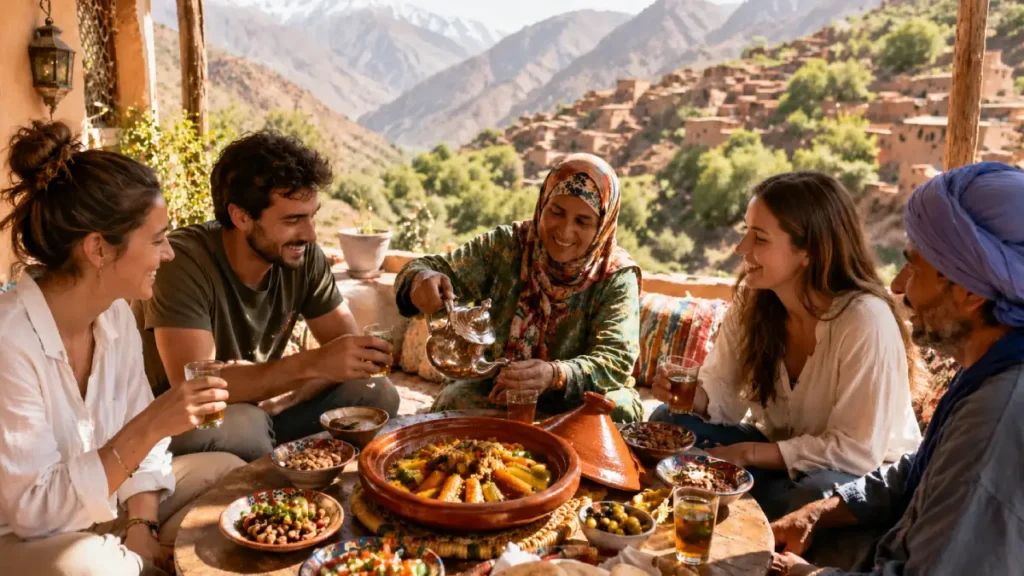
Lunch in the Atlas Mountains is often simple and honest. You may eat tagine, couscous, omelet, lentils, bread, olive oil, or seasonal vegetables. The food is connected to the land and the village.
In Amazigh homes, lunch is also about hospitality. Even if the family has a simple table, they will offer it with generosity. This is something travelers remember. The food may not be decorated like a restaurant plate, but it has heart.
A mountain lunch with fresh bread, olive oil, a vegetable tagine, and mint tea can be one of the best meals in Morocco. It feels close to the land. You taste the mountain air, the village rhythm, and the kindness of the people.
Lunch in the Sahara Desert
In the Sahara, lunch depends on the tour, camp, and route. You may eat tagine, salad, grilled meat, rice, pasta, bread, or dates. In desert areas, meals are often simple but filling because travel days can be long.
If you visit Merzouga or Erg Chigaga, lunch may happen in a guesthouse, a desert camp, or a local restaurant along the route. The experience is part of the journey: long roads, palm valleys, kasbahs, and finally the dunes.
In desert regions, tea is very important. After lunch, tea often becomes a moment to rest, talk, and escape the heat. This is where travelers understand that Moroccan food is not only about ingredients. It is about place.
Lunch in Coastal Morocco
Coastal Morocco has a different lunch rhythm. In Essaouira, Agadir, Tangier, and other coastal towns, fish and seafood are more present. Lunch can be grilled sardines, fried fish, seafood tagine, or simple plates with salad and bread.
The coast feels lighter than the inland cities. A seafood lunch in Essaouira, followed by a walk near the port or beach, feels very different from a heavy lunch in Marrakech.
For travelers who love fish, coastal Morocco is a strong part of the food journey. Morocco changes from the mountains to the desert to the ocean, and lunch is one of the best ways to taste that change.
What Should Travelers Order for Lunch in Morocco?
For travelers wondering what do Moroccans eat for lunch on a first trip, I recommend starting with classic dishes that are easy to enjoy. Chicken tagine with preserved lemon and olives is a good choice. Kefta tagine with eggs is also popular. Couscous is best on Friday, and Moroccan salads are a good starter before the main dish. Lentils or loubia are perfect if you want something local, simple, and filling.
For a light lunch, choose Moroccan salads, an omelet, soup, or grilled vegetables. For a filling lunch, choose tagine, couscous, grilled meat, lentils, or beans. For a coastal lunch, choose grilled fish or seafood. For a family-style lunch, choose couscous or a shared tagine with fresh bread.
Vegetarians can eat well in Morocco, but they should ask clearly because some vegetable dishes may still be cooked with meat broth or served with meat. Vegetable tagine, lentils, beans, salads, omelets, and couscous with vegetables can be good options.
For a full overview of Moroccan dishes across breakfast, lunch, dinner, snacks, and drinks, use my Morocco Food Guide as your main starting point.
Lunch Mistakes Travelers Should Avoid
The first mistake is eating too much too fast. Moroccan lunch can be filling, especially if you start with salads, then eat tagine or couscous, then dessert or tea. Take your time.
The second mistake is choosing restaurants only because they are close to tourist attractions. Some are fine, but many are average. Walk a little, ask locals, or choose places that feel busy with real customers.
The third mistake is ordering couscous any day and expecting it to be amazing. Many restaurants serve couscous every day for tourists, but in Moroccan homes, Friday is the special couscous day.
The fourth mistake is ignoring simple dishes. Lentils, beans, grilled sardines, or a local omelet can be more memorable than an expensive tourist menu.
The fifth mistake is eating the same dish every day. Morocco has many regions and many food traditions. Try to taste the difference between Marrakech, Fes, the Atlas Mountains, the Sahara, and the coast.
Is Moroccan Lunch Spicy?
Moroccan lunch is flavorful, but it is not usually very spicy. This is something many travelers misunderstand before arriving. Moroccan food uses spices like cumin, ginger, turmeric, paprika, saffron, cinnamon, black pepper, and coriander, but the goal is balance, not burning heat.
Of course, you may find spicy harissa or hot sauce on the side in some places. Some families like stronger flavors than others. But most Moroccan dishes are aromatic rather than very hot.
If you do not like spicy food, you can still enjoy Moroccan lunch easily. Tagine, couscous, salads, lentils, beans, grilled fish, and bread are usually comfortable for most travelers.
Is Moroccan Lunch Good for Vegetarians?
Yes, Moroccan lunch can be good for vegetarians, but you need to ask clearly. Morocco has many vegetable dishes, salads, beans, lentils, omelets, bread, olives, and vegetable tagines. The challenge is that some dishes may be cooked with meat, chicken, or broth even if they look vegetarian.
A vegetable tagine can be a good choice. Lentils and loubia are also useful options. Moroccan salads can be excellent, especially cooked salads like zaalouk and taktouka. Couscous with vegetables is possible, but ask if it is cooked without meat.
In tourist-friendly restaurants, vegetarian options are easier to find. In small local places, you may need to explain more clearly. A simple phrase like “no meat, no chicken, no fish” can help.
My Local Advice as a Moroccan Guide
My advice is to treat Moroccan lunch as an experience, not only a meal. Do not rush it every day. At least once, sit somewhere local, order a real dish, eat with bread, and enjoy the vibe of the place.
Growing up in Tinghir, lunch was often the meal that brought people together. Breakfast could be simple, dinner could be light, but lunch had weight. It was the meal of tagine, couscous, bread, vegetables, and family.
When I guide travelers, I notice that many people arrive knowing tagine and couscous, but they leave remembering smaller things too: the sauce at the bottom of the tagine, the taste of warm bread, the smell of cumin, the color of Moroccan salads, or the way tea comes after the meal.
That is Moroccan lunch. It is not only food. It is place, family, geography, and hospitality on one table.
Best Places to Experience Moroccan Lunch
Marrakech is great for variety: tagines, grills, rooftop restaurants, riad lunches, and medina food. Fes is best for traditional cooking and old family recipes. The Atlas Mountains are best for homemade-style meals and Amazigh hospitality. Essaouira is best for seafood. The Sahara is best for the atmosphere and tea after a long desert route.
If your trip includes different regions, try lunch in each place. Do not eat the same tourist tagine every day. Morocco changes from city to city, and lunch is one of the best ways to taste that change.
If you are still building your route, my Morocco Travel Guide can help you connect food experiences with cities, seasons, transport, and the best places to visit.
So, what do Moroccans eat for lunch? They eat tagine, couscous, salads, bread, grilled meat, fish, lentils, beans, vegetables, and many dishes that change by region and season.
But Moroccan lunch is not only about the food on the table. It is about sharing. It is about bread in the middle, sauce at the bottom of the tagine, tea after the meal, and the feeling that food brings people together.
When you visit Morocco, do not treat lunch as a quick stop between attractions. Give it time. Choose well. Taste slowly. A good Moroccan lunch can teach you more about the country than many guidebooks.
FAQs About Moroccan Lunch
What do Moroccans usually eat for lunch?
Moroccans usually eat tagine, couscous, grilled meat, fish, lentils, beans, Moroccan salads, bread, and seasonal vegetables. Lunch is often the main meal of the day.
Is lunch the main meal in Morocco?
Yes, for many Moroccan families, lunch is the main meal. It is often bigger and more important than breakfast or dinner, especially when the family eats together.
Do Moroccans eat couscous every day?
No, Moroccans do not usually eat couscous every day. Many families eat couscous on Friday, especially after Friday prayer.
What is the best Moroccan lunch for travelers?
A good first Moroccan lunch is chicken tagine with preserved lemon and olives, Moroccan salads, fresh bread, and mint tea. On Friday, couscous is a great choice.
What do Moroccans drink with lunch?
Many Moroccans drink water, soda, or mint tea after the meal. Tea is especially common when people want to sit, talk, and relax after lunch.
Is Moroccan lunch spicy?
Moroccan lunch is flavorful, but not usually very spicy. Moroccan cooking uses spices for depth and aroma, not only heat.
Can vegetarians eat lunch in Morocco?
Yes, vegetarians can eat well in Morocco with vegetable tagine, lentils, beans, Moroccan salads, omelets, and vegetable couscous. It is still good to ask if the dish is cooked with meat or broth.
What time do Moroccans eat lunch?
Many Moroccans eat lunch between 12:30 and 3:00 in the afternoon. Timing depends on work, school, prayer, and family habits.