Morocco Travel Scams & Tourist Traps
Practical Advice to Avoid Costly Mistakes (By a Local Guide)
Morocco is not a country where tourists are constantly at risk, but it is a country where misunderstandings happen easily if you don’t understand how everyday interactions work. When travelers talk about “scams” here, they’re rarely talking about serious crime. They’re usually talking about moments that felt uncomfortable, confusing, or more expensive than expected once the situation was over.
Morocco travel scams are usually not about danger, but about misunderstanding how everyday interactions work in busy tourist areas.These situations tend to happen in busy tourist areas, not because Morocco is unsafe, but because tourism is deeply woven into daily life. When you understand how these situations begin and why they work, you stop feeling unsure and start moving with confidence.
If this is your first time planning a trip, it helps to understand the full travel context first. I recommend starting with the Morocco Travel Guide, which covers planning basics, timing, money, and expectations in detail.
How Tourist Traps Actually Begin (And Why They Work)
Most tourist traps don’t start with pressure. They start with speed. Someone approaches quickly, speaks confidently, and offers help or information before you’ve even asked a question. When travelers already feel slightly lost or overwhelmed, confidence can easily be mistaken for authority.
Once the interaction is moving, people hesitate to stop it because they don’t want to appear rude. That hesitation is where most problems begin. The most effective habit is to slow things down early. Nothing should move forward unless you clearly asked for it and understand what’s happening.
When You’re Told a Place Is Closed or Inaccessible
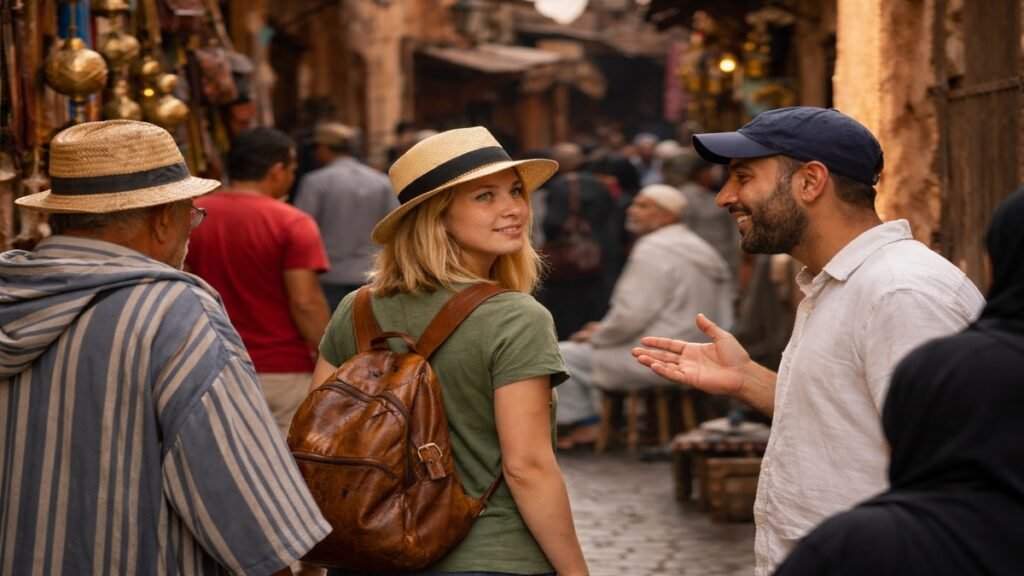
Near historic sites and medina entrances, travelers are sometimes told that a place they want to visit is closed, under maintenance, or only accessible with assistance. The message is usually delivered casually, as if it’s common knowledge.
What often follows is a suggestion to take a different route or visit another place, which leads to a shop or café where spending money becomes socially expected. Nothing aggressive happens, but the situation feels uncomfortable afterward.
The practical approach is simple: verify information independently. If a site is closed, there will usually be official signage or staff at the entrance. Avoid changing your plans based only on unsolicited information offered outside.
Help That Turns Into an Expected Service
In busy tourist areas, someone may begin walking with you, pointing things out or giving directions you didn’t ask for. At first it feels friendly. After a few minutes, it becomes clear that payment is expected.
Understanding how Morocco travel scams usually begin helps travelers avoid stress without becoming overly cautious.
This works because travelers feel awkward stopping someone once help has already been given. The key moment is always the beginning. A clear refusal early avoids the situation entirely. If you want a guide, it’s better to arrange one intentionally rather than accepting spontaneous help.
For travelers who prefer structured guidance, booking tours through a clear platform with transparent descriptions helps avoid confusion.
👉 Recommended guided experiences
👉 Private & small-group tours
Shopping Situations That Feel Fine at First – Then Questionable Later
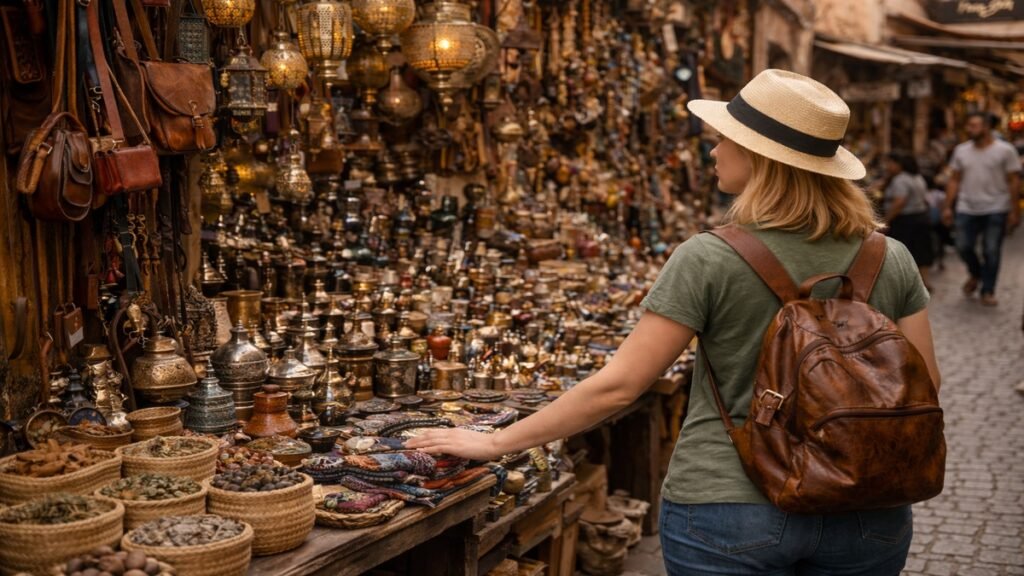
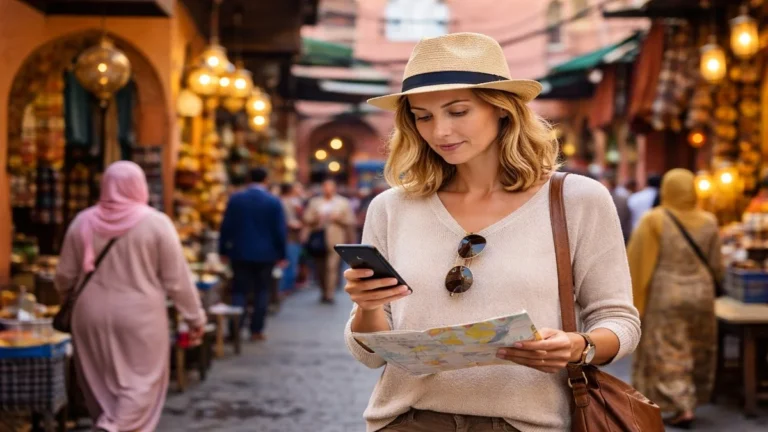
In Moroccan souks, prices are not fixed. Sellers adjust prices based on demand, interest, and experience level. First-time visitors often hear prices far above local norms and assume that’s standard.
The regret usually comes later, after comparison, not during the moment. Shopping becomes stressful when it feels rushed or emotionally pressured.
The best approach is to remove urgency. Ask prices calmly, counter politely, and be willing to leave. If the experience doesn’t feel relaxed, step away and return later. That single habit prevents most shopping regret.
Henna and Photo Situations That Escalate Quickly
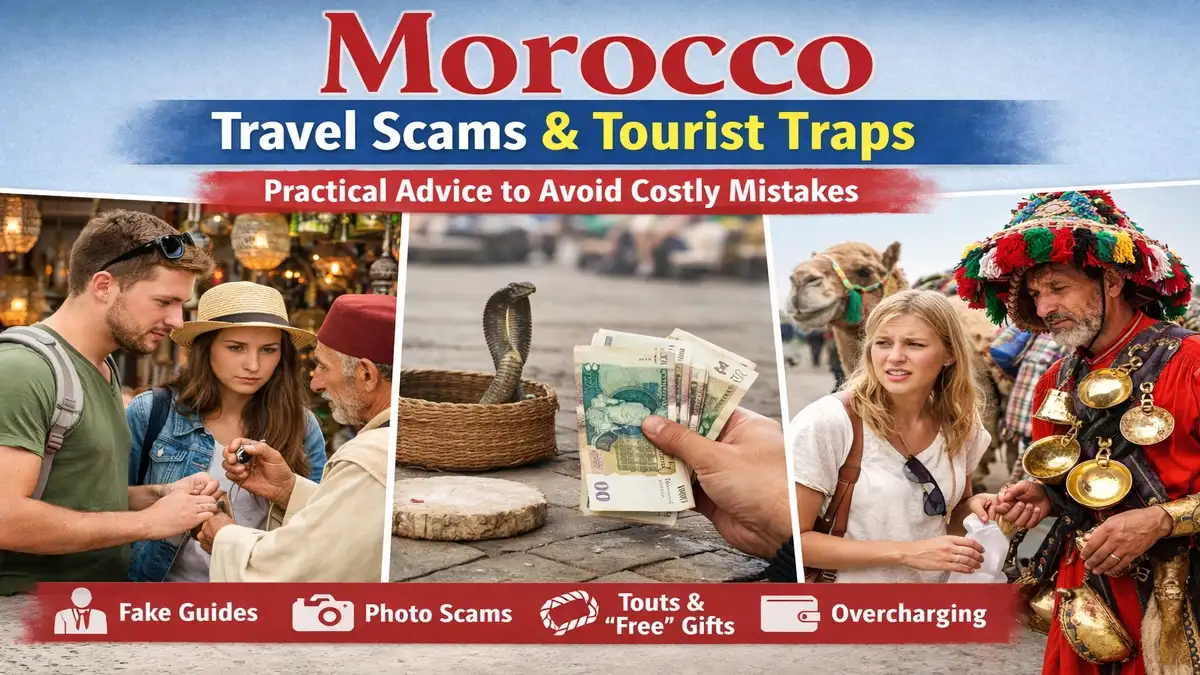
In very busy squares, some experiences begin without clear agreement. A henna artist may start drawing before price is discussed, or an animal may be placed on your shoulder before payment is mentioned.
Once the experience has started, travelers feel pressured to pay more than expected. The solution is always the same: agree on the price before anything begins. If the price isn’t clear, don’t participate.
Taxi Confusion That Slowly Increases Your Costs
Taxi issues are rarely dramatic, but they add up. Some drivers avoid using the meter or quote higher flat prices in tourist areas. Many travelers overpay small amounts multiple times per day simply to avoid awkward conversations.
Confirming the meter or agreeing on the total price before sitting down removes most taxi-related stress. This is explained city by city in the Morocco Transportation Guide, which I highly recommend reading before arrival.
How Last-Minute Decisions Become Expensive Decisions
When travelers don’t plan key logistics early, they often accept overpriced solutions under pressure. Missed connections, late arrivals, or fatigue lead to rushed decisions that quietly break budgets.
Planning long-distance transport and major transitions in advance prevents most of these situations. Your Morocco Itinerary (7 / 10 / 14 Days) is designed to help travelers pace routes realistically and avoid these problems.
Cash and Payment Confusion When You’re Tired
After long days, travelers sometimes get confused during cash transactions. Unfamiliar bills, fast counting, and fatigue create small but frustrating mistakes.
The practical solution is to slow down money exchanges and count cash calmly before walking away. Many travelers also prefer using a travel card with fair exchange rates for ATM withdrawals and payments.
👉 Wise travel card
It’s one of the easiest ways to manage currency exchange without overpaying fees.For full budgeting advice, see Morocco Travel Costs.
The Emotional Trap: Becoming Too Guarded
After one uncomfortable interaction, some travelers assume everyone wants something. That’s not true. Morocco has genuine hospitality, and many interactions are simply friendly.
The balance is awareness without suspicion. Being polite doesn’t mean being obligated, and saying no doesn’t mean being rude.
Practical Habits That Prevent Most Problems
Most uncomfortable situations disappear when travelers slow interactions down, confirm prices early, avoid unsolicited help, and don’t rush decisions. These habits don’t require confrontation just calm clarity.
FAQ: Morocco Travel Scams & Tourist Traps
The questions below cover the most common concerns travelers have about scams and tourist traps in Morocco. These answers are based on real travel situations, not rumors or fear-based advice.
Is Morocco safe for tourists despite scams?
Yes. Morocco is generally safe for tourists, including solo travelers, couples, and families. Most issues visitors describe as “scams” are actually misunderstandings, price confusion, or pressure situations in busy tourist areas. Violent crime against tourists is rare. Awareness and calm decision-making prevent the vast majority of problems.
Are scams in Morocco aggressive or dangerous?
In most cases, no. They are usually verbal, non-confrontational, and based on social pressure rather than threats. Situations may feel uncomfortable, but they rarely escalate if you stay calm, say no clearly, and walk away when needed.
Where do tourist scams happen most often in Morocco?
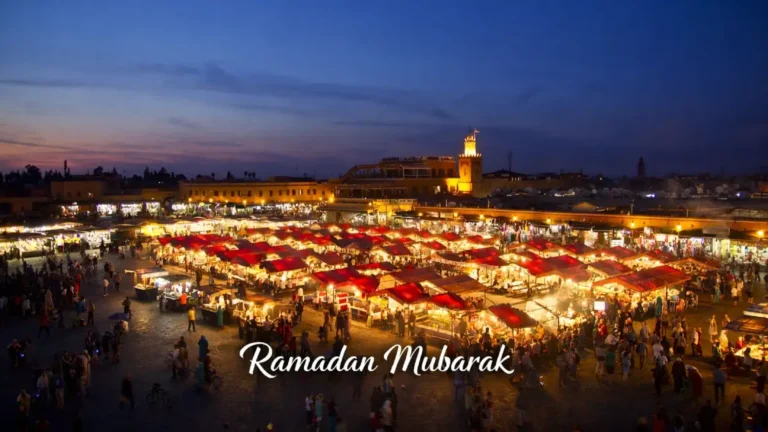
They are most common in busy tourist areas such as old medinas, large public squares, transport hubs, and popular markets. Places like Jemaa el-Fna in Marrakech or crowded souks attract both visitors and people offering services. Outside these areas, issues are much less frequent.
How can I avoid getting scammed in Morocco?
The most effective approach is to slow interactions down. Ask prices before agreeing, confirm taxi fares in advance, avoid unsolicited help, and don’t rush decisions when tired. Most problems disappear when expectations are clear from the beginning.
Are taxis in Morocco a common scam?
Taxis themselves are not a scam, but price confusion is common. Some drivers may avoid using the meter or quote higher prices in tourist areas. Confirming the meter or agreeing on a total price before the ride starts prevents repeated overpayment.
Is bargaining required in Morocco?
Bargaining is normal in traditional markets, but it should feel calm, not stressful. You are not required to bargain aggressively. If a price doesn’t feel right, it’s acceptable to thank the seller and walk away. Fixed-price stores and modern shops usually do not require bargaining.
Are guided tours safer than exploring independently?
Guided tours can reduce confusion, especially in complex historic areas, but they are not required everywhere. The key is clarity. If you book a tour, make sure inclusions, duration, and group size are clearly explained. Independent exploration is safe when done with basic awareness.
Should I avoid talking to people who approach me?
Not necessarily. Many Moroccans are genuinely friendly. The key difference is whether help was requested. Unsolicited assistance that quickly leads to expectations of payment is where problems usually begin. Friendly conversation without pressure is normal.
Is it safe to use ATMs and exchange money in Morocco?
Yes, when using official bank ATMs or licensed exchange offices. Avoid street currency exchange offers. Always count your cash before leaving the ATM or counter, especially at the end of a long day.
Do scams happen outside Marrakech?
They can happen in other tourist cities such as Fes or Chefchaouen, but they are most common in high-traffic areas. Smaller towns and less tourist-focused areas tend to have fewer pressure situations.
Are Morocco travel scams worse than in other countries?
No. Similar confidence tricks exist in many popular destinations around the world. What makes Morocco feel different is the intensity of interaction in medinas and markets. Once travelers adjust their expectations, Morocco often feels easier than expected.
Is Morocco safe for solo female travelers?
Yes, with the same awareness recommended for any destination. Solo female travelers should expect attention in busy areas but can reduce discomfort by dressing modestly, avoiding prolonged engagement with unsolicited help, and confidently saying no when needed.
What is the biggest mistake travelers make regarding scams?
The biggest mistake is waiting too long to set boundaries. Most uncomfortable situations could be avoided by confirming prices early, declining help clearly at the start, and not continuing interactions out of politeness.
Final Thoughts From a Professional Guide
Morocco doesn’t rely on tricking visitors. It tests assumptions and rewards preparation. When travelers understand how interactions work and plan logistics realistically, the country becomes easier, calmer, and far more enjoyable.
Once travelers understand the patterns behind Morocco travel scams, most uncomfortable situations disappear naturally.
For smooth planning, these guides work best together:
- Morocco Travel Guide
- Plan Your Trip to Morocco
- Morocco Transportation Guide
- Morocco Travel Costs
- Morocco Travel Mistakes
- Morocco Itinerary (7 / 10 / 14 Days)
Used together, they remove confusion before it begins.
Some links in this article are affiliate links. If you choose to book through them, I may earn a small commission at no extra cost to you. I only recommend platforms and tools that travelers actually use.