Things to Do in Tangier – A Local Guide’s Perspective
Tangier is one of the most misunderstood cities in Morocco. Many travelers arrive expecting either Europe or Africa, and what they find instead is a city that has always lived between worlds. As a Moroccan tour guide, I like Tangier because it explains Morocco’s openness better than any other city.
Tangier’s importance comes from its location. Sitting at the meeting point of the Mediterranean Sea and the Atlantic Ocean, and facing Europe across the Strait of Gibraltar, Tangier has always been a city of movement, ideas, and encounters. Phoenicians, Romans, Arabs, Europeans, and modern Moroccans have all left their mark here. This layered history is still visible today if you know where to look.
Unlike imperial cities such as Fes or Marrakech, Tangier was never closed in on itself. It developed through diplomacy, trade, and international influence. In the 20th century, Tangier even had a special international status, which shaped its architecture, culture, and mindset. When I guide visitors here, I always explain that Tangier feels different because it has always looked outward.
What makes Tangier special is not just its sites, but its atmosphere. You can walk through an old medina overlooking the sea, visit historic kasbah viewpoints, sit in cafés once frequented by writers and artists, and then step into modern neighborhoods that show how the city continues to evolve.
In this Things to Do in Tangier, I’m sharing the places and walks I personally recommend when guiding visitors in Tangier. These are not rushed stops or generic attractions, but experiences that help you understand the city’s role in Morocco past and present.
If you’re planning a wider journey across the country, my Morocco Travel Guide explains how Tangier fits into different routes and how to combine it with cities like Rabat, Fes, and Chefchaouen.
The Medina of Tangier – Where the City Still Whispers Its Stories
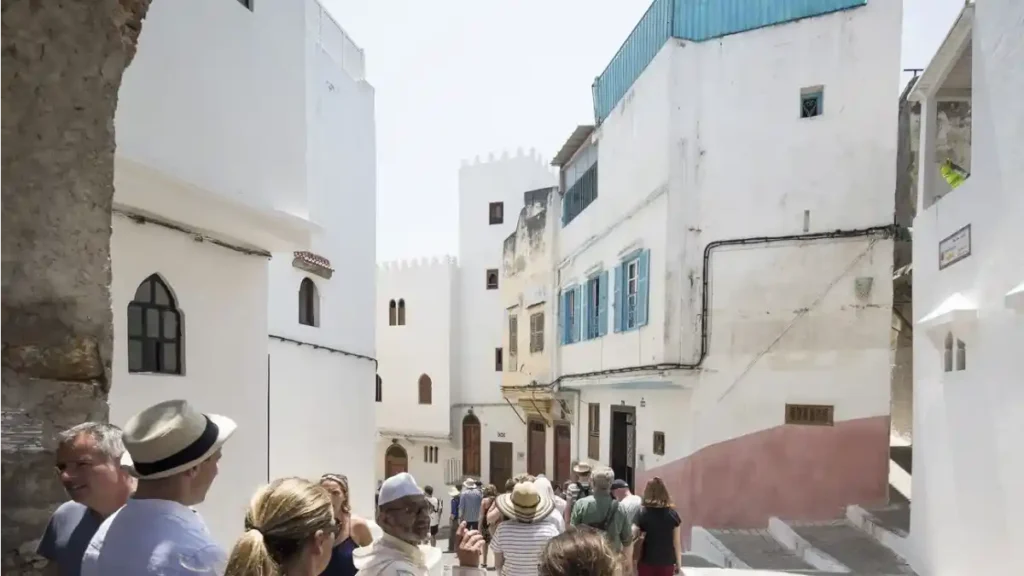
Tangier’s Medina is not the kind of place you rush through with a map in your hand. It’s a living maze, hanging between Africa and Europe, where every narrow alley feels like it has something to tell you. I always say: if you want to understand Tangier, start here not at the port, not at the cafés, but inside these old walls.
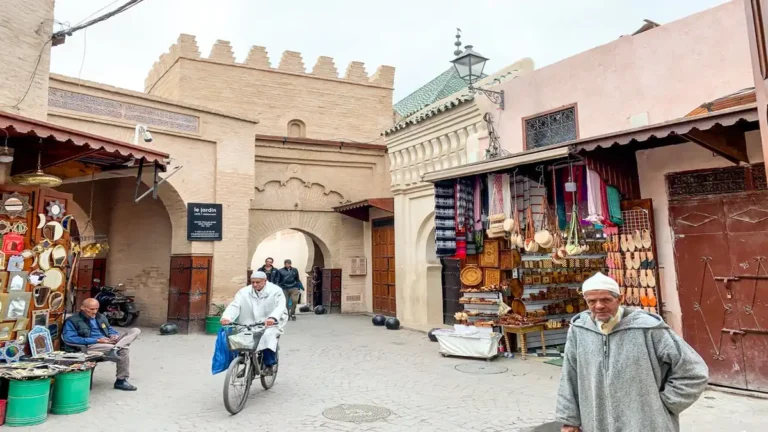
As a local guide, when I walk travelers through the Medina, I don’t just show them streets. I show them how Tangier breathes. You’ll pass small bakeries pulling khobz from wood ovens, old men playing cards in doorways, and shops selling everything from spices to antique radios. This is daily life, not a performance.
🟦 Petit Socco & Grand Socco – The Heartbeat of Old Tangier
Petit Socco is where Tangier’s stories mix together. Writers, spies, merchants, and locals all crossed paths here in the past, and even today you can feel that energy in the cafés and small squares. Walk a little further and you reach Grand Socco, the gateway between the modern city and the Medina busy, noisy, and full of life.
Local tip: Sit for a mint tea in Petit Socco and just watch. Ten minutes here will teach you more about Tangier than an hour of walking.
🟦 Getting Lost Is Part of the Experience
The Medina is confusing and that’s good. Some of the best corners are the ones you don’t plan to find: a hidden terrace, a tiny mosque, a door painted deep blue. Let yourself wander, but keep your phone offline and your senses open.
Practical advice from me:
- Wear good shoes the streets are steep and slippery.
- Keep small cash for tiny shops.
- If someone offers help, a polite “La, shukran” is enough unless you really want guidance.
🟦 Markets, Crafts & Real Souks
You won’t find huge souks like in Marrakech, but Tangier’s Medina has its own charm: leather slippers, brass trays, woven baskets, and old-style tailors still working by hand. Prices are often fair, but bargaining is part of the culture always with a smile.
If you’d like to explore the Medina with a local who knows its hidden corners and stories, you can check guided walking tours of Tangier here it’s the easiest way to experience the old city without missing the best spots.
The Kasbah of Tangier – History Watching Over Two Seas
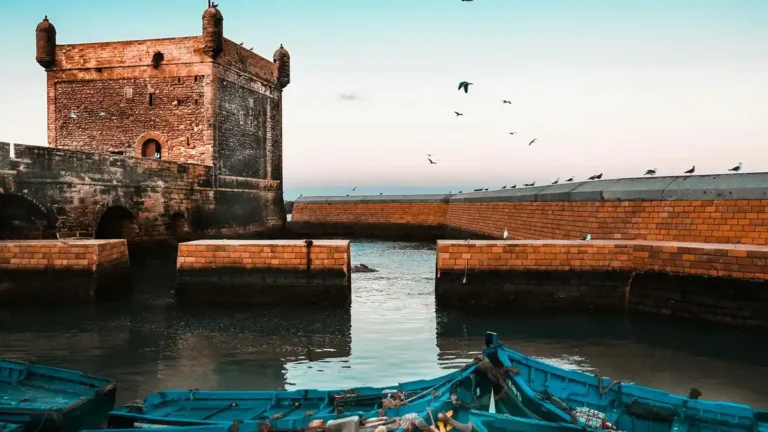
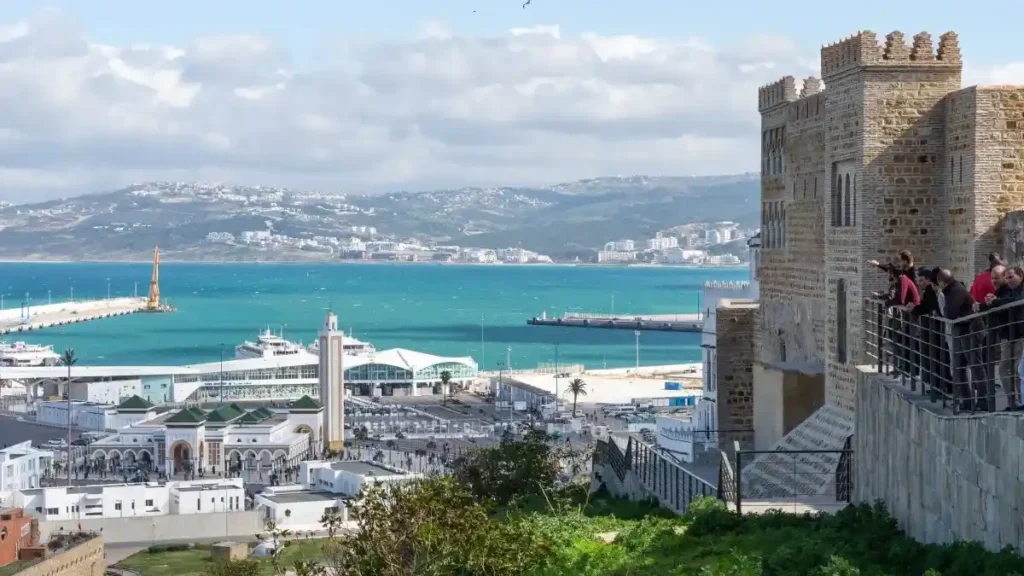
Above the Medina, standing quietly like an old guardian, is the Kasbah of Tangier. This is where the city looks out over both the Mediterranean and the Atlantic, and where you really feel why Tangier has always been so important in Morocco’s story.
When I bring travelers here, I tell them: this is not just a viewpoint this is where power, trade, and cultures met for centuries. Sultans, diplomats, and foreign envoys all passed through these walls. Today, it’s calmer, but the weight of history is still in the air.
🟦 Kasbah Museum (Dar el Makhzen)
Inside the old Sultan’s palace, you’ll find the Kasbah Museum. Even if you’re not a big museum person, this one is worth your time. It helps you understand how Tangier fits into Moroccan history from ancient civilizations to the Alaouite dynasty. You’ll see mosaics, old maps, weapons, and artifacts that show how strategic this city has always been.
Local tip: Go in the morning when it’s quiet. You’ll enjoy the courtyard and gardens almost to yourself.
🟦 The Viewpoint Over the Strait of Gibraltar
Just outside the Kasbah, there’s a viewpoint where you can see Spain on a clear day. Standing here, you really feel that Tangier is a bridge between two worlds. Many travelers tell me this is one of their favorite moments in the city simple, silent, and powerful.
What I always tell my guests: Don’t rush. Sit on the wall for a few minutes. Let the wind and the view do the work.
🟦 Quiet Streets & Local Life
Unlike the busy Medina below, the Kasbah streets are peaceful. White houses, blue doors, cats sleeping in the sun it’s perfect for slow wandering and photos.
Many city tours include the Kasbah and its viewpoints if you prefer to visit with a knowledgeable guide who explains the history as you walk, you can find good Tangier city tours here.
🇺🇸 The American Legation – Where Morocco Meets America
When I guide visitors in Tangier, I always like to stop at the American Legation Museum because it tells a story many people don’t expect. This building represents the first diplomatic relationship between the United States and any country in the world and that country was Morocco.
The American Legation was established in the late 18th century, after Morocco became the first nation to recognize the independence of the United States in 1777. Standing inside this building, I often explain to travelers that Tangier was already an international city at that time, welcoming diplomats, traders, and cultures from different parts of the world.
🟦 More Than a Museum
Today, the Legation is a museum and cultural center. Inside, you’ll find exhibitions about Moroccan–American relations, old photographs of Tangier, historical documents, and art that reflects the city’s international past. It’s not a big museum, but it’s rich in meaning.
What I like most is how this place connects Tangier to global history. It reminds visitors that Tangier was never isolated it was always part of a wider world.
🟦 A Quiet Stop Inside the Medina
The Legation is located inside the Medina, but once you step in, everything becomes calm. The courtyard is peaceful, and the rooms give you a break from the busy streets outside.
Local tip:
If you’re interested in history and diplomacy, this is one of the most rewarding short visits in Tangier. You don’t need more than 30–45 minutes.
Practical local tips
- Visit during late morning or early afternoon
- Combine it with your Medina walk
- Read the main panels they explain the story clearly
- Respect the quiet atmosphere inside
For travelers who enjoy cultural history, some guided walks include the American Legation as part of the Medina tour.
👉 You can check Tangier walking tours that include the American Legation here
Café Hafa & the Atlantic Coast – Tea With a Legendary View
No visit to Tangier is complete without stopping at Café Hafa. I’ve brought many travelers here over the years, and every time, the reaction is the same: silence first… then smiles. This place is not about fancy coffee or luxury. It’s about the view, the breeze, and the feeling of Tangier.
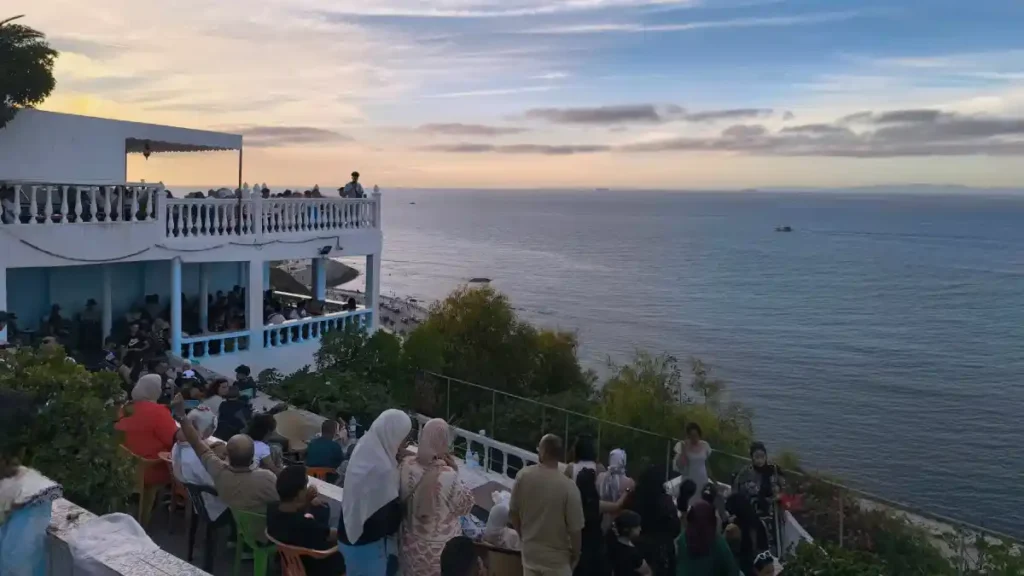
Café Hafa has been here since the 1920s, sitting above the Atlantic, looking out toward the Strait of Gibraltar. Writers, artists, musicians, and locals have all passed through but what never changes is the simple ritual: mint tea and the ocean in front of you.
🟦 Sitting Where Time Slows Down
The café is built in terraces going down the cliff. You choose a seat, order mint tea, and just sit. No rush. No noise. Just waves and wind.
As a local guide, I always tell my guests:
This is the moment to stop walking, stop planning, and just be in Tangier.
🟦 Walk Along the Corniche
After tea, take a walk along the Corniche, the seaside promenade below. It’s great in the late afternoon when locals come out to walk, chat, and watch the sunset. You’ll see fishermen, kids playing, and couples enjoying the view. It shows you Tangier not as a tourist city, but as a place where people live their everyday life by the sea.
🟦 Sunset Over Two Seas
If you time it right, sunset here is magic. The sky turns orange and pink, and the water seems endless. On clear days, you can even see the outline of Spain across the strait.
Local tip: Come about one hour before sunset to get a good seat at Café Hafa.
Many Tangier city tours and walking tours include Café Hafa and the Corniche it’s a great way to enjoy the coast while learning about the city’s stories from a local guide.
Hercules Caves & Cape Spartel – Where Myths Meet the Ocean
When travelers ask me what shows Tangier’s geography best, I always say: Hercules Caves and Cape Spartel. This is where you really feel that Tangier is standing at the edge of two worlds Africa behind you, and the open seas in front of you.
These places are just outside the city, and I usually include them as a short trip when guiding visitors who want to see more than the Medina and Kasbah.
🟦 Hercules Caves – Legend and Sea
The Caves of Hercules are famous for their opening shaped like the map of Africa. According to legend, this is where Hercules rested after completing his labors. Whether you believe the story or not, the caves have a strong atmosphere. The sound of waves hitting the rocks and the light coming through the opening make it a unique stop.
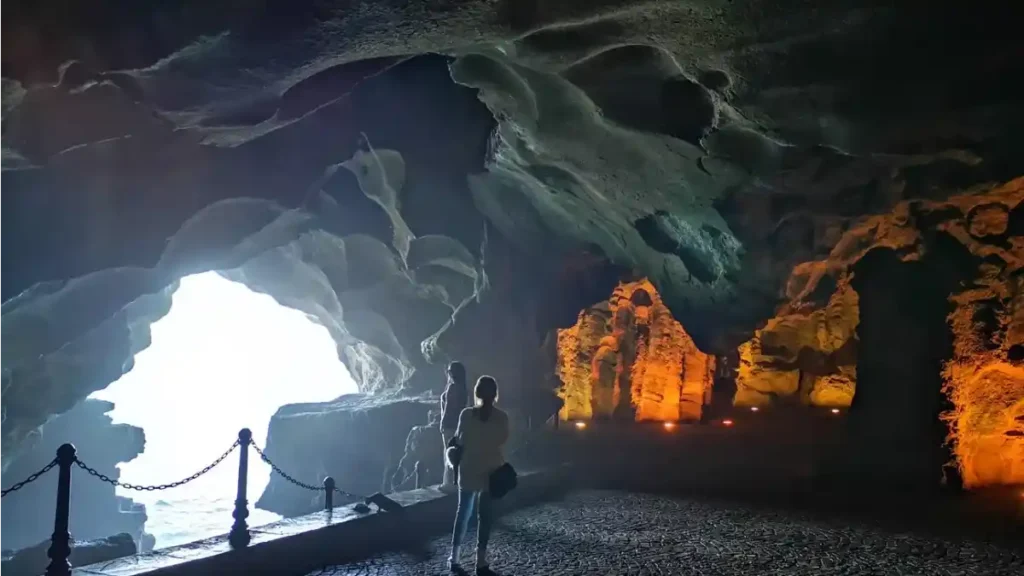
Inside, you’ll find chambers partly natural, partly shaped by people over centuries. It’s cool inside, which is nice on hot days, and the walk is easy.
Local tip:Go earlier in the day if you can it’s quieter, and the light is better for photos.
🟦 Cape Spartel – Two Seas in One View
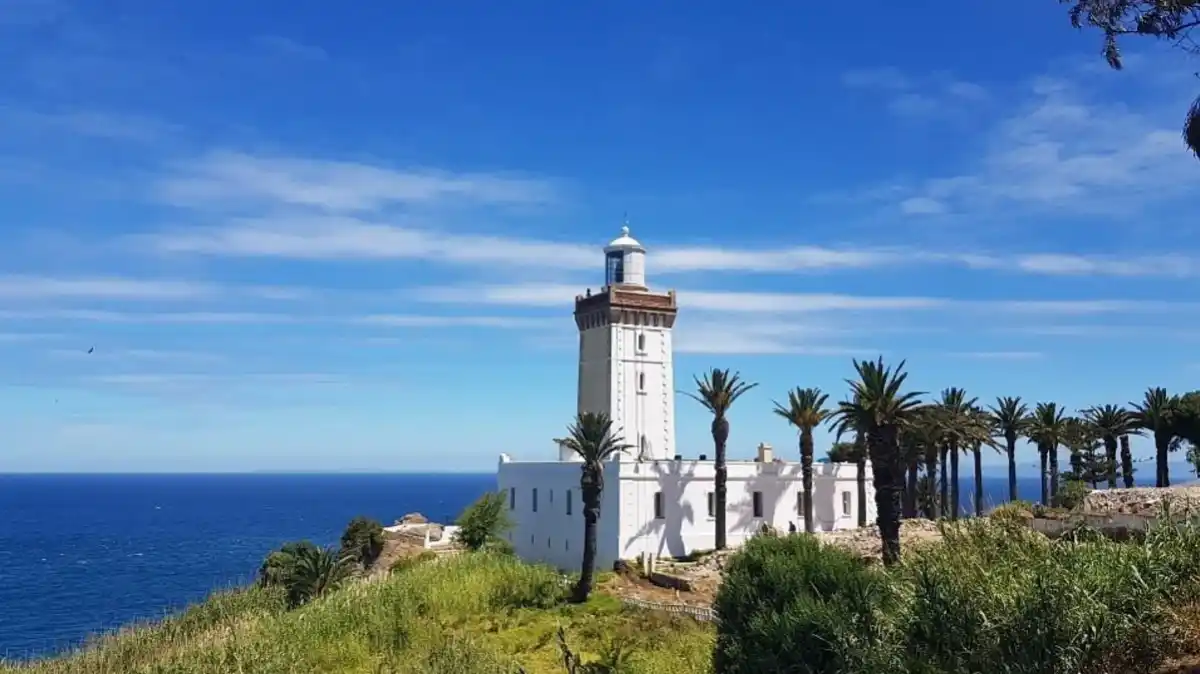
A few minutes from the caves is Cape Spartel, where the Atlantic Ocean meets the Mediterranean Sea. Standing here, you understand why Tangier has always been strategic. The lighthouse marks this point clearly, and the views are wide and open.
This is one of my favorite places to stop with guests, especially if the weather is clear. It gives perspective not just on geography, but on why so many cultures wanted control of Tangier.
What I always explain here:
This is not just a viewpoint. This is history written in geography.
🟦 Easy Half-Day Trip from Tangier
Hercules Caves and Cape Spartel are usually done together. You can reach them by taxi or as part of a guided tour. It takes half a day at most, but adds a lot to your understanding of Tangier beyond the city center.
Practical advice:
- Bring water and sun protection
- Wear good walking shoes
- Combine both spots in one trip
Many visitors choose to visit Hercules Caves and Cape Spartel with a half-day tour from Tangier, which usually includes transport and stops along the coast. You can explore good Tangier coastal tours here.
Many travelers continue from Tangier to the blue city in the Rif Mountains. If that’s in your plan, my Things to Do in Chefchaouen guide shows you what to see and how to experience the city properly.
Modern Tangier – How the City Is Changing
Many travelers still imagine Tangier only as an old port city with cafés and writers, but when I guide people here, I make sure they also see modern Tangier. The city has changed a lot in recent years, and this side of Tangier tells you where Morocco is heading.
The biggest symbol of this change is the new port and marina area. What used to be an industrial port has been transformed into a clean waterfront with walking paths, cafés, and views back toward the Kasbah. When you stand here, you can see old Tangier above you and the modern city around you both in one frame.
🟦 Tangier Marina & Port Area
I like bringing visitors here at the end of the day. The area is open, easy to walk, and gives you space after the narrow streets of the Medina. From here, the Kasbah looks even more impressive sitting on the hill, especially at sunset.
It’s also a good place to explain how Tangier has become a key gateway again, not just for tourism but for trade and investment.
Local tip: Come in the late afternoon and walk toward sunset. The light on the Kasbah is beautiful.
🟦 Malabata & the New Corniche
To the east of the city, Malabata shows another face of Tangier: modern hotels, wide roads, and a long seaside promenade. This is where many locals come in the evening to walk, exercise, or sit by the sea.
It’s not historic, but it’s very real. If you want to see how people in Tangier live today, this area gives you that feeling.
🟦 A City Opening to the World Again
Tangier has always been a city that looks outward, and today that spirit is back. New infrastructure, better roads, fast connections to other cities, and international links are changing daily life. When I explain this to travelers, they often realize Tangier is not just about the past it’s about movement and connection.
What I tell my guests:
To understand Tangier, you need to see both the old streets and the new avenues. That’s where the city’s character comes from.
Local Food in Tangier – Eating Between Two Seas
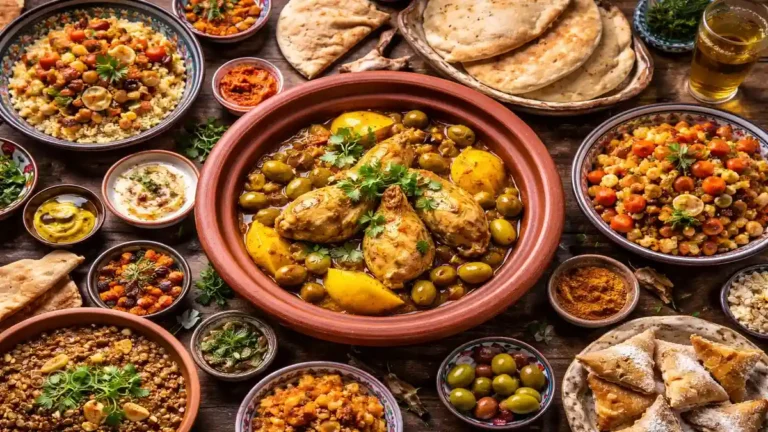
Food in Tangier reflects the city itself: open, mixed, and shaped by the sea. When I guide visitors here, I always explain that Tangier’s cuisine feels a little different from cities like Fes or Marrakech. You still find classic Moroccan dishes, but with strong Mediterranean and coastal influence.
Tangier is a good place to slow down and eat simply. You don’t need fancy restaurants to enjoy the best flavors. The places where locals eat are often the ones that give you the most honest experience.
🟦 Seafood Is the Star
Because Tangier sits between the Atlantic and the Mediterranean, fish and seafood are everywhere. Grilled sardines, calamari, shrimp, and simple fish tagines are common. I usually tell travelers: if you see a modest place full of locals eating fish, that’s a good sign.
Local tip: Ask what’s fresh that day. Many places change their menu based on the catch.
🟦 Classic Moroccan Dishes Done Well
You’ll still find tagines, kefta, bissara, and harira, especially in small neighborhood restaurants and inside the Medina. Tangier’s style is usually lighter less heavy spices, more focus on freshness. If you’re here on a Friday, try couscous for lunch. It’s when many local families eat it, and some restaurants prepare it only on that day.
🟦 Cafés Are Part of Daily Life
Tangier has a long café culture. People sit for coffee or mint tea to talk, read, or simply watch the street. Places around Petit Socco, the Kasbah edges, and along the Corniche are perfect for this. Sitting in a café is not a break from sightseeing it is part of the experience.
What I tell my guests:
Don’t rush your tea. In Tangier, time matters less than the moment.
🟦 Simple Rules I Follow
- Eat where locals are eating
- Avoid menus with too many photos
- Keep small cash for neighborhood places
- Trust busy, simple kitchens
If you enjoy discovering food with context and stories, some walking tours in Tangier focus on local eateries and café culture. You can explore Tangier food and cultural tours here.
Tangier is often part of a longer route through Morocco. For a full overview of itineraries, transport, and how to connect the north with the rest of the country, you can also explore my Morocco Travel Guide, written from a local perspective.
Frequently Asked Questions About Visiting Tangier
Is Tangier worth visiting?
Yes, Tangier is absolutely worth visiting if you want to understand Morocco’s openness to the world. It’s a city of history, sea views, culture, and movement. Tangier feels different from imperial cities like Fes or Marrakech, and that contrast is exactly what makes it special.
How many days do you need in Tangier?
I usually recommend one to two full days. One day is enough to see the Medina, Kasbah, and enjoy the cafés by the sea. Two days allow time for places like Hercules Caves, Cape Spartel, and a slower pace.
Is Tangier safe for tourists?
Yes, Tangier is generally safe for visitors. It’s a busy city, especially around the port and Medina, but normal travel awareness is enough. Like in any large city, keep an eye on your belongings and avoid quiet streets late at night.
What is the best time to visit Tangier?
The best time to visit is spring (March to May) and autumn (September to November). The weather is pleasant, and the city is comfortable for walking. Summer is nice by the sea but can be humid, while winter is mild but sometimes windy.
Do you need a guide in Tangier?
You don’t need a guide to walk around Tangier, but having one adds real value in places like the Medina, Kasbah, and historical sites. Tangier has many layers, and explanation helps you understand why the city feels so unique.
Can Tangier be combined with Chefchaouen or Tetouan?
Yes, very easily. Tangier connects well with Chefchaouen and Tetouan, both of which make great day trips or overnight stops. Many travelers start or end their northern Morocco route in Tangier.
Is Tangier more European or Moroccan?
Tangier is fully Moroccan, but with strong international influence. That’s its identity. You’ll feel Moroccan culture everywhere, but also a long history of European and global connections that shaped the city’s mindset and architecture.
Final Thoughts – Tangier Through a Local’s Eyes
Things to do in Tangier are not just about ticking off sights they’re about understanding a city that has always lived between worlds. From the narrow streets of the Medina and the Kasbah above the sea, to cafés facing the Atlantic and modern waterfront walks, Tangier shows you a Morocco that is open, layered, and constantly moving.
As a Moroccan tour guide, I always tell travelers that Tangier is best experienced slowly. Walk more than you plan. Sit more than you rush. Let the city speak through its views, its people, and its rhythm. If you do, Tangier won’t just be a stop on your trip it will become one of the places you remember most.
Some links in this post are affiliate links. This means that if you click on a link and make a booking or purchase, I may earn a small commission at no extra cost to you. I only recommend tours and experiences that match the way I guide visitors in Tangier and that genuinely add value to your trip