Morocco Transportation Guide: How to Get Around Morocco the Smart Way
Morocco transportation is the part of a trip that quietly controls everything from how tired you feel to how much time and money you end up wasting or saving.. It affects how tired you feel, how much you enjoy each place, and how much money you end up wasting fixing small mistakes. Most travelers focus on hotels and activities first, but in reality, transportation is what decides whether the trip feels smooth or exhausting.
I’m Kamal, a licensed local guide based in Marrakech. I organize routes across Morocco every week for couples, families, solo travelers, and small groups. This guide is written the same way I explain transportation to my own clients before they arrive. Nothing here is copied from other blogs. This is how transport actually works on the ground, with real prices, real distances, and realistic expectations.
If you are still at the early planning stage, read Plan Your Trip to Morocco first. Transport decisions only make sense once your route is clear.
For first-time visitors, understanding Morocco transportation early makes the entire trip smoother, cheaper, and far less stressful.
Table of Contents
How Morocco Transportation Really Works on the Ground
Morocco looks small on a map, but travel takes longer than people expect. Mountains slow roads, medinas are built for walking, and not every city connects the same way. One of the biggest mistakes first-time visitors make is trying to use one transport style for the entire trip, usually the cheapest one.
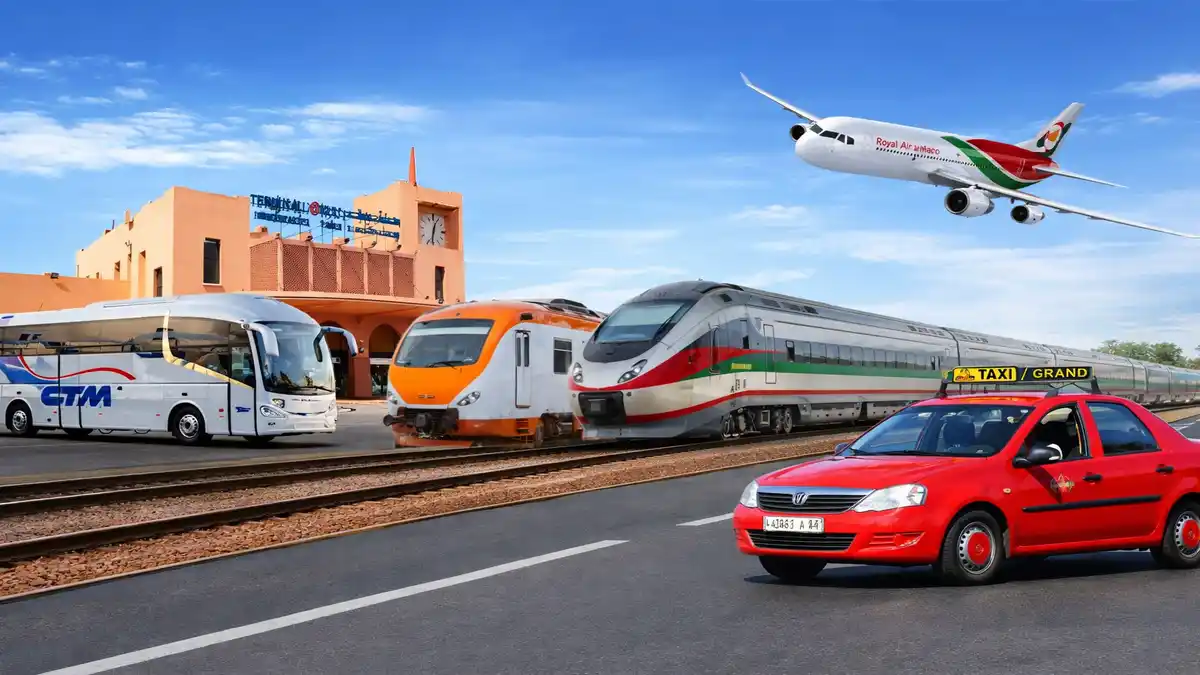
In reality, Morocco works best when you mix transport types. Trains are excellent between major cities but useless elsewhere. Buses can be very good or very tiring depending on the company. Taxis are perfect for short distances but not for planning routes. Private drivers are not about luxury; they are about time, energy, and flow. Domestic flights exist, but they rarely improve the experience.
This is exactly why transport planning should come after understanding the country as a whole something I break down step by step in the Morocco Travel Guide.
Once you understand this, transportation becomes logical instead of stressful.
Trains in Morocco: The Easiest Way Between Major Cities
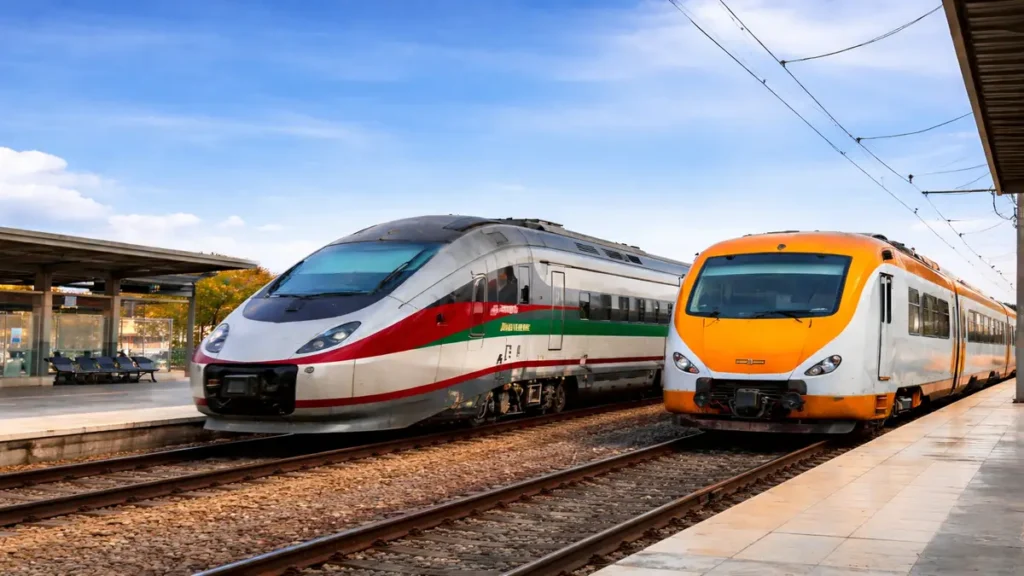
Train travel is one of Morocco’s strongest transport options and one that many travelers underestimate. Between major cities, trains are clean, air-conditioned, reliable, and affordable. They remove a lot of mental load from travel days.
The main train routes connect Casablanca with Marrakech, Fes, Rabat, and Tangier. In the north, the high-speed train has made travel between Tangier, Rabat, and Casablanca much faster and more realistic for visitors.
In real life, second-class train tickets usually cost between 50 and 120 MAD (€5–12) depending on distance. First class is typically 80 to 180 MAD (€8–18). For longer trips or if you are traveling with luggage, first class is often worth the small extra cost. Trains save energy and are far less tiring than long road journeys.
If you like to plan transport in advance, especially during busy seasons, you can check train schedules and prices using trusted booking platforms like Omio or 12Go. These platforms are useful for comparing routes, travel time, and seat classes before you arrive in Morocco.
Trains fit naturally into a well-paced Morocco Itinerary (7 / 10 / 14 Days) and help keep daily transport costs predictable.
Buses in Morocco: Where Choosing the Right Company Matters
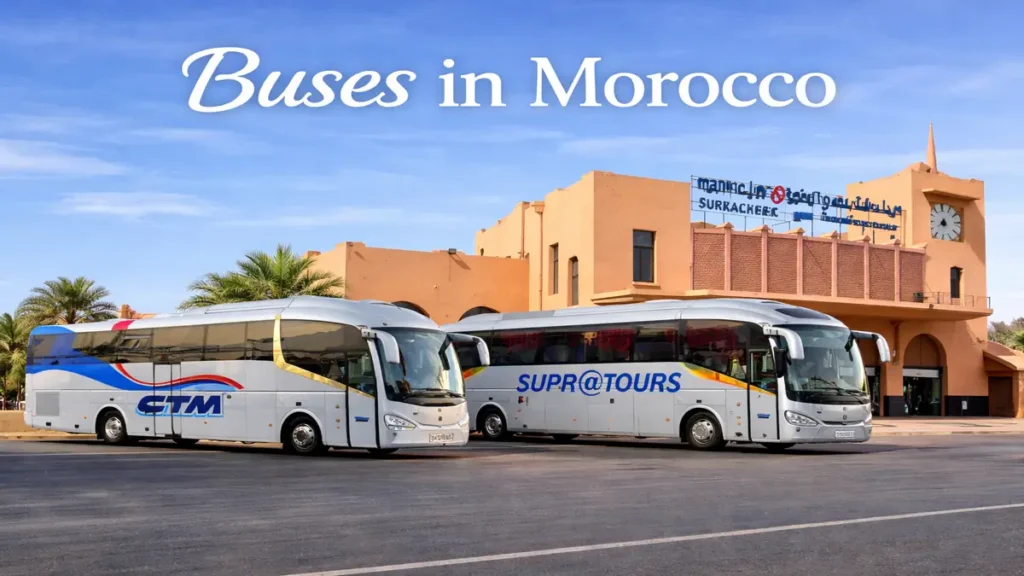
Buses are essential in Morocco because trains do not reach many beautiful destinations, especially coastal towns and mountain areas. This is also where travelers often make mistakes by assuming all buses are the same.
They are not.
The two companies I consistently recommend are CTM and Supratours. These companies operate with fixed schedules, assigned seating, air-conditioning, and proper luggage handling. They are designed for long-distance travel, not improvisation.
On popular routes like Marrakech to Essaouira, travelers usually pay 80 to 120 MAD (€8–12). Longer routes such as Fes to Chefchaouen typically cost 100 to 150 MAD (€10–15). These prices include luggage and a reserved seat, which makes a big difference on busy days.
Cheaper local buses exist and are widely used by locals, but they are slower, more crowded, and unpredictable. The money saved is usually small compared to the loss of comfort and time. For visitors moving city to city with limited days, CTM and Supratours are the smart choice.
For long-distance bus travel, many travelers prefer to check CTM and Supratours routes in advance so they know departure times and availability before reaching the station. Platforms like Omio and 12Go often show these options clearly and help avoid last-minute confusion.
Taxis in Morocco: Affordable but Easy to Misunderstand
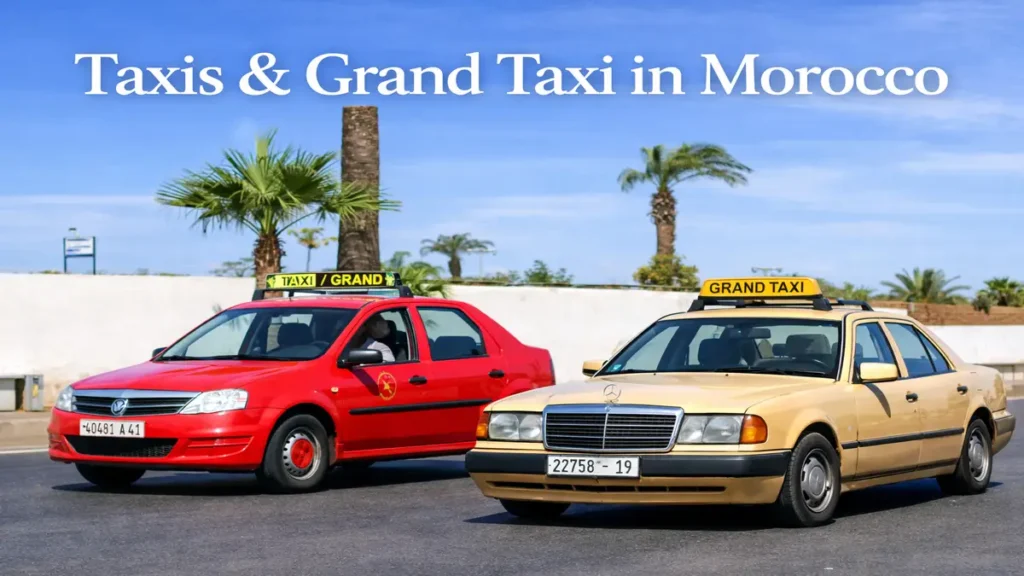
Taxis are everywhere in Morocco and are part of daily life, but tourists often misuse them simply because they expect them to work the same way as in other countries.
Inside cities, small taxis are used for short distances. With the meter, a normal ride usually costs 7 to 20 MAD (€0.70–2). In tourist areas, drivers may suggest a flat rate of 20 to 30 MAD (€2–3) for short trips. This is normal, but the price should always be agreed on before the ride starts.
Longer rides across a city may reach 40 to 60 MAD (€4–6). Anything much higher usually means the price was not discussed clearly. Taxis are excellent for daily movement but should not be used to plan longer routes.
In cities like Marrakech, understanding taxis avoids daily frustration. This is why taxi behavior is explained in detail in the Marrakech Travel Guide, where visitors most often overpay without realizing it.
Getting to the Sahara: Transport Is Part of the Experience
The Sahara is one of Morocco’s most powerful experiences, and it is also where transport decisions matter most. Distances are long, roads are slow, and comfort matters.
Group desert tours usually cost €80 to €120 per person per day, depending on the route and accommodation. These tours are affordable but involve long driving days and fixed pacing. They work well for travelers on tight budgets.
If you prefer booking tours online in advance, these platforms usually offer the clearest descriptions and customer reviews. Always read what’s included carefully before booking.
- Marrakech guided walking tour – GetYourGuide
- Atlas Mountains day trip – GetYourGuide or Viator
- Agafay desert sunset & dinner – GetYourGuide
- Sahara desert tour (Merzouga or Zagora) – Viator
Private desert transport changes the experience completely. Expect €180 to €300 per day for private transport, depending on distance and terrain. Desert camps vary widely. Standard camps usually cost €60 to €100 per night, while luxury camps range from €150 to €300+ per night depending on comfort and season.
For private drivers and full itineraries, quality varies a lot. I always recommend choosing transport based on clear routes, realistic timing, and transparent pricing not just the cheapest offer online.
Very cheap desert offers almost always cut corners. Long uncomfortable drives, rushed stops, and camps that do not match the photos are common complaints. A fair-priced option with clear inclusions nearly always leads to a better experience. Desert routes should always be planned as part of a full Morocco Itinerary (7 / 10 / 14 Days), not as an afterthought.
Domestic Flights in Morocco: Useful Only in Specific Situations
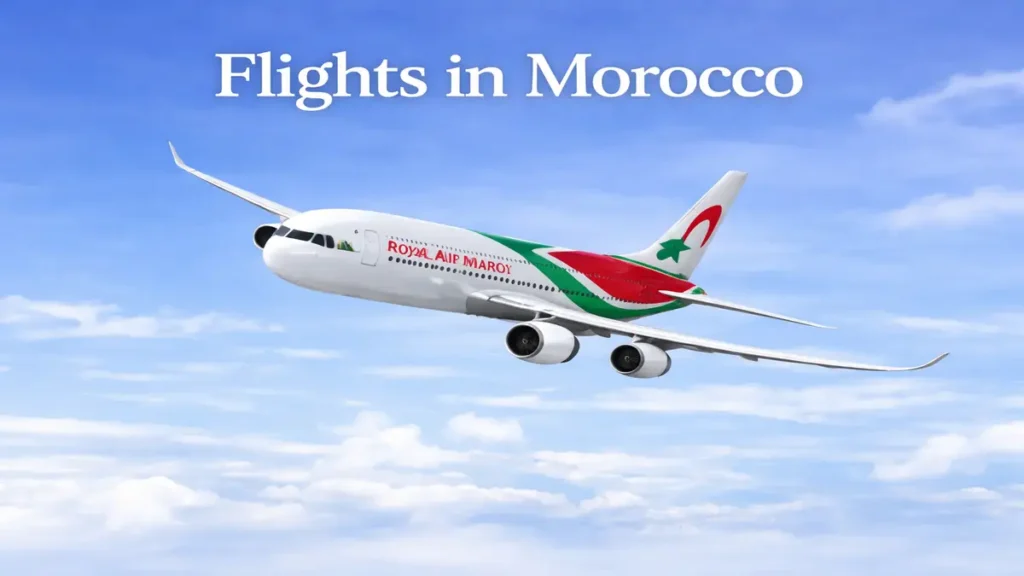
Domestic flights in Morocco usually cost between €40 and €120 when booked in advance. While this sounds convenient, flights rarely save time once airport transfers and waiting are considered.
Flights make sense only when time is extremely limited or when connecting distant regions quickly. Choosing your arrival and departure airports early is important, which is why this is explained in Travel Routes (Flights to Morocco) before booking hotels.
For travelers comparing domestic flight options or international arrivals, platforms like Aviasales Skyscanner or Google Flights help check prices quickly and choose the best arrival city before booking accommodation.
How a Local Thinks About Transport
When I plan transport, I do not ask what is cheapest. I ask what makes the journey feel natural. Major cities flow best by train. Coastal and mountain routes work better by CTM or Supratours. Medinas are explored on foot, supported by taxis. Full itineraries feel calmer with a private driver. Desert travel rewards patience and comfort.
Mixing transport styles is not a weakness. It is the smartest way to travel Morocco.
Common Transportation Mistakes Travelers Make
The most common mistake is trying to see too many cities too fast. This leads to fatigue, rushed days, and extra costs fixing poor decisions. Other mistakes include underestimating driving times, choosing transport based only on price, and booking tours before understanding routes.
Good transport planning always comes before hotel bookings. That is why Plan Your Trip to Morocco should be read first.
For a complete overview of Morocco beyond transportation including destinations, seasons, costs, and planning mistakes visit the Morocco Travel Guide before finalizing your itinerary.
FAQ: Transportation in Morocco (Real Answers From a Local Guide)
How do tourists usually get around Morocco?
Most travelers use a mix of transportation. Trains work best between major cities like Casablanca, Marrakech, Fes, and Tangier. Buses such as CTM or Supratours are used where trains don’t reach. Inside cities, people walk and use taxis. For full itineraries or desert routes, many travelers choose a private driver to keep the trip smooth.
Is public transportation in Morocco safe?
Yes. Trains and long-distance buses are generally safe and widely used by locals and travelers. Like anywhere, you should watch your belongings in busy stations, but serious issues are rare. The biggest challenge is usually comfort or timing, not safety.
Is it better to travel Morocco by train or bus?
When trains are available, they are usually the better option because they are faster and more comfortable. Buses are useful for destinations without train stations, but only if you choose reliable companies like CTM or Supratours. The decision depends on the route, not just the price.
How much do taxis cost in Morocco?
Short taxi rides inside cities are inexpensive. With the meter, most rides cost between 7 and 20 MAD (€0.70–2). In tourist areas, drivers may suggest a fixed price of around 20–30 MAD (€2–3) for short distances. The key is agreeing on the price before the ride starts.
Is hiring a private driver in Morocco worth it?
For many travelers, yes. A private driver is especially worth it for families, couples, and multi-city itineraries. While the daily cost is higher, private transport saves time, reduces stress, and often prevents expensive mistakes. For desert routes, it can completely change the experience.
What is the best way to get to the Sahara Desert?
There is no single “best” way it depends on your budget and comfort level. Group tours are cheaper but involve long driving days. Private transport costs more but offers flexibility and a more relaxed pace. The Sahara experience is heavily influenced by how you get there, not just where you sleep.
Do I need to book transportation in advance?
For trains and long-distance buses during busy seasons, booking in advance is a good idea. Taxis usually don’t need advance booking. For private drivers and desert routes, planning ahead is strongly recommended to secure good vehicles and realistic itineraries.
Are domestic flights useful for traveling within Morocco?
Sometimes, but not often. Domestic flights can help if you are short on time or need to jump quickly between distant regions. However, once airport transfers and waiting time are included, flights rarely save much time compared to trains or private transport.
What is the biggest transportation mistake travelers make in Morocco?
The biggest mistake is trying to see too many places too quickly. This leads to long travel days, fatigue, and extra costs fixing rushed decisions. Morocco rewards slower, well-planned routes much more than aggressive itineraries.
Can I pay for transportation with a card in Morocco?
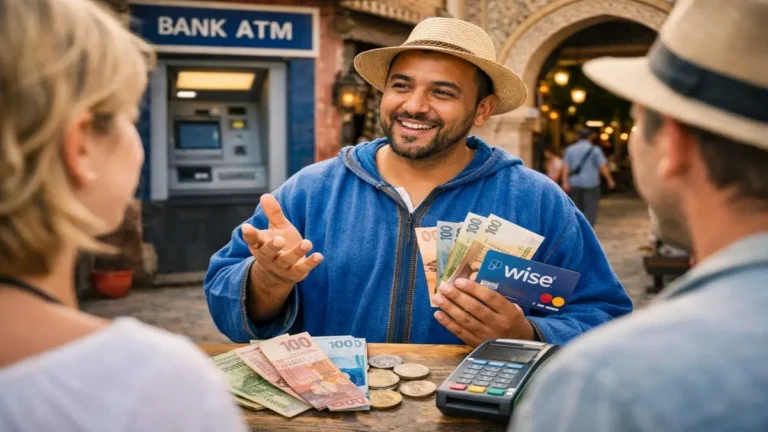
Cards are accepted for trains, some buses, and many tour bookings, but cash is still important for taxis and smaller payments. Many travelers use a Wise card to withdraw cash and manage expenses easily while moving between cities.
Final Advice From a Moroccan Guide
Morocco is not difficult to travel. It simply rewards realistic choices. When transport makes sense, everything improves: sleep, mood, budget, and memories.
When planned correctly, Morocco transportation stops being a challenge and becomes one of the easiest parts of traveling through the country.
Some links in this guide are affiliate links, which means I may earn a small commission at no extra cost to you. I only recommend services and platforms that travelers I work with actually use and trust. These links help support the time and effort that goes into creating detailed, up-to-date travel guides.