14 Days in Morocco Itinerary: A Complete Two-Week Route
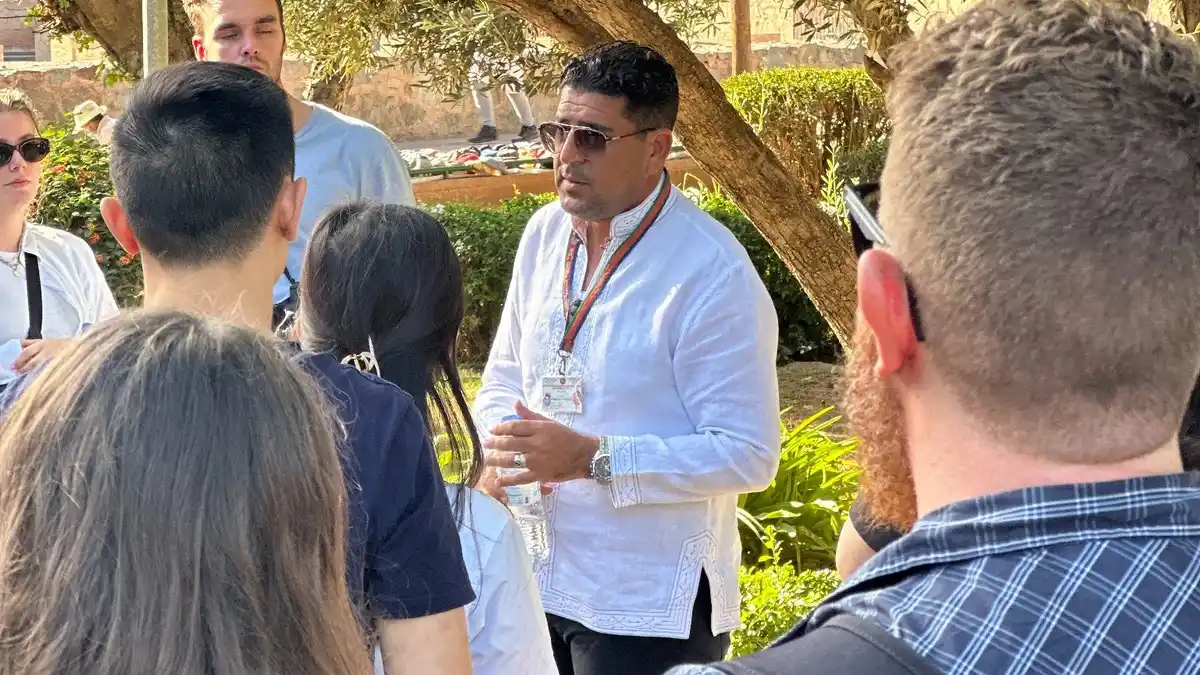
If you have two full weeks in Morocco, this 14 days Morocco itinerary is the most complete way to experience the country. As a local Moroccan guide, I designed this route to balance culture, history, landscapes, and travel time without rushing. From the lively streets of Marrakech to the silence of the Sahara Desert, the blue alleys of Chefchaouen, and the Atlantic coast, this itinerary follows a logical loop that makes sense on the ground, not just on a map.
To understand Morocco, not just visit it, 14 days is the perfect amount of time. It allows you to slow down, go deeper, and experience Morocco as it naturally unfolds: from ancient medinas and imperial cities to vast deserts, mountain passes, Atlantic coastlines, and quiet blue streets in the north.
This 14 days Morocco itinerary is designed by a local guide who understands distances, travel rhythm, and real-life logistics. You won’t rush. You won’t backtrack unnecessarily. And you won’t feel exhausted. Instead, each destination flows naturally into the next, giving you time to absorb Morocco’s culture, history, landscapes, and daily life.
Before diving into the day-by-day route, I recommend reading my complete Morocco Travel Guide, where I share essential tips about culture, money, safety, transport, and the best time to visit.
Whether this is your first time in Morocco or you want a complete, well-balanced route, this itinerary gives you the full picture of the country.
Table of Contents
Table of Contents
14 Days Morocco Itinerary – Route Overview & Travel Logic
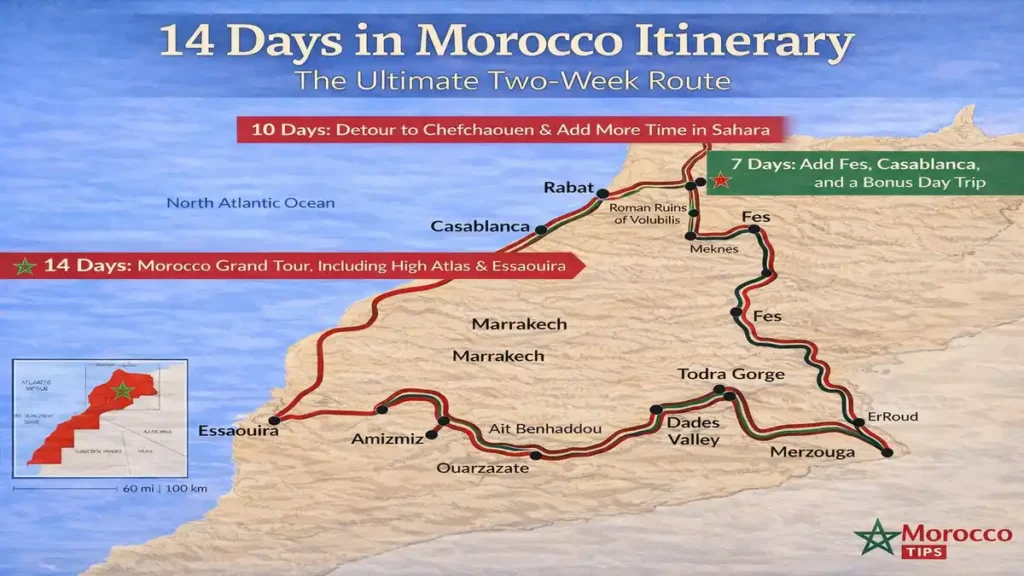
This itinerary follows a logical loop starting and ending in Marrakech, moving east into the desert, north through imperial cities, and west along the Atlantic coast before returning south.
Route overview:
Marrakech → Atlas Mountains → Ait Ben Haddou → Dades Valley → Merzouga (Sahara) → Ziz Valley → Fes → Meknes → Volubilis → Chefchaouen → Rabat → Casablanca → Essaouira → Marrakech
The idea is simple:
You start in the heart of Morocco, cross the mountains once, experience the Sahara properly, explore the cultural north, then relax by the ocean before returning to Marrakech.
This two-week journey is part of my complete Morocco Itinerary – The Perfect 7, 10 & 14 Days, where I break down different routes depending on how much time you have.
Day 1 – Arrival in Marrakech
Your journey begins in Marrakech, the beating heart of Morocco. After arriving at the airport, you’ll be transferred to your riad inside or near the medina. Depending on your arrival time, you can take a gentle first walk to Jemaa el-Fna Square, where storytellers, musicians, and food stalls come alive at sunset.
This first evening is about absorbing the atmosphere, not rushing into sightseeing. Sit on a rooftop café, listen to the call to prayer, and let Morocco welcome you.
For a deeper look at the city, including hidden spots and local food, see my Things to Do in Marrakech guide.
Day 2 – Marrakech Guided City Tour
Today is dedicated to discovering Marrakech with depth and context. You’ll explore the historic medina, visiting places like Bahia Palace, the Koutoubia Mosque exterior, hidden artisan quarters, and colorful souks filled with spices, leather, lamps, and carpets.
Unlike rushed city tours, this day allows time to understand how Marrakech works, how the medina is organized, and how locals live behind the walls. By the end of the day, Marrakech will already feel familiar rather than overwhelming.
If your itinerary includes Marrakech, don’t miss this detailed Marrakech with kids guide with family-friendly tips, hotels, and the best day trips.
Day 3 – Marrakech → Atlas Mountains → Ait Ben Haddou → Dades Valley
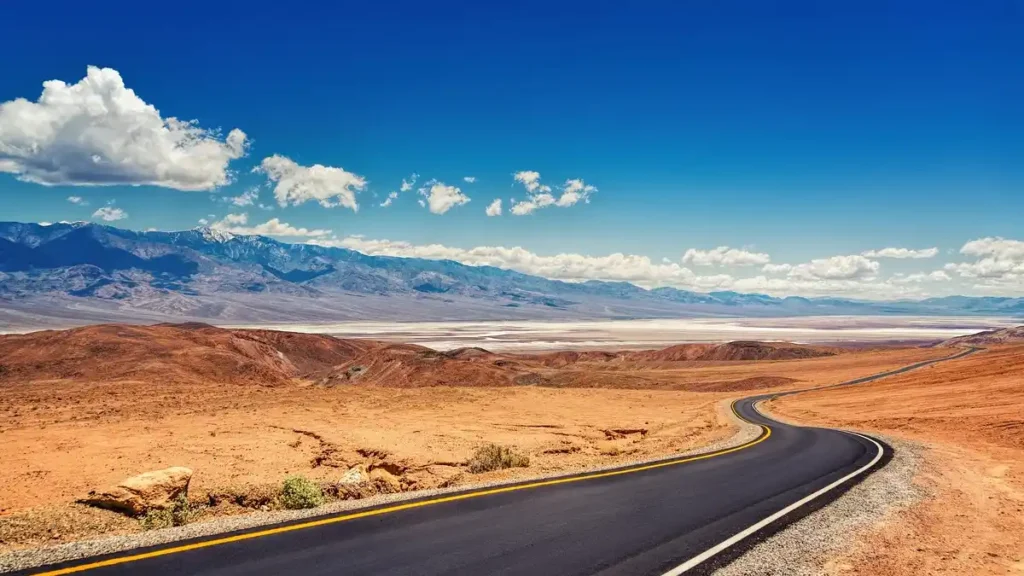
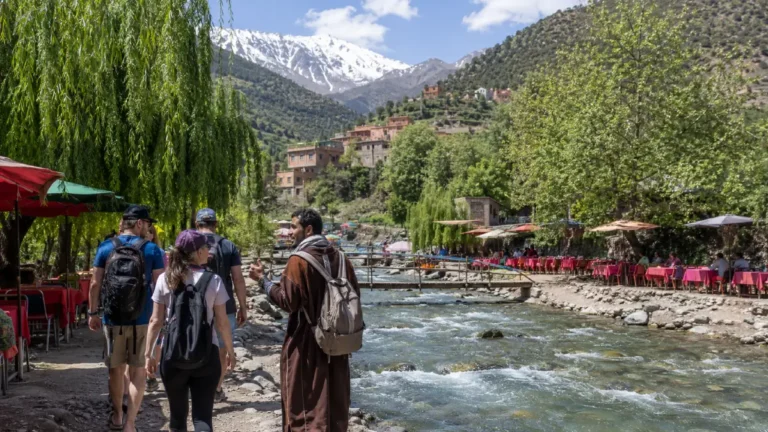
Leaving Marrakech, you cross the spectacular High Atlas Mountains via the Tizi n’Tichka Pass. The landscape changes quickly green valleys turn into red mountains and desert plains.
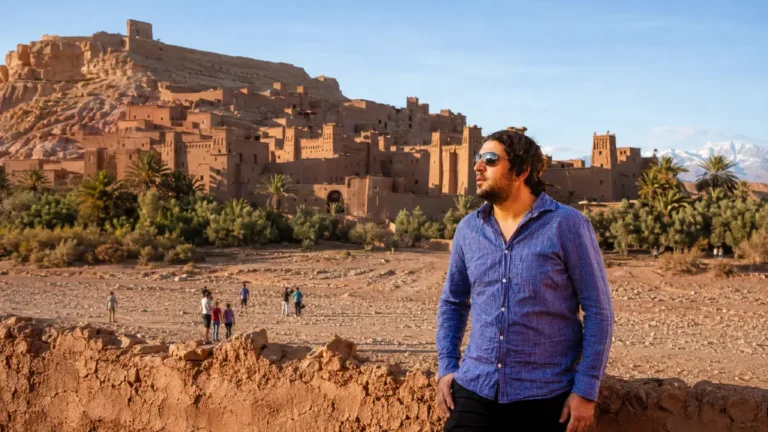
A stop at Ait Ben Haddou, Morocco’s most famous kasbah and a UNESCO World Heritage Site, gives you a glimpse into traditional earthen architecture and caravan history. By late afternoon, you continue to the Dades Valley, where dramatic rock formations and quiet villages surround your hotel.
Day 4 – Dades Valley → Todra Gorges → Merzouga
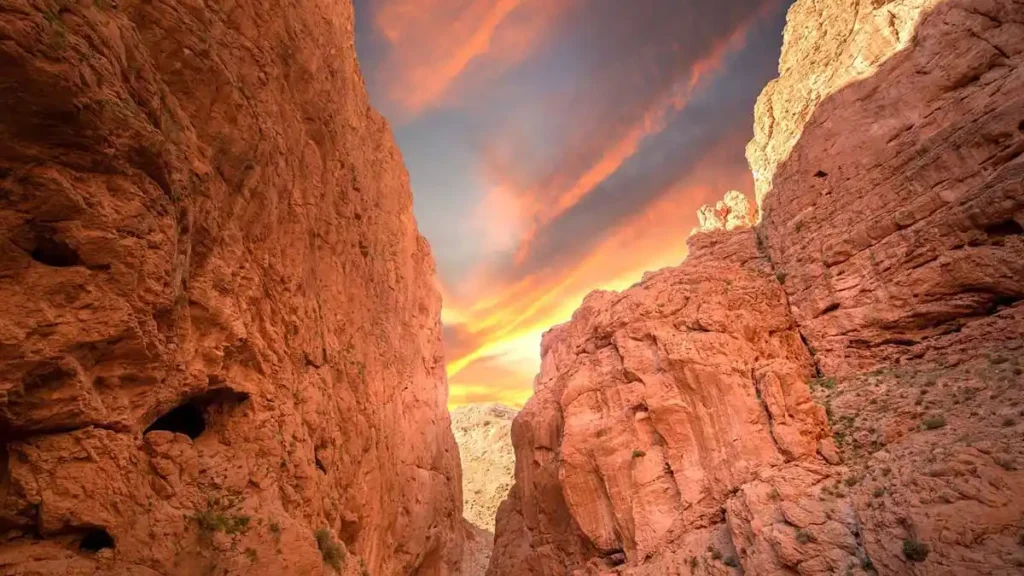
After breakfast, the road takes you through palm oases and the impressive Todra Gorges, where sheer canyon walls rise hundreds of meters above a narrow river.
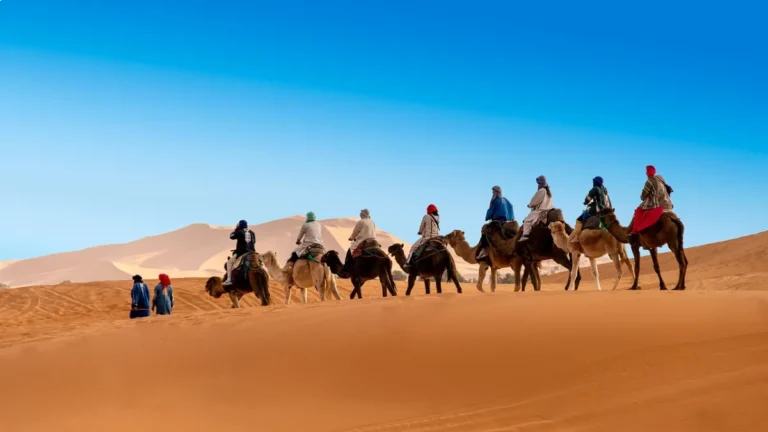
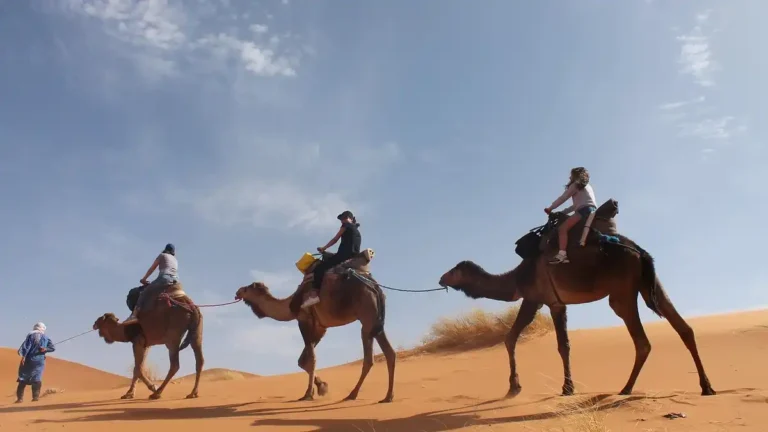
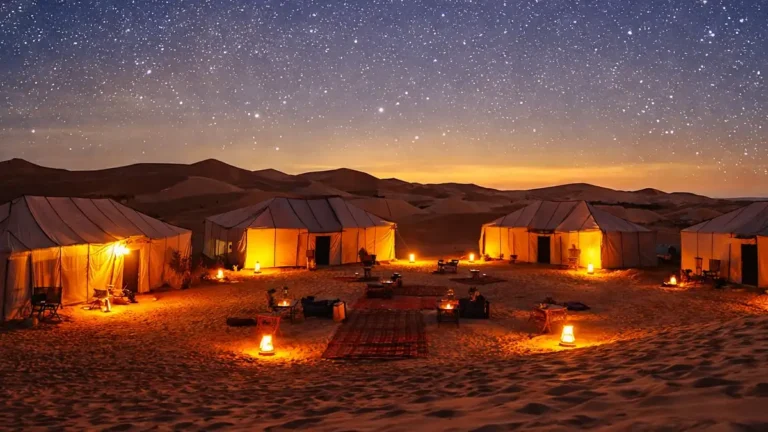
In the afternoon, the desert appears on the horizon. In Merzouga, you’ll swap your vehicle for a camel and ride into the dunes as the sun sets. The night is spent in a desert camp under a sky full of stars one of the most unforgettable experiences in Morocco.
I’ve shared more details about desert experiences, camps, and camel trekking in my Merzouga Sahara Desert Guide.
Day 5 – Merzouga Desert Experience
This full day is dedicated to the Sahara, not just sleeping in it. You’ll explore the surrounding desert by 4×4, visit nomadic families, listen to Gnawa music, and learn how people survive in this harsh but beautiful environment.
Having a full day here is what separates a real desert experience from a rushed overnight stop.
Day 6 – Merzouga → Ziz Valley → Fes
Leaving the desert, the journey north follows the Ziz Valley one of Morocco’s largest palm oases. Thousands of palm trees line the river, creating a striking contrast against the dry mountains.
You continue through the Middle Atlas Mountains, passing cedar forests and Berber towns, before arriving in Fes in the evening.
To understand Fes beyond the main sights, check my Things to Do in Fes guide.
Day 7 – Fes Guided City Tour
Fes is Morocco’s spiritual and cultural capital. Its medina is the largest car-free urban area in the world and feels like stepping back in time.
With a local guide, you’ll explore ancient madrasas, traditional tanneries, and hidden neighborhoods where crafts are still practiced exactly as they were centuries ago. This is a deep cultural day, rich in history and detail.
Day 8 – Fes → Meknes → Volubilis → Chefchaouen
Leaving Fes, you stop in Meknes, another imperial city, before visiting the Roman ruins of Volubilis. These remarkably preserved ruins show Morocco’s connection to the ancient Roman world.
In the afternoon, the road winds into the Rif Mountains, arriving in Chefchaouen, famous for its blue-painted streets and relaxed atmosphere.
I’ve listed my favorite viewpoints, cafés, and photo spots in Things to Do in Chefchaouen.
Day 9 – Chefchaouen
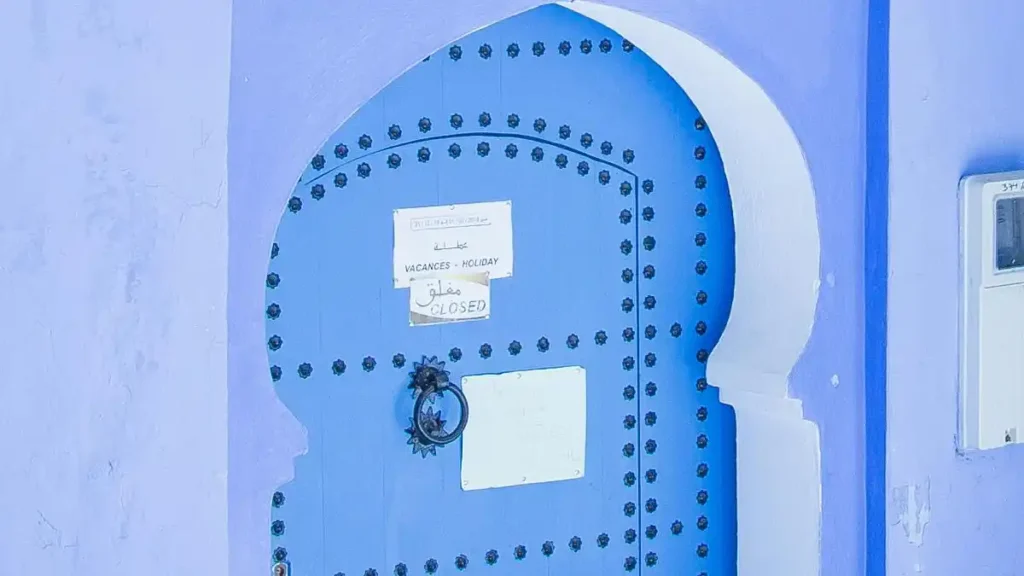
This day is intentionally slow. Chefchaouen is best enjoyed without a schedule wandering through blue alleys, taking photos, enjoying local cafés, or hiking to viewpoints above the town.
It’s a perfect pause after the busy cities and long drives.
Day 10 – Chefchaouen → Rabat → Casablanca
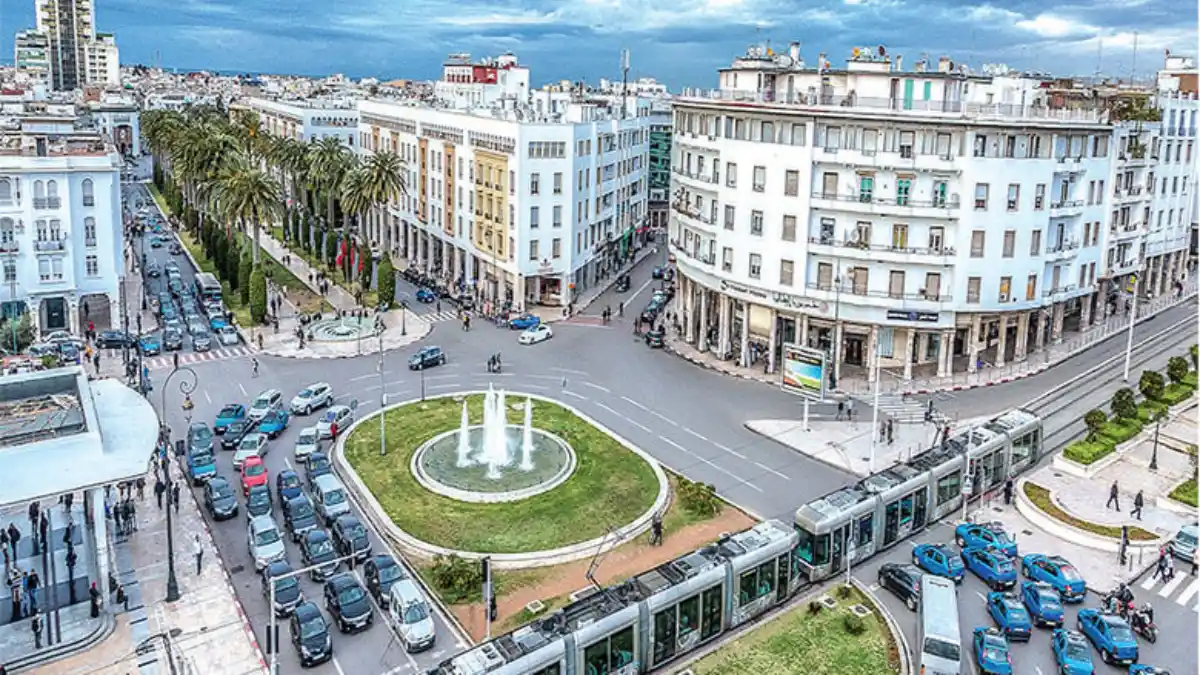
Traveling west, you reach Rabat, Morocco’s capital. You’ll visit highlights like the Hassan Tower and Kasbah of the Udayas before continuing to Casablanca.
In Casablanca, the Hassan II Mosque one of the largest mosques in the world offers a striking contrast between tradition and modern Morocco.
If you want to explore Morocco’s capital further, see my Things to Do in Rabat guide.
Day 11 – Casablanca → Essaouira
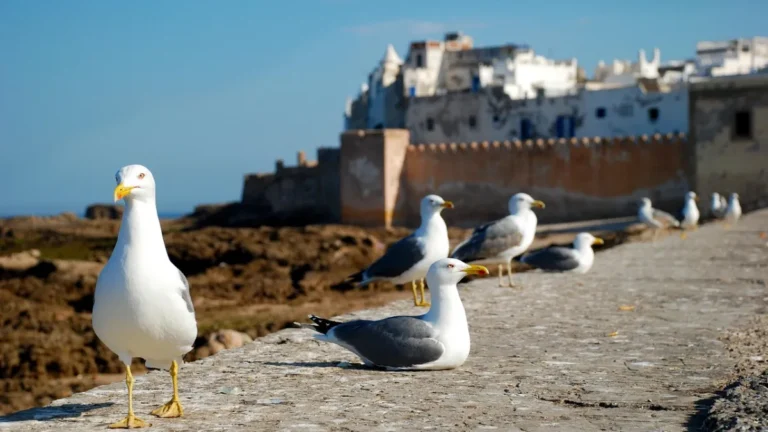
Following the Atlantic coast south, you arrive in Essaouira, a relaxed seaside town known for its white-and-blue medina, fishing port, and fresh seafood.
Casablanca offers a different side of Morocco, which I explain in my Casablanca Travel Guide.
The pace slows again here, giving you time to breathe after the cities.
Day 12 – Essaouira
Essaouira is all about freedom. You can walk along the ramparts, relax on the beach, try surfing, or simply enjoy long lunches overlooking the ocean.
This coastal break balances the intensity of the desert and imperial cities perfectly.
I’ve shared my favorite beaches, seafood spots, and walks in Things to Do in Essaouira.
Day 13 – Essaouira → Marrakech
On the way back to Marrakech, you pass through argan tree country, where goats famously climb trees. By late afternoon, you’re back in Marrakech for your final night.
Day 14 – Departure from Marrakech
Depending on your flight time, you’ll be transferred to the airport, bringing your Moroccan journey to a smooth and satisfying end.
Why This 14-Day Morocco Itinerary Works
This itinerary isn’t about ticking boxes it’s about flow. Every long drive is balanced by a slower day. Every intense city is followed by nature or coast. And the desert is given the time it deserves.
It’s the kind of route locals recommend when friends ask, “What’s the best way to see Morocco properly?”
If you have less time, you can also check my 7 Days in Morocco Itinerary or the more relaxed 10 Days in Morocco Itinerary.
FAQ – 14 Days in Morocco Itinerary
Is 14 days in Morocco too long or just right?
Fourteen days is actually the ideal amount of time to explore Morocco properly. It allows you to travel at a comfortable pace without rushing, experience the Sahara Desert without cutting corners, and still enjoy imperial cities, the north, and the Atlantic coast. Instead of just seeing places, you have time to understand them.
Can I see the Sahara Desert in a 14 day Morocco itinerary?
Yes, and this is one of the biggest advantages of a two-week trip. With 14 days, you can spend more than one night in the desert, visit nomad families, explore the dunes by 4×4, and enjoy both sunset and sunrise without feeling rushed. This itinerary includes a full desert experience, not just a quick stop.
What is the best starting city for a 14 Days Morocco Itinerary?
Marrakech is the best starting point for most travelers. It has excellent international connections and sits perfectly on a route that flows naturally through the Atlas Mountains, Sahara Desert, northern cities, and the Atlantic coast. Casablanca and Tangier are also possible, but Marrakech offers the smoothest logistics.
How much driving is involved in this 14 Days Morocco Itinerary?
There are a few longer driving days, especially when crossing the Atlas Mountains and traveling from the Sahara to Fes. However, these drives are broken up with scenic stops, villages, and viewpoints. The itinerary also includes slower days in cities and on the coast to balance the journey.
Is Morocco safe for a two-week trip?
Yes, Morocco is generally very safe for travelers, especially on well-established routes like this one. As with any destination, basic awareness and respect for local customs go a long way. Traveling with a local guide or driver can make the experience even smoother and more relaxed.
What is the best time of year for a 14 day Morocco itinerary?
Spring (March to May) and autumn (September to November) are the best seasons, with comfortable temperatures across the country. Summer can be very hot in the desert, while winter nights in the Sahara can be cold, but both seasons are still possible with good planning.
Should I drive myself or travel with a guide?
You can self-drive, but many travelers prefer a local driver or guide for a 14-day itinerary. It removes the stress of long distances, mountain roads, and navigation, and allows you to focus on enjoying the journey rather than managing logistics.
Is 14 Days the Best Way to See Morocco?
Yes, for many travelers, 14 days is one of the best ways to see Morocco properly. It gives you enough time to experience the country with a better rhythm instead of rushing from one stop to the next. In two weeks, you can explore Marrakech, cross the Atlas Mountains, spend a night in the Sahara, discover the old medina of Fes, slow down in Chefchaouen, and finish on the Atlantic coast without making the trip feel exhausting.
A good 14 Days Morocco Itinerary is not about adding as many cities as possible. It is about building the route in the right order, keeping driving days realistic, and giving each stop enough time to feel different. That is what makes this trip length so strong. You get variety, depth, and a much clearer picture of Morocco than you would on a shorter trip.
This is also when many travelers start to understand something important: Morocco is not a country you should rush. The landscapes change, the pace changes, the architecture changes, and even daily life feels different from one region to another. With 14 days, you are not only seeing Morocco. You are starting to understand it.
For travelers comparing routes, it also helps to look at shorter versions first. My 7 Days in Morocco Itinerary is useful for a faster first trip, while the 10 Days in Morocco Itinerary offers a strong middle ground. For broader planning advice, transport tips, and destination ideas, you can also read the Plan Your Trip to Morocco.
Need Help Customizing This 14-Day Morocco Itinerary?
Every traveler moves at a different pace. Some want more time in the desert, some want to slow down in Chefchaouen or Essaouira, and some prefer to cut long driving days and focus on fewer places. That is why this route works best when it matches your travel style, dates, and budget.
I can help you adjust this 14-day Morocco itinerary into a route that feels more realistic, more comfortable, and more personal for your trip.
Contact me directly on WhatsApp to customize this 14-day itinerary.
“Morocco is not just a place you visit; it’s a country you feel.”
And with 14 days, you’ll leave not just with photos, but with real memories. 🇲🇦