Marrakech to the Chegaga Desert: What You Need to Know Before Choosing This Route
Marrakech to Chegaga Desert is one of the longest and most rewarding desert routes in Morocco, but it’s also one that many travelers misunderstand before choosing it.
Chegaga Desert (also written as Chigaga) is one of the most remote Sahara dune areas in southern Morocco, located far beyond the last towns and paved roads.
Table of Contents
Table of Contents
Many travelers arrive in Marrakech with the same idea in mind: they want to see the Sahara Desert. They imagine silence, dunes, open space, and nights under the stars. What most of them don’t realize is that the desert in Morocco is not one single experience. Where you go, how long it takes to get there, and what kind of journey you accept along the way will completely shape what you feel in the end.
The route from Marrakech to the Chegaga Desert is not the most famous desert option, and it is certainly not the easiest. That is exactly why some travelers choose it, and why others shouldn’t. Chegaga is not about quick access or dramatic first impressions. It is about distance, gradual transition, and the feeling of being far from everything familiar.
This is not a route you add to your trip at the last minute. It requires time, patience, and an understanding of how Morocco’s geography works. If you are looking for a short desert experience close to the city, Chegaga will feel too far. If you are looking for large dunes that rise immediately next to a village, Chegaga will feel subtle rather than spectacular. But if you want a desert that feels open, quiet, and truly detached from towns and roads, Chegaga offers something very rare.
Before deciding on this route, it is important to understand how it compares to other desert options in Morocco. Many travelers confuse Chegaga with places like Agafay Desert or Merzouga, but these places serve very different purposes.
Agafay sits close to Marrakech and can be reached in less than an hour. It offers a desert atmosphere, open views, and a quick escape from the city, but it is not a sand desert and it does not feel remote. Merzouga, on the other hand, is famous for its tall dunes and easy access. You can reach the sand directly from the village, and the experience is visually impressive and straightforward. Chegaga works on a different level. The dunes are not next to a town, the access is off-road, and the sense of space comes from how far everything is spread out.
Understanding this difference early saves disappointment later. Travelers who choose Chegaga without knowing the distance often feel tired before they arrive. Travelers who choose it knowing what it involves usually describe it as one of the most meaningful parts of their journey. The difference is not the desert itself, but expectations.
If this is your first time visiting Morocco, it helps to understand how distances, travel pace, and regions work across the country, which I explain in more detail in my Morocco Travel Guide.
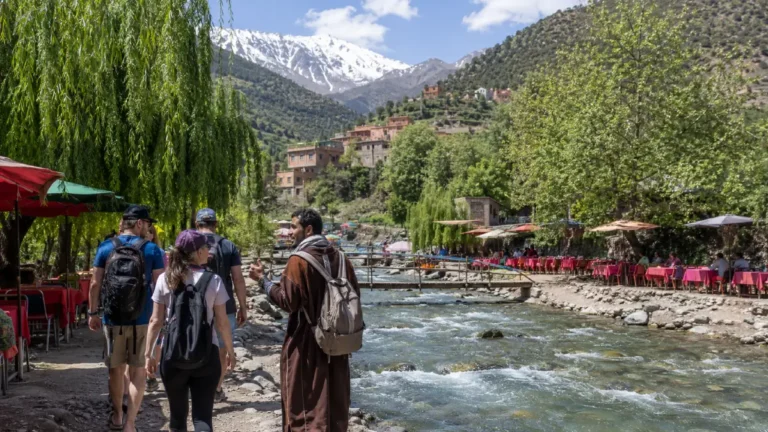
The journey from Marrakech to Chegaga is long, and it passes through several regions that slowly prepare you for the desert. You cross the High Atlas Mountains, descend into southern Morocco, pass palm valleys and small towns, and eventually leave paved roads behind. This gradual change is not a disadvantage. It is what makes Chegaga feel earned rather than staged.
Why the Chegaga Desert Is Different From Other Desert Routes
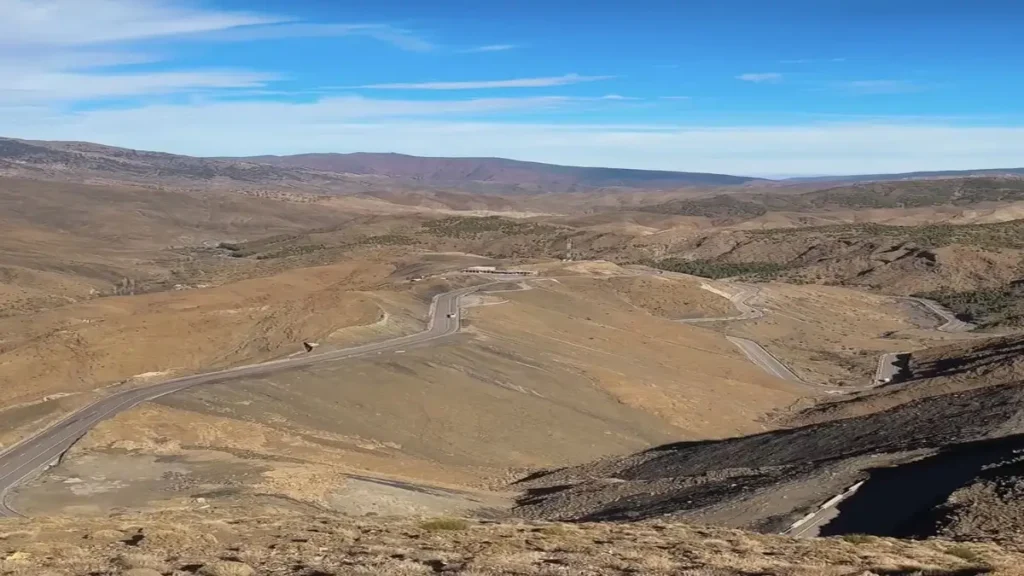
When someone asks me, “Kamal, how far is Chegaga from Marrakech?”, I never answer with one number. If I say “about 10 hours,” it doesn’t help. What matters is how those hours are divided, because each part of the route feels different in your body and in your head.
From Marrakech to the High Atlas Mountains, the drive starts almost immediately. You begin climbing within the first 30 minutes. This section looks short on the map, but it’s slow. Curves, trucks, mountain traffic, and sometimes weather all affect speed. Crossing the Atlas usually takes 3.5 to 4.5 hours, and by the time you reach the other side, most travelers already feel they’ve done a full journey. This is normal.
From the Atlas down to Ouarzazate, you need another 1 to 1.5 hours. So from Marrakech to Ouarzazate, with a couple of short stops, you’re looking at 5 to 6 hours total. This is why I always say: don’t plan anything heavy for the evening if you sleep there. Eat, rest, and let the day end calmly.
From Ouarzazate to Zagora, the drive takes about 4 hours. The road is easier, but it’s long and straight in places, and the heat can be tiring. You pass through the Draa Valley, which is beautiful, but by the time you arrive in Zagora, you’ve usually been on the road 9 to 10 hours since Marrakech if you did it in one stretch. That’s why most people stop before this or arrive late afternoon and sleep.
From Zagora to the Chegaga Desert, there is no normal road to the dunes. This section takes 4 to 5 hours, sometimes more. You cross stone desert, dry lakebeds like Iriki, and long off-road tracks. Speed depends on terrain, not distance. You don’t rush here. You can’t.
So in real life, Marrakech to Chegaga is 10 to 12 hours of driving, and trying to do that in one day is a mistake. Even if you can physically do it, you arrive tired and you don’t feel the desert the way you should. This is why understanding the real travel time from Marrakech to Chegaga Desert matters before choosing this route.
Long drives like this are common in Morocco, and understanding how travel time really works makes planning much easier, which I cover step by step in Plan Your Trip to Morocco.
This is why I always recommend breaking the journey with proper overnight stops. Sleeping in the right places makes the trip feel natural instead of exhausting. For example, staying around Ouarzazate or in the Draa Valley allows you to slow down and enjoy the route instead of fighting it.
One more thing I always tell travelers: Chegaga is not like Agafay, which you reach in under an hour, or even Merzouga, where the dunes are right next to the village. Chegaga asks for time. That time is not wasted. It’s what creates the feeling of being far away when you finally arrive.
If you are still deciding between Chegaga, Merzouga, and Agafay, read my full Authentic Morocco Sahara Desert Tours guide before choosing your route.
If you prefer a Sahara experience with easier access and shorter logistics, you may find the Merzouga route more suitable. I explain how that journey works, day by day, in my guide to a 3-day desert tour from Marrakech.
As a local guide, I usually recommend the 3-day Merzouga tour for travelers who want a real Sahara experience with easier access than Chegaga. It still involves long driving, but it gives a better balance between time, adventure, and comfort for most first-time visitors.
Breaking the Journey: Where It Makes Sense to Sleep on the Way
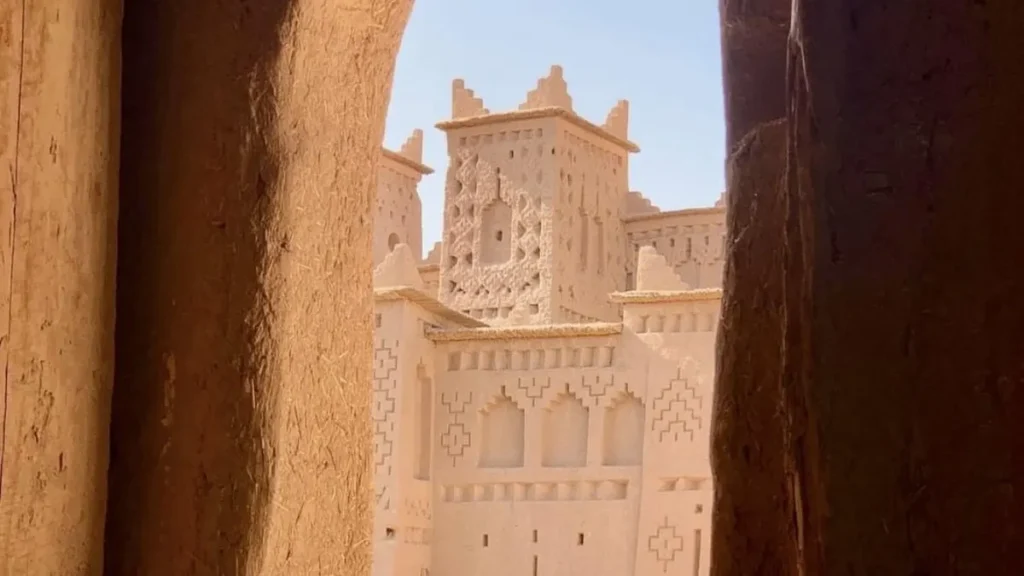
One of the biggest mistakes I see travelers make on the way to Chegaga is choosing accommodation based on looks instead of location. On a map, many places seem close. On the road, they are not. When you’re dealing with long mountain drives and off-road desert tracks, where you sleep has a direct impact on how you feel the next day.
After leaving Marrakech and crossing the High Atlas, your body is already tired. Even if the views are beautiful, mountain driving takes energy. That’s why the first overnight stop should never be too ambitious. Sleeping around Ouarzazate or the nearby Skoura oasis makes sense. This area sits right at the point where mountain travel ends and southern desert travel begins. It allows you to finish the hardest driving day, eat calmly, sleep well, and reset before continuing south.
In Skoura, kasbah-style hotels surrounded by palm trees work especially well. They’re quiet at night, slightly outside traffic, and designed for rest rather than activity. Places like Dar Ahlam or similar kasbah lodges fit naturally into this route. You don’t stay here to explore the town. You stay to recover from the road.
The next logical region to sleep is the Draa Valley. This stretch feels very different from Ouarzazate. Palm groves are long and continuous, villages are closer to the land, and evenings are slower. Sleeping somewhere along the valley helps you feel that you are already leaving the busy parts of Morocco behind. Eco-lodges and small kasbah hotels here are usually simple, quiet, and well adapted to the climate. A place like Kasbah Azul is a good example of accommodation that fits the journey rather than distracting from it.
Many travelers then choose to sleep one final night near Zagora. I always explain that Zagora is not where the desert begins. It’s where preparation ends. Sleeping here allows you to organize your bags, rest properly, and mentally slow down before entering the off-road section the next day. A comfortable riad like Riad Dar Sofian works well because it’s practical, calm, and close to the route south.
Trying to skip these stops and push farther usually backfires. I’ve seen travelers arrive at Chegaga exhausted, unable to enjoy the silence because they’re simply too tired. The desert should feel peaceful, not overwhelming. Breaking the journey correctly is what makes that difference.
Accommodation in the Chegaga Desert is generally simple and focused on location and atmosphere, not on city-style comfort. Camps are spaced far apart, nights are quiet, and there are no nearby towns or lights. What most people feel here is space, calm, and complete darkness rather than convenience.
That said, there is a luxury camp option in Chegaga for travelers who want this remote desert experience without giving up comfort. Camps like Erg Chigaga Luxury Desert Camp offer spacious tents, proper beds, private bathrooms, and a higher level of service, while still being deeply inside the dunes. The environment remains wild and silent, but the sleeping experience is more refined.
If you expect city-style hotels with constant amenities, Chegaga will still feel basic compared to Marrakech or Ouarzazate. But if you value atmosphere first and comfort second, both standard camps and luxury camps in Chegaga deliver in their own way. The difference is not where you are it’s how much comfort you want once the sun goes down.
Choosing the right overnight stops is part of smart trip planning, especially in Morocco where distances matter more than people expect,You can check my Best Hotels in Morocco Guide.
If you want to see reliable places to stay along this route and choose what fits your pace, you can check accommodation options in Ouarzazate, the Draa Valley, and Zagora here:
When the Road Ends: Crossing the Dunes by 4×4 and Sharing Tea With Nomad Families
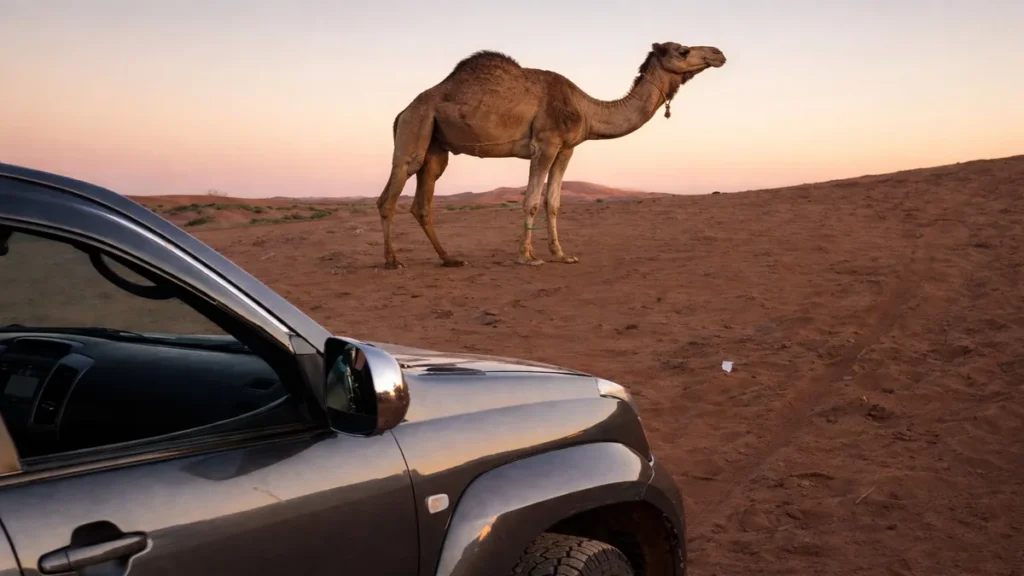
There is a moment on the way to Chegaga Desert when everything changes. It happens quietly. The paved road ends, the last signs disappear, and suddenly there is nothing in front of you except open land. From here, there is no map you can follow in a normal way. This part of the journey depends entirely on the driver’s experience and understanding of the desert.
Moving through the dunes by 4×4 is slow and careful. The vehicle climbs gently, descends smoothly, and adjusts constantly to the sand beneath it. You feel the difference immediately. There is no traffic, no noise from outside, no sense of direction marked by buildings or roads. Most people become very quiet here, not because they are told to, but because the place itself encourages it.
As you go deeper into the desert, the space opens up even more. The dunes are spread out, not crowded together, and the feeling is not dramatic or overwhelming. It is calm. The farther you go, the more the outside world feels distant. This is usually when travelers stop checking their phones, not because there is no signal, but because there is no reason to.
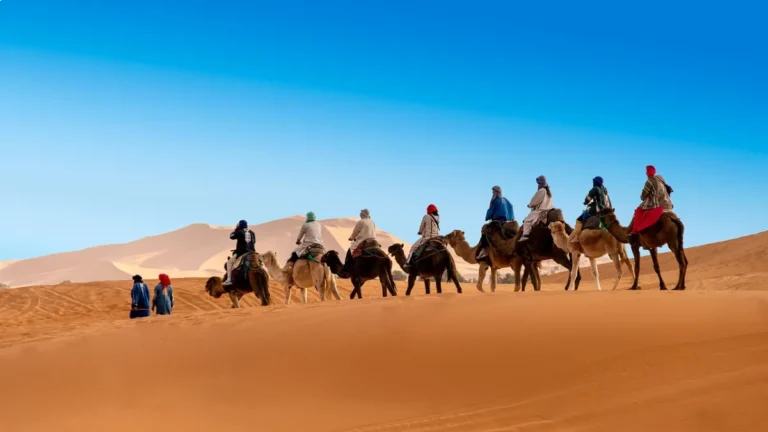
Sometimes, along this route, you may encounter nomad families living in simple tents. These meetings are never rushed and never staged. If you are invited to stop, you sit down on the sand and share tea. The tea is prepared slowly, with care, just as it has always been done. There is no schedule, no explanation, no performance. You drink, exchange a few words or smiles, and simply sit together for a while.
For many travelers, this moment becomes one of the strongest memories of the entire journey. Not because it is planned, but because it feels genuine. It reminds you that the desert is not empty. It is home to people who understand it in a way visitors never fully can.
As the afternoon passes and the light begins to change, the dunes take on softer colors. Shadows stretch, the air cools, and the desert feels more welcoming than harsh. By the time you reach the camp area, there is no sense of arrival like in a city. Instead, it feels like you have stepped out of movement and into stillness.
What a Night in the Chegaga Desert Is Really Like
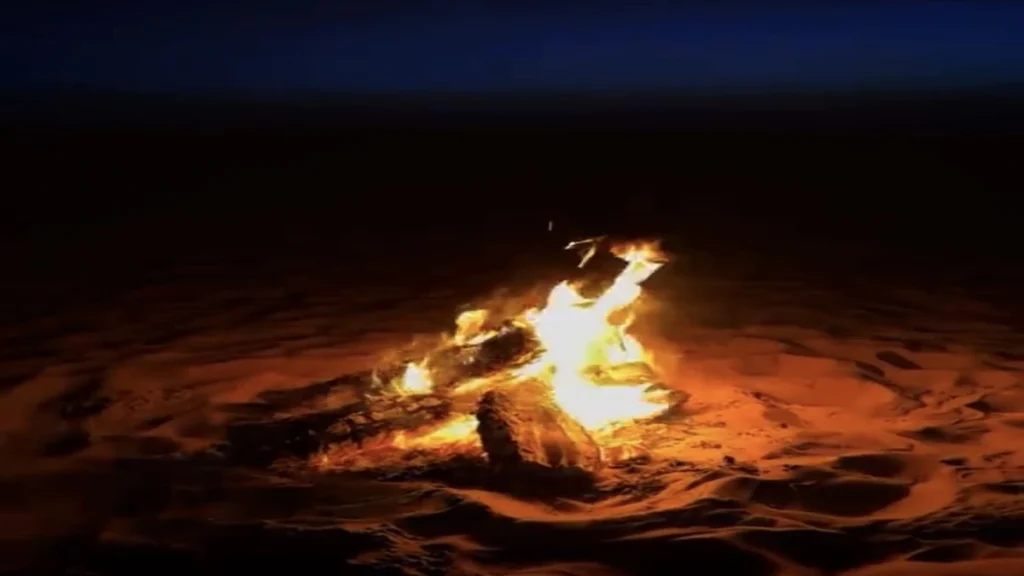
The first thing most people notice in Chegaga at night is not the stars. It’s the darkness. Not the kind of darkness you get in a village or even in a small town, but a deep darkness where there are no lights on the horizon at all. No cars, no houses, no distant glow. When the sun goes down behind the dunes, the desert simply closes the day.
This is usually the moment when travelers slow down without trying to. Conversations become quieter. People sit outside longer than they expect, watching the sky change color. The temperature drops, but it’s a comfortable cold, especially after the heat of the afternoon. You don’t feel rushed to go anywhere, because there is nowhere else to go.
When the stars appear, they don’t arrive slowly. They come all at once. Many people tell me they’ve never seen the sky like this before, even if they’ve traveled a lot. The Milky Way is visible on clear nights, and because there is no light pollution, the sky feels close, almost heavy. Phones come out at first, then disappear again, because photos never capture what your eyes see.
Dinner in the desert is simple and warm. You eat slowly, often around a fire, listening more than talking. Sounds travel far in the desert, so even small noises feel clear. The wind moves gently across the sand, and sometimes you hear nothing at all. This silence surprises people. At first it feels strange. Then it becomes calming.
Sleeping in Chegaga is different from sleeping anywhere else. Tents are designed to protect from wind and cold, not to block the desert completely. You hear the sand moving outside, the fabric shifting, sometimes distant footsteps. It’s not uncomfortable. It’s unfamiliar. Most people sleep better than they expect, because the mind is not busy. There is nothing demanding your attention.
Some travelers wake up during the night just to step outside. The air is still, the sky is full, and the desert feels endless. These moments are quiet and personal. They don’t need explanation.
Morning comes gently in Chegaga. There is no alarm clock, no traffic noise, no sudden movement. The light changes slowly, turning the dunes soft and pale. When you step outside, the desert feels fresh and open again, as if the night reset everything.
This is why I always tell people that Chegaga is not about activities. It’s about spending time in a place that doesn’t ask anything from you. The night is not entertainment. It’s part of the experience, and for many travelers, it becomes the most powerful part of the journey.
What People Usually Get Wrong Before Coming to Chegaga
Most issues travelers face in Chegaga don’t come from the desert itself. They come from preparing for the wrong kind of trip. I’ve seen this many times. People arrive excited, but uncomfortable, simply because they packed for heat only, or because they brought too much, or the wrong things.
The first thing people underestimate is how much temperatures change. During the day, the sun can feel strong, especially when you’re crossing open dunes with no shade. At night, the air cools quickly. This is why light layers matter more than heavy clothing. A breathable long-sleeve shirt for the day and a warm layer for the evening will keep you comfortable without adding weight.
Overpacking is another common mistake. Big suitcases are not made for this route. You move between vehicles, sand, and tents, and you don’t need many clothes. What works best is a lightweight travel backpack that you can carry easily and open quickly. Almost everyone who brings luggage ends up wishing they hadn’t.
Footwear is often ignored, but it matters a lot. Chegaga is not the place for new shoes or flat sandals. You walk on sand, sometimes on rocky ground, and around camp. Comfortable closed walking shoes that you already trust are always the best choice. Your feet do more work here than you expect.
Sun protection is essential in Chegaga, even on cooler days. The sand reflects light, and the sun is constant. A wide-brim hat or scarf, UV sunglasses, and high-quality sunscreen make a big difference in how you feel throughout the day. When people skip this, they feel tired much faster.
Electricity is limited in the desert, and this surprises many travelers. You don’t charge devices whenever you want. A portable power bank is very useful, not to stay online, but so you don’t worry about your phone battery when you want to take photos or check the time. This small item removes a lot of stress.
One thing I always recommend for Chegaga, even to travelers who have been to the desert before, is travel insurance that covers remote areas. Not because something will go wrong, but because Chegaga is far from services. Knowing you’re covered lets you relax and enjoy the experience instead of thinking about problems.
The biggest mistake of all is rushing the experience. People try to fit Chegaga into tight schedules. They want to arrive, see the dunes, sleep, and leave. Chegaga doesn’t reward that. It rewards patience. When you give it time, it gives you calm. When you don’t, it feels tiring instead of meaningful.
If you pack the right items and come with realistic expectations, Chegaga is not difficult. It’s simple, quiet, and deeply rewarding.
Staying Connected Before the Desert (One Small Thing That Helps)
Before heading south toward the desert, it’s worth thinking about connectivity while you still have signal. Once you pass Zagora and move off-road, coverage becomes unreliable and then disappears completely. That’s normal, and it’s part of the Chegaga experience.
What helps most is having reliable data before and after the desert. A Morocco eSIM can work very well in cities and transit stops like Marrakech, Ouarzazate, and Zagora, without needing to find a shop or swap physical SIM cards along the way. I usually recommend setting it up before arrival, then simply telling family or friends that you may be offline for a night once you head into the dunes.
What to Bring for the Chegaga Desert
I do not believe in carrying a lot of gear into the desert. Chegaga is not about equipment. It is about being comfortable, protected from the sun, and relaxed enough to enjoy the silence. These are the few things that actually make a difference on this route, based on what I have seen travelers use and regret over the years.
Small travel backpack
A light backpack is much more useful than large luggage once you leave the road behind. It keeps your essentials close and makes movement between vehicles, sand, and camp much easier.
Breathable long-sleeve clothing
Long sleeves usually work better than short sleeves in the desert. They protect your skin from the sun and often feel cooler over a full day outdoors.
One warm layer for the evening
Nights in Chegaga cool down quickly. You do not need a heavy jacket, but you do need something warm enough to sit outside comfortably after sunset.
Comfortable closed shoes
Bring shoes you have already worn before. Sand, uneven ground, and desert camp areas are not kind to brand-new footwear.
Hat or desert scarf
This is one of the most useful things you can bring. It helps protect your face, neck, and head from both strong sun and wind.
Sunglasses
The light reflecting off the sand is stronger than many travelers expect. Good sunglasses make a real difference over a long day.
Sunscreen
Even when the air feels cool, the desert sun is strong. This is something you want to bring with you, not look for at the last minute.
Power bank
Electricity in the desert is limited. A power bank is one of the easiest ways to keep your phone or camera usable without thinking about battery life all evening.
Travel insurance
Because Chegaga is remote, I always recommend having proper travel insurance that covers desert routes and remote areas. It does not change the experience itself, but it removes unnecessary stress and lets you relax more fully.
Disclosure: Some links on this page may be affiliate links. If you decide to book or buy through them, I may earn a small commission at no extra cost to you. I only share services I genuinely trust and would recommend to my own travelers.
FAQs About the Chegaga Desert Route
Is the Chegaga Desert better than Merzouga?
It’s not about better, it’s about what you’re looking for. Merzouga is easier to reach and has very tall dunes close to the village. Chegaga is farther, quieter, and feels more open and remote. If you want convenience and classic dunes, Merzouga works well. If you want space, silence, and fewer people, Chegaga usually feels more rewarding.
Can I visit the Chegaga Desert in one day from Marrakech?
No, and I don’t recommend trying. The distance is too long, and the off-road section alone takes several hours. Doing it in one day turns the trip into pure driving. Chegaga needs at least three days to make sense and to enjoy it without exhaustion.
Is the Chegaga Desert safe for travelers?
Yes, when planned properly. The area itself is calm and peaceful, but it is remote. This is why experienced drivers, suitable vehicles, and realistic timing matter. I always recommend having travel insurance that covers remote areas, not because something will happen, but because peace of mind makes the experience better.
Is Chegaga suitable for families or older travelers?
It can be, but only if the pace is adapted. Long drives and off-road sections can be tiring. Families with older children and travelers who are comfortable with long travel days usually do well. For very young children or travelers who prefer short transfers, other desert options may be easier.
What is the best time of year to visit Chegaga?
Spring (March to May) and autumn (September to November) are the most comfortable. Days are warm but not extreme, and nights are cool. Summer can be very hot, especially during the day, while winter nights can be quite cold, even if daytime temperatures feel mild.
Will I have phone signal or internet in Chegaga?
No and that’s part of the experience. Once you leave Zagora and head off-road toward Chegaga, mobile signal becomes weak and then usually disappears completely. There are no towers in the dunes, so you should expect to be offline for the night.
I always tell travelers to let family or friends know in advance that they’ll be unreachable. Doing that removes stress and lets you enjoy the desert the way it’s meant to be enjoyed. For many people, being disconnected for a short time ends up being one of the best parts of Chegaga.
If staying connected before and after the desert matters to you, using an international Morocco eSIM is the easiest option. It works well in cities and towns like Marrakech, Ouarzazate, and Zagora, without needing to buy a local SIM card.
What kind of accommodation should I expect in Chegaga?
In Chegaga, accommodation is about choosing a level of comfort, not choosing a location — because all camps are already deep in the dunes. You won’t find city-style hotels here, but you can choose between traditional desert camps and a luxury desert camp experience.
Traditional camps focus on simplicity and atmosphere, while luxury options such as Erg Chigaga Luxury Desert Camp offer proper beds, private bathrooms, and a higher level of service without losing the feeling of remoteness.
How many days do I really need to visit the Chegaga Desert?
To enjoy Chegaga properly, you need at least 3 days from Marrakech. The distance is long and the final approach is off-road, so anything shorter turns into constant driving with very little desert time. With 3 days, you can break the journey sensibly, arrive rested, spend a full night in the dunes, and leave without rushing. If you have 4 days or more, the experience becomes even better, with less fatigue and more time to enjoy the silence and space.
Do I need special gear for the Chegaga Desert?
Nothing extreme. What matters most is light layers, sun protection, comfortable shoes, and a small backpack. A portable power bank is useful, and good preparation matters more than buying expensive gear.
Is Agafay a good alternative if I don’t have time?
Yes, if your time is very limited. Agafay is close to Marrakech and offers a short desert experience, but it is rocky and not part of the Sahara. It’s a good option for a quick escape, not a replacement for Chegaga.
Who should NOT choose the Chegaga route?
Travelers who dislike long drives, want quick access, or prefer busy and social environments may not enjoy Chegaga. This route is best for people who are comfortable slowing down and spending time on the journey itself.
Final Advice From a Local Guide: Is Chegaga Right for You?
Before choosing the route from Marrakech to the Chegaga Desert, the most important thing you can do is be honest with yourself about how you like to travel. Chegaga is not difficult, but it is demanding in a quiet way. It asks for time, patience, and a willingness to slow down. If you arrive expecting fast experiences or constant activity, you may miss what makes this place special.
Chegaga works best for travelers who enjoy long journeys and do not see driving as wasted time. The road, the changing landscapes, the pauses, and even the silence between places are all part of the experience. If you like understanding how a country changes from region to region, Chegaga gives you that feeling more strongly than almost any other desert route in Morocco.
This route is also right for people who value space over spectacle. The dunes are not crowded, camps are spread far apart, and nights feel genuinely disconnected from the outside world. If your idea of the desert includes quiet evenings, wide skies, and mornings without noise, Chegaga is a very good fit.
At the same time, Chegaga is not for everyone, and saying that honestly matters. If you have very limited time, if long drives make you uncomfortable, or if you prefer easier access and faster rewards, another desert option may suit you better. Choosing a closer or simpler route is not a bad choice. It is the right choice when it matches your travel style.
What I always tell travelers is this: do not choose Chegaga because it sounds impressive. Choose it because you understand what it involves and feel comfortable with that pace. When expectations match reality, Chegaga becomes one of the most meaningful experiences in Morocco. When they do not, it can feel longer and harder than expected.
The route from Marrakech to Chegaga is not about speed. It is about choosing a journey that fits the way you like to travel.