
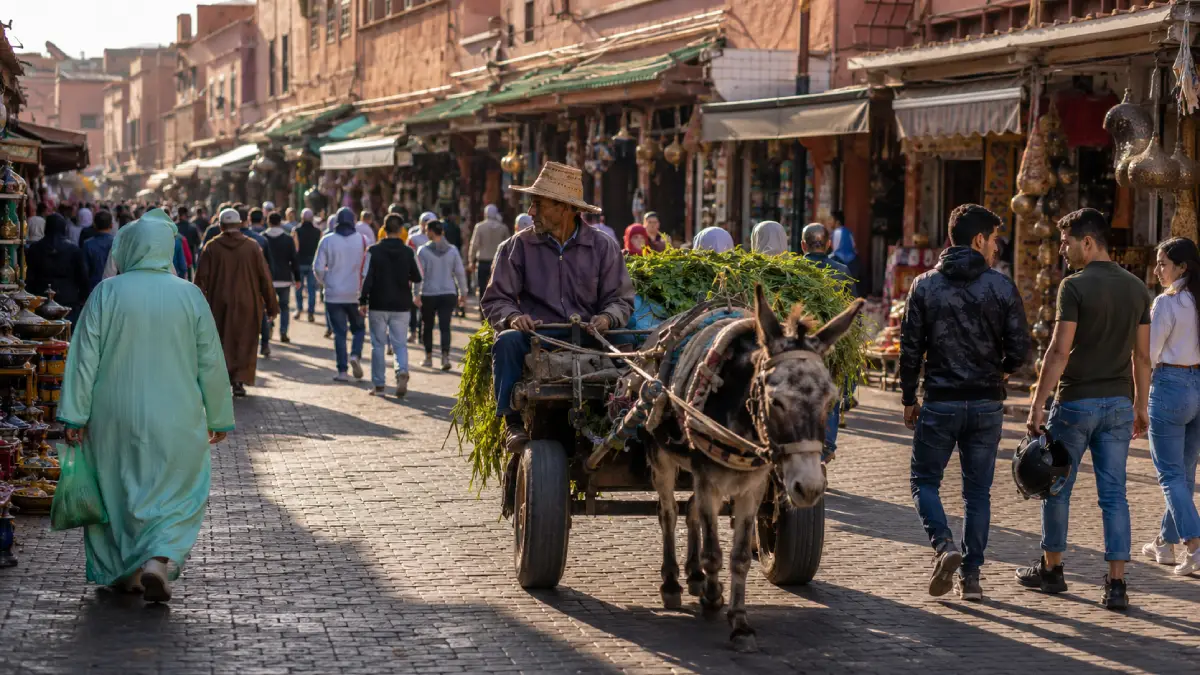
I’m Kamal, a licensed Moroccan tour guide based in Marrakech, and one thing I notice with first-time visitors is how quickly Morocco starts to feel easier once they understand a few simple cultural habits.
Moroccan etiquette is not a complicated rulebook. Nobody expects you to arrive knowing exactly how to greet someone, eat from a communal tagine or behave in every situation.
What matters much more is respect.
A greeting before asking a question, permission before photographing someone, a little awareness about clothing and religion, and a calm attitude in shops or crowded streets will take you a long way.
Morocco is also not culturally identical everywhere. Marrakech, Casablanca and Tangier can feel quite different from a small mountain village or a traditional neighborhood in Fes. What feels completely normal at a beach resort may look out of place in a rural town.
This Morocco Culture & Etiquette guide explains the everyday customs I think travelers genuinely need to understand.
If this is your first trip, I also recommend reading my Morocco Travel Guide for the bigger picture on traveling around the country.
Table of Contents
Table of Contents
Morocco Culture & Etiquette at a Glance
| Situation | What I Recommend |
|---|---|
| Greeting someone | Say “Salam” or “Salam Alaikum” before asking for something |
| Giving or receiving something | Use your right hand when practical |
| Taking someone’s photo | Ask first |
| Clothing | Dress a little more modestly in traditional and rural areas |
| Visiting a home | Follow your host, especially about removing shoes |
| Eating communally | Use your right hand and eat from the section in front of you |
| Mint tea | Accept graciously when you can, but you are not required to buy anything |
| Mosques | Do not enter unless visitors are specifically permitted |
| Ramadan | Be discreet about eating, drinking and smoking publicly during fasting hours |
| Bargaining | Keep it friendly and know when prices are fixed |
| Tipping | Small tips are appreciated for good service |
| Public affection | Keep intimate affection private |
| Alcohol | Drink only where it is legally served and avoid public drunkenness |
| Offers of help | Be friendly, but clear when you do not need assistance |
You do not need to remember every item in this table.
If you remember greet people, ask permission, stay calm and read the setting, you will already avoid most cultural misunderstandings.
Once you understand the basics of Morocco Culture & Etiquette, everyday interactions become much easier.
Greetings Matter More Than Many Travelers Expect
One of the easiest ways to change an interaction in Morocco is to greet someone before making a request.
If you walk into a shop and immediately say, “How much is this?” you will still get an answer.
But:
“Salam. How much is this?”
feels different.
The same applies when asking for directions, approaching a reception desk or speaking to someone in a café.
You do not need perfect Arabic.
A few words are enough:
Salam — Hello
Salam Alaikum — Peace be upon you
Shukran — Thank you
La, shukran — No, thank you
Beslama — Goodbye
For more useful everyday phrases, the Moroccan National Tourist Office has a helpful introduction to languages and common expressions used in Morocco.
Even when your pronunciation is not perfect, people usually appreciate the effort.
Greetings may also take a little longer than visitors expect. Someone may ask where you are from, how you are, how long you are staying or whether this is your first time in Morocco.
These questions are often simply part of conversation.
You do not have to give personal information you are uncomfortable sharing. A short, friendly answer is enough.
Handshakes and the Hand Over the Heart
Handshakes are common, but not everybody shakes hands with someone of the opposite sex.
If a person does not offer their hand, do not take it personally.
A small nod or placing your right hand over your heart is a perfectly respectful greeting.
My advice is simple: let the other person lead when you are unsure.
Why the Right Hand Matters
This is one small custom many visitors do not know before arriving.
Traditionally, the right hand is preferred for eating, shaking hands and giving or receiving things.
This is especially noticeable when sharing food.
You do not need to become anxious every time you reach for something with your left hand, and Moroccans understand that visitors come from different cultures.
But if you are eating from a communal dish, accepting tea, handing money to someone or greeting a person, using the right hand when practical is a nice sign of awareness.
If you are naturally left-handed, nobody expects you to spend your holiday fighting your own body.
Think of this as a cultural courtesy rather than an exam you can fail.
Personal Space and Everyday Questions
Morocco can feel socially closer than countries where people maintain a lot of physical distance.
Medinas are narrow.
Markets are crowded.
People may stand closer when talking.
A shopkeeper might begin a conversation while you are simply browsing.
This does not automatically mean someone is trying to intimidate you.
It is often just the normal rhythm of public life.
You may also be asked questions that feel personal:
“Are you married?”
“Where are you from?”
“Do you have children?”
“How long are you staying?”
In Morocco, these questions can be ordinary ways of building a conversation.
You are still allowed to have boundaries.
You can answer briefly, change the subject or politely end the conversation.
Cultural understanding should make you more comfortable, not make you feel that you have to tolerate an interaction you do not want.
What to Wear in Morocco
There is no single tourist dress code for the whole country.
You will see everything from very traditional clothing to jeans, dresses, business clothes, shorts and modern fashion.
Context matters.
Beachwear that looks completely normal beside a hotel pool can look very out of place inside a traditional medina.
The same applies to extremely revealing clothing in rural villages or religious surroundings.
For most sightseeing days, comfortable, relatively modest clothing is the easiest choice for both men and women.
You do not have to cover your hair.
You do not have to wear Moroccan clothing.
And visitors are not expected to dress exactly like locals.
I simply recommend paying attention to where you are.
In Marrakech, Casablanca or a resort area, you will generally see much more variety. In traditional neighborhoods, small towns and rural areas, slightly more coverage tends to feel more natural.
For detailed packing advice by season, including recommendations for men and women, read my What to Wear in Morocco guide.
Visiting a Moroccan Home
If you are invited into a Moroccan home, enjoy it.
Hospitality is one of the best ways to understand the country beyond hotels and tourist attractions.
The first rule is to follow your host.
If you notice shoes lined up at the entrance or your host removes theirs, remove yours too.
In many homes, especially around a carpeted salon, shoes stay near the door.
You may be offered tea almost immediately.
You might then be offered bread, pastries, nuts, fruit or eventually a full meal.
Do not panic if the host keeps encouraging you to eat.
That is very Moroccan.
You can say thank you and politely explain when you are full.
If you are invited for a planned meal, bringing something small such as pastries, sweets or fruit is a thoughtful gesture, although a foreign visitor is not expected to understand every hosting tradition.
Most importantly, do not rush the interaction.
Home visits are one of the best ways to experience Morocco Culture & Etiquette beyond the tourist areas.
Eating Etiquette in Morocco
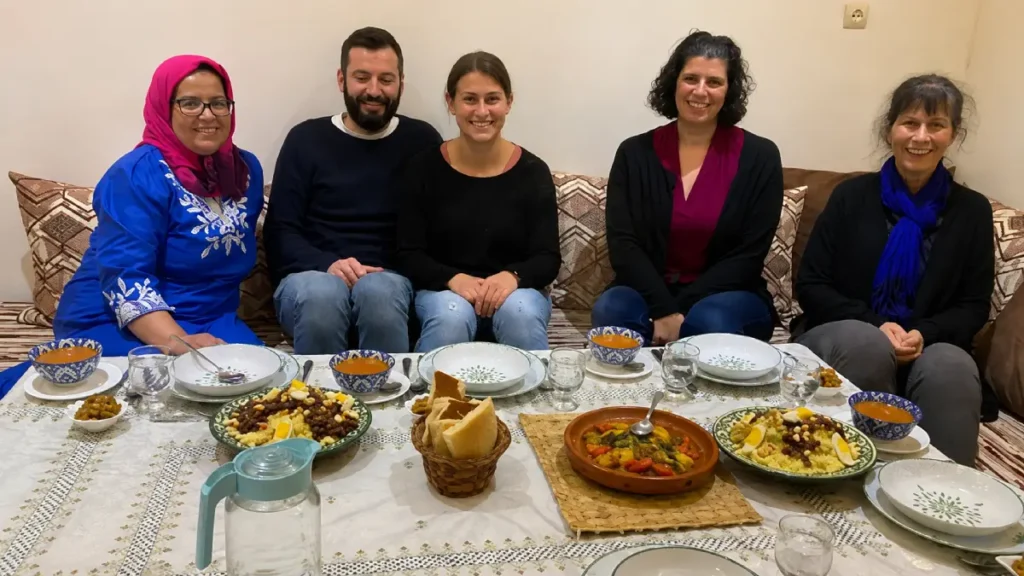
Moroccan meals can be very communal.
At home or in a traditional setting, several people may eat from the same tagine, couscous plate or serving dish.
Do not reach across the entire plate looking for the piece you like most.
Generally, eat from the section directly in front of you.
When eating with your hand, use the right hand.
Bread often works as the utensil. You use a small piece to pick up vegetables, sauce or meat.
Do not worry if you are terrible at it on your first attempt.
Everyone can see that you are learning.
Forks and spoons are also widely available, especially in restaurants, so there is no need to force yourself to eat by hand simply to prove you understand Moroccan culture.
If your host offers you a good piece of meat from another part of the dish, that is often hospitality. Accepting it is a nice gesture.
For much more about Moroccan meals and what travelers should try, see my Morocco Food Guide.
Mint Tea and Moroccan Hospitality
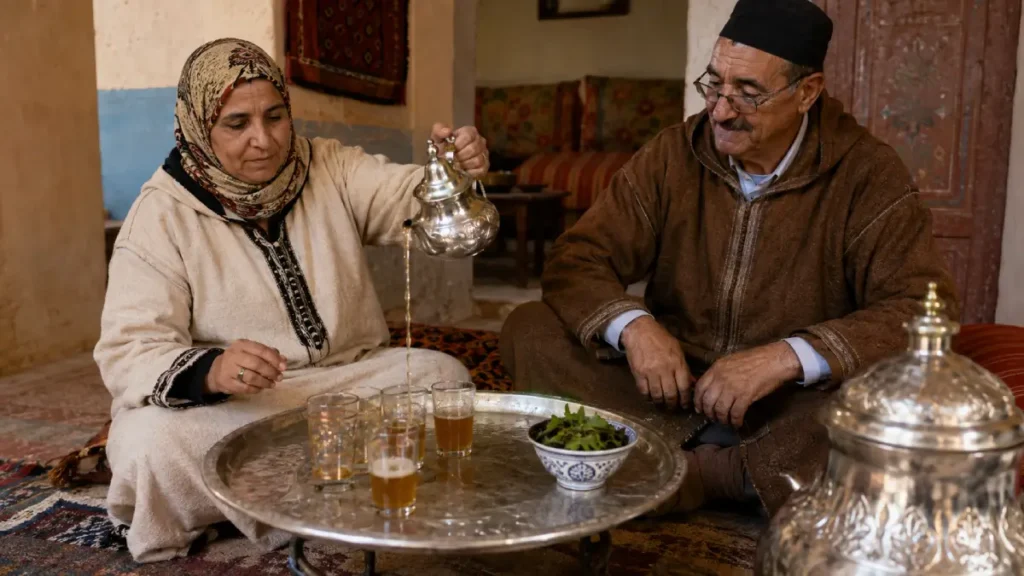
Mint tea is more than a drink in Morocco.
It can be a welcome, a break, the beginning of a conversation or simply something people share while sitting together.
You may be offered tea in a home, riad or shop.
Accepting when you have time is a nice gesture.
But there is an important point for travelers:
drinking tea in a shop does not automatically mean you have agreed to buy something.
Hospitality and business sometimes happen in the same space, particularly in the souks.
You can enjoy the tea, look around and still decide not to purchase anything.
If you genuinely do not want tea, you can decline politely.
Moroccans are hospitable, but you are not required to drink ten glasses a day to avoid offending the country.
Photography: Ask Before Photographing People
Morocco is extremely photogenic.
That does not mean every Moroccan wants to become part of your travel album.
Architecture, wide street scenes, landscapes and markets are one thing.
Pointing a camera directly at someone’s face from close range is different.
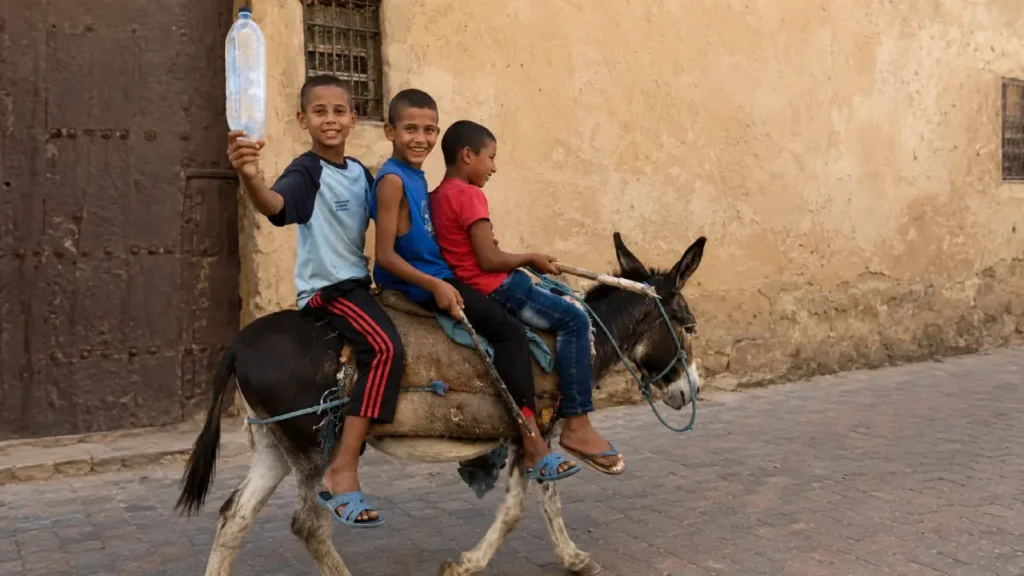
I especially recommend asking before photographing:
- Shopkeepers
- Artisans at close range
- Women
- Children
- People praying
- Someone inside a private home or workplace
Sometimes a smile and a gesture toward the camera are enough to ask.
If someone says no, accept it.
Do not take the photo secretly a few seconds later.
In very touristy places, some performers or people posing for photographs may expect payment. If you deliberately photograph someone who is performing for tourists, clarify the situation before taking several pictures.
There are also legal restrictions around photographing sensitive political, military and security locations.
When you are unsure, keep the camera down.
A respectful photo is better than a photograph that creates an argument.
Religion in Everyday Moroccan Life
Islam is part of daily life in Morocco, but visitors are not expected to participate.
You will hear the call to prayer.
You will see people going to mosques.
Friday around midday is particularly important for communal prayer.
During religious holidays, normal business hours may change.
For most travelers, all that is required is awareness and respect.
Do not mock religious practices.
Do not interrupt someone who is praying for a photograph or question.
And be particularly respectful around mosque entrances.
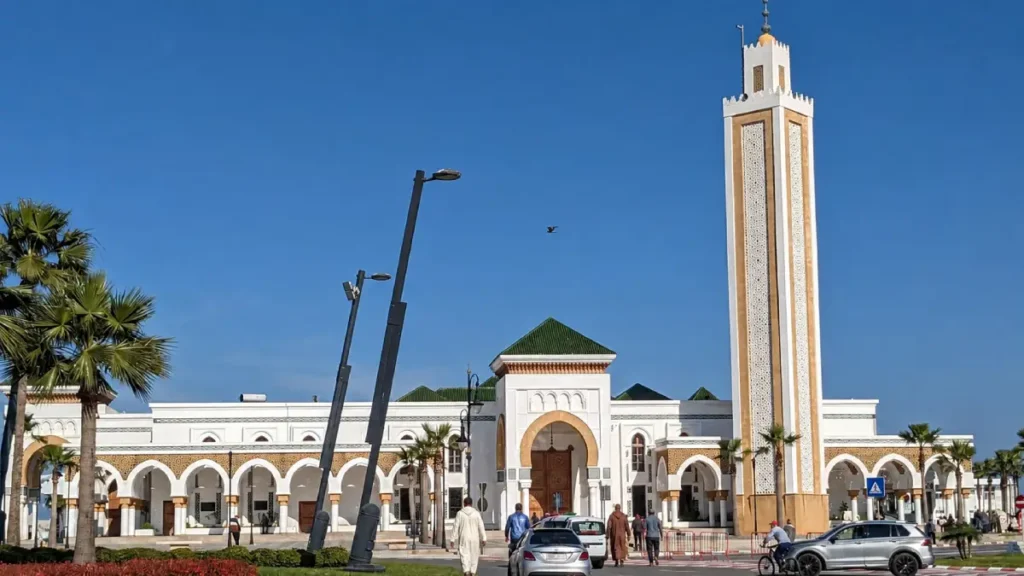
Can Non-Muslims Enter Mosques in Morocco?
Most functioning mosques in Morocco are not ordinary tourist attractions, and non-Muslim visitors should not simply walk inside.
There are specific exceptions where visits are organized.
The best-known example is the Hassan II Mosque in Casablanca, which offers official guided visitor tours.
If a mosque or religious site is open to visitors, follow the rules about clothing, shoes, photography and where you are allowed to walk.
If it is not clearly open to tourists, admire it from outside.
That simple rule avoids awkward situations.
Ramadan Etiquette for Travelers
Ramadan changes the rhythm of Morocco. Religion is an important part of Morocco Culture & Etiquette, especially around Ramadan, prayer and daily routines.
Many Muslims fast during daylight hours, which means not eating or drinking until sunset. Visitors are not expected to fast.
Hotels and tourist-oriented restaurants may continue serving food, although opening hours can change. What matters is discretion.
If people around you have not eaten or had water for many hours, walking through a traditional neighborhood eating a sandwich or smoking openly is not a very thoughtful thing to do.
Eat and drink somewhere appropriate rather than making a performance of it in the street.
The atmosphere changes dramatically near sunset. Roads can become busy as people hurry home, and some shops may close temporarily.
Then, after the fast is broken, streets and cafés can become lively again.
If you travel during Ramadan, do not see these changes as bad service or disorganization. You are simply seeing Morocco follow a different daily rhythm for one month.
Bargaining in Morocco Without Making It a Battle
Bargaining is normal in many souks and independent shops.
It is not normal everywhere.
Supermarkets, modern retail stores, restaurants with menus and businesses displaying fixed prices are generally not places to negotiate.
In the souk, the first price may be an opening point rather than a final price.
That does not mean you need to turn every purchase into a 30-minute fight.
Ask the price.
Decide what the item is worth to you.
Make a reasonable counteroffer.
Keep the conversation relaxed.
If you cannot agree, say thank you and leave.
Walking away politely is completely acceptable.
What I dislike seeing is when bargaining becomes disrespectful.
A traveler starts insulting the product, raising their voice or fighting over an amount that is insignificant to them but meaningful to the seller.
You are allowed to negotiate hard.
Just remember you are dealing with a person, not an algorithm.
If you want more practical information about cash, cards, ATMs and the dirham, see my Money in Morocco guide.
Tipping in Morocco
Tipping is common, but Morocco does not have one universal percentage that applies to every situation.
A small tip is appreciated when somebody has provided good service.
That might include:
- Restaurant and café staff
- Hotel or riad staff
- Drivers
- Porters
- Guides
- People providing a genuine service during your trip
The amount should make sense for the service.
Do not feel pressured to tip every stranger who gives you two seconds of directions.
At the same time, when somebody spends meaningful time helping you, a small gesture of appreciation is normal.
What matters almost as much as the money is how you give it.
A smile and “shukran” go a long way.
Public Affection and Relationships
Morocco is more socially conservative about public affection than many Western countries.
Holding hands is unlikely to surprise anyone in the main tourist areas.
Kissing passionately or behaving very intimately in public is different.
My advice for couples is straightforward:
keep intimate affection private.
This applies particularly around religious sites and in traditional neighborhoods.
You do not need to behave coldly toward your partner.
Just understand that public space here has different boundaries.
Alcohol and Public Behavior
Alcohol is available in Morocco.
Licensed hotels, restaurants and bars serve it, particularly in major cities and tourist areas.
That does not make drinking culture the same as it is in every European or North American destination.
Drinking openly in public streets or becoming visibly drunk outside a licensed setting can cause problems.
If you want a drink, enjoy it somewhere where alcohol is properly served.
The same general principle applies to public behavior.
A loud argument, aggressive confrontation or drunken scene attracts far more attention than quietly resolving a disagreement.
Staying calm is one of the most useful cultural skills you can bring to Morocco.
Hospitality, Help and Knowing When to Say No
Moroccan hospitality can be one of the most memorable parts of a trip, but offers of help are not always easy for first-time visitors to interpret. Moroccans often offer help.
Sometimes it is genuine.
Sometimes a person hopes for a tip.
In tourist areas, an offer of directions may also become unofficial guiding or an attempt to bring you to a particular shop.
You do not need to treat every offer as a scam.
You also do not need to accept every offer because you are afraid of being rude.
If you do not need help:
“La, shukran.”
Keep walking.
If somebody keeps following you or creates pressure, become firmer.
Being culturally respectful does not mean abandoning your boundaries.
For situations involving fake guides, misleading directions, taxi problems and other tourist traps, read my Morocco Travel Scams guide.
And if an interaction makes you genuinely concerned rather than simply uncomfortable, my broader Safety in Morocco guide explains how I recommend handling common safety situations.
Women Travelers and Cultural Context
Morocco welcomes women travelers, including women traveling alone, but the social environment can feel different from home.
A woman may receive more attention, questions or comments than she is used to.
Some women find that slightly more modest clothing reduces attention in traditional areas.
Others find that confident body language and clearly ending unwanted conversations make the biggest difference.
There is no single way every woman needs to behave.
The cultural advice is simply to understand the setting, trust your judgment and know that politeness does not require you to keep talking to someone who is making you uncomfortable.
For more detailed advice about harassment, clothing, accommodation and traveling independently, see my Solo Female Travel Safety in Morocco guide.
12 Cultural Mistakes I Would Avoid in Morocco
Most Moroccans are forgiving when visitors make an innocent mistake.
Still, these are situations I would try to avoid:
- Walking into an interaction without greeting anyone. A quick “Salam” changes the tone immediately.
- Photographing people close-up without permission. Ask first.
- Assuming every mosque is open to tourists. Confirm before entering.
- Wearing beachwear through a traditional neighborhood. Dress for the setting.
- Being very intimate with your partner in public. Keep private behavior private.
- Getting aggressive while bargaining. Negotiate calmly or walk away.
- Assuming every offer of help is either completely free or automatically a scam. Clarify what you need.
- Using your left hand unnecessarily when sharing traditional food. Use the right when practical.
- Reaching across a communal dish. Eat from the area in front of you.
- Being loudly drunk in public. Enjoy alcohol only in appropriate places.
- Ignoring Ramadan completely when everyone around you is fasting. A little discretion is respectful.
- Treating unfamiliar behavior as automatically hostile. Sometimes something feels strange simply because the cultural context is different.
You will probably make a small mistake at some point. Everyone does. Smile, adjust and continue your trip.
Useful Moroccan Words for Travelers
You do not need to learn Darija before visiting Morocco, but a few words make everyday interactions warmer.
| English | Darija |
|---|---|
| Hello | Salam |
| Peace be upon you | Salam Alaikum |
| Thank you | Shukran |
| No, thank you | La, shukran |
| How are you? | Labas? |
| Welcome | Marhba |
| Goodbye | Beslama |
Even using only Salam and Shukran makes a difference.
People understand that you are a visitor. The effort matters more than perfect pronunciation.
Morocco Culture & Etiquette FAQs
Is Morocco strict about etiquette for tourists?
Not in the way many travelers imagine. Visitors are not expected to know every Moroccan custom. Basic respect, appropriate behavior around religious places, polite greetings and awareness of local norms matter much more than perfect etiquette.
What is considered disrespectful in Morocco?
Taking close-up photographs without permission, behaving disrespectfully around religion, creating loud confrontations, ignoring clear social boundaries and being extremely intimate in public can all create unnecessary discomfort.
Should I say Salam Alaikum in Morocco?
You do not have to, but it is a friendly greeting and usually appreciated. “Salam” is also perfectly fine for a visitor who wants something easier to remember.
Should tourists use their right hand in Morocco?
When eating traditionally or giving and receiving something, using the right hand when practical is considered polite. Visitors are not expected to perform the custom perfectly.
Do tourists need to dress modestly in Morocco?
There is no single tourist dress code, but relatively modest clothing generally fits more comfortably in medinas, traditional neighborhoods, rural areas and religious settings. Beach and resort environments are more relaxed.
For detailed clothing advice, use my What to Wear in Morocco guide.
Is it rude to refuse mint tea?
Not automatically. Tea is an important gesture of hospitality, so accepting when you have time is nice. If you do not want it, decline warmly rather than treating the offer dismissively.
Can tourists enter mosques in Morocco?
Do not assume a mosque is open to non-Muslim visitors. Most functioning mosques are not ordinary tourist attractions. Specific places such as the Hassan II Mosque in Casablanca offer organized visitor access.
Can I take photos of people in Morocco?
Ask permission before taking identifiable close-up photographs of people. Respect a refusal and avoid photographing sensitive military, political or security locations.
How should I behave during Ramadan in Morocco?
Visitors do not have to fast, but discretion around eating, drinking and smoking publicly during fasting hours is respectful. Expect some businesses and schedules to change.
Is bargaining expected everywhere?
No. Bargaining is common in souks and many independent shops but not in supermarkets, modern fixed-price stores or restaurants displaying set prices.
Is public affection acceptable in Morocco?
Keep it discreet. Holding hands is generally different from intimate kissing or prolonged physical affection, particularly in traditional and religious surroundings.
Do cultural misunderstandings make Morocco unsafe?
Usually they affect comfort more than safety. Understanding how greetings, personal space, bargaining and boundaries work can prevent ordinary situations from feeling more threatening or confusing than they really are.
Planning Your First Trip to Morocco
Understanding culture makes everything else easier.
You know why a greeting matters.
You know why a shop conversation may take longer.
You understand why Friday, Ramadan or prayer time can change the rhythm of the day.
You know when someone is being hospitable and when you need to make your boundaries clearer.
And you stop worrying that every unfamiliar interaction means you have done something wrong.
If you are still organizing your trip, my Plan Your Trip to Morocco guide will help you put the practical side together.
Final Words From a Moroccan Guide
You do not need to become Moroccan to travel well in Morocco.
You do not need perfect Arabic.
You do not need to memorize dozens of customs.
And you definitely do not need to spend your holiday worrying about accidentally offending everyone around you.
What matters is much simpler.
Greet people.
Be patient.
Ask before photographing someone.
Respect religious and private spaces.
Pay attention to how people behave around you.
And keep your boundaries when an interaction becomes uncomfortable.
Moroccans generally understand that visitors come from different cultures. Small mistakes are normal.
What people notice is effort.
After years of guiding travelers through my country, I have seen that visitors who understand these basic parts of Morocco culture and etiquette usually relax much faster.
They stop trying to decode every interaction.
They become more comfortable saying yes when they genuinely want to participate and more comfortable saying no when they do not.
And that is when Morocco becomes much easier to enjoy—not because you learned every rule, but because you understand the people and the context a little better.