Morocco in March: Weather, What to Wear & Travel Tips
March is one of my favorite months to show guests around Morocco. Morocco in March sits in that beautiful middle ground between winter and summer: Marrakech is usually warm without the intense summer heat, the Atlas valleys begin turning green, orange blossom perfumes the streets, and the Sahara offers comfortable afternoons and much cooler nights. But March can still surprise first-time visitors. Mornings in Merzouga may feel cold, and mountain areas can be much cooler than Marrakech. Depending on the year, Ramadan and Eid al-Fitr may also fall in March, so travelers should check the dates before booking because opening hours and daily rhythms can change. Easter can also bring stronger spring travel demand, especially toward the end of the month, so it is wise to book popular riads and tours earlier.
Table of Contents
Table of Contents
The Magic of the “Goldilocks” Season in Morocco
Some links in this guide may earn a small commission at no extra cost to you. I only recommend services I trust for planning a Morocco trip.
March is what I call the “Goldilocks” season in Morocco. Not too hot, not too cold. For many travelers, especially first-time visitors, it is one of the best months to come.
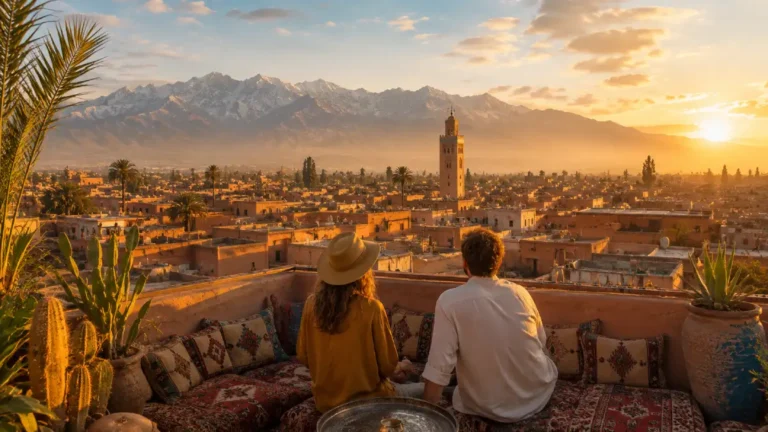
In Marrakech, daytime temperatures usually feel perfect for walking: warm sun, blue sky, café terraces, gardens, and long medina afternoons. The city can reach around 23°C to 26°C during the day, but evenings still ask for a jacket. This is where many travelers make their first mistake. They pack like they are going to summer Morocco, then they shiver after sunset on a riad rooftop.
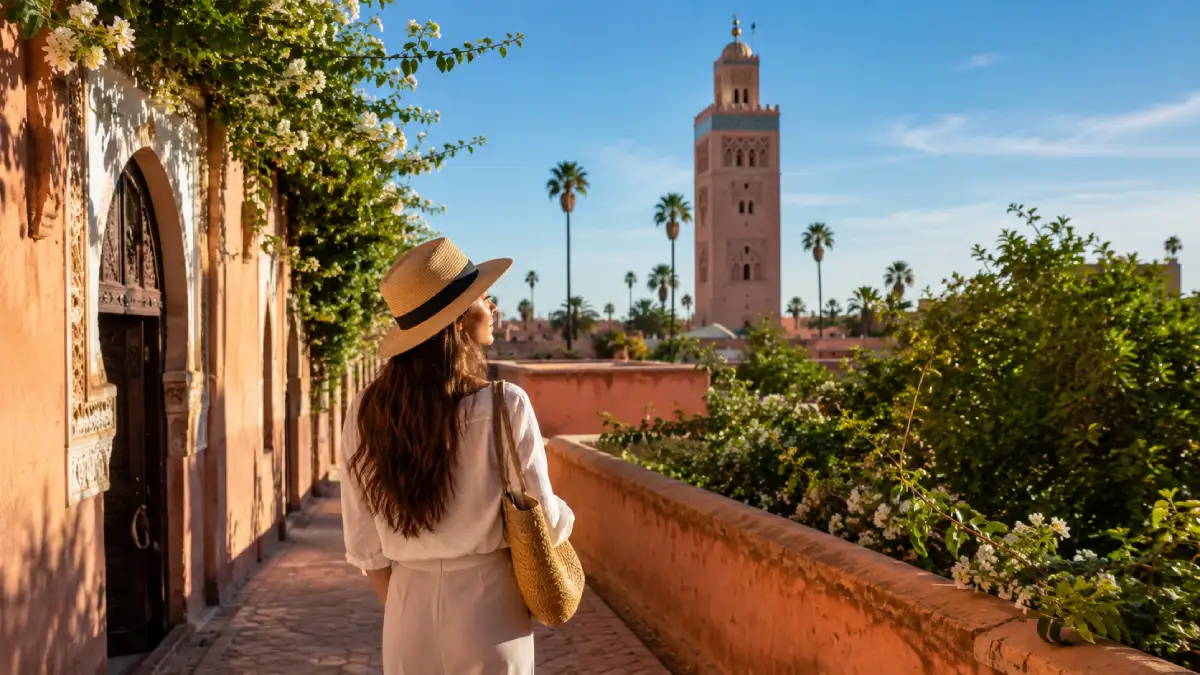
The special thing about March is not only the temperature. It is the feeling. In Marrakech, the orange trees begin to perfume the city. You walk near a garden or through a quiet street after breakfast, and suddenly the air smells sweet. This is zahria, orange blossom season, and it gives the city a softness you do not feel in August.
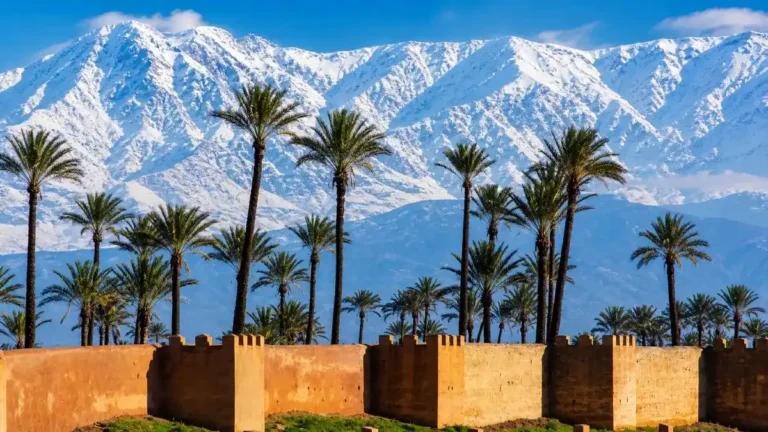
The Atlas Mountains are also beautiful in March. The lower valleys can look neon-green, especially around Imlil, Ourika, and the road toward Ouirgane. But high peaks may still hold snow. I always tell guests: March in Morocco can give you spring and winter on the same day.
March in Morocco is defined by mild temperatures, spring blooms, the end of winter rain, cold mountain and desert mornings, and excellent conditions for city walks, Sahara Desert tours, and cultural travel.
Is March a Good Time to Visit Morocco?
Yes, March is one of the best times to visit Morocco because the weather is mild, the landscapes are green, the desert is comfortable by day, and major cities are easier to explore than in summer.
The only thing you must respect is the variation. Morocco is not one flat destination. Marrakech, Fes, Merzouga, Essaouira, Chefchaouen, and the Atlas Mountains can all feel different in the same week. That is why a smart March itinerary needs layers, good timing, and realistic travel distances.
March is a beautiful month for soft spring beginnings, cooler mornings, and green landscapes. But if you want warmer days, easier evenings, and more confidence for longer routes, read my Morocco in April guide too before choosing your final travel month. If you are planning even later in spring, my Morocco in May guide explains the warmer side of spring, Rose Festival season, and the last comfortable window for the Sahara before summer heat arrives.
For the bigger planning picture, start with my Morocco Travel Guide, then compare all spring months in my Spring in Morocco guide and my Best Time to Visit Morocco guide.
Navigating the 2027 Religious Calendar: Ramadan, Eid & Easter
March 2027 is not a normal March. It has two important cultural moments: the end of Ramadan and the Easter travel rush.
Ramadan in Morocco 2027: Spiritual Silence Before the Celebration
Ramadan 2027 is expected to begin in early February and end around March 9 or 10, depending on the official Moroccan moon sighting. Timeanddate lists Eid al-Fitr in Morocco on March 10, 2027, as a tentative national holiday, with a second holiday on March 11.
For visitors, the first days of March 2027 will still feel like Ramadan. During the day, life becomes slower. In smaller towns, many local restaurants may be closed until sunset. In tourist areas like Marrakech, Fes, Essaouira, and major hotel zones, you will still find places to eat, but the timing changes.
The most beautiful moment is sunset. I call it the “ghost hour.” Streets suddenly empty as people go home to break the fast with ftour. Then, after food, tea, soup, dates, and family time, the streets wake up again. Marrakech after Ramadan sunset can feel like the whole city has taken a deep breath.
For tourists, Ramadan is not something to fear. It can be a rich cultural experience. But you need patience, respect, and flexible timing.
Eid al-Fitr Celebrations Morocco: Beautiful, Busy, and Not Easy for Transport
Eid al-Fitr is joyful. Families dress well, visit relatives, eat sweets, and celebrate the end of fasting. But for travelers, Eid can also be difficult logistically.
Intercity buses, trains, and shared taxis get booked quickly because Moroccans travel to see family. CTM buses and trains can fill days in advance. Banks and government offices close, and some shops or local restaurants may stay closed for a short period. If you are traveling around March 9–11, 2027, book transport early and avoid planning a tight same-day connection.
This is especially important if you are going from Marrakech to Fes, Marrakech to Merzouga, Casablanca to Marrakech, or any route where missing one bus can break your plan.
Easter in Morocco 2027: The Late-March Price Spike
Easter Sunday falls on March 28, 2027. This matters because European families often travel during school holidays, and Morocco is close, warm, and popular.
Late March 2027 will likely bring a short-term peak in Marrakech, Fes, Essaouira, the Sahara routes, and popular riads. I strongly recommend booking good riads, desert camps, and private drivers 2 to 4 months in advance if you plan to travel during the Easter period.
For the best value, early March may be better. For families tied to school holidays, late March is still excellent, but you need to reserve earlier and accept higher prices.
Morocco Weather in March: From Snowy Peaks to Sahara Dunes
Morocco weather in March is one of the biggest reasons people love this month. But do not look at one temperature for the whole country. Morocco is mountains, coast, desert, and old cities all together.
City Temperature Comparison for March
| Region | Daytime Feel | Night/Morning Feel | Local Advice |
|---|---|---|---|
| Marrakech | 23°C–26°C | 10°C–14°C | Warm days, jacket at night. |
| Fes | 18°C–23°C | 7°C–11°C | Cooler evenings, good walking weather. |
| Essaouira / Atlantic Coast | 17°C–21°C | 11°C–14°C | Breezy, fresh, usually too cold to swim. |
| Merzouga / Sahara Desert | Up to 28°C | Around 7°C at dawn | Hot afternoon, cold sunrise. |
| Atlas Mountains | 8°C–18°C depending on altitude | Can be near freezing | Snow possible on high routes. |
Marrakech Weather in March
Marrakech weather in March is usually beautiful for exploring. You can visit Bahia Palace, Ben Youssef Madrasa, the souks, Majorelle Garden, and rooftop cafés without the heavy summer heat. This is the month when walking tours feel natural, not like survival training.
But bring a light jacket. After sunset, especially on rooftops or in riad courtyards, the temperature drops quickly. Many traditional riads have tiled floors and open courtyards, so they can feel colder inside than outside.
For city planning, my Marrakech Travel Guide will help you choose neighborhoods, timing, and what to see first.
Sahara Desert Tours March: Warm Days, Cold Mornings
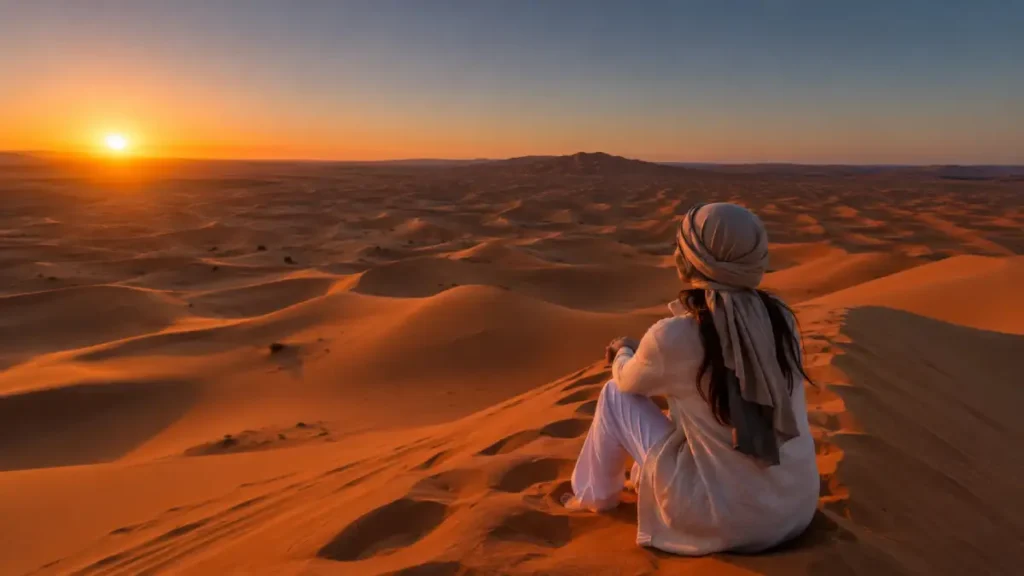
March is an excellent month for the Sahara Desert, especially Merzouga and Erg Chebbi. I recommend Merzouga for most March travelers because the camps are more reliable, easier to reach, and more likely to have better comfort for cold nights.
But let me be honest: the Sahara is a drama queen in March. At 3 PM, you may be taking photos in warm light and thinking, “This is perfect.” At 6 AM, before sunrise, you may be wrapped in a blanket asking why the desert feels like winter.
For March Sahara Desert tours, I recommend:
- Do not drive Marrakech to Merzouga in one day. It is around a 9-hour haul and too exhausting.
- Sleep one night in the Dades Valley or around Tinghir before reaching the dunes.
- Choose a camp with real beds, proper blankets, and ensuite toilets if your budget allows.
- Bring warm layers for sunrise and nighttime.
- Expect sandstorms to be rare but possible. A good guide simply adjusts the timing.
For most travelers, a 3-day trip from Marrakech to Merzouga works, but 4 days feels much better. If you want to understand the options, read my Sahara Desert Tours guide before booking.
Atlas Mountains Hiking March
Atlas Mountains hiking March can be wonderful, especially in the valleys around Imlil, Ourika, and Ouirgane. The fields are green, almond blossoms may still appear in some areas, and the air is clean.
But do not underestimate the mountains. I once had a tour where we expected spring sun, and suddenly we had snow. Some mountain guesthouses are simple and not fully heated. This can become a mental challenge for travelers who packed only city clothes.
If you plan hiking, go with a local mountain guide, especially around Imlil. For multi-hour walks, donkeys can help carry gear, and local guides understand weather changes, trails, and village etiquette.
Essaouira and the Atlantic Coast
The coast in March is mild, breezy, and green. Essaouira is perfect for seafood, medina walks, photography, and a slower pace after Marrakech.
But swimming? For most people, no. The Atlantic water can be around 17°C, which is cold unless you have a wetsuit. Come for the sea air, grilled fish, ramparts, and relaxed cafés, not for a warm beach holiday.
What to Wear in Morocco in March: Modesty Meets Layering
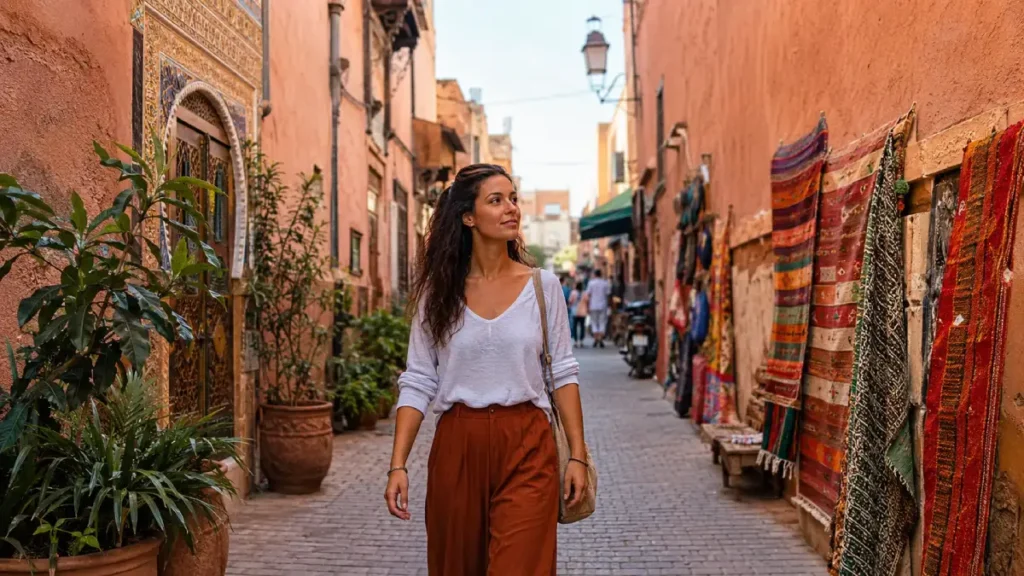
What to wear in Morocco in March is one of the most important questions, because you are dressing for several climates in one trip.
My best advice is simple: dress in layers and keep it modest.
March is not the month for one perfect outfit. You may need a T-shirt at midday in Marrakech, a fleece in the Atlas Mountains, and a warm jacket at sunrise in the Sahara.
The Spring Shuffle Packing Strategy
For March, I like what I call the “spring shuffle.” You add and remove layers during the day.
A practical packing list for Morocco in March should include:
- Light T-shirts or breathable tops
- Long-sleeve shirts for sun and modesty
- A sweater or fleece
- A light puffer jacket for desert and mountain mornings
- Comfortable trousers, jeans, or joggers
- A scarf for wind, sun, and cultural comfort
- Closed-toe walking shoes
- Sandals for riads, beach towns, or desert camp
- Sunglasses and sunscreen
- Slippers for cold tiled riad floors
The slipper tip sounds small, but trust me. Many riads have beautiful tiles, and those tiles feel cold in March mornings.
What to Wear in Morocco in March as a Woman
For women, Morocco is not as strict as some people imagine, but modest clothing makes travel easier and more respectful. Shoulders, knees, and midriffs should generally stay covered, especially in medinas, villages, mosques from the outside, and conservative areas.
A family-friendly wardrobe guide for Morocco in spring would include loose trousers, maxi skirts, long dresses, linen shirts, cardigans, and a scarf. You do not need to dress like a local, but you should avoid very revealing clothes in public spaces.
What to wear in Morocco in March as a woman is not about fear. It is about comfort, respect, and reducing unwanted attention. For a deeper packing and outfit guide, read my full guide on how to dress in Morocco before you pack your suitcase.
Best Places to Visit in Morocco During March
March is good almost everywhere, but some places become extra special.
Marrakech for Orange Blossom Season
Marrakech in March is alive without being too hot. Gardens are beautiful, rooftops are comfortable, and the medina has energy without the intense summer pressure.
Visit gardens in the morning, explore souks in the afternoon, and enjoy rooftop views before sunset. During Ramadan days in early March 2027, plan lunch in tourist-friendly areas or your riad. After sunset, the city becomes lively again.
Merzouga for Sahara Desert Comfort
Merzouga is my top desert recommendation for March. Erg Chebbi dunes are iconic, the road access is easier than Erg Chigaga, and the camp choice is wider. For cold nights, this matters.
Luxury desert glamping is not only about Instagram. In March, a better tent with heating or thick bedding can change the whole experience.
Imlil and the Atlas Valleys for Green Landscapes
If you love nature, add Imlil or another Atlas valley. The lower valleys feel fresh and green, while the high peaks still remind you that winter has not fully left.
For hikers, March is excellent, but go prepared. Weather can change fast.
Volubilis for Wildflowers and Roman History
Volubilis is one of the best March photography spots in Morocco. The Roman ruins sit among green fields and spring flowers, and the light can be beautiful. If you are traveling between Fes, Meknes, and Chefchaouen, this is a smart cultural stop.
M’Hamid and the International Nomads Festival
The International Nomads Festival in M’Hamid El Ghizlane is often a late-March cultural highlight, celebrating nomadic music, poetry, heritage, and desert identity. If your timing matches, it can add real depth to a southern Morocco trip.
But M’Hamid and Erg Chigaga require more effort than Merzouga. You need more 4×4 driving and better planning. For adventure lovers, yes. For first-time visitors who want comfort, Merzouga is usually easier.
Is Morocco Safe for Solo Female Travelers in March?
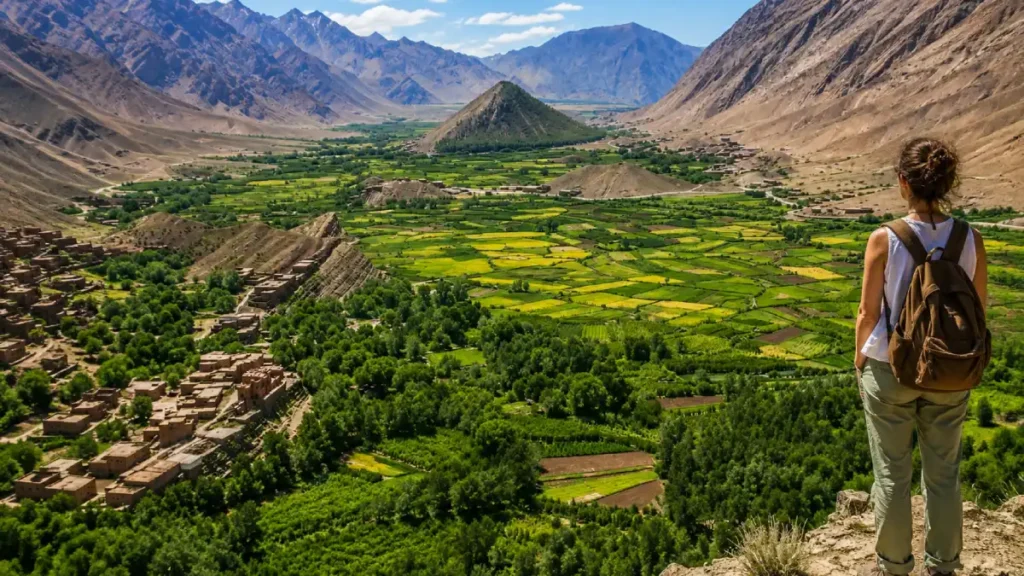
Is Morocco safe for solo female travelers? In general, yes, Morocco is safe for many solo women, including in March. But I always prefer honest advice over sugar-coating.
The main issue is not usually danger. It is street attention. In Marrakech and Fes especially, some men may call out, joke, follow for a short distance, or try to sell something too aggressively. I call this “male show-ponying” or peacocking. It can be annoying, but it is rarely dangerous.
The best tactic is to walk with purpose. Do not look lost, even when you are. Use offline maps, keep your phone secure, and avoid empty alleys late at night.
If someone is persistent, start with a firm “La, shukran” — no, thank you. If they continue, use the word “Hchouma.” It means shame, and in Moroccan culture it has power. Say it firmly, not aggressively. Many people understand immediately that they crossed a line.
For more detailed advice, you can read my full guide to solo female travel safety in Morocco, where I explain what women should expect in medinas, taxis, riads, souks, and late-night situations.
For solo female travel safety tips for Morocco medinas, I recommend staying in a well-reviewed riad, arriving before dark when possible, asking your riad for trusted taxi help, and using a guide for your first medina walk if you feel nervous.
Essential Travel Tech, Transport and Money Tips for 2027
March 2027 will be busy because of Eid and Easter, so logistics matter.
Connectivity: Get Online Before You Get Lost
An eSIM like Airalo or Saily can be useful because you avoid airport haggling and can use maps immediately. You can also buy a local SIM card in Morocco, but after a long flight, many travelers prefer to be connected before leaving the airport.
Offline maps are still important. Medina GPS can be patchy, especially in Marrakech and Fes alleys. Download maps before you travel.
Money Tip: Cash, ATMs and Bank Cards
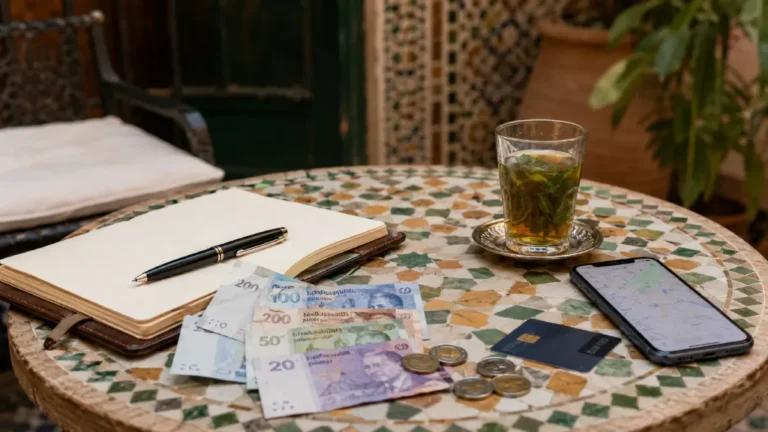
The Moroccan dirham is a closed currency, meaning it is not always easy or practical to get outside Morocco. I usually tell my guests to bring a good bank card, withdraw Moroccan dirhams from ATMs after arrival, and keep smaller notes for taxis, tips, cafés, markets, and small shops.
Check your bank’s foreign transaction and ATM withdrawal fees, carry a backup card separately, and withdraw before leaving for rural areas. My Money in Morocco guide explains the full cash-and-card plan, including what to do with leftover dirhams before departure.
A 200-DH note can be annoying for small purchases. Break large notes at supermarkets, bigger restaurants, your hotel, or a riad reception when possible. For tipping guides, drivers, luggage helpers, and café staff, 10-DH coins and 20-DH notes are much easier.
For a deeper breakdown of daily prices, riads, food, transport, tours, and realistic travel budgets, read my full guide to Morocco travel costs.
Transport: Book Early Around Eid and Easter
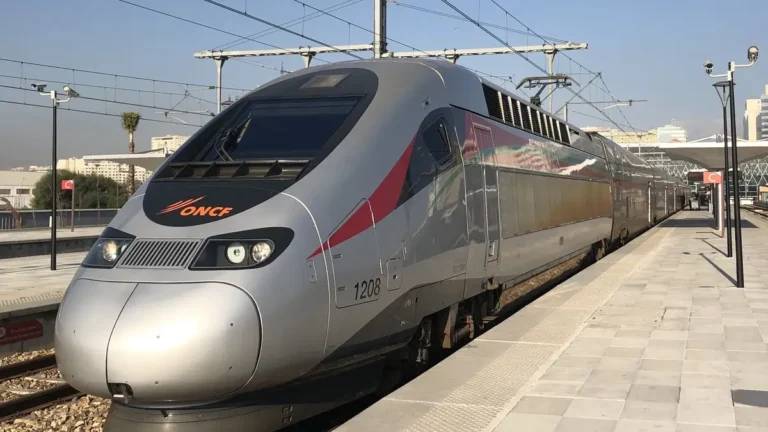
CTM buses are reliable and air-conditioned for many routes. Trains are useful between cities like Marrakech, Casablanca, Rabat, Tangier, Meknes, and Fes. Private drivers are best when you want flexibility, photo stops, mountain routes, or desert travel.
Around Eid al-Fitr and Easter 2027, do not leave transport to the last minute. This is not the time to “see how it goes” if your itinerary is tight.
For routes and travel planning, read my Morocco itinerary 7, 10 & 14 days guide.
Budget vs Mid-Range vs Luxury: What March Costs
March is not the cheapest month, but it gives strong value because the weather is excellent. Prices rise around Easter, and in 2027 the late-March period will be especially popular.
A savvy budget traveler can manage around $400 / $500 per week using hostels, buses, simple local food, and careful spending.
A mid-range traveler should expect around $600–$800 per week, especially with nice riads, some guided visits, and a few comfortable transfers. Good riads may range around £40–£80 per night depending on location and date.
Luxury travelers should expect $1,200+ per week, especially with palatial hotels, private drivers, fine dining, and luxury desert camps.
My honest advice: spend more where it matters. For March, that means good desert bedding, safe transport, a well-located riad, and a trusted guide when the place is confusing or culturally rich.
2027 Festival and Travel Calendar for March
| Date / Period | Event or Travel Moment | What Travelers Should Know |
|---|---|---|
| Early March 2027 | Final days of Ramadan | Slower days, magical sunset atmosphere, and some daytime closures. |
| Around March 9–11 | Eid al-Fitr in Morocco | Family celebrations, busy transport, and closures for banks and offices. |
| Mid-March | Spring travel window | Great weather, green landscapes, and good timing for desert trips. |
| Late March | Possible Nomads Festival period | M’Hamid can be culturally special, but this period needs early planning. |
| March 28 | Easter Sunday 2027 | Riads, drivers, and desert camps should be booked early. |
My Honest Local Advice for March 2027
If you are coming to Morocco in March 2027, plan with two things in mind: culture and climate.
Culture because Ramadan and Eid can change opening times, transport, and the feeling of the streets. Climate because Morocco can give you warm Marrakech, cold desert sunrise, breezy Essaouira, and snowy Atlas peaks in one trip.
Do not overpack your itinerary. Morocco looks small on a map, but the roads tell another story. Marrakech to Merzouga is not a quick jump. Fes to Chefchaouen takes time. Mountain roads require patience.
If you have 7 to 10 days, you can enjoy Morocco properly. With 10 days, you can combine Marrakech, the Atlas Mountains, the Sahara, Fes, and maybe Chefchaouen or Essaouira without turning the trip into a race.
Planning a trip to Morocco in March 2027? If you want a local expert to handle the long desert drives, choose the right riads, avoid bad camp surprises, and shape the route around real local timing, reach out for a custom private tour. I will be happy to help you build a Morocco trip that feels smooth, honest, and unforgettable.
FAQs About Morocco in March
Is it cold in Morocco in March?
March is mild during the day, but mornings and evenings can be cold. Marrakech may feel warm at midday, while the Sahara and Atlas Mountains can feel very cold at sunrise or after dark. Pack layers, not only summer clothes.
Is March a good time to visit the Sahara Desert?
Yes, March is one of the best months for the Sahara Desert because the daytime weather is warm without the extreme summer heat. The big surprise is the morning cold, especially around sunrise, so choose a good camp and bring warm layers.
What is Morocco weather in March like?
Morocco weather in March depends on the region. Marrakech is usually warm and pleasant, Fes is cooler, Essaouira is breezy, the Sahara has hot afternoons and cold mornings, and the Atlas Mountains can still have snow at high altitude.
What to wear in Morocco in March?
Wear layers, comfortable walking shoes, and modest clothing. For cities, long trousers, dresses, shirts, light sweaters, and a jacket work well. For desert and mountains, add a fleece or puffer jacket for cold mornings.
What is the dress code for female tourists in Morocco?
There is no strict legal dress code for tourists, but modest dress is strongly recommended. Covering shoulders, knees, and midriffs shows respect and usually makes the travel experience more comfortable, especially in medinas and villages.
Is Morocco safe for solo female travelers?
Morocco is generally safe for solo female travelers, but street attention can happen in busy medinas like Marrakech and Fes. Walk with purpose, use offline maps, stay in well-reviewed accommodation, and use “La, shukran” or “Hchouma” if someone becomes too persistent.
Can you drink alcohol in Morocco during Ramadan?
Adult travelers may find alcohol in licensed hotels, bars, and some tourist restaurants, but sales are more limited during Ramadan. Supermarkets and liquor shops may stop selling it, and drinking publicly is not respectful. Keep it discreet and follow local rules.
Are shops closed during Ramadan and Eid al-Fitr?
During Ramadan, many shops still open, but hours can change and the day moves slower. Around Eid al-Fitr, banks, government offices, and some local businesses close, and transport becomes very busy because Moroccan families travel to celebrate together.
Is Easter in Morocco 2027 a busy travel time?
Yes. Easter Sunday is March 28, 2027, and late March is likely to be busy in Marrakech, Fes, Essaouira, and the Sahara routes. Book riads, private drivers, and desert camps 2 to 4 months in advance if you want the best choices.
What is “Hchouma” in Morocco?
“Hchouma” means shame in Moroccan Arabic. It is a strong cultural word you can use if someone is being too pushy or inappropriate. Say it firmly, and most people understand they need to stop.