
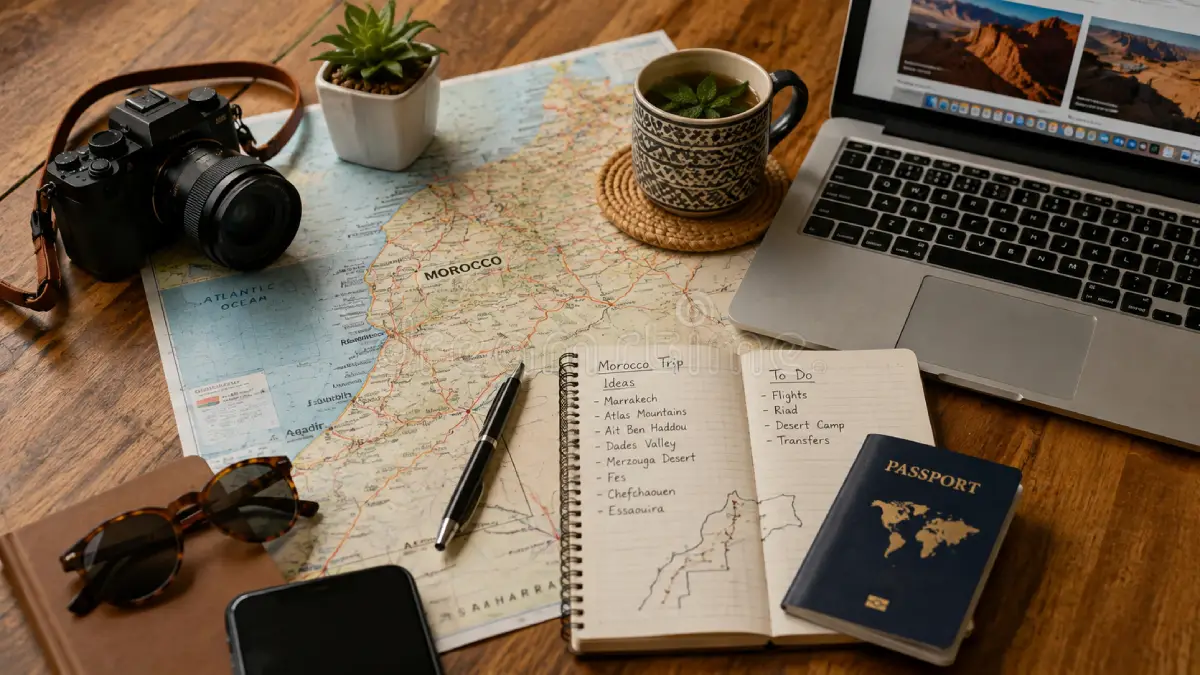
I’m Kamal, a licensed Moroccan tour guide based in Marrakech, and one of the biggest mistakes I see travelers make happens before they even arrive: they start booking hotels, transport and tours before they understand how their Morocco trip should fit together.
Morocco is not especially difficult to plan, but the order matters.
A beautiful riad in the wrong city can create an unnecessary travel day. A cheap flight can end up costing more if it forces you to cross the country again at the end of your trip. And an itinerary that looks simple on Google Maps can feel very different once you add mountain roads, medina transfers, luggage and sightseeing stops.
This guide is designed to help you plan your trip to Morocco in the right order, so the big decisions make sense before you start booking everything.
For destinations, accommodation, transport and seasonal details, I’ve linked to my dedicated Morocco guides throughout this page so you can go deeper when you reach each planning decision.
What I want to show you here is how I put the pieces together when someone asks me:
“Kamal, where do I actually start?”
If you are still discovering Morocco and deciding what interests you most, begin with my Morocco Travel Guide.
If you already know you want to visit and need to turn that idea into a realistic, well-organized trip, you are in the right place.
Table of Contents
Table of Contents
Plan Your Trip to Morocco at a Glance
| Planning Decision | What to Do |
|---|---|
| Travel dates | Choose the season before building the route |
| Trip length | Decide how many full days you actually have in Morocco |
| Priorities | Choose desert, cities, mountains, coast or a combination |
| Sahara | Decide early because it changes the whole route |
| Arrival airport | Choose it based on your itinerary, not only the cheapest fare |
| Departure airport | Consider leaving from a different city to avoid backtracking |
| Route | Build around geography and realistic travel times |
| Transport | Match trains, car, bus or private driver to each part of the trip |
| Budget | Set your travel style before choosing hotels and transport |
| Accommodation | Prioritize location as much as hotel quality |
| Entry requirements | Check official rules for your own passport |
| Final preparation | Insurance, money, phone data, transfers and documents |
If you plan your trip to Morocco in this order, the route, transport and accommodation decisions become much easier.
Now let’s go through it properly.
Step 1: Choose When You Want to Visit Morocco
Do not begin by choosing ten cities.
Begin with your dates.
Morocco changes considerably through the year because the country includes Atlantic coastline, Mediterranean areas, mountains, inland cities and desert regions.
An itinerary that works beautifully in April may need adjusting in August.
Spring and autumn are usually the easiest periods for travelers who want to combine several regions, but that does not mean they are the only good times to visit.
Summer can work very well if you spend more time on the Atlantic coast.
Winter can be excellent for Marrakech, Fes and the Sahara, although nights can become cold and mountain conditions require more attention.
Your season should influence your route rather than simply being something you check after booking.
I have a complete Best Time to Visit Morocco guide covering weather, months, regions and different types of trips.
Use that guide to choose when.
Then come back here to decide how to organize everything else.
Step 2: Count Your Real Travel Days
There is a big difference between a seven-night holiday and seven full sightseeing days.
If you land at 8 p.m. on your first day and fly home at 9 a.m. on your last day, those are not two full days for exploring.
Start with:
Arrival date
Departure date
Then count the complete days in between.
This sounds obvious, but it changes itineraries constantly.
I often see travelers plan as though arrival and departure days are normal sightseeing days and then discover that their route is too tight.
The number of full days you actually have is one of the most important things to know before you plan your trip to Morocco.
As a general planning rule:
| Time in Morocco | What I Would Plan |
|---|---|
| 3–5 days | One main region or city with a carefully chosen day trip |
| 7 days | A focused route with two or three major experiences |
| 10 days | Enough time for a more balanced first trip |
| 14 days | Enough time to combine several regions without constant rushing |
These are not fixed rules.
A traveler who loves slow mornings and photography needs a different itinerary from someone who enjoys moving every day.
The important thing is not how many destinations you can technically reach. It is how much of your holiday you want to spend inside a vehicle.
For actual routes, use my Morocco Itinerary 7, 10 & 14 Days guide.
I also have dedicated 7-day, 10-day and 14-day itineraries when you are ready to choose the exact route.
Step 3: Decide What Matters Most to You
Before choosing cities, decide what you actually want from Morocco.
I find this much easier than starting with a list of famous places.
Ask yourself:
Is sleeping in the Sahara one of the main reasons I am coming?
Do I care more about history and medinas?
Do I want mountains and hiking?
Do I need a few quiet days by the ocean?
Is food one of the main experiences I want?
Do I want luxury and relaxation or a road trip?
Am I traveling with children or someone who dislikes long drives?
Two travelers with ten days can need completely different itineraries.
If the Sahara is your dream, build around it.
If you dislike long driving days, do not force the Sahara into a short itinerary simply because everyone online tells you it is essential.
If you mainly want medinas, food and history, Marrakech and Fes may matter more.
If relaxation is important, adding Essaouira may improve your trip more than adding another inland city.
The best trip is not the one with the longest list of destinations. It is the one that matches your reasons for coming.
Step 4: Decide About the Sahara Early
The Sahara is not a little excursion you attach to the end of a Marrakech weekend.
This decision affects your whole route.
Merzouga is far from Marrakech and far from Morocco’s Atlantic coast. Reaching it properly usually means traveling through the High Atlas and southeastern Morocco.
That journey is part of the experience.
Aït Ben Haddou, Ouarzazate, the valleys, gorges, villages and changing landscapes between Marrakech and the dunes are not simply obstacles on the way to the desert.
They are some of the most beautiful parts of the trip.
If the Sahara matters to you, decide that before choosing every hotel.
Then build the rest of the trip around it.
For Erg Chebbi, camps, weather and what to expect once you arrive, read my Merzouga Sahara Desert Travel Guide.
And remember: Agafay is not the Sahara.
Agafay can be a lovely experience near Marrakech when you only have limited time, but its rocky landscape is completely different from the large sand dunes around Merzouga.
Step 5: Choose the Right Arrival and Departure Airports
A cheap flight is not always the best flight for your itinerary.
Before booking, look at where your route begins and ends.
Marrakech works naturally for travelers whose trip focuses on Marrakech, the High Atlas, Essaouira or a southern desert route.
Casablanca can make sense when the international flight options work better or when your route includes central and northern Morocco.
Tangier can be useful when beginning a northern Morocco itinerary.
Fes can work well when your journey starts around Fes and northern Morocco.
Agadir is practical for travelers focusing on the southern Atlantic coast.
But the bigger planning trick is this:
you do not always need to arrive and depart from the same Moroccan city.
For example, if your route naturally moves across Morocco, an open-jaw ticket can sometimes prevent an unnecessary final journey back to your arrival airport.
Compare the whole itinerary, not only the airfare.
Saving €40 on a flight is not a saving if you then need an extra hotel, train and half a day of travel simply to return to the same airport.
If you are coming from the United States, my Flights to Morocco From the USA guide covers nonstop routes, connections and choosing between arrival airports.
Step 6: Build the Route Around Geography
This is where many Morocco itineraries go wrong.
On a map, Marrakech, Fes, Chefchaouen, Essaouira and Merzouga can look like a collection of places you should simply connect.
On the ground, they create very different travel days.
Mountains slow journeys.
Medina hotels may require walking transfers with luggage.
The Sahara sits far to the southeast.
Chefchaouen is in the north.
Essaouira is on the Atlantic coast.
Trying to combine opposite sides of Morocco in too little time creates unnecessary backtracking.
When I build a route, I try to make the trip flow in one direction whenever possible.
Avoid:
City → long drive → city → long drive back toward where you started.
Prefer:
Arrival → logical sequence of regions → departure from the city where the route naturally finishes.
When you plan your trip to Morocco, building the route around geography can save hours of unnecessary backtracking.
This is why I always recommend looking at a map before booking hotels.
You do not need to understand every Moroccan road.
You simply need to understand where the major regions sit relative to one another.
Then use the detailed itinerary guide to choose the route.
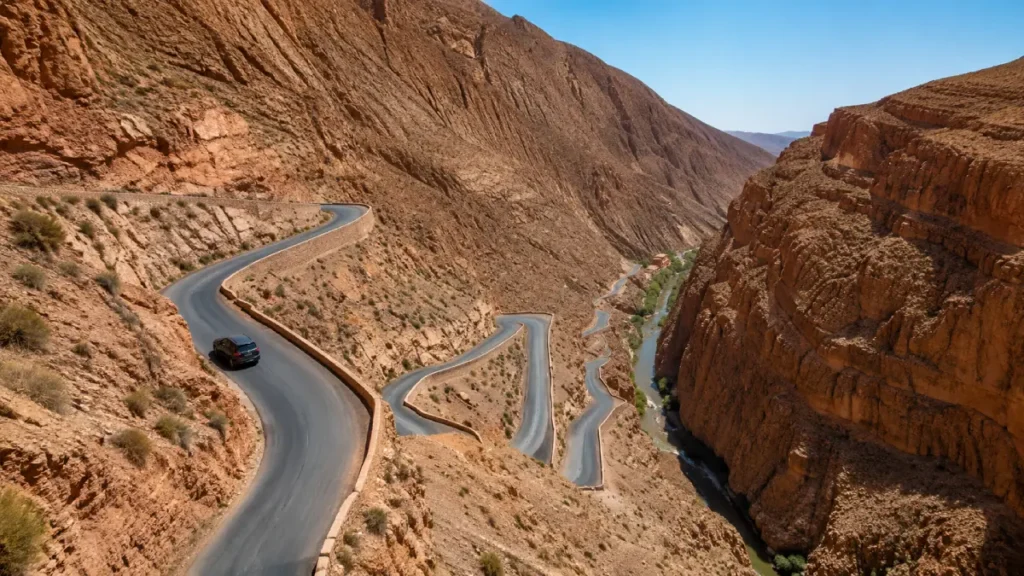
Step 7: Choose Transportation After You Know the Route
Do not choose transportation before you know where you are going.
Different parts of Morocco suit different transport.
Train
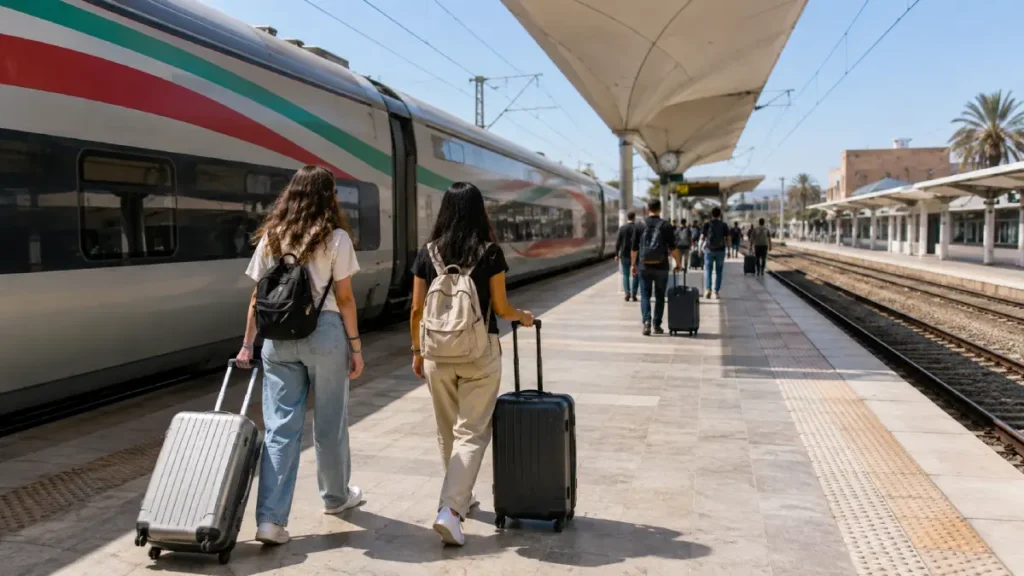
Trains are very useful between several major cities.
If your trip follows the railway network, they can be one of the easiest ways to travel.
My Train Travel in Morocco guide explains stations, tickets, classes and the routes where trains make sense.
Bus
Buses fill many gaps where trains do not operate.
They can work well for independent travelers with more time and lighter luggage.
Rental Car
A rental car gives you independence, particularly for road trips and places outside the main railway network.
It also means dealing with navigation, parking, traffic, fuel, mountain roads and driving after dark.
Read my Rent a Car in Morocco guide before deciding.
Private Driver
A private driver costs more but can make complicated multi-city routes much easier.
It is particularly useful when the journey itself includes sightseeing stops, villages, mountain roads and places that are inconvenient by public transport.
There is no single “best” way to travel around Morocco.
I often combine methods.
Train for one section.
Driver for another.
Taxi inside a city.
Walking inside the medina.
For the full comparison, use my Morocco Transportation Guide.
Step 8: Decide Your Budget Before Choosing Every Hotel
Morocco can work for very different budgets.
What matters is knowing what kind of trip you are trying to build.
Do you want:
Simple accommodation and public transport?
Comfortable riads and selected private experiences?
A private driver and boutique hotels?
Luxury hotels and premium camps?
Decide the general level first.
Then allocate money to the things that affect your experience most.
For many travelers, I would rather see them spend a little more on:
a well-located riad
safe and comfortable transportation
a good desert camp
a knowledgeable guide when it adds real value
than use the entire budget on one luxury hotel and then struggle with the rest of the trip.
For detailed prices, I keep the cost information in separate guides so you can check accommodation, food, transport and activity expenses in more detail.
Use my Morocco Trip Budget Calculator for an estimate and my Morocco Travel Costs guide for accommodation, food, transport and activity prices.
For cash, ATMs, cards and Moroccan dirhams, use Money in Morocco.
Step 9: Choose Accommodation by Location, Not Only Rating
A beautiful hotel in the wrong location can make a trip unnecessarily difficult.
When comparing places to stay, I look at:
Where is it relative to what you want to see?
Can a taxi or private vehicle reach the door?
If it is inside a medina, how far will you walk with luggage?
Is arriving late at night straightforward?
Will you need transport every time you go out?
This is particularly important with riads.
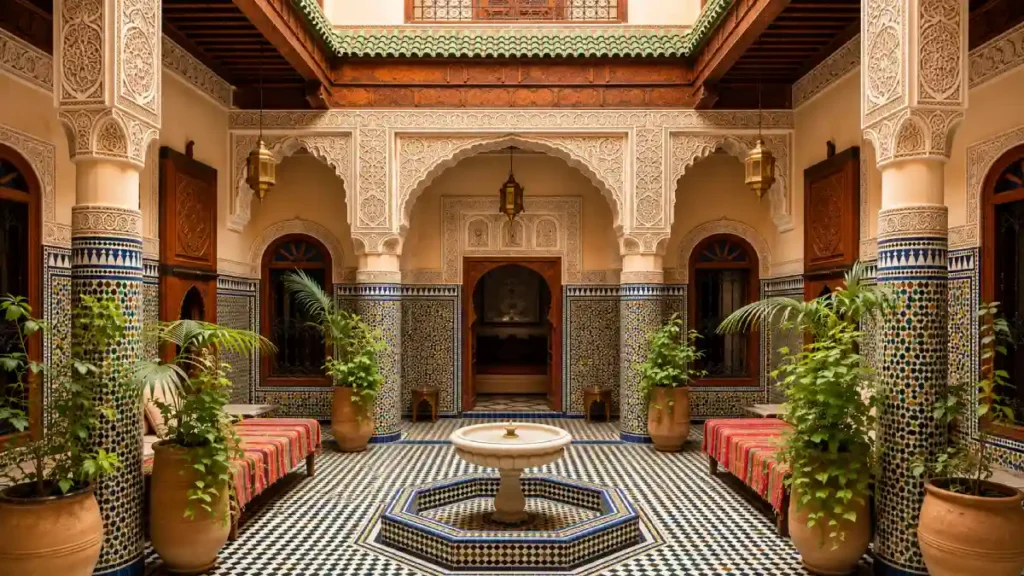
A riad deep inside a medina can be magical.
But two riads with identical reviews can provide very different experiences depending on their location.
For a first-time visitor, easy access sometimes matters more than having the most photogenic courtyard on Instagram.
Choose the neighborhood first.
Then choose the property.
My Best Hotels in Morocco guide will help once you reach that stage.
Step 10: Check Morocco Entry Requirements Using Your Own Passport
Do not rely on a generic statement such as “everyone from these countries gets 90 days.” Entry requirements can depend on nationality, residence status, passport type and other circumstances. Morocco has an official online system where travelers can check whether they need a visa, eVisa or another authorization. Before paying for non-refundable arrangements, check your requirements on the official Accès Maroc visa portal. I also recommend checking again shortly before departure, especially if you booked your trip several months in advance. Passport and entry requirements can change or differ by traveler, so this is one area where I prefer visitors to rely on the official Moroccan system rather than a travel blog, including mine.
Step 11: Book Things in the Right Order
Once you plan your trip to Morocco around a realistic route, you can start booking the important parts with much more confidence.
This is the order I normally prefer:
1. International flights
Your arrival and departure dates create the framework for everything else.
2. Any fixed part of the trip
If the Sahara is essential, a wedding is involved, you have a special event or there is one hotel you absolutely want, secure the difficult piece early.
3. First and final accommodation
I particularly like knowing exactly where a traveler is going after landing and where they will sleep before the departure flight.
4. Key accommodation along the route
Popular riads and desert camps can have limited rooms, especially during busy periods.
5. Important intercity transport
Once hotels are confirmed, lock in the transportation that connects them.
6. Major tours and guides
Book experiences that are genuinely important to you.
7. Flexible activities
Restaurants, hammams, small museums, souk time and casual activities can often remain more flexible.
The goal is not to schedule every hour.
The goal is to secure the parts that would create a serious problem if they were unavailable.
Step 12: Plan Your Arrival Day
The first evening in Morocco deserves more attention than travelers give it.
You may arrive tired.
Your phone may not yet have mobile data.
You may not have Moroccan dirhams.
Your riad may be inside the medina.
And the streets may look very different from what you expected.
Before flying, know:
How are you leaving the airport?
Can the driver reach your hotel?
Where exactly will you meet if you stay inside the medina?
Do you have the accommodation phone number?
Does someone know when you expect to arrive?
I especially recommend arranging the first transfer in advance if you land late, travel with children, have heavy luggage or stay deep inside a medina.
A smooth first hour changes the feeling of the entire trip.
Step 13: Prepare Money and Phone Data
You will probably use both cards and cash in Morocco.
Larger hotels, many restaurants and established businesses often accept cards. Small shops, taxis, tips, market purchases and local restaurants may still require cash.
Do not carry your entire holiday budget around in cash.
Use a combination of:
bank card
some Moroccan dirhams
a backup payment method
Also decide how you will stay connected.
Mobile data is extremely useful for:
Google Maps
WhatsApp
hotel contact
transport information
tickets
translation
banking
If you prefer buying service locally, use my Morocco SIM Card Guide.
If you want data ready before landing, compare options in my Best eSIM for Morocco guide.
Step 14: Read the Safety and Culture Basics Before You Arrive
You do not need to study Morocco for weeks before your holiday.
But understanding a few things before landing makes the first days much easier.
Learn:
- how to handle unsolicited help
- how taxis generally work
- why greetings matter
- when to ask before photographing someone
- how bargaining works
- what clothing fits different settings
- how to behave around religious spaces
- what common tourist scams look like
For general safety, read my Safety in Morocco guide.
For everyday behavior, greetings, Ramadan, food etiquette and social expectations, use my Morocco Culture & Etiquette guide.
And for tourist traps, read Morocco Travel Scams before your first medina day.
These guides are much more useful before the trip than after something has already confused you.
What I Would Book Early — and What I Would Leave Flexible
Not every part of a Morocco trip needs to be reserved months ahead.
I would normally secure international flights, any special hotel you specifically want, Sahara arrangements, important private transport and experiences that are essential to your trip once the route is confirmed.
Restaurants, ordinary shopping, smaller attractions, rooftop stops and free afternoons can usually remain more flexible.
A trip where every hour is booked can become exhausting. Morocco is one of those countries where leaving some room for the unexpected often improves the experience.
My Morocco Pre-Departure Checklist
Before leaving home, I would check these one final time:
Documents
- Passport
- Visa or travel authorization if required
- Travel insurance details
- Flight confirmations
- Hotel addresses and phone numbers
- Important tickets saved offline
- Digital copy of passport
Money
- Bank cards
- Backup card
- Bank informed about travel if necessary
- Small amount of accessible cash
- Understanding of Moroccan dirhams and ATM use
Phone
- SIM or eSIM plan
- Offline maps downloaded
- WhatsApp working
- Hotel and transfer numbers saved
- Charging cable and power bank
Health
- Prescription medication
- Enough medication for the trip
- Sun protection
- Any personal medical information you may need
Route
- First-night hotel confirmed
- Airport transfer understood
- Intercity transportation confirmed
- Desert arrangements confirmed if applicable
- Departure airport checked carefully
Use this checklist when you plan your trip to Morocco so the practical details are handled before you leave home.
10 Morocco Trip Planning Mistakes I See Most Often
1. Trying to Visit Everything
Morocco rewards a realistic route more than a long checklist.
2. Booking Hotels Before Understanding the Route
Decide geography first, accommodation second.
3. Treating Marrakech to Merzouga Like a Short Transfer
The journey toward the Sahara needs proper time.
4. Flying In and Out of the Same City Without Checking Alternatives
Sometimes it is right. Sometimes it creates unnecessary backtracking.
5. Choosing Accommodation Only by Photos
Location can matter just as much as the room.
6. Underestimating Travel Days
Three hours in a car is not three hours out of your holiday once stops, check-outs and arrivals are included.
7. Booking Every Minute
Leave some room to enjoy Morocco rather than constantly following a schedule.
8. Choosing the Cheapest Transport Without Considering Time
A cheap option can become expensive when it costs you an entire day.
9. Ignoring the Season
The desert, coast and mountains behave very differently throughout the year.
10. Waiting Until Arrival to Understand Everything
You do not need to over-plan, but learning the basics of money, transport, safety and culture before departure makes Morocco much easier.
How Far in Advance Should You Plan a Morocco Trip?
There is no single booking window that works for everyone.
If your dates are flexible and you are traveling in a quieter period, you can often plan later.
If your trip falls during a popular spring or autumn period, school holidays, Christmas, New Year or another busy travel window, I would begin earlier.
What matters most is securing anything with limited availability:
Flights that suit your route
Special hotels
Desert camps
Private transport
Guides you specifically want
Once those are confirmed, the rest becomes much easier.
Plan Your Trip to Morocco FAQs
How many days do I need for Morocco?
For a first trip covering more than one region, I find 7–10 days much easier to work with than a very short visit. With fewer days, focus on one region rather than trying to see the whole country. Two weeks gives you much more freedom to combine cities, desert, mountains and coast.
What should I book first for Morocco?
Start with your dates and route. Then book international flights, any fixed or difficult-to-replace experience, accommodation and important intercity transportation.
Should I visit Marrakech or Fes first?
There is no universal answer. Choose based on your flight options and the direction your overall route travels. Avoid choosing the first city in isolation from the rest of your itinerary.
Do I need to book everything before arriving?
No. I prefer confirming the important logistics while leaving some restaurant choices, shopping, free afternoons and smaller activities flexible.
Can I plan Morocco independently?
Yes. Many travelers organize Morocco independently using trains, buses, rental cars, taxis and individual tours. A private driver or organized route becomes more useful when your itinerary includes difficult transport connections, the Sahara, mountain regions or many sightseeing stops.
Should I include the Sahara on my first trip?
Include it if the desert is genuinely important to you and you have enough time. Do not add it simply because you think every Morocco itinerary must include it.
Is seven days enough for Morocco?
Seven days can make a very good trip when the route is focused. It is not enough to comfortably visit every major region of Morocco.
Is ten days enough for Morocco?
Ten days gives a first-time visitor much more flexibility and is one of the easiest lengths for combining Marrakech, the Sahara and another major region without making every day a long transfer.
Should I fly into one Moroccan city and out of another?
Sometimes. If your itinerary naturally crosses Morocco, using different arrival and departure airports can reduce backtracking. Compare the total journey and cost before booking.
Final Advice From a Moroccan Guide
Planning Morocco well is not about booking the most expensive hotels or creating the longest itinerary.
It is about making the big decisions in the correct order.
Choose the season.
Know how many days you really have.
Decide what matters most.
Build a route that makes geographical sense.
Then choose flights, transport and hotels around that route.
After that, the small details become much easier.
I have guided travelers who arrived with spreadsheets covering every hour, and I have guided people who barely knew where they were sleeping the next night.
The best trips usually sit somewhere in between.
Prepare the things that matter.
Leave some space for Morocco to surprise you.
If you already know your dates but are unsure whether your route makes sense, you can contact me and tell me how many days you have, where you are flying from and what you most want to experience.
I will tell you what I would change before you start booking.