
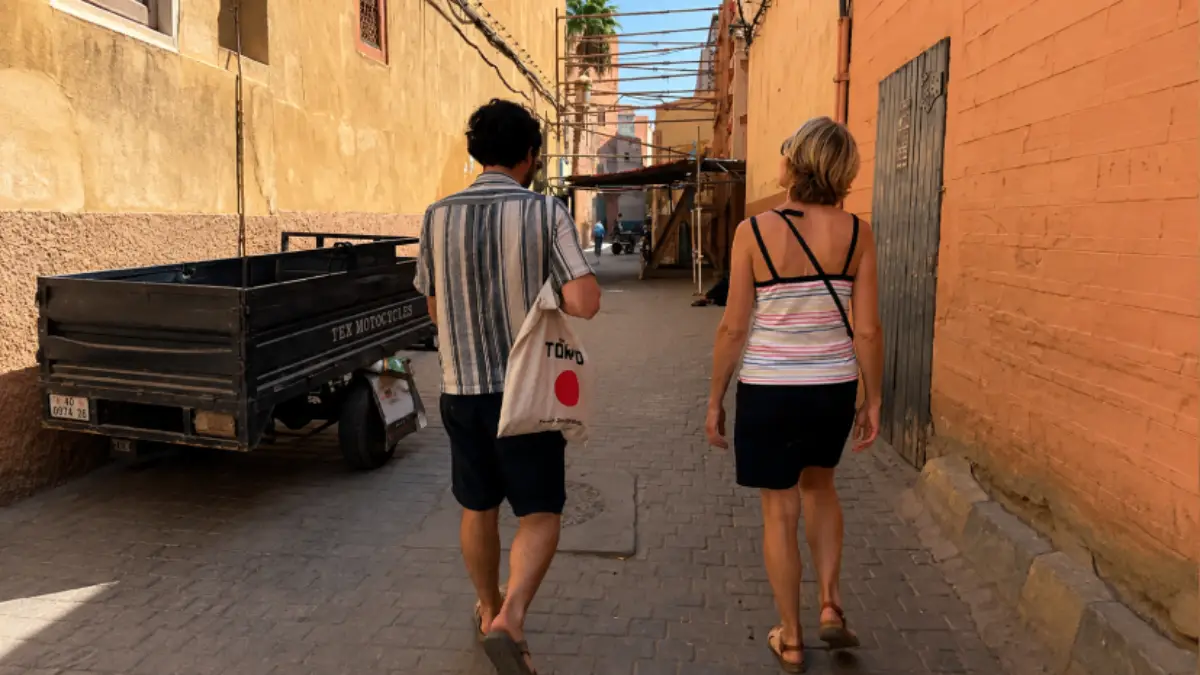
I’m Kamal, a licensed Moroccan tour guide based in Marrakech, and safety is one of the subjects travelers ask me about most before coming to Morocco.
My answer is usually reassuring, but I never tell visitors that Morocco is completely risk-free. No destination is.
Most travelers visit Marrakech, Fes, Chefchaouen, Essaouira, Rabat, Tangier, the Atlas Mountains and the Sahara without experiencing a serious problem. In everyday travel, the situations you are more likely to encounter are petty theft, tourist scams, unwanted attention, confusing medina streets and road-safety issues.
There are also more serious risks that should not be ignored, including terrorism concerns, demonstrations, natural hazards and restrictions in some remote border regions.
This guide combines what I see while working with travelers in Morocco with current government travel advice. My goal is not to frighten you or tell you that everything is perfect. It is to explain what deserves your attention, what is usually more annoying than dangerous, and how to travel around Morocco with confidence.
If this is your first visit, my Morocco Travel Guide is a good place to start alongside this safety guide.
Table of Contents
Table of Contents
Safety in Morocco: The Short Version
For most people following Morocco’s usual tourist routes, traveling here is manageable and comfortable with normal precautions.
That does not mean you should switch off your common sense.
Crowded medinas require more attention to your belongings. Quiet streets deserve more caution late at night. Long-distance driving requires patience. Remote mountain and desert environments require preparation.
As of August 2026, the U.S. State Department lists Morocco at Level 2: Exercise Increased Caution because of terrorism. The Government of Canada and Australia’s Smartraveller advise travelers to exercise a high degree of caution, also citing terrorism. UK Foreign Travel Advice warns about terrorism alongside petty crime, scams, demonstrations, road safety and local laws.
Travel advice can change, so I recommend checking your own government’s latest guidance shortly before departure.
If you only want the direct answer to whether tourists should visit, read my Is Morocco Safe for Tourists? guide. This page is the broader safety reference, covering crime, transportation, women travelers, the Sahara, mountains, local laws, emergencies and regional risks.
Safety in Morocco at a Glance
| Issue | What I Tell Travelers |
|---|---|
| Petty theft | Watch your belongings in crowded medinas, markets and transport areas |
| Serious crime | Less common than petty crime, but it can occur |
| Tourist scams | Common enough that first-time visitors should recognize them |
| Walking at night | Use busy, familiar streets and avoid isolated alleys |
| Solo female travel | Very possible, but unwanted attention and harassment can occur |
| Taxis | Use official or properly licensed transport |
| Driving | Requires more attention than many visitors expect |
| Sahara Desert | Heat, weather, road travel and isolation are bigger concerns than crime |
| Atlas Mountains | Weather, terrain and remoteness require preparation |
| Demonstrations | Avoid them and change your route |
| Border regions | Some remote areas have specific restrictions or warnings |
| Emergencies | Save the main emergency numbers before traveling |
Crime and Petty Theft in Morocco
Petty crime is one of the more realistic safety concerns for visitors.
Pickpocketing and bag theft can happen in crowded tourist areas, particularly when people are distracted.
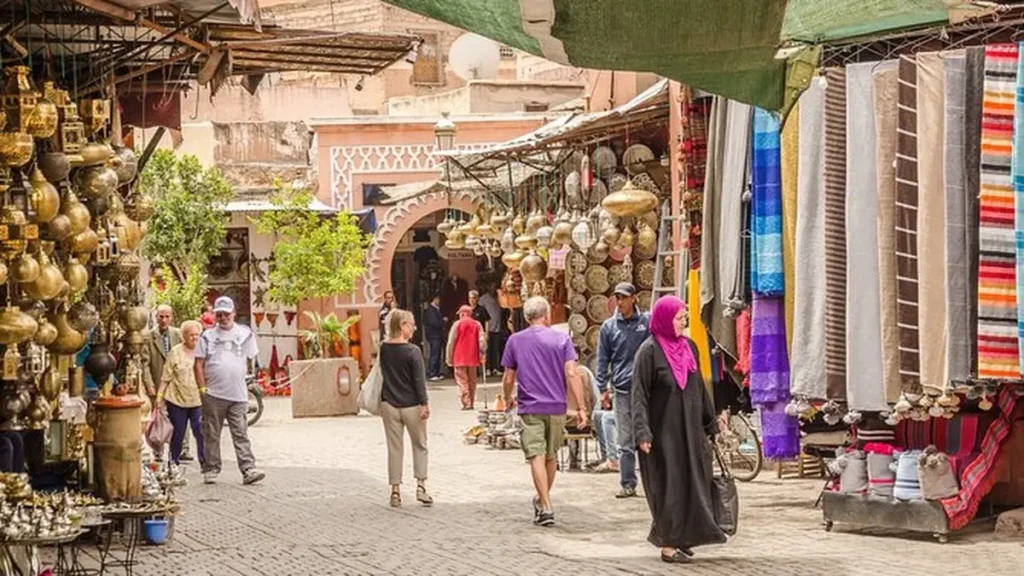
A busy medina is a good example. You may be watching performers, photographing a beautiful doorway, bargaining in a souk or concentrating on your phone while trying to find your riad. That is exactly when somebody may notice that your wallet or phone is easy to reach.
The answer is not to walk around frightened. Make theft difficult.
Keep bags zipped in crowded places. When a street becomes very busy, wear your bag in front of your body rather than behind you.
Avoid keeping your wallet or phone in an exposed back pocket. Do not carry much more cash than you need for the day, and do not leave an expensive phone sitting at the edge of an outdoor café table.
I also prefer keeping my passport somewhere secure unless there is a genuine reason to carry it.
These are simple precautions, but they prevent many of the problems travelers actually experience.
ATMs and Bank Cards
Card fraud and theft around ATMs can also happen.
Use an ATM attached to a bank or located somewhere busy whenever possible. Cover the keypad when entering your PIN and pay attention when somebody else handles your bank card.
Check your banking app occasionally during the trip so you notice any unfamiliar transactions quickly.
Morocco still uses cash frequently, but that does not mean you need to carry a large amount with you.
Tourist Scams and Unofficial Guides
Tourist scams are worth understanding before you arrive because visitors sometimes mistake them for a sign that Morocco is dangerous.
Most are about money rather than physical danger.
Someone may tell you a street is closed and offer to show you another route. A stranger may start walking with you through the Medina, offer directions and later demand money. Someone may present themselves as a guide even though you never hired them.
A taxi driver may quote a price you consider unreasonable, or a seller may put you under more pressure than you are comfortable with.
None of this means you should distrust every Moroccan who speaks to you. Many people will genuinely help without expecting anything.
The useful skill is recognizing when unsolicited help starts turning into pressure.
If you do not want assistance, simply say:
“La, shukran.” — No, thank you.
You do not need a long explanation and you do not need to argue. Just keep moving.
Morocco has licensed professional tour guides. If you are hiring somebody to guide you through a medina or historical area, use a legitimate guide or reputable operator rather than somebody who approaches you randomly in the street.
I explain these situations in more detail in my Morocco Travel Scams & Tourist Traps guide.
Walking Around Morocco at Night
Morocco does not suddenly become dangerous when the sun goes down.
Evenings are an important part of daily life here. Families go out, cafés stay busy and main streets in many cities remain active well into the evening.
What matters is the exact location.
A medina alley full of shops and people at 6 p.m. can feel completely different after the businesses close.
My advice is simple: after dark, use busy routes you recognize rather than experimenting with quiet shortcuts.
If your riad is deep inside a medina, ask the staff which route they recommend at night.
Save the location of your accommodation on your phone. If necessary, download the area for offline use before going out.
If you are uncomfortable walking back, take an official taxi as close to your accommodation as possible.
That is sensible travel awareness, not a reason to stay inside after dark.
Safety in Morocco’s Major Tourist Cities
The fundamentals do not change dramatically from city to city.
Keep an eye on your belongings, understand where you are going and use more caution in isolated areas after dark.
Marrakech
Marrakech is intense rather than inherently dangerous.
The Medina and Jemaa el-Fna bring together large crowds, sellers, performers, motorbikes, unofficial offers of help and thousands of visitors. It can feel overwhelming during your first few hours.
For detailed advice about Jemaa el-Fna, the Medina, scams, taxis and walking around after dark, read my Is Marrakech Safe for Tourists? guide.
Fes
The biggest practical challenge in Fes is often navigation.
The old Medina is enormous, and its narrow streets can become confusing even for experienced travelers.
Save your accommodation location before entering and ask your riad which gate is easiest to use.
Be cautious if somebody suddenly approaches and insists that you need them to show you the way.
Essaouira
Essaouira generally feels slower and easier to navigate than Marrakech or Fes.
Its Medina is much more compact. Normal precautions still apply around valuables, crowded areas and isolated streets late at night, but many first-time visitors find Essaouira straightforward to explore.
Chefchaouen
Chefchaouen is smaller again and easy to explore on foot.
The Medina attracts plenty of visitors, but the town is much less intense than Marrakech.
At night, use familiar central streets rather than wandering into quiet hillside lanes simply because they look interesting on a map.
Casablanca, Rabat and Tangier
These are larger urban environments with busy roads, stations and commercial districts.
Use the same awareness you would use in any large city. Pay attention to your belongings around transport hubs and crowded streets, and avoid wandering through unfamiliar deserted areas late at night.
Solo Female Traveler Safety in Morocco
Women travel around Morocco alone every year, and I regularly meet solo female travelers who have excellent trips.
But unwanted attention exists, and I think visitors deserve to know that before arriving.
A woman traveling alone may experience staring, comments, attempts to start conversations or persistent attention.
Most encounters do not develop beyond that, but they can still be uncomfortable.
Confidence helps. Walk as though you know where you are going. If you do not want a conversation, you do not have to stop.
A calm but firm “no thank you” is usually enough.
At night, use active, well-lit streets and take a taxi when the alternative is a long walk through an isolated or unfamiliar area.
Good accommodation can also make a big difference. A helpful riad can explain the neighborhood, arrange transport and show you the easiest route back after dark.
Women also often ask me what they should wear.
Foreign women do not have to dress like Moroccan women. Morocco is, however, socially more conservative than many Western countries.
Some travelers feel more comfortable in loose clothing with more coverage, particularly in traditional neighborhoods and rural areas. This is about understanding the local environment and choosing what makes you feel comfortable.
For more specific advice about harassment, clothing, accommodation and moving around alone, read my Is Morocco Safe for Women Traveling Alone? guide.
Transportation Safety in Morocco
Transportation is one area where visitors sometimes focus on the wrong risk.
Crime receives a lot of attention online, but road safety deserves just as much.
For a full explanation of trains, buses, taxis, rental cars and private drivers, see my Morocco Transportation Guide.
Taxis
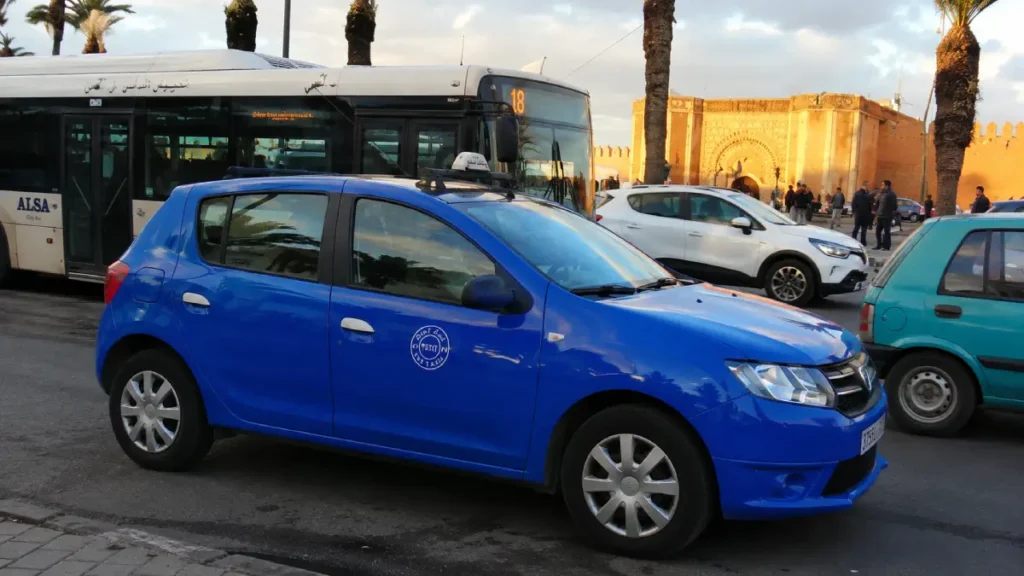
Official taxis are part of everyday life throughout Morocco.
Taxi colors and local practices vary between cities, so do not assume every taxi system works exactly the same way.
Where meters are normally used, ask the driver to use one. If you are taking a journey where the price will be agreed in advance, understand the fare before the vehicle starts moving.
Hotels and riads can arrange transport when you do not want to negotiate yourself.
I recommend avoiding unlicensed or questionable vehicles simply because they offer a cheaper ride.
Train Travel
The train is one of the easiest ways to travel between several major Moroccan cities.
Normal luggage awareness is usually sufficient.
Keep your passport, money and important electronics with you rather than leaving them unattended.
For routes, stations, tickets and practical advice, read my Train Travel in Morocco guide.
Driving in Morocco
Driving yourself is possible, and many visitors rent cars successfully.
But Moroccan roads require concentration.
You may encounter scooters, pedestrians, bicycles, animals, trucks, sudden overtaking and vehicles entering the road in ways you are not accustomed to.
Rural and mountain roads may have limited lighting. Weather can also change road conditions quickly.
My strongest recommendation is to avoid unnecessary long-distance driving at night when you are unfamiliar with Moroccan roads.
The scenery between cities also leads some visitors to underestimate how tiring a driving day can become.
Give yourself more time than you think you need and try to arrive before dark.
If you plan to drive yourself, read my Rent a Car in Morocco guide before booking. I explain deposits, insurance, road conditions and when renting actually makes sense.
Safety in the Sahara Desert
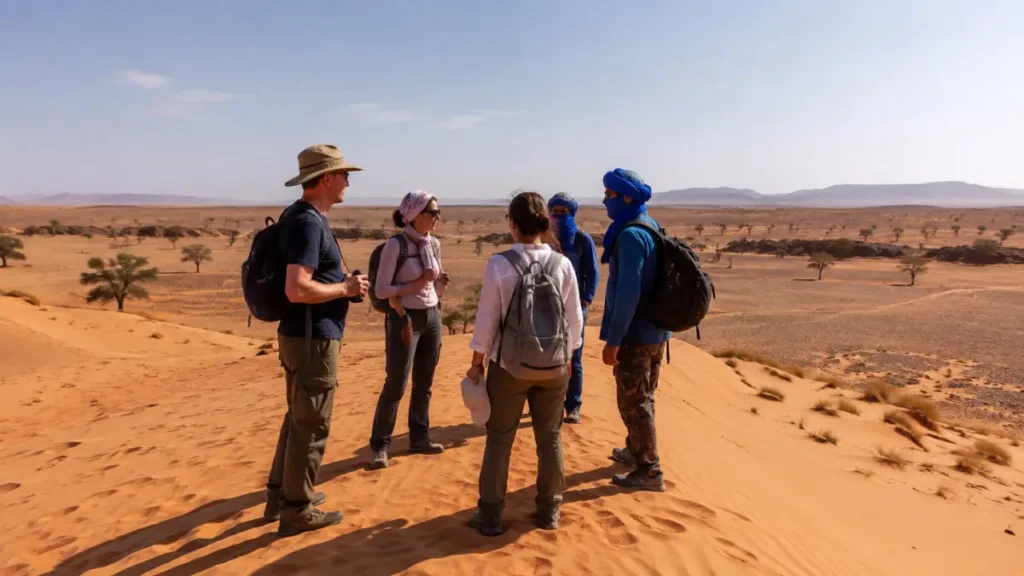
In the Sahara, I would worry more about the environment and the journey than about street crime.
The desert deserves respect.
Temperatures can change sharply between day and night. Mobile coverage may become weak or disappear. Weather conditions can change, and distances are difficult to judge when you are surrounded by dunes.
If you are staying at a desert camp, do not wander a long distance away by yourself without telling somebody.
Carry water. Use sun protection. Listen to your camp or guide if they give you advice about weather conditions.
Choose a reputable operator, and do not attempt an off-road route in an ordinary vehicle simply because you see a track on a map.
Driving toward the Sahara also requires patience. The journey from Marrakech or Fes is long, and tired driving is a real concern.
If Erg Chebbi is part of your itinerary, my Merzouga Sahara Desert Travel Guide explains what to expect once you reach the area.
Safety in the Atlas Mountains
Mountain safety is completely different from city safety.
The main issues here are weather, terrain, preparation and remoteness.
A sunny morning in Marrakech tells you very little about conditions higher in the Atlas Mountains.
If you are going hiking, research the route before leaving. Carry enough water. Wear appropriate shoes and clothing. Tell somebody where you are going.
For routes requiring local knowledge or experience, use a professional mountain guide.
Do not underestimate a trail simply because it begins close to a village or popular tourist destination.
Rain, snow, heat and sudden weather changes can completely change mountain conditions.
Terrorism and Security Awareness
This subject needs balance.
Government travel advisories currently identify terrorism as a risk in Morocco.
That should not be ignored.
At the same time, it does not mean you need to spend your holiday expecting an attack.
Visitors will notice security measures around airports, important public buildings, some hotels and major tourist locations.
The practical advice is straightforward: stay aware in crowded public places and transport hubs, follow instructions from security personnel and local authorities, and pay attention if conditions change.
Official advice can change quickly, so check your own government’s current Morocco travel advice shortly before departure rather than relying on something you read months earlier.
Useful official sources include the U.S. State Department Travel Advisory, UK Foreign Travel Advice, Government of Canada Travel Advice and Australia’s Smartraveller.
Demonstrations and Political Gatherings
Public demonstrations sometimes happen in Moroccan cities.
Most tourists will never be affected by one.
If you encounter a demonstration, do not stop to watch it like a tourist attraction. Change your route.
Even a peaceful gathering can create traffic disruption, attract a large police presence or change unexpectedly.
Follow instructions from local authorities and check local news if a significant event is taking place.
Remote Regions and Border Areas
Most visitors never go anywhere near Morocco’s politically sensitive border regions.
A normal itinerary through Marrakech, Fes, Chefchaouen, Rabat, Casablanca, Essaouira, the Atlas Mountains or Merzouga is very different from an expedition into remote frontier areas.
But there are two situations worth understanding.
Morocco-Algeria Border
The land and sea borders between Morocco and Algeria are closed.
Do not attempt to cross the border unofficially.
This is also relevant if you are using a private boat or jet ski near the northeastern coastline. Know where the border is and remain in Moroccan waters.
Western Sahara
Western Sahara is a disputed territory, and some remote areas carry much stronger official warnings.
Australia, for example, currently advises against travel within 30 km of the northern or western side of the Berm and to areas south and east of it.
Travelers following normal tourist routes are unlikely to go anywhere near these locations.
If you are planning a remote overland journey through Western Sahara, check the latest regional advice before leaving and do not improvise routes around restricted or mined areas.
Local Laws and Cultural Awareness
Some situations visitors describe as safety problems are actually misunderstandings of Moroccan law or culture.
Morocco is a Muslim-majority country, and its laws and social expectations may be different from what you are used to.
Respect mosques and religious areas.
Avoid photographing military installations, police facilities and other sensitive security locations.
Do not fly a drone without understanding Morocco’s regulations and obtaining any required permission.
Illegal drugs carry serious penalties.
Alcohol is available in licensed hotels, restaurants and bars, but drinking alcohol openly in public is best avoided and local laws should be respected.
Public displays of affection are generally more discreet than in many Western countries.
During Ramadan, daily routines change, and visitors should be particularly respectful of local customs.
You do not need to behave exactly like a Moroccan while you are here. You simply need to remember that you are visiting a country with its own laws, traditions and social expectations.
My Morocco Culture & Etiquette guide explains these everyday differences in more detail.
LGBTQ+ Travelers in Morocco
LGBTQ+ travelers should understand the legal and cultural situation before visiting.
Same-sex sexual relations are illegal under Moroccan law, and Moroccan society remains socially conservative.
LGBTQ+ visitors do travel to Morocco, but I would not advise anyone to ignore the local legal environment.
Discretion is sensible.
Avoid intimate public displays of affection, particularly in traditional neighborhoods, villages and religious environments.
Public displays of affection are generally more restrained in Morocco for couples of any orientation.
Before traveling, LGBTQ+ visitors should read the latest official travel advice from their own government and make decisions based on accurate information.
Jewish Travelers and Jewish Heritage in Morocco
Jewish history is an important part of Morocco’s history.
Historic Mellahs, synagogues, cemeteries and other Jewish heritage sites remain in cities including Marrakech, Fes, Casablanca, Essaouira and Meknes.
As a Moroccan guide, I have seen how meaningful these places can be for travelers discovering the long relationship between Morocco’s Muslim and Jewish communities.
International political tensions can, however, influence demonstrations and public conversations anywhere.
My advice is the same as for other travelers: avoid political demonstrations and heated public political discussions, especially during periods of heightened regional tension.
Travelers interested in Jewish heritage often include Essaouira because of the city’s history. My Essaouira Travel Guide can help you plan that part of the trip.
Food, Water and Health Safety
Health is another part of travel safety.
Most visitors eat extremely well in Morocco, but your stomach may need time to adjust to different foods, spices and routines.
Choose restaurants and street-food stalls with good turnover.
Drink enough water, especially during summer and when traveling toward desert areas. Dehydration can creep up on you during a long sightseeing day.
If you take prescription medication, bring enough for your trip and keep important medicine in your hand luggage when flying.
Travel insurance is also worthwhile, particularly if your itinerary includes hiking, desert activities, driving or remote locations.
Be particularly cautious with alcohol from questionable or informal sources. Current UK guidance warns that deaths and serious illness from methanol-contaminated alcoholic drinks have occurred in Morocco.
For more help with eating here, see my Morocco Food Guide.
Earthquakes, Flooding and Extreme Weather
Safety in Morocco is not only about crime.
Natural hazards matter too.
Morocco is in an earthquake zone. The devastating High Atlas earthquake in September 2023 was a reminder that significant earthquakes can happen.
Heavy rain can also produce flash flooding, particularly in mountains, valleys and areas near rivers.
Never attempt to drive through floodwater because a road normally looks harmless or because another vehicle has already crossed.
Conditions in mountain and desert regions can also change quickly.
When your accommodation, guide or local authorities warn you about weather, take that advice seriously.
Emergency Numbers in Morocco
Save the main emergency numbers before you begin traveling.
Police: 190
Royal Gendarmerie: 177
Ambulance: 150
Fire service: 150
The Royal Gendarmerie is particularly relevant outside major urban areas.
I also recommend saving:
- Your hotel or riad telephone number
- Your accommodation address
- Your travel insurance emergency number
- Your embassy or consulate information
- A digital copy of your passport
- Contact details for your tour operator or driver if you are traveling with one
If your passport is lost or stolen, report it to the police and contact your embassy or consulate.
If something happens and you are unsure what to do, your hotel or riad can often help you communicate with local services and direct you to the appropriate police station.
12 Safety Tips I Give Travelers in Morocco
- Keep your phone and wallet secure in crowded areas. A zipped bag is safer than an exposed pocket.
- Do not automatically follow strangers offering directions. Stop and check where you are going first.
- Use licensed guides and reputable operators. This matters particularly in medinas, mountains and remote areas.
- Avoid isolated alleys late at night. Use familiar, active routes instead.
- Ask your riad how to return after dark. A two-minute conversation can prevent a lot of confusion later.
- Use ATMs carefully. Choose a bank or busy location and protect your PIN.
- Use legitimate transport. Understand how the taxi fare will be calculated before leaving when necessary.
- Avoid unnecessary long-distance driving at night. Rural and mountain roads become more difficult after dark.
- Download important information offline. Save maps, hotel details and tickets before traveling somewhere with weak reception.
- Keep emergency numbers in your phone. Do this before you need them.
- Stay away from demonstrations. Change your route rather than stopping to watch.
- Check official travel advice shortly before departure. Security conditions and regional warnings can change.
None of these habits should make you nervous about visiting Morocco.
They simply remove many avoidable problems.
Safety in Morocco FAQs
Is Morocco safe for first-time visitors?
Most first-time visitors travel around Morocco without experiencing a serious problem. The first day can feel intense because medinas, traffic, bargaining and street interactions may be unfamiliar. Normal precautions and a little preparation make a significant difference.
Is Morocco safe for families with children?
Families travel around Morocco regularly, and children are usually warmly received. Parents should pay particular attention around traffic, motorbikes inside medinas, swimming pools, animals and large crowds.
Is it safe to walk around Morocco at night?
Busy central areas can remain active well into the evening. Avoid deserted streets and unfamiliar medina alleys late at night. If you are uncertain about your route, use an official taxi.
Is Morocco safe for solo female travelers?
Many women travel successfully around Morocco alone. Unwanted attention and harassment can occur, so good accommodation, confident boundaries, active streets and sensible nighttime transport can make the experience easier.
Are scams common in Morocco?
Tourist scams do occur, particularly around busy medinas and popular attractions. Most involve money, directions, guiding, taxis or shopping rather than physical danger. Knowing the common situations before arriving makes them much easier to handle.
Are Moroccan taxis safe?
Official taxis are widely used by locals and visitors. Use legitimate transport and understand how the fare will be calculated. Your hotel or riad can arrange transport when you would rather not negotiate yourself.
Is public transportation safe in Morocco?
Morocco’s trains and established long-distance bus services are widely used by travelers. Keep an eye on your luggage and valuables, particularly around stations and on crowded services.
Is the Sahara Desert safe to visit?
For most travelers using a reputable operator, the main concerns are heat, dehydration, weather, road travel and becoming separated from your group or camp rather than crime.
Is hiking in the Atlas Mountains safe?
Many travelers hike safely in the Atlas Mountains, but conditions should not be underestimated. Research your route, carry appropriate equipment and water, check the weather and use a professional guide when the route or conditions require one.
Do I need travel insurance for Morocco?
I recommend travel insurance for any international trip. It becomes particularly important if your itinerary includes driving, hiking, desert activities or remote regions where medical treatment or an unexpected change of plans could become expensive.
Should I cancel my trip because of a government travel advisory?
Read what the advisory actually says rather than looking only at the headline risk level. Advice can vary by country and sometimes by region. Check your own government’s latest guidance, consider your itinerary and circumstances, and make your decision using current information.
Planning a Safe Trip to Morocco
Many safety problems become easier to avoid when the rest of your trip is properly organized.
Know where you are staying. Understand how you will travel between cities. Do not build an itinerary around unrealistic driving times. Download important information before heading into remote areas, and ask trusted local people when you are uncertain.
If you are still organizing your trip, use my Plan Your Trip to Morocco guide alongside this page.
Good preparation does not remove the adventure from Morocco. It gives you more freedom to enjoy it.
Final Thoughts From a Moroccan Guide
Morocco is not a country where I would tell you to switch off your common sense.
But it is also not a country I think you need to explore with fear.
Most situations tourists actually encounter are manageable: crowded medinas, persistent sellers, unofficial guides, confusing streets, petty theft, traffic and cultural misunderstandings.
Other risks deserve more attention, including road accidents, terrorism concerns, natural hazards and specific remote regional areas.
The answer is not to worry about everything.
Prepare properly. Know where you are going. Keep an eye on your belongings. Respect the culture. Listen to trusted local advice.
And if something does not feel right, move away rather than worrying about whether you are being impolite.
After years of guiding travelers through my country, that is the advice I would give to my own guests.
Do that, and you can spend far less time worrying about safety in Morocco and far more time enjoying the country you came to see.