Tipping in Morocco: How Much Should You Tip?
Tipping in Morocco is customary in many tourism and hospitality situations, but it is not mandatory. A small tip is a way to thank someone for good service, not a fixed charge that every traveler must pay.
As a nationally licensed Moroccan tour guide, I am asked about tipping almost every week. My practical advice is to carry small Moroccan dirham notes, use the ranges below as a guide, and adjust the amount to the service you actually received.
For wider advice about cash, cards and everyday costs, start with my Money in Morocco guide.
Table of Contents
Table of Contents
Quick Answer: How Much Should You Tip in Morocco?
For most travelers, tipping in Morocco is simple. Round up a café or taxi bill by a few dirhams, leave 5–10% in a restaurant when service is not included, and use clear per-person amounts for guides and private drivers. These are practical ranges, not compulsory charges.
| Service | Typical Tip |
|---|---|
| Café | Round up or 2–5 MAD |
| Restaurant | 5–10% if service is not included |
| City taxi | Round up or 2–5 MAD |
| Hotel porter | 10–20 MAD per bag |
| Housekeeping | 20–50 MAD per day |
| Licensed guide | 100–300 MAD per person for a full day |
| Private driver | 50–100 MAD per person for a full day |
| Desert camp staff | 50–100 MAD per person |
| Hammam attendant | 20–50 MAD |
My local rule: tip at the end, use Moroccan dirhams, and give more only when the service was genuinely exceptional. You should never feel pressured to tip.
When You Should Not Tip in Morocco
There are times when tipping is not expected at all. Knowing this makes your trip easier and helps you avoid stress, especially if this is your first time in Morocco.
You do not need to tip for simple directions. If someone answers a quick question, points you toward a street, or explains where a place is, a polite “shukran” is enough.
You do not need to tip shopkeepers. When you buy something, the price is the transaction. Even if the shopkeeper is friendly or explains carpets, spices, leather, or souvenirs, tipping is not part of shopping.
You should never tip police, border officers, or officials. That is not normal tipping and it can create problems. If something feels confusing or uncomfortable, stay calm and polite.
You do not need to tip someone who gives uninvited help. In busy tourist areas, someone may start walking with you, giving directions, or pointing things out without you asking. If you did not request a service or agree to help, you are not obligated to pay.
This is not rude. It is a boundary. Knowing this helps travelers feel more confident, especially in places like Marrakech medina, where misunderstanding “help” is one of the common situations I explain in my Is Marrakech Safe for Tourists? guide.
If you feel pressured, rushed, or uncomfortable, you do not need to tip. Tipping should come from appreciation, not fear. For more practical advice, read my Is Morocco Safe for Tourists? guide and my Morocco Travel Scams guide before your trip.
Is Tipping Expected in Morocco?

Tipping is appreciated in Morocco, especially in tourism, but it is not required in every situation. In daily Moroccan life, people do not tip for every small interaction. A shopkeeper answering a question, a local giving directions, or a waiter bringing coffee does not automatically expect money.
This is where many travelers get confused. They arrive thinking they must tip everyone because they want to be polite. In Morocco, this can feel unnatural. Hospitality is part of the culture, and many small acts of help are offered without expecting payment.
Tourism is different. People who work as guides, drivers, hotel staff, porters, and camp staff often work long hours. Their income can depend on the season, and tips are genuinely appreciated when the service is good. But a professional person should never pressure you for a tip.
The best way to understand tipping in Morocco is simple: a tip is a thank-you, not an obligation.
If you want to understand this better, read my Morocco Culture and Etiquette guide, because tipping is connected to how respect, hospitality, and personal service work in Morocco.
Why Tipping Feels Different in Morocco
Moroccan hospitality is very strong. Offering tea, giving directions, helping a guest, or taking time to explain something is part of daily life. Many Moroccans help because it feels natural, not because they expect money.
At the same time, tourism has created a professional service world. A driver on a desert trip is not just driving. He is managing timing, luggage, road safety, hotel coordination, and long hours away from home. A guide is not just walking with you. He is explaining history, protecting your time, reading the atmosphere, and helping you understand the country.
So two things are true at the same time. In normal daily life, tipping is light and optional. In tourism, tipping can be more meaningful because the service is personal and the work is demanding.
Once you understand that difference, tipping becomes less stressful. You stop asking, “Do I have to tip?” and start asking, “Was the service good, and do I want to say thank you?”
How Much to Tip in Moroccan Cafés
In small cafés, tipping is very light. Most Moroccans either leave nothing or leave 2–5 MAD if they feel happy with the service.
If you order coffee, tea, or a small breakfast, you can simply round up the bill. For example, if your bill is 18 MAD, giving 20 MAD is fine. If the waiter was friendly or you sat for a long time, leaving 5 MAD is already appreciated.
You do not need to leave 10%, 15%, or 20% in a simple café. That is not how most locals do it. No one is watching to judge what you leave.
A small tip in a café is a kind gesture, not a rule.
How Much to Tip in Restaurants in Morocco

In local restaurants, tipping is optional and usually small. If service was good, leaving 5–10 MAD is enough for a simple meal. In a nicer restaurant or a tourist restaurant, many travelers leave around 5–10% of the bill if they are happy with the service.
For example, if your bill is 200 MAD, leaving 10–20 MAD is normal and appreciated. If the service was excellent, you can leave more. If the service was poor, rushed, or uncomfortable, you do not need to tip just because you are a tourist.
In Morocco, tipping in restaurants should feel like appreciation, not pressure.
If food is a big part of your trip, you can also read my What to Eat in Morocco, Where to Eat in Marrakech, and Moroccan Street Food Guide.
How Much to Tip Hotel and Riad Staff in Morocco
Hotels and riads are where travelers often want clear numbers. The good news is that the amounts are simple.
If someone carries your bag, 10–20 MAD per bag is normal. If the staff member carries several bags, helps with stairs, or gives extra support, you can give a little more.
Housekeeping tips are optional. Some travelers leave 20–30 MAD per night, while others leave one larger tip at checkout, such as 50–100 MAD, depending on the length of stay and service.
If someone at the riad helps you many times during your stay, gives local advice, books taxis, or makes your visit smoother, leaving 20–50 MAD at the end is a kind gesture.
You do not need to tip every staff member every day. If you want to tip, do it calmly and directly.
How Much to Tip Taxi Drivers in Morocco
Taxi drivers in Morocco do not expect big tips. In cities like Marrakech, Fes, Rabat, Tangier, Casablanca, and Agadir, most people simply round up the fare.
If the meter shows 17 MAD, you can give 20 MAD. If it shows 28 MAD, you can give 30 MAD. That is enough.
There is no need to tip 10% or 20% for a short taxi ride. A few dirhams of rounding is normal. If the driver helped with luggage, waited patiently, or gave excellent service, you can add a little more, but it is not required.
For transport planning, read my Morocco Transportation Guide and How to Get Around Morocco guide.
How Much to Tip a Private Driver in Morocco
For a full-day private driver, 50–100 MAD per person is a practical tip when the service was good. The amount can reflect the length of the day, safe and careful driving, help with luggage, useful stops and flexibility along the route.
A private driver is different from a city taxi driver. On a day trip or longer journey, the driver may spend many hours on the road and help with timing, luggage and hotel access.
For a multi-day journey, tip once at the end rather than every evening. Adjust the total according to the number of days and the quality of the service. Tipping remains optional and should never be demanded.
How Much to Tip a Tour Guide in Morocco
For a licensed local guide, 100–300 MAD per person for a full-day tour is a fair range when you are happy with the experience. For a half-day tour, 50–100 MAD per person is usually appropriate.
A professional guide should never ask for a tip or make you feel uncomfortable. The amount should reflect the guide’s knowledge, preparation, communication and ability to adapt the tour to your interests.
The best time to tip is at the end of the tour. On a private Marrakech shopping and souks tour, this lets you judge the complete experience before deciding what feels fair.
How Much to Tip in the Sahara Desert
Desert trips can be confusing because several people may be involved: driver, camel handler, camp staff, cook, luggage helper, and sometimes musicians.
For camel handlers, a small tip of 20–50 MAD is appreciated if they helped you and took care of the camels well.
For desert camp staff, some travelers leave 50–100 MAD, sometimes more if the service was excellent. In many camps, tips may be shared among staff.
For your private driver, tip separately at the end of the full trip, not every night.
The Sahara is one place where choosing the cheapest option can create problems. A good camp, safe transport, and professional staff make a big difference. Before booking, read my Best Desert Camps in Merzouga and Erg Chebbi vs Erg Chigaga guides.
Tipping in Marrakech
Tipping customs in Marrakech are the same as in the rest of Morocco, but visitors are more likely to encounter guides, porters, riad staff, taxi drivers and restaurant servers in a single day. Carrying small notes and coins makes tipping easier and avoids the need to ask for change.
If you’re exploring the medina, joining a guided tour or staying in a traditional riad, small tips for good service are always appreciated but never required. The most important thing is to tip because you value the service, not because you feel pressured to do so.
If you’re planning your visit, my Marrakech Travel Guide covers local customs, transport, accommodation and practical advice to help you enjoy the city with confidence.
How Much to Tip in a Moroccan Hammam
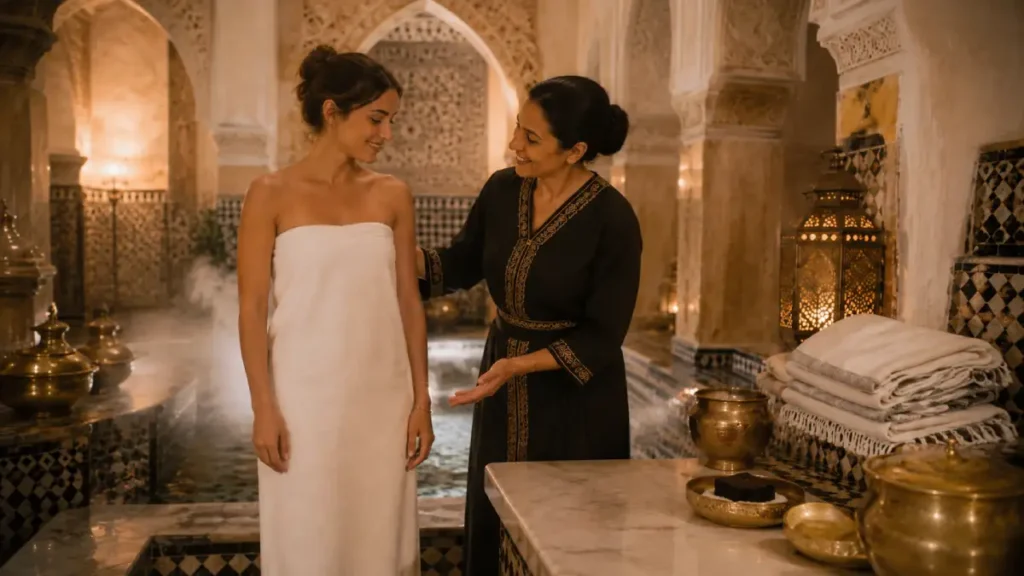
In a local hammam, tipping is small and optional. If someone gives you a scrub or helps you through the process, 10–20 MAD can be enough in a simple public hammam. The experience is usually simple, local, and direct, so you do not need to overthink the tip.
In a private hammam or spa, tipping is more common. If the service was good, 20–50 MAD is appreciated. In luxury hotel spas, some travelers tip more, especially after a long treatment or a very personal service.
You should not feel pressure. Tip only if the service was good and you felt comfortable. If this is your first time, read my First-Time Moroccan Hammam Experience guide before you go, because it helps you understand what happens step by step.
For Marrakech, you can also compare my Best Hammams in Marrakech, What to Wear in a Moroccan Hammam, and Public vs Private Hammam Marrakech guides before choosing the hammam style that feels right for you.
Cash, Small Bills, and Tipping in Morocco
Tipping in Morocco is usually done in cash. Cards are accepted in many hotels, riads, and restaurants, but tips are still usually handed directly in Moroccan dirhams. If you want to understand where cards work and where cash is better, read Can You Use Credit Cards in Morocco?
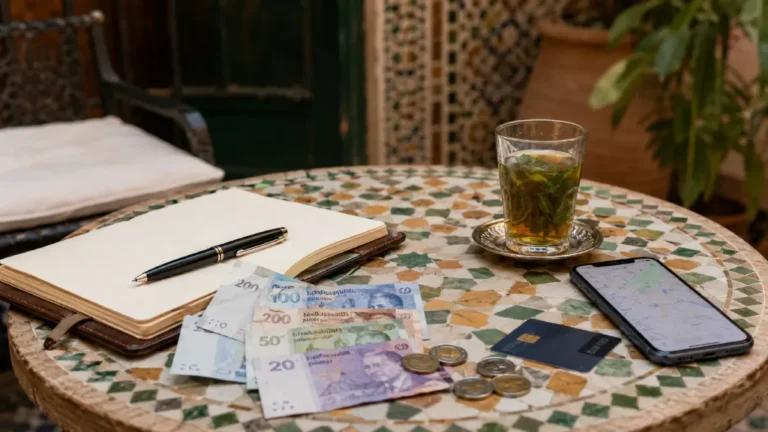
Small bills make everything easier. Try to keep 5 and 10 MAD coins and 20 and 50 MAD notes with you. If you only have 100 or 200 MAD notes, tipping can feel awkward and you may end up giving more than you wanted.
A simple habit I recommend is this: when you withdraw money, break one larger note at a café, shop, or hotel reception. Keep small bills separate for tips, taxis, water, snacks, and small purchases.
Can You Tip by Card in Morocco?
Tips in Morocco are normally given in cash. When a hotel or restaurant accepts card tips, ask how the tip is shared and whether it reaches the staff you want to thank. Keep 5 and 10 MAD coins and 20 and 50 MAD notes for cafés, taxis, porters, guides and drivers.
Keep tips separate from the service price, and check whether service is already included before adding more. Moroccan dirhams are the simplest way to tip directly.
Should You Tip in Euros, Dollars, or Moroccan Dirhams?
Moroccan dirhams are best. They are easier for local workers to use immediately.
In tourist areas, some people may accept euros or dollars, especially guides, drivers, and hotel staff. But small foreign coins are not useful because they are hard or impossible to exchange. If you tip in euros or dollars, use notes, not coins.
Still, the easiest and most respectful option is to tip in Moroccan dirhams. If you are not sure how much daily cash to carry for tips, taxis, cafés, and small services, read How Much Cash Should I Bring to Morocco?
Common Tipping Mistakes Travelers Make in Morocco
The first mistake is over-tipping because of fear. Some travelers are so worried about being rude that they give too much in every situation. This is not necessary. Tipping is appreciated, but Morocco is not a place where you need to pay your way through every interaction.
The second mistake is tipping everyone the same way. A café waiter, a private driver, a licensed guide, a porter, and someone giving directions are not the same situation. Context matters. This is one of the small cultural details many visitors misunderstand, especially on a first trip, so it helps to read my Morocco Culture and Etiquette guide before you arrive.
The third mistake is feeling guilty when you do not tip. Friendliness does not always mean someone expects money. In Morocco, kindness is part of daily life, and a sincere “shukran” can be enough in many simple situations.
The fourth mistake is tipping too early. For guides and drivers, it is better to tip at the end of the service, once the full experience is complete.
The fifth mistake is avoiding tipping completely because you are unsure. If the service was good and you feel comfortable, a small tip is understood and appreciated.
Most tipping problems come from uncertainty, not bad intentions. For more practical advice before your trip, read my Morocco Travel Mistakes guide so you can avoid the common situations that make travelers feel confused or pressured.
Local Tipping Examples for First-Time Visitors
Here are a few simple examples to make tipping easier.
If you drink coffee in a local café and the bill is 18 MAD, give 20 MAD.
If you eat dinner in a nice restaurant and the bill is 300 MAD, leave 20–30 MAD if service was good.
If someone carries your suitcase to your riad room, give 10–20 MAD.
If a driver takes you on a full-day trip and the day went well, give 50–100 MAD per person.
If a private driver takes your group on a three-day desert trip, tip once at the end, not every day.
If a licensed guide gives you a full-day private tour and you are happy, 100–200 MAD per person is a common thank-you.
If someone gives you directions without being asked and then wants money, you can say thank you and walk away.
This is how tipping becomes simple: small, calm, and based on the situation.
Final Advice From a Moroccan Tour Guide
After all these details, here is what I want you to remember most.
Tipping in Morocco is not about rules, percentages, or doing everything perfectly. It is about appreciation. If the service was good and you felt comfortable, tipping is a nice way to say thank you. If the situation felt pressured or uncomfortable, you are allowed to say no politely.
Morocco is a country where hospitality comes first. People remember your kindness, patience, respect, and attitude more than the exact number of dirhams you leave behind.
So carry small bills, tip when it feels right, say “shukran” sincerely, and enjoy your trip. That is how tipping in Morocco is meant to work.
FAQs About Tipping in Morocco
Is tipping mandatory in Morocco?
No, tipping in Morocco is not mandatory. It is appreciated in some situations, especially in tourism, but it is not required. A polite thank you and respectful behavior are always acceptable.
How much should I tip a tour guide in Morocco?
For a licensed tour guide, many travelers tip around 50–100 MAD per person for a half-day tour and 100–300 MAD per person for a full-day tour. For excellent private service, some guests give more. Tipping is best done at the end of the tour.
How much should I tip a driver in Morocco?
For a full-day private driver, many travelers tip 50–100 MAD per person. For a multi-day journey, tip once at the end and adjust the total according to the number of days and the quality of the service.
Do you tip taxi drivers in Morocco?
Taxi drivers do not expect tips. Most people simply round up the fare or add 2–5 MAD. Tipping more than that is not necessary.
Do you tip in restaurants in Morocco?
In small cafés and local restaurants, tipping is optional and usually small, around 2–5 MAD. In nicer restaurants, travelers sometimes leave 5–10% if the service was good, but it is not required.
Should I tip hotel or riad staff in Morocco?
Tipping hotel and riad staff is optional but appreciated. Carrying bags is often tipped 10–20 MAD per bag, and some guests leave 20–50 MAD at checkout if the staff was especially helpful.
Is it rude not to tip in Morocco?
No. It is not rude to not tip in Morocco. Respectful behavior, patience, and saying “shukran” matter more than money.
When should I not tip in Morocco?
You do not need to tip for directions, shopping, police or officials, or help you did not ask for. If someone makes you uncomfortable or pressures you, tipping is not required.
Is it better to tip in cash in Morocco?
Yes. Tips in Morocco are almost always given in cash, usually in small bills. Having small notes makes tipping easier and more natural.
Why do people working in tourism appreciate tips more?
Tourism work in Morocco is often seasonal, and base salaries can be modest. Tips help balance long working hours and unpredictable income, especially for guides, drivers, and hotel staff.