Berber Tattoos in Morocco: Amazigh Women, Symbols and Stories
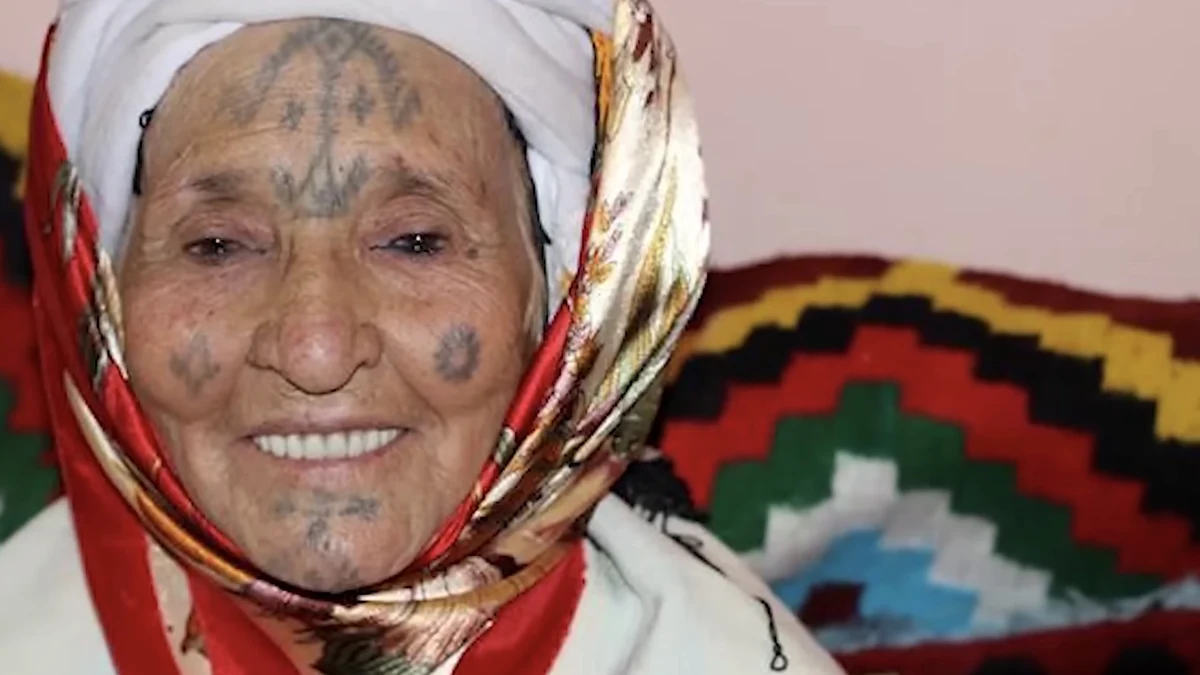
Berber tattoos in Morocco are permanent facial and body markings associated with the traditions of some Amazigh communities. A line on the chin, dots on the forehead or patterns on the hands may catch your attention. Understanding them takes more than matching a shape to a meaning on the internet.
I’m Kamal, a licensed Moroccan tour guide based in Marrakech, originally from Tinghir in southeastern Morocco. My advice is to begin with the woman who wears the tattoo. Her explanation matters more than a souvenir seller’s story or a chart of supposedly universal symbols.
This guide looks at what researchers and women’s published accounts tell us, how the practice has changed, and how to approach the subject respectfully when travelling.
Table of Contents
Table of Contents
Berber Tattoos in Morocco: The Quick Answer
Traditional Amazigh tattoos could express beauty, belonging, protection or a stage in a woman’s life. Their significance varied between communities and individuals. Some women described them mainly as decoration; others connected them to their region or family. The practice has declined considerably, although older women still carry these markings. Permanent tattoos should also be distinguished from temporary henna decoration.
The important point is this: a tattoo is part of someone’s life. Its meaning cannot always be read from its shape alone.
Berber or Amazigh: Which Word Should You Use?
“Berber tattoos” is a familiar expression in travel writing. Amazigh is the name many people prefer for their own identity; Imazighen is the plural. You will encounter both terms in books, museums and conversations.
There is no single Amazigh tattoo tradition that explains every community in Morocco, much less the whole of North Africa. Be cautious when a description gives every woman the same story.
Why Did Some Amazigh Women Have Tattoos?
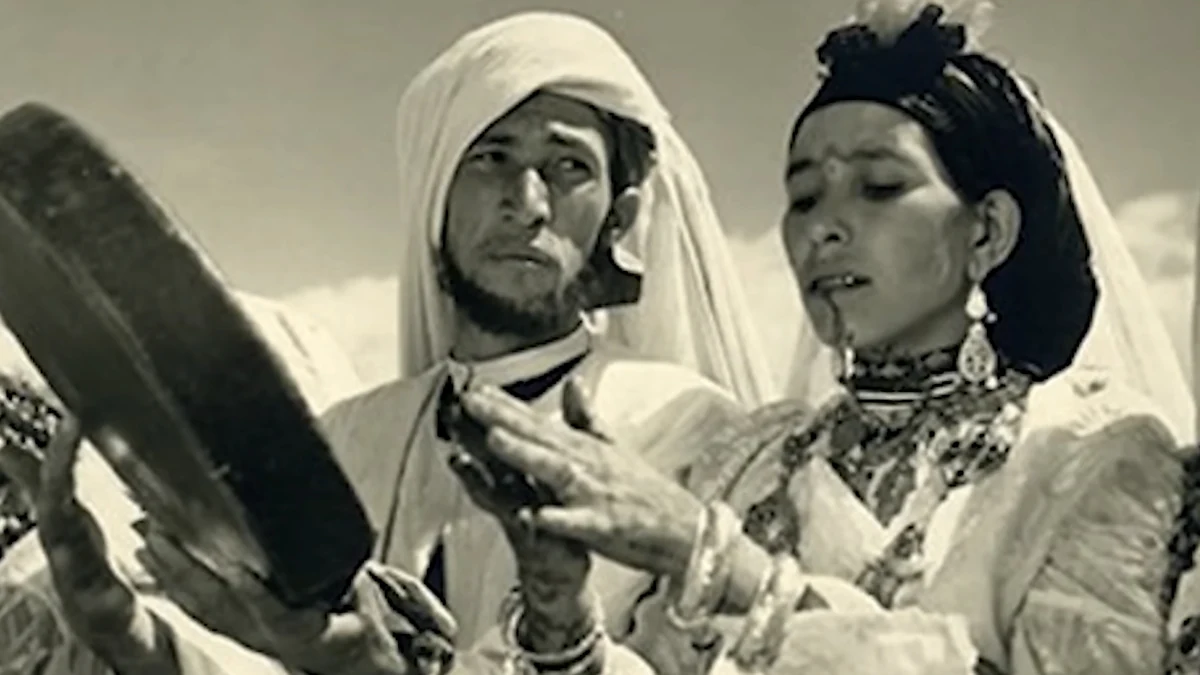
Beauty and adornment
In interviews published by Morocco World News in 2019, women in Khemisset described their tattoos as decoration. Fatima compared hers to makeup. Those accounts are a useful reminder that a woman may have liked the way her tattoos looked without attaching a separate spiritual explanation to every mark.
Belonging and identity
In Associated Press reporting from 2018, Hadda Oaabbjdi explained that her chin marking represented her village and region, Tingaref. This is a specific woman’s account, rather than a rule for interpreting all chin tattoos.
A tattoo could be connected to the people and place around its wearer. Recognising that connection is different from claiming you can identify someone’s community from a photograph.
Protection and life stages
Research has also discussed protective beliefs, fertility and transitions into adulthood. Hannah Mesouani’s 2019 study stresses that interpretations can differ according to generation and who is explaining them.
There was no universal age for receiving a tattoo. AFP interviewed Hannou Mouloud from Imilchil in 2024; she recalled being six. Other accounts describe tattooing closer to adolescence.
These are historical beliefs and social practices. Describing a protective or healing meaning does not establish that a tattoo could prevent illness or harm.
What Do Berber Tattoo Symbols Mean?
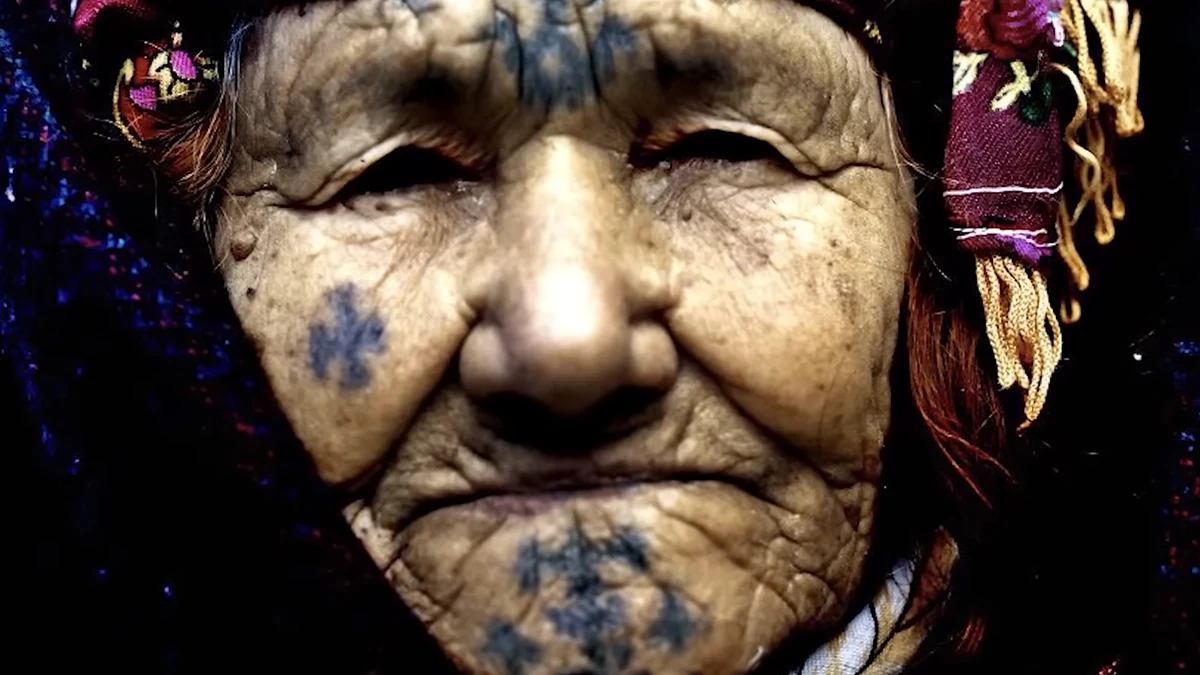
Published accounts describe geometric markings on the chin, forehead and hands. Their arrangements varied between communities.
It is tempting to turn them into a tidy dictionary. A more useful approach is to separate what you can see from what you can establish.
| What you notice | What you can reasonably say | What needs more evidence |
|---|---|---|
| A line on the chin | Chin markings appear in documented Moroccan accounts | The meaning for this particular woman |
| Dots or a geometric pattern | The arrangement is visible in the photograph | Whether it indicates protection, beauty or something else |
| A similar shape on two women | The designs have a visual resemblance | Whether both women gave it the same meaning |
| A motif resembling one on a rug | The two designs look similar | A shared origin, name or interpretation |
Ask where an explanation comes from. Was it recorded from the wearer, documented in a named community, or repeated without a source?
A woman may give a short answer, remember only part of the story or prefer not to discuss it. That is not a gap for a visitor to fill with a more dramatic interpretation.
How Were Traditional Tattoos Made?
Published accounts describe hand tattooing with needles and dark pigments. In the AFP report from Imilchil, Mouloud recalled a woman pricking a design drawn on her skin. She and another interviewee remembered the pain involved.
The experience was not the same for everyone. Cynthia Becker’s research among Ait Khabbash women in southeastern Morocco includes a recollection of a girl requesting a tattoo, alongside accounts of women being tattooed against their will.
Both experiences belong in the history. We should not assume every woman freely chose her markings, or that every woman rejected them.
Why Has Amazigh Facial Tattooing Declined?
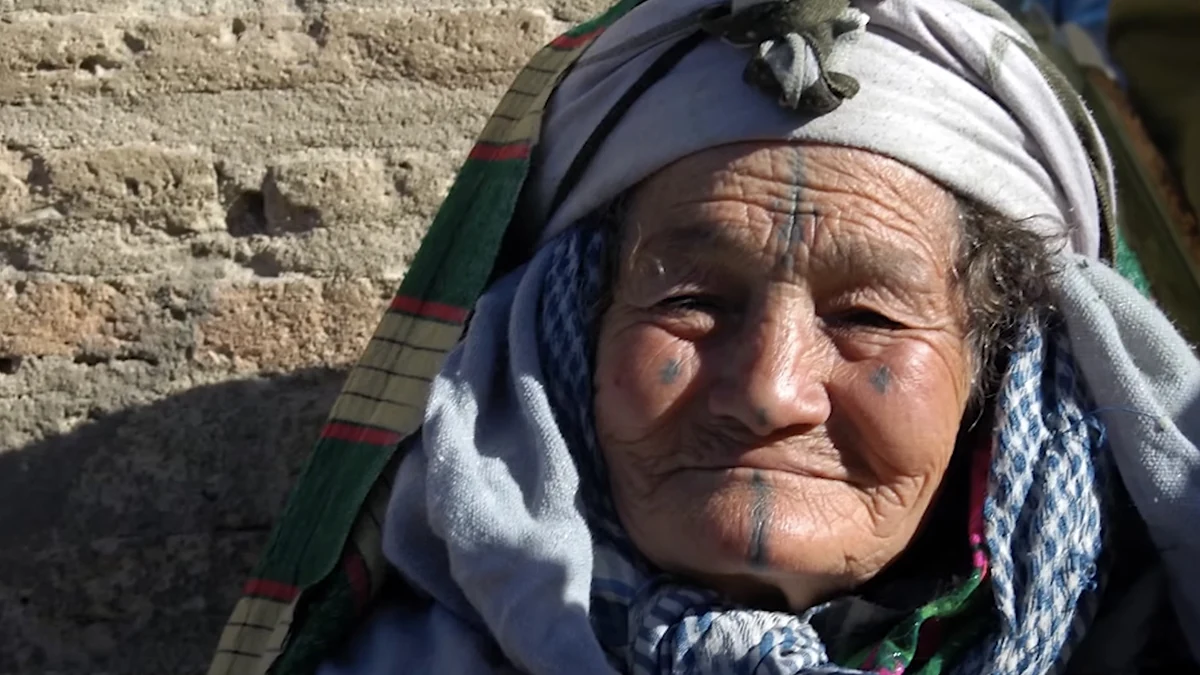
There is no single explanation covering every region and family.
Becker describes religious condemnation affecting tattooing among the Ait Khabbash, where the practice had faded by the time of her fieldwork in the 1990s. Her account is rooted in that community and period.
Other reporting describes changing ideas about appearance, urban life and social acceptance. Morocco World News recorded women who once valued their tattoos but later felt ashamed of them.
It would be misleading to explain this simply as Islam arriving and the tattoos immediately disappearing. The women’s accounts describe changes in attitudes within their own lifetimes.
It would also be unfair to judge a woman who covered or removed a tattoo. Preserving the history should not mean telling women what they must keep on their bodies.
Is the Tradition Disappearing Completely?
The older practice of receiving traditional facial tattoos has declined, but its place in memory and art continues.
Moroccan photographer Safaa Mazirh offers one example. Boston University’s presentation of her work explains that her Amazigh series was inspired by her family heritage and her grandmothers’ tattoos. She brought tattoo imagery together with self-portraiture through multiple exposures.
That is a contemporary artistic interpretation. It should not be confused with evidence that traditional village tattooing continues unchanged.
Amazigh culture is also much wider than tattooing. A person does not need facial markings or traditional clothing to belong to it.
Are Amazigh Tattoos the Same as Henna?
No. Permanent tattooing and henna decoration are different practices, even when a tourist sign calls henna a “temporary tattoo.”
| Traditional permanent tattooing | Henna decoration |
|---|---|
| Pigment is introduced beneath the skin | Plant-based paste stains the skin’s surface |
| The marking is lasting | The decoration fades |
| Discussed here through historical and personal accounts | Used for adornment and celebrations, including weddings |
UNESCO recognised “Henna: rituals, aesthetic and social practices” in 2024 through a multinational inscription that includes Morocco. Its description places henna within family knowledge, celebration and social relationships. That recognition concerns henna, not permanent Amazigh facial tattooing.
If you are considering henna during your trip, ask what the product contains. The US Food and Drug Administration warns that products marketed as “black henna” may contain PPD, a hair-dye ingredient that can cause dangerous skin reactions. The label “henna” alone is not a safety guarantee.
How to Ask About Tattoos and Take Photos Respectfully
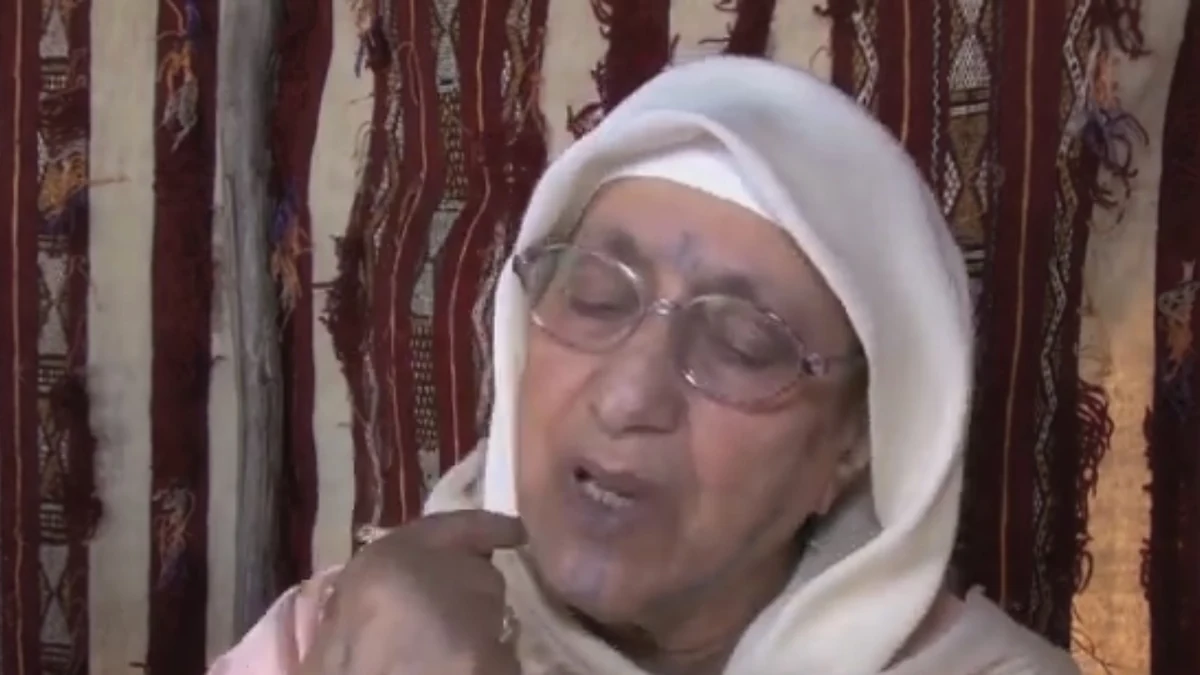
My advice is to start with an ordinary conversation, rather than immediately asking to photograph someone’s face.
If the subject comes up naturally, a question such as “Would you like to tell me about your tattoo?” gives the person room to decide. Avoid asking someone to explain her entire culture or reveal a private story.
Ask before taking a photograph. If you intend to publish it on a website or social media, explain that too. A posed photograph does not automatically mean permission for every future use.
Accept a refusal without bargaining. Avoid photographing discreetly from a distance after someone has said no.
For a caption, use information you actually know. Do not assign a community, marital status or symbolic meaning simply from the person’s appearance.
Where Can Travellers Learn More?
In Marrakech, the Musée Pierre Bergé des arts berbères at Jardin Majorelle provides broader context for Amazigh material culture. Its official presentation describes more than 600 objects representing communities from the Rif to the Sahara.
Treat it as an introduction to a diverse living culture, rather than a promise of a dedicated tattoo exhibition. Check the official website for current visiting arrangements.
When browsing textiles, my guide to buying a Moroccan rug in Marrakech explains practical questions about construction, origin and sales claims. Keep the same curiosity when hearing explanations of symbols, without assuming a rug design and a facial tattoo have an identical meaning.
For the wider visit, use my Marrakech souks guide and Morocco travel guide.
FAQs About Berber Tattoos in Morocco
Why do some older Moroccan women have chin tattoos?
For some women, these markings were associated with beauty, belonging or life stages. The wearer’s own account is more useful than assuming every chin tattoo has one meaning.
Did all Amazigh women have tattoos?
No. The accounts discussed here describe particular communities and individuals. They should not be treated as a requirement of Amazigh identity.
Can you tell what a tattoo means from a photograph?
You can describe its visible shape. Establishing its meaning requires context, such as the wearer’s explanation or research from her community. A matching shape on an online chart is not enough.
Can visitors get a traditional Berber tattoo in Marrakech?
A modern studio may offer an Amazigh-inspired design, but that does not make the experience equivalent to the traditions described here. Research the artist and the design, and do not rely on a sales pitch as proof of cultural meaning.
Is henna a permanent Berber tattoo?
No. Henna is temporary surface decoration. Traditional permanent tattooing introduces pigment beneath the skin. Similar-looking patterns do not make them the same practice.
A Final Word From Kamal
If you notice an older woman’s tattoos during your trip, remember that you are seeing part of her life, not just a design.
Be curious, ask kindly and listen to the answer she chooses to give. Sometimes understanding Morocco begins with accepting that one person’s story cannot speak for everyone.