
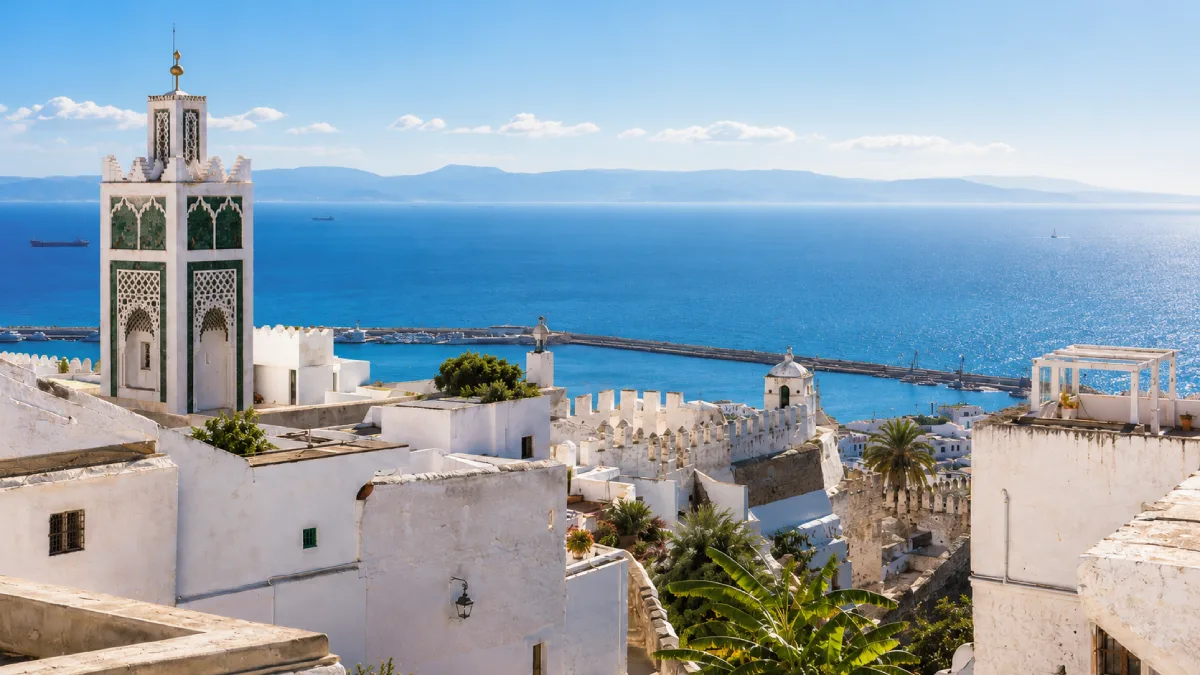
If you are planning the north for the first time, this Northern Morocco travel guide will help you understand which places are worth your time and how to connect them without rushing. Most first-time visitors think first about Marrakech, Fes and the Sahara, but the north feels very different. You have Tangier on the coast, Chefchaouen in the Rif Mountains, the old Medina of Tetouan, the small coastal town of Asilah and many places that are still much less visited.
I’m Kamal, a licensed Moroccan tour guide, and I like this part of Morocco because the distances are shorter and every stop feels different. You can spend the morning walking through an old Medina, drive through the mountains in the afternoon and finish the day near the sea.
Tangier is normally the easiest place to start. Chefchaouen is the town most visitors already know, but I would not come north only for the blue streets. Tetouan, Asilah, Akchour and the Mediterranean coast are also worth considering if you have enough time.
In this guide, I’ll show you where I would go, how I would organize the route, how many days you really need and the easiest ways to travel between the main places. If Northern Morocco is only one part of a longer trip, you can also use my Morocco Travel Guide, Best Time to Visit Morocco and Morocco Itinerary: 7, 10 & 14 Days to plan the rest of the country.
Table of Contents
Table of Contents
Best Places to Visit in Northern Morocco
| Place | Best For | Local Feeling | My Advice |
|---|---|---|---|
| Tangier | Best base and gateway | Sea, history, cafés, modern energy | Do not use it only as an arrival point |
| Chefchaouen | Most beautiful feeling | Blue streets and Rif mountain atmosphere | Stay overnight if you can |
| Tetouan | Culture and authenticity | Andalusian medina and daily Moroccan life | Best underrated city in the north |
| Asilah | Calm coastal beauty | White walls, art, ocean and slow walks | Good stop near the end of the route |
| Akchour | Nature and waterfalls | Rif mountain escape near Chefchaouen | Add it if you have extra time |
| Al Hoceima | Mediterranean coast | Beaches, cliffs and summer sea life | Better with more days and a car |
Tangier: Best Base for Northern Morocco
If you are starting a trip through Northern Morocco, Tangier is usually the easiest place to begin. You can arrive by plane, ferry or train, and from here it is straightforward to continue toward Chefchaouen, Tetouan or Asilah.
I would not treat Tangier only as an arrival point. Give yourself at least one full day if your schedule allows it. Walk through the Medina and Kasbah, spend some time around Grand Socco, and leave room for the coast and the cafés. The city has changed a lot in recent years, but you can still find the older Tangier once you move away from the busiest streets.
For a northern route, Tangier works well because you can arrive, recover from the journey and then continue without wasting a full day on a long transfer.
If you want to plan the city itself, read my Tangier Travel Guide.
Chefchaouen: The Blue Town in the Rif Mountains

Chefchaouen is usually the place travelers already know before they come to Northern Morocco. The blue Medina is beautiful, but I would not plan a visit only for photos.
If you can, stay one night. The town feels very different early in the morning and later in the evening when many day visitors have gone. You also have more time to walk without watching the clock or worrying about the drive back to Tangier.
Chefchaouen also works well as a base if you want to spend more time in the Rif Mountains. If Akchour is important to you, I would give the area two nights rather than trying to fit everything into one day.
For transport, where to stay and how to plan your time, read my Chefchaouen Travel Guide.
Tetouan: A More Local Side of Northern Morocco
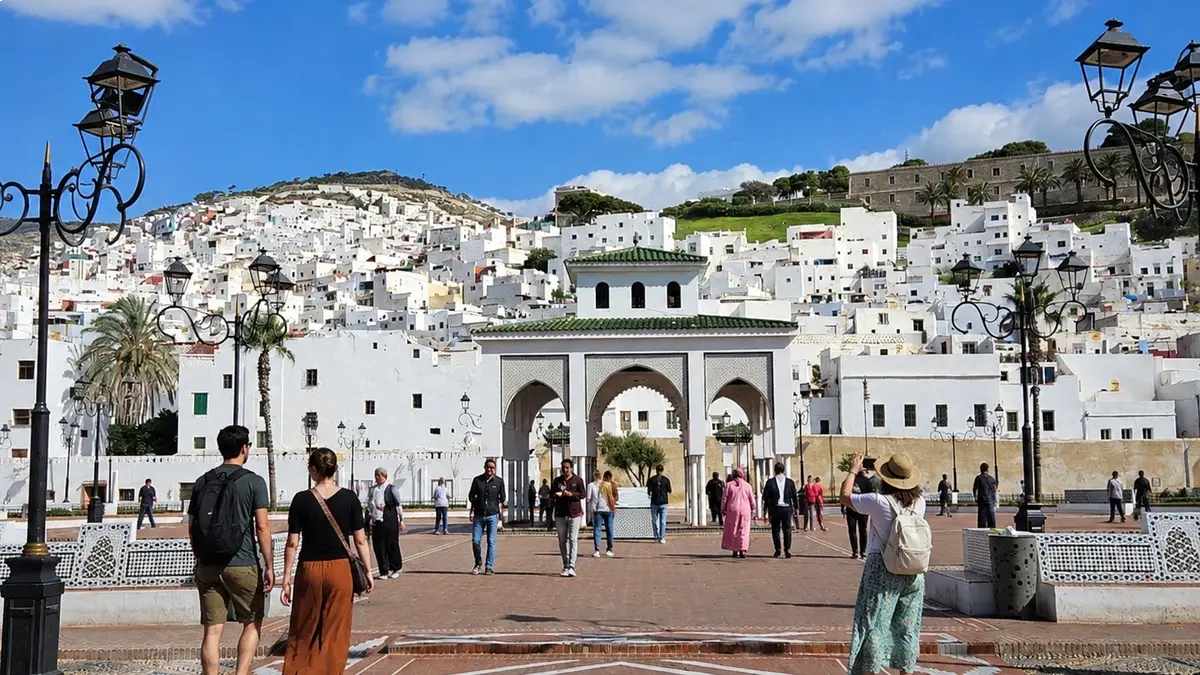
Tetouan is one of the places I would add if you want to see a quieter side of the north. It does not get the same attention as Chefchaouen or Tangier, and that is part of what makes it interesting.
The Medina still feels very local. You see people shopping, small food stalls, workshops, white buildings and streets that are busy with normal daily life. The Andalusian influence is also easy to notice in the architecture and the way the old city is laid out.
I would not come here expecting a long list of famous attractions. Tetouan is better when you walk slowly, spend time in the Medina and pay attention to the small details.
If your route already includes Chefchaouen and Tangier, Tetouan is a very good stop between the mountains and the coast
Asilah: A Quiet Stop on the Atlantic Coast
Asilah is much smaller than Tangier, and that is exactly why I like adding it to a northern route. The Medina is easy to walk, the sea is always close, and you do not need a long list of things to do to enjoy the town.
Come here for the white streets, old walls, murals and ocean views. It is a good place to slow down after spending time in Tangier, Chefchaouen or Tetouan.
I would usually put Asilah near the end of the trip. You can spend a few hours here, but one night works well if you want a quieter evening and an easy morning before going back toward Tangier.
Asilah is especially nice for couples, photographers and travelers who prefer smaller coastal towns.
Akchour: A Day in the Rif Mountains
Akchour is one of the easiest nature stops to add if you are staying in Chefchaouen. You come here for the river, mountain paths, waterfalls and a break from the Medinas.
I would not try to squeeze Akchour into a very short Chefchaouen visit. If you only have one night, enjoy the town properly. If you have two nights, then Akchour becomes much easier to include without rushing.
Start early, wear shoes with a good grip and carry enough water. Conditions on the paths can change with the weather, so ask locally before setting out if there has been heavy rain.
For most northern itineraries, I see Akchour as an extra day rather than a place you need to force into the route.
Al Hoceima and the Mediterranean Coast
If you have more time, the Mediterranean side is worth adding. Al Hoceima, M’diq, Martil and Cabo Negro are popular with Moroccan families in summer and give you a very different feeling from Tangier or Chefchaouen.
Al Hoceima is the strongest choice if you want beaches, cliffs and a longer coastal stay. M’diq and Martil are easier to combine with Tetouan and work better on a shorter route.
I would only add this part of the north if you have enough days. The coast is spread out, and moving between places takes longer than it looks on the map.
In July and August, book earlier because the beach towns get busy with domestic travelers.
If your trip is short, I would still prioritize Tangier, Chefchaouen, Tetouan and Asilah first.
Best Northern Morocco Route
For most travelers, I would start and finish in Tangier. From there, go to Chefchaouen, continue to Tetouan, then finish with Asilah before returning to Tangier.
This is the route I would use for a first trip, and it is the one I recommend in this Northern Morocco travel guide because it keeps the journey simple and avoids unnecessary backtracking.
Tangier gives you the easiest arrival, Chefchaouen takes you into the Rif Mountains, Tetouan brings you back toward the coast, and Asilah is easy to combine with Tangier at the end.
Do not try to fit every place into a short trip. With three days, keep it simple. With five days, you can add Tetouan and Asilah. With one week, you have enough time for Akchour or part of the Mediterranean coast.
3-Day Northern Morocco Itinerary
For a short trip, start in Tangier. Spend your first day walking the medina, the Kasbah area, Grand Socco, cafés, and the coast. Sleep in Tangier so you do not arrive and leave too quickly.
On the second day, travel to Chefchaouen. Walk the blue medina slowly, visit a viewpoint, take your photos, and stay overnight. This overnight stay makes a big difference because morning and evening are the best times to enjoy Chefchaouen without the heavy daytime crowds.
On the third day, enjoy Chefchaouen early, then return toward Tangier. If you have enough time, stop in Tetouan for a short walk in the medina. If the day feels too tight, skip the stop and keep the trip comfortable.
5-Day Northern Morocco Itinerary
With five days, the route becomes much better. Start with one or two nights in Tangier so you can enjoy the city instead of using it only as an arrival point. Walk the old medina, sit in a café, visit the coast, and give the city time to show itself.
After Tangier, go to Chefchaouen and stay one night. If you want to add Akchour, stay two nights. Then continue to Tetouan and spend time in the medina, the markets, and the white streets. Finish in Asilah for a calmer coastal ending before returning to Tangier.
This is the route I like most for travelers who want a good balance: sea, mountain, culture, medinas, and one quiet coastal finish. If you want to compare this northern route with Marrakech, Sahara or imperial-city options, see my 5-day Morocco itinerary.
7-Day Northern Morocco Itinerary
With one week, you can travel the north properly. Spend two nights in Tangier, two nights in Chefchaouen with Akchour, one night in Tetouan, one night near the Mediterranean coast or around M’diq and Martil, and one night in Asilah before returning to Tangier.
This route is best for travelers who already know the classic Marrakech, Fes, and Sahara route and now want another side of Morocco. You get Tangier’s cafés and sea air, Chefchaouen’s blue streets, Tetouan’s local medina, the Mediterranean coast, and Asilah’s quiet finish.
Best Time to Visit Northern Morocco
For most travelers, spring and autumn are the easiest times to visit Northern Morocco.
From March to May, the weather is usually comfortable for walking, the Rif Mountains are greener, and places like Tangier, Chefchaouen and Tetouan are pleasant to explore during the day.
September to November is also a very good period. The summer crowds start to drop, while the coast can still feel warm enough for relaxed days outside.
July and August are much busier, especially around the Mediterranean coast, M’diq, Martil and Al Hoceima, because many Moroccan families travel north for their summer holidays.
Winter is quieter, but the Rif Mountains can be cold and wet. If you plan to visit Akchour or drive through mountain areas, check the weather before you go.
For a full month-by-month overview of the country, read my Best Time to Visit Morocco guide.
How to Get Around Northern Morocco
Tangier is the easiest transport hub in Northern Morocco. You can arrive by plane, ferry or train, and from there continue by road toward Chefchaouen and Tetouan or by train toward Asilah and the rest of Morocco. For current train schedules and tickets, check the official ONCF website.
Chefchaouen has no train station. From Tangier or Tetouan, you will need a bus, taxi, private driver or rental car. This is one reason I prefer staying overnight instead of trying to visit Chefchaouen on a rushed day trip.
If your route is only Tangier and Asilah, public transport is easy enough for most travelers. Once you add Chefchaouen, Akchour and the Mediterranean coast, having a car or private driver gives you much more freedom.
If you are using Tangier as your rail connection, read my Train Travel in Morocco guide for routes, tickets and ONCF advice. For buses, taxis, rental cars and private transfers around the country, see my Morocco Transportation Guide.
Is Northern Morocco Good for First-Time Visitors?
Yes, it can be. If you arrive in Tangier and prefer sea, mountains and shorter drives, the north can work very well for a first trip.
I would especially recommend it to travelers who do not want to spend long days driving toward the Sahara. You can combine cities, mountain towns and the coast without covering huge distances.
But if your main dream is the desert, I would not replace the Sahara with Northern Morocco. The two trips are completely different.
For travelers who have already seen Marrakech, Fes or the desert, the north is even more interesting because it shows another side of the country.
Common Mistakes Travelers Make in Northern Morocco
The first mistake is trying to see too much in too little time. Tangier, Chefchaouen, Tetouan and Asilah may look close on the map, but moving between them still takes time.
Another mistake is visiting Chefchaouen only as a quick photo stop. If you can stay overnight, you get a much calmer side of the town in the early morning and evening.
I also see travelers using Tangier only as a place to arrive and leave. If your schedule allows it, give the city at least one proper day before continuing.
And do not ignore Tetouan just because it is less famous. For me, it is one of the best places in the north if you want to see a Medina that still feels very local.
Final Advice for Northern Morocco
Northern Morocco works best when you give each place enough time. I would rather visit three or four stops properly than try to fit the whole region into a few rushed days.
For most travelers, Tangier, Chefchaouen, Tetouan and Asilah make the strongest first route. Add Akchour if you want a day in the Rif Mountains, or the Mediterranean coast if you have more time.
The north is easy to underestimate because the distances look short on the map. Plan fewer stops, stay overnight when it makes sense, and leave some time to enjoy the cafés, Medinas and coast without always thinking about the next transfer. I hope this Northern Morocco travel guide helps you build a route that gives each place enough time.
Need Help Planning Your Northern Morocco Trip?
I’m Kamal, a licensed Moroccan tour guide. If you want help putting together a realistic route through Northern Morocco, you can contact me directly.
I can help with the route, private transport and deciding how much time to give each stop, especially if you are trying to combine Tangier, Chefchaouen and other places in the north without rushing.
FAQ: Northern Morocco Travel Guide
Is Northern Morocco worth visiting?
Yes. Northern Morocco gives you a very different trip from Marrakech or the Sahara, with Tangier, Chefchaouen, Tetouan, Asilah, the Rif Mountains and both Atlantic and Mediterranean coast.
How many days do you need for Northern Morocco?
Three days is enough for Tangier and Chefchaouen. Five days gives you time to add Tetouan and Asilah. With one week, you can also include Akchour or part of the Mediterranean coast.
What is the best route for Northern Morocco?
For most travelers, I recommend Tangier → Chefchaouen → Tetouan → Asilah → Tangier. It is simple, realistic and avoids unnecessary backtracking.
What is the best time to visit Northern Morocco?
Spring and autumn are the easiest seasons for most travelers. The weather is usually better for walking, the Rif Mountains are greener in spring, and the coast is less crowded than in midsummer.
Is Northern Morocco good for first-time visitors?
Yes, especially if you prefer sea, mountains and shorter drives. If the Sahara is your main reason for visiting Morocco, I would plan a different route.
Do you need a car for Northern Morocco?
Not always. Tangier and Asilah are easy by public transport, and Chefchaouen can be reached by bus or taxi. A rental car or private driver becomes more useful if you want Akchour or the Mediterranean coast.