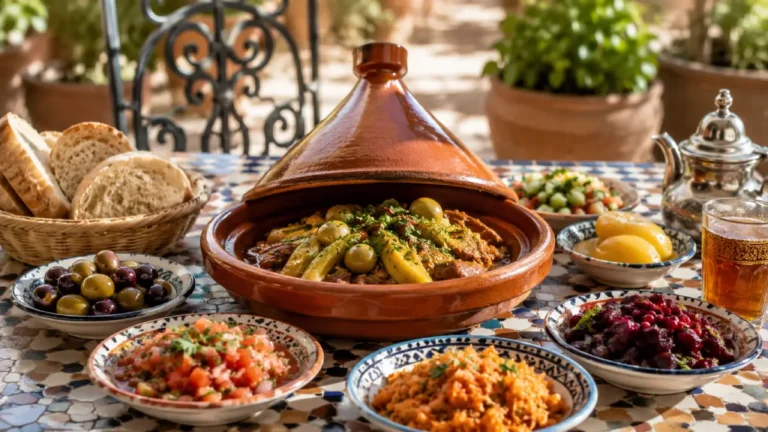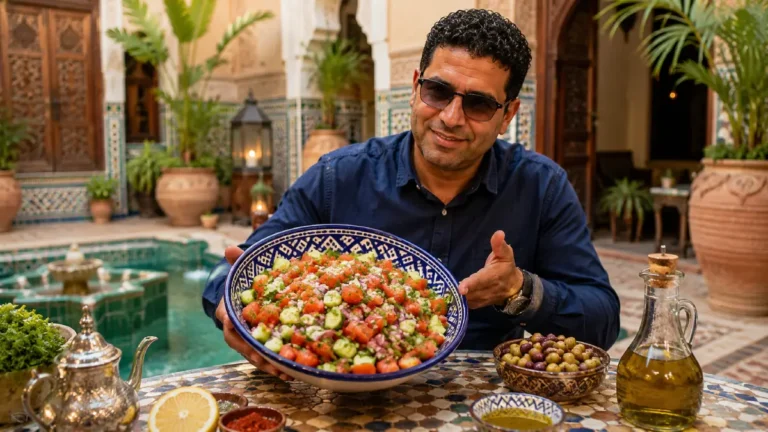
Is Street Food Safe in Morocco? Honest Local Guide Advice for Travelers
Is street food safe in Morocco? Yes, it can be safe, delicious, and one of the best ways to experience local life, but you need to choose carefully. Moroccan street food is famous for its flavor and atmosphere, but the real question for travelers is not only what to try it is how to choose it safely.
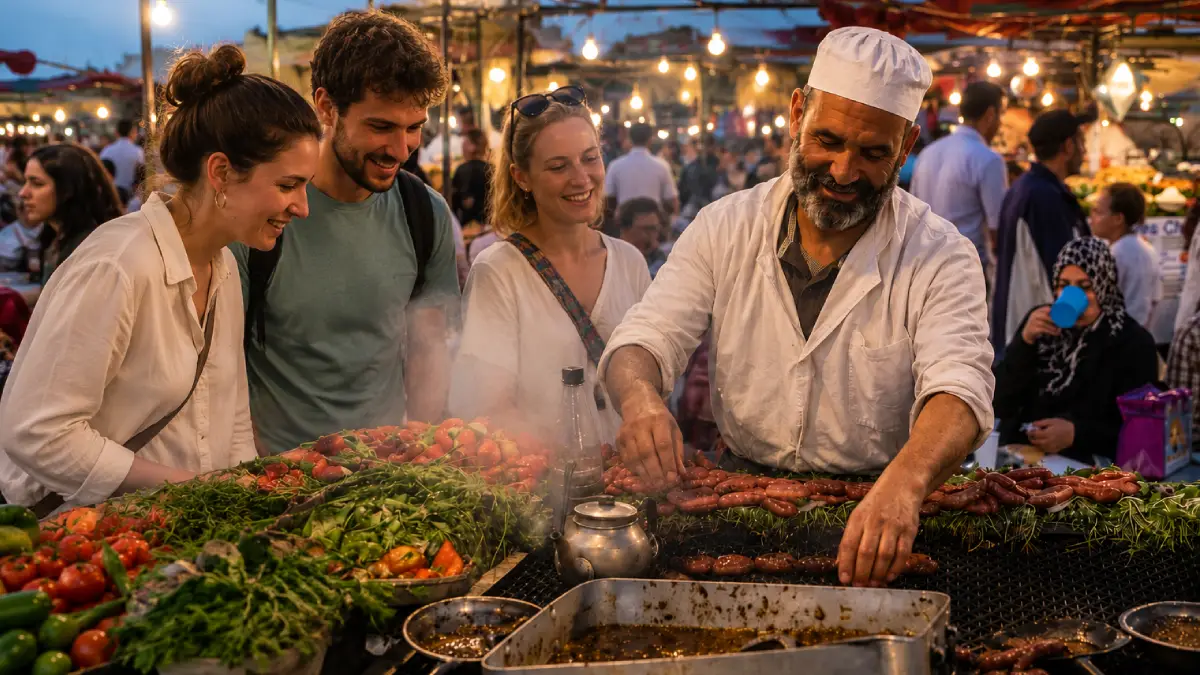
As a local guide, I always tell travelers the same thing: do not be afraid of Moroccan street food, but do not eat blindly either. The safest options are usually fresh, hot, cooked in front of you, and sold at a busy stall where food moves quickly.
Morocco has amazing street food, especially in cities like Marrakech, Fes, Essaouira, Tangier, Rabat, Casablanca, and small local markets across the country. You can find msemen, grilled skewers, harira, snails, fresh bread, sardines, olives, dates, nuts, fresh orange juice, and many simple local snacks.
But like anywhere in the world, safety depends on hygiene, freshness, heat, and turnover. A busy stall with fresh food can be a great choice. A quiet stall with food sitting outside too long is not.
This guide will help you understand when street food in Morocco is safe, what to try, what to avoid, and how to enjoy Moroccan food with confidence.
Before your trip, I recommend reading my Morocco Food Guide, What to Eat in Morocco, and What Not to Eat in Morocco. These guides will help you enjoy food in Morocco without feeling stressed.
Table of Contents
Table of Contents
Is Street Food Safe in Morocco?
Yes, street food is safe in Morocco when you choose clean, busy stalls where food is cooked fresh and served hot. The safest options are grilled meat, msemen, harira, fresh bread, roasted nuts, and food prepared in front of you.
Be more careful with food that has been sitting out for a long time, uncovered meat or fish, old sauces, raw salads, unknown ice, and stalls that look dirty or empty.
| Street Food | Is It Usually Safe? | My Local Advice |
|---|---|---|
| Msemen | Usually yes | Best when cooked fresh and hot in front of you. This is one of the easier street foods for travelers. |
| Harira | Usually yes | Choose busy stalls or local restaurants where the soup is hot and served often. |
| Grilled skewers | Usually yes | Make sure the meat is cooked well and served hot. Busy grill places are usually better. |
| Snails | Depends | Choose busy stalls with hot broth. Avoid quiet stalls where the pot has been sitting too long. |
| Fresh orange juice | Usually yes | Choose clean, busy stalls where the oranges are fresh and the glasses look properly washed. |
| Fried fish | Depends | Better near the coast and freshly fried. I would be more careful with old-looking fish far inland. |
| Raw salads | Be careful | Better in trusted restaurants than street stalls. Washing water and handling matter a lot. |
| Sauces sitting outside | Be careful | Avoid sauces if they look old, uncovered, or have been sitting in the heat for a long time. |
| Meat sitting in heat | Avoid | Choose fresh grilled meat instead. If meat has been sitting out too long, it is not worth the risk. |
Some links in this guide may earn a small commission at no extra cost to you. I only recommend services I trust for planning a Morocco trip.
The Simple Rule for Moroccan Street Food
The simple rule is this: choose food that is cooked fresh, served hot, and popular with locals.
This rule works in Marrakech, Fes, Essaouira, Tangier, Casablanca, Rabat, Chefchaouen, and almost everywhere in Morocco. If a stall is busy and food is moving quickly, that is usually a good sign. If a place is empty and the food looks tired, dry, or uncovered, walk away.
Street food should look alive. You should see people cooking, serving, eating, and replacing food. Fresh movement is important.
Do not judge only by how beautiful a stall looks. Some simple local stalls are excellent. Some pretty tourist stalls are average. Look at freshness, cleanliness, and turnover.
Morocco Street Food Is Famous for a Reason
Moroccan street food is not just something travelers discover by accident. Marrakech has been recognized internationally for its street food culture, especially around Jemaa el-Fna, where visitors find fresh juices, snails, grilled food, and many local snacks. CNN has also highlighted Moroccan street food dishes such as brochettes, sardines, maakouda, snails, stuffed spleen, and traditional sweets.
But famous does not always mean you should eat everything without thinking. As a local guide, my advice is to enjoy Moroccan street food with confidence, but also with common sense. Choose busy stalls, freshly cooked food, hot dishes, and places where locals are eating. That way, you enjoy the best part of Moroccan street food without taking unnecessary risks.
Why Street Food in Morocco Can Be a Great Experience
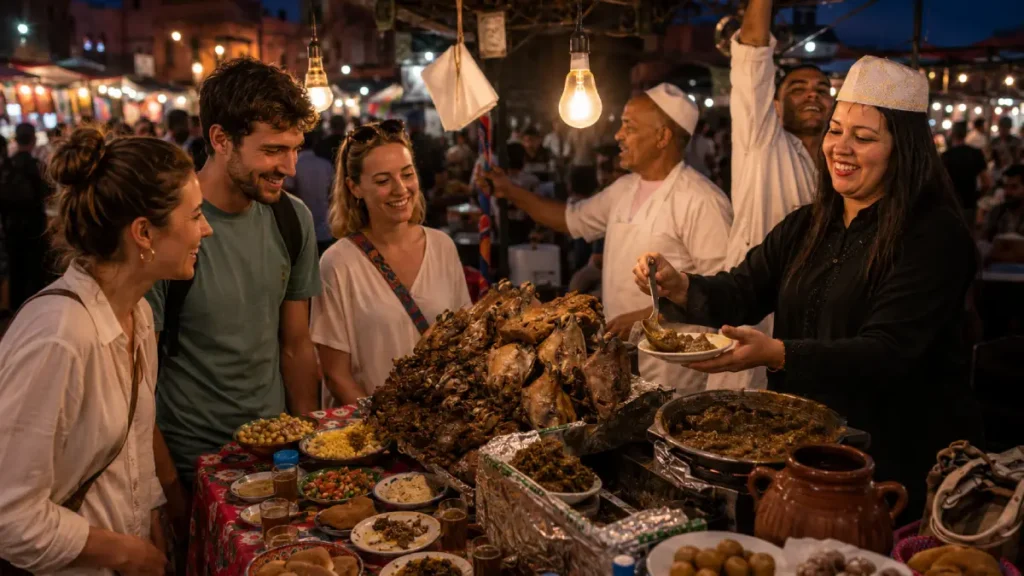
Street food is not only about eating cheaply. It is part of Moroccan daily life. Locals stop for breakfast, tea, soup, grilled snacks, bread, fruit, and small bites during the day. In the morning, this can be as simple as msemen, harcha, fresh bread, mint tea, or coffee. If you want to understand the morning side of local food, read my full guide to Moroccan Breakfast.
For many travelers, street food gives a more direct feeling of Morocco than a formal restaurant. You see how people eat, what they order, how they talk to vendors, and how food connects to daily life.
In Marrakech, street food is part of the energy of the medina. In Essaouira, seafood is part of the coastal rhythm. In Fes, simple soups and snacks are part of old medina life. In northern Morocco, small cafés and food stalls have their own atmosphere.
If you are nervous about eating street food alone, a guided food walk can help, especially in a busy city like Marrakech. I explain what to book, what to avoid, and how to choose wisely in my guide to the best food tours in Marrakech.
If you enjoy food, do not skip street food completely. Just choose wisely.
For a bigger food picture, read my Morocco Food Guide and What to Eat in Morocco.
Best Moroccan Street Foods to Try
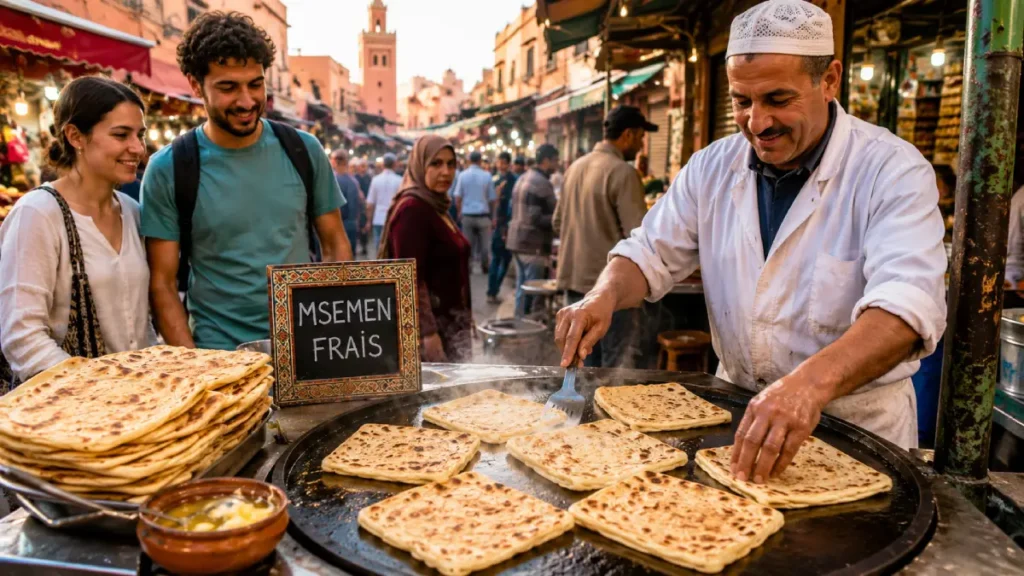
Some street foods are easier and safer for first-time visitors because they are cooked fresh and served hot.
Msemen is one of the best street foods to start with. It is a Moroccan flatbread cooked on a hot griddle. You can eat it plain, with honey, cheese, or sometimes stuffed. When it is cooked fresh in front of you, it is usually a safe and delicious choice.
Harira is a Moroccan soup made with tomatoes, lentils, chickpeas, herbs, and spices. It is especially popular during Ramadan but can be found in many places. Choose a busy stall or local restaurant where the soup is hot.
Grilled skewers, known as brochettes, can be very good when the meat is fresh and cooked well. Choose a stall where the grill is active and the meat is not sitting too long.
Fresh bread, roasted nuts, dates, olives, and simple bakery items are also good choices. These are easy snacks and usually safer than complicated foods with many sauces.
Fresh orange juice is popular in Marrakech and other cities. It can be fine when the stall is clean, busy, and the juice is made in front of you.
Street Food to Be Careful With
Some foods need more caution, especially if you have a sensitive stomach.
Be careful with meat that has been sitting uncovered in the heat. If it looks dry, old, or not properly stored, do not eat it. Choose stalls where meat is grilled fresh.
Be careful with sauces that sit outside all day. Sauces can be delicious, but if they are uncovered or look old, skip them.
Be careful with raw salads from street stalls. Cooked Moroccan salads are usually safer, but raw lettuce, cucumber, and tomato depend heavily on washing and hygiene. For more details, read my Can You Eat Salad in Morocco? guide.
Be careful with seafood far from the coast. Fried fish or sardines can be excellent in Essaouira, Agadir, or coastal cities, but random cheap seafood far inland is not always the best idea.
Be careful with ice from unknown places. If your stomach is sensitive, avoid drinks with ice unless you trust the place.
This does not mean you must avoid everything. It means you should choose with your eyes open.
Is Street Food Safe in Marrakech?
Yes, street food in Marrakech can be safe, but Marrakech is also where travelers need to be most selective because there are many tourist areas, busy squares, and food stalls with different quality levels.
Jemaa el-Fna is famous for food stalls, orange juice, snails, grilled meats, and evening atmosphere. It is an experience, but not every stall is the same. Look for busy stalls, fresh cooking, clean handling, and food that is served hot.
If someone pushes too hard or the food looks old, move on. You are not obligated to eat anywhere.
For first-time visitors in Marrakech, I often recommend starting with simple street foods like msemen, fresh bread, roasted nuts, dates, hot soup, or grilled skewers from a busy place. Then, as you feel more confident, you can try more.
For safer restaurant choices and local food planning, read my Where to Eat in Marrakech, Marrakech Travel Guide, and Marrakech Souks Guide.
Is Street Food Safe in Fes?
Fes has a deep food culture, and the medina is full of small shops, bakeries, soup places, and traditional food stalls. Street food in Fes can be excellent, but the medina is old and busy, so choose places carefully.
Look for stalls where locals are eating and where food is clearly fresh. Simple foods like bread, soups, sweets from busy bakeries, and grilled items can be good choices.
Fes is also a city where having a guide can help you understand what you are seeing and where to eat without feeling lost. If Fes is part of your Morocco route, my Fes Travel Guide and Things to Do in Fes guides can help you plan the city better before you arrive.
Is Street Food Safe in Essaouira and Coastal Cities?
Essaouira, Agadir, Tangier, Asilah, Rabat, and Casablanca are better places for seafood than inland cities. Fresh fish, sardines, grilled seafood, and simple coastal meals can be wonderful when chosen well.
In Essaouira, seafood is part of the city’s identity. Still, freshness matters. Choose places where fish looks fresh and is cooked properly. Avoid seafood that looks old, smells strong in a bad way, or has been sitting too long.
Fried fish and grilled sardines can be great when they are cooked fresh. This is one reason I often tell travelers: eat seafood near the coast, not in random inland places.
If you want to plan a coastal food stop, my Essaouira Travel Guide and Things to Do in Essaouira guides will help you understand where the city fits into your Morocco route. For a wider coastal trip, you can also read my Best Beaches in Morocco guide.
Fresh Orange Juice: Safe or Not?
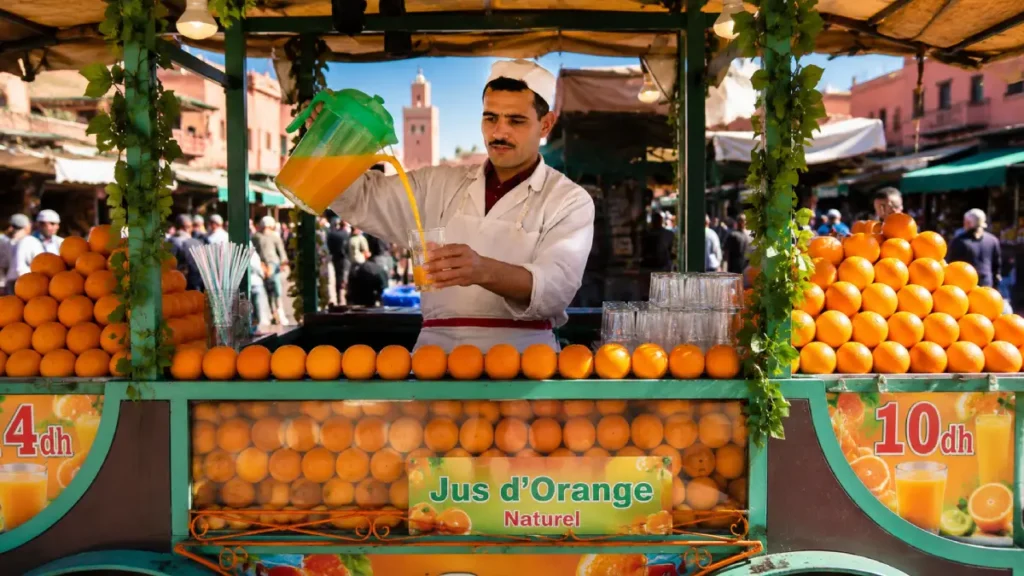
Fresh orange juice is one of the things travelers love in Morocco. In Marrakech especially, orange juice stalls are everywhere.
Fresh orange juice is usually fine if the stall is clean, busy, and the juice is pressed in front of you. Choose a vendor who uses fresh oranges and clean glasses. If you are unsure, ask for the juice without ice.
Avoid juice that has been sitting out for a long time. Fresh means fresh.
My local advice: orange juice from a busy clean stall is usually one of the easiest street drinks to enjoy, but skip unknown ice if your stomach is sensitive.
If you are also unsure about water, ice, or fresh drinks, read Can You Drink Tap Water in Morocco? before trying juices, street food, or drinks with ice.
Snails in Morocco: Should You Try Them?
Snail stalls are common in some Moroccan cities, especially in Marrakech. Snails are served in hot broth with herbs and spices.
Are they safe? They can be, if you choose a busy stall where the broth is hot and turnover is high. But snails are not for everyone. The flavor is strong, and the broth can be intense for travelers who are not used to it.
If you have a sensitive stomach, maybe do not make snails your first street food in Morocco. Start with something easier, then try snails later if you feel curious.
Street Food During Ramadan
During Ramadan, street food changes. Before sunset, many places are quiet. After iftar, the streets become lively with soups, sweets, bread, dates, juices, and family foods.
Harira, chebakia, dates, boiled eggs, msemen, and fresh juices are common around Ramadan evenings. This can be a beautiful food experience, but crowds can be intense, especially in busy medinas.
Choose food that is fresh and moving quickly. Ramadan food is often prepared in large quantities, so freshness and timing matter.
If you are visiting during this period, read my Morocco During Ramadan guide before your trip. If your visit is close to the end of the month, my Eid al-Fitr Morocco guide will also help you understand what changes for travelers.
Street Food on Desert Tours and Road Trips
On desert tours, street food and roadside food require more attention. The road from Marrakech to Merzouga, Fes, or the desert includes many tourist stops. Some are good, some are average, and some are chosen mainly because they are convenient for groups.
On long road trips, I recommend simple cooked food: tagine, omelet, soup, grilled chicken, bread, cooked vegetables, and bottled water. These choices are usually easier on the stomach and safer than food that has been waiting too long.
Be more careful with raw salads, seafood far inland, and food that looks tired or uncovered. A good desert tour company or driver will usually know better lunch stops, and this is one reason why the cheapest tour is not always the best value.
If the Sahara is part of your trip, my Merzouga Sahara Desert Travel Guide and Best Desert Camps in Merzouga guide can help you plan the desert side of the journey more carefully.
How to Choose a Safe Street Food Stall in Morocco
Here is what I look for:
The stall is busy with locals.
Food is cooked fresh in front of you.
Hot food is actually hot.
Meat is grilled properly.
The vendor handles food cleanly.
Food is covered or protected.
The area does not smell bad.
There is quick turnover.
The stall does not look abandoned or tired.
You feel comfortable.
These signs matter more than decoration. A simple stall can be excellent if food is fresh and people trust it.
What to Avoid With Moroccan Street Food
Avoid food that has been sitting out too long.
Avoid meat that looks old or dry.
Avoid raw salads from unclear places.
Avoid sauces that are uncovered or look tired.
Avoid seafood far from the coast if the place does not specialize in it.
Avoid ice if you are not sure where it came from.
Avoid empty stalls with old-looking food.
Avoid eating too much too quickly on your first day.
The last point is important. Sometimes travelers get sick not because the food was unsafe, but because they try too much rich food, sugar, mint tea, fried snacks, spices, and juice all at once.
What If You Have a Sensitive Stomach?
If you have a sensitive stomach, you can still enjoy Moroccan food, but start slowly.
Begin with cooked food like tagine, soup, grilled chicken, bread, rice, cooked vegetables, and peeled fruit. Drink bottled water. Avoid raw salad and unknown ice at the beginning.
Try street food slowly, not all in one evening. Start with fresh msemen, bread, or hot soup before moving to grilled meats or stronger flavors.
Your stomach may need time to adjust to Moroccan spices, oils, and travel rhythm.
For more safety advice, read my What Not to Eat in Morocco and Is Morocco Safe for Tourists? guides.
My Local Guide Rules for Eating Street Food Safely
My first rule is to follow freshness. If food is cooked in front of you and served hot, it is usually a better choice.
My second rule is to follow locals. If local families, workers, or regular customers are eating there, that is often a good sign.
My third rule is to avoid pressure. If a vendor pushes too hard and you feel uncomfortable, walk away.
My fourth rule is to keep it simple on your first day. Morocco has many flavors, and you do not need to try everything immediately.
My fifth rule is to trust your instinct. If something looks wrong, smells wrong, or feels wrong, choose another stall.
Street food should feel enjoyable, not stressful.
My Honest Local Advice
Do not let fear stop you from enjoying Moroccan street food. Some of the best small food memories in Morocco come from simple places: hot msemen in the morning, a bowl of harira in the evening, grilled skewers from a busy stall, fresh bread from a bakery, or orange juice after walking in the medina.
But also do not eat randomly just because a place looks exciting. Street food is best when you choose with care.
As a local guide, my advice is simple: eat hot, fresh, and busy. Avoid old, uncovered, and unclear. That one rule will help you more than any complicated list.
Final Thoughts: Is Street Food Safe in Morocco?
Yes, street food in Morocco can be safe, enjoyable, and memorable when you choose wisely. The best rule is simple: eat where food is fresh, hot, busy, and clean.
Moroccan street food is part of the country’s daily life. It is not something you need to fear. You just need to avoid food that looks old, uncovered, poorly handled, or left sitting too long.
As a local guide, I want travelers to enjoy Morocco with confidence. Try the msemen. Drink the orange juice from a clean stall. Taste the harira. Watch the grill. Follow the locals. And when something does not feel right, walk away calmly.
That is how you enjoy street food in Morocco the smart way.
FAQs About Street Food Safety in Morocco
Is street food safe in Morocco?
Yes, street food in Morocco can be safe if you choose busy stalls, freshly cooked food, and clean places. Avoid food that has been sitting out too long or looks poorly handled.
Is street food safe in Marrakech?
Yes, Marrakech street food can be safe, but choose carefully. Jemaa el-Fna and the medina have many options, so look for busy stalls, fresh cooking, and hot food.
What is the safest street food in Morocco?
Msemen, fresh bread, harira, roasted nuts, dates, grilled skewers from busy stalls, and fresh orange juice from clean vendors are some of the easier options for travelers.
What street food should I avoid in Morocco?
Avoid food sitting out too long, old-looking meat, uncovered sauces, raw salads from unclear places, unknown ice, and seafood far from the coast if freshness is doubtful.
Can tourists eat at Jemaa el-Fna food stalls?
Yes, tourists can eat at Jemaa el-Fna, but they should choose stalls carefully. Look for busy places, fresh cooking, and clear prices before ordering.
Is fresh orange juice safe in Morocco?
Fresh orange juice is usually safe if it is made in front of you at a clean, busy stall. Ask for no ice if you have a sensitive stomach.
Are Moroccan snails safe to eat?
Snails can be safe from busy stalls with hot broth, but they are not the easiest food for sensitive stomachs. Try them only if the stall looks clean and popular.
Can street food make you sick in Morocco?
It can, especially if food is old, poorly handled, or your stomach is sensitive. But many travelers enjoy Moroccan street food without problems when they choose carefully.
Should I eat raw salad from street food stalls?
I would be careful. Raw salad depends on washing and hygiene. Cooked Moroccan salads or hot food are safer choices when eating casually.
Is Moroccan street food spicy?
Most Moroccan street food is flavorful, not extremely spicy. Some sauces or harissa can be hot, but many dishes are mild unless you add spicy sauce.