Moroccan Breakfast: 12 Traditional Foods & What to Try
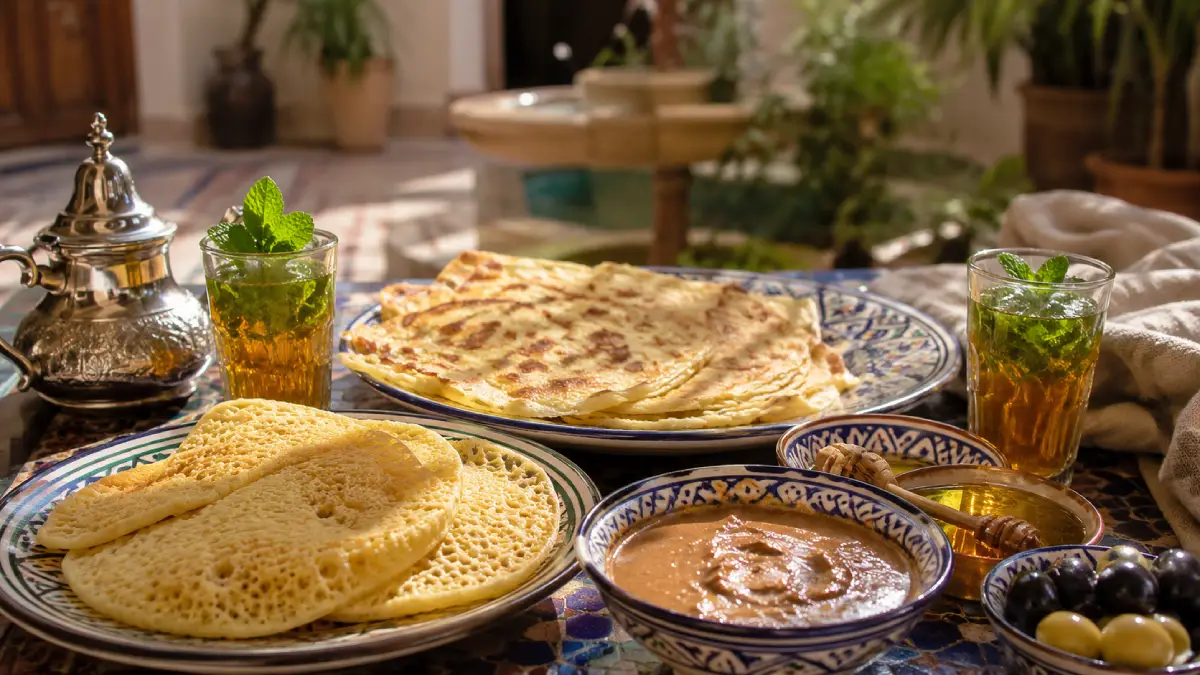
What do Moroccans eat for breakfast? A typical Moroccan breakfast starts with khobz (bread), olive oil, butter, honey, cheese or jam, served with mint tea or coffee. Msemen, baghrir, harcha, eggs, olives and amlou may also be on the table. Everyday home breakfasts are often simple; riads usually serve a larger selection for guests.
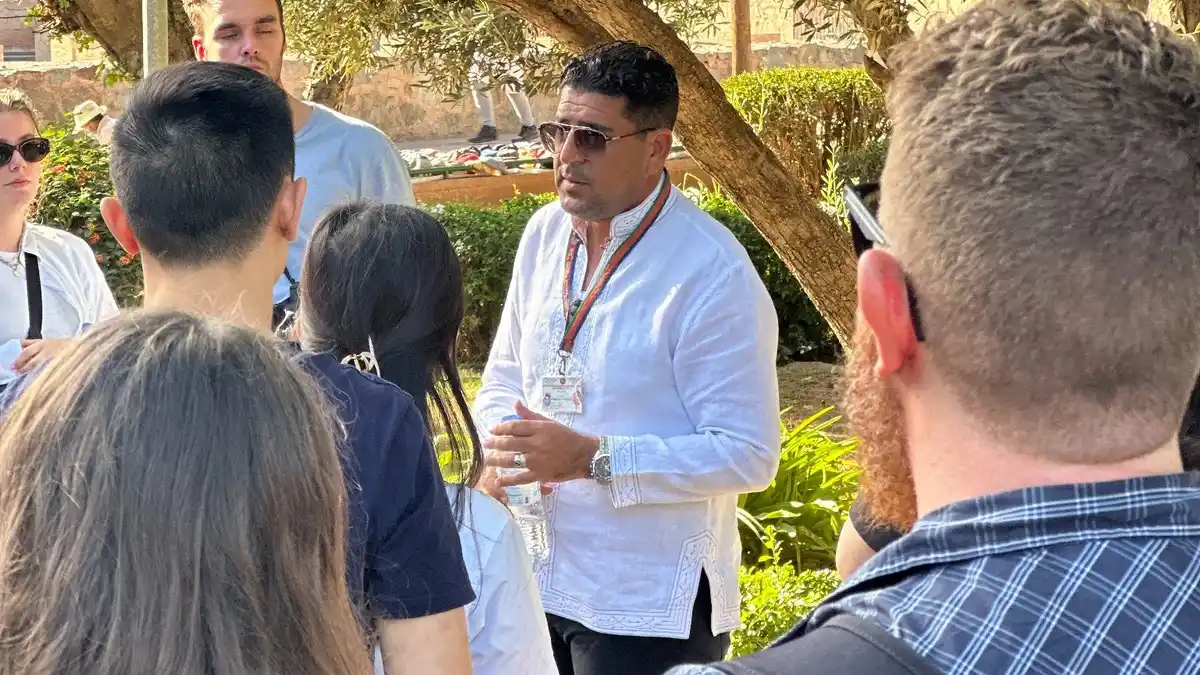
I’m Kamal, a licensed Moroccan guide from Tinghir. This guide explains 12 traditional breakfast foods, what to order in a café or riad, and how morning meals vary around Morocco.
For meals later in the day, see my guide to what Moroccans eat for lunch.
What would I order for a first Moroccan breakfast? Start with warm msemen or baghrir, honey and mint tea or coffee. Add eggs or jben if you prefer something savoury. Ask what the breakfast set includes before ordering; a riad spread and a simple café breakfast are different experiences.
Looking for somewhere to eat after exploring the souks? My Where to Eat in Marrakech guide helps you plan the rest of your food stops.
Table of Contents
Table of Contents
Some links in this guide may earn a small commission at no extra cost to you. I only recommend services I trust for planning a Morocco trip.
What Is a Typical Moroccan Breakfast?
A typical Moroccan breakfast is usually simple, filling, and shared. In many homes, the table begins with khobz, the round Moroccan bread eaten almost every day. Bread is served with olive oil, butter, honey, jam, fresh cheese, olives, or amlou. Some families add boiled eggs, fried eggs, or omelets cooked with olive oil and cumin.
Tea is very important. Moroccan mint tea is not only a drink; it is part of hospitality. Coffee is also common, especially in cities. Many Moroccans like “nus nus,” which means half coffee and half milk. In Marrakech cafés, you will see locals drinking coffee in the morning with msemen or harcha before work.
A traditional Moroccan breakfast can be sweet, savory, or both. You may have honey and amlou on one side of the table, olives and cheese on the other, and bread in the middle for everyone to share. This is why Moroccan breakfast feels generous even when the ingredients are simple.
If you are planning your first trip, this is a beautiful way to begin understanding Moroccan food culture. You can also read my full guide to what to eat in Morocco for the dishes travelers should try beyond breakfast.
What Is Included in a Traditional Moroccan Breakfast?
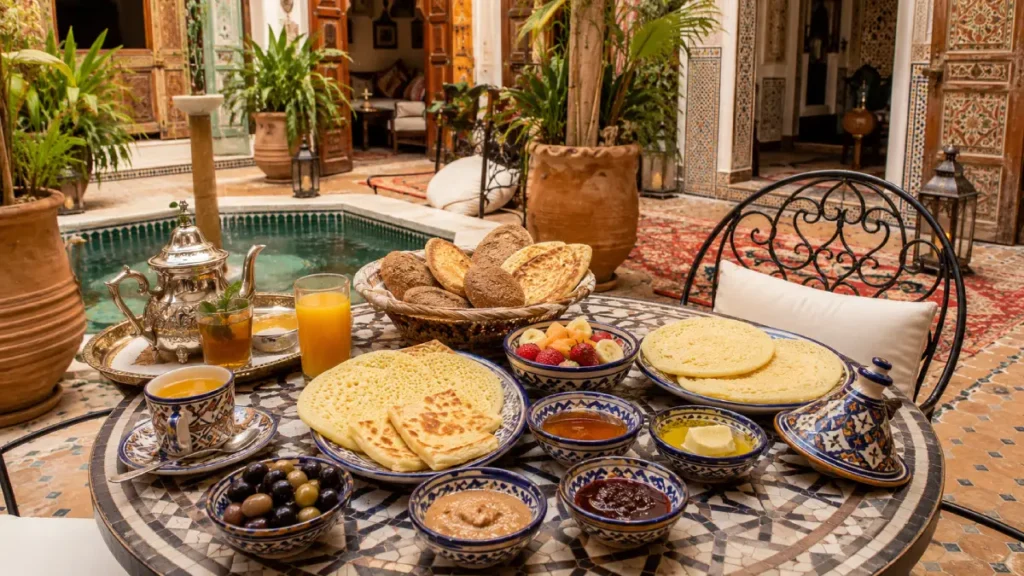
A traditional Moroccan breakfast usually combines bread, pancakes, simple spreads, eggs, and hot drinks. The exact table changes from one family or region to another, but these are the foods travelers are most likely to see in Moroccan homes, cafés, and riads.
| Moroccan breakfast food | What it is | How it is usually served |
|---|---|---|
| Khobz | Round Moroccan bread | With olive oil, butter, honey, cheese, or jam |
| Msemen | Square layered Moroccan pancake | With honey, butter, cheese, or jam |
| Baghrir | Soft semolina pancake with tiny holes | Usually with melted butter and honey |
| Harcha | Crumbly semolina bread | With cheese, honey, butter, or olive oil |
| Amlou | Almond, argan oil, and honey spread | With bread, msemen, harcha, or baghrir |
| Eggs | Boiled, fried, or cooked as an omelet | Often eaten with bread |
| Olives | Green or black olives | Served in small shared dishes |
| Olive oil | A basic Moroccan breakfast staple | Bread is dipped directly into it |
| Mint tea | Green tea with mint and sugar | Served throughout breakfast |
| Coffee | Espresso-style coffee or nus nus | Common especially in cafés and cities |
| Jben | Fresh Moroccan cheese | With bread, honey, or olive oil |
| Bissara | Warm fava bean soup | With olive oil, cumin, and bread |
In a Moroccan home, breakfast may include only a few of these foods. A riad normally serves a larger selection because breakfast is prepared for guests. The ingredients are traditional, but the presentation is often more generous than an everyday family breakfast.
Msemen: The Moroccan Pancake Travelers Love
Msemen is one of the most popular Moroccan breakfast foods for travelers. It is a square, layered pancake made with dough, oil, and semolina. When cooked well, it is slightly crispy outside and soft inside. You can eat it with honey, butter, cheese, jam, or simply plain with tea.
In Marrakech, you can find msemen in local cafés, bakeries, street stalls, and riads. Some versions are plain, while others are stuffed with onions, spices, or minced meat. For breakfast, the plain version with honey or cheese is the most common.
For Moroccans, msemen is not only tourist food. It is part of real life. Many families make it at home, especially on slower mornings or weekends. It can also be eaten in the afternoon with tea. For travelers, msemen is often one of the first Moroccan breakfast foods they remember because the texture is so different from pancakes in Europe or North America.
If you are visiting Marrakech and want to explore food more deeply, a local food walk can help you understand what is homemade, what is street food, and what is prepared mainly for tourists. I explain this more in my guide to the best food tours in Marrakech.
Baghrir: The Thousand-Hole Pancake
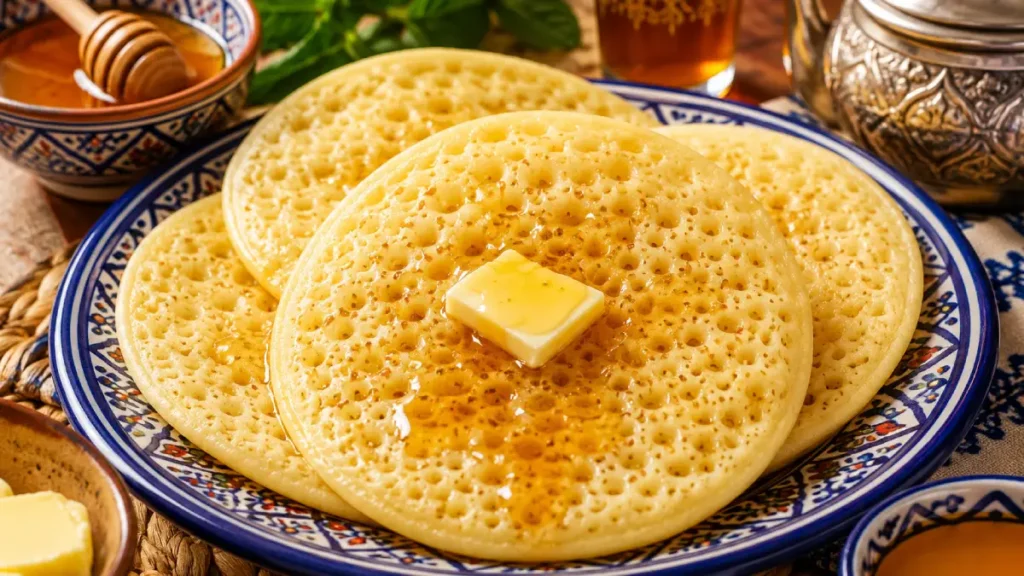
Baghrir is a soft Moroccan pancake made with semolina. Many travelers call it the thousand-hole pancake because the surface is full of tiny holes. It is cooked only on one side, which gives it a light, spongy texture.
The classic way to eat baghrir is with melted butter and honey. The warm honey goes into the little holes, making every bite soft and sweet. This is one of those simple foods that feels like home for many Moroccans.
Baghrir is common in family breakfasts, riads, and traditional cafés. It is especially nice when served warm. If you like soft pancakes but want something lighter than American-style pancakes, baghrir is a must-try.
Travelers should not rush this one. Eat it slowly with mint tea. This is the kind of Moroccan morning food that tells you a lot about the country: simple ingredients, warm hospitality, and a lot of care.
Harcha: Morocco’s Semolina Breakfast Bread
Harcha is another Moroccan breakfast favorite. It is made with semolina, so the texture is different from msemen and baghrir. It is more crumbly, slightly grainy, and rustic. Some people eat it with cheese, honey, butter, olive oil, or jam.
In cafés, harcha is often served warm with mint tea or coffee. It is popular because it is simple, affordable, and filling. For me, harcha has a very local feeling. It does not try to be fancy. It is honest Moroccan food.
If you are the kind of traveler who loves local cafés, order harcha with nus nus. Sit for a few minutes and watch morning life around you. This small moment can feel more authentic than a big restaurant meal.
Khobz and Moroccan Bread Culture
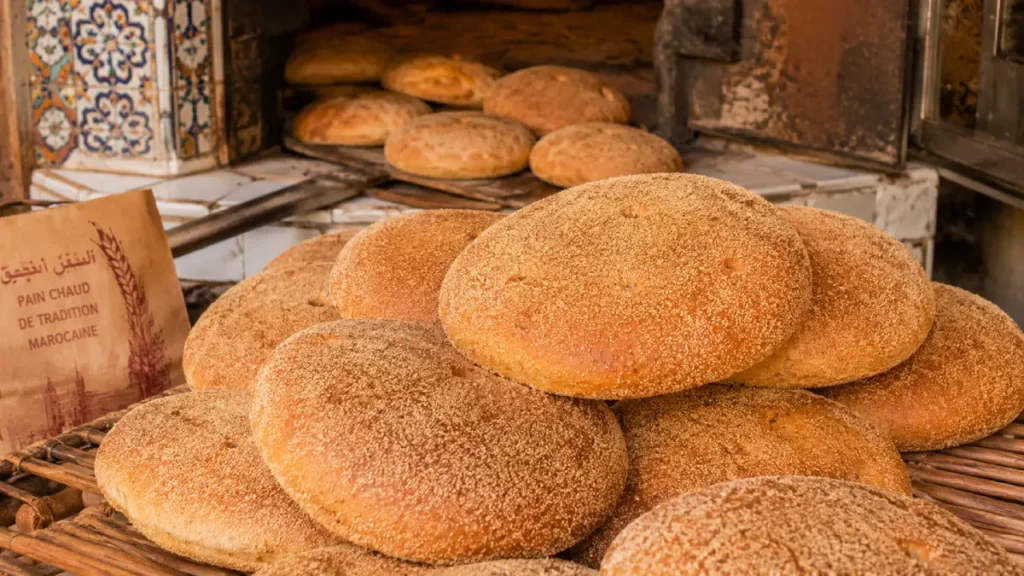
To understand breakfast in Morocco, you need to understand bread. Khobz is not only something we eat with breakfast. It is part of how we eat. Moroccans use bread to dip, scoop, share, and taste.
In many traditional neighborhoods, families prepare dough at home and take it to the communal oven. The baker knows the families, and each family knows its bread by shape or small marks. This tradition still exists in many Moroccan towns and medinas.
Fresh bread in the morning is one of the best smells in Morocco. You see people carrying warm round loaves from the bakery, sometimes wrapped in cloth or paper. At breakfast, bread may be eaten with olive oil, honey, butter, cheese, or eggs.
Many travelers focus on tagine and couscous, but bread is the quiet hero of Moroccan food. Without bread, the Moroccan table feels incomplete. This is true at breakfast, lunch, and dinner.
Amlou: Morocco’s Luxury Breakfast Spread
Amlou is one of the most special things you can try at breakfast in Morocco. It is made from roasted almonds, argan oil, and honey. Some travelers compare it to peanut butter, but I do not think that is fair. Amlou is more delicate, more Moroccan, and more connected to the land.
Real amlou has a rich nutty taste from almonds, sweetness from honey, and a deep flavor from argan oil. It is especially connected to the Souss region, where argan trees grow. Good amlou is not cheap because real argan oil and good almonds are expensive.
Eat amlou with warm bread, msemen, harcha, or baghrir. It is also a popular food souvenir. If you are comparing bottles to use at home, my guide to buying argan oil in Marrakech explains the difference between culinary and cosmetic oil. Check the label before choosing. Some cheap versions use low-quality oil or too much sugar. If you want to bring Moroccan breakfast home, real amlou, Moroccan tea glasses, a traditional teapot, or a good Moroccan cookbook can be beautiful choices.
Mint Tea, Coffee, and Morning Drinks
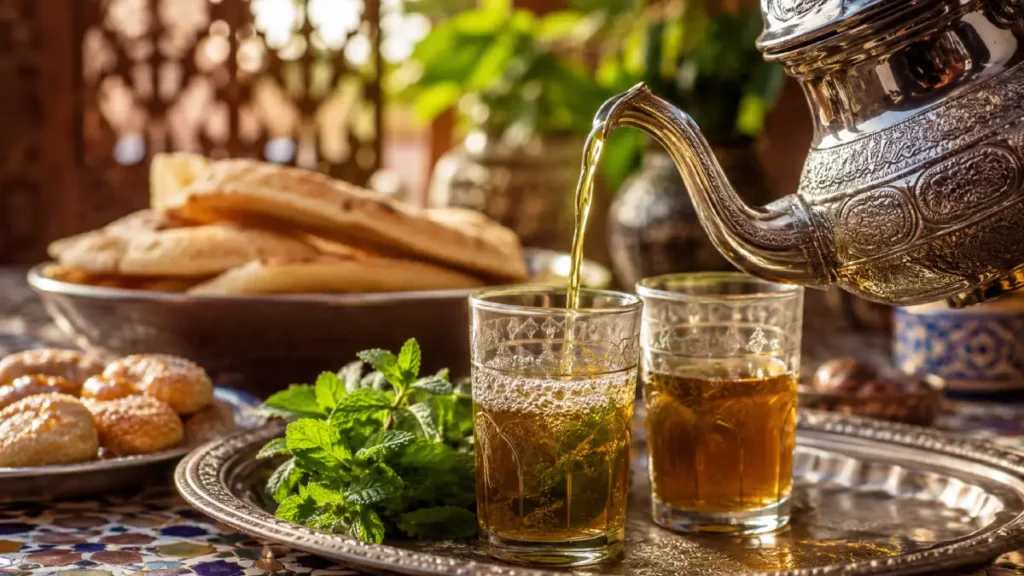
Moroccan mint tea is famous, and yes, many Moroccans drink it at breakfast. It is made with green tea, fresh mint, and sugar. Some families make it very sweet. Others make it lighter. The taste changes depending on the region and family.
Tea is also a sign of welcome. When someone pours tea for you in Morocco, it is not only about drinking. It is a gesture. It says, “You are welcome here.” This strong tea culture is part of Morocco’s wider hospitality tradition, which is also highlighted by Visit Morocco when presenting Moroccan food and culture to travelers.
Coffee is also very common, especially in cities. In Marrakech, Casablanca, Rabat, Tangier, and Fes, many locals start the day in a café. Nus nus is a favorite morning drink. It is half coffee and half milk, usually served in a small glass.
Fresh orange juice is common in tourist breakfasts and in places like Marrakech. Raib, a Moroccan yogurt-style drink, is another local drink travelers often miss. It is refreshing and simple, especially in warmer weather.
Regional Moroccan Breakfasts
Marrakech
Breakfast in Marrakech can be traditional, local, or tourist-style depending on where you eat. In a riad, you may get msemen, baghrir, harcha, bread, honey, olives, eggs, orange juice, tea, and coffee. In a local café, breakfast may be msemen or harcha with coffee. In the medina, you can also find small stalls and bakeries where locals buy fresh bread and pancakes.
Marrakech is one of the best cities for travelers who want to experience Moroccan breakfast because everything is easy to find. If this is your first time in the city, also read my Marrakech travel guide to understand where to stay, what to see, and how to enjoy the city without feeling lost.
Fes
Fes has a deep traditional food culture. Breakfast in Fes can feel very old and authentic, especially inside the medina. Bread, olives, tea, cheese, and homemade items are common. The city has a strong connection to family recipes and old food traditions.
A riad breakfast in Fes can be one of the most beautiful breakfast experiences in Morocco. Imagine sitting in a courtyard with zellij tiles, soft morning light, mint tea, warm bread, and the sound of the medina waking up outside.
Chefchaouen and Northern Morocco
In Chefchaouen and northern Morocco, breakfast often includes bread, olive oil, cheese, tea, and sometimes bissara, especially during colder mornings. The north has excellent olive oil, so a simple breakfast with bread and local oil can taste amazing.
Chefchaouen also has a slower morning mood. Breakfast on a terrace in the blue city feels very different from breakfast in busy Marrakech. It is calm, quiet, and beautiful for travelers who like slow mornings.
Atlas Mountains
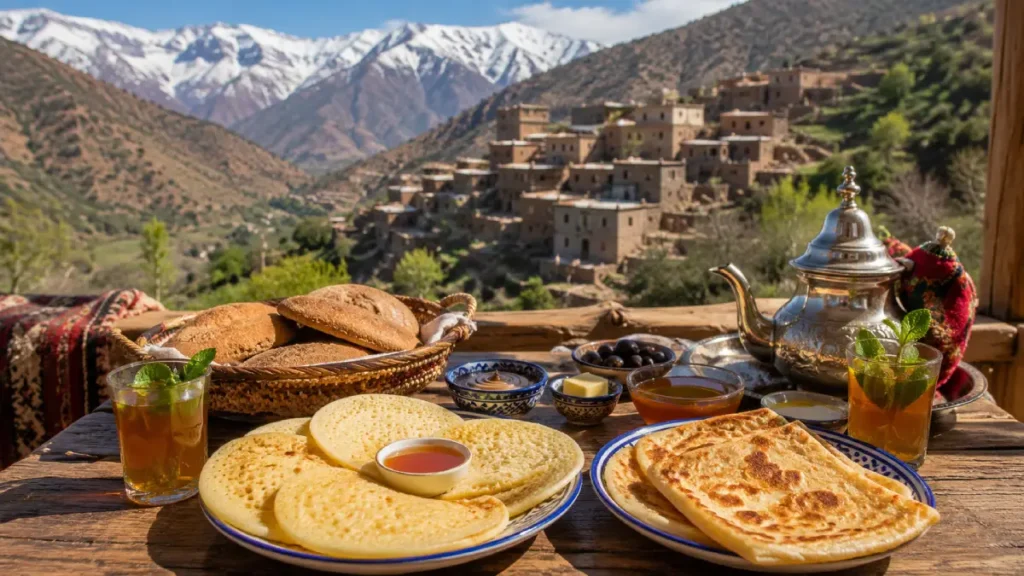
In the Atlas Mountains, breakfast is usually simple and strong. You may find homemade bread, olive oil, butter, honey, cheese, eggs, and mint tea. In Amazigh villages, food is connected to the land. The bread may be homemade, the olive oil may come from nearby trees, and the honey may be local.
For me, mountain breakfast has one of the most authentic feelings in Morocco. It is not about decoration. It is about hospitality. A family may not have many luxury things, but they will place what they have on the table with pride.
Sahara Desert
Breakfast in the Sahara Desert is special because of the setting. After watching sunrise over the dunes, you may sit at a desert camp table with bread, pancakes, eggs, dates, jam, tea, and coffee. The food may be simple, but the moment makes it unforgettable.
In Merzouga or Erg Chigaga, breakfast is part of the desert memory. You wake up early, see the sand changing color, drink tea, and feel the silence of the desert before the day becomes warm.
Essaouira and the Coast
Essaouira has a different morning feeling. It is calmer, fresher, and shaped by the Atlantic air. Breakfast may include bread, harcha, msemen, coffee, tea, orange juice, and local bakery items. You may not eat seafood for breakfast, but the coastal atmosphere changes everything.
For travelers who find Marrakech too intense, Essaouira can be a beautiful place for slow breakfasts, café mornings, and relaxed walks by the sea.
Breakfast is only one part of Morocco’s regional food culture. For a wider look at how food changes from Marrakech and Fes to the Atlas, coast and south, read my Morocco Food Guide.
Moroccan Home Breakfast vs Riad Breakfast
This is very important for travelers. A Moroccan riad breakfast is usually bigger and more beautiful than a normal breakfast at home. Riads prepare breakfast for guests, so they often serve many small plates: bread, pancakes, jams, honey, olives, eggs, fruit, juice, tea, and coffee.
A real home breakfast is often simpler. A family may eat bread with olive oil, cheese, butter, honey, or jam. Maybe there are eggs. Maybe there is mint tea. On weekends, there may be msemen or baghrir. During colder months, some families may eat bissara.
So, is riad breakfast authentic? Yes, the foods are authentic. But the presentation is more polished and generous for travelers. Home breakfast is usually more practical and more casual. Both experiences are valuable, but they are not exactly the same.
If you are building your Morocco itinerary, try to experience both: enjoy your riad breakfast, but also visit a normal café or bakery one morning. This gives you a better taste of daily life.
What Should Travelers Order for Breakfast in Morocco?
For your first Moroccan breakfast, choose a few things you want to try instead of ordering the whole menu. Here is how I would choose:
| If you prefer | What to order | What to ask |
|---|---|---|
| A simple café breakfast | Harcha or msemen with mint tea or nus nus | Is the drink included, or priced separately? |
| Something sweet | Baghrir with butter and honey | Can you serve it warm, with the topping separately? |
| Something savoury | Eggs, bread, olives and jben | Which items come with the breakfast set? |
| A larger riad breakfast | A selection of breads, pancakes, eggs and spreads | Is breakfast included in the room rate, and what time is it served? |
My café tip: ask the price of the whole breakfast before ordering extras. A menu photo may show a larger spread than the basic set. If you have an early transfer or day trip, confirm breakfast hours with your riad the evening before.
Many breakfast choices are vegetarian. If you are vegan, ask about milk, butter, eggs and honey in the bread, pancakes and toppings rather than relying on the dish name. For practical advice on choosing food during your trip, see my guide to what to be careful eating in Morocco.
Breakfast Foods Travelers Often Miss
Many travelers try msemen and baghrir, but they miss other Moroccan breakfast foods. Bissara is one of them. It is a warm fava bean soup made with olive oil, cumin, and bread. It is especially popular in the north and during cold mornings.
Sfenj is another food travelers should know. It is a Moroccan doughnut, usually eaten fresh and hot. It is not something to eat every day, but trying it once with coffee or tea is part of the local experience.
Raib is also worth trying if you like yogurt-style drinks. Simple bread with olive oil is another thing travelers often overlook. If the olive oil is good, it can be one of the best tastes in Morocco.
Seasonal foods matter too. Depending on the time of year, you may find dates, figs, pomegranates, local honey, fresh cheese, or special homemade breads. To understand food and seasons together, you can also read my guide to the best time to visit Morocco.
My Local Advice as a Moroccan Guide
My honest advice is simple: do not judge Moroccan breakfast only by your hotel. Enjoy your riad breakfast, yes, but also try one local café, one bakery, or one homemade-style breakfast if you can.
Growing up in Tinghir, breakfast was not about luxury. It was about bread, tea, olive oil, family, and starting the day together. In southern Morocco and the Atlas regions, simple food can have strong meaning. The taste of warm bread with good olive oil can stay in your memory longer than a fancy meal.
When I guide travelers in Marrakech, many expect tagine, couscous, and street food to be the main food memories. But often they tell me later, “Kamal, that breakfast was amazing.” They remember the msemen, the amlou, the tea on the rooftop, or the bread still warm from the oven.
This is why I love Moroccan breakfast. It does not need to show off. It is humble, but it carries the soul of the country.
Best Places to Experience Moroccan Breakfast
Marrakech is the easiest place to experience Moroccan breakfast because you have riads, cafés, bakeries, markets, and food tours. Fes is best for old medina atmosphere and deep traditional food culture. Chefchaouen is beautiful for slow breakfasts with mountain views. The Atlas Mountains are perfect for homemade bread, olive oil, tea, and Amazigh hospitality.
The Sahara Desert gives you one of the most memorable breakfast settings in Morocco, especially after sunrise in the dunes. Essaouira is best for relaxed coastal mornings, coffee, bakeries, and sea air.
For food lovers, I recommend mixing experiences. Enjoy a riad breakfast, try a local café, visit a bakery, and consider a cooking class or food tour if you want to understand the culture behind the food. Moroccan food is not only about taste. It is about stories, family, geography, and hospitality.
So, what do Moroccans eat for breakfast? They eat bread, olive oil, honey, butter, eggs, cheese, msemen, baghrir, harcha, amlou, mint tea, coffee, and many simple foods that become special because of how they are shared.
But Moroccan breakfast is not only food. It is hospitality. It is family. It is the smell of fresh bread in the morning, the sound of tea being poured, and the feeling that there is always space for one more person at the table.
When you visit Morocco, do not rush breakfast every day. Sit down. Taste slowly. Ask questions. Try something local. Sometimes the best travel memories do not come from big monuments or famous places. Sometimes they come from warm bread, good olive oil, and a glass of mint tea in the morning.
FAQs About Moroccan Breakfast
What do Moroccans usually eat for breakfast?
Moroccans usually eat bread, olive oil, butter, honey, cheese, eggs, mint tea, coffee, and sometimes msemen, baghrir, or harcha. Many breakfasts are shared from small plates in the middle of the table.
Is Moroccan breakfast sweet or savory?
Moroccan breakfast can be both sweet and savory. Honey, jam, baghrir, and amlou are sweet. Olives, cheese, eggs, olive oil, and bissara are savory. Many Moroccan tables include both.
What is the most popular breakfast in Morocco?
One of the most common breakfasts in Morocco is khobz with olive oil, butter, cheese, honey, or jam, served with tea or coffee. Msemen is also very popular, especially in cafés and family homes.
Do Moroccans drink coffee or tea for breakfast?
Yes, Moroccans drink both. Mint tea is very traditional, especially at home, while coffee and nus nus are very common in cities and cafés.
Is Moroccan breakfast healthy?
Moroccan breakfast can be healthy when it includes bread, olive oil, eggs, fruit, and tea. It becomes heavier when you eat too many sweet pancakes, pastries, butter, and honey every morning. The best way is to enjoy variety.
What should tourists try for breakfast in Morocco?
Tourists should try msemen, baghrir with butter and honey, harcha, amlou, Moroccan mint tea, nus nus, fresh orange juice, and bread with olive oil.
Can vegetarians eat Moroccan breakfast?
Yes, Moroccan breakfast is very vegetarian-friendly. Most breakfast foods are based on bread, pancakes, eggs, cheese, olives, olive oil, honey, jam, fruit, tea, and coffee.
What time do Moroccans eat breakfast?
Many Moroccans eat breakfast between 7:00 and 10:00 in the morning before work or school. In riads and tourist hotels, breakfast may be served later.