Buying a Moroccan Rug in Marrakech: Types, Prices and Local Advice
Walking into a rug shop in Marrakech for the first time can feel exciting and overwhelming at the same time.
Mint tea arrives, rugs begin covering the floor, and within minutes you may be looking at thick Beni Ourain wool rugs, colourful Azilal designs, vintage Boujad pieces and flat-woven kilims.
This is where many travellers make their first mistake. They buy with emotion before thinking about where the rug will go, how it will be used or whether it fits their budget.
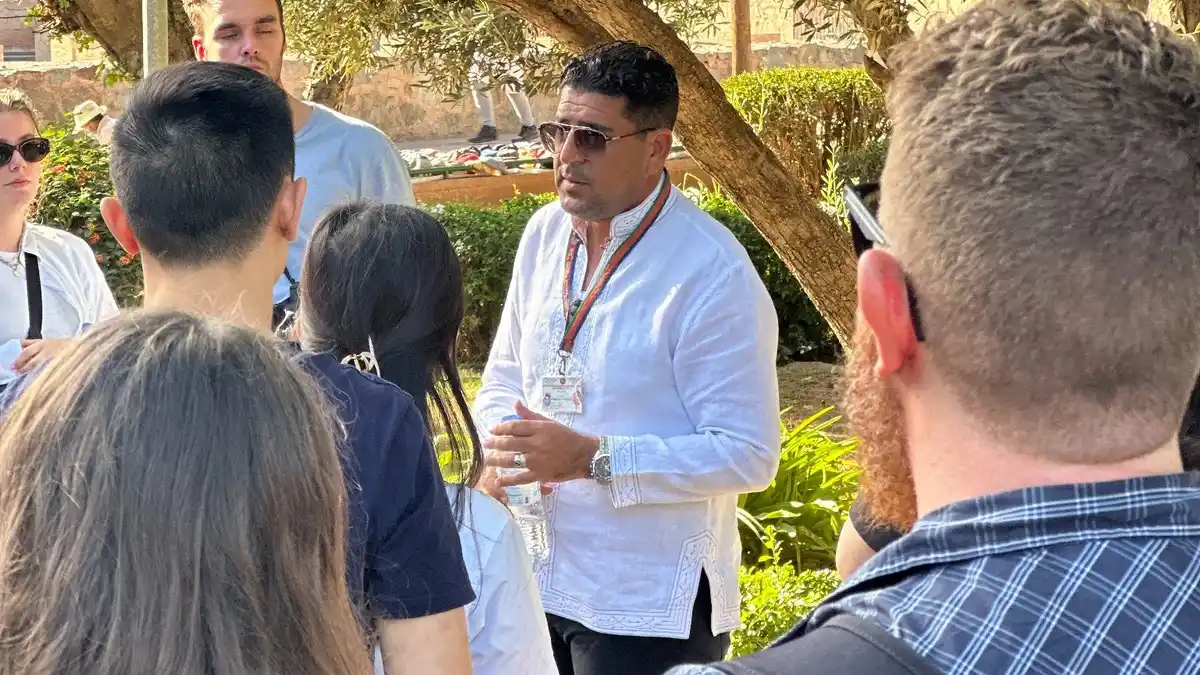
I’m Kamal, a licensed Moroccan tour guide based in Marrakech. For more than 20 years, I have guided travellers through Morocco’s medinas, souks and artisan workshops. During my private shopping tours, the first question I ask is always the same: where will this rug go in your home?
Once you know the room, measurements, climate and daily use, buying a Moroccan rug in Marrakech becomes much easier.
This guide explains the main Moroccan rug types, realistic Marrakech prices, handmade quality checks, bargaining, shipping and the mistakes first-time buyers should avoid. For help planning the rest of your journey, read my complete Morocco Travel Guide.
Table of Contents
Table of Contents
Buying a Moroccan Rug in Marrakech: The Quick Answer
Marrakech is one of the best places in Morocco to compare handmade rugs because shops carry pieces from weaving regions across the country. You can find thick Beni Ourain rugs, colourful Azilal and Boujad designs, practical kilims, Zanafi rugs, refined Mrirt pieces and decorative Boucherouite rugs.
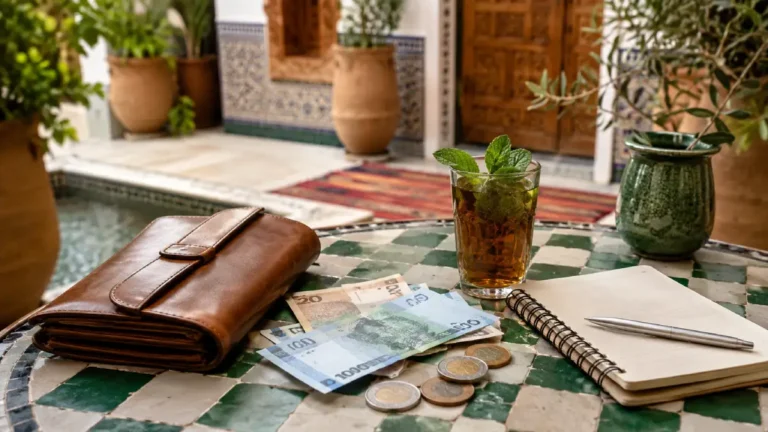
Prices depend on the rug’s size, material, weaving density, condition and where it is sold. Small flat-woven rugs and runners generally cost around 800–2,500 MAD. Medium rugs usually range from 2,000–10,000 MAD depending on the style and construction. Large handmade wool rugs often cost 7,000–18,000 MAD, while dense, vintage or exceptional pieces may cost 12,000–30,000 MAD or more.
Bargaining is common in many medina shops, although some boutiques and artisan centres use fixed prices. Before paying, confirm the exact measurements, check the front and back, ask what material was used and get the final price, shipping terms and rug description in writing.
The most important rule is simple: choose a rug that fits your home and budget, not one you feel pressured to buy inside the shop.
Planning to shop for a rug in Marrakech?
My private shopping tours help travellers compare different rug styles, understand quality and move through the souks without feeling rushed or pressured to buy.
Explore My Private Shopping Tour on Viator
Should You Buy a Moroccan Rug in Marrakech?
For many travellers, a Moroccan rug becomes one of the most meaningful things they bring home from their journey.
Unlike a small souvenir, a handmade rug can be used every day for many years. It may become part of a living room, bedroom or hallway while continuing to remind you of Morocco.
Marrakech is a convenient place to shop because merchants bring rugs from many different regions. Instead of travelling from village to village, you can compare several styles during the same afternoon.
However, a Moroccan rug is not the right purchase for everyone.
Handmade rugs can be expensive and heavy. Thick wool rugs need proper cleaning and may not suit warm climates or busy areas of the home. International shipping, airline baggage and possible import charges can also increase the final cost.
Waiting is usually the better decision when you have not measured your room, do not know where the rug will go or are buying only because the atmosphere inside the shop feels exciting.
The best Moroccan rug is not necessarily the oldest, thickest or most expensive. It is the one that suits your space, lifestyle and budget.
If you are still deciding between a rug and other Moroccan souvenirs, see my complete What to Buy in Morocco guide for ceramics, leather, spices, argan products, jewelry, textiles and other things worth bringing home.
Before You Enter a Rug Shop
The best preparation happens before you enter the first shop.
Start by measuring the space where the rug will be used. Save both the length and width on your phone. A rug can appear surprisingly small in a large showroom but feel much bigger once placed under your furniture.
Take a few photographs of the room as well. Seeing the flooring, walls, furniture and natural light will help you judge whether a colourful rug, neutral rug or darker pattern will work at home.
Set a realistic spending limit before you begin. Decide whether that limit includes shipping and card fees or only the rug itself.
Think about how the room is used. A thick wool rug may feel comfortable in a bedroom but be less practical in a dining room, warm climate or busy hallway. Flat-woven kilims and Zanafi rugs are generally lighter and easier to maintain.
You do not need to become a rug expert before visiting Marrakech. You only need enough information to ask practical questions and avoid making a decision based entirely on a sales story.
For a better understanding of the market areas, directions and atmosphere, read my complete Marrakech Souks Guide before you go.
Types of Moroccan Rugs You Will See in Marrakech
One of the most common mistakes first-time buyers make is asking for a “Berber rug” without realising how broad that description is.
Moroccan rugs vary by region, weaving technique, material, thickness and intended use. Some are soft and warm, while others are light, flat and practical.
Beni Ourain Rugs
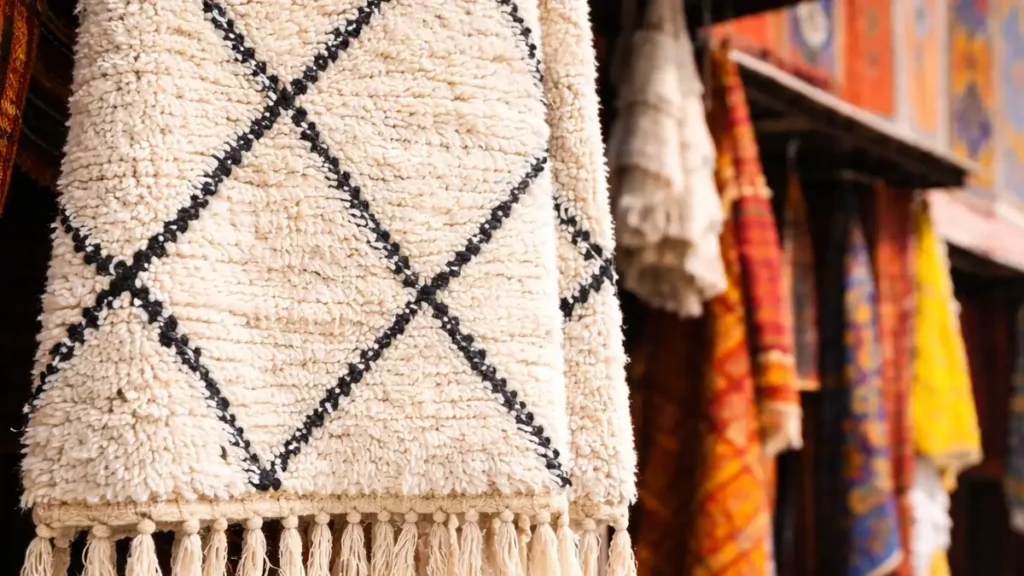
Beni Ourain rugs are among the most internationally recognised Moroccan rugs. They normally have a cream or ivory background with simple black or dark-brown geometric lines.
They are traditionally associated with communities in the Middle Atlas and are usually thick, warm and soft underfoot.
A Beni Ourain rug can work well in a bedroom or comfortable living room. It may be less suitable for a warm climate, busy hallway or home where easy cleaning is the main priority.
Because the style is popular, Marrakech shops also carry many new rugs inspired by the traditional Beni Ourain appearance. Do not rely on the familiar diamond pattern alone. Inspect the wool, back, edges and overall construction.
Azilal Rugs
Azilal rugs are associated with the central High Atlas and are often more colourful and expressive than Beni Ourain rugs.
They may include bright colours, irregular lines, abstract shapes and playful geometric patterns. Some are mostly neutral with small areas of colour, while others are designed to become the main feature of a room.
Azilal rugs can work particularly well in bedrooms, smaller living rooms and spaces that need more personality.
Their thickness and finishing can vary considerably, so compare the construction rather than assuming every rug carrying the Azilal name has the same quality.
Boujad Rugs
Boujad rugs are known for warm tones such as red, pink, orange and purple. Older examples may have a faded appearance that gives them a strong vintage character.
These rugs can bring warmth to a neutral room, but condition is especially important when looking at an older piece.
Inspect the rug for holes, weak areas, repairs, uneven fading and damaged edges. Repairs do not always make a rug a bad purchase, but they should be explained clearly and reflected in the price.
Mrirt Rugs
Mrirt rugs are associated with the Khénifra area in the Middle Atlas. They are often dense, soft and carefully finished.
Many contemporary Mrirt rugs use neutral colours, deeper piles and simple geometric patterns designed for modern interiors.
Their density and finishing often make them more expensive than lighter Moroccan rugs. However, the name “Mrirt” is not proof of quality by itself. Compare the back, weight, wool and finish before paying a premium.
Kilim Rugs
Kilims are flat-woven rugs without a thick pile. They are normally lighter, easier to fold and simpler to carry or ship.
They are practical for dining areas, hallways, warmer climates and homes where easy maintenance matters more than softness.
Because kilims can move on smooth flooring, you may need a non-slip rug pad once you return home.
Zanafi Rugs
Zanafi rugs are also flat-woven and are often recognised by strong geometric patterns, darker tones and tight construction.
They are usually durable and can work well in busy hallways, family homes and other areas that receive regular foot traffic.
They may not feel as soft as a thick wool rug, but they are often among the most practical options for daily use.
Boucherouite Rugs
Boucherouite rugs are made from recycled textiles rather than being woven entirely from wool.
They are normally colourful, irregular and highly individual. The materials available to the weaver influence the pattern, texture and final colours.
Boucherouite rugs can work well as decorative accents, children’s-room pieces or wall displays. They should not be described or priced in the same way as a dense all-wool rug.
Moroccan Rug Types at a Glance
| Rug type | Main character | Best for |
|---|---|---|
| Beni Ourain | Thick, soft and usually neutral | Bedrooms and comfortable living rooms |
| Azilal | Colourful, expressive and artistic | Rooms that need more personality |
| Boujad | Warm colours and vintage character | Statement interiors and neutral rooms |
| Mrirt | Dense, refined and luxurious | High-end living rooms and bedrooms |
| Kilim | Flat, light and practical | Dining rooms, hallways and warm climates |
| Zanafi | Strong, durable and tightly woven | Busy and high-traffic areas |
| Boucherouite | Colourful recycled textiles | Decorative spaces and wall displays |
These prices apply specifically to Moroccan rugs in Marrakech. If you are comparing the cost of other souvenirs such as leather goods, ceramics, babouche slippers, spices or hammam products, see my complete What to Buy in Morocco guide.
How Much Do Moroccan Rugs Cost in Marrakech?
There is no single fixed price for a Moroccan rug in Marrakech.
Two rugs with similar dimensions may have very different prices because the final amount depends on the material, weaving density, style, age, condition, shop and services included.
These are approximate Marrakech shopping ranges based on the prices I see while guiding travellers. They are not official fixed prices, and the final amount depends on size, wool, density, condition, shop location and service included.
| Rug size and type | Typical Marrakech price range |
|---|---|
| Small kilim, mat or runner | 800–2,500 MAD |
| Small handmade wool rug | 1,500–4,500 MAD |
| Medium flat-woven rug | 2,000–5,500 MAD |
| Medium Azilal or Boujad rug | 3,000–8,000 MAD |
| Medium thick wool rug | 4,500–10,000 MAD |
| Large handmade wool rug | 7,000–18,000 MAD |
| Large dense, vintage or exceptional rug | 12,000–30,000+ MAD |
A polished boutique that includes professional cleaning, documentation and international shipping may charge more than a small medina shop where bargaining is expected.
Size
Larger rugs normally cost more because they require more material and more time to complete.
However, size should never be considered alone. A small rug with dense weaving and high-quality wool can cost more than a larger rug with a loose or simple construction.
Material
Good-quality wool normally costs more than recycled cloth or synthetic fibres.
Ask what the rug is made from, but also examine the texture and finish yourself. A seller’s description should not be the only reason you pay a higher price.
Weaving Density
A dense rug generally takes longer to produce and may feel heavier and more substantial.
Turn the rug over and compare the weaving structure. The back can reveal more about the workmanship than the pattern on the front.
Age and Condition
An old rug is not automatically valuable.
Vintage rugs can be beautiful, but condition matters. Look for holes, damaged edges, weak areas, repairs and uneven fading.
A repaired rug can still be worth buying when you love the design and understand its condition. The damage should be explained honestly and considered in the final price.
Style and Demand
Popular styles such as Beni Ourain and Mrirt may cost more because demand is high.
This does not always mean they offer better quality or better value than an Azilal, Boujad, kilim or Zanafi rug. The right value depends on the construction and how well the rug suits your home.
The Shop and Service Included
Location and service also affect the price.
A central tourist-area shop may begin with a higher amount. A fixed-price boutique may include cleaning, professional packaging, credit-card payment and organised shipping.
Do not judge a deal only by the size of the discount. A rug reduced from 20,000 MAD to 10,000 MAD is not automatically better value than one clearly priced at 7,000 MAD from the beginning.
How to Tell if a Moroccan Rug Is Handmade
One of the questions I hear most often during shopping tours is: “How do I know whether this rug is really handmade?”
There is no single test that proves authenticity in every case. Look at several details together.
Turn the Rug Over
The back reveals the individual knots or weaving structure.
A handmade rug normally shows small irregularities because it was created by a person rather than produced with perfect mechanical repetition.
Irregularity alone does not guarantee high quality, but a back that looks perfectly printed or mechanically uniform deserves closer inspection.
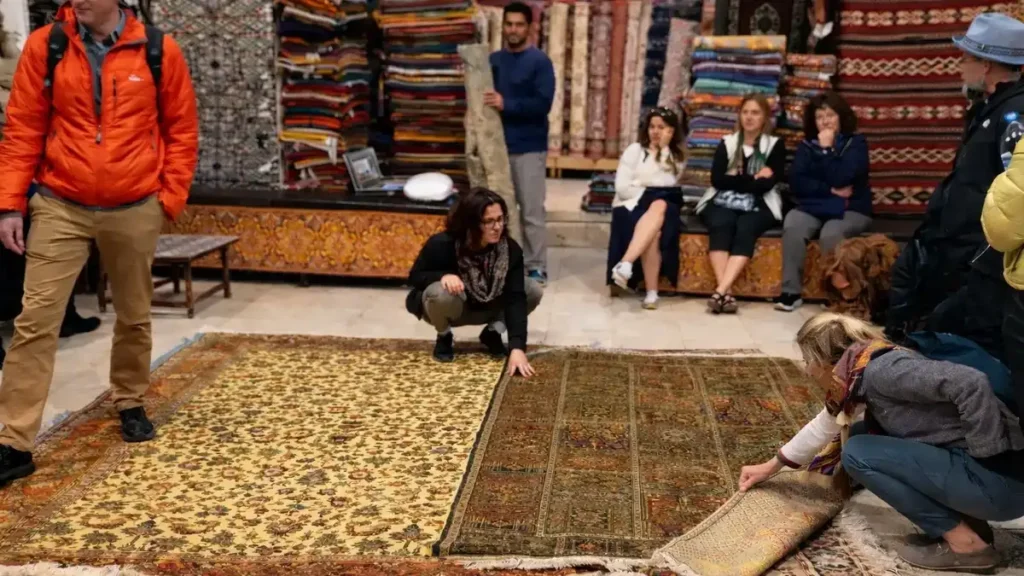
Feel the Wool
Run your hand across the surface and press gently into the pile.
Natural wool should normally feel warm and resilient rather than overly slippery or plastic. Some wool is softer than others, so the most useful test is comparing several rugs side by side.
Check the Weight and Density
Lift one end of the rug when possible.
A dense wool rug often feels heavier than expected for its size. A very light rug may still be handmade, especially when it is flat-woven, but it should not be priced like a thick, tightly constructed wool piece.
Inspect the Edges and Fringe
Look for loose threads, weak stitching, damaged corners and sections beginning to unravel.
On many handmade rugs, the fringe is part of the rug’s underlying structure rather than something attached afterward.
Older rugs may have repaired edges or replaced fringe. That is not automatically a problem, but you should understand what has been repaired.
Look Beyond the Sales Story
Sellers may explain where a rug was woven, who made it or what the symbols represent.
These stories can be interesting, but they should never replace physical inspection. Concentrate on what you can verify: dimensions, material, construction, condition and finish.
Where to Buy Moroccan Rugs in Marrakech
Choosing the right shop is almost as important as choosing the rug itself.
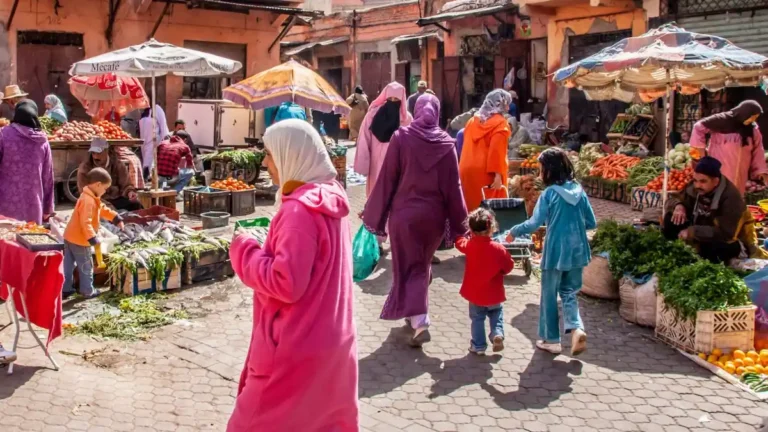
Marrakech has family-run medina shops, fixed-price artisan centres, contemporary design studios and specialist rug boutiques. There is no single best place for every buyer.
For the specific dealers I personally use and recommend, see my guide to where to buy rugs in Marrakech, including my picks for selection, authenticity and interior design.
For help understanding the city beyond shopping, use my complete Marrakech Travel Guide.
The Medina and Souk des Tapis
The Marrakech medina is where many visitors begin. Shops carry rugs from different regions of Morocco, often stacked from floor to ceiling.
The medina offers an enormous selection, but it requires patience. Prices may not be displayed, bargaining is common and the quality can vary considerably between stores.
Visit more than one shop before making a large purchase. You do not need to negotiate seriously in every store. The first goal is to understand the available styles, weights and general price levels.
Ensemble Artisanal
Ensemble Artisanal is a good place to begin if you are buying your first Moroccan rug or feel uncomfortable negotiating prices. This government-supported artisan centre brings together workshops and shops selling handmade products from across Morocco.
Prices are usually fixed, creating a relaxed shopping experience where you can compare different rug styles, materials and craftsmanship without pressure. Although the selection is smaller than in the souks, it gives you a realistic idea of quality and pricing before you visit shops where bargaining is expected.
Address: Avenue Mohammed V, Guéliz, Marrakech 40000, Morocco
Google Maps: Ensemble Artisanal Marrakech
Sidi Ghanem
Sidi Ghanem is Marrakech’s design and industrial district. It contains furniture studios, workshops, interior-design businesses and shops specialising in more contemporary Moroccan products.
You may find modern rugs, custom designs and carefully selected collections. Prices can be higher than in smaller medina shops, but the atmosphere is generally quieter and the service may be more structured.
Specialist Rug Boutiques
Specialist boutiques often provide clearer information about materials, measurements and regional styles.
Some include cleaning, careful packaging and international shipping as part of the service. You may pay more, but the extra organisation can be valuable when buying an expensive rug.
Should You Buy From a Cooperative?
Some women’s cooperatives genuinely work with artisans and weaving communities. Others are normal commercial shops using the word “cooperative” as part of their marketing.
Ask where the rugs are made, how the organisation works and how artisans are paid. A trustworthy representative should be willing to answer clearly.
Do not assume that a cooperative is genuine only because the word appears on a sign. The official Moroccan tourism website also provides information about traditional Moroccan craftsmanship and the country’s regional rug-making traditions.
Would you like local help comparing rug shops?
I can help you understand the differences between rugs, ask the right questions and inspect the details before you make a decision. There is never any obligation to buy.
How Bargaining for a Moroccan Rug Really Works
Bargaining is normal in many Marrakech rug shops, especially where prices are not fixed.
The first amount is often a starting point, but there is no rule saying every rug should sell for half the opening price.
Before negotiating, decide whether you genuinely want the rug. Bargaining for an item you have no intention of buying wastes time and can make the conversation unnecessarily difficult.
Ask for the seller’s best price, then think about it calmly. Compare the rug with similar pieces you have already seen and decide what it is worth to you.
Make a respectful counteroffer based on your budget. There is no need to become aggressive, laugh at the price or accuse the seller of dishonesty.
Pay attention to the final amount, not the performance of the negotiation. A large discount from an unrealistic opening price does not automatically create a good deal.
When the price remains above your limit, thank the seller and leave politely. Walking away is a normal part of shopping in Marrakech.
The seller may call you back with a different offer, or the conversation may simply end. Both outcomes are normal.
Do not agree to the final amount unless you are ready to complete the purchase. A spoken agreement can be taken seriously, especially after a long negotiation.
Fixed-price boutiques and artisan centres may not expect bargaining. You can still ask whether cleaning, packing, delivery or shipping is included.
For broader advice about prices, pressure and moving through the market, read my full guide to taking a shopping tour in Marrakech.
Common Rug-Selling Tactics to Understand
Most rug sellers in Marrakech are merchants doing their work, and many are honest and welcoming.
The challenge is that visitors may not recognise the sales techniques being used. Understanding them helps you remain calm without treating every seller with suspicion.
“This Rug Is One of a Kind”
Every handmade rug is slightly different, so the statement may technically be true.
However, it does not mean you will never find another rug with a similar colour, style or size. The phrase is often used to create urgency.
“This Price Is Only for Today”
A limited-time price may be a genuine attempt to close a sale, or it may simply be part of the negotiation.
Do not buy because you are afraid the opportunity will disappear. Buy because the rug suits your home and the final amount feels reasonable.
“My Family Made This Rug”
The story may be true, particularly in a family business. It may also be difficult for a visitor to verify.
Listen respectfully, then return to the details you can inspect yourself.
“This Is an Antique”
Be careful with claims about age.
Some rugs are genuinely old. Others may have been washed, faded or distressed to create an aged appearance.
For a very expensive antique purchase, independent specialist advice is more reliable than a verbal claim made during the sale.
“You Can Resell It for More”
A Moroccan rug should normally be purchased for your home, not as a financial investment.
Most travellers do not have the specialist knowledge, buyers or market access needed to resell a rug profitably.
Being Taken to a Shop Without Asking
A driver, guide or friendly stranger may offer to show you a special shop, workshop or cooperative.
This does not automatically mean something dishonest is happening, but a commission may be involved and could influence the price.
Ask why you are being taken there and confirm that you are free to leave without buying.
You can read more about these situations in my guide to Morocco travel scams and tourist traps.
What to Check Before You Pay
Once you have chosen a rug and agreed on a price, slow down before making the payment.
Ask the seller to measure the rug in front of you. Confirm the exact length and width instead of relying on an estimate.
Inspect the front, back, edges and fringe one final time. Look for holes, repairs, stains, weak areas or damage that may not have been visible while several rugs were covering the floor.
Confirm the material. When the seller describes the rug as handmade, wool, vintage or from a specific region, ask for the important details to be written on the receipt.
Confirm the currency and complete final amount. When paying by card, ask whether a card fee will be added and select payment in Moroccan dirhams rather than accepting an unfavourable currency conversion on the terminal.
For more payment advice, read my guide to using credit cards in Morocco.
If shipping is included, ask exactly what the price covers. Confirm the packing, courier charge, tracking, insurance, customs paperwork and delivery address.
A proper receipt should include the shop name, telephone number, rug description, dimensions, final price and payment method.
Take clear photographs of the rug before it is folded or packed. Photograph the front, back, any existing repairs and the receipt.
For an expensive purchase, written records are especially important if there is a later problem involving shipping, damage or confusion about which rug was sent.
How to Take or Ship a Moroccan Rug Home
Small rugs, runners and flat-woven kilims can often be folded or rolled and placed inside checked luggage.
Ask the shop to pack the rug securely, then check the final weight and dimensions against your airline’s baggage allowance.
A folded rug may look compact but still qualify as overweight or oversized baggage. Check the airline’s rules before deciding whether carrying it is cheaper than shipping it.
Large or heavy rugs are normally easier to send through a courier or specialist shipping company.
Ask which company will handle the shipment, whether tracking is included and how long delivery is expected to take.
Confirm whether the quoted amount includes insurance, paperwork and delivery to your door. Import taxes or customs charges may still be the buyer’s responsibility when the rug arrives.
Make sure your name, address, telephone number and postal code are written correctly. Keep the receipt, tracking information and shop contact details until delivery is complete.
The exact rug should be photographed before it is wrapped. This is particularly important when the shop is packing several customer orders at the same time.
Do not allow a damp rug to be sealed tightly for a long journey. Trapped moisture can cause unpleasant smells or damage. The rug should be clean and completely dry before packing.
For an expensive rug, insured shipping is the safer option. Ask what the process will be if the package is delayed, lost or damaged.
How to Care for a Moroccan Rug at Home
A well-made Moroccan rug can last for many years when it is cleaned and used correctly.
Some shedding is normal when a new wool rug first arrives, especially with thicker Beni Ourain, Azilal or Mrirt styles.
Use a vacuum with low suction and avoid an aggressive rotating brush on delicate or long-pile wool.
Flat-woven rugs can often be vacuumed carefully on both sides. Always check whether the edges or fringe could catch inside the vacuum.
Rotate the rug every few months so that sunlight and foot traffic affect it more evenly. Strong direct sunlight may gradually fade colours, particularly on older rugs.
A rug pad can prevent slipping, protect the weave and make a flat rug feel more comfortable.
When something spills, blot the area gently with a clean cloth. Do not rub the stain because this may push it deeper into the fibres.
Avoid bleach, very hot water and strong household chemicals. Wool and handmade dyes may react badly to harsh cleaning products.
Moroccan rugs do not normally require frequent deep cleaning. For a valuable wool rug, use a professional cleaner experienced with handmade textiles.
Explain that the rug may contain natural wool, older dyes or repaired sections that need extra care.
If the rug develops a smell after travelling, place it in a dry, shaded and well-ventilated area. Do not leave it tightly wrapped.
For long-term storage, clean and dry the rug first. Roll it rather than leaving it folded for many months, and store it somewhere protected from dampness.
Should You Buy a Moroccan Rug Alone or With a Guide?
You can buy a Moroccan rug in Marrakech without a guide, and many travellers enjoy exploring independently.
Buying alone can work well when you have plenty of time, feel comfortable bargaining and are confident leaving a shop when something does not feel right.
The main advantage is freedom. You can visit as many shops as you like and make the final decision without outside influence.
However, the process can become confusing when you are comparing regional names, materials, weaving methods, condition and changing prices for the first time.
A guide can help you ask clearer questions, understand the differences between rugs and inspect the practical details before payment.
A guide cannot guarantee the cheapest possible rug or prove every story told by a seller. A responsible guide should help you understand the purchase while keeping the final decision in your hands.
It is also reasonable to ask how a guide is paid. Commissions exist in Marrakech shopping, and a traveller should never feel trapped inside one shop because a guide or driver brought them there.
During my private shopping tours, I focus first on the room, dimensions, use and budget. We then compare materials, condition and construction. There is no obligation to buy a rug or any other product.
Shopping alone may be right for you when you enjoy uncertainty and have enough time to learn through comparison.
A private guide may be useful when this is your first serious rug purchase, your time in Marrakech is limited or you want local support while reviewing the quality, price and shipping agreement.
Final Advice for Buying a Moroccan Rug in Marrakech
Buying a Moroccan rug in Marrakech should be an enjoyable part of your journey, not a decision made under pressure.
Start with your room measurements and budget. Compare the material, construction and condition rather than relying only on names or sales stories.
Confirm every important detail before paying, including the dimensions, final price, material, shipping arrangements and any existing repairs.
A good rug does not need a dramatic story or an enormous discount to prove its value. It needs to be well made, fairly priced and right for the home where it will be used.
Take your time, ask practical questions and be willing to leave when something does not feel clear. The goal is not simply to return from Morocco with a rug. It is to return with one you will still enjoy many years from now.
Would you like help buying a rug in Marrakech?
I offer private shopping tours for travellers who want to compare rugs, understand quality and shop at a comfortable pace. You are always free to look, ask questions and leave without buying.
Book a Private Rug Shopping Tour on WhatsApp
FAQs About Buying Moroccan Rugs in Marrakech
Is Marrakech a good place to buy a Moroccan rug?
Yes. Marrakech offers one of the widest selections of Moroccan rugs in the country, with pieces from the Middle Atlas, High Atlas and other weaving regions. The variety is excellent, but prices and quality differ between shops, so compare carefully before paying.
How much should I pay for a Moroccan rug in Marrakech?
Small flat-woven rugs and runners usually cost around 800–2,500 MAD. Medium rugs generally range from 2,000–10,000 MAD depending on the type. Large handmade wool rugs often cost 7,000–18,000 MAD, while dense, vintage or exceptional pieces may cost 12,000–30,000 MAD or more.
Should I bargain when buying a rug?
Bargaining is normal in many medina rug shops where prices are not fixed. Stay polite, concentrate on the final amount and only make a serious offer when you are prepared to buy. Boutiques and artisan centres may use fixed prices.
How can I tell if a Moroccan rug is handmade?
Turn the rug over and examine the knots or weaving structure, edges and fringe. Handmade rugs normally show small variations rather than perfect mechanical repetition. No single sign proves authenticity, so inspect the material, weight, construction and finish together.
Are all Moroccan rugs made from wool?
No. Many traditional rugs are made from sheep’s wool, but flat-woven rugs may use different fibres. Boucherouite rugs are made from recycled textiles, and some modern rugs may contain synthetic material. Ask what the rug is made from before agreeing on a price.
Can I take a Moroccan rug on the plane?
Small rugs, runners and kilims can often be folded or rolled into checked luggage. Check the packed weight and dimensions against the airline’s baggage rules because a compact rug may still count as overweight or oversized luggage.
Can Marrakech rug shops ship internationally?
Many established shops can arrange international shipping. Before paying, confirm the courier, packing, cost, insurance, tracking, customs responsibility and estimated delivery time in writing.
Is it safe to buy an expensive rug in Marrakech?
It can be safe when you use a reputable shop, inspect the rug carefully and obtain a detailed receipt. Photograph the rug before it is packed and keep copies of the payment and shipping information until it arrives.
Should I buy from a women’s cooperative?
A genuine cooperative can be a good place to buy, but the word “cooperative” is not automatic proof that artisans receive a fair share. Ask how the organisation operates, where the rugs are woven and how the makers are paid.
What is the best type of Moroccan rug to buy?
There is no single best type. A thick Beni Ourain may suit a bedroom, a kilim may be better for a warm climate, and a Zanafi can be more practical in a busy hallway. Choose according to the room, climate, maintenance and daily use.