
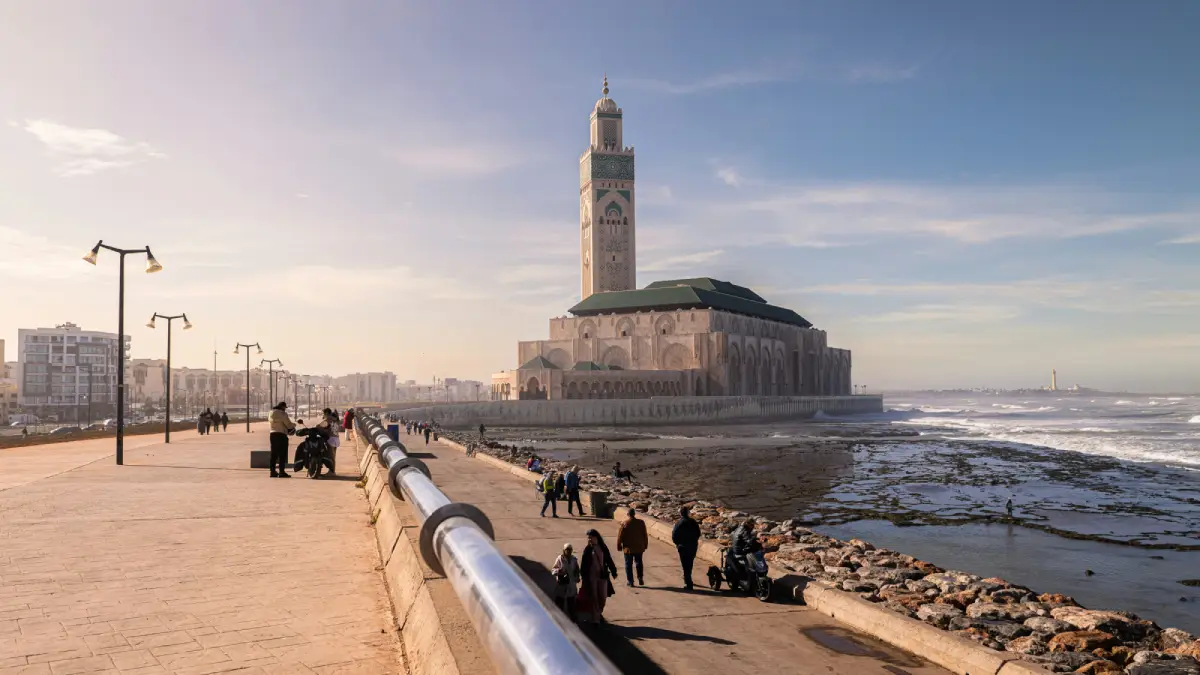
Casablanca is Morocco’s Atlantic city: modern, energetic, full of white Art Deco buildings, ocean air, cafés, seafood, and one unforgettable landmark—the Hassan II Mosque.
It is not Marrakech, Fes, or Chefchaouen, and that is exactly why many travelers enjoy it. Casablanca gives you a look at modern Moroccan life, with a working port, busy streets, stylish neighborhoods, traditional markets, beaches, and a relaxed coastal atmosphere.
This Casablanca Travel Guide covers the best things to do, where to stay, what to eat, how to get around, practical safety advice, and how to plan one or two days without wasting time in traffic.
Quick answer: Spend at least one full day in Casablanca for the Hassan II Mosque, Old Medina, Art Deco center, local food, and the Corniche. Two days gives you time for Habous, the Jewish Museum, slower meals, and the city’s less obvious corners.
Table of Contents
Table of Contents
Why Visit Casablanca?
Many travelers land at Mohammed V International Airport and immediately take a train to Marrakech or Fes. That is understandable, but Casablanca is worth more than a quick airport connection.
Visit Casablanca if you enjoy architecture, ocean views, café culture, seafood, museums, shopping, and seeing how Morocco works beyond the postcard version.
The city is best known for:
- The Hassan II Mosque beside the Atlantic Ocean
- The Corniche and Ain Diab coastline
- Casablanca’s Old Medina
- Mohammed V Square and Art Deco architecture
- Moroccan seafood and busy local markets
- Habous Quarter and traditional shopping
- A blend of Moroccan, French, Jewish, and modern international influences
Casablanca is a good first stop if you want a gentle introduction to Morocco before continuing to Marrakech, Fes, Rabat, or Chefchaouen. The city is also one of the easiest places to use Morocco’s rail network. My Morocco train guide explains routes, tickets, and the main stations.
If you are continuing to the capital or planning a day visit, my Rabat Travel Guide helps you choose your train station, sightseeing route and whether to stay one or two days.
Traveling straight to Marrakech after landing? Compare the train, taxi and private-transfer options from Casablanca Airport to Marrakech.
The honest advice is simple: do not come expecting the largest or oldest medina in Morocco. Come for the combination of ocean, architecture, food, culture, and modern city life.
Best Things to Do in Casablanca
The best way to explore Casablanca is by grouping nearby sights together. The Hassan II Mosque and Corniche belong together, while the Old Medina, Central Market, Mohammed V Square, and Art Deco streets are easier to visit on the same day.
Hassan II Mosque
The Hassan II Mosque is the highlight of Casablanca and the one place I would not skip.
The mosque stands beside the Atlantic, with detailed zellige tilework, carved plaster, marble, cedar wood, and an enormous minaret visible from across the city. The setting is just as impressive as the building itself, especially when the waves are moving beneath the oceanfront esplanade.
Non-Muslim visitors can enter on an organized guided visit. You cannot simply walk inside at any time, so check the current visiting schedule before you go. Prayer times, Fridays, holidays, and special events can affect access.
Dress modestly, cover your shoulders and knees, and follow the instructions of your guide. Plan enough time to appreciate the interior rather than treating the mosque as a quick photo stop.
My local planning tip is to build your day around the mosque visit first. Afterward, continue toward the Corniche or take a taxi back toward the Old Medina and city center.
Casablanca Corniche and Ain Diab
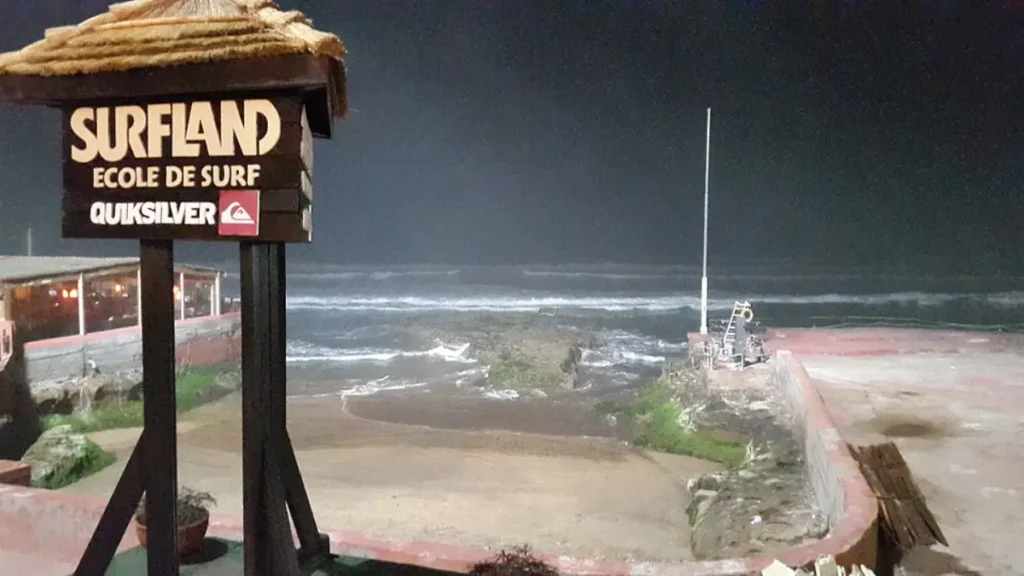
The Corniche is Casablanca’s oceanfront promenade and one of the best places to slow down.
Come in the late afternoon for the sea breeze, cafés, restaurants, palm trees, and sunset light. The area becomes especially lively in the evening, when local families, couples, and friends come to walk beside the Atlantic.
Ain Diab is the beach area along the Corniche. Swimming conditions can change, and the Atlantic can be rough, so use lifeguarded or clearly designated areas and follow local advice.
The Corniche is better for atmosphere than for rushing between attractions. Give yourself time to sit, walk, and enjoy the view.
Explore the Old Medina
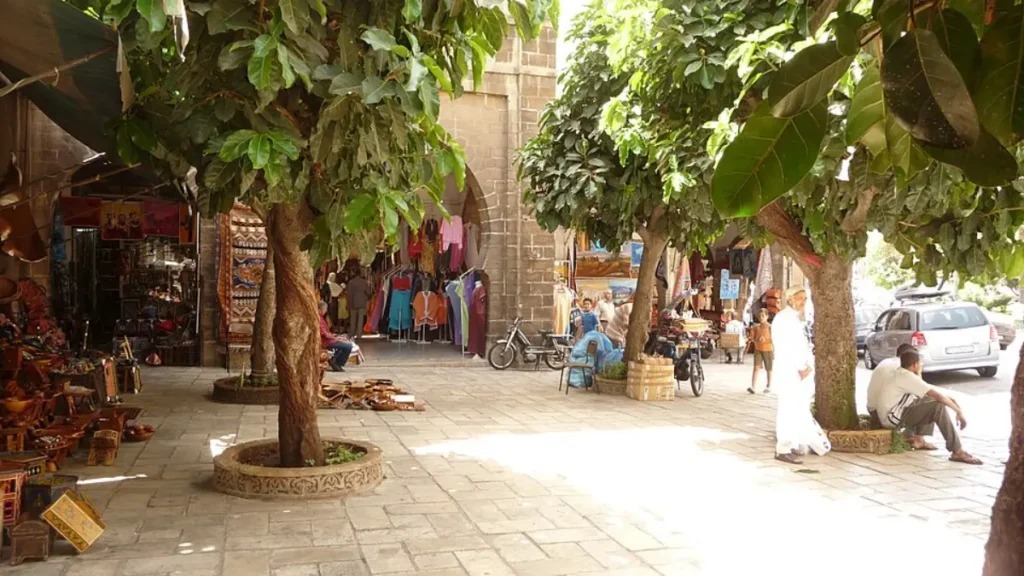
Casablanca’s Old Medina is smaller and more compact than the medinas of Marrakech or Fes. It feels more local and practical, with shops, cafés, bakeries, small restaurants, clothing, spices, leather goods, and everyday neighborhood life.
You can combine the Old Medina with Casa-Port, the port area, Rick’s Café, and the Central Market. Wear comfortable shoes because the lanes are uneven in places.
Do not compare this medina with the huge historic maze of Fes. Casablanca’s charm is that you can explore it without needing an entire day to understand the layout.
Mohamed V Square & Art Deco Architecture
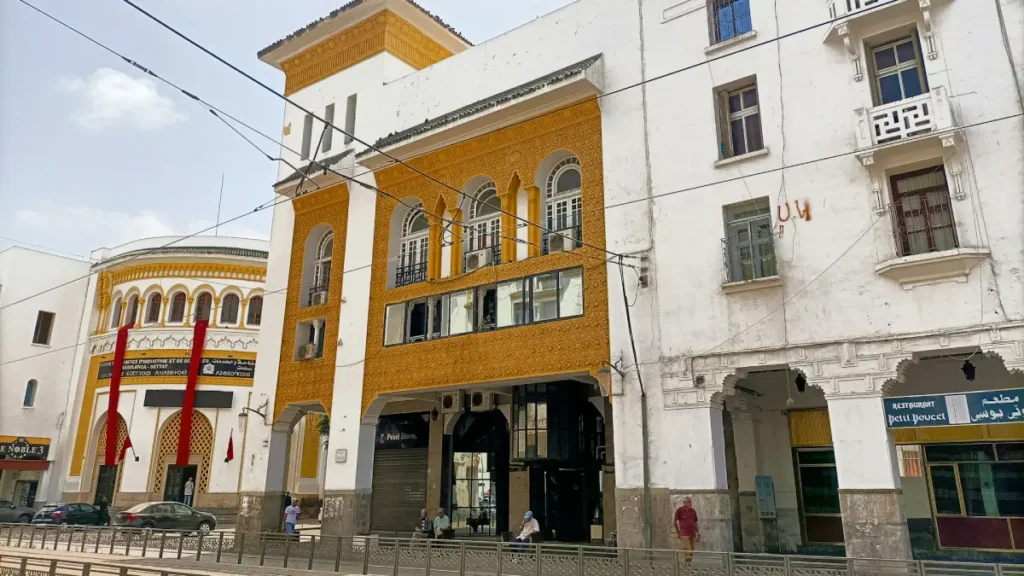
Mohammed V Square is one of the best starting points for understanding Casablanca’s architecture.
The surrounding buildings combine Moroccan details with French Art Deco and early twentieth-century design. Look for geometric façades, balconies, arches, tiled details, wide boulevards, and impressive civic buildings.
From the square, continue toward United Nations Square, Boulevard Mohammed V, the Central Market, and the nearby downtown streets. This area is best explored slowly on foot, with time to look upward instead of only following a map.
The Art Deco district is one of the reasons Casablanca feels so different from Morocco’s imperial cities. It shows the city’s modern history and its role as Morocco’s economic center.
Visit the Central Market
The Central Market is a useful stop for travelers who want to see Casablanca’s everyday food culture.
You will find fish, seafood, fruit, vegetables, spices, pastries, and small places serving simple meals. Go earlier in the day when the market is most active.
Fresh seafood is one of Casablanca’s strengths, but you do not need an expensive restaurant to enjoy it. Ask about the catch of the day, check the price before ordering, and carry some Moroccan dirhams for smaller stalls.
Walk Through Habous Quarter
Habous Quarter, also called the New Medina, is different from the Old Medina.
It was designed with wider streets, organized lanes, Moroccan-style arches, shops, cafés, bakeries, and traditional craft stores. It is a comfortable place to browse leather goods, ceramics, slippers, spices, clothing, and Moroccan pastries.
Habous is a good choice if you want traditional shopping with a little more space and less confusion. Pâtisserie Bennis is a popular stop for Moroccan sweets, but check current opening hours before visiting.
You can combine Habous with the Mahkama of the Pasha area, but use a taxi or public transport if you are also visiting the Corniche or Hassan II Mosque on the same day.
Visit the Jewish Museum of Morocco
The Jewish Museum of Morocco is a quiet and important cultural stop in Casablanca’s Oasis district.
Its exhibitions explain Jewish life and heritage in Morocco through objects, photographs, clothing, religious pieces, and historical material. It adds another layer to understanding the country’s long multicultural history.
The museum is outside the main Old Medina and Mohammed V Square walking route, so check its current opening schedule and plan it as a separate stop. It is especially worthwhile if you enjoy history, religion, architecture, or museums that offer a deeper view of Morocco.
Other Casablanca Stops
If you have extra time, consider Rick’s Café, Arab League Park, Notre Dame de Lourdes Cathedral, the El Hank Lighthouse, or Morocco Mall.
Rick’s Café is mainly about the atmosphere inspired by the famous film. Morocco Mall shows a more modern, commercial side of Casablanca and may suit families or travelers who want shopping and air-conditioning.
These are optional. For a first visit, prioritize the mosque, Old Medina, central architecture, food, and the Corniche.
Where to Stay in Casablanca
The best area depends on whether you want walkability, train access, restaurants, or the ocean.
City center and Casa-Port: This is the easiest choice for a first visit. You are close to the Old Medina, Central Market, United Nations Square, cafés, and transport. It is especially convenient for a short stay.
Casa-Voyageurs: Choose this area if you are arriving by train, leaving early, or continuing to another Moroccan city. It is practical rather than atmospheric, but transport connections are useful.
Maarif and Gauthier: These neighborhoods suit travelers who prefer modern cafés, bakeries, restaurants, shopping, and a lively urban atmosphere. They are good for longer stays.
Ain Diab and the Corniche: Stay here for ocean views, beach walks, cafés, and evening atmosphere. It is more relaxed but farther from the Old Medina and central Art Deco streets.
Near Hassan II Mosque: This area is convenient for mosque visits and ocean walks. It can feel quieter at night than the city center.
Hotels travelers often compare include Four Seasons Casablanca, Hyatt Regency, Le Casablanca Hotel, Kenzi Tower, Ibis Casa Voyageurs, and Melliber Hotel. Prices and availability change by season, so compare your dates carefully.
For more options and hotel planning advice, see my Best Hotels in Morocco guide. If you want to compare areas before booking, my where to stay in Casablanca guide breaks down the main neighborhoods and hotel options.
What to Eat in Casablanca
Casablanca is one of the best cities in Morocco for travelers who enjoy both traditional food and international restaurants.
Start with fresh seafood, especially grilled fish, prawns, calamari, or sardines. You can look around the Central Market, the port area, or established seafood restaurants along the coast.
Traditional Moroccan dishes to try include tagine, harira, couscous, msemen, grilled meats, olives, preserved lemon, chebakia, and ghriba.
If you are in Casablanca on a Friday, ask about couscous. It is an important weekly tradition in many Moroccan homes and restaurants.
The café culture is also part of the experience. Enjoy mint tea, Moroccan pastries, coffee, or a light breakfast while watching the city move around you. Bondi Coffee Kitchen, Pâtisserie Bennis, and cafés along the Corniche are options travelers often mention, but always check current hours.
For a more local meal, choose a busy restaurant with a good turnover of food, ask the price before ordering, and do not feel pressured to order more than you want.
Casablanca Safety
Casablanca is generally comfortable for visitors who use the same awareness they would use in any large city.
Keep your phone and wallet secure in crowded areas, especially markets, stations, and busy streets. Avoid walking with your phone held out near traffic because motorbikes can pass very close to pedestrians.
Stay on well-lit main roads at night and avoid quiet unfamiliar streets if you are alone. The Corniche and central areas can be lively, but side streets may become quiet later in the evening.
Use a metered petit taxi, a reputable taxi stand, or a locally available ride app. If a driver refuses the meter, agree on the price before leaving or choose another taxi.
Respect local customs, ask before photographing people, and keep valuable items out of sight.
Weather & Best Time to Visit Casablanca
Casablanca has an Atlantic climate, so the city is generally milder than Morocco’s inland destinations.
Spring and autumn are usually the most comfortable seasons for walking, sightseeing, and sitting along the Corniche.
Summer can be sunny and warm, but the ocean breeze can make evenings feel cooler. Winter is mild compared with many destinations, although rain, humidity, wind, and cloudy days are possible.
Bring layers rather than relying on one heavy item. The weather can change during the same day, especially near the ocean.
Casablanca Travel Tips
Casablanca is easier when you understand the distances between its neighborhoods.
From Mohammed V Airport: The airport is outside the central city. You can use the airport train service when it matches your arrival time and destination, or arrange a reliable taxi or transfer. Allow extra time for immigration, luggage, traffic, and finding your accommodation.
Casa-Port and Casa-Voyageurs: Casa-Port is more convenient for the Old Medina, port, and central attractions. Casa-Voyageurs is the more important rail connection for many intercity journeys.
By train: Trains are useful for Rabat, Marrakech, Fes, Tangier, and other Moroccan cities. Read my Morocco train guide before booking.
Around the city: Central Casablanca is walkable in sections, but the mosque, Corniche, Habous, Maarif, and Jewish Museum are not all next to each other. The tram can be useful on its routes, while red petit taxis are practical for shorter trips. Check the current fare and route information locally.
From Marrakech: A Casablanca day trip from Marrakech is possible by train, but it requires an early start and careful timing around the Hassan II Mosque. If you prefer a calmer experience, stay overnight. My Casablanca day trip from Marrakech guide explains the timing and route.
A simple one-day itinerary: Start with the Hassan II Mosque, then visit the Old Medina and Central Market. Spend the afternoon around Mohammed V Square and the Art Deco center. Finish with a Corniche walk and sunset.
A relaxed two-day itinerary: Use day one for the mosque, Corniche, Old Medina, and central architecture. Use day two for Habous, the Jewish Museum, slower meals, shopping, or Morocco Mall.
Before your trip, check the Visit Morocco official tourism website for current destination information.
For exact train, taxi, bus and transfer details, use my Casablanca Airport to city centre guide.
Heading north after your Casablanca stay? Read my guide to traveling from Casablanca to Tangier for Al Boraq tickets, Casa Voyageurs station advice and alternatives by bus or car.
What to Pack for Casablanca
Pack comfortable walking shoes, light clothing, sunglasses, sunscreen, and a small jacket or sweater for Atlantic evenings.
If you plan to visit the Hassan II Mosque, bring clothing that covers your shoulders and knees. A light scarf can be useful, but follow the instructions given at the mosque.
A small crossbody bag, power bank, reusable water bottle, and some Moroccan dirhams are useful in the city. If you are bringing several devices, see my Morocco plug and adapter guide.
Do’s & Don’ts in Casablanca
- Do walk the Corniche around sunset.
- Do allow time for a proper Hassan II Mosque visit.
- Do use the meter in petit taxis whenever possible.
- Do carry cash for small cafés, markets, and taxis.
- Do greet people politely and ask before taking photographs.
- Do dress respectfully at religious and cultural sites.
- Don’t assume the Old Medina and Habous Quarter are the same place.
- Don’t expect Casablanca to look like Marrakech or Fes.
- Don’t walk alone through quiet unfamiliar streets late at night.
- Don’t accept an unclear taxi price without agreeing first.
- Don’t plan too many distant neighborhoods into one short day.
For more Moroccan city inspiration, read my Fes Travel Guide.
Casablanca Travel GuideFAQs
Is Casablanca worth visiting?
Yes, especially if you enjoy modern cities, ocean views, architecture, cafés, seafood, and a mixture of Moroccan and European influences. Casablanca is different from Marrakech and Fes, but that difference is its appeal.
How many days do you need in Casablanca?
One full day is enough for the main highlights if you plan your route carefully. Two days is better if you want to visit Habous, the Jewish Museum, Morocco Mall, or enjoy the city without rushing.
Can Casablanca be a day trip from Marrakech?
Yes, but it is a long day. Use the train, check the Hassan II Mosque schedule first, and keep your route focused. If you prefer time for cafés, food, and the Corniche, an overnight stay is more comfortable.
Can non-Muslims visit the Hassan II Mosque?
Non-Muslim visitors can enter during organized guided visits. Check the current schedule and ticket information before arriving because access changes around prayers, Fridays, holidays, and special events.
Where should first-time visitors stay in Casablanca?
The city center near Casa-Port is usually the easiest base for first-time visitors. Maarif and Gauthier are good for cafés and restaurants, while Ain Diab and the Corniche suit travelers who prefer the ocean.
Is Casablanca safe for tourists?
Casablanca is generally safe for tourists who use normal big-city precautions. Keep valuables secure, use well-lit streets, be careful with your phone near traffic, and use reputable taxis or transport apps.
Can you swim in Casablanca?
You can swim at some beaches around Ain Diab, but conditions vary and the Atlantic can be rough. Use lifeguarded or designated areas and ask locally about conditions before entering the water.
What is Casablanca known for?
Casablanca is known for the Hassan II Mosque, Atlantic coastline, Art Deco architecture, the Old Medina, café culture, seafood, modern business districts, and its role as Morocco’s economic center.
Casablanca or Rabat: which should you visit?
Choose Casablanca for modern city life, oceanfront energy, architecture, food, and the Hassan II Mosque. Choose Rabat for a calmer atmosphere, historic monuments, gardens, and a more compact sightseeing experience.
Flights to Morocco
Casablanca is one of Morocco’s main international arrival points, and Mohammed V Airport connects the city with many international destinations.
Before booking your trip, read my Best Morocco Flight Deals Guide for advice on airlines, airports, routes, and finding better fares.
Some links in this guide may be affiliate links. If you book through them, I may earn a small commission at no extra cost to you. Thank you for supporting Morocco Tips.
Need Help Planning Your Trip?
If you need help combining Casablanca with Marrakech, Fes, Rabat, or another Moroccan destination, you can contact me. I am happy to share practical advice to help you plan your route with confidence.
Casablanca is modern, lively, and full of surprises. Give it enough time to enjoy the ocean, architecture, food, and everyday Moroccan life.