Things to Do in Fes – A Local Guide’s Honest View
When people search for things to do in Fes, they often expect a simple list of monuments and attractions. But Fes is not a city you rush through with a checklist. It is older, quieter, and deeper than many travelers expect, and it reveals itself slowly through the medina streets, old craft workshops, food smells, hidden courtyards, and daily life that still feels connected to centuries of Moroccan history. As a Moroccan local guide, I always tell travelers that if Marrakech is energy, Fes is soul. The best things to do in Fes are not only famous places like the tanneries, madrasas, and viewpoints, but also the small moments in between: watching artisans work by hand, getting respectfully lost in Fes el-Bali, stopping for mint tea, and understanding why this city is one of Morocco’s great cultural treasures. This guide will help you explore Fes with more confidence, more patience, and more respect for how the city really works. For a wider planning overview before you go deeper, read my Fes Travel Guide, and if you are still choosing your base, my guide to where to stay in Fes can help you decide between the medina and quieter areas outside the old city.
Table of Contents
Table of Contents
Understanding Fes Before You Start
The most important thing to understand about Fes is that it was not designed for visitors. That is exactly what makes it special.
Fes is the oldest of Morocco’s imperial cities, and its historic Medina, Fes el-Bali, is a UNESCO World Heritage Site and one of the largest car-free urban areas in the world. Founded in the 9th century, it remains one of Morocco’s most important cultural and spiritual centers.
First-time visitors often feel overwhelmed, especially inside the Medina. The streets are narrow, signs are limited, and sounds seem to come from every direction. Donkeys replace cars, workshops open directly onto alleyways, and daily life continues without pause.
Feeling lost in Fes is normal. In many ways, it is part of the experience.
The key is to arrive with the right mindset. Fes is not a city to conquer with maps and strict schedules. It is a city to explore slowly, with curiosity and respect. Once you stop trying to control every movement, the city begins to make sense. That is when it starts to open up.
Things to Do in Fes el-Bali – Start by Walking Without a Plan
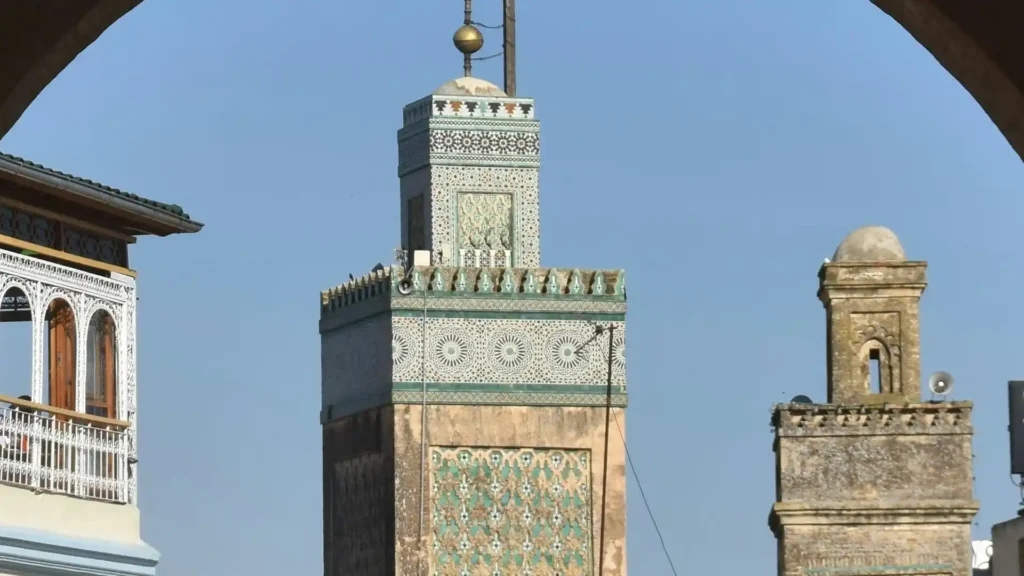
Fes el-Bali is not a place you navigate in the usual sense. It is a place you surrender to.
The Medina is a living labyrinth of thousands of narrow streets, and many of them have no names, no clear signs, and no obvious direction. At first, this can feel intimidating. But once you stop trying to find the fastest way somewhere, the experience changes completely.
Walking through Fes el-Bali feels like stepping into a world that never stopped evolving. You pass brass workshops where artisans shape metal by hand, bakeries where families still bake bread in communal ovens, and small shops that have served the same neighborhood for generations. The smells of leather, spices, cedar wood, and charcoal mix in the air, and every turn reveals something unexpected.
The best way to experience the Medina is without a strict plan. Pick a general direction, keep your phone in your pocket for a while, and let yourself wander. You will get lost, and that is not a problem. In Fes, getting lost often leads to the most memorable moments: a quiet courtyard, an artisan at work, a doorway you would never have noticed otherwise, or a small exchange with someone simply going about daily life.
If you start to feel overwhelmed, stop. Step aside. Let the city move around you. Fes rewards travelers who slow down and pay attention. Once you accept that there is no perfect route inside the Medina, the city becomes far less stressful and much more meaningful.
Visit Bab Boujloud and Bou Inania Madrasa
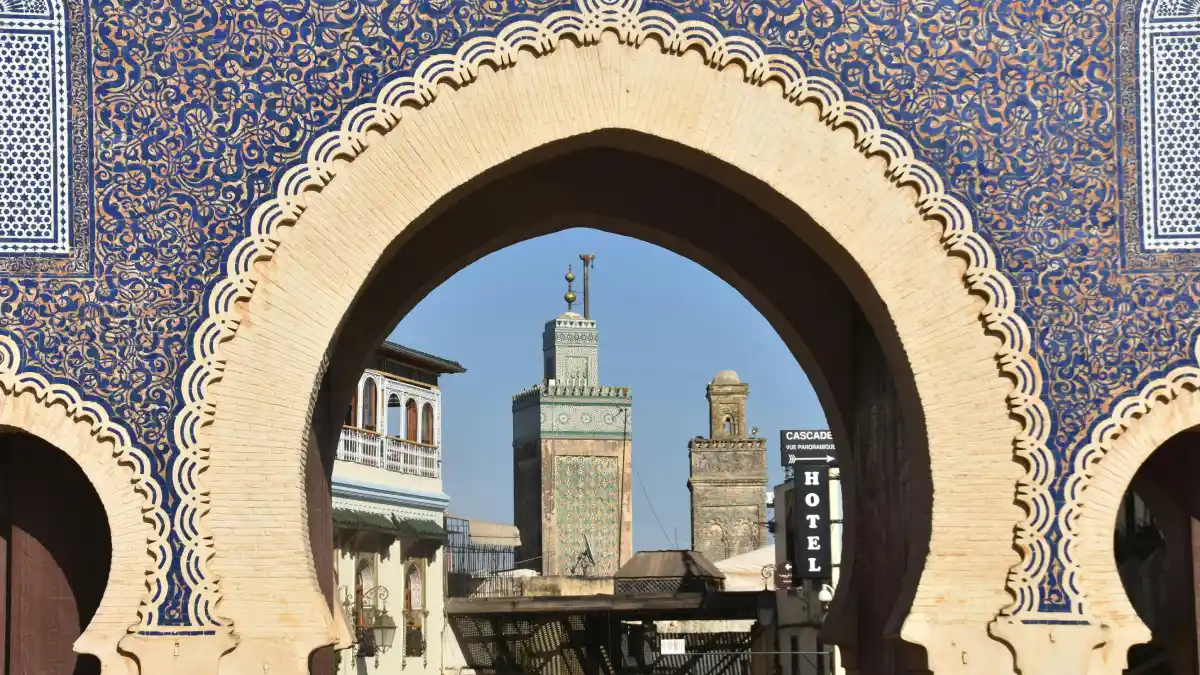
For many first-time visitors, Bab Boujloud is the easiest place to begin exploring Fes el-Bali. The blue-tiled gate marks one of the main entrances to the old medina and immediately brings you into some of its busiest streets.
Just inside the medina, Bou Inania Madrasa is one of the historic buildings I would prioritize. The carved wood, zellij tilework and traditional plaster decoration give you a much better sense of the craftsmanship that shaped Fes.
Do not rush through this area. It works best as the beginning of a longer walk into the medina rather than a quick photo stop.
See Al Attarine Madrasa
Al Attarine Madrasa is another important historic school in the heart of Fes. It is smaller than some visitors expect, but the decoration is incredibly detailed and the setting feels more intimate.
Because it is close to the Al Quaraouiyine area, it fits naturally into the same part of your medina walk.
Explore the Nejjarine Area
The Nejjarine quarter is worth slowing down for. The historic fountain, old caravanserai architecture and woodworking traditions make this one of the medina areas where the craftsmanship of Fes is especially easy to notice.
If you enjoy traditional architecture and Moroccan crafts, spend more time here instead of simply walking through on your way to the next monument.
Stop at Seffarine Square
Seffarine Square is one of the best places to see working craftsmanship rather than a polished tourist attraction. Metalworkers still shape trays, pots and other objects in workshops around the square, and the sound of hammering is part of the atmosphere.
This is exactly the kind of place that makes Fes different from a city where the historic center exists mainly for visitors.
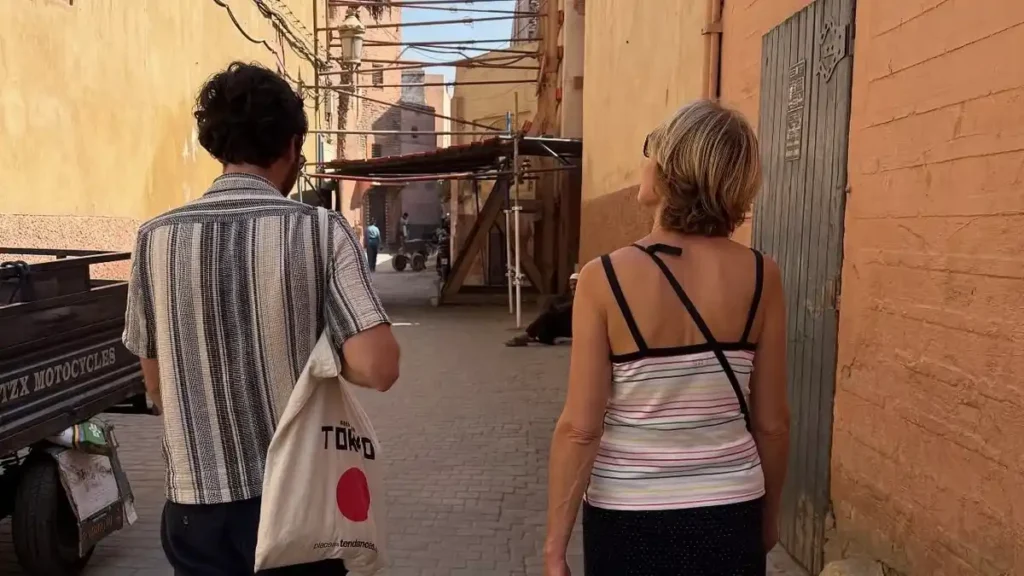
Al Quaraouiyine Mosque and the Soul of Fes
At the heart of Fes lies Al Quaraouiyine Mosque, a place that carries more than religious importance. It carries the identity of the city itself.
Founded in the 9th century, Al Quaraouiyine is widely recognized as the oldest continuously operating university in the world. For centuries, scholars from across North Africa, Al-Andalus, and the wider Islamic world came here to study theology, science, philosophy, and law.
Non-Muslims cannot enter the mosque, but that does not make the experience less meaningful. Standing near the entrance, watching worshippers and students move quietly through the area, you still feel the depth of its presence. Life here follows habits that were already old long before tourism existed.
The streets around Al Quaraouiyine are among the most alive in the Medina. Bookshops, manuscript traditions, neighborhood commerce, and old workshops still exist side by side in a way that feels natural rather than staged. This part of Fes reminds you that the city is not a museum. It is alive, working, and still rooted in knowledge and faith.
If this is your first time visiting Morocco, my Morocco Travel Guide also helps explain the traditions, customs, and travel patterns that shape cities like Fes and Marrakech.
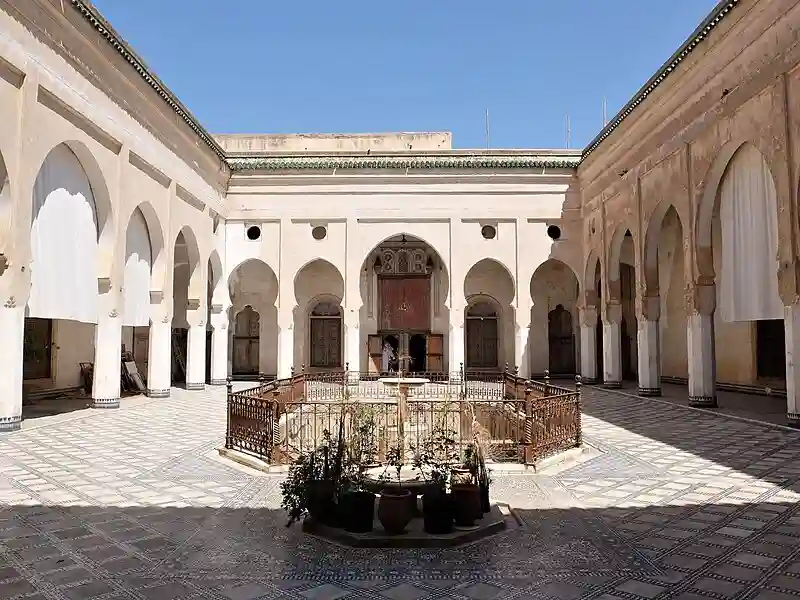
The Tanneries of Fes – What to Expect
The tanneries of Fes are one of the city’s most famous sights, but they are also one of the most misunderstood.
Many travelers arrive with mixed feelings because they have heard about strong smells, crowds, and pressure to buy. The truth is more straightforward: the tanneries are real working spaces, not attractions built for tourists. Understanding that changes the experience.
Leather has been produced here for centuries using methods that have changed very little. Workers soak hides in stone vats, treat them with natural materials, and dye them with colors drawn from saffron, indigo, poppy flower, and other traditional ingredients. From above, the view is striking: a patchwork of color, labor, and movement that shows one of the hardest-working sides of Fes.
Yes, the smell can be strong, especially on warmer days. Many shopkeepers offer mint leaves, and usually a few minutes is enough to appreciate the scene. Late morning is often the best time to visit, when the light is good and the work is active.
What matters most is remembering that the terraces around the tanneries belong to leather shops. You do not need to buy something just because you were invited to look. A polite “no, thank you” is enough.
When approached with patience and realism, the tanneries offer one of the most honest views into working life in Fes.
Explore Fes Jdid and the Mellah
Fes is not only Fes el-Bali. If you have enough time, I recommend seeing Fes Jdid as well because it gives you a different side of the city.
This area developed later than the old medina and feels more open in places. It is also where you find the Mellah, the historic Jewish quarter of Fes.
The architecture, streets and old balconies here feel different from the dense lanes of Fes el-Bali, which is exactly why the area is worth adding to your visit.
See the Royal Palace Gates
The Royal Palace gates are one of the most photographed spots in Fes. You cannot enter the palace, but the large decorated doors are worth seeing if you are already exploring Fes Jdid and the Mellah.
I would treat this as part of the neighborhood, not as a destination that needs a lot of time on its own.
Take a Break in Jnan Sbil Gardens
After several hours inside the medina, Jnan Sbil Gardens can be a very welcome change of pace.
The gardens give you space, shade and a quieter atmosphere after the narrow streets of Fes. They fit especially well between Fes el-Bali and Fes Jdid if you are exploring both areas on the same day.
See Fes from Above
One of the best ways to understand Fes is to see the medina from above after you have already spent time walking inside it.
A viewpoint near the Marinid Tombs gives you a broad view across Fes el-Bali and helps you understand just how dense and large the old city really is.
If the weather is clear, I like this as a late-afternoon stop. The light becomes softer, and the medina looks completely different from above.
Food Experiences Worth Trying in Fes
Food is part of the Fes experience, especially if you want to understand the city beyond monuments.
One dish I would try here is pastilla, which is especially associated with Fes. You will also find tagines, harira, grilled meats, Moroccan salads and traditional sweets throughout the medina.
Rather than turning this page into a full food guide, I would focus on the experience itself: have one traditional riad meal, try one simple local restaurant and stop for mint tea somewhere with a view over the old city.
A food tour or cooking class can also be a good way to understand spices, markets and family-style cooking if that interests you.
For a deeper introduction to Moroccan dishes, read my What to Eat in Morocco guide.
Best Day Trips from Fes
If you have an extra day, the strongest day-trip combination from Fes is usually Meknes and Volubilis.
Volubilis gives you Roman ruins and open countryside, while Meknes adds another imperial city with a very different atmosphere from Fes.
The Middle Atlas, including Ifrane and the Azrou area, is another good option if you want forests, mountain scenery and a break from the medina.
Chefchaouen is possible as a long day trip, but I prefer staying overnight if your itinerary allows it.
For broader planning, transport and how these places fit into your route, use my Fes Travel Guide.
You can also compare well-reviewed day trips from Fes if you prefer an organized excursion.
Practical Tips for Exploring Fes
Wear comfortable shoes. You will spend a lot of time walking on uneven streets and stairs inside the medina.
Carry some small cash because many shops and simple restaurants still prefer it.
Ask before photographing people, especially artisans working inside small workshops.
Do not try to see everything in one day. Fes becomes much easier to enjoy once you stop rushing between attractions.
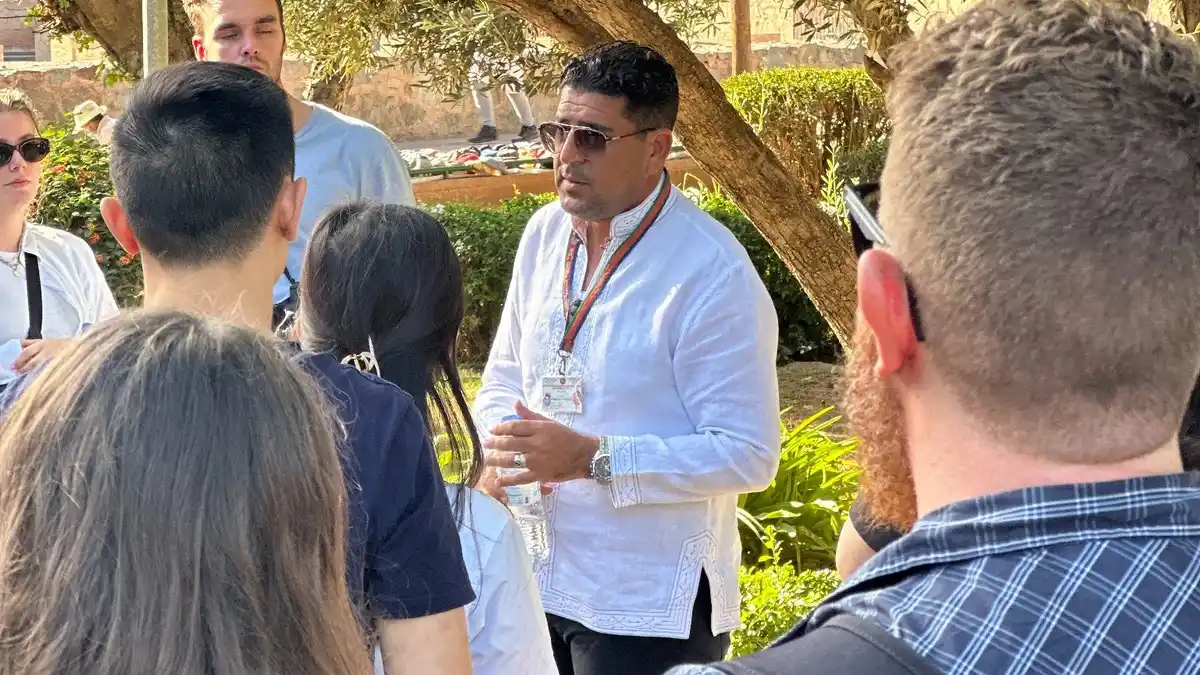
For a first visit, a licensed local guide can be useful for understanding the medina layout, history and crafts, especially during your first few hours.
If you need help with where to stay, transport, safety or how many days to spend in the city, use my Fes Travel Guide instead of trying to solve all of that on this page.
FAQs About Visiting Fes
What are the best things to do in Fes for first-time visitors?
For a first visit, I would prioritize walking through Fes el-Bali, seeing Bab Boujloud, visiting Bou Inania Madrasa and Al Attarine Madrasa, exploring the Al Quaraouiyine area, seeing the Chouara Tanneries and finishing with a viewpoint over the medina.
Are the Chouara Tanneries worth visiting?
Yes. The Chouara Tanneries are one of the most distinctive sights in Fes because they are still working leather-production areas. Visit for the view and the craftsmanship, but remember that the terraces are usually connected to leather shops and you are not required to buy anything.
Which madrasa should I visit in Fes?
Bou Inania Madrasa and Al Attarine Madrasa are both worth seeing. Bou Inania works especially well near the beginning of a medina walk, while Al Attarine fits naturally with the Al Quaraouiyine area.
What can you do in Fes besides exploring the medina?
You can explore Fes Jdid and the Mellah, see the Royal Palace gates, relax in Jnan Sbil Gardens or visit a viewpoint above the old city. With an extra day, Meknes, Volubilis and the Middle Atlas are also good options.
Where can you get the best view of Fes?
The area near the Marinid Tombs gives you a broad view over Fes el-Bali. I like it later in the day when the light is softer and you can see how large and dense the old medina really is.
Final Thoughts: What I Would Prioritize in Fes
If it is your first time in Fes, do not try to see everything.
I would prioritize a slow walk through Fes el-Bali, one or two madrasas, the Al Quaraouiyine area, the Chouara Tanneries, time around the artisan quarters and at least one viewpoint over the old city.
If you have more time, add Fes Jdid, the Mellah, Jnan Sbil Gardens and a day trip to Meknes and Volubilis.
The best things to do in Fes are not only the famous attractions. Some of the strongest moments happen between them: watching someone work by hand, stopping for mint tea, hearing the medina change as the day gets quieter or finding a small courtyard you were not looking for.
That is why I recommend using this page as a guide, not a checklist. Fes becomes much more rewarding when you leave room for the city itself.
Disclosure: Some links in this article may be affiliate links. If you choose to book through them, I may earn a small commission at no extra cost to you. I only recommend experiences and services that I genuinely believe add value to your trip.