What to Eat in Morocco: 15 Moroccan Foods You Should Try
Quick answer: The Moroccan foods I recommend first are tagine, Friday couscous, pastilla, harira and fresh bread. Then try regional specialties such as tanjia in Marrakech, seafood on the Atlantic coast, and rfissa when you find it on a traditional menu. These are the dishes that give first-time visitors the clearest taste of everyday Moroccan cooking.
What to eat in Morocco is one of the first questions travelers ask once they arrive. The good news is that Moroccan food is one of the highlights of the trip, with everything from slow-cooked tagines and Friday couscous to pastilla, harira, grilled meats, fresh bread and simple street food.
Food in Morocco is also part of daily life. It is how families gather, how guests are welcomed, and how people slow down together over lunch or tea.
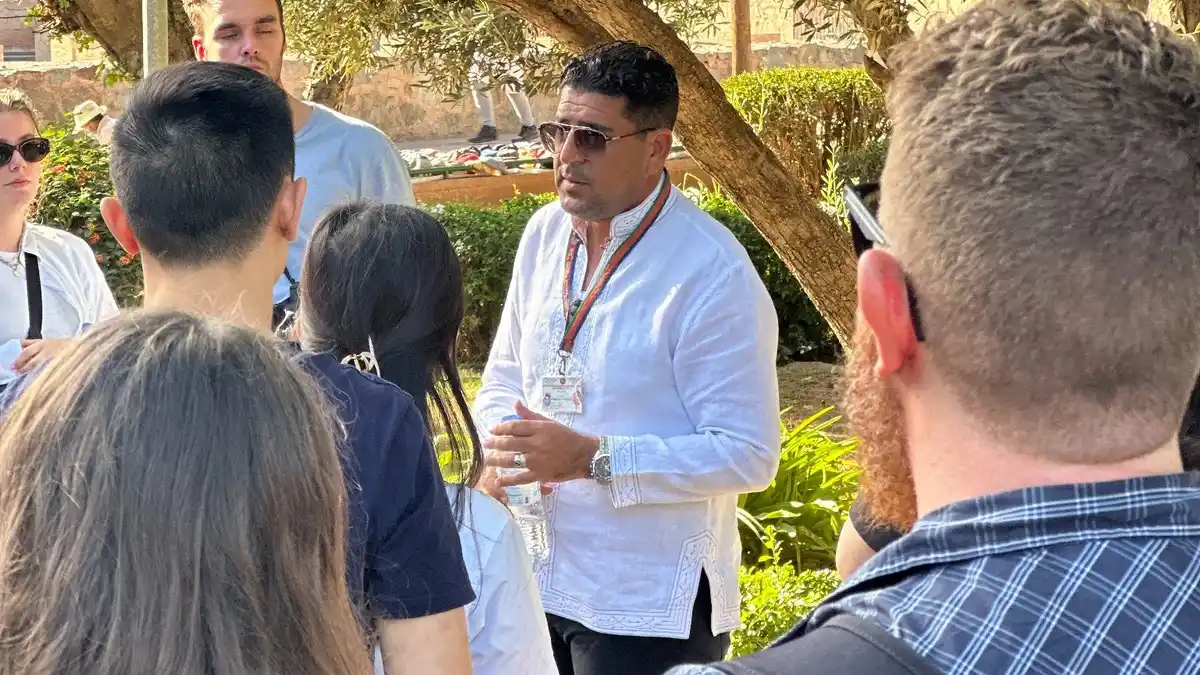
As a licensed Moroccan tour guide, I have shared meals with travelers in family homes, small roadside cafés, mountain villages, desert camps and local restaurants across the country. The dishes visitors remember most are often not the most expensive ones, but the simple Moroccan foods prepared well and eaten in the right place.
In this guide, I’ll show you 15 Moroccan foods you should try, what each dish is like, where you are most likely to find it, and a few local tips to help you order with confidence.
If you are still planning your trip, start with my Plan Your Trip to Morocco guide and my Morocco Travel Guide. For a wider regional look at Moroccan cuisine, my Morocco Food Guide covers what to eat in Marrakech, Fes, Essaouira, the Atlas Mountains, the Sahara and other parts of Morocco.
Table of Contents
Table of Contents
How Food Really Works in Morocco
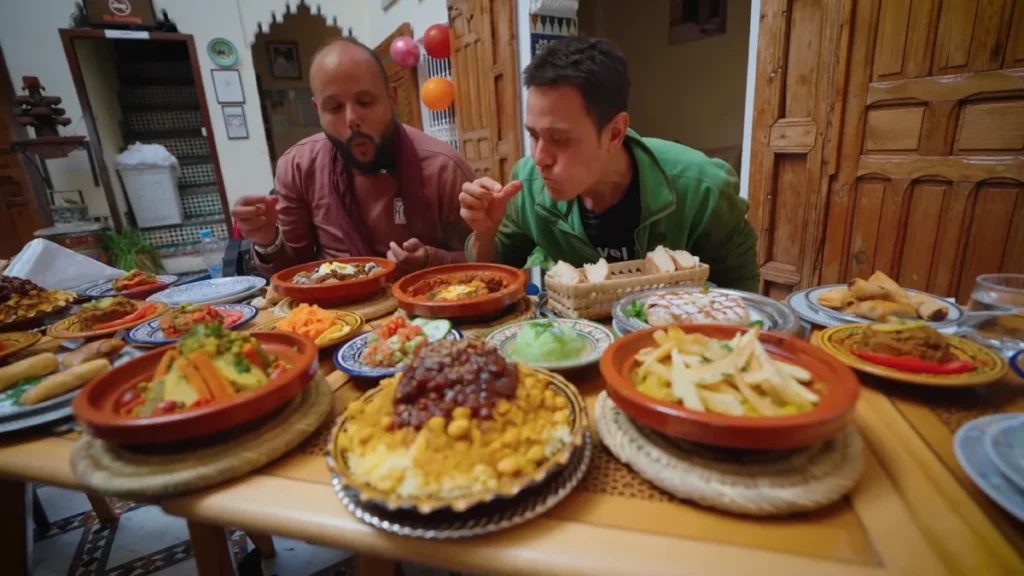
In Morocco, food is built around the day itself. Most families cook every day, not once for the whole week. Ingredients are bought in the morning, meals are prepared slowly, and food is meant to be eaten while it’s fresh and hot. Leftovers exist, but they’re treated differently than in Europe or North America. Morocco’s official tourism office also highlights traditional dishes such as tagine, couscous, pastilla, rfissa and mechoui as part of the country’s food culture.
That’s why a lot of general food advice you read online doesn’t fully fit Morocco. If you are still deciding what to eat in Morocco, pay attention to how the food is prepared. Long simmering, strong heat on the grill, and food moving quickly from kitchen to table are a big part of how Moroccan cooking works. We do not depend on refrigeration in exactly the same way visitors may expect; freshness, cooking time, and serving food hot matter just as much.
When travelers follow that logic, food rarely becomes a problem. Eating hot dishes, taking your time, not ordering too much, and avoiding food that’s been sitting around too long makes a bigger difference than any checklist. Once you understand that, eating in Morocco feels natural, not risky.
What to Eat in Morocco: 15 Must-Try Moroccan Foods
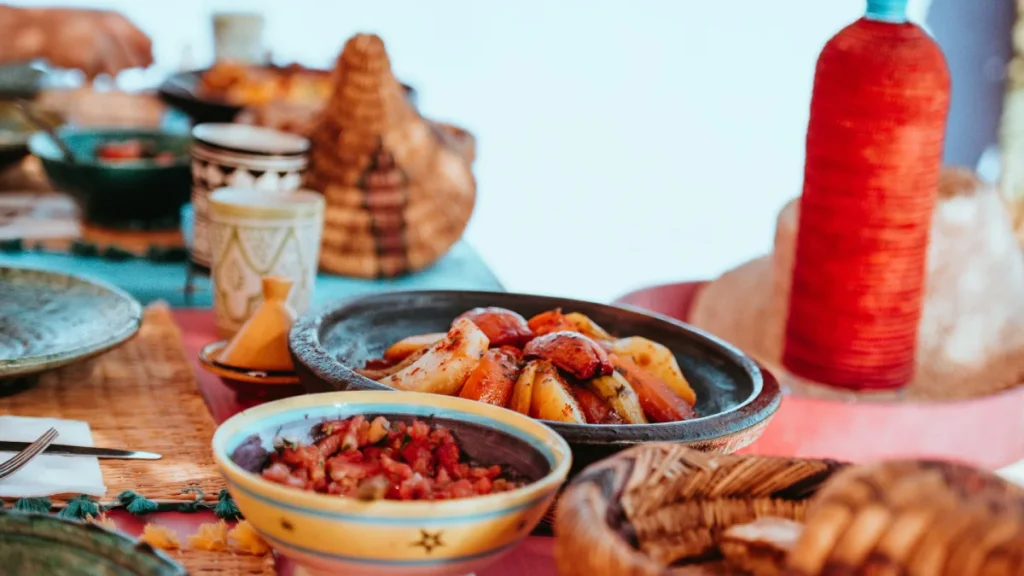
1. Tagine
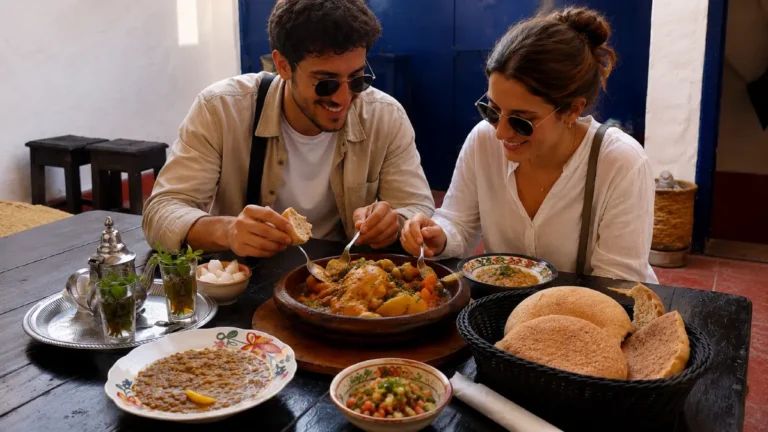
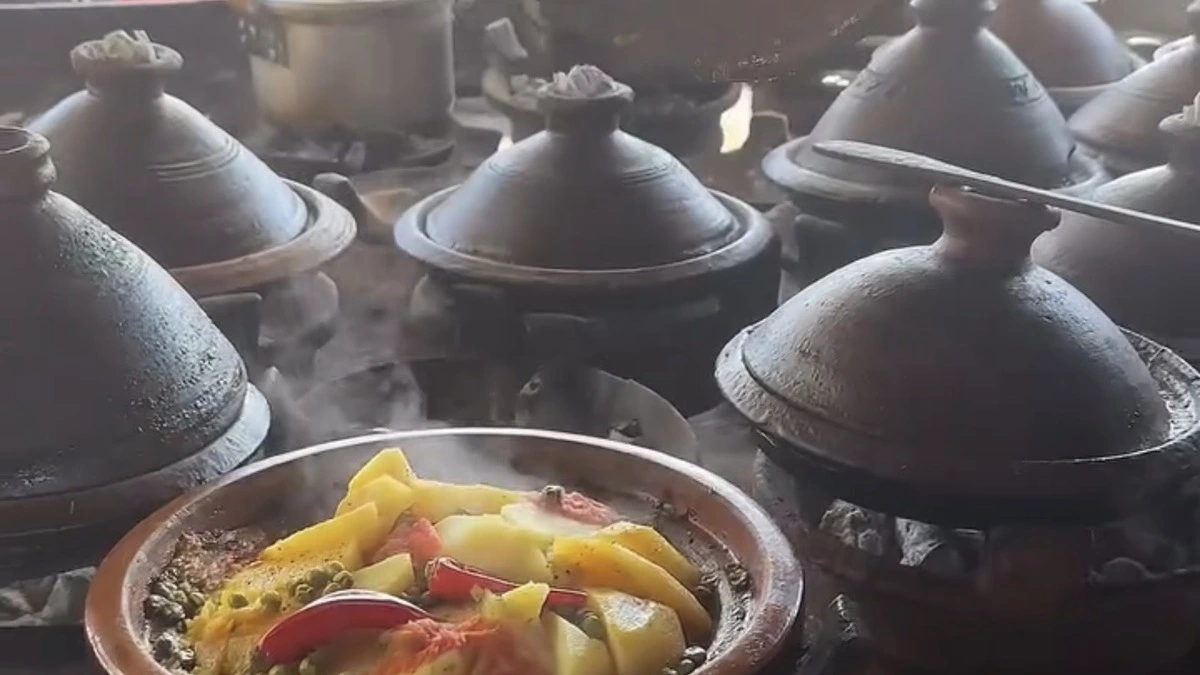
If there is one Moroccan dish I almost always recommend first, it is tagine. It is slow-cooked in a covered clay pot, which gives the meat, vegetables, spices and sauce time to come together properly.
Some of the most common versions are chicken with preserved lemon and olives, beef with prunes, lamb with almonds, and vegetable tagine. These are not just tourist dishes. Moroccans eat them at home, in local restaurants and during everyday family meals.
For first-time visitors, tagine is an easy place to start because it feels comforting while still being very Moroccan. It is usually served hot with bread and shared from the middle of the table.
On tours, when someone asks me what they should try first, tagine is often my answer. It is also one of the classic dishes locals eat at midday, which I explain more in my guide to what Moroccans eat for lunch.
If you are eating in Marrakech, some of the most memorable tagines come with rooftop views over the medina. See my guide to where to eat in Marrakech for more local restaurant ideas.
2. Couscous
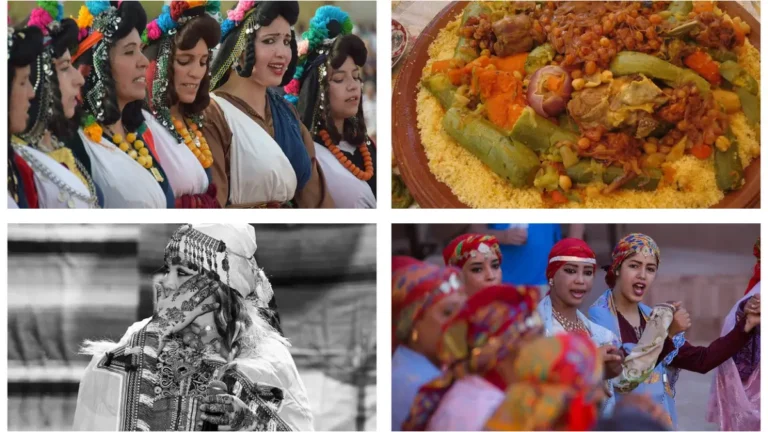
Couscous is one of the most traditional foods in Morocco, and Friday is still the best day to experience it. After Friday prayers, many families gather around a large shared dish of steamed couscous topped with vegetables, broth and sometimes chicken, beef or lamb.
You will find couscous on restaurant menus throughout the week, but Friday couscous often feels more authentic because it is part of the weekly rhythm of Moroccan family life.
A good couscous should be light and fluffy rather than heavy. The grains are steamed several times, the vegetables are cooked slowly, and the broth adds flavor without turning the dish into soup.
For travelers, it is a very satisfying meal after a busy morning of sightseeing. If you are in Morocco on a Friday, I recommend trying it that day if you can.
Local tip: Couscous is usually a lunch dish rather than a late dinner, so midday is the best time to look for it.
Food also plays an important role during Yennayer in Morocco, although dishes and customs vary by region and family.
3. Pastilla
Pastilla is one of the most distinctive dishes you can try in Morocco. It combines crisp, thin pastry with a rich savory filling, usually chicken or pigeon, along with almonds, cinnamon and a light dusting of sugar.
The sweet-and-savory combination surprises many first-time visitors, but when it is done well, the flavors work beautifully together. The outside should be crisp, while the filling stays soft, fragrant and slightly spiced.
Pastilla is more common at celebrations, family gatherings and traditional restaurants than as an everyday meal, so it feels a little more special than tagine or couscous.
You will find it most often in cities like Fes and Marrakech, although recipes vary from place to place.
Local tip: If you see seafood pastilla on the menu, that is another popular version, especially in restaurants serving a more modern Moroccan menu.
4. Harira
Harira is one of Morocco’s most comforting traditional soups. It is usually made with tomatoes, lentils, chickpeas, herbs and spices, sometimes with small pieces of meat added to the broth.
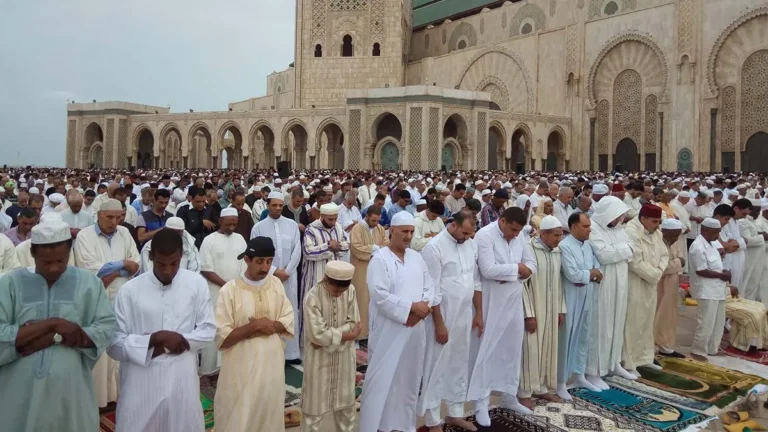
You will find harira throughout Morocco, but it becomes especially important during Ramadan, when families traditionally serve it to break the fast. It is often accompanied by dates and chebakia, a sweet sesame pastry coated with honey.
I have watched many travelers come back to harira after trying it for the first time. It is simple, warming and satisfying, especially after a long day of walking through the medina or traveling between cities.
You can find harira in traditional restaurants and small local places, and it is usually one of the more affordable Moroccan dishes to try.
Local tip: Try harira with fresh Moroccan bread. You do not need anything complicated with it—the soup and bread are often enough.
5. Rfissa
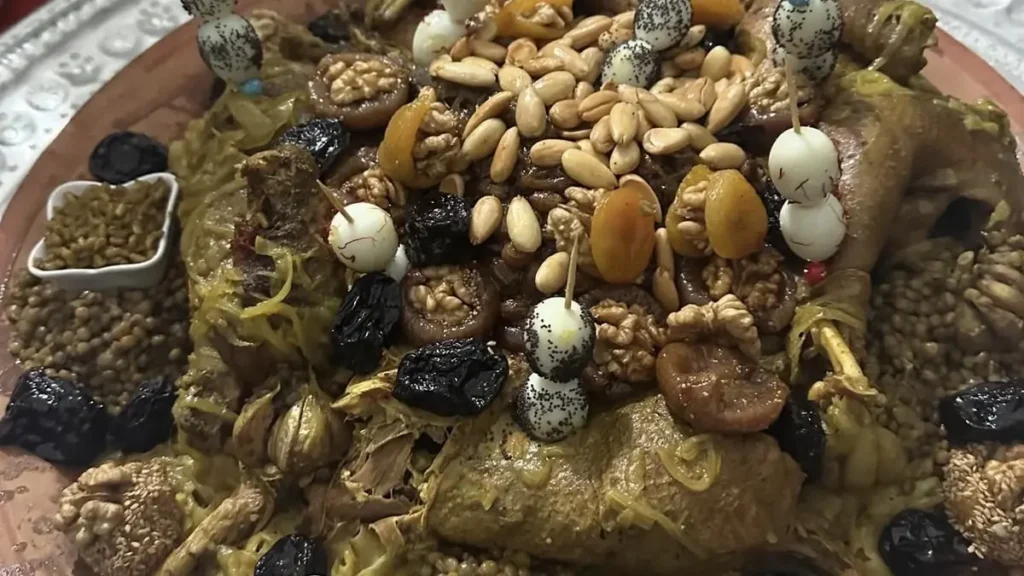
Rfissa is a traditional Moroccan dish made with chicken, lentils, onions and a fragrant broth served over shredded msemen or trid pastry.
It is rich, soft and full of flavor, with spices such as fenugreek, saffron and ras el hanout often used in the cooking. The bread underneath absorbs the broth, which is what makes the dish so comforting.
Rfissa is especially associated with family gatherings and special occasions, and it is also traditionally prepared for women after childbirth. Because of that, it feels much more like home cooking than restaurant food.
You can find rfissa in some traditional Moroccan restaurants, but it is not as common on tourist menus as tagine or couscous.
Local tip: If you see rfissa on a traditional menu, it is worth trying. It gives you a better idea of the kind of Moroccan food many visitors never discover.
6. Tanjia
Tanjia is one of the dishes most closely connected with Marrakech. It is made with beef or lamb, preserved lemon, garlic, spices and smen, then cooked slowly for several hours in a tall clay pot.
Traditionally, the pot is taken to the public hammam furnace, where it cooks in the hot ashes rather than over a normal stove. That slow cooking makes the meat extremely tender and gives the sauce a deep, rich flavor.
Tanjia is different from tagine, even though the names can sound similar to first-time visitors. Tagine is the cooking vessel and dish you will find across Morocco, while tanjia is a Marrakech specialty with its own preparation and tradition.
You will find tanjia in traditional restaurants around Marrakech, especially in and around the medina.
Local tip: If you are spending a few days in Marrakech, try tanjia at least once. It is one of the best dishes for understanding the city’s own food identity.
7. Mechoui
Mechoui is one of Morocco’s classic meat dishes, usually made with lamb that is roasted slowly until the outside is crisp and the meat inside becomes very tender.
It is often served at celebrations, family gatherings and special meals, but you can also find it in traditional restaurants and dedicated mechoui shops in cities like Marrakech.
The best mechoui is simple. The flavor comes from the quality of the lamb, slow roasting and a little salt and cumin rather than a heavy sauce.
It is usually served in generous portions with bread, and many Moroccans eat it with their hands rather than with a knife and fork.
Local tip: In Marrakech, look for places where locals are ordering lamb by weight. A busy mechoui counter is usually a much better sign than a restaurant where the dish seems added only for tourists.
8. Kefta
Kefta is seasoned minced meat, usually beef or lamb, mixed with herbs and spices such as cumin, paprika, parsley and coriander. You will find it all over Morocco, grilled on skewers, served in sandwiches, or cooked in a tagine.
One of the versions I recommend trying is kefta tagine. Small meatballs are cooked in a tomato sauce, often with eggs added at the end and served while the dish is still bubbling hot.
Grilled kefta is simpler but just as Moroccan. Small local restaurants and busy grill shops often serve it with bread, tomato, onion and a little cumin or harissa on the side.
This is not a special-occasion dish. Kefta is everyday food, which is exactly why it is worth trying if you want to eat something Moroccans regularly order themselves.
Local tip: At a busy grill, order kefta with fresh bread and Moroccan salad. It is a simple local meal and usually much more interesting than choosing another tourist-menu tagine.
9. Brochettes
Brochettes are Moroccan grilled meat skewers, usually made with beef, lamb or chicken and seasoned with simple spices before being cooked over charcoal.
You will find them in local grills, roadside cafés, market areas and neighborhood restaurants all over Morocco. They are often served with fresh bread, grilled tomatoes, onions and a little cumin or salt on the side.
What makes brochettes worth trying is their simplicity. There is no heavy sauce and no complicated presentation. When the meat is fresh and the grill is busy, they can be one of the most satisfying quick meals in Morocco.
They are especially common in places where people stop for lunch during road trips or after shopping in the souks.
Local tip: Choose a busy grill where the skewers are cooked to order. Brochettes are best when they go straight from the charcoal to the plate.
10. Zaalouk
Zaalouk is one of the Moroccan salads I recommend most often. It is made mainly with cooked eggplant and tomatoes, seasoned with garlic, cumin, paprika, olive oil and fresh herbs.
Unlike the raw salads many travelers expect, zaalouk is cooked until the vegetables become soft and the flavors come together. It is usually served warm or at room temperature and eaten with Moroccan bread.
You will often see it served as one of several small dishes at the beginning of a meal, alongside other cooked salads and vegetables.
Zaalouk is simple, inexpensive and very common in Moroccan homes. It is also a good example of how much flavor Moroccan cooking can get from basic ingredients.
Local tip: Use a piece of fresh bread to scoop it up rather than treating it like a side salad with a fork. That is how it is usually enjoyed at the table.
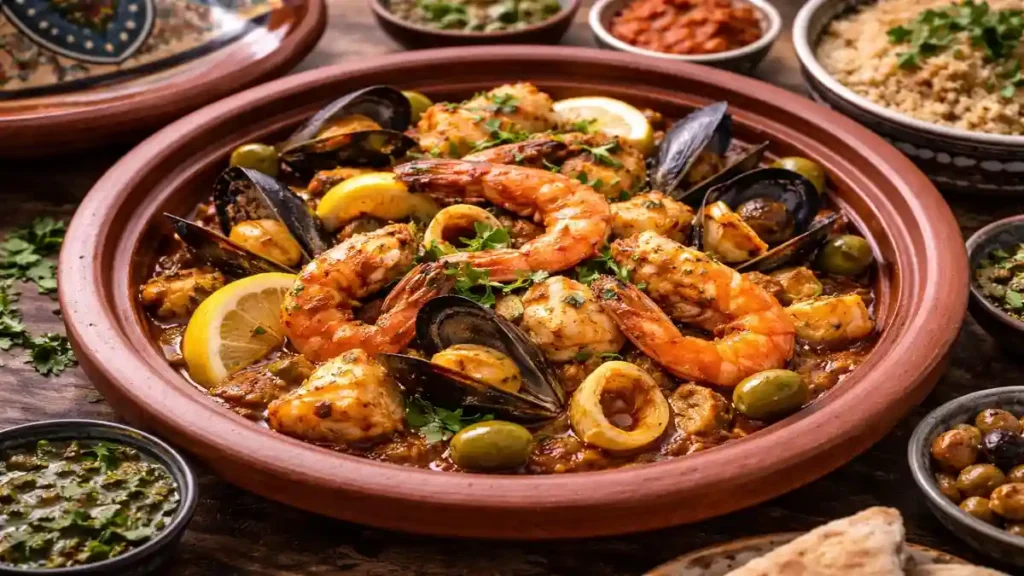
11. Taktouka
Taktouka is another classic Moroccan cooked salad, made mainly with roasted green peppers and tomatoes, then seasoned with garlic, paprika, cumin, olive oil and herbs.
The peppers are usually grilled or roasted first, which gives the dish a slightly smoky flavor. The tomatoes are cooked down until everything becomes soft and rich rather than fresh and crunchy.
You will often find taktouka served alongside zaalouk and other small salads at the beginning of a Moroccan meal. Like zaalouk, it is usually eaten with bread and shared from the middle of the table.
It is simple home-style food, but when it is done well, it can be one of the most flavorful things on the table.
Local tip: If a restaurant serves several Moroccan salads together, try taktouka and zaalouk side by side. They are very different in taste, even though they are often served together.
12. Msemen
Msemen is a square Moroccan flatbread made from folded layers of dough that are cooked on a hot griddle until crisp on the outside and soft inside.
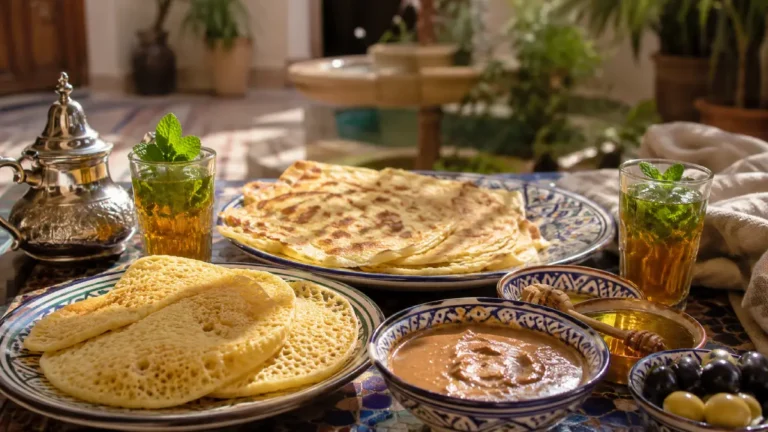
It is one of the most common foods you will see at breakfast or during afternoon tea. Moroccans often eat it with honey, butter, cheese, olive oil or amlou, depending on the region and the family.
You can find msemen in cafés, bakeries, markets and small street stalls, and it is often cooked fresh in front of you.
It is simple food, but that is part of the appeal. A warm msemen with mint tea can be just as memorable as a more elaborate restaurant meal.
Local tip: Try msemen while it is still hot from the griddle. Once it sits too long, it loses the texture that makes it so good.
13. Baghrir
Baghrir is a soft Moroccan pancake made from semolina, known for the hundreds of tiny holes that appear on the surface while it cooks.
It is usually served at breakfast or with afternoon tea, often with a warm mixture of butter and honey poured over the top.
The texture is light and slightly spongy, which helps it absorb the honey and butter. It is different from a regular pancake and much less heavy than it looks.
You can find baghrir in traditional breakfasts, cafés, bakeries and sometimes in riads serving a full Moroccan morning meal.
Local tip: Try baghrir with mint tea and eat it while it is still warm. That is when the texture is at its best.
14. Sfenj
Sfenj is a traditional Moroccan doughnut made from a simple yeasted dough that is stretched by hand and fried until golden.
It is crisp on the outside, soft and airy inside, and usually much less sweet than the doughnuts many travelers are used to.
Moroccans often eat sfenj in the morning or in the late afternoon, usually with mint tea or coffee. You will see it hanging in rings at small neighborhood shops and street stalls, especially in older parts of Moroccan cities.
Some people eat it plain, while others add a little sugar. The best sfenj is simple and fresh, straight from the fryer.
Local tip: Look for a busy sfenj shop where they are frying them continuously. Freshness makes a huge difference with this one.
15. Grilled Sardines
Grilled sardines are one of the simplest and most popular seafood dishes in Morocco, especially in coastal cities such as Essaouira, Casablanca, Safi and Agadir.
They are usually cleaned, seasoned with salt and spices, then cooked quickly over charcoal. In some places, sardines are also stuffed with chermoula before being grilled or fried.
This is everyday food rather than a luxury seafood dish. You will often find sardines at busy local grills, fish markets and small restaurants close to the coast.
Freshness matters more than presentation. When the fish is fresh and cooked straight away, grilled sardines can be one of the best-value meals in Morocco.
Local tip: Eat sardines on the coast when possible. A busy fish grill near the sea is usually a better choice than ordering them far inland.
Prefer a hands-on experience? A Moroccan cooking class can be a fun way to learn how dishes like tagine and couscous are prepared.
Street Food in Morocco: What to Try and How to Choose
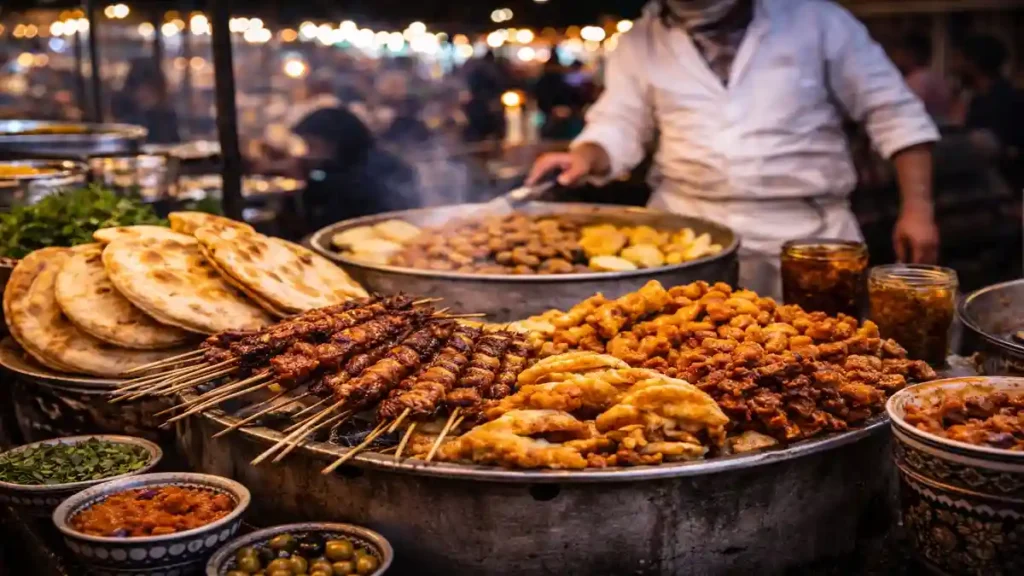
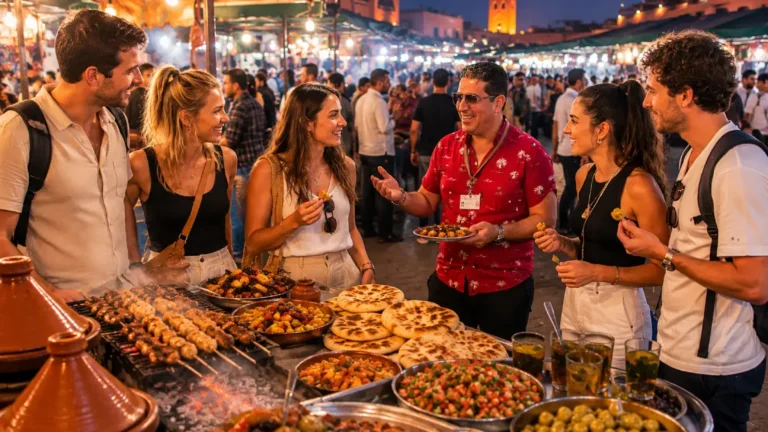
When travelers ask me what to eat in Morocco, I always tell them not to overlook street food. It is part of everyday life here. Locals eat it on the way to work, after shopping, in the evening, or whenever they want something quick and inexpensive.
Some of the easiest things to try are brochettes, kefta sandwiches, maakouda potato cakes, grilled sardines, msemen and freshly baked bread. What is available changes from city to city, which is part of the fun.
My advice is to choose busy places where food is being cooked continuously. When you can see meat going straight onto the grill or food being prepared in front of you, that is usually a good sign. Locals also prefer places with high turnover.
Marrakech and Fes are particularly good cities for discovering street food, but you do not need to try everything at once. Pick one or two things, see what locals are ordering, and enjoy it as part of the experience.
If you want someone local to introduce you to the best stops, see my guide to the best food tours in Marrakech.
For more detailed advice about choosing stalls and eating safely, read Is Street Food Safe in Morocco?.
Want to taste Moroccan food with a local guide?
A Marrakech food tour is a good way to try street food, traditional dishes and local specialties without guessing where to go.
Check the best Marrakech food tours →
Foods to Be Careful With in Morocco
Moroccan food is generally safe to eat, and most travelers can enjoy it without worrying too much, especially when meals are cooked fresh and served hot. The main things I tell visitors to be more careful with are raw vegetables washed in uncertain water, unpasteurized dairy, seafood that does not look fresh, and food that has been sitting out for too long.
Water also deserves a little attention. Bottled water is easy to find throughout Morocco, and if you are unsure about ice in a small café or street stall, simply order your drink without it.
My rule is simple: choose busy places, eat food that is freshly cooked, and pay attention to what local people are ordering. You do not need to avoid Moroccan food — you just need to choose sensibly.
For the full advice, read my guide to What Not to Eat in Morocco. I also have separate guides explaining Can You Eat Salad in Morocco? and Can You Drink Tap Water in Morocco?.
Vegetarian Food in Morocco
Vegetarian travelers can eat very well in Morocco. Many everyday Moroccan dishes already rely on vegetables, lentils, chickpeas, beans, grains and fresh bread, so you usually have more choices than you might expect.
Good options include vegetable tagine, zaalouk, taktouka, lentils, bean dishes, msemen and vegetable couscous. Breakfast is also easy for vegetarians, with bread, olive oil, cheese, honey, amlou, msemen and baghrir commonly served.
The one thing worth checking is whether a vegetable dish has been cooked with meat or meat stock. In smaller restaurants, a dish may look vegetarian even though meat was used during cooking, so ask clearly if that matters to you.
Local tip: Rather than looking only for restaurants advertising themselves as vegetarian, look at traditional Moroccan dishes first. Some of the best meat-free food here has always been part of normal Moroccan cooking.
For more ideas about what you may find in the morning, see my guide to Moroccan breakfast.
FAQs About Food in Morocco
What food should I try in Morocco?
Start with tagine, couscous, pastilla, harira, rfissa and grilled meats. I also recommend trying zaalouk, taktouka, msemen, baghrir and sfenj if you want to experience more everyday Moroccan food.
What is the most famous food in Morocco?
Tagine and couscous are probably the two Moroccan dishes travelers know best. Tagine comes in many regional versions, while couscous is traditionally associated with Friday family lunches.
What should I eat on my first day in Morocco?
Tagine is usually my first recommendation. It is served hot, easy to find and gives you a good introduction to Moroccan flavors. Harira with fresh bread is another simple option.
Is Moroccan food spicy?
Moroccan food uses plenty of spices, but it is usually aromatic rather than very hot. Cumin, paprika, ginger, turmeric, cinnamon and saffron are common, while strong chili heat is not normally the main flavor.
What do Moroccans eat for breakfast?
A typical Moroccan breakfast can include bread, msemen, baghrir, olive oil, honey, cheese, amlou, eggs, mint tea and coffee. The exact breakfast varies between families and regions.
Is it easy to eat vegetarian food in Morocco?
Yes. Vegetable tagine, zaalouk, taktouka, lentils, beans, couscous and many breakfast foods can be vegetarian. Just ask whether meat or meat stock has been used if that is important to you.
What food should tourists be careful with in Morocco?
Most freshly cooked Moroccan food is straightforward to enjoy. Be more careful with food that has been sitting out, raw vegetables from uncertain sources and anything that does not look fresh. For the full advice, see my guide to What Not to Eat in Morocco.
Final Thoughts from a Local
One of the best parts of traveling through Morocco is discovering how different the food feels from one place to another. Marrakech has its tanjia, coastal cities are perfect for fresh sardines and seafood, while dishes like tagine, couscous and harira are part of everyday life across the country.
You do not need to try all 15 foods in one trip. Start with the dishes that interest you most, eat where the food looks fresh and busy, and leave room for the small discoveries you did not plan.
Some of the meals travelers remember longest are not in expensive restaurants. They are a warm msemen with tea, a bowl of harira after a long day, fresh brochettes from a local grill, or couscous shared around a table on Friday.
If you are wondering what to eat in Morocco, my advice is simple: try the classics, taste a few regional specialties, and enjoy the experience slowly. Moroccan food is not only about what is on the plate. It is also about sharing, hospitality and the time spent around the table.
Disclosure: Some links in this article may be affiliate links. If you use them, I may earn a small commission at no extra cost to you. I only recommend services and guides that genuinely help travelers in Morocco.