What Not to Eat in Morocco: Honest Local Guide Advice for Travelers
Food is one of the best parts of traveling in Morocco, but many visitors arrive with the same quiet worry: “What should I avoid eating in Morocco?”
If you are searching for what not to eat in Morocco or which foods to avoid in Morocco, the real answer is not a scary list of foods. It is about knowing which foods need more care, where to eat them, and when to choose cooked dishes instead.
As a local guide, I hear this question all the time. Travelers want to enjoy tagine, couscous, street food, mint tea, fresh orange juice, and local markets, but they also do not want to spend two days of their trip feeling sick in a hotel room.
The honest answer is simple: Moroccan food is not something to fear. Most travelers eat very well here. But, like anywhere in the world, you need to be smart about where you eat, what looks fresh, and how your stomach reacts to new spices, oils, and routines.
This guide is not written to scare you. It is written to help you eat with confidence. I will explain what not to eat in Morocco, when to be careful with salads, street food, seafood, water, dairy, and buffets, and how to enjoy Moroccan food safely without overthinking every meal.
Before you arrive, I also recommend reading my What to Eat in Morocco, Morocco Travel Guide, and Is Morocco Safe for Tourists? guides. Together, they will help you understand food, culture, safety, and daily travel habits before your trip.
Table of Contents
Table of Contents
Foods to Avoid in Morocco
In Morocco, you do not need to avoid all local food. The main things to be careful with are raw salads in questionable places, tap water if your stomach is sensitive, ice from unknown sources, seafood far from the coast, food that has been sitting out too long, and very cheap restaurants with poor hygiene.
You should also be careful with unpeeled fruit, street food that does not look freshly cooked, and dairy products if you already have a sensitive stomach.
The safest rule is this: eat where the food is fresh, busy, cooked well, and served hot. If a place is full of locals and the food is moving quickly, that is usually a good sign.
This quick table gives you the simple answer to what not to eat in Morocco, but the details below will help you understand the difference between food that is truly risky and food that is safe when prepared well.
| Food or Drink | Should You Avoid It? | My Local Advice |
|---|---|---|
| Tagine | No | Safe when served hot and freshly cooked. This is one of the best dishes to try in Morocco. |
| Couscous | No | Best in trusted restaurants or family homes, especially on Fridays when it is freshly prepared. |
| Raw salad | Sometimes | Eat it only in clean, trusted places. Sensitive stomachs should be more careful with raw vegetables. |
| Street food | Not always | Choose busy stalls with fresh turnover. If many locals are eating there, that is usually a good sign. |
| Tap water | Usually avoid | Bottled water is safer for travelers, especially during the first days of the trip. |
| Ice | Be careful | Better in trusted hotels and restaurants. Avoid it in places where you are not sure about water quality. |
| Fresh orange juice | Usually fine | Choose clean, busy stalls where the oranges are fresh and the glasses look properly washed. |
| Seafood | Depends | Best on the coast, especially in places like Essaouira, Agadir, or coastal restaurants with fresh daily catch. |
| Buffets | Be careful | Avoid food that has been sitting out too long, especially in hot weather. |
| Dairy | Depends | Fine for many travelers, but sensitive stomachs should be careful with fresh milk, yogurt, or creamy desserts. |
Some links in this guide may earn a small commission at no extra cost to you. I only recommend services I trust for planning a Morocco trip.
Is Food in Morocco Safe for Tourists?
Yes, food in Morocco is generally safe for tourists, especially if you eat in clean restaurants, busy local places, good riads, and trusted food stalls. Millions of travelers visit Morocco every year and enjoy the food without serious problems.
The issue is not Moroccan food itself. The issue is usually a combination of new spices, rich oils, heat, long travel days, dehydration, and eating something your stomach is not used to. Sometimes travelers blame “bad food,” but the real cause can be too much food, not enough water, or a sudden change in routine.
Moroccan food is full of flavor, but it can also be rich. Tagines, bread, olives, spices, grilled meats, pastries, and mint tea are all delicious, but if you try everything in one day, your stomach may complain.
My advice is to enjoy Moroccan food slowly. Start with simple dishes, drink bottled water, avoid risky raw foods in the beginning, and give your body time to adjust.
For a full positive guide to the dishes worth trying, read my What to Eat in Morocco guide.
Raw Salads in Morocco: When to Be Careful
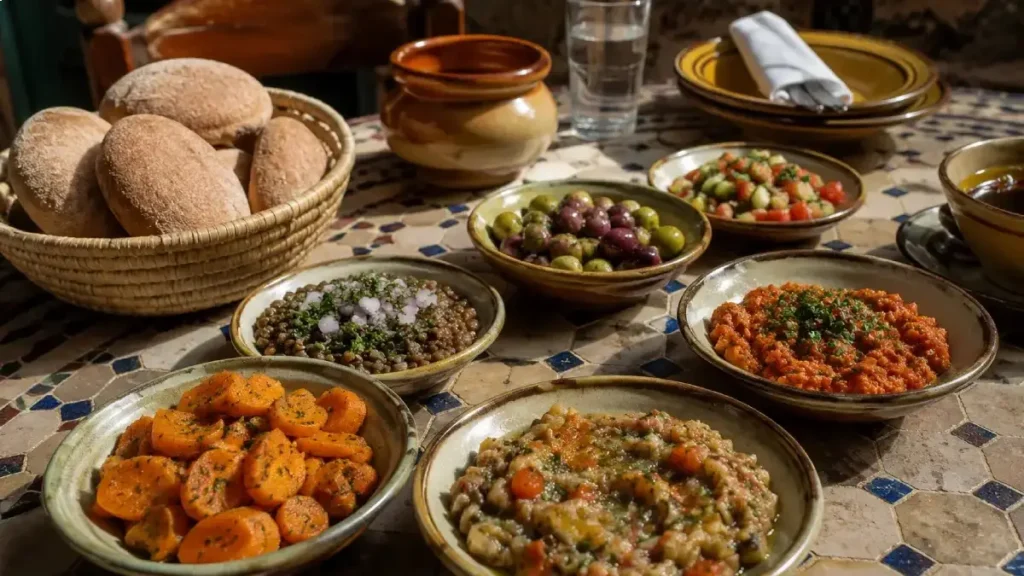
Raw salads are one of the main foods travelers ask me about before visiting Morocco. Can you eat salad in Morocco? Yes, but the answer depends on where you are eating and how the salad is prepared.
In good restaurants, riads, hotels, and trusted cafés, raw salads are usually fine. The places I’m more careful with are very cheap restaurants, roadside stops, empty tourist places, or anywhere the food looks like it has been sitting too long.
The safest choice is usually Moroccan cooked salads such as zaalouk, taktouka, cooked carrots, lentils, beans, or eggplant. These are part of our normal food culture, served with bread, and easier for many visitors to enjoy because they are prepared with heat.
Be more careful with raw lettuce, cucumber, tomato, and mixed fresh salads if you are not sure about the washing water or kitchen hygiene. When the place looks clean and busy, it is usually okay. When it looks careless, choose cooked vegetables instead.
For a deeper answer, read my guide Can You Eat Salad in Morocco?, where I explain which salads are safest for travelers and when to avoid raw lettuce or mixed salads.
Street Food in Morocco: What to Try and What to Avoid
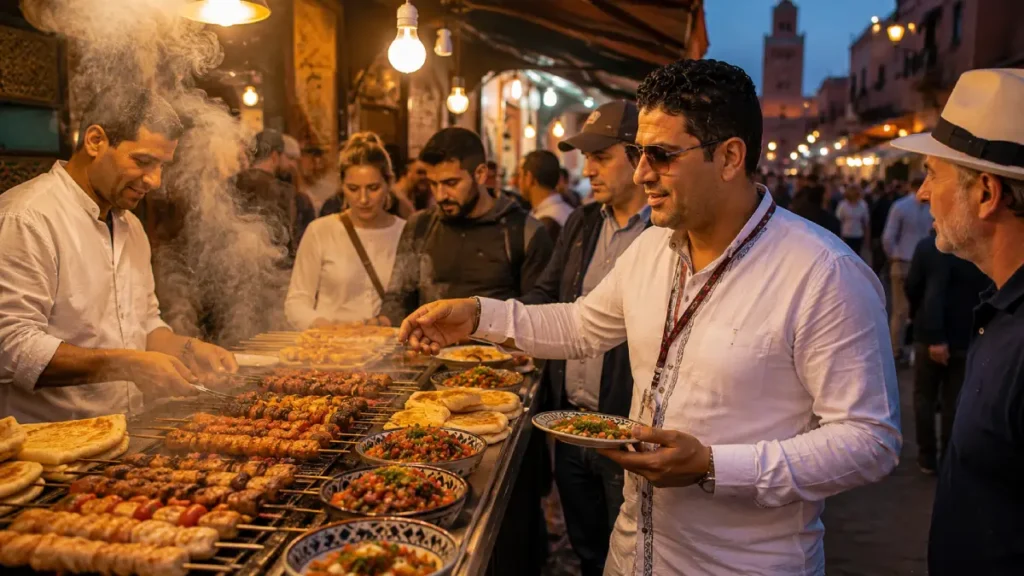
Street food can be part of the fun in Morocco, especially in Marrakech, Fes, Essaouira, Tangier, and local markets. But not all street food is equal. The best street food is usually cooked fresh, served hot, and prepared in busy places where food moves quickly.
If Marrakech is your main stop and you feel unsure about choosing food stalls alone, a guided food walk can make the experience easier. I explain what to book, what to avoid, and how to choose a trusted local experience in my guide to the best food tours in Marrakech.
The safest street food is usually cooked fresh in front of you and served hot. Grilled meat, fresh bread, msemen, harira, snails from a busy stall, roasted nuts, and fresh fried items can be fine when the stall looks clean and popular.
Be more careful with food that has been sitting out for a long time, especially in the heat. Avoid meat or fish that looks dry, old, or uncovered. Also be careful with sauces that sit outside all day.
A busy stall is often a good sign because food moves quickly. Empty stalls with old-looking food are not a good sign.
My advice is simple: watch first, then order. See how the food is handled, whether locals are eating there, and whether the food is cooked fresh.
If you are nervous, start with simple street foods like msemen, fresh bread, grilled skewers from a busy stall, or fresh orange juice from a clean vendor. If you are planning food stops in the city, my Where to Eat in Marrakech guide and Marrakech Travel Guide will help you choose better places with less stress. And if you want a full street food breakdown, read Is Street Food Safe in Morocco?, where I explain what to try, what to avoid, and how to choose clean, busy food stalls with confidence.
Tap Water in Morocco: Should Tourists Drink It?
In many Moroccan cities, tap water is treated, and locals may drink it. But for travelers, I usually recommend bottled water, especially if it is your first trip to Morocco or your stomach is sensitive.
This is not because Moroccan water is dangerous everywhere. It is because your body may not be used to the local water. Even a small change can affect some travelers, especially during the first few days.
Use bottled water for drinking. You can also use bottled water when brushing your teeth if you are very sensitive, although many travelers use tap water for brushing without problems.
Always check that the bottle seal is closed when you buy water. This is a simple habit, but it helps avoid stress.
My local advice: dehydration causes more problems than many travelers realize. Morocco can be hot and dry, especially in Marrakech, the Sahara Desert, and summer months. Drink enough water during the day, and check my Morocco Packing List Guide, Best Time to Visit Morocco, and Money in Morocco guide before your trip so you know what to bring and how to manage small daily costs.
Ice and Fresh Juices in Morocco
Fresh orange juice is one of the small pleasures of Morocco, especially in Marrakech. Many travelers enjoy it without any issue. The key is to choose a clean, busy stall or café where oranges are fresh and the stand looks well managed.
Ice is where I would be more careful. In good hotels, riads, and trusted restaurants, ice is usually fine. In very local or unclear places, skip it if you have a sensitive stomach.
Fresh juice should be made in front of you. If juice has been sitting out for a long time, choose something else.
My advice: fresh orange juice from a busy, clean place is usually fine. Unknown ice in a random place is not worth the risk.
For a deeper water safety guide, read Can You Drink Tap Water in Morocco? where I explain bottled water, ice, brushing teeth, city-by-city advice, and what to do in rural or desert areas.
Seafood Away From the Coast
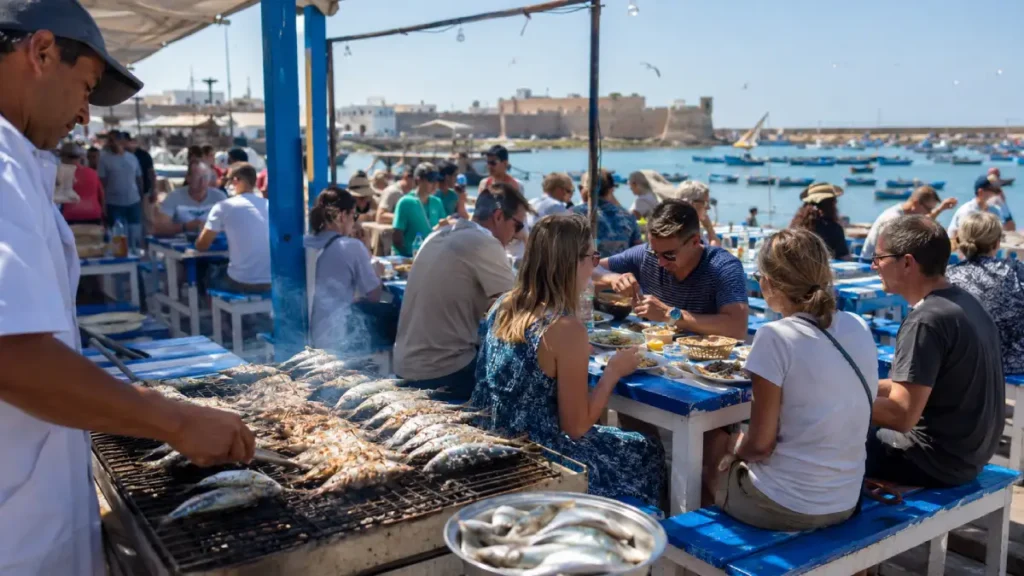
Morocco has excellent seafood in coastal cities like Essaouira, Agadir, Casablanca, Rabat, Tangier, and Asilah. If you love fish, the coast is where seafood makes the most sense.
In inland cities like Marrakech or Fes, seafood can still be good in quality restaurants, but you should choose more carefully. If a restaurant is known for fresh seafood and has strong reviews, fine. But I would avoid cheap seafood in random inland places, especially during hot weather.
Fish needs good handling and freshness. When you are far from the coast, the risk is not Morocco itself; it is poor storage, weak turnover, or bad kitchen management.
My local advice: eat seafood where seafood belongs. Essaouira is a better place for grilled sardines than a random backstreet restaurant far inland. If seafood is important for your trip, read my Essaouira Travel Guide, Things to Do in Essaouira, and Best Beaches in Morocco before choosing your route.
Buffets and Food Sitting Too Long
Buffets can be convenient, especially in hotels, tours, and large restaurants. But they are also one of the places where I tell travelers to use their eyes.
Food that sits out too long, especially in warm weather, can become risky. This is true anywhere in the world, not only Morocco.
Choose dishes that are hot, fresh, and being replaced often. Be careful with lukewarm meat, creamy sauces, raw salads, and desserts that look like they have been sitting for many hours.
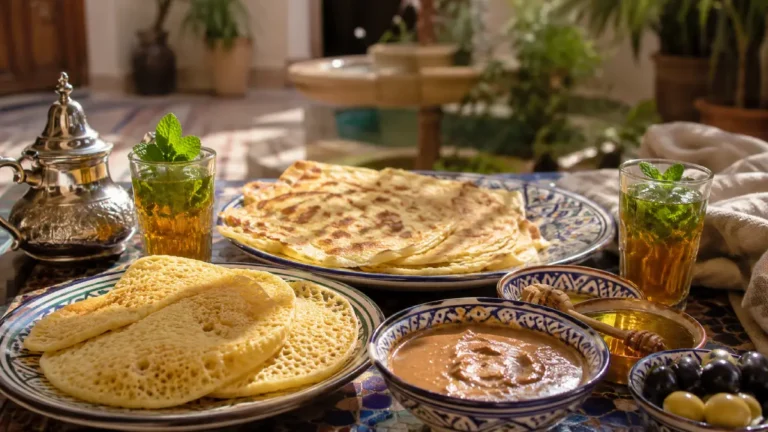
Breakfast buffets in good hotels are usually fine, but still choose fresh items. Eggs cooked to order, bread, fruit you can peel, yogurt from a trusted hotel, and hot tea or coffee are usually safe choices. If you want to understand Moroccan mornings beyond hotel buffets, read my full guide to Moroccan Breakfast, where I explain what locals really eat with mint tea, fresh bread, msemen, baghrir, harcha, olive oil, and amlou.
My local advice: if you are unsure, choose cooked food served hot instead of food that has been waiting too long.
Dairy Products and Sensitive Stomachs
Morocco has many dairy products, including milk, yogurt, raib, cheese, and desserts. Many are delicious and safe when bought from clean, trusted places.
But dairy can be tricky for travelers with sensitive stomachs. If your body is not used to local dairy, start slowly. Avoid dairy from places that look unclean or where products are not kept cold.
In villages and traditional areas, you may be offered fresh milk or homemade dairy. This can be part of Moroccan hospitality, but if your stomach is sensitive, it is okay to politely decline or take only a little.
My advice: trusted yogurt or packaged dairy is usually fine. Unfamiliar dairy from unclear conditions is something to approach carefully.
Fruit in Morocco: What Is Safe?
Fruit in Morocco is one of the best things to enjoy. Oranges, dates, figs, pomegranates, watermelon, grapes, bananas, and seasonal fruits can be excellent.
The safest fruits are the ones you peel yourself, such as bananas, oranges, mandarins, and pomegranates. Dates are also a classic Moroccan treat, especially in the desert and during Ramadan.
Be more careful with fruit that is already cut and sitting outside, especially in warm weather. If you buy cut fruit from a stall, choose a busy, clean place with fresh turnover.
My local advice: whole fruit is usually better than pre-cut fruit. Wash it, peel it, and enjoy.
Meat and Grilled Food
Meat is common in Moroccan food, especially lamb, beef, chicken, and grilled skewers. Most travelers eat meat safely in Morocco, but quality depends on where you eat.
Choose restaurants and stalls where meat looks fresh and is cooked properly. Avoid meat that looks like it has been sitting uncooked in the sun or cooked long ago and reheated poorly.
Grilled meat from a busy, clean local spot can be very good. But if a place smells bad, looks empty, or the meat looks old, trust your instinct and leave.
My advice: in Morocco, your eyes and nose are useful. If something does not feel right, choose another place.
Very Cheap Restaurants With Poor Hygiene
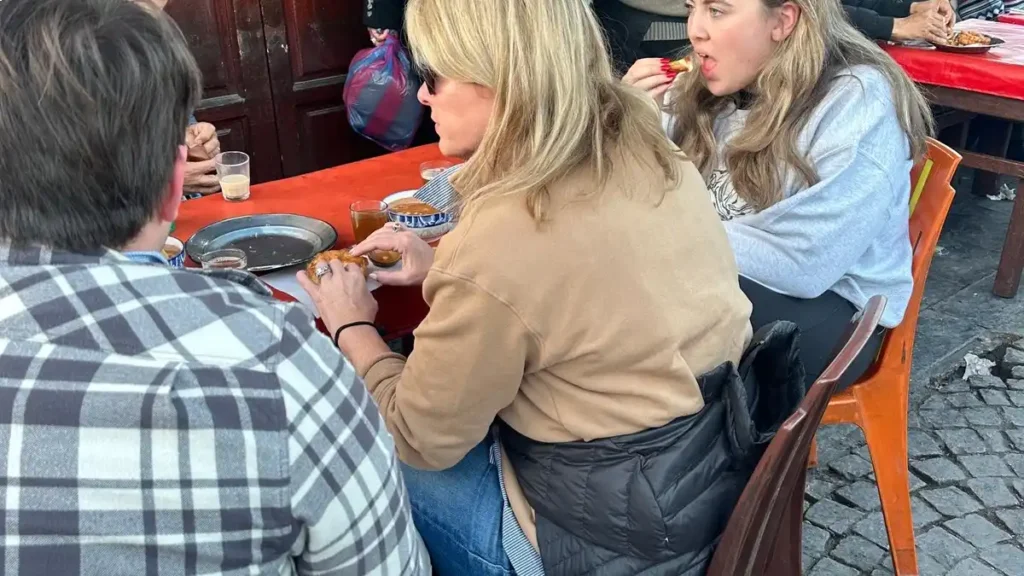
I love simple local restaurants. Some of the best meals in Morocco are not expensive. But there is a difference between simple and careless.
A small local restaurant can be excellent if it is busy, clean enough, and serving fresh food. A cheap place with dirty tables, old food, bad smell, and no local customers is not worth it.
Do not choose only by price. Sometimes paying a little more gives you a cleaner kitchen, better ingredients, and a calmer stomach.
This is also true in tourist areas. Expensive does not always mean good, and cheap does not always mean bad. Look at freshness, turnover, and cleanliness. This is also part of planning your budget wisely, so read my Morocco Travel Costs guide and Morocco Travel Mistakes guide before your trip.
Food During Desert Tours
Desert tours are where food quality can change a lot depending on the company, driver, stops, and camp.
On the road from Marrakech to Merzouga, many travelers stop at tourist restaurants. Some are good, some are average, and some are overpriced for what they serve. The safest choice is usually hot cooked food like tagine, omelet, grilled meat, soup, or fresh couscous.
At desert camps, dinner is usually included. Good camps serve warm, fresh meals and clean breakfast. Very cheap camps may offer more basic food. This is one reason I always tell travelers not to choose desert tours only by the lowest price.
A better desert camp often means better food, cleaner facilities, and smoother service. For desert planning, read my Best Desert Camps in Merzouga, Merzouga Sahara Desert Travel Guide, and 3 Days Desert Tour from Marrakech before booking.
What You Should Eat Instead
Now let’s make this positive, because Moroccan food is not about avoiding everything. There are many safe and delicious choices.
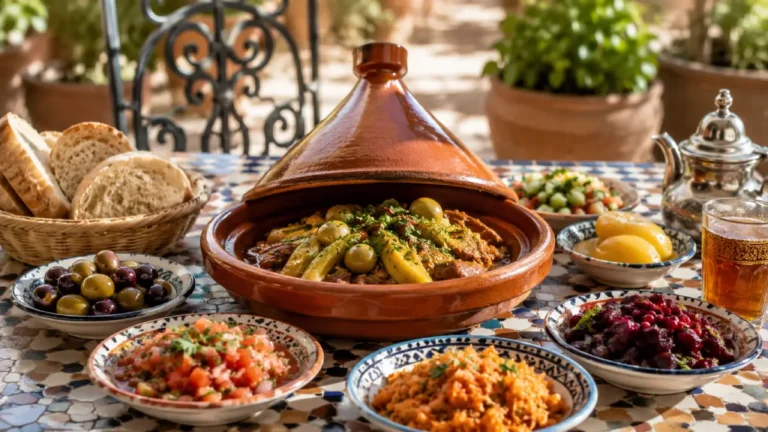
Tagine is usually a great option because it is cooked slowly and served hot. Couscous is wonderful, especially in trusted restaurants or family-style places. Harira is a warm soup that many travelers enjoy. Grilled brochettes can be good from busy places. Moroccan cooked salads like zaalouk and taktouka are excellent. Fresh bread, olives, dates, mint tea, and seasonal fruit are part of the experience.
For first-time visitors, I often recommend starting with cooked dishes before trying too many raw foods. This helps your stomach adjust while still letting you enjoy Moroccan flavors.
The goal is not to eat like you are afraid. The goal is to eat wisely.
Read my full Morocco Food Guide for the dishes I confidently recommend, from tagine and couscous to street food, coastal seafood, and local meals travelers should not miss.
My Local Rules for Eating Safely in Morocco
My first rule is to eat where food moves fast. A busy restaurant with local customers is usually better than an empty place with food sitting around.
My second rule is to choose hot cooked food when you are unsure. Tagine, soup, grilled food, and cooked salads are safer than random raw items.
My third rule is to drink bottled water, especially at the beginning of your trip.
My fourth rule is to avoid overdoing it on the first day. Many travelers get excited and try too many dishes, sweets, juices, and spices at once. Your stomach needs time.
My fifth rule is to trust your instinct. If a place looks dirty, smells wrong, or food looks old, leave. There is always another place to eat in Morocco.
What If You Get an Upset Stomach in Morocco?
Sometimes travelers get an upset stomach in Morocco even when they are careful. It can happen because of heat, travel stress, new spices, rich food, long driving days, or dehydration.
If it happens, keep things simple. Rest, drink bottled water, eat plain food, and avoid heavy meals for a short time. Rice, bread, bananas, soup, and simple grilled food can help your stomach calm down.
Pharmacies are easy to find in Moroccan cities, and pharmacists are used to helping travelers with common stomach issues. If symptoms feel serious, last longer than expected, or you feel very weak, ask for medical help.
This is not something to panic about, but it is something to handle calmly.
For general travel health advice, the CDC also shares useful food and water safety tips for travelers, including washing hands regularly and being careful with contaminated food or drinks.
My Honest Local Guide Advice
If you are visiting Morocco, do not let food fear control your trip. Some of the best memories travelers have here come from meals: a hot tagine after a long drive, fresh bread in a mountain village, mint tea on a rooftop, grilled fish in Essaouira, or couscous shared with people who welcome you like family.
But also do not eat carelessly just because something looks interesting. Morocco rewards curious travelers, but the best travelers are curious and aware at the same time.
Eat cooked food when unsure. Choose busy places. Drink bottled water. Be careful with raw salads and food sitting too long. Start slowly, then explore more as your confidence grows.
So when travelers ask me what not to eat in Morocco, I always tell them this: avoid careless food, not Moroccan food itself. Moroccan food is beautiful, generous, and full of flavor. The real secret is choosing fresh, clean, well-cooked food from places that feel trusted.
That is how I would advise my own guests, and that is how I want you to experience Moroccan food: with joy, not fear.
Final Thoughts: Eat Smart, Not Scared
Morocco is a wonderful country for food lovers. You do not need to avoid Moroccan food, and you should not arrive afraid of every meal. But it helps to know where to be careful.
The safest choices are usually hot cooked dishes, busy restaurants, clean stalls, bottled water, peeled fruit, and trusted riads or cafés. The foods to be careful with are raw salads in unclear places, tap water, unknown ice, old buffet food, seafood far from the coast, and anything that looks like it has been sitting too long.
As a Moroccan guide, my advice is simple: eat with your eyes open, not with fear. Moroccan food is part of the journey. Enjoy it slowly, choose wisely, and let food become one of the memories you take home.
The best way to understand what not to eat in Morocco is to look at freshness, cleanliness, and how the food is served, not only the name of the dish.
FAQs About What Not to Eat in Morocco
What foods should tourists avoid in Morocco?
Tourists should be careful with raw salads in questionable places, tap water, unknown ice, seafood far from the coast, food sitting out too long, and street food that does not look freshly cooked. You do not need to avoid Moroccan food in general.
Can you eat salad in Morocco?
Yes, you can eat salad in Morocco, especially in clean restaurants, riads, and trusted places. Cooked Moroccan salads are usually a safer choice than raw lettuce or raw mixed salads in unclear places.
Is street food safe in Morocco?
Street food can be safe if it is cooked fresh, served hot, and sold at a busy clean stall. Avoid food that has been sitting out for a long time or does not look fresh.
Can tourists drink tap water in Morocco?
Many locals drink tap water in some cities, but tourists usually do better with bottled water, especially if they have sensitive stomachs. Bottled water is easy to find and inexpensive.
Is ice safe in Morocco?
Ice is usually fine in good hotels, riads, and trusted restaurants, but it is better to avoid unknown ice in very local or unclear places if your stomach is sensitive.
Can you eat fruit in Morocco?
Yes, fruit is safe when washed or peeled. Bananas, oranges, mandarins, pomegranates, and dates are good choices. Be more careful with pre-cut fruit sitting outside in the heat.
Is seafood safe in Morocco?
Seafood is best in coastal cities like Essaouira, Agadir, Casablanca, Rabat, Tangier, and Asilah. Be more careful with cheap seafood far inland or in places with poor hygiene.
What should I eat in Morocco if I have a sensitive stomach?
Start with cooked dishes like tagine, harira, grilled chicken, rice, bread, cooked vegetables, and peeled fruit. Avoid too much spice, raw salad, and heavy sweets on the first day.
Is Moroccan food spicy?
Moroccan food is flavorful but not usually extremely spicy. It uses spices like cumin, paprika, turmeric, ginger, saffron, and cinnamon. Harissa or hot sauce may be served separately.
What is the safest Moroccan dish to try first?
A simple chicken or vegetable tagine is a good first dish because it is cooked well, served hot, and easy for many travelers to enjoy.