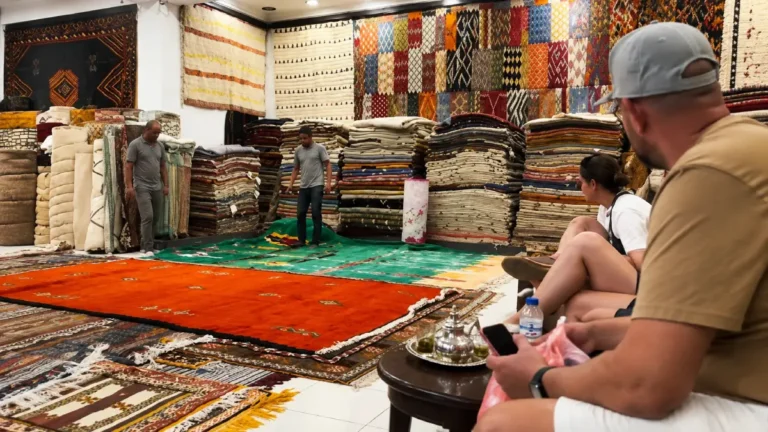
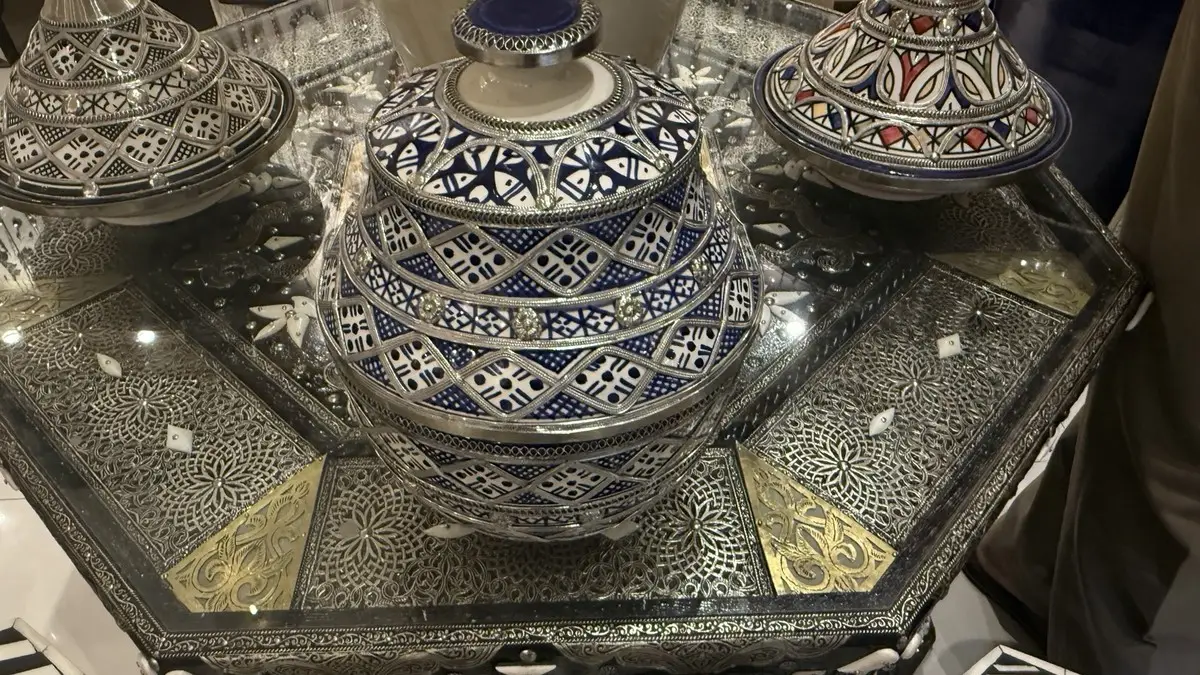
Buying Ceramics in Marrakech: What to Check Before You Buy
Buying ceramics in Marrakech is a lovely way to bring a piece of Morocco home. A painted bowl, a platter or a small decorative pot can be easier to enjoy every day than a souvenir chosen in a hurry. Before buying, decide how you will use it and how you will get it home.
My advice is to check three things in this order: intended use, the condition of the exact piece, and packing. Only then compare prices. A large platter is less appealing when it will not fit your luggage, and a decorative tagine should not be bought on the assumption that you can cook in it.
If pottery is a priority, we can include it in your private Marrakech shopping tour. You choose your interests and budget, and there is no obligation to buy.
Table of Contents
Table of Contents
Buying ceramics in Marrakech: choose the purpose first
Are you looking for something to display, serve food in or cook with? These are different purchases. Tell the seller what you intend to do with the piece, rather than asking only whether it is a “good tagine” or a “good bowl.”
For a display piece, think about the size of your shelf or table and the colours at home. For a gift, smaller pieces can be easier to carry and place. If you want a matching set, inspect the pieces together and decide how much variation you like.
For tableware or cookware, ask for reliable product information about food contact and the permitted uses. Appearance alone cannot establish suitability. If the information is unclear, choose the item for decoration instead.
Where to browse Moroccan pottery in Marrakech
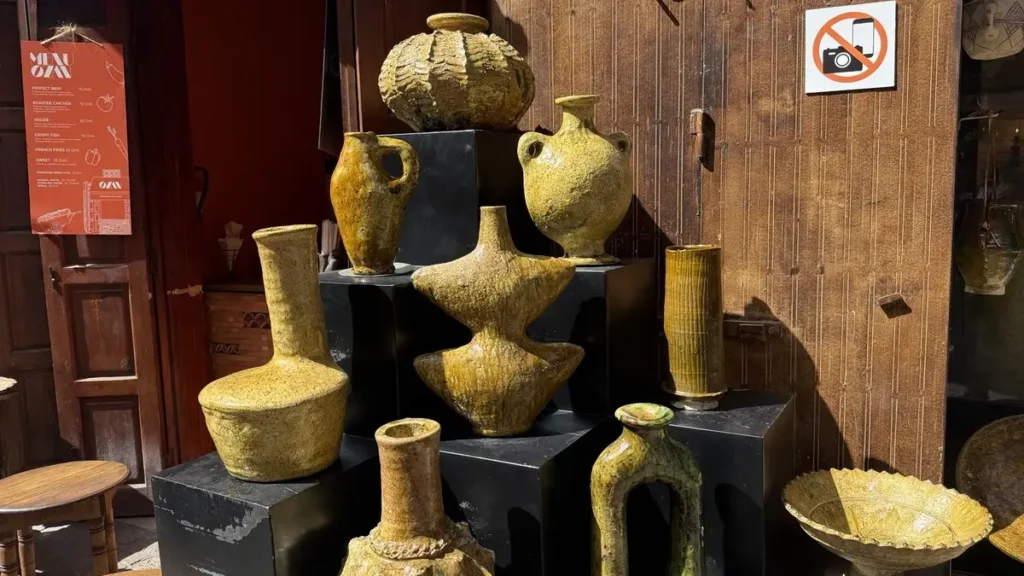
Browse medina shops and compare them with a specialist ceramics seller or a workshop that can explain its production. Ask where the item was made, who decorated it and whether the shop sells its own work or pieces from different makers.
Use my Marrakech souks guide for planning the wider medina visit. If you are still deciding between ceramics, leather, textiles and other souvenirs, start with what to buy in Morocco.
How to inspect a ceramic piece before paying
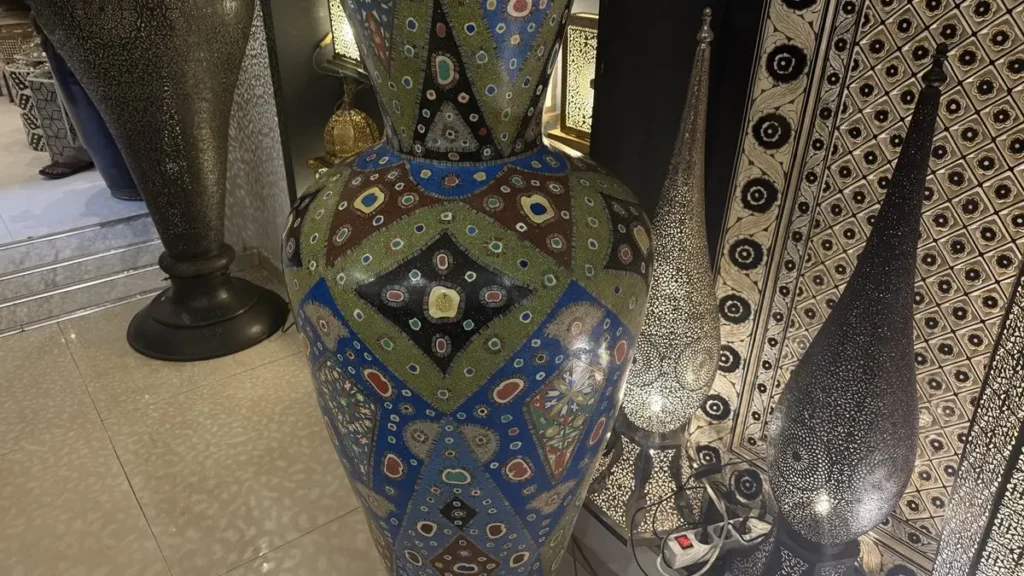
Look at the rim and edges. Ask to see the piece away from a crowded stack. Check for chips, rough damaged areas and repairs that were not mentioned. Inspect handles and the edge of a lid as well as the main body.
Check the base. Place it gently on a level surface with the seller’s permission. Decide whether it sits securely and whether the base could scratch the surface where you plan to use it. Turn it over to read any maker marks or use instructions.
Examine the whole surface. Look inside bowls and under platter edges. Handmade variation can be part of the appeal, but ask about cracks or marks you are unsure of. You do not need to accept a defect simply because the item is described as handmade.
Check how separate parts fit. For a lidded pot or tagine, try the lid on the exact base you are buying. Ask whether the two pieces are sold together. Do not assume a display sample represents the condition of a boxed item.
Inspect a set piece by piece. A matching colour does not mean every bowl has the same dimensions or finish. Count the pieces, check each one and confirm whether the price is for the whole set or a single item.
Decorative pottery, tableware and cooking tagines
A tagine shape does not by itself tell you whether an item is suitable for cooking. Ask specifically about the heat source, temperature limits and preparation instructions for that model. Do not put an unfamiliar decorative purchase on a hob or in an oven to test it.
For plates, bowls and cups, ask the maker for evidence supporting food-contact suitability. A verbal “food safe” assurance is less useful than clear product information and relevant testing. Do not infer safety from the colour, the glaze or a traditional design.
The US Food and Drug Administration notes that some ceramic foodwares can release lead from food-contact surfaces. This is a general ceramics issue, not a claim about every Moroccan piece. If you cannot establish suitability, use the purchase for display rather than food or drink.
Also ask separately about dishwasher, microwave and oven use. Those properties are not interchangeable. Keep the maker’s written instructions with the item, particularly if you are buying it as a gift.
Compare the full price, including packing
Compare items of similar size, finish and construction. A small bowl and a large hand-decorated platter are different purchases, even if both have the same pattern. Ask whether the stated price includes a lid, a stand or protective packing.
Set a comfortable budget before discussing a purchase. Ask whether the price is fixed or negotiable. There is no universal discount percentage that tells you a ceramic item is good value, and the biggest discount is not always the best choice.
For larger items, work out the transport cost before paying. A piece that needs special packing or separate delivery can cost more to get home than you first expected. Confirm the final total and currency, and request a receipt with the seller’s contact details.
Packing ceramics for the journey home
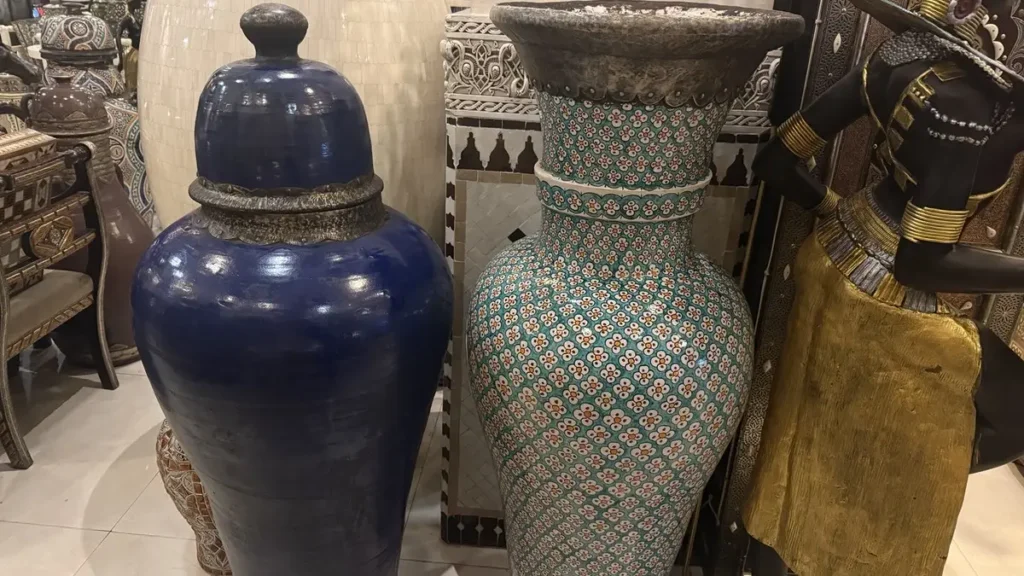
Plan space for protective packing, not just for the pottery itself. Ask the seller to wrap each piece separately and cushion vulnerable parts such as handles, rims and lids. Avoid having unprotected ceramic surfaces knock against each other.
Check the packed size and weight against your airline’s current baggage allowance. A bag that fits your allowance before shopping may not fit afterwards. Keep fragile purchases away from heavy objects that can press against them in your suitcase.
Packing reduces risk but cannot guarantee that a piece will arrive unbroken. If you are buying something especially large or delicate, compare carrying it yourself with delivery before committing to the purchase.
If you want the shop to ship your pottery
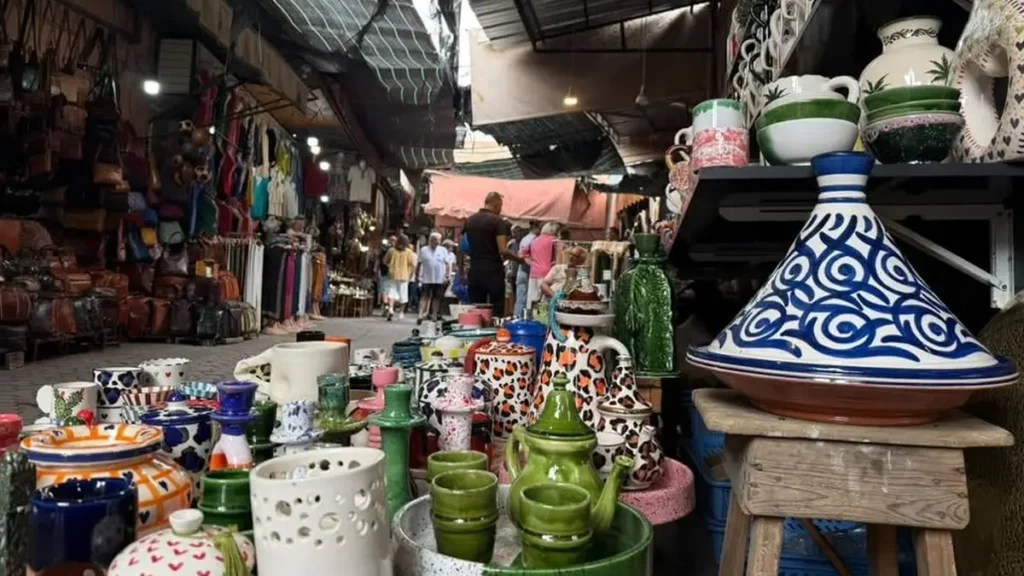
Get the shipping quote, carrier, tracking arrangements and damage procedure in writing. Ask who packs the item and what happens if it arrives broken. Photograph the exact piece before it is packed and keep your receipt and order details.
Policies vary by seller. Check the policy for your actual purchase rather than relying on a general promise about international delivery.
For delivery abroad, check your destination’s official customs information for any charges or requirements before ordering. Ask who will pay any charges on arrival. A shipping price and the full delivered cost may be different.
Plan a pottery-focused private shopping visit
A private route can give you time to compare ceramics alongside other items you want to browse. A guide can help with questions and communication, while you make the final buying decision. Product testing, purchases and delivery remain separate from the tour.
My private Marrakech shopping tour with Kamal lasts around 3–4 hours and costs €60 total for a private group of 2–4 people, payable on arrival. Purchases, shipping and vehicle transfers are separate. Meeting arrangements and booking terms are agreed in writing.
Contact Kamal on WhatsApp to plan your shopping tour. Share your date and what you would like to browse. The message opens empty so you can ask your own questions.
Questions about buying ceramics in Marrakech
Can I cook in a painted tagine bought in the souks?
Only use it for cooking when the maker has established that it is suitable for your intended heat source and provided instructions. Some tagines are decorative.
Are handmade bowls automatically suitable for food?
No. Handmade describes production, not verified food-contact suitability. Ask for reliable product information and use uncertain pieces for display.
Should I buy pottery early or at the end of my trip?
Choose a time that lets you compare pieces and arrange packing. If you have several travel stops afterwards, consider whether you want to carry fragile items between them.
Can a shopping tour focus on ceramics?
Yes. Tell me your interests before the tour so we can plan the route around pottery and any other items you would like to browse. Buying is optional.