Spring in Morocco: Best Places to Visit in March, April and May
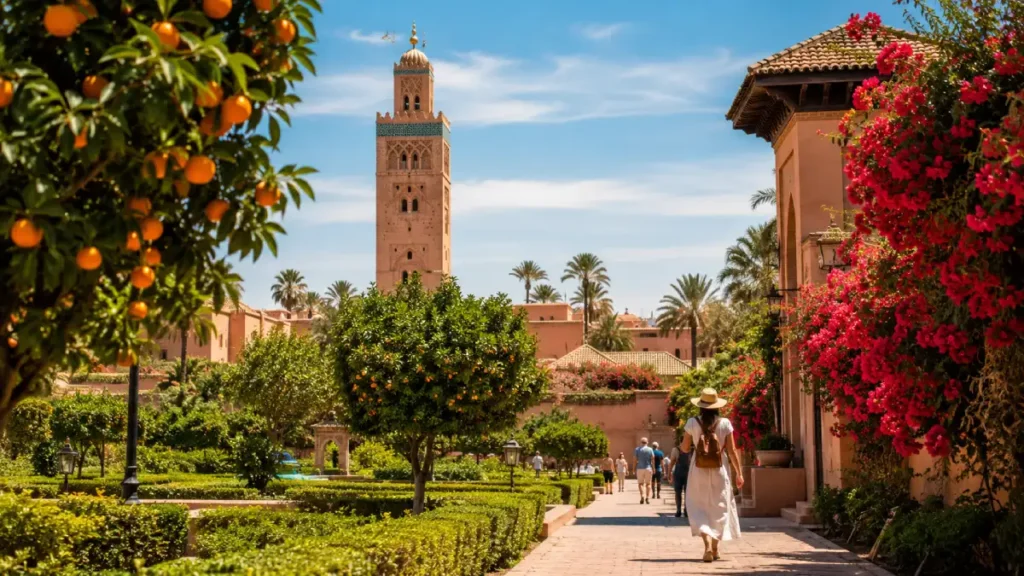
Spring in Morocco is one of the best times to explore the country. From March to May, the weather is usually warm without the intense heat of summer, valleys become greener after winter rain, and many cities are comfortable to explore on foot.
For most travellers, April offers the best overall balance. March is cooler and often greener, while May brings warmer weather, the rose harvest near Kelaat M’Gouna, and better conditions along the Atlantic coast.
The best places to visit in Morocco in spring include Marrakech, Fes, Chefchaouen, the Atlas Mountains, Merzouga, the Valley of Roses, Essaouira and Tafraoute. Each region feels different during the season, so the best route depends on whether you prefer cities, mountains, desert landscapes or the coast.
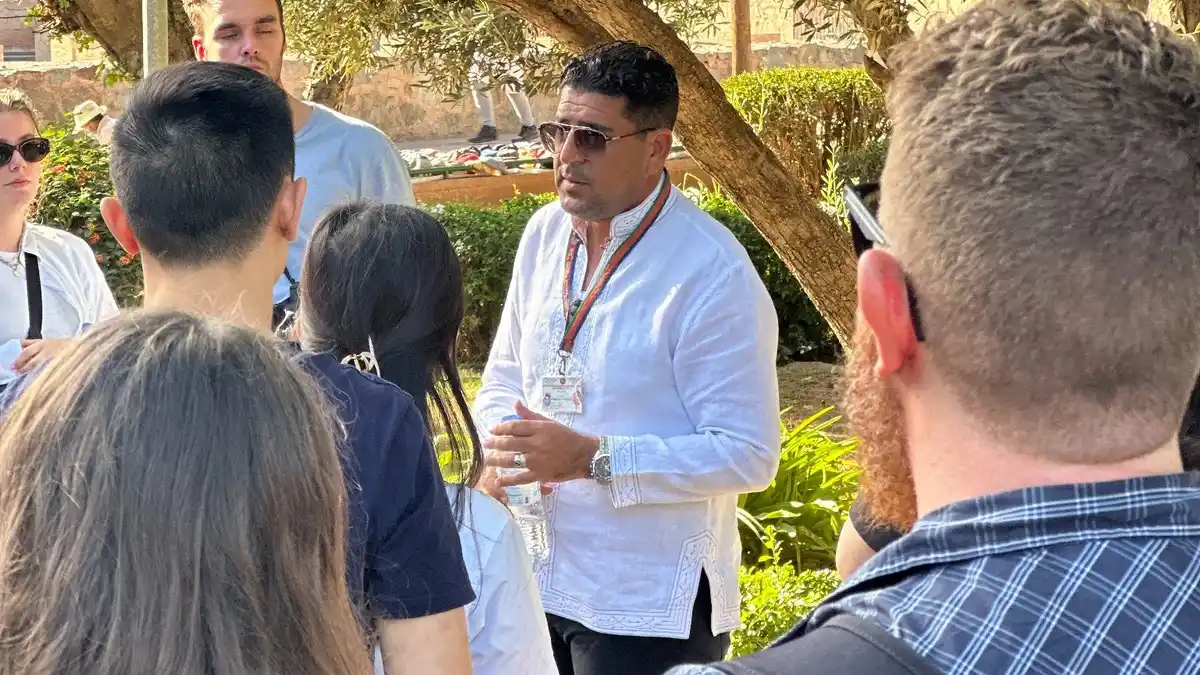
I’m Kamal, a licensed Moroccan tour guide based in Marrakech. After years of guiding travellers across the country, I have found that spring is one of the easiest seasons for combining several regions in one trip.
This guide explains where to go, what the weather is like in March, April and May, what to pack, and how to plan a realistic spring itinerary. For a complete overview of the country, read my Morocco Travel Guide. You can also compare spring with other seasons in my Best Time to Visit Morocco guide.
Quick answer: Spring in Morocco runs from March to May. April is usually the best all-round month, while March is cooler and greener and May is warmer. The best places to visit in Morocco in spring include Marrakech, Fes, Chefchaouen, the Atlas Mountains, Merzouga, the Valley of Roses, Essaouira and Tafraoute.
Table of Contents
Table of Contents
8 Best Places to Visit in Morocco in Spring
The 8 best places to visit in Morocco in spring are Marrakech, Fes, Chefchaouen, the Atlas Mountains, Merzouga, the Valley of Roses, Essaouira and Tafraoute. Each offers something different in March, April or May, from green mountain valleys and desert weather to rose season and mild Atlantic days. For most first-time visitors, April is the best all-round month because temperatures are comfortable across much of Morocco. March is cooler and greener, while May is warmer and especially good for the Valley of Roses and the coast.
| Place | Why visit in spring | Best time |
|---|---|---|
| Marrakech | Comfortable sightseeing weather and gardens in bloom | March–April |
| Fes | Pleasant temperatures for exploring the medina | March–April |
| Chefchaouen | Flowers, mountain views and comfortable walking weather | April |
| Atlas Mountains | Green valleys, flowing rivers and clearer hiking conditions | April–May |
| Merzouga | Warm desert days before the stronger summer heat | March–April |
| Valley of Roses | Rose harvest and seasonal celebrations | May |
| Essaouira | Mild coastal weather, seafood and ocean air | April–May |
| Tafraoute | Almond blossoms and Anti-Atlas landscapes | March |
My Local Tip for Choosing a Spring Route
Do not try to include every destination in one short trip. Marrakech, the Atlas Mountains, Ouarzazate, the Dades Valley and Merzouga work well together on a southern route.
Fes and Chefchaouen fit better into a northern itinerary, while Essaouira is easy to combine with Marrakech.
For a first visit of seven to ten days, choose one clear route instead of spending most of the trip driving.
Is Spring a Good Time to Visit Morocco?
Yes. Spring is one of the best seasons to visit Morocco, especially from March to May, when the weather is comfortable across many parts of the country. From March to May, Morocco offers one of the best combinations of comfortable weather, longer days and varied landscapes. Inland cities are warm without the intense summer heat, mountain valleys become greener after winter rain, and desert journeys are easier to enjoy.
Spring is especially good for travellers who want to combine several parts of the country in one trip. You can explore the medinas of Marrakech and Fes, walk through mountain villages, cross southern valleys and spend a night near the dunes without one region feeling too hot or too cold.
Every season has its advantages. Summer in Morocco is better suited to the Atlantic and Mediterranean coasts, while Autumn in Morocco is excellent for full-country itineraries and Sahara trips. Winter in Morocco is quieter and often sunny, but nights can be cold in the mountains, desert and inland cities.
What makes spring feel different is the countryside. After the winter rains, parts of the Atlas Mountains, Rif Mountains and southern valleys become noticeably greener. Rivers carry more water, wildflowers appear along rural roads, and almond and fruit trees begin to bloom.
The season also changes from month to month. Morocco in March is cooler, greener and sometimes wetter. Morocco in April usually offers the best overall balance for city sightseeing, mountain trips and the Sahara. Morocco in May is warmer and brings the rose harvest around Kelaat M’Gouna, while the coast remains pleasant.
For most first-time visitors, April is the safest all-round choice. It gives you comfortable weather in many regions and enough flexibility to combine cities, mountains, desert landscapes and the coast in one journey.
Some links in this guide may earn a small commission at no extra cost to you. I only recommend services I trust for planning a Morocco trip.
Morocco Spring Weather: March, April & May
The weather during spring in Morocco varies significantly by region. Marrakech can feel warm and sunny, the Atlantic coast may be cool and windy, mountain areas can still be cold, and the Sahara becomes noticeably hotter as May approaches.
March is usually the coolest spring month. Daytime weather is often pleasant in cities such as Marrakech, Fes and Rabat, but evenings can still feel cold. Rain is also more likely in northern Morocco and the Atlas Mountains, while snow may remain on the highest peaks.
April usually brings the best balance. Days are warmer, rainfall becomes less frequent, and conditions are comfortable for city sightseeing, road trips and desert travel. Mountain valleys are often green, although higher trails may still have snow or muddy sections.
May feels closer to summer, especially in Marrakech, Ouarzazate and the Sahara. Afternoon temperatures can become hot, but mornings and evenings are usually more comfortable. Coastal cities such as Essaouira and Tangier remain milder because of the ocean breeze.
| Region | March | April | May |
|---|---|---|---|
| Marrakech and inland cities | Mild days and cool evenings | Warm and comfortable | Hotter afternoons |
| Fes and northern Morocco | Mild with possible rain | Pleasant and greener | Warm and generally drier |
| Atlas Mountains | Cold at altitude with possible snow | Green valleys and changing trail conditions | Better for lower and mid-altitude walks |
| Sahara Desert | Warm days and cold nights | Excellent desert conditions | Hotter, especially late in the month |
| Atlantic coast | Mild, breezy and sometimes cloudy | Comfortable and fresh | Warm but often windy |
Even in late spring, it is useful to carry a light jacket. Temperatures can drop quickly after sunset in the mountains and desert, while coastal wind can make Essaouira feel much cooler than Marrakech on the same day.
Marrakech in Spring
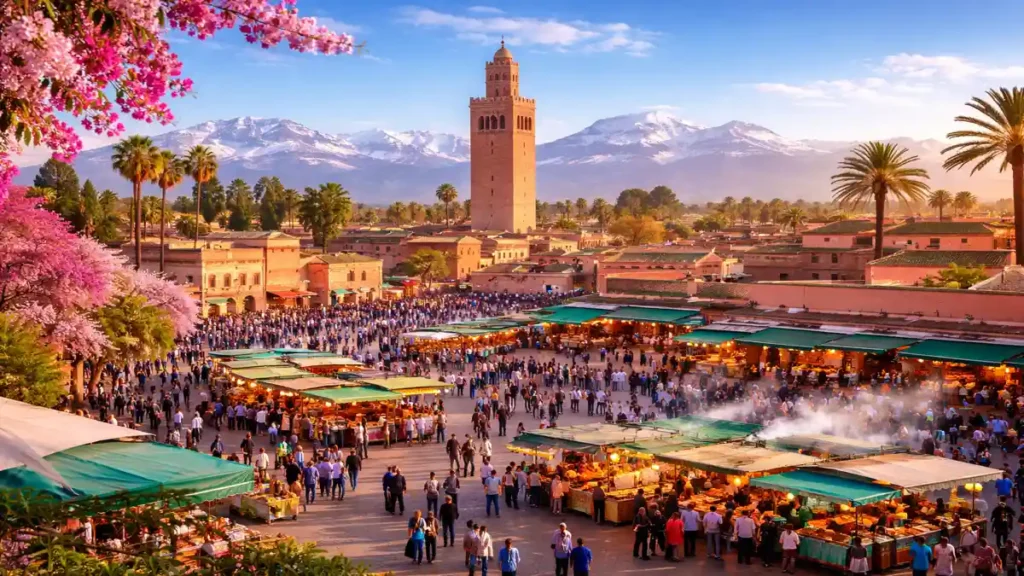
Marrakech is one of the best places to visit in Morocco during spring. The days are usually warm enough for sightseeing, while mornings and evenings remain more comfortable than they are in summer.
This is a good season for exploring the Medina on foot. You can visit Bahia Palace, walk through the souks, stop for lunch on a rooftop terrace and reach Jemaa el-Fnaa before sunset without spending the entire day in intense heat.
Spring is also one of the nicest times to enjoy Marrakech’s gardens. Majorelle Garden, Le Jardin Secret and the Menara Gardens feel greener, while clear days may bring views of snow remaining on the highest Atlas peaks.
March can still bring cool evenings and occasional rain. April normally offers the most balanced weather, while May afternoons may already feel hot, especially inside crowded streets with little shade.
The city becomes busy during Easter holidays and other popular travel periods, so well-rated riads and major attractions can fill earlier than expected. Start outdoor sightseeing in the morning, rest during the warmest part of the afternoon and return to the Medina later in the day.
For detailed planning, read my Marrakech Travel Guide. For accommodation advice, see Where to Stay in Marrakech and Best Riads in Marrakech.
My local tip for Marrakech in spring
Do not plan every Marrakech visit around the main square and the busiest souks. Spring mornings are ideal for exploring quieter neighbourhoods, palace courtyards and gardens before the larger tour groups arrive.
Atlas Mountains in Spring
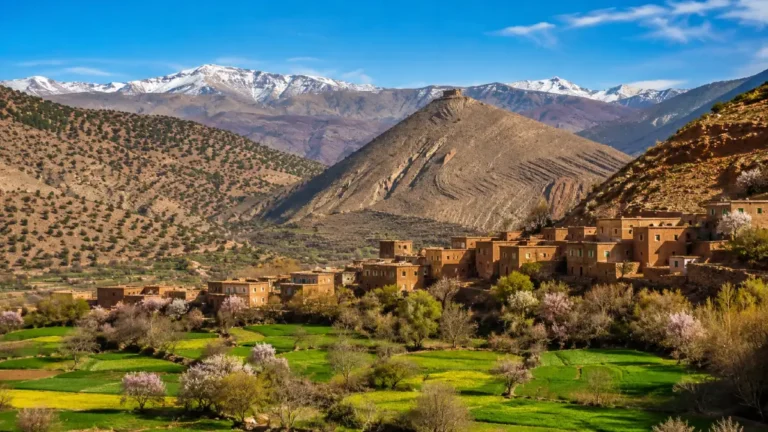
Spring transforms the Atlas Mountains into one of the most beautiful regions of Morocco. After the winter rain and snow, valleys become greener, rivers carry more water and terraced fields begin to fill with crops and wildflowers.
April and May are usually the best months for lower and mid-altitude walks. March can still feel cold, especially in the morning, and snow may remain on higher trails around Imlil and Mount Toubkal.
Popular spring destinations include Imlil, Ourika Valley, Ouirgane and Aït Bouguemez. Each area offers a different experience, from short village walks and riverside lunches to longer mountain hikes.
Spring weather can change quickly in the mountains. A sunny morning may become cloudy or cool later in the day, so bring comfortable walking shoes, a light jacket and sun protection even when Marrakech feels warm.
Travellers should also be careful near rivers and waterfalls after heavy rain or snowmelt. Paths can become slippery, and water levels may rise faster than expected.
From Marrakech, the Atlas Mountains can be visited on a day trip, but staying overnight gives you more time to walk, meet local families and experience the quieter atmosphere after day visitors leave.
For more practical advice, read my Atlas Mountains Day Trip and Ourika Valley Day Trip guides.
My local tip for the Atlas Mountains in spring
Do not choose a mountain route only because it looks close on the map. Spring road and trail conditions depend on altitude, recent rain and remaining snow, so ask locally before planning a longer hike.
Chefchaouen in Spring
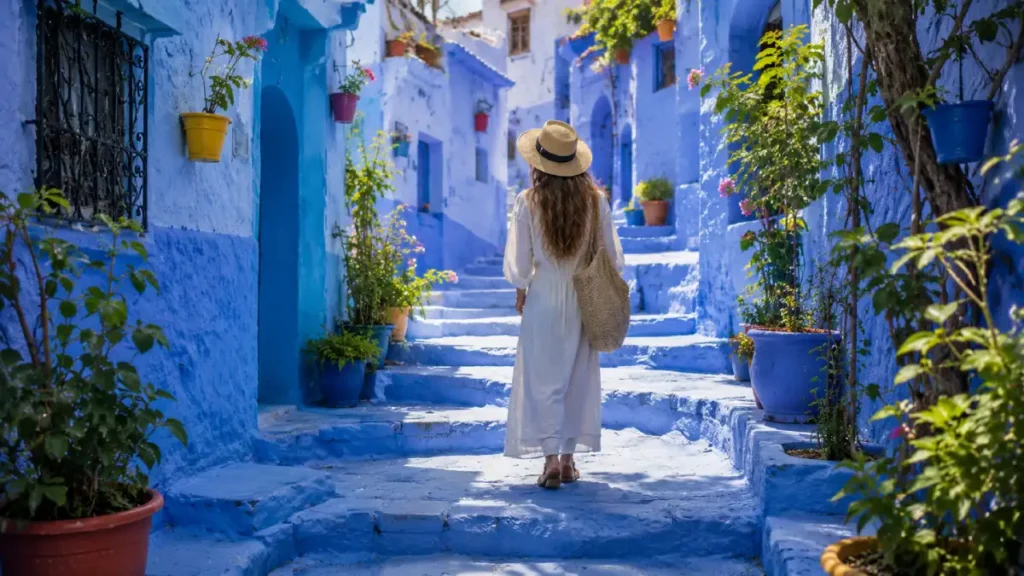
Chefchaouen is especially beautiful in spring, when the Rif Mountains become greener and flowers appear across balconies, terraces and the hills surrounding the town.
The mild weather makes it easier to explore the blue-painted Medina on foot. You can walk through the quieter lanes in the morning, stop in Outa el Hammam Square and climb toward the Spanish Mosque for views over the town and surrounding mountains.
March can still bring rain and cool evenings, while April usually offers the best balance of flowers, comfortable temperatures and clearer walking conditions. By May, days are warmer but still pleasant compared with inland cities such as Marrakech and Fes.
Spring is also a good season for short hikes around Chefchaouen. Akchour is popular for waterfalls and mountain scenery, but paths can be slippery after rain and water levels may be stronger than expected.
Chefchaouen works best as part of a northern Morocco route with Tangier, Tetouan and Fes. It does not fit naturally into a short Marrakech-to-Sahara itinerary because reaching it requires significant extra travel time.
For more planning advice, read my Chefchaouen Travel Guide and Things to Do in Chefchaouen.
My local tip for Chefchaouen in spring
Stay at least one night if your schedule allows. Chefchaouen feels calmer early in the morning and after day visitors leave, and spring evenings are perfect for enjoying the town without rushing.
The Sahara Desert in Spring
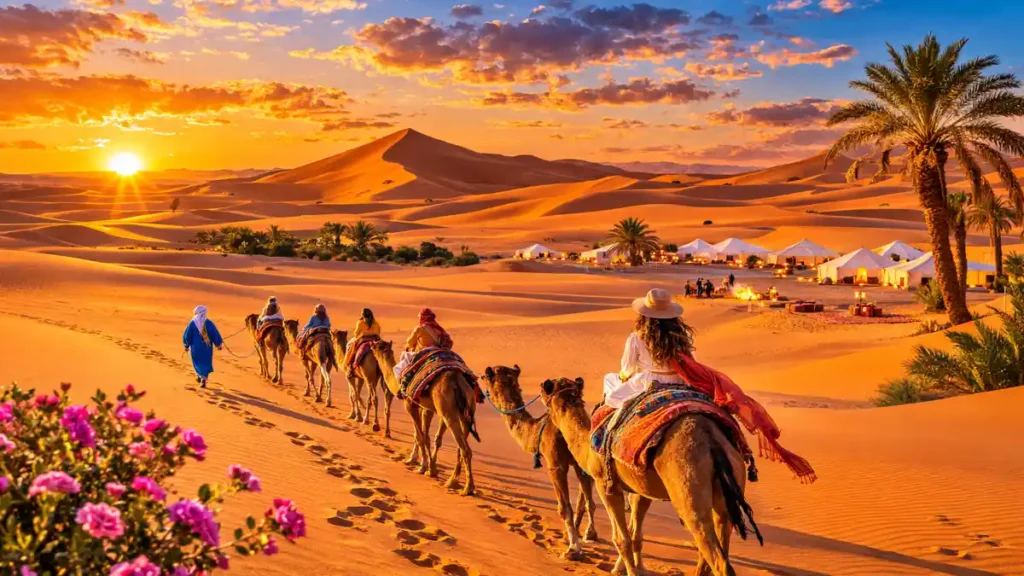
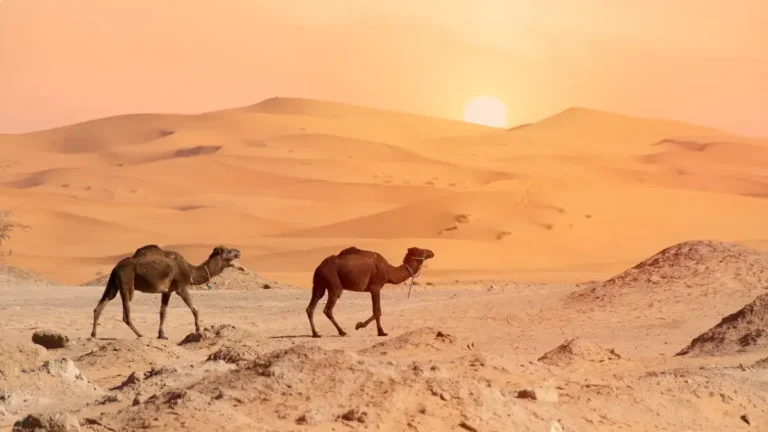
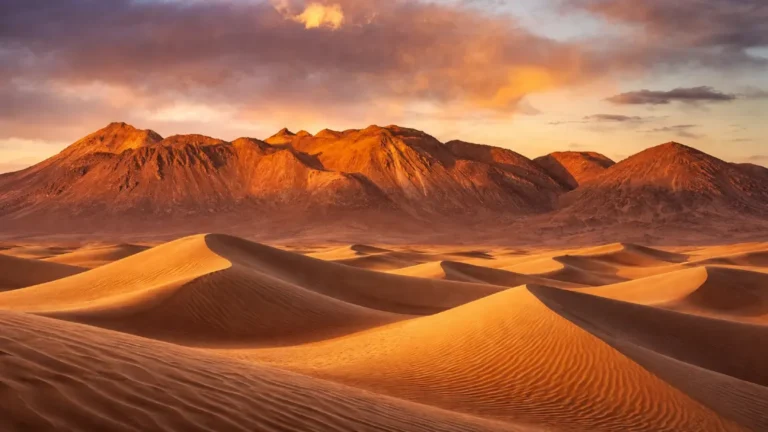
Spring is one of the best seasons to visit the Sahara, especially around Merzouga and the Erg Chebbi dunes. Days are usually warm without the extreme heat of summer, while evenings remain cooler and more comfortable for desert camps.
March and April normally offer the best balance. Daytime conditions are pleasant for exploring the dunes, visiting nearby villages and enjoying a sunset camel ride. Nights can still feel cold in March, so bring a warm layer even when the afternoon is sunny.
May is warmer, particularly later in the month. Desert trips are still possible, but midday heat becomes stronger and activities are better planned for early morning or late afternoon.
Spring weather in the desert is not always calm. Wind can pick up suddenly, and short periods of blowing sand are possible, especially during seasonal weather changes. A scarf, sunglasses and closed shoes can make the experience much more comfortable.
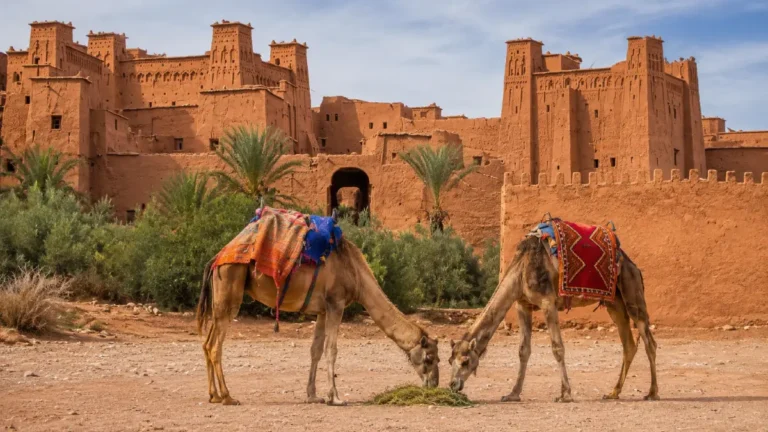
Most travellers reach Merzouga through Ouarzazate, the Dades Valley and Todra Gorge. This journey should not be rushed. From Marrakech, a proper desert route normally needs at least three days, while four days gives you a more comfortable pace.
For detailed planning, read my Merzouga Sahara Desert Travel Guide, Best Desert Camps in Merzouga and 3 Days Desert Tour from Marrakech guides.
My local tip for the Sahara in spring
Do not judge desert temperatures only by the daytime forecast. Once the sun sets, the temperature can drop quickly, especially in March and early April. Pack one warm layer for the evening and early morning.
The Valley of Roses in Spring
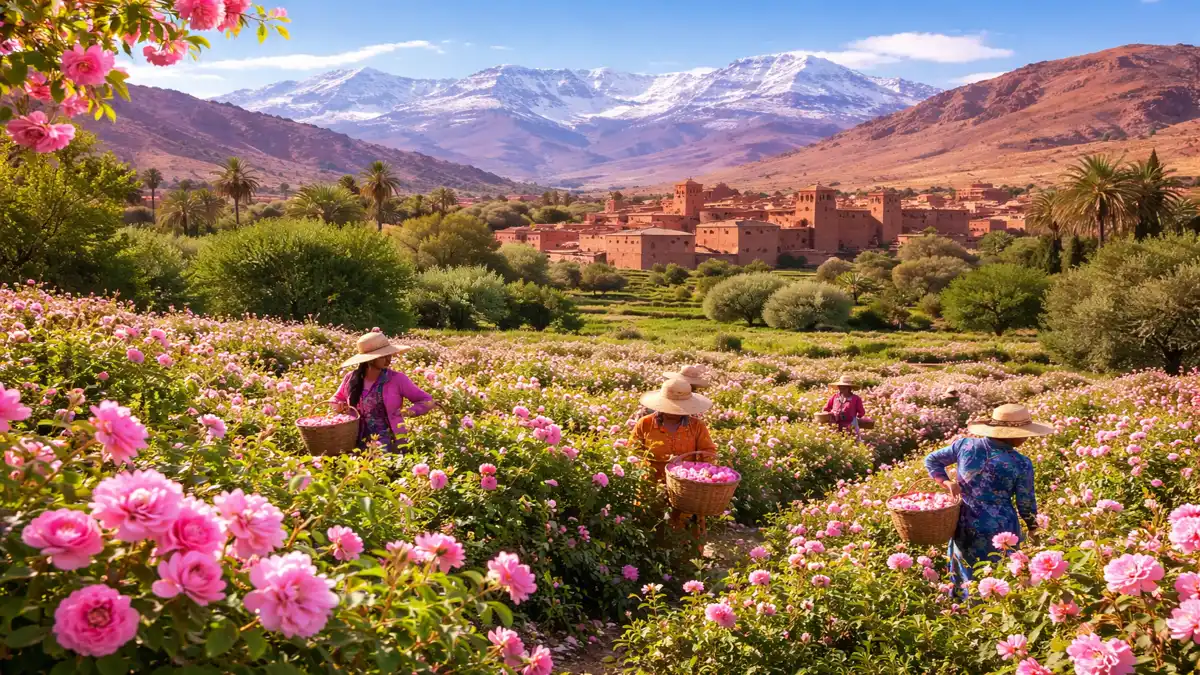
The Valley of Roses is one of Morocco’s most distinctive spring destinations. It stretches through the area around Kelaat M’Gouna, between Ouarzazate and the Dades Valley, and becomes especially interesting during the rose harvest in late April and May.
The roses are grown in small fields, gardens and hedges beside villages rather than in one enormous flower field. During the harvest, local families collect the blossoms early in the morning before the daytime heat becomes stronger.
May is usually the best month to experience the rose season. Shops and cooperatives sell rose water, oils, soaps, creams and other locally made products, while Kelaat M’Gouna becomes busier around the annual Rose Festival.
The valley is also worth visiting outside the festival dates. Spring brings greener scenery to the surrounding villages, orchards and river valleys, while the nearby Dades route adds dramatic rock formations and mountain landscapes.
Kelaat M’Gouna fits naturally into a road trip between Ouarzazate, the Dades Valley, Todra Gorge and Merzouga. It is better treated as part of a southern Morocco journey than as a separate day trip from Marrakech.
For festival information and practical planning, read my Roses Festival in Morocco and Ouarzazate Travel Guide.
My local tip for the Valley of Roses in spring
Do not expect every part of the valley to be covered in large pink fields. The roses often grow beside farms and village paths, and the best way to experience the season is to travel slowly, stop at small cooperatives and explore the countryside around Kelaat M’Gouna.
Coastal Cities in Spring
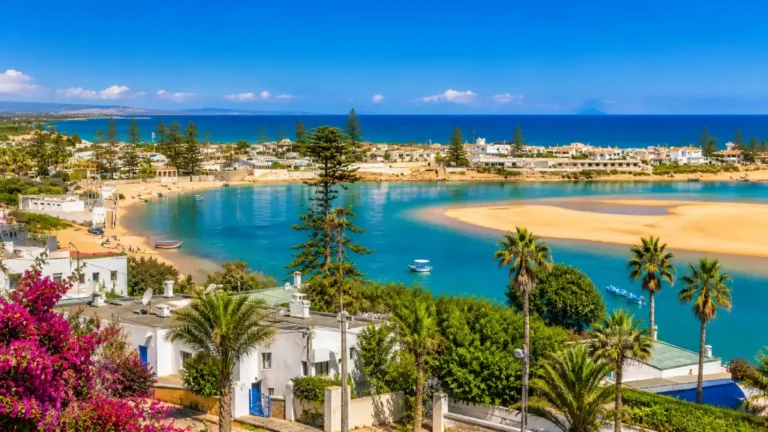
Morocco’s Atlantic coast is a good choice in spring, especially when inland cities begin to feel warmer. Coastal destinations usually remain milder because of the ocean breeze, although mornings and evenings can still feel cool.
Essaouira is the best coastal option for many travellers. Its compact Medina, fishing port, ramparts and seafood restaurants are easy to explore on foot, while the relaxed atmosphere makes it a comfortable break from Marrakech.
April and May are usually the best spring months for Essaouira. The weather is mild, but the city can be windy, so bring a light jacket even when Marrakech feels hot.
Tangier is another good spring destination, especially as part of a northern route with Tetouan and Chefchaouen. The city combines Atlantic and Mediterranean views, historic neighbourhoods and easy access to the Rif region.
Rabat is quieter than Marrakech or Fes and works well for travellers interested in history, gardens and coastal walks. Spring is a pleasant time to visit the Kasbah of the Udayas, Hassan Tower and the city’s waterfront.
Casablanca can also be included, particularly for the Hassan II Mosque, but it is usually better as a short stop than the main destination of a spring itinerary.
For a relaxed coastal escape from Marrakech, read my Essaouira Travel Guide. For northern Morocco, see my Tangier Travel Guide and Rabat Travel Guide.
My local tip for Morocco’s coast in spring
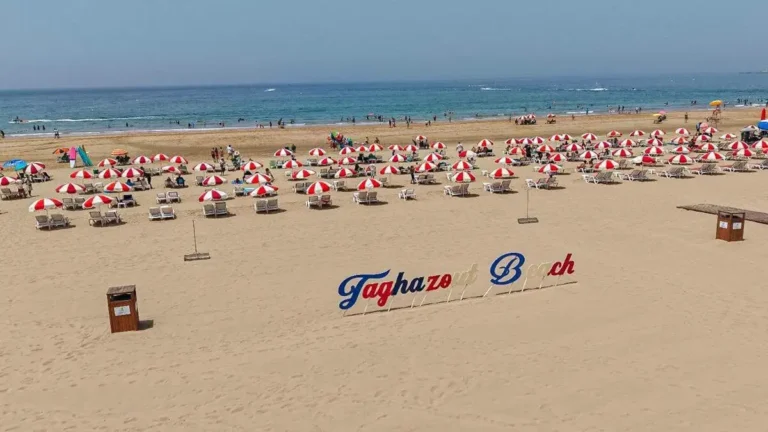
Do not choose the coast only for beach swimming. Atlantic water can remain cool in spring, and Essaouira is often windy. Visit for the Medina, seafood, coastal scenery and slower atmosphere rather than expecting hot summer beach weather.
Spring Festivals in Morocco
Spring in Morocco is also a season of harvests, festivals and religious celebrations, although exact dates can change from year to year.
The Almond Blossom Festival in Tafraoute usually celebrates the flowering season in the Anti-Atlas region. Visitors may find traditional music, local products, food stalls and community performances, although the blossoms do not always follow the festival schedule exactly.
The Rose Festival in Kelaat M’Gouna is another important spring event. It is connected to the annual rose harvest and usually brings parades, music, markets and celebrations to the town. Accommodation in the area can become limited, so book early when travelling during the festival period.
Ramadan and Eid al-Fitr may also fall partly or fully during spring because the Islamic calendar moves each year. Daily routines can change during Ramadan, with quieter afternoons and busier streets after sunset. Most attractions and travel services continue operating, but opening hours may be shorter.
Spring also brings smaller local markets, harvest celebrations and cultural events that are not always widely advertised online. These can be some of the most interesting experiences because they remain closely connected to community life.
For more details, read my Almond Blossom Festival in Morocco, Roses Festival in Morocco and Eid al-Fitr in Morocco guides.
My local tip for spring festivals in Morocco
Do not plan an entire trip around estimated festival dates until they are officially confirmed. Seasonal events can shift, and flowering periods depend on rainfall and temperature. Treat the festival as an added experience rather than the only reason for visiting the region.
Travel Tips for Visiting Morocco in Spring
Travelling during spring in Morocco is generally comfortable, but conditions can still vary considerably between cities, mountains, the coast and the Sahara.
Pack light clothing for warm daytime weather, but always carry a jacket or sweater for cooler evenings. March nights can still feel cold, especially in the Atlas Mountains, Fes and the desert.
Comfortable walking shoes are essential because medinas often have uneven streets, and spring rain can make some mountain paths slippery.
Sun protection is still important. Bring sunscreen, sunglasses and a hat, even when temperatures feel mild. Wind in the desert and coastal areas can also make a scarf useful.
Spring is a popular travel season, particularly around Easter, school holidays and major festivals. Book well-rated riads, desert camps and small hotels early if your dates are fixed.
Do not plan routes only by distance on a map. Mountain roads, city traffic and long desert journeys can make travel times much longer than expected.
For road trips, keep your daily route realistic and avoid driving after dark on unfamiliar rural roads. My Rent a Car in Morocco and Driving in Morocco guides explain insurance, deposits, road conditions and practical driving advice.
For help building your route, use my Morocco Itinerary 7, 10 and 14 Days guide.
My local tip for travelling in Morocco during spring
Spring weather can change quickly between regions. A warm afternoon in Marrakech does not mean the evening will feel warm in Imlil or Merzouga, so keep one light layer in your day bag.
Where to Go in Morocco in March, April and May
The best places to visit in Morocco change as spring progresses. In March, Marrakech, Fes, Tafraoute and the Sahara are strong choices. April is the best all-round month for Marrakech, Chefchaouen, the Atlas Mountains and Merzouga. By May, the Valley of Roses and Atlantic destinations such as Essaouira become especially appealing as inland temperatures start to rise.
Morocco in March
March is one of the best months to visit Morocco for cooler weather, greener landscapes and comfortable sightseeing before the stronger spring heat arrives.
This is a good month for Marrakech, Fes and Rabat because the weather is comfortable for walking through medinas and historic neighbourhoods. Northern Morocco may still receive rain, while higher mountain areas can retain winter snow.
March is also a good time to visit Tafraoute and the Anti-Atlas, where almond trees may still be in bloom depending on rainfall and temperatures.
The Sahara is pleasant during the day, but desert nights can be cold. Pack a warm layer if you plan to stay in a camp near Merzouga.
Read my Morocco in March guide for more detailed weather and itinerary advice.
Morocco in April
April is usually the best all-round spring month for visiting Morocco. Temperatures are comfortable in many regions, rural landscapes are often green and the strongest summer heat has not yet arrived.
Marrakech and Fes are warm enough for sightseeing without being too hot. The Atlas Mountains are especially beautiful, although snow or muddy paths may remain at higher elevations.
April is also one of the best months for travelling to Merzouga. Days are warm, nights are generally more comfortable than in March and long road journeys through Ouarzazate and the Dades Valley are easier to manage.
Easter holidays can make Marrakech, Chefchaouen and popular desert camps busier, so book early when travelling on fixed dates.
Read my Morocco in April guide for a closer look at weather, destinations and seasonal travel advice.
Morocco in May
May is warmer and feels closer to summer, particularly in Marrakech, Ouarzazate and the Sahara. Sightseeing is still comfortable in the morning, but afternoons can become hot in southern and inland regions.
This is the best month for the Valley of Roses around Kelaat M’Gouna. The harvest usually takes place from late April into May, and the annual Rose Festival brings music, markets and celebrations to the town.
The Atlas Mountains remain a strong choice, especially for lower and mid-altitude walks. Coastal cities such as Essaouira, Rabat and Tangier are also pleasant because ocean breezes keep temperatures milder.
Desert travel is still possible, but late May can feel hot around Merzouga. Plan outdoor activities around sunrise and sunset rather than the middle of the day.
Read my Morocco in May guide for more detailed planning advice.
Which Is the Best Month to Visit Morocco in Spring?
For most first-time visitors, April is the best choice because it offers the most balanced conditions for cities, mountains, the Sahara and road trips.
Choose March for cooler weather, greener scenery and fewer crowds. Choose May for the rose season, warmer coastal trips and mountain landscapes before summer begins.
Morocco Spring Packing List
Packing for spring in Morocco requires a few layers because conditions can change significantly between cities, mountains, the coast and the Sahara.
Bring lightweight, breathable clothing for warm days, including comfortable trousers, shirts and tops that cover your shoulders when visiting traditional neighbourhoods or religious sites.
A light jacket or sweater is essential for cool evenings, especially in March, the Atlas Mountains and the desert. Travellers staying overnight near Merzouga should also bring one warmer layer for early mornings and nights.
Comfortable walking shoes are important for medinas, historic sites and uneven streets. Add proper hiking shoes if your itinerary includes mountain trails, waterfalls or longer village walks.
Pack sunscreen, sunglasses and a hat even when temperatures feel mild. The Moroccan sun can still be strong in spring, particularly in Marrakech, southern valleys and the Sahara.
A scarf or light shawl is useful for desert wind, cooler coastal evenings and respectful clothing when visiting traditional areas. Read my Morocco Packing List guide. Spring rain is possible, especially in northern Morocco and the mountains. A small waterproof jacket or compact umbrella can be useful without taking up much space.
Bring a reusable water bottle, a small day bag and any personal medication you may need. Keep copies of important travel documents separately from the originals.
For more advice about respectful clothing and regional differences, read my How to Dress in Morocco guide.
My local packing tip for spring in Morocco
Pack for changing conditions rather than one national forecast. You may need a T-shirt in Marrakech during the afternoon and a jacket in the Atlas Mountains or desert on the same day.
Sample 7-Day Spring Route: Marrakech to Fes
A seven-day spring itinerary should follow one clear route rather than trying to cover every part of the country. The most practical option is to begin in Marrakech, cross the Atlas Mountains, continue through southern Morocco to Merzouga, and finish in Fes.
Day 1–2: Marrakech
Spend your first two days exploring Marrakech. Visit Bahia Palace, walk through the souks, see the Koutoubia Mosque and experience Jemaa el-Fnaa in the evening.
Spring mornings are ideal for outdoor sightseeing, while the warmer afternoon hours are better for gardens, museums or a relaxed lunch on a rooftop terrace.
For more ideas, read my Things to Do in Marrakech guide.
Day 3: Aït Ben Haddou and Ouarzazate
Leave Marrakech early and cross the High Atlas Mountains through the Tizi n’Tichka road.
Stop at Aït Ben Haddou before continuing to Ouarzazate. The drive is scenic, but mountain roads and photo stops make the journey longer than it appears on a map.
Read my Aït Ben Haddou Day Trip and Ouarzazate Travel Guide for more planning advice.
Day 4: Valley of Roses, Dades Valley and Todra Gorge
Continue through Skoura and Kelaat M’Gouna toward the Dades Valley. In late April and May, this route may coincide with the rose harvest.
After exploring the Dades landscapes, continue toward Tinghir and Todra Gorge. Stay overnight in Tinghir, Todra or farther along the route depending on your pace.
Day 5: Merzouga and the Sahara
Travel from Tinghir toward Merzouga through Erfoud and Rissani.
Arrive in time for a sunset camel ride or a 4×4 transfer to your desert camp. Spring days are usually comfortable, but nights may still feel cold in March and early April.
Read my Merzouga Sahara Desert Travel Guide and Best Desert Camps in Merzouga before booking.
Day 6: Merzouga to Fes
Leave Merzouga early for the long journey to Fes. The route normally passes through the Ziz Valley, Midelt, the Middle Atlas and Ifrane.
This is one of the longest driving days of the itinerary, so avoid adding too many stops. Arriving in Fes during the evening is realistic when you start early.
Day 7: Fes
Finish the trip in Fes, where you can explore the historic Medina, traditional workshops, madrasas and viewpoints over the old city.
Fes feels very different from Marrakech and gives the itinerary a strong cultural ending after the mountains and desert.
For detailed planning, read my Things to Do in Fes guide.
Can You Add Chefchaouen?
Chefchaouen does not fit comfortably into this seven-day route. Add at least two or three extra days if you want to continue from Fes to the Blue City and Tangier.
For a slower route with more time in each destination, compare my Morocco Itineraries for 7, 10 and 14 Days.
Travellers who want to continue beyond Fes can also compare this 7-day Morocco tour from Marrakech through the Sahara, Fes and Chefchaouen to Tangier. Check the daily driving times, accommodation, inclusions and cancellation conditions before booking.
My local tip for planning a spring itinerary
Do not try to drive from Marrakech to Merzouga in one day. The journey is long, and the places between them are an important part of the experience. Three days is the minimum for a Marrakech desert route, while four days is much more comfortable.
Planning a Spring Trip to Morocco?
Spring makes it easier to combine cities, mountains, desert landscapes and the coast, but the route still needs to be realistic.
Choose one part of the country as the main focus instead of trying to see everything in a week. Marrakech, Ouarzazate, the Dades Valley and Merzouga work well together, while Fes, Chefchaouen, Tetouan and Tangier are better suited to a northern itinerary.
Book well-rated riads, desert camps and small hotels early when travelling around Easter, school holidays or the Rose Festival. Spring is popular, and the best places can fill faster than expected.
Compare the full itinerary before booking any tour. Check driving times, hotel locations, meal inclusions, camp standards, cancellation rules and whether entrance fees are included.
Travellers planning a road trip should also understand deposits, insurance and mountain driving before collecting a vehicle. Read my Rent a Car in Morocco and Driving in Morocco guides before booking.
For a complete route comparison, see my Morocco Itinerary for 7, 10 and 14 Days.
My local tip for planning a spring trip to Morocco
Do not choose a route only because every stop looks attractive. A good Morocco itinerary leaves enough time to enjoy each place instead of spending every day inside a vehicle.
FAQs About Spring in Morocco
Is spring a good time to visit Morocco?
Yes. Spring is one of the best seasons to visit Morocco because the weather is usually comfortable for cities, mountain trips, road journeys and the Sahara. Landscapes are also greener after winter rain.
Which spring month is best for Morocco?
April is usually the best all-round month. Temperatures are comfortable across many regions, the countryside is often green and the strongest summer heat has not yet arrived.
What is the weather like in Morocco during spring?
Spring weather varies by region. Marrakech and Fes are generally warm, the Atlantic coast is milder and breezier, the Atlas Mountains can remain cold at altitude, and the Sahara becomes hotter as May approaches.
Is Morocco crowded in spring?
Spring is a popular travel season, especially around Easter, school holidays and major festivals. Marrakech, Chefchaouen and well-rated desert camps can become busy, so early booking is recommended for fixed dates.
Is the Sahara too hot in spring?
March and April are usually excellent for the Sahara. Days are warm and nights are cooler. May can become hot, particularly later in the month, so desert activities are better planned for sunrise and late afternoon.
Can you hike in the Atlas Mountains in spring?
Yes, but conditions depend on altitude. Lower valleys are often green and pleasant, while snow, mud or changing weather may affect higher trails. Check local conditions before starting a longer hike.
What should I wear in Morocco in spring?
Pack lightweight clothing for daytime, comfortable walking shoes and a jacket or sweater for cooler evenings. Add sun protection, a scarf and a waterproof layer if your route includes mountains or northern Morocco.
Can you swim in Morocco during spring?
Swimming conditions depend on the location and month. Hotel pools may still feel cool in March, while Atlantic water can remain cold throughout spring. By May, warmer inland destinations are generally better for pool weather.
Is spring a good season for a Morocco road trip?
Yes. Spring is one of the best seasons for a road trip because temperatures are generally comfortable and southern routes are easier to enjoy than in summer. However, mountain weather and long driving times still require realistic planning.
What are the best places to visit in Morocco in spring?
The best places to visit in Morocco in spring are Marrakech, Fes, Chefchaouen, the Atlas Mountains, Merzouga, the Valley of Roses, Essaouira and Tafraoute. March is cooler and greener, April offers the best all-round weather, and May is especially good for the Valley of Roses and the Atlantic coast.