Morocco for Food Lovers: A Local Guide to the Country Through Its Flavors
Morocco is not a country you only visit with your eyes. You also visit it through bread still warm from the neighborhood oven, mint tea poured high into small glasses, sardines smoking beside the Atlantic, couscous shared on Friday, and a slow tagine eaten in a mountain village after a long road.
Many Morocco food guides repeat the same list: tagine, couscous, mint tea, pastilla. They are not wrong, but they miss the most important part. In Morocco, food belongs to place.
This Morocco food guide is different because it does not only tell you what to eat. It shows you where each dish makes sense. You do not understand tanjia properly until you taste it in Marrakech. You do not feel pastilla the same way outside Fes. Sardines taste better near Essaouira, Safi, or Oualidia than far inland. Amlou makes more sense in the Souss, close to the argan region. And a simple Amazigh tagine in the Atlas Mountains can stay in your memory longer than a polished restaurant dinner.
This Morocco food guide is written like I explain food to my guests on the road: honestly, locally, and with respect for the people behind the meal.
To understand how these dishes fit into everyday life, read my guide to what Moroccans eat for lunch, including typical midday meals, Friday couscous, and what to order as a visitor.
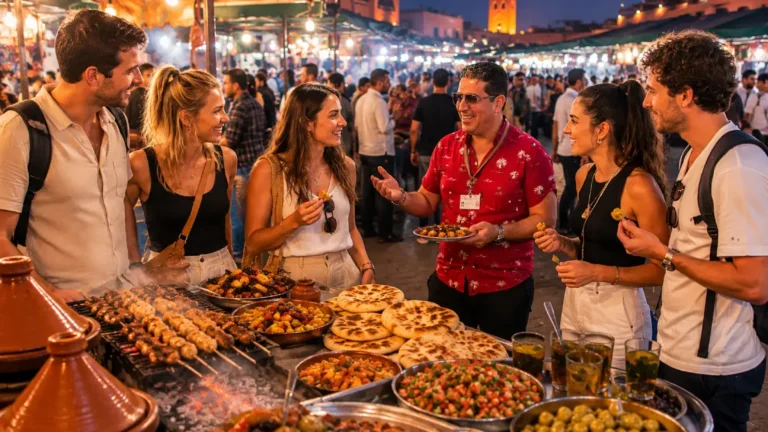
For travelers visiting Marrakech, joining one of the best food tours in Marrakech is a great way to understand Moroccan food with a local guide, especially if it is your first time trying street food in the medina.
If you are still planning your full trip, start with my Morocco Travel Guide, then use Best Time to Visit Morocco and Morocco Itinerary 7, 10 & 14 Days to build the right route before choosing where to eat. If you are planning an autumn food route, my Morocco in October guide explains the weather, best regions and travel conditions for combining Marrakech, Fes, the coast and the Sahara.
Table of Contents
Table of Contents
Food Safety Quick Advice for First-Time Visitors
Moroccan food is one of the best parts of traveling in Morocco, but first-time visitors should still eat with a little awareness. You do not need to be afraid of local food. Most travelers eat very well here. The key is choosing fresh, busy, and clean places, especially when eating street food, seafood, raw salads, or food from small stalls.
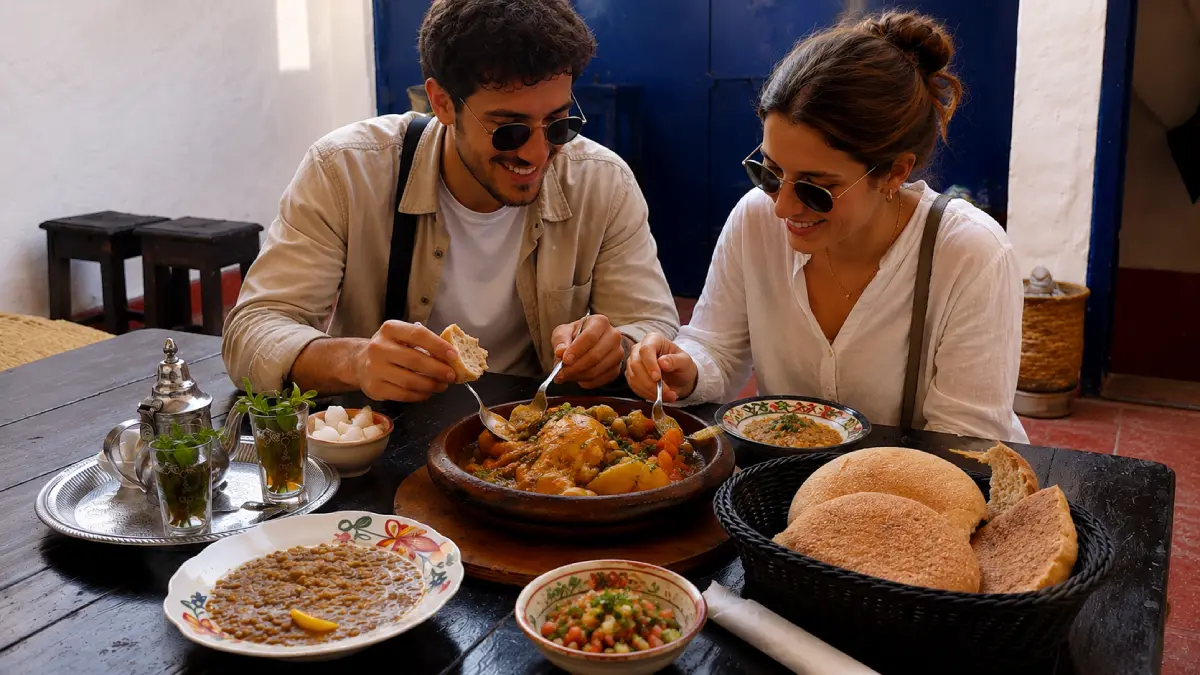
My simple local advice is this: start with cooked dishes, drink bottled water, choose busy restaurants or stalls, and be careful with raw salads in places you do not trust. Tagine, couscous, harira, grilled food, cooked Moroccan salads, fresh bread, olives, dates, and mint tea are usually safe and enjoyable when served fresh.
If you are wondering about drinking water, read my guide Can You Drink Tap Water in Morocco? before your trip. It explains tap water, bottled water, ice, mint tea, and what tourists should know to avoid stomach problems.
If you are nervous about food safety, read my full What Not to Eat in Morocco guide before your trip. It explains what to be careful with, including raw salads, tap water, ice, seafood far from the coast, buffets, and street food. For a more positive list of dishes to try, continue with my What to Eat in Morocco guide.
For Marrakech specifically, my Where to Eat in Marrakech guide will help you choose better restaurants, rooftops, local food stops, and places where the food experience feels easier for first-time visitors. If you want to try local snacks and market food, read my full guide, Is Street Food Safe in Morocco? It explains what to try, what to avoid, and how to choose clean, busy food stalls with confidence.
The Local Rule: Eat the Dish Where It Belongs
Moroccan cuisine is shaped by Amazigh, Arab-Andalusian, Jewish, Saharan, Mediterranean, and Atlantic influences. Morocco’s official tourism board highlights couscous, tajine, pastilla, mrouzia, rfissa, mint tea, and chebakia as key parts of the country’s food culture.
That is why food changes as you travel. Marrakech feels smoky and bold. Fes feels old and refined. Essaouira tastes of salt and wind. The Atlas Mountains are simple, generous, and patient. The Sahara is about hospitality more than restaurant choice.
Couscous is also recognized by UNESCO as intangible cultural heritage shared across Morocco, Algeria, Tunisia, and Mauritania, connected to solidarity, sharing meals, and togetherness. Jemaa el-Fna is also recognized by UNESCO as a cultural space, which helps explain why Marrakech food culture is tied to public life, storytelling, performance, and trade.
So here is my local advice: do not order the same dish everywhere. Let every region feed you in its own language.
Marrakech
Best For: Tanjia, street food, rooftops
What to Try: Tanjia, mechoui, harira, msemen
Fes
Best For: Traditional recipes
What to Try: Pastilla, rfissa, couscous
Essaouira
Best For: Seafood
What to Try: Sardines, grilled fish, seafood tagine
Oualidia
Best For: Oysters and quiet coast
What to Try: Oysters, shellfish, grilled fish
Atlas Mountains
Best For: Amazigh home cooking
What to Try: Bread, olive oil, tagine, tea
Sahara Desert
Best For: Nomadic hospitality
What to Try: Dates, soup, camp dinner, tea
Souss & Agadir
Best For: Argan and amlou
What to Try: Amlou, argan oil, seafood
Tangier & North
Best For: Bissara and café life
What to Try: Bissara, fish, olives, bread
Some links in this guide may earn a small commission at no extra cost to you. I only recommend services I trust for planning a Morocco trip.
Marrakech: Smoke, Tanjia & Rooftop Nights
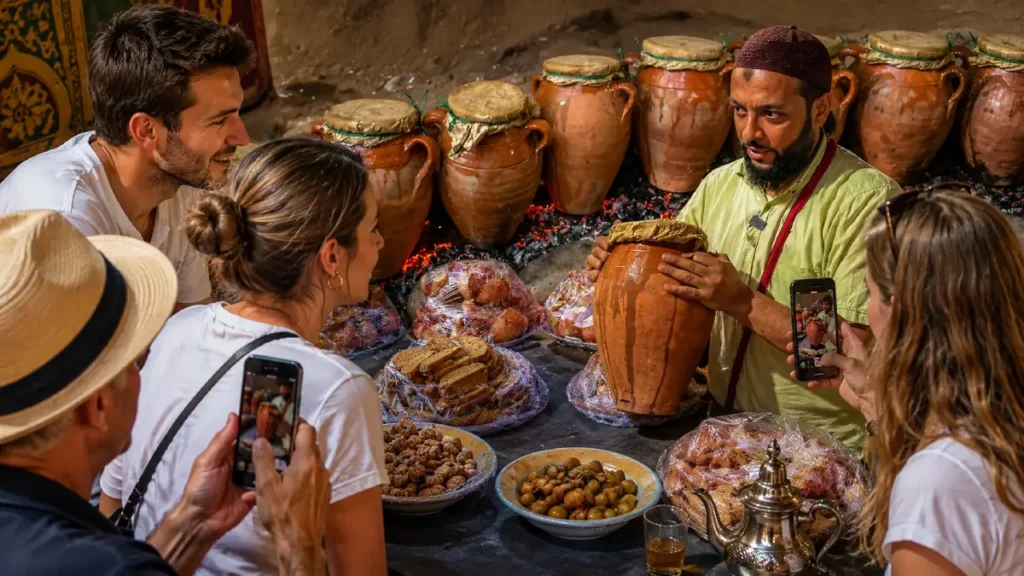
Marrakech is not a quiet food city. It smells of cumin, grilled meat, orange juice, olives, smoke, and fresh bread. Around the medina, food comes from street stalls, small local restaurants, riads, rooftops, bakeries, and family kitchens.
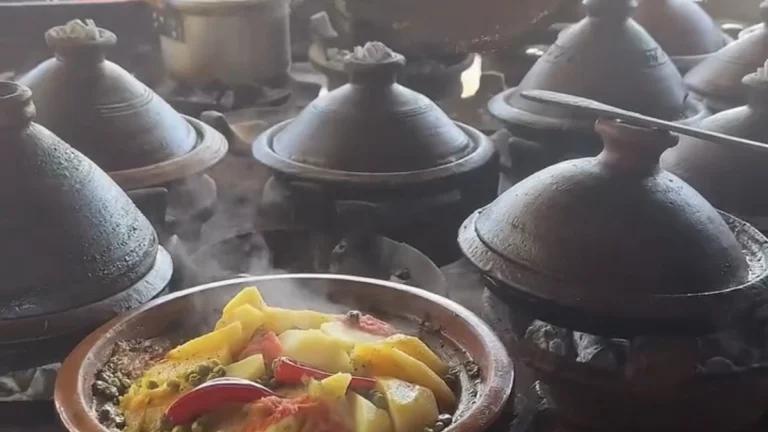
The dish that belongs to Marrakech is tanjia Marrakchia. Many tourists confuse it with tagine, but tanjia is different. It is usually cooked slowly in a clay urn with meat, preserved lemon, garlic, saffron, cumin, and smen. Traditionally, it was sent to cook near the heat of the hammam furnace. This is old Marrakech working culture in a pot. If you want to understand the bathing tradition connected to that furnace, read my first-time Moroccan hammam guide.
Jemaa el-Fna is famous, and it deserves to be seen at night, but do not sit at the first stall that calls you. Walk first. Watch the food. Check if the place is busy. Ask the price before ordering. The square is exciting, but first-time visitors can feel pressured.
A good Marrakech food evening is simple: arrive before sunset, watch the square wake up, taste something small, then choose either a trusted local restaurant or a rooftop where you can breathe above the medina.
If Marrakech is your first stop, my Marrakech Travel Guide will help you understand the medina before dinner, while Where to Eat in Marrakech gives you a deeper look at rooftops, local restaurants, and food stops. Travelers interested in market culture should also explore my Marrakech Souks Guide .
Best things to try in Marrakech: tanjia, mechoui, harira, Moroccan salads, brochettes, msemen, sfenj, olives, chebakia, fresh orange juice, and mint tea.
Fes: The City of Old Recipes
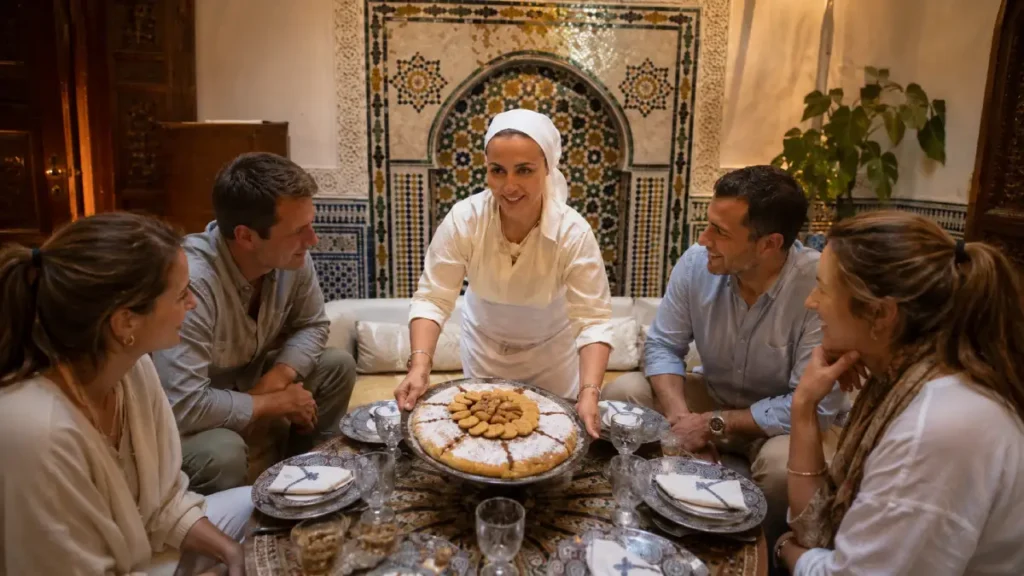
Fes is different. Marrakech gives you energy; Fes gives you roots.
Inside the old medina, food feels connected to family tradition. You see bread ovens, spice shops, olive stalls, preserved lemons, sweets, and riad kitchens hidden behind plain doors. Fes food often feels more delicate than Marrakech food. It is not only about strong spices. It is about balance.
This is one of the best places to try pastilla, especially the sweet-salty style with thin pastry, almonds, cinnamon, and meat. Fes is also strong for rfissa, harira, cooked salads, couscous, and slow tagines.
The mistake many travelers make is visiting Fes too quickly. If you want to understand Moroccan food, stay at least two nights. Take a cooking class, book one proper riad dinner, or walk the medina with someone who knows the local food stops.
Fes needs more time than many travelers expect, so connect this part of your route naturally with my Fes Travel Guide and Where to Stay in Fes when planning how long to stay in the city.
Best things to try in Fes: pastilla, rfissa, harira, zaalouk, taktouka, couscous, preserved lemons, olives, kaab el ghazal, and traditional sweets.
Essaouira: Sardines, Wind & Atlantic Flavor
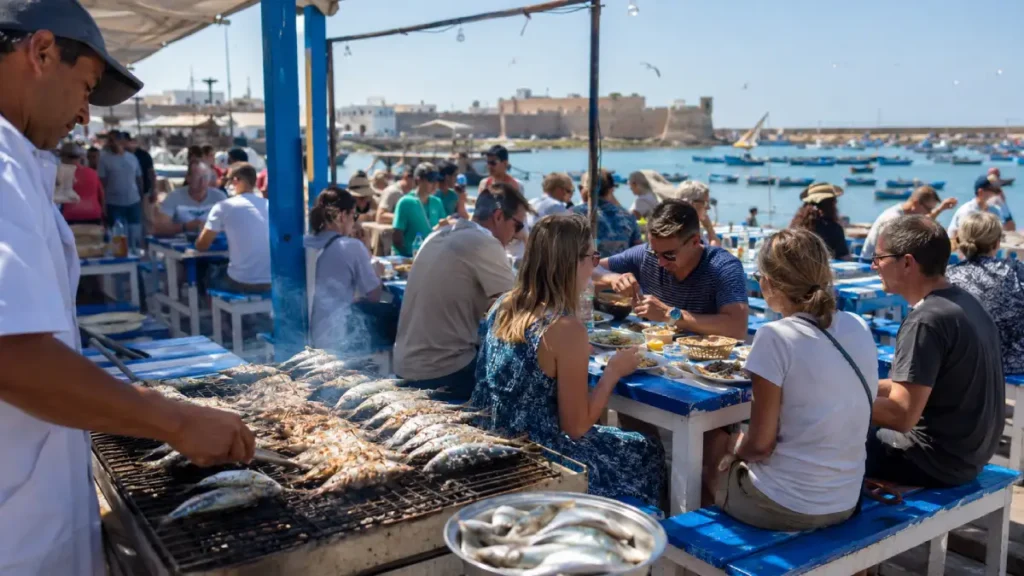
At the Essaouira port, sardines crackle over open grills while gulls circle above the blue fishing boats. The tables are simple, the napkins are simple, and the fish tastes right because the ocean is right there.
Essaouira is one of Morocco’s best food stops because it does not try too hard. The city has wind, music, stone ramparts, seafood, and a slower pace than Marrakech.
Here, the best meals are often grilled sardines, fresh fish, calamari, shrimp, seafood tagine, Moroccan salads, bread, and mint tea after lunch.
My local advice: ask the price before eating seafood, especially near busy tourist areas. Keep it simple. Fresh grilled fish with bread and salads can be better than a complicated tourist menu.
Essaouira works especially well in warmer months, so travelers planning coastal routes should also read my Essaouira Travel Guide, Summer in Morocco, and Best Time to Visit Morocco before building their itinerary. If you are traveling without a car, my Morocco Transportation Guide also explains the easiest ways to reach the coast.
Best things to try in Essaouira: grilled sardines, seafood tagine, calamari, shrimp, fish sandwiches, seafood pastilla, olives, and mint tea with an ocean view.
Oualidia: Oysters & Quiet Coastal Morocco
Oualidia is not always on a first-time Morocco itinerary, but food lovers should know it. It is a quieter Atlantic lagoon destination known for oysters, seafood, birds, and slow coastal life.
This is not Marrakech spice and noise. This is salt, water, oysters, and calm.
Oualidia works well for couples, luxury travelers, slow travelers, and anyone building a coastal route between Casablanca, El Jadida, Safi, and Essaouira. Travelers combining coast and cities can continue planning through my Plan Your Trip, while those building a longer route can use and Where to Stay in Morocco for hotel ideas and pacing.
Best things to try in Oualidia: oysters, shellfish, grilled fish, seafood platters, and simple coastal meals.
Atlas Mountains: Bread, Tea & Amazigh Hospitality
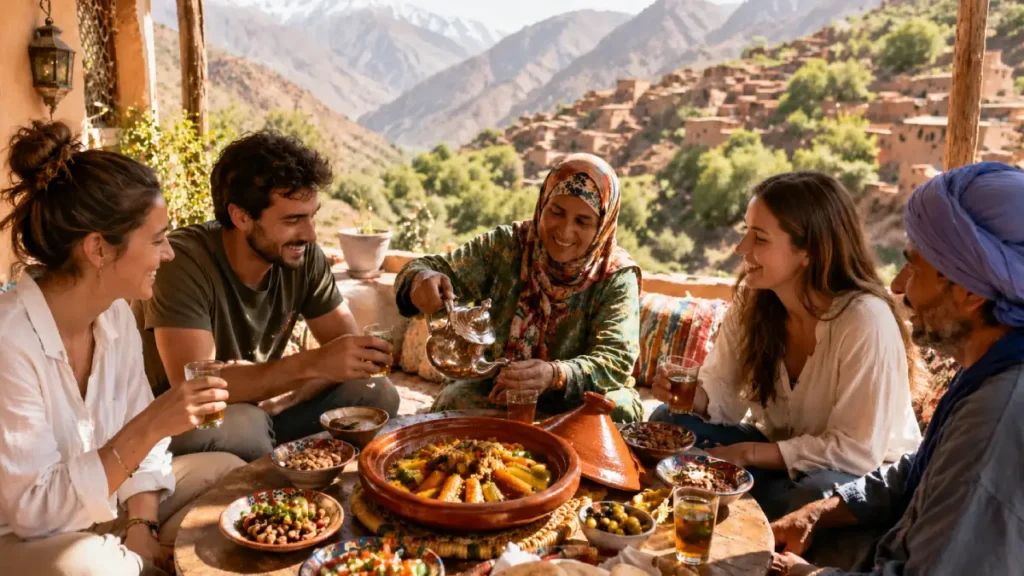
In the Atlas Mountains, food is not about decoration. It is about land, family, weather, and hospitality.
A mountain lunch may be homemade bread, olive oil, walnuts, honey, lentils, beans, vegetables, couscous, or a chicken or goat tagine. The best meal is often not in a restaurant. It may be in a family home, a guesthouse, or a village after walking through a valley.
This is where travelers understand that Moroccan food takes time. Tea takes time. Bread takes time. Tagine takes time. That is not bad service. That is the meal.
If this kind of slower Morocco experience interests you, continue with my Atlas Mountains Guide and Marrakech Day Trips. Travelers visiting in colder seasons should also check Morocco Packing List before heading into the mountains.
Best things to try in the Atlas Mountains: Amazigh tagine, homemade bread, olive oil, walnuts, honey, couscous, lentils, beans, and mint tea.
Sahara Desert: Dates, Tea & Dinner Under the Stars

The Sahara is not a restaurant destination. It is a memory destination.
In Merzouga, Erg Chebbi, or Erg Chigaga, meals are usually served in a desert camp, kasbah hotel, or guesthouse. You may eat soup, tagine, couscous, grilled meat, dates, fruit, bread, and tea. The dishes may be simple, but the setting changes everything.
After sunset, when the dunes become quiet and the stars appear, even a simple bowl of soup feels special.
But I want to be honest. Desert food quality depends on the camp. Cheap camps often serve basic meals. Better camps usually give cleaner service, better dinners, warmer dining spaces in winter, and more comfortable breakfasts.
My local guide advice: when booking a Sahara trip, do not only ask about camel rides. Ask about the camp, dinner quality, bathrooms, bedding, heating in winter, and arrival before sunset.
Before choosing your desert experience, read my Merzouga Sahara Desert Travel Guide and Best Desert Camps in Merzouga so you understand the difference between basic camps and more comfortable stays. Travelers unsure between the two dune regions should also compare Erg Chebbi vs Erg Chigaga, while those leaving from Marrakech can use 3 Days Desert Tour from Marrakech to understand the route better.
Best things to try in the Sahara: camp dinner, dates, mint tea, soup, tagine, fresh bread, and breakfast after sunrise.
Souss, Agadir & Taroudant: Amlou, Argan Oil & Southern Flavor
The Souss region has a food identity many tourists miss. This is the land of argan oil, amlou, almonds, honey, citrus, seafood, and Amazigh food traditions.
Amlou is one of the best Moroccan breakfast experiences. It is usually made with roasted almonds, culinary argan oil, and honey. Some people call it Moroccan Nutella, but that name is too simple. Real amlou is richer, deeper, and connected to the southwest.
Around Agadir, the coast brings seafood. Around Taroudant and inland Souss, food becomes more rural, Amazigh, and agricultural.
My advice: if you visit an argan cooperative, choose carefully. Some are authentic and women-led, while others are more tourist-shop experiences. Taste culinary argan oil, not cosmetic argan oil.
Travelers interested in this side of Morocco should continue with my Agadir Travel Guide, Taroudant Guide, and Best Beaches in Morocco. If you are budgeting for a longer road trip through the south, my Morocco Travel Costs guide will help you plan realistically.
Best things to try in Souss: amlou, culinary argan oil, honey, almonds, oranges, seafood, Amazigh tagine, and fresh bread.
Tangier & Northern Morocco: Bissara, Seafood & Café Life
Tangier has a different flavor from Marrakech and Fes. It is Moroccan, but it also carries Mediterranean air, Spanish influence, old cafés, seafood, and northern street life.
This is a good city for lighter meals, fish, olives, bread, and café breakfasts. In northern Morocco, bissara is loved, especially in cooler months. It is a thick fava bean soup served with olive oil, cumin, and bread. Simple, cheap, warm, and local.
Tangier is also a city where cafés matter. Sitting with tea or coffee is part of the experience. You watch the port, the streets, the people, and the mix of old and new Morocco.
Travelers exploring northern Morocco should continue with my Tangier Travel Guide, Chefchaouen Travel Guide, and Northern Morocco Itinerary to connect the coast, mountains, and medinas together.
Best things to try in Tangier and the north: bissara, grilled fish, olives, bread, seafood, Moroccan salads, mint tea, and café breakfasts.
Chefchaouen: Mountain Breakfasts & Simple Food
Chefchaouen is not a food capital like Marrakech or Fes. Its charm is slower and simpler.
Here, the best food moment may be breakfast on a terrace: bread, goat cheese, olive oil, honey, eggs, olives, msemen, and mint tea. The blue streets and mountain air make simple food feel beautiful.
Do not visit Chefchaouen expecting endless restaurant choice. Visit for calm mornings, mountain views, simple tagines, and slow meals.
If you are planning to visit in spring or cooler months, my Morocco in Spring and Best Time to Visit Morocco guides explain why Chefchaouen feels especially beautiful during those seasons.
Best things to try in Chefchaouen: goat cheese, local bread, olive oil, honey, simple tagines, bissara, msemen, and mint tea.
Casablanca & Rabat: Modern Moroccan Dining
Casablanca and Rabat are not always the most emotional food cities for tourists, but they are useful and underrated.
Casablanca is strong for seafood, bakeries, business restaurants, international dining, and modern Moroccan restaurants. Rabat feels calmer and more polished, with comfortable restaurants, cafés, and clean dining options.
These cities are good at the beginning or end of a Morocco trip. After a long flight, sometimes you do not need a deep medina food adventure. You need a good, clean meal that works.
Travelers arriving by train or flight can use my Casablanca Travel Guide, Rabat Travel Guide, and Morocco Transportation Guide to understand how these cities connect with the rest of the country.
Best things to try in Casablanca and Rabat: seafood, Moroccan salads, modern tagines, pastries, café breakfasts, fresh juices, and polished Moroccan menus.
Quick Guide to Moroccan Dishes by Region
Moroccan food changes as you travel across the country. In Marrakech, look for tanjia and mechoui. Fes is known for pastilla and rfissa, while Essaouira and the Atlantic coast are ideal for grilled sardines and fresh seafood. In the Souss region, try amlou and culinary argan oil, while northern Morocco is a good place to taste bissara. In the Atlas Mountains, simple tagines, homemade bread and mint tea are part of the experience.
For a complete list of the classic dishes worth trying, read my What to Eat in Morocco: 15 Must-Try Moroccan Foods guide.
Best Food Experiences in Morocco
A Moroccan food trip should include more than restaurants.
Take a cooking class in Marrakech, Fes, Essaouira, or the Atlas Mountains. Join a guided food walk in Marrakech or Fes if you feel unsure about street food. Eat seafood in Essaouira or Oualidia. Try a family lunch in the Atlas Mountains. Choose a quality desert camp dinner in Merzouga or Erg Chigaga. Visit a local bakery if you want to understand how important bread is in Moroccan daily life.
The best food experiences are not always expensive. Sometimes the strongest memory is hot bread, olive oil, and tea after a mountain walk.
Travelers wanting to combine food with culture and local experiences can continue with my Best Marrakech Tours, Marrakech Shopping Guide.
Local Food Tips Before You Eat in Morocco
Do not judge Moroccan food only by hotel buffets. Some hotels serve excellent Moroccan dishes, but many soften the flavors for tourists. The real food experience is often found in trusted local restaurants, family-style places, riads, food markets, and small spots where the food is fresh and moving quickly.
In busy tourist areas, always ask prices before ordering, especially for seafood, fresh juice, and food stalls. Small cafés, market stalls and local food stops often prefer Moroccan dirhams, so read my guide to ATMs in Morocco before relying only on cards. Choose places where locals are eating and where food is cooked fresh instead of sitting for a long time. If you have a sensitive stomach, do not try everything on the first day. Start with hot cooked food, bottled or filtered water, and simple dishes before jumping into raw salads, heavy sweets, street food, and rich sauces.
This is not because Moroccan food is unsafe. It is because your body may need time to adjust to new spices, oils, heat, and travel rhythm. My What Not to Eat in Morocco guide explains this in more detail without making food feel scary. If you are worried about fresh vegetables, read my full guide: Can You Eat Salad in Morocco? It explains the difference between cooked Moroccan salads like zaalouk and taktouka, and raw salads that need more care.
Moroccans often eat with bread and sometimes by hand from a shared plate. If you are invited to eat this way, use your right hand and eat from the section in front of you. Do not reach across the whole dish.
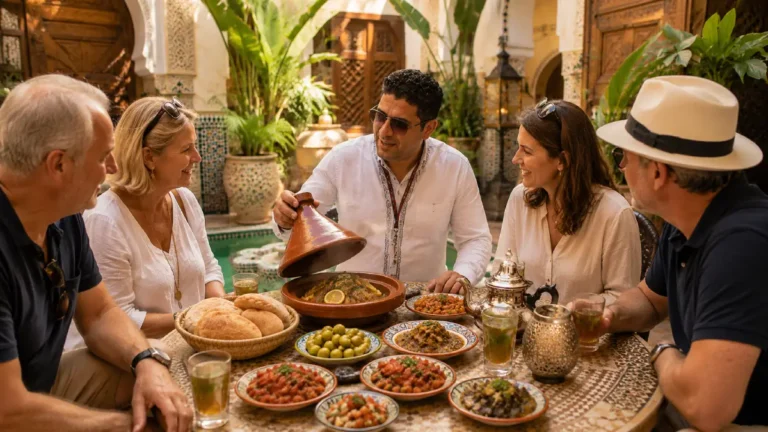
Tea is hospitality in Morocco. If someone serves you mint tea, it is more than a drink. It is a welcome.
Final Advice From a Moroccan Guide
The best way to eat in Morocco is to follow the land.
Eat tanjia in Marrakech. Eat pastilla in Fes. Eat sardines in Essaouira. Eat oysters in Oualidia. Eat amlou in Souss. Eat bissara in the north. Eat homemade bread in the Atlas Mountains. Drink tea in the Sahara after sunset.
That is how Moroccan food becomes more than a checklist.
Food here is memory. It is family, patience, hospitality, and place. It is the smell of spices in the souk, the sound of tea pouring into glass, the warmth of bread, and the feeling that someone has made space for you at the table.
If this Morocco food guide makes you hungry to experience the country beyond tourist restaurants, contact Kamal for local guidance, private food-focused walks, and honest Morocco travel advice shaped by real experience on the ground.
FAQ: Morocco Food Guide
How does Moroccan food change by region?
Moroccan food changes a lot from one region to another. Marrakech is known for tanjia and mechoui, Fes for pastilla and rfissa, Essaouira for seafood, the Souss for amlou and argan oil, northern Morocco for bissara, and the Atlas Mountains for simple tagines, bread and tea.
What is the best city in Morocco for food?
Marrakech is the best city for variety, street food, rooftops, and traditional dishes like tanjia. Fes is best for old Moroccan recipes and refined traditional cooking. Essaouira and Oualidia are best for seafood and Atlantic flavors.
Is Moroccan food spicy?
Moroccan food is flavorful rather than very spicy-hot. Moroccan cooking uses spices like cumin, saffron, ginger, turmeric, paprika, cinnamon, and black pepper. Some sauces, such as harissa, can be spicy, but most traditional dishes are balanced and aromatic instead of hot.
What is the most traditional food in Morocco?
Couscous is one of the most traditional Moroccan dishes and is strongly connected to family life and Friday meals. Tagine is also one of Morocco’s most iconic traditional foods because it is cooked slowly and differently in every region.
Which Moroccan foods should I try in different regions?
In Marrakech, try tanjia and mechoui. Fes is a good place for pastilla and rfissa, while Essaouira is known for grilled sardines and fresh seafood. In the Souss region, look for amlou and culinary argan oil, and in northern Morocco try bissara. For the full list of classic dishes, see my What to Eat in Morocco guide.
Is street food safe in Morocco?
Street food in Morocco can be safe if you choose busy places with fresh turnover and clean preparation. It is best to start slowly, eat freshly cooked food, avoid quiet stalls, and ask prices before ordering in tourist areas.
Can vegetarians eat well in Morocco?
Yes, vegetarians can eat very well in Morocco. Vegetable tagines, lentils, beans, couscous, Moroccan salads, soups, olives, bread, and breakfast foods are common throughout the country. Still, travelers should explain clearly if they do not eat meat because some dishes may use meat stock.
What do Moroccans drink with food?
Mint tea is Morocco’s most famous drink and is part of hospitality culture. Fresh orange juice is also very popular, especially in Marrakech. In coastal cities, coffee culture is strong as well, especially in Tangier, Casablanca, and Rabat.
What is a traditional Moroccan breakfast?
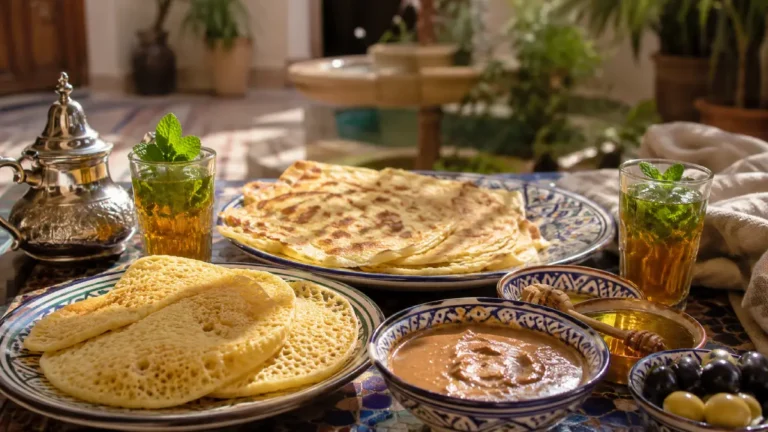
A traditional Moroccan breakfast may include msemen, harcha, bread, olive oil, honey, amlou, eggs, olives, cheese, mint tea, and coffee. Breakfast in mountain areas and smaller towns is often simple but very fresh and filling.
Is Moroccan food healthy?
Yes, Moroccan food can be healthy, especially when meals are cooked traditionally with vegetables, olive oil, legumes, herbs, spices, and fresh ingredients. In this Morocco food guide, I always suggest looking beyond tourist restaurants, because home-style Moroccan food is often more balanced, simple, and nourishing than many travelers expect.
What food should I avoid in Morocco?
Travelers with sensitive stomachs should avoid poorly handled street food, uncooked foods from questionable places, and untreated tap water during the first days of the trip. Busy restaurants with local customers are usually a safer choice.
What is the best food experience in Morocco?
Some of the best food experiences in Morocco include eating seafood in Essaouira, trying tanjia in Marrakech, sharing couscous on Friday, drinking mint tea in the Atlas Mountains, joining a cooking class in Fes, and having dinner under the stars in the Sahara Desert.