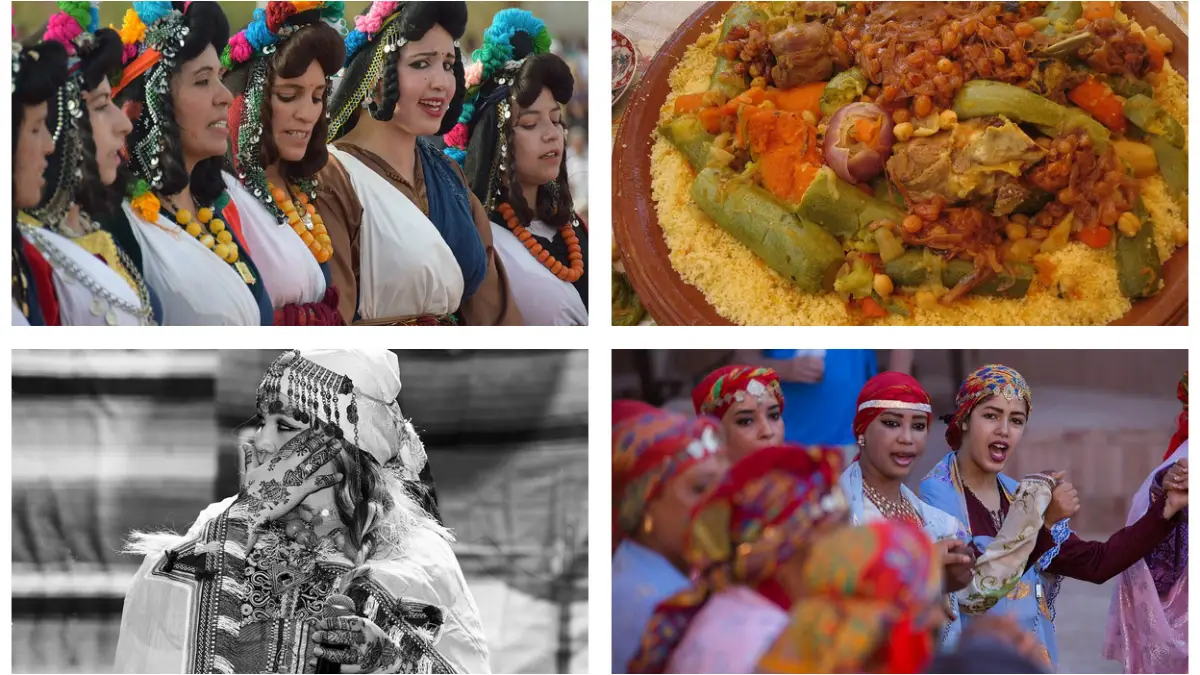
Yennayer in Morocco: Amazigh New Year 2027 Guide
Yennayer in Morocco is the Amazigh New Year, a celebration of renewal, family, the land, and Morocco’s deep Amazigh heritage. Today it is an official national holiday, but the traditions behind it are much older.
If you visit Morocco in January, you may come across traditional music and dance, Amazigh clothing, cultural events, and special family meals. But Yennayer is not celebrated in exactly the same way everywhere. Traditions vary between regions, towns, villages, and families.
Table of Contents
Table of Contents
When Is Yennayer in Morocco in 2027?
In Morocco, the official Amazigh New Year holiday falls on Thursday, January 14, 2027. It marks the beginning of Amazigh year 2977.
| Yennayer 2027 quick facts | Details |
|---|---|
| Official date in Morocco | Thursday, January 14, 2027 |
| Amazigh year | 2977 |
| Status | Official paid national holiday |
| Meaning | Amazigh New Year and the beginning of a new agricultural cycle |
| Also called | Yennayer, Id Yennayer, Iḍ n Innayer, Amazigh New Year |
| Traditional greeting | Assegas Ameggaz |
January 14 is Morocco’s official date for the Amazigh New Year holiday. You may also see January 12 or 13 mentioned online because Yennayer traditions and dates vary across North Africa, and some families begin celebrating before the official Moroccan holiday.
For travelers, the important date to remember is January 14. Cultural events and celebrations may begin earlier or continue for several days.
What Is Yennayer?
Yennayer marks the Amazigh New Year and is closely connected to the traditional agricultural calendar. It is celebrated in Morocco and other parts of North Africa, although customs and dates can vary from one community to another.
For generations, Yennayer has been associated with the land and the agricultural year. Families traditionally welcome the new year with hopes for rain, fertile land, good harvests, health, and prosperity.
Yennayer is a cultural celebration rather than a religious holiday. Its traditions are closely connected to Amazigh identity, family life, seasonal change, agriculture, and the relationship between people and the land.
Why Is the Amazigh Calendar 950 Years Ahead?
The commonly used Amazigh year count is approximately 950 years ahead of the Gregorian calendar. This is why 2027 corresponds to Amazigh year 2977.
The modern numbering system is commonly linked to around 950 BCE and the reign of Shoshenq I, an ancient Egyptian pharaoh of Libyan origin. This way of numbering Amazigh years was popularized much more recently and became an important cultural symbol.
The traditions surrounding Yennayer are older and more complex than this modern numbering system. It is therefore better to understand 2977 as part of the modern Amazigh calendar rather than evidence of one unchanged celebration continuing for nearly 3,000 years.
Is Yennayer a Public Holiday in Morocco?
Yes. Yennayer is an official paid national holiday in Morocco.
King Mohammed VI announced in May 2023 that the Amazigh New Year would become an official paid national holiday. Morocco officially observed the holiday for the first time in January 2024.
The decision gave Yennayer official national recognition and reflected the importance of Amazigh heritage within Morocco’s identity.
According to Morocco’s official national holiday calendar, Amazigh New Year is observed on January 14.
How Is Yennayer Celebrated in Morocco?
There is no single Yennayer celebration followed across the whole country. In one home it may be a quiet family meal, while elsewhere you might find concerts, traditional dancing, exhibitions, workshops, or large public celebrations.
Family Meals and Sharing
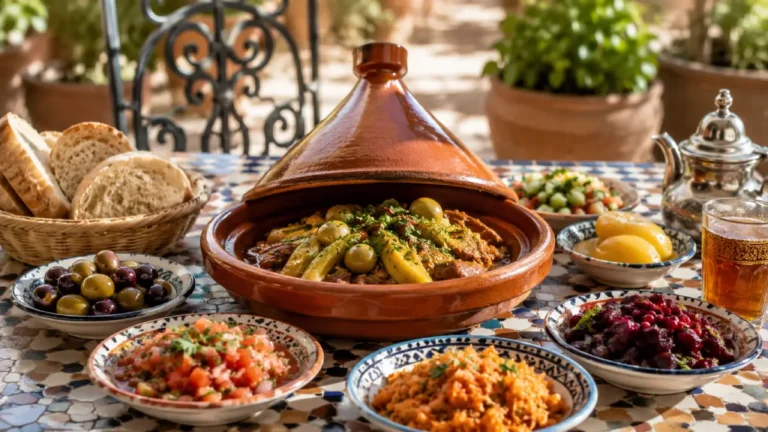
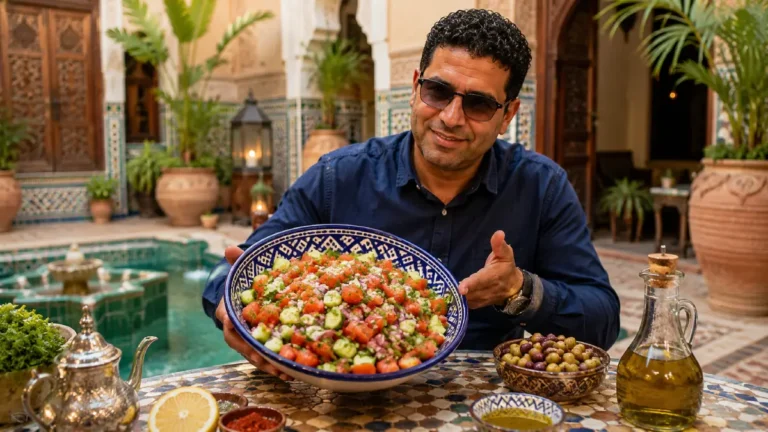
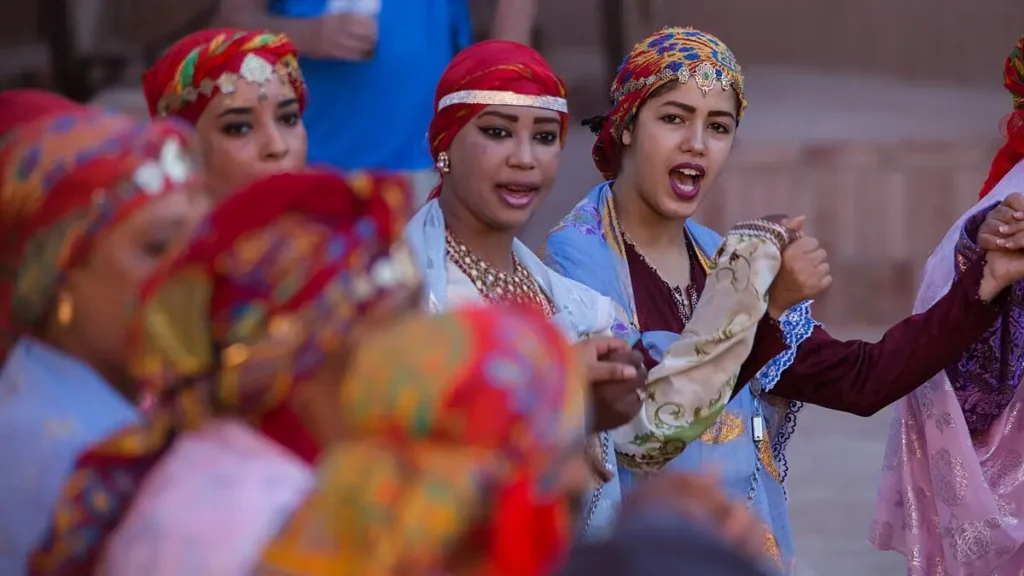
Food is at the heart of many Yennayer traditions. Families gather around dishes prepared with grains, legumes, dried fruit, nuts, local oils, and seasonal ingredients.
Many of these foods are associated with abundance and hopes for a prosperous agricultural year.
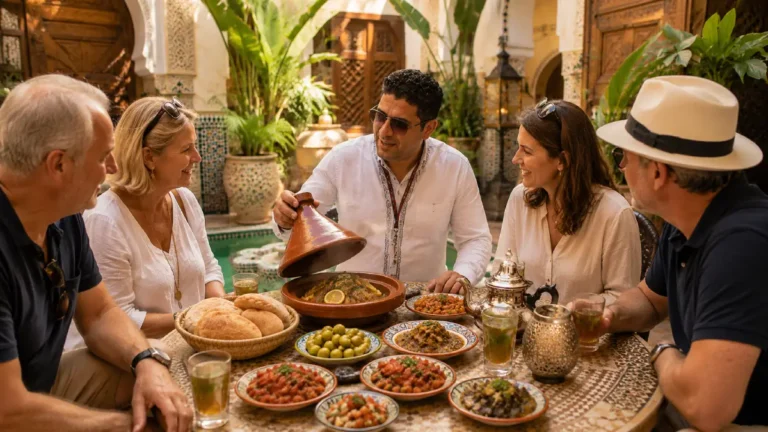
Sharing is often just as important as the food itself. Relatives and neighbors may eat together, exchange food, and begin the new year with generosity.
Amazigh Music and Dance
Public Yennayer celebrations may feature traditional Amazigh music and dance, including Ahwach and Ahidous. The style depends on the region.
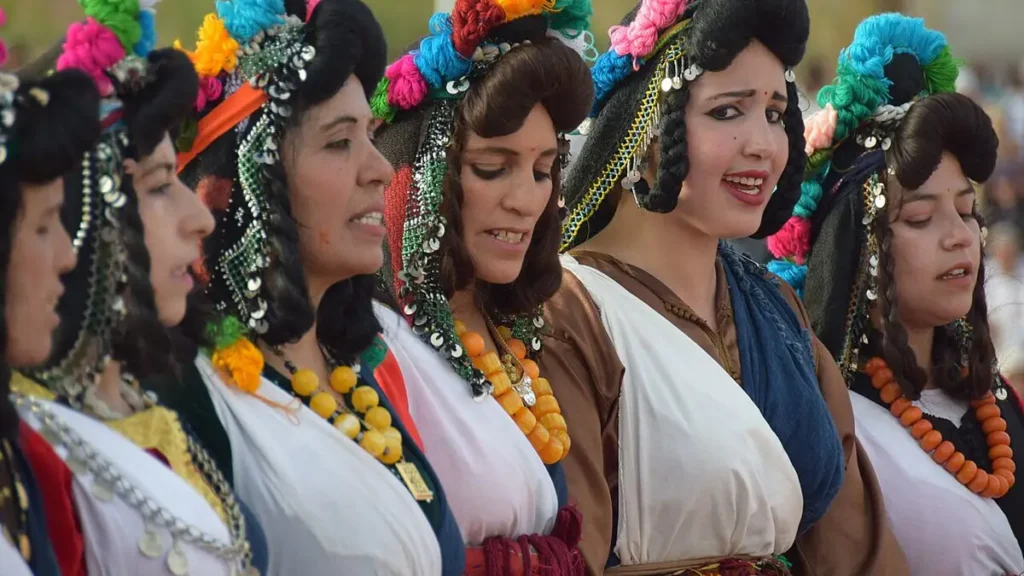
These traditions combine music, poetry, singing, drumming, and collective dance. They also preserve stories, local memory, and community identity.
Visitors may encounter performances at cultural centers, public squares, museums, hotels, or events organized by municipalities and cultural associations.
Traditional Clothing and Jewelry
During cultural celebrations, women and men may wear regional Amazigh clothing, silver jewelry, embroidered garments, and colorful accessories.
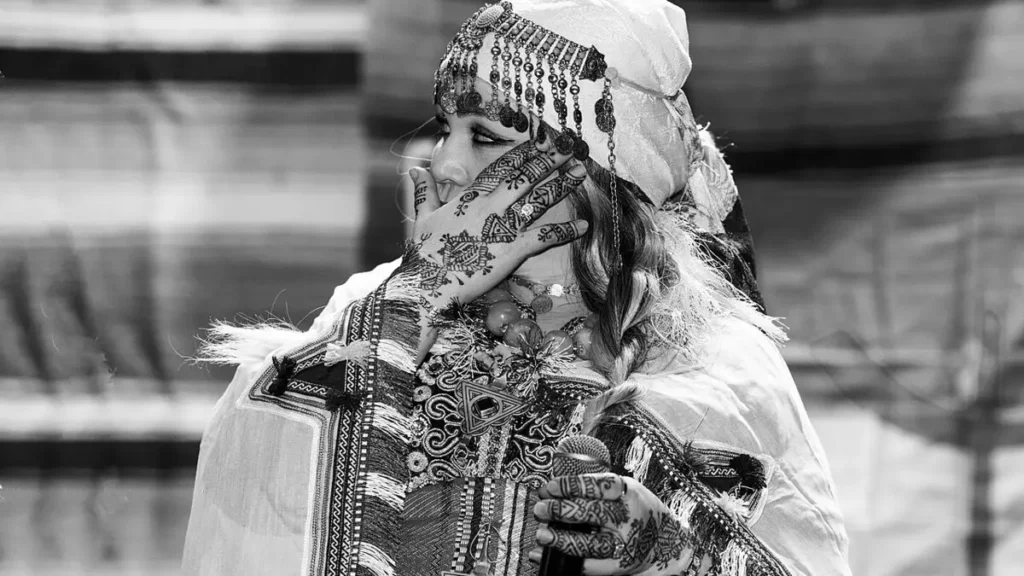
Styles differ considerably between the Rif, Middle Atlas, High Atlas, Souss, Anti-Atlas, and southeastern Morocco.
There is no single traditional outfit representing every Amazigh community. Morocco’s Amazigh culture is diverse, and each region has its own traditions.
Passing Traditions to Younger Generations
Yennayer is also an opportunity for older generations to share songs, stories, recipes, blessings, and local traditions with children.
This connection between generations helps keep Amazigh traditions alive even as everyday life in Morocco changes.
Traditional Yennayer Food in Morocco
There is no single national Yennayer menu. What families prepare depends on the region and their own traditions, but grains, legumes, nuts, dried fruit, and foods connected to the harvest are common.
Tagoula
Tagoula, sometimes called tarwayt, is particularly associated with southern Morocco and the Souss region.
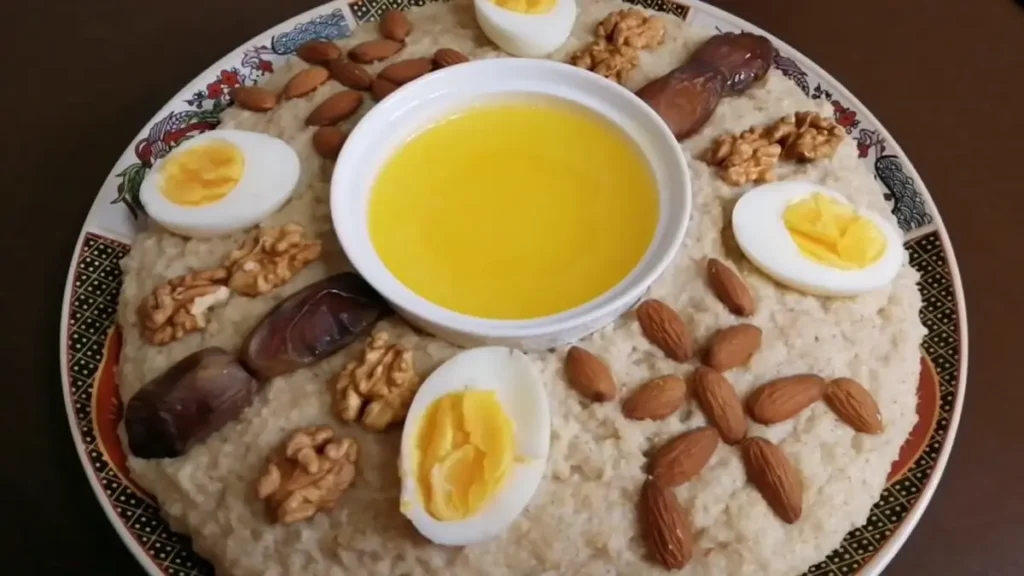
It is a thick porridge usually prepared from barley or corn semolina and may be served with argan oil, olive oil, honey, amlou, dates, or nuts.
Some families place a date stone or another symbolic item inside the dish. The person who finds it may be considered lucky for the coming year.
Ourkimen
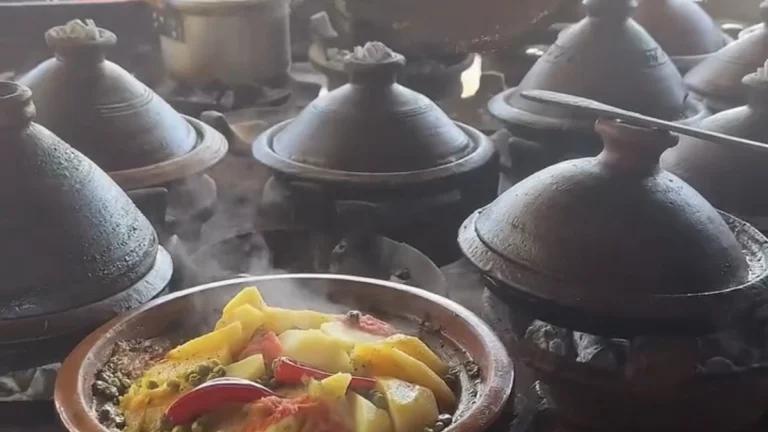
Ourkimen is a slow-cooked dish made with a mixture of grains and legumes. Recipes vary, but ingredients can include wheat, barley, lentils, beans, and chickpeas.
The combination of different ingredients is associated with abundance, nourishment, and hopes for a generous agricultural year.
Berkoukes
Berkoukes is prepared with large hand-rolled semolina grains, bigger than ordinary couscous.
Depending on the region and family recipe, it can be served in a savory broth or prepared with ingredients such as milk, butter, honey, or cinnamon.
Couscous and Regional Dishes
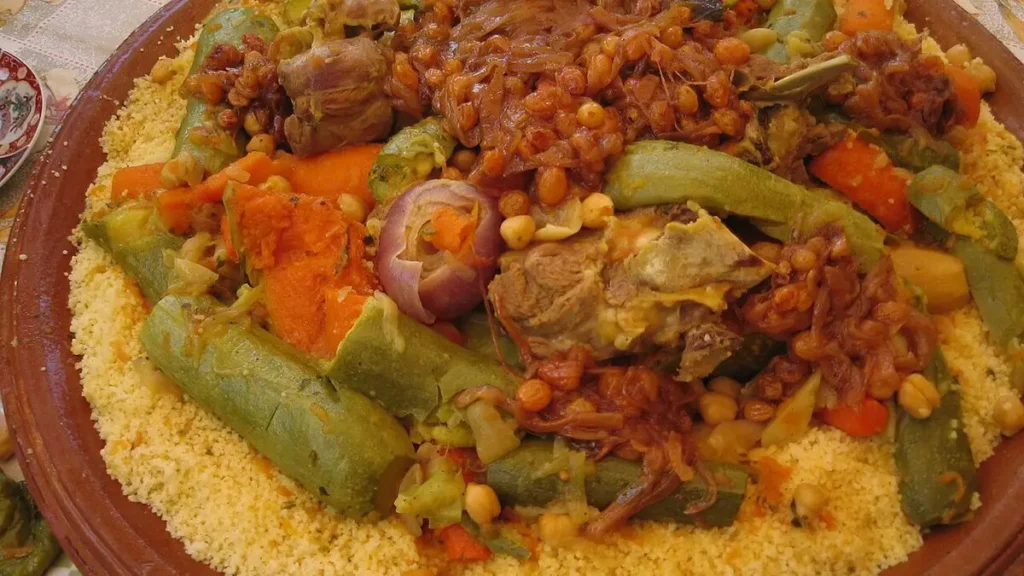
Some families prepare couscous with vegetables, meat, chicken, dried fruit, or nuts. Others serve local breads, soups, dates, sweets, or dishes specific to their region or village.
If you want to explore Moroccan cuisine beyond Yennayer, read my guide to what to eat in Morocco.
Where Can Visitors Experience Yennayer in Morocco?
Yennayer is celebrated throughout Morocco, but public events are often particularly visible in regions with strong Amazigh cultural traditions.
Agadir and the Souss Region
Agadir and the wider Souss region are excellent places to look for public Yennayer celebrations.
Depending on the year, programs may include concerts, Ahwach performances, traditional food, exhibitions, workshops, and activities for families.
If Agadir is part of your January trip, start with my Agadir Travel Guide. Nearby Taghazout is another good base for exploring the Souss coast.
Atlas Mountains and Southeastern Morocco
The High Atlas, Middle Atlas, Anti-Atlas, Ouarzazate, Tinghir, and surrounding valleys have strong living Amazigh traditions.
Celebrations in these areas may be more family- and community-centered than the larger public events organized in cities.
Do not arrive in a village expecting a performance for visitors. Many Yennayer traditions take place privately inside homes and communities. Participate only when invited and always ask permission before photographing people.
Marrakech
Marrakech may host concerts, exhibitions, and cultural programs around Yennayer, but events change from year to year.
Check confirmed local announcements shortly before your visit rather than planning your entire day around an event announced in a previous year.
My Marrakech in January guide covers the weather, what to wear, crowds, and other practical information for visiting during this period.
Rabat and Casablanca
Cultural institutions, associations, museums, and public venues in Rabat and Casablanca may organize exhibitions, talks, concerts, and family activities for Yennayer.
Programs are usually announced closer to the date, so check current local information if you will be visiting either city around January 14.
What Should Travelers Expect on January 14?
Because Yennayer is a national holiday, government offices, banks, and some businesses may close or operate differently.
Hotels, restaurants, public transport, attractions, and other tourism services generally continue operating, although individual schedules can change.
If you have an important transfer, activity, restaurant reservation, or attraction planned for January 14, confirm the schedule in advance.
Most importantly, do not expect one enormous nationwide street festival. Some of the most meaningful Yennayer traditions happen quietly inside homes and local communities.
Planning to travel around Morocco during Yennayer? If you prefer to arrange things in advance, you can compare Morocco tours and activities or airport transfers before your trip.
January is also winter in Morocco. Days can be pleasant in many cities, but evenings are cooler and mountain areas can be very cold. Read my Morocco in January guide before packing.
How to Experience Yennayer Respectfully
Yennayer is a living part of Moroccan culture rather than a performance created for tourists. If you encounter a celebration, a few simple habits will help you experience it respectfully.
- Ask permission before photographing people, especially children or family gatherings.
- Do not enter a private celebration unless you are invited.
- Listen to local explanations because customs vary between regions and communities.
- Support local artisans, musicians, cooks, and community events when appropriate.
- Use “Amazigh” when that is how people describe themselves rather than assuming everyone prefers the older term “Berber.”
- Remember that there is no single Amazigh costume, dish, language variety, or way of celebrating Yennayer.
A Local Note from Kamal
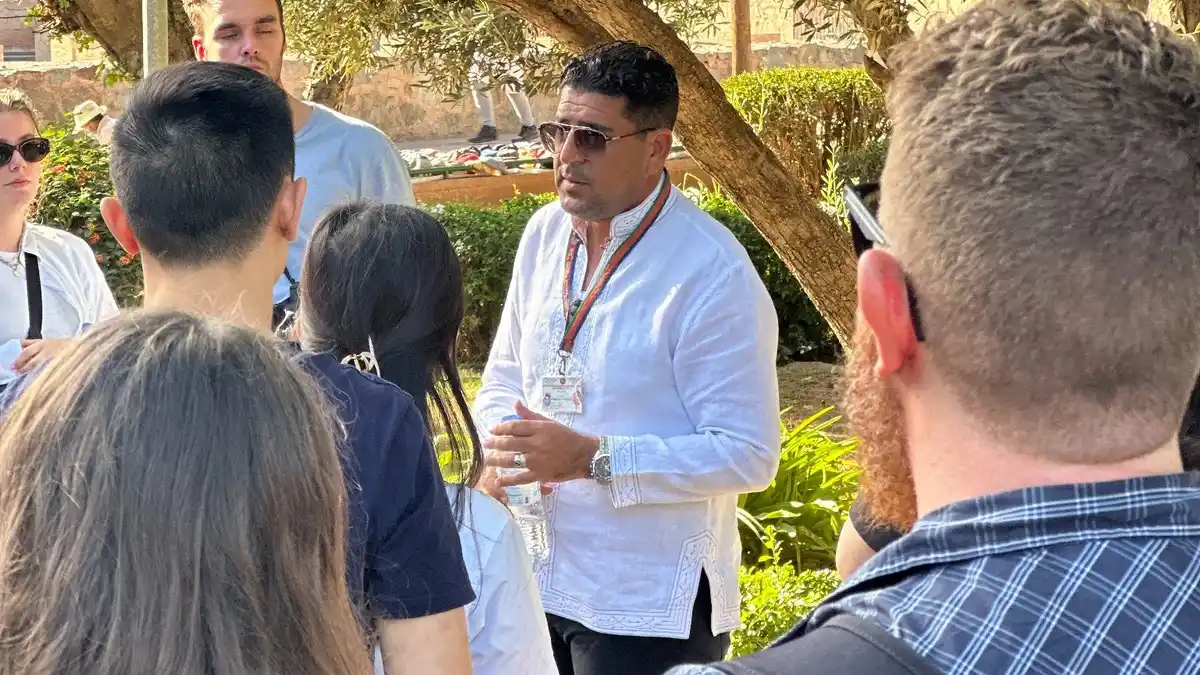
I come from Tinghir in southeastern Morocco, where Amazigh culture is part of everyday life rather than something you see only during festivals.
You find it in the language people speak, the food families prepare, music, architecture, traditions passed between generations, and the relationship people have with the land.
For me, the best way to understand Yennayer is not to search only for the biggest celebration. Pay attention to the meaning behind the meal, the music, and the gathering: renewal, generosity, family, belonging, and hope for a good year ahead.
Useful Amazigh New Year Greetings
You may see several spellings of Yennayer and its greetings because Morocco has different Amazigh language varieties and transliterations.
Assegas Ameggaz is one of the greetings visitors will commonly encounter and is used to wish someone a happy or prosperous new year.
You may also see Yennayer written as Innayer or Iḍ n Innayer. Different spellings and local expressions reflect the diversity of Amazigh languages and traditions across Morocco and North Africa.
Frequently Asked Questions
When is Yennayer 2027 in Morocco?
The official Amazigh New Year holiday in Morocco falls on Thursday, January 14, 2027. It marks the beginning of Amazigh year 2977.
Why do I sometimes see January 12 or 13 as the date for Yennayer?
Yennayer has traditionally been observed on different dates across North Africa, which is why you may see January 12 or 13 mentioned online. For travelers visiting Morocco, January 14 is the date that matters: it is the country’s official Amazigh New Year holiday.
Is Yennayer a religious holiday?
No. Yennayer is primarily a cultural and agricultural New Year associated with Amazigh heritage and the traditional farming calendar.
Is Amazigh New Year the same as Berber New Year?
Both terms are commonly used in English to refer to Yennayer. “Amazigh” is increasingly preferred when referring to the Indigenous peoples and cultures of North Africa, while “Berber New Year” remains common in older publications and online searches.
Will shops and attractions be closed on Yennayer?
Government offices, banks, and some businesses may close or change their hours because January 14 is a national holiday. Hotels, restaurants, attractions, and transport services often continue operating, particularly in tourist areas, but it is sensible to confirm anything important in advance.
Can tourists join Yennayer celebrations?
Yes, when an event is public or when you are invited.
Look for confirmed programs from municipalities, museums, cultural centers, and local associations. Family celebrations are private, so always participate respectfully.
What year is 2027 in the Amazigh calendar?
The Gregorian year 2027 corresponds to Amazigh year 2977 under the commonly used modern Amazigh calendar.
Final Thoughts
Yennayer gives travelers an opportunity to learn more about Morocco beyond its famous sights. Its importance, however, goes far beyond tourism.
It celebrates Amazigh heritage, family, agriculture, generosity, renewal, and hopes for prosperity in the year ahead.
If you are in Morocco around January 14, 2027, check confirmed local programs but also remain open to the quieter side of Yennayer. Sometimes a shared dish, a traditional song, or a conversation with a Moroccan family can tell you more about the celebration than the largest public event.
For more help planning your trip, start with my complete Morocco Travel Guide.