What to Buy in Morocco: 18 Best Souvenirs, Prices & Local Shopping Tips
One of the questions travelers ask me most when we walk through the souks is simple: what should I actually buy in Morocco?
I understand why. On your first walk through a Moroccan medina, everything catches your eye. You see handwoven rugs hanging from walls, leather bags stacked outside workshops, brass lanterns glowing in dark passages, colorful ceramics, spices, slippers, jewelry, baskets and bottles of argan oil.
But not everything that looks Moroccan is worth putting in your suitcase.
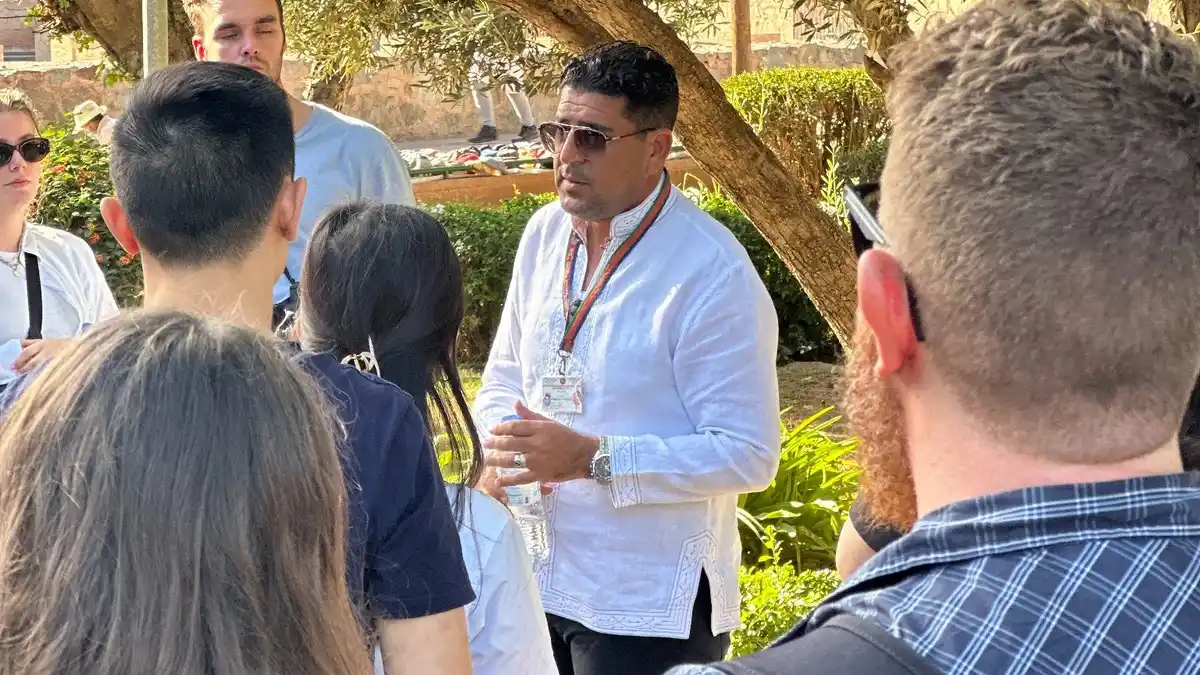
I’m Kamal, a licensed Moroccan tour guide based in Marrakech, and I have spent years walking through souks and craft workshops with visitors from around the world. I have seen travelers find beautiful handmade pieces they still love years later, and I have also seen people pay too much because they became excited before they understood what they were buying.
My advice is simple: shop slowly and buy fewer, better things.
What to buy in Morocco depends on your budget, where you travel and what you will actually use at home. The best Moroccan souvenirs are usually connected to a real craft, region or part of everyday life: a wool rug, handmade pottery, quality leather, traditional babouche slippers, argan oil, spices, tea glasses, baskets, jewelry, hammam products or something made by an artisan whose work you genuinely appreciate.
In this guide, I will show you what I think is worth buying in Morocco, realistic price ranges, where I prefer to look for different products, what is easy to take home and what I would check before spending serious money.
Planning the rest of your trip too? My Morocco Travel Guide covers when to visit, where to go, transport, money, safety, food and practical planning for a first trip to Morocco.
Table of Contents
Table of Contents
What Are the Best Things to Buy in Morocco?
If you are still deciding what to buy in Morocco on your first trip, start with something useful, easy to carry and connected to a real local craft rather than choosing only because it looks good in the souk.
The best things to buy in Morocco are handmade rugs, leather goods, ceramics, babouche slippers, argan oil, spices, jewelry, tea glasses, lanterns, hammam products, woven baskets, textiles and regional crafts such as thuya wood and rose products. The best choice depends on your budget, luggage space and where you travel, so I have included realistic price ranges and the best places to look for each item below.
Best Moroccan Souvenirs for First-Time Visitors
| Souvenir | What I’d look for | Where I’d shop | Typical price |
|---|---|---|---|
| Moroccan rugs | Beni Ourain-style rugs, kilims, colorful Amazigh designs | Marrakech, Atlas regions, Fes, southern Morocco | 750–25,000+ MAD |
| Babouche slippers | Leather pointed slippers, rounded styles, embroidered pairs | Marrakech, Fes | 80–400+ MAD |
| Moroccan ceramics | Fes blue-and-white bowls, Safi pottery, painted plates, mini tagines | Fes, Safi, Marrakech | 20–500+ MAD |
| Leather goods | Crossbody bags, wallets, belts, backpacks, poufs | Fes, Marrakech | 100–1,500+ MAD |
| Argan products | Cosmetic oil, culinary oil, argan soap and creams | Essaouira, Agadir region | 80–180+ MAD/100 ml |
| Moroccan spices | Ras el hanout, cumin, paprika, cinnamon, turmeric, ginger | Markets across Morocco | 20–100+ MAD |
My pick: If you want one memorable purchase, I would look at a good Moroccan rug or well-made leather. For smaller gifts that are easy to pack, babouche slippers and spices are much simpler choices. For more background on Morocco’s regional crafts and artisan traditions, the Moroccan National Tourist Office has a useful overview of traditional Moroccan craftsmanship.
Moroccan Souvenirs That Look Good at Home
| What to buy | Best version to look for | Best place | Packing reality |
|---|---|---|---|
| Moroccan jewelry | Amazigh-style necklaces, bracelets, earrings, pendants | Southern Morocco, Marrakech, Fes | Very easy |
| Tea glasses | Painted, colored or gold-decorated sets | Across Morocco | Fragile |
| Moroccan teapots | Engraved traditional metal teapots | Marrakech, Fes | Medium |
| Moroccan lanterns | Pierced-metal or colored-glass lamps | Marrakech, Fes | Difficult |
| Woven baskets | Palm-leaf market baskets and decorated storage baskets | Marrakech, Essaouira | Medium |
| Hammam products | Beldi soap, kessa glove, ghassoul clay, rose water | Across Morocco | Very easy |
Best for luggage: jewelry and hammam products are the easiest choices here. Think twice about: large lanterns and fragile tea glasses unless you have space to pack them properly.
Regional Moroccan Souvenirs Worth Looking For
| Local find | What makes it interesting | Best region | Typical price |
|---|---|---|---|
| Thuya wood | Jewelry boxes, trays and carved decorative pieces | Essaouira | 80–600+ MAD |
| Moroccan textiles | Woven blankets, cushion covers and throws | Atlas regions, Marrakech | 250–1,500+ MAD |
| Moroccan clothing | Kaftans, djellabas, embroidered tunics and scarves | Marrakech, Fes, Rabat | 150–1,500+ MAD |
| Metalwork | Brass trays, engraved mirrors, candleholders and bowls | Marrakech, Fes | 100–1,500+ MAD |
| Rose products | Rose water, soap, creams and scented oils | Kelaat M’Gouna, Dades Valley | 20–150+ MAD |
| Moroccan food gifts | Dates, amlou, honey, sweets and mint tea | Across Morocco | 30–250+ MAD |
Local tip: If your route takes you through Essaouira, the Atlas Mountains or southern Morocco, don’t automatically wait until Marrakech. Some souvenirs are more meaningful when you buy them closer to where they are traditionally made.
Price note: These are approximate shopping ranges. Quality, size, material, craftsmanship and location can change the price considerably, especially for rugs, leather, jewelry and handmade products.
Want help shopping in Marrakech? Explore the souks with me on a private Marrakech shopping tour. See how the tour works and contact me directly to check availability and request a price for your group. I’ll help you compare Moroccan crafts at a comfortable pace, with no pressure to buy. Prefer booking through a platform? View my tour on Viator.
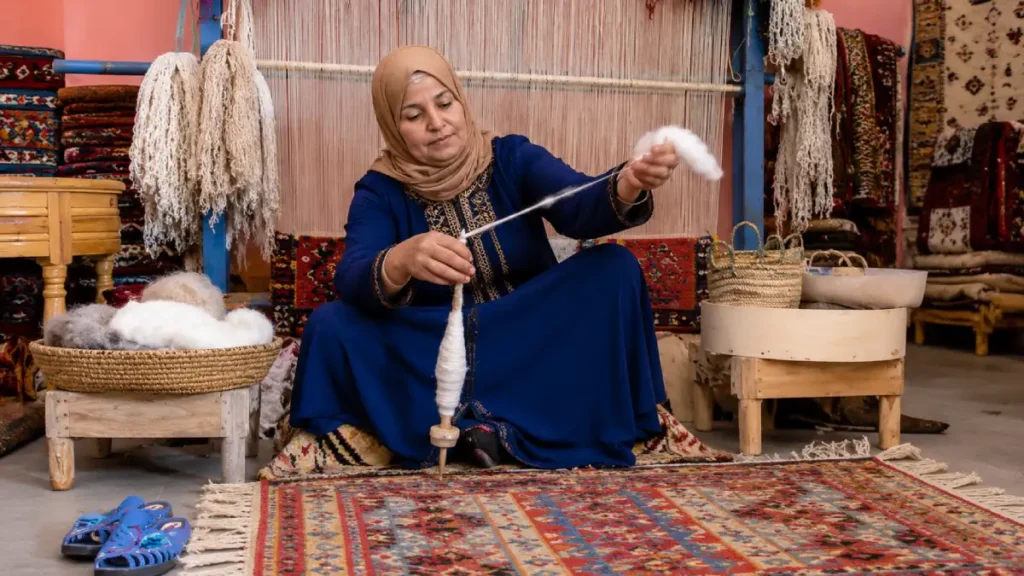
1. Moroccan Rugs
If you want one memorable purchase from Morocco, a good Moroccan rug can be difficult to beat.
Moroccan rugs vary enormously by region, weaving technique, wool, age, pattern and size. You will find everything from simple flat-woven kilims to thick wool rugs and more colorful Amazigh designs from mountain and southern regions.
This is also one of the easiest purchases to overpay for because there is no single correct price for a Moroccan rug.
As a rough guide, a small simple rug might begin around 750–1,000 MAD, while many good medium-size rugs fall around 3,500–6,000 MAD. Large, intricate, high-quality or genuinely older pieces can reach 10,000–25,000 MAD or considerably more.
Do not judge a rug only by how beautiful it looks hanging on a wall.
Ask to take it down. Feel the wool. Look at the back. Check the edges and weaving. Ask where it comes from, what material was used and whether the seller knows anything about how it was made.
Then look at several rugs before making a decision.
Most importantly, never buy a rug simply because someone tells you it is an incredibly rare antique and that you must decide immediately.
A beautiful rug does not stop being beautiful because you took 20 minutes to think.
If you are unsure about making a larger purchase, my guide to whether a Moroccan rug is worth bringing home can help you consider your space, daily use and budget.
If a rug is one of the main things you hope to buy, read my complete guide to buying a Moroccan rug in Marrakech, where I go deeper into rug types, realistic prices, quality, bargaining and shipping. If you are deciding which shops to visit, see my guide to where to buy rugs in Marrakech for three places I personally recommend.
2. Moroccan Leather Bags and Goods
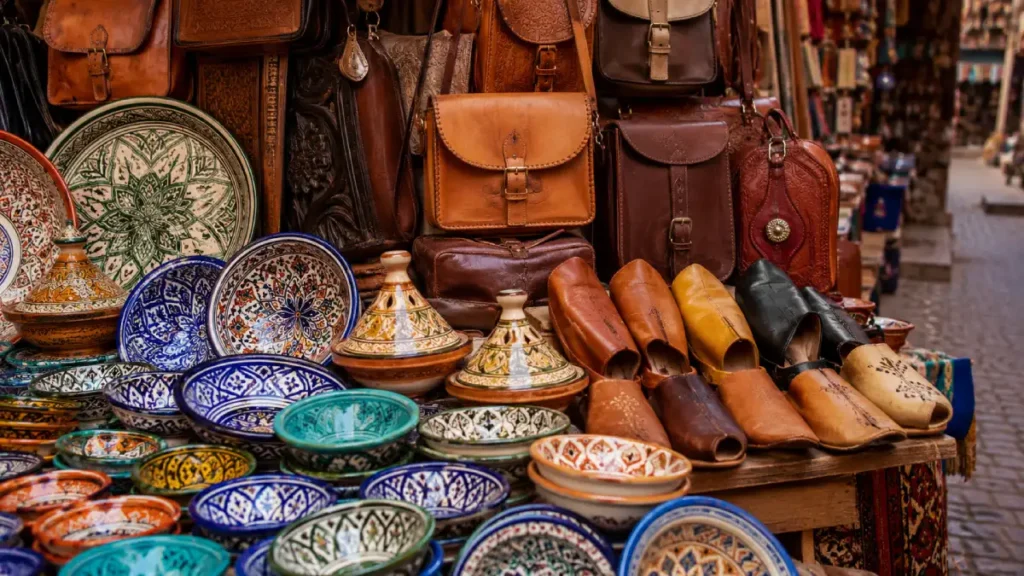
Leather is another classic thing to buy in Morocco, particularly in Fes and Marrakech.
You will find handbags, crossbody bags, travel bags, backpacks, belts, wallets, leather poufs and many other products.
Fes has one of Morocco’s strongest traditional leather-working traditions, while Marrakech gives travelers an enormous amount of choice in both traditional and contemporary designs.
I pay more attention to construction than to the sales story.
Look closely at the stitching, zipper, lining, handles and edges. Pick the bag up. Open and close it. Check whether the handles feel secure.
For a simple small leather item, you might spend around 100–300 MAD. A decent handmade bag may fall around 350–1,000 MAD, while larger or better-finished pieces can cost considerably more.
Do not automatically assume the strongest leather smell means the best leather. Look at the workmanship.
A beautiful bag is not much use if the zipper breaks after two weeks.
If you are shopping in Marrakech, read my guide to choosing a leather bag in Marrakech for a practical inspection checklist and questions to ask before paying.
3. Babouche Slippers
Traditional babouche slippers are among my favorite cheap things to buy in Morocco because they are colorful, lightweight and easy to fit into a suitcase.
You will see pointed slippers, rounded versions, plain leather styles and more decorative embroidered designs.
There can be a big difference between an inexpensive tourist pair and better-finished handmade slippers.
Look at the sole, stitching and inside finish. If you actually intend to wear them regularly, I would not choose only by the lowest price.
Basic babouches can start around 80–150 MAD, while better leather or more decorative pairs may cost 200–400 MAD or more.
They also make easy gifts because they take up almost no luggage space.
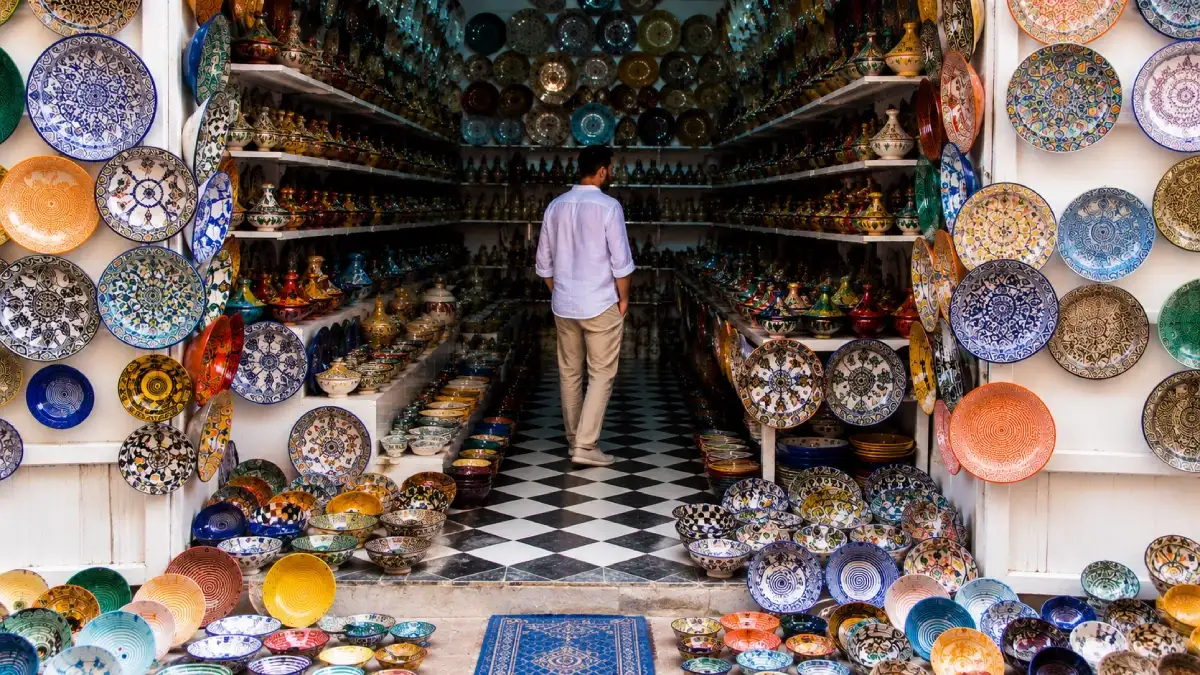
4. Moroccan Ceramics and Pottery
If you like color and design, Moroccan ceramics are dangerous for your luggage allowance.
Bowls, plates, tagines, cups, serving dishes and decorative pottery are everywhere, but different Moroccan regions have their own traditions and styles.
Fes is especially famous for blue-and-white ceramics and detailed geometric decoration, while Safi has an important pottery tradition of its own.
Small ceramic bowls might start at around 20–50 MAD, with more detailed bowls, plates and serving pieces around 50–200 MAD. Larger or more elaborate handmade pieces can reach several hundred dirhams or more.
My practical advice is to think about the flight home before buying six large plates.
Ask the shop to wrap ceramics carefully, and put the most delicate pieces somewhere protected inside your luggage.
If you buy a tagine because you want to cook with it, ask whether it is intended for cooking. Some beautifully decorated tagines are primarily decorative or serving pieces.
If you are shopping in Marrakech, read my guide to choosing ceramics in Marrakech for a practical checklist covering condition, intended use, packing and shipping.
5. Argan Oil
Argan oil is one of the most famous Moroccan products, but it is also something I would buy carefully.
The argan tree is strongly associated with southwestern Morocco, particularly the region around Essaouira and Agadir, so those areas are natural places to shop for good argan products.
You will see both cosmetic argan oil and argan oil prepared for culinary use. They are not exactly the same product, so know what you are buying.
For a small bottle of good cosmetic argan oil, I would roughly budget around 80–180 MAD for approximately 100 ml, although quality, production and packaging can push the price higher.
I would rather pay slightly more from a place where the ingredients and origin are clear than buy a suspiciously cheap anonymous bottle because someone promises it is “100% pure.”
This is especially important with products you intend to use on your skin.
If you are shopping in Marrakech, my guide to choosing argan oil in Marrakech covers intended use, ingredients, producer details, bottle sizes and packing before you buy.
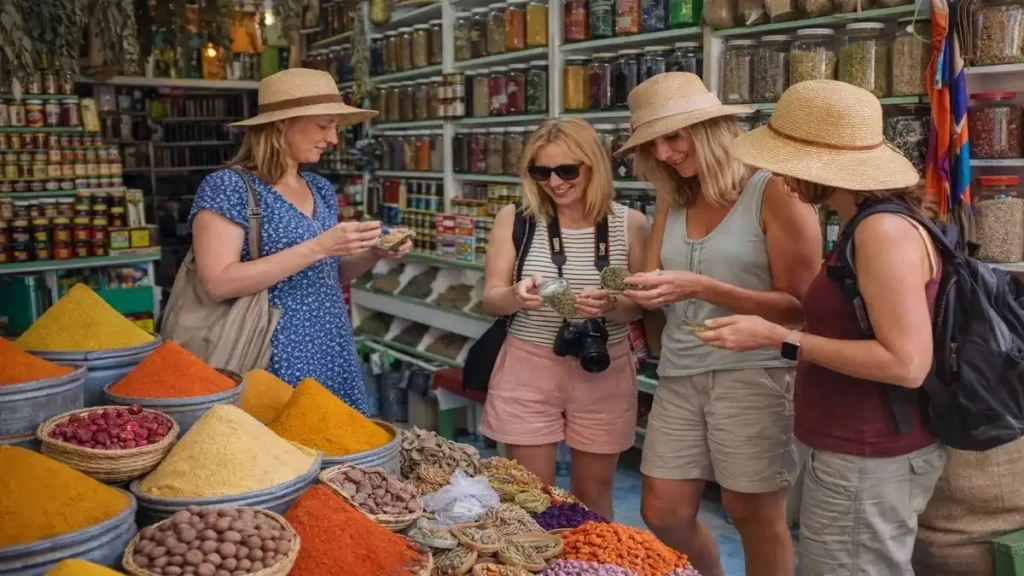
6. Moroccan Spices
Spices are among the easiest souvenirs to buy in Morocco because they are inexpensive, lightweight and useful once you get home.
Look for ras el hanout, cumin, paprika, cinnamon, turmeric and ginger.
Ras el hanout is probably one of the easiest spice blends to take home because it immediately reminds people of Moroccan cooking.
Cumin is another spice I associate strongly with the Moroccan table.
My advice is not to buy huge quantities simply because the spice display looks beautiful. Buy what you genuinely cook with.
I would also be cautious with anything sold as very expensive saffron.
Real saffron is valuable, and tourists do sometimes encounter products marketed as premium saffron that are not what they appear to be.
If you cannot judge the quality yourself, do not spend a large amount only because you are told it is the finest saffron in Morocco.
If you are shopping in Marrakech, my guide to choosing spices in Marrakech covers Rahba Lkdima, spice blends, quantities, packing and prices by weight.
7. Moroccan Jewelry
What jewelry should you buy in Morocco? This is a question worth answering carefully because there is far more variety than many travelers expect.
You will see Amazigh-inspired necklaces, silver-colored bracelets, earrings, pendants, engraved pieces and jewelry incorporating stones, enamel or geometric designs.
Southern Morocco can be especially interesting if traditional Amazigh design appeals to you, while Marrakech and Fes offer a very wide selection.
But jewelry is another category where I tell visitors not to confuse a good story with proof.
Something looking old does not automatically make it antique.
Something being described as silver does not automatically tell you how much silver it contains.
For inexpensive decorative jewelry, that may not matter at all. If you like the design and the price is reasonable, enjoy it.
For an expensive purchase, ask clearly what material you are buying and what exactly you are paying for.
Simple decorative pieces can begin around 150–300 MAD, while better handmade jewelry may run 500–1,500 MAD or considerably more, depending on the material and craftsmanship.
I would rather buy one piece you genuinely love than five pieces because you felt pressured to make a decision.
If you are shopping in Marrakech, my guide to choosing silver jewelry in Marrakech covers Souk Siyyaghin, metal descriptions, fit and the details to request on your receipt.
8. Moroccan Lanterns and Lamps
Moroccan lanterns look especially beautiful inside the souks.
Pierced metal creates patterns of light across walls, while colored-glass lamps can completely change the atmosphere of a room.
Unfortunately, they are also among the least convenient Moroccan souvenirs to transport.
Small simple lanterns may begin around 150–300 MAD, while larger, heavier or more detailed lamps can cost hundreds or even thousands of dirhams.
Inspect thin metal carefully because inexpensive lanterns can bend quite easily.
If you buy an electrical lamp, also remember that the wiring or fixture may not necessarily match the electrical standards in your home country.
Sometimes the smartest souvenir is a decorative candle lantern that does not create another job when you return home.
If Marrakech is your shopping stop, read my guide to choosing and bringing home a lantern from Marrakech for checks on workmanship, intended use and packing.
9. Moroccan Tea Glasses
Tea glasses are one of the easiest ways to bring a little piece of Moroccan daily life home.
You will see simple colored glasses, gold-decorated sets, painted glasses and more elaborate designs.
A basic set might cost around 60–150 MAD, with more decorative or better-quality sets around 150–250 MAD or more.
They are useful, affordable and make good gifts.
Their only enemy is baggage handling.
Wrap them very carefully.
10. Moroccan Teapots
If the tea glasses are going home, you may be tempted by a Moroccan teapot too.
Traditional-style metal teapots range from inexpensive decorative versions to heavier engraved pieces.
Expect roughly 150–600 MAD or more, depending on size, material and workmanship.
Before buying one, inspect the handle and lid and place the pot on a flat surface.
Then ask yourself one important question:
Will I actually use this when I get home?
The souvenirs I recommend most are the ones that still have a place in your life long after the holiday is over.
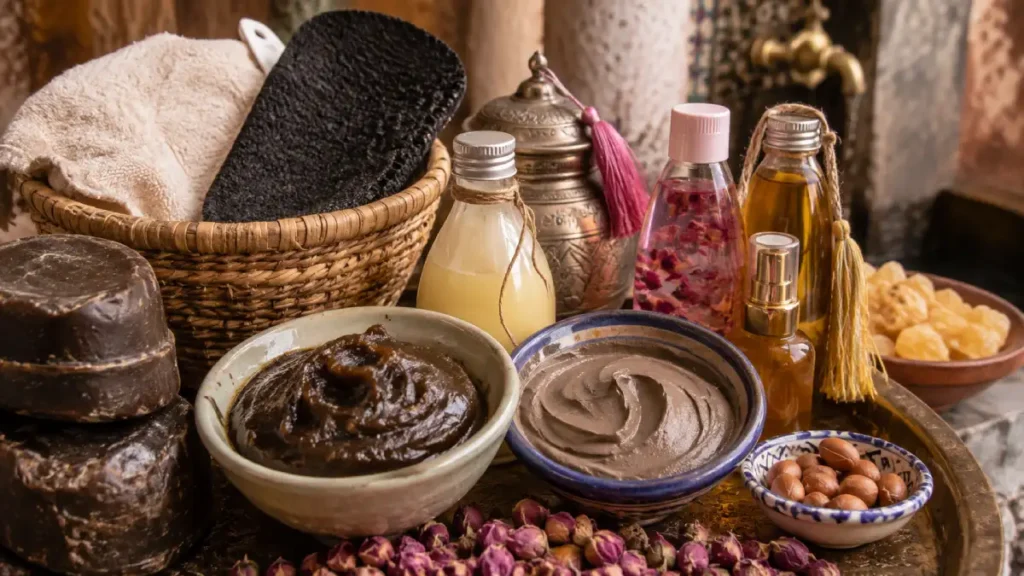
11. Moroccan Hammam and Beauty Products
If you are wondering what beauty products to buy in Morocco, traditional hammam products are a good place to start.
Look for beldi black soap, kessa exfoliating gloves, ghassoul clay, rose water, orange blossom water and argan-based cosmetics.
These products are usually inexpensive and take almost no room in your suitcase.
Simple hammam products often cost around 20–100 MAD, while packaged oils, skincare products and gift sets can cost more.
For anything you intend to use on your skin, I prefer clearly labeled products from a reputable shop over an anonymous liquid poured into an unmarked bottle.
If you have sensitive skin, test unfamiliar products carefully rather than assuming that “natural” automatically means suitable for everyone.
12. Moroccan Woven Baskets
Woven Moroccan baskets are practical, attractive and usually inexpensive.
Look for palm-leaf market baskets, decorated shopping baskets, storage baskets and small woven gift baskets.
Small versions may begin around 50–100 MAD, while larger or decorated baskets might cost 100–300 MAD or more.
One practical advantage is that you can often fill a basket with softer souvenirs and pack everything together.
This is the type of inexpensive Moroccan souvenir I like: simple, useful and connected to ordinary daily life.
13. Thuya Wood From Essaouira
When I am in Essaouira, one craft I particularly like is thuya woodwork.
You will find small jewelry boxes, decorative boxes, trays, containers and larger objects made from beautifully patterned wood.
A small thuya box might cost around 80–200 MAD, while more elaborate pieces can rise to several hundred dirhams or more.
Small thuya products also make excellent souvenirs because they look distinctive but are much easier to transport than a large lamp or ceramic serving plate.
If you are visiting Essaouira, this is one of the local crafts I would take time to look at.
14. Moroccan Blankets and Textiles
Not everyone wants a full-size Moroccan rug.
A good woven blanket, cushion cover, throw or other textile can give you much of the character of Moroccan weaving without the price or weight of a large carpet.
Prices vary significantly, but roughly 250–1,500 MAD or more covers many of the textiles travelers are likely to consider.
Inspect the weave, edges and finish rather than choosing only by the design on the front.
Handwoven textiles can have small variations. That is not necessarily a defect.
The question is whether the overall workmanship and material feel right for the price.
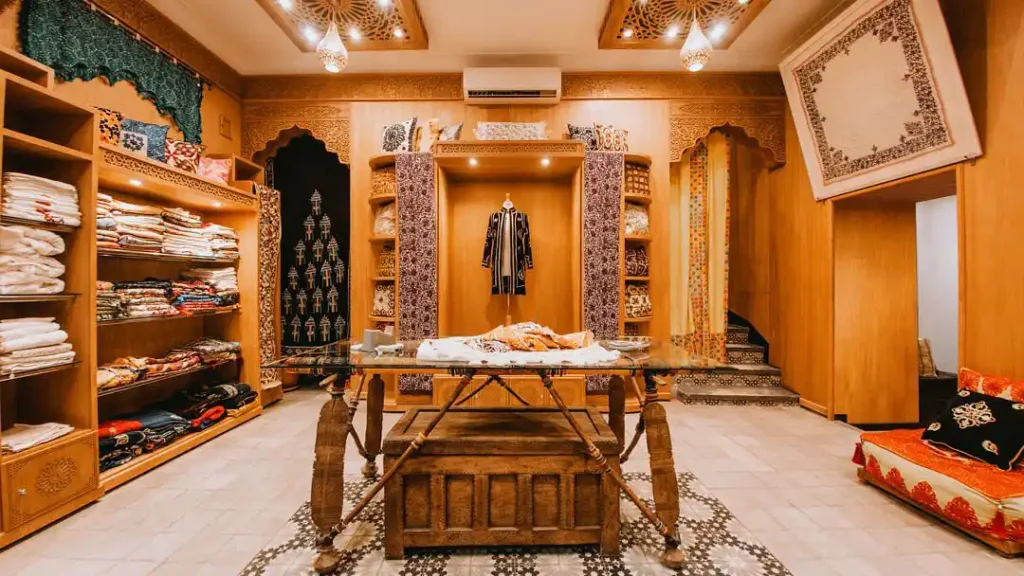
15. Kaftans, Djellabas and Moroccan Clothing
Traditional Moroccan clothing can be a beautiful souvenir if you are buying something you will genuinely wear.
You will find kaftans, djellabas, embroidered tunics, scarves and other traditional or Moroccan-inspired clothing.
Simple garments may start around 150–300 MAD, while better fabrics, embroidery and tailoring quickly raise the price.
A well-made kaftan or special-occasion outfit can cost 1,000 MAD or several thousand dirhams, particularly when the embroidery and workmanship are elaborate.
If you have time, a well-fitted or tailored piece can be much more interesting than buying something quickly from a tourist shop.
My test is simple.
Imagine yourself six months after the holiday.
If you can still see yourself wearing it, it may be worth buying.
For shopping in Marrakech, read my guide to choosing a kaftan in Marrakech for places to browse, fabric and fit checks, and questions about custom orders.
16. Moroccan Metalwork
Trays, mirrors, candleholders, decorative bowls and engraved metal pieces can make beautiful Moroccan souvenirs.
Marrakech and Fes both offer plenty of choice.
Small decorative pieces might cost 100–300 MAD, while larger trays, mirrors or highly worked pieces can run into the hundreds or thousands of dirhams.
Look closely at the detail and finishing.
Small variations are normal in handmade work.
In fact, if ten supposedly handmade objects look completely identical, that should at least make you ask a few more questions about how they were produced.
17. Rose Products From the Valley of Roses
If your Morocco itinerary takes you through Kelaat M’Gouna and the Valley of Roses, rose products make an especially appropriate souvenir.
Look for rose water, rose soap, creams, scented oils and small cosmetic products.
You will find rose products all over Morocco, but buying them closer to the area famous for rose cultivation gives the souvenir a stronger connection to the place.
As with argan products, I pay attention to labeling and ingredients rather than choosing only by the prettiest bottle.
18. Moroccan Food Gifts
Sometimes the best souvenir is something you eat.
Dates, amlou, honey, packaged Moroccan sweets, mint tea and spice mixes can make excellent gifts.
If you are buying dates, you will see a range of varieties and qualities, especially as you travel toward southeastern Morocco.
Amlou, made traditionally with almonds, argan oil and honey, is another product many visitors enjoy taking home.
Before flying internationally with food, check the customs rules of the country you are entering.
Packaged foods and spices are often easier to travel with than fresh products.
Cheap Things to Buy in Morocco
You do not need a large shopping budget to bring home something meaningful from Morocco.
If I wanted several affordable souvenirs for family or friends, I would look first at babouche slippers, small ceramic bowls, spices, tea glasses, beldi soap, kessa gloves, small woven baskets, rose products or simple decorative jewelry.
Many of these can be found for under 200 MAD, depending on the quality and where you shop.
But I would not make “cheap” the main goal.
A handmade object that takes an artisan many hours to produce should not cost the same as something mass-produced in a factory.
The better question is:
Am I paying a fair price for something I actually want?
What to Buy in Morocco and How Much to Pay
Understanding what to buy in Morocco and how much to pay becomes much easier when you compare quality, materials and craftsmanship instead of looking only at the first asking price.
| Souvenir | Budget range | Better-quality range | Local note |
|---|---|---|---|
| Babouche slippers | 80–150 MAD | 200–400+ MAD | Check sole and stitching |
| Small ceramics | 20–50 MAD | 50–200+ MAD | Fes and Safi are strong choices |
| Leather wallet or belt | 100–300 MAD | 300–600+ MAD | Check stitching and finish |
| Handmade leather bag | 350–600 MAD | 600–1,000+ MAD | Quality varies a lot |
| Argan oil | 80–120 MAD | 120–180+ MAD/100 ml | Buy from a reputable seller |
| Spices | 20–50 MAD | 50–100+ MAD | Whole spices can be easier to judge |
| Jewelry | 150–300 MAD | 500–1,500+ MAD | Ask what metal you are buying |
| Tea-glass set | 60–150 MAD | 150–250+ MAD | Pack carefully |
| Teapot | 150–300 MAD | 300–600+ MAD | Check handle, lid and weight |
| Lantern | 150–300 MAD | 500–1,500+ MAD | Larger pieces are harder to transport |
| Woven basket | 50–100 MAD | 100–300+ MAD | Good lightweight gift |
| Hammam products | 20–60 MAD | 60–150+ MAD | Look for clear labeling |
| Thuya wood box | 80–200 MAD | 200–600+ MAD | Best associated with Essaouira |
| Moroccan textile | 250–600 MAD | 600–1,500+ MAD | Check weave and edges |
| Moroccan rug | 750–3,500 MAD | 3,500–25,000+ MAD | Size and craftsmanship change everything |
One of the most useful things to understand before shopping in Morocco is that traditional souks do not work like supermarkets.
There is no national price list for leather bags, carpets, pottery or lanterns.
Two products that look very similar from across the shop may have completely different materials, workmanship and quality.
That is why I prefer giving travelers price ranges rather than pretending there is one correct price.
Use the prices in this guide to recognize whether you are somewhere in a realistic range, but do not expect every merchant to sell every object for exactly the same amount.
If something is expensive, compare before buying.
Walk through several shops. Feel the product. Look at the finishing. Ask what it is made from and where it came from.
Then decide what the item is worth to you.
One of the biggest mistakes I see is negotiating before the traveler even understands what they are buying.
Quality first. Price second. Bargaining third.
What to Buy in Marrakech
Best buys in Marrakech: Moroccan rugs, leather bags, lanterns, babouche slippers, ceramics, spices, jewelry, textiles, tea glasses and hammam products. Marrakech is the best all-round shopping stop if you want variety and the chance to compare many different styles in one place.
The advantage of shopping in Marrakech is choice.
The disadvantage is also choice.
It is very easy to enter the souks intending to buy one thing and spend two hours comparing ten versions of it.
I recommend doing an exploratory walk before making an expensive purchase. See what is available, understand the general prices and then return to the pieces you genuinely liked.
If you want to understand how the market is organized before you go, read my Marrakech Souks Guide.
And if shopping is one of the main reasons you are visiting Marrakech, you can also read my guide to taking a shopping tour in Marrakech.
What to Buy in Fes
Best buys in Fes: leather goods, blue-and-white ceramics, metalwork, embroidery and traditional textiles.
You can also find metalwork, textiles, embroidery and other traditional crafts throughout the medina.
Because the Fes medina is large and complicated, I would avoid trying to evaluate an expensive purchase while also worrying about whether you can find your way back to your riad.
Give yourself time.
What to Buy in Essaouira
Best buys in Essaouira: thuya wood, argan products, baskets, small crafts and local art.
The shopping atmosphere can also feel easier for travelers who find Marrakech’s souks overwhelming.
For argan products, Essaouira also puts you closer to one of Morocco’s main argan-producing regions.
If I wanted a small souvenir that felt especially connected to Essaouira, I would look at a well-made thuya wood box or other small piece of woodwork.
What to Buy in Southern Morocco
Best buys in southern Morocco: rugs, woven textiles, dates, rose products and Amazigh-inspired jewelry and crafts.
I come from southeastern Morocco, and this is one reason I encourage travelers to look beyond the big-city souvenir shops.
The story of Moroccan craft does not begin and end in Marrakech.
Many products you eventually see for sale in Marrakech have roots in smaller towns, mountain communities, desert regions and rural villages.
If you see something you genuinely like closer to where it is produced, you do not always need to wait until the end of your trip to buy it.
What Not to Buy in Morocco: Souvenirs I Would Be Careful With
Knowing what to buy in Morocco also means knowing which products deserve a little more caution. There is no single Moroccan product that I tell every traveler never to buy.
What I avoid is buying a story instead of buying the object.
I become cautious when an inexpensive-looking piece suddenly becomes a “priceless antique,” when ordinary decorative jewelry is represented as valuable silver without explanation, when an anonymous bottle is sold as exceptionally pure argan oil, or when something that looks mass-produced is guaranteed to be completely handmade.
The souks contain excellent craftsmanship.
They also contain ordinary retail merchandise.
There is nothing wrong with buying a machine-made or inexpensive souvenir if you genuinely like it and the price reflects what it is.
The problem begins when you pay artisan prices because you were sold an artisan story. I would be especially careful with products presented as rare antiques without clear provenance, expensive “silver” jewelry without information about the metal, suspiciously cheap argan oil, supposedly premium saffron from an unknown seller, and mass-produced items presented as unique handmade work. This does not automatically mean the product is bad. It means I would want better information before paying a premium price.
Your best protection is not aggressive bargaining.
It is knowledge, comparison and patience.
How to Tell if a Moroccan Souvenir Is Good Quality
I use my hands more than my ears when shopping.
With a leather bag, I check the stitching, lining, zipper, handles and edges. Good workmanship usually feels solid and balanced rather than rushed.
With ceramics, I inspect the finish, base and edges and look for cracks or weak areas. If the piece is meant for cooking or serving food, I also ask what it was made for.
With babouche slippers, I look at the sole, stitching and inside finish. A very cheap pair can still be fine for occasional use, but better construction matters if you plan to wear them regularly.
With textiles and blankets, I examine the weave, edges and consistency. Small variations are normal in handmade work, but loose threads or weak finishing are different.
With metalwork, I look at the weight, detail and finishing. If something is described as handmade, perfectly identical repetition across many pieces should at least make you ask how it was produced.
With jewelry, I ask exactly what material I am buying. For expensive pieces, I would not rely only on words such as “silver,” “old” or “antique.”
With argan oil, rose products and cosmetics, I prefer clear labeling, ingredients and origin information over anonymous bottles and dramatic claims.
With Moroccan rugs, I always inspect both the front and the back, check the edges and ask about the material, size and condition. If a rug is your main purchase, use my detailed guide to buying a Moroccan rug in Marrakech.
You do not need to become an expert before shopping in Morocco. You simply need to slow the purchase down, compare similar items and ask practical questions.
Pressure makes people stop inspecting.
How to Bargain in Morocco Without Being Rude
Bargaining is normal in many traditional Moroccan souks, but that does not mean every price everywhere is negotiable.
Modern boutiques, cooperatives and shops with clearly marked fixed prices may operate differently.
When bargaining is appropriate, keep it friendly.
Ask the price. Decide what you are genuinely prepared to pay. Make a reasonable counteroffer and see whether you can find a price that works for both sides.
I do not believe in rules such as always offering one-third of the first price.
There is too much variation in products, shops and quality for one formula to work everywhere.
And do not turn a small purchase into a battle over 10 dirhams simply because someone told you tourists are supposed to bargain hard.
My personal rule is simple:
once you agree on a price, honor it. If you are shopping in Marrakech and want a deeper explanation of how I approach bargaining, shop pressure and comparing quality with clients, read my Shopping Tour in Marrakech guide.
Cash or Card for Shopping in Morocco?
For traditional souks, small shops and inexpensive purchases, I recommend carrying Moroccan dirhams.
Some larger shops accept cards, particularly for expensive purchases, but you should not assume every merchant will.
Keep smaller notes available too.
It is much easier to pay 80 MAD with a 100-dirham note than produce a very large banknote after negotiating over a small souvenir.
For a full explanation of cash, cards, ATMs and everyday payments, read my Money in Morocco guide. If you are planning a serious shopping day, my guide to how much cash to bring to Morocco will help you decide how much to carry without keeping too much money on you.
Can You Bring Moroccan Souvenirs Home?
Most ordinary Moroccan souvenirs such as rugs, clothing, leather goods and decorative crafts can be taken home without much difficulty. The main things to think about are size, fragility, airline baggage limits and the customs rules of the country you are entering.
Before buying a large lantern or metal piece, think about whether it will fit safely in your luggage. Before buying several ceramic bowls or tea glasses, think about how they will be protected during the flight.
Food, seeds, plants and other agricultural products can be more complicated because import rules vary by country, so check the official customs guidance for your destination before packing them.
For large rugs or furniture, some established shops can arrange international shipping. Before paying, confirm the total delivery cost, who is arranging the shipment, whether tracking or insurance is included and what happens if the item is delayed or damaged.
Keep your receipt, shipping details and clear photos of any expensive item until it arrives safely.
Is Morocco Cheap for Shopping?
Morocco can be inexpensive for small souvenirs, but good handmade craftsmanship is not necessarily cheap.
Small items such as spices, black soap, babouche slippers, tea glasses, simple baskets and basic ceramics can often be bought without spending very much.
Larger or more detailed purchases are different. A handwoven rug, well-made leather bag, quality jewelry, embroidered clothing or artisan-made lantern can cost much more because the price reflects the material, workmanship and time involved.
I do not recommend judging a Moroccan shopping experience by how cheaply you managed to buy everything.
If an artisan has spent days or weeks making something you will keep for years, paying a fair price for good workmanship is not a failure to bargain.
The better goal is to understand what you are buying, whether the quality matches the price and whether you will still value the item once you are home.
Is Marrakech or Fes Better for Shopping?
Marrakech is better for overall variety, while Fes is particularly strong for traditional leather and ceramics. Neither city is better for every type of Moroccan souvenir.
I would choose Marrakech if you want to compare a wide range of rugs, leather goods, lanterns, spices, jewelry, textiles, babouche slippers, ceramics and homeware in one place. The size of the souks gives you plenty of choice, although that can also make shopping feel overwhelming.
I would pay particular attention to Fes for leather and ceramics because of the city’s long association with those crafts. If those are high on your shopping list, Fes deserves time rather than treating Marrakech as your only opportunity to buy.
Essaouira is especially interesting for thuya wood and argan products, while the Atlas Mountains and southern Morocco can be excellent places to look for rugs, textiles and regional crafts.
My advice is not to save every purchase for Marrakech automatically. If you find something you genuinely like close to the region where it is traditionally produced, that can make the souvenir more meaningful.
My Local Advice Before You Go Shopping in Morocco
When travelers ask me what to buy in Morocco, I usually tell them to think first about what they will actually use, wear or enjoy once they are back home.
After years of guiding travelers through Moroccan souks and craft workshops, I have learned that the best shopping days usually begin before anyone spends money.
Decide what you actually want before entering the souks.
If you dream of taking home a Moroccan rug, leave room in your budget and spend time learning about rugs before you start negotiating.
If you mainly want small gifts for family or friends, concentrate on things that travel easily: spices, babouche slippers, hammam products, jewelry, tea glasses or small crafts.
Do not try to buy everything on your first afternoon.
The medina will still be there tomorrow.
And please do not feel that you must buy something because a shopkeeper offered you tea or spent time showing you products. Hospitality and selling often live side by side in Moroccan markets.
Be friendly. Be respectful. Ask questions. Compare quality. Buy when the product, workmanship and price all feel right.
I also recommend keeping one simple rule in mind: if a purchase feels rushed, step away for a while. A good souvenir should still feel like a good idea after you have left the shop.
The best Moroccan souvenir is not necessarily the most expensive thing you take home. It is the object that, years later, still takes you back to Morocco when you see it.
Frequently Asked Questions About What to Buy in Morocco
What is special to buy in Morocco?
Morocco is especially known for handmade rugs, leather goods, ceramics, babouche slippers, argan products, spices, tea glasses, metalwork, jewelry, woven textiles and traditional hammam products. What is best for you depends on where you travel, your budget and how much luggage space you have.
What is worth bringing back from Morocco?
I would prioritize one or two good handmade products you genuinely love rather than filling your suitcase with generic souvenirs. Moroccan rugs, ceramics, leather, jewelry, tea glasses, argan products and small artisan crafts can all be worth bringing home.
Is Morocco cheap for shopping?
Morocco can be inexpensive for small gifts such as spices, hammam soap, babouche slippers, baskets and simple ceramics. High-quality handmade rugs, leather, jewelry and metalwork can be expensive because the price reflects the material, workmanship and time required to make them.
What jewelry should I buy in Morocco?
Look for Amazigh-inspired necklaces, bracelets, earrings, pendants and other traditional designs that genuinely appeal to you. For an expensive purchase, ask clearly what metal and materials you are buying rather than relying only on descriptions such as “silver,” “old” or “antique.”
What are cheap things to buy in Morocco?
Babouche slippers, spices, black soap, kessa gloves, small ceramic bowls, tea glasses, rose products, simple baskets and inexpensive decorative jewelry are among the easiest affordable souvenirs to find.
What should I buy in Marrakech?
Marrakech is best for variety. I would look at rugs, leather goods, lanterns, babouche slippers, ceramics, spices, jewelry, textiles and hammam products. If you want to understand the souks before shopping, read my Marrakech Souks Guide.
How much should I bargain in Morocco?
There is no fixed percentage you should always offer. Compare similar items, decide what the product is worth to you and negotiate politely when bargaining is appropriate. If you want a deeper explanation of how I approach bargaining in Marrakech, read my Shopping Tour in Marrakech guide.
Is it better to shop in Marrakech or Fes?
Marrakech is better if you want the widest possible selection. Fes is particularly interesting for leather and ceramics. Essaouira is a good choice for thuya wood and argan products, while southern Morocco is worth exploring for rugs, textiles and Amazigh-inspired crafts.
Can I pay by card in Moroccan souks?
Some larger shops accept cards, but cash remains useful for traditional souks and small purchases. Carry Moroccan dirhams and keep some smaller notes with you.
Can Moroccan shops ship rugs internationally?
Many established rug shops can arrange international shipping. Before paying, confirm the courier, total cost, tracking, insurance and delivery details in writing. For rug-specific buying and shipping advice, see my Buying a Moroccan Rug in Marrakech guide.